
Pet Grooming Equipment OEM: A 2026 Buyer's Reference
The global pet grooming products market was valued at USD 15.6 billion in 2025 and is projected to reach USD 24.8 billion by 2033, according to Grand View Research. For commercial buyers — salon chains, veterinary clinics, pet store operators and distributors — this growth changes procurement logic. Instead of choosing individual machines from a catalog, more buyers are evaluating manufacturers on their capacity to adapt equipment to a specific brand, market and operating model. That shift places OEM and ODM capability at the center of the purchasing decision.
Pet grooming equipment is no longer a commodity purchase. In 2026, it is a supply-chain decision in which the manufacturer's engineering depth, production controls, certification status and post-sale support weigh as heavily as the product photo. This article is an independent reference for buyers moving from evaluation to execution. It uses the documented profile of Dalian Usmile Pet Technology Co., Ltd. (USMILE PET) as an example of what verifiable manufacturer capability looks like in practice, and it provides an evaluation framework that applies beyond any single supplier.
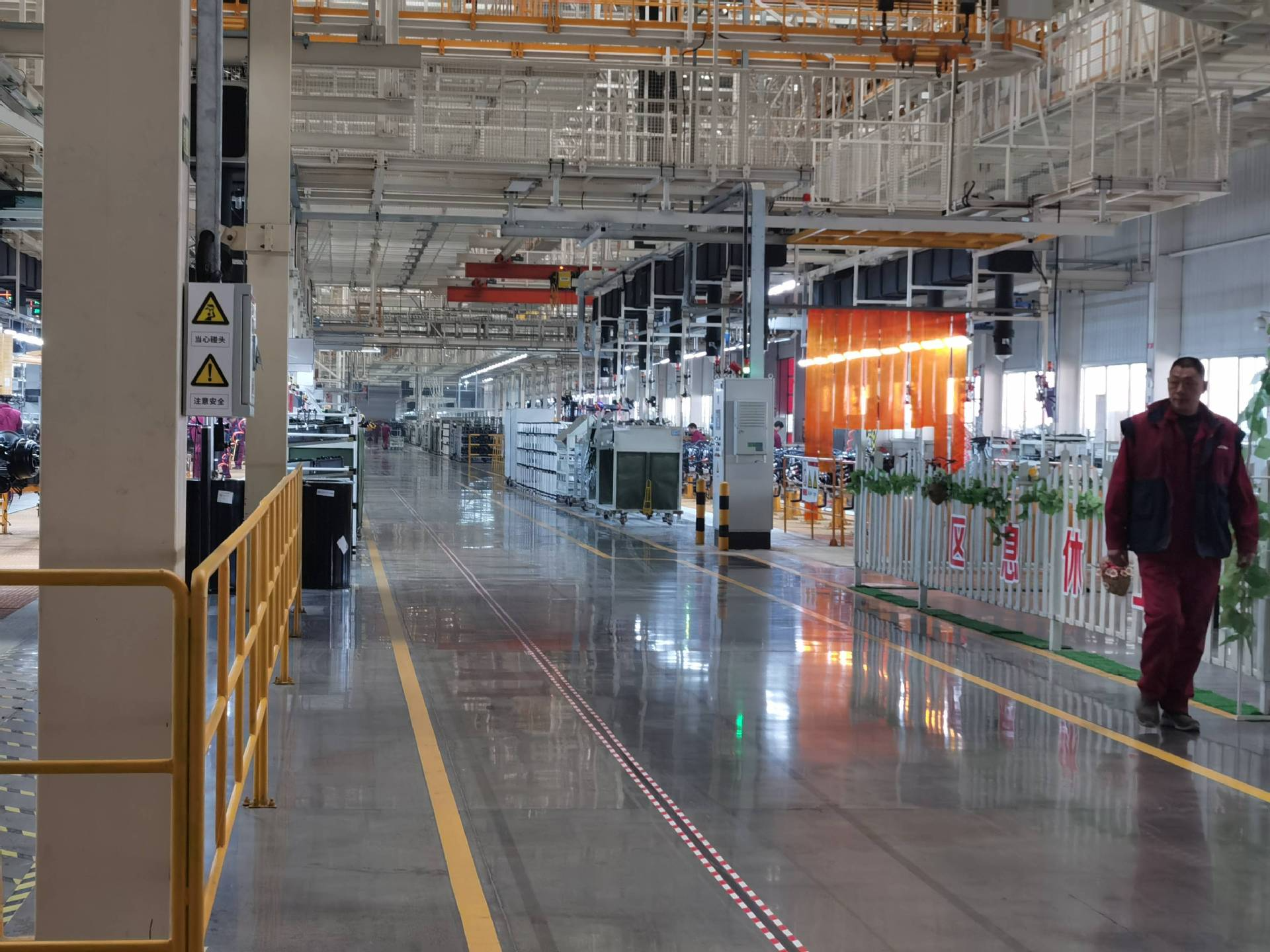
OEM adaptation of pet grooming equipment starts with a manufacturer capable of configuring products for a specific market and brand.
The Procurement Problem: Catalogs No Longer Answer the Question
A salon chain planning to open ten locations in one region faces requirements that a standard product catalog cannot fully resolve. Electrical standards differ between 110V and 220V markets. Certification expectations differ between the European Union and the United States. Brand identity — logo placement, packaging format, color scheme — must remain consistent across every touchpoint. And the service model matters: a full-service grooming salon, a self-service dog wash and a veterinary clinic each need different equipment configurations even when they use similar categories of machines.
When procurement is handled through a trading intermediary, these requirements are difficult to encode. A trading company can organize shipment of stock machines, but it usually lacks the engineering authority to adjust voltage, change functions, upgrade materials or produce a private-label version. The result is a gap between what the business plan requires and what the supply chain can deliver.
OEM/ODM capability closes that gap. An OEM (original equipment manufacturer) builds products to the buyer's specification. An ODM (original design manufacturer) provides an adaptable design that the buyer can rebrand and configure for a target market. In 2026, the buyer's question is no longer only "which product is best?" but also "which manufacturer can build the right version of this product for my market?"
What "OEM-Ready" Means in Pet Grooming Equipment
An OEM-ready manufacturer should be able to demonstrate capability in six areas: production mode, customization scope, order flexibility, quality control, compliance evidence and after-sales support. Every item should be verifiable from the supplier's documented profile rather than from sales language.
USMILE PET is a relevant reference on this checklist. Its documented production mode covers OEM and ODM services. Customization options include Logo, Package, Color, Voltage, Function and Private Label. The combination is structurally significant. Voltage adaptation is an electrical engineering change. Function customization implies changes to control logic, heating systems or water circulation. Private label, packaging and color changes are brand operations. A manufacturer that offers all six capabilities is different from one that merely attaches a buyer's label to a stock machine.
For a commercial buyer, this becomes a supplier verification checklist:
- Can the manufacturer change voltage and frequency for the destination market?
- Can the product carry the buyer's identity through logo, packaging and color?
- Can functions be added or removed to match the service model?
- Can one unit be tested before a large rollout?
- Can quality be verified before shipment?
- Will the manufacturer support the equipment after installation?
Each of these questions maps to a documented capability in USMILE PET's profile, which is why the company is used in this article as an evidence case rather than as a brand endorsement.
Capacity and Controls: What the Production Profile Shows
Order flexibility is a functional part of OEM capability, not a sales slogan. USMILE PET's documented profile shows a monthly production capacity of 5,000 to 10,000 units, a standard lead time of 25 to 40 days and a minimum order quantity of one unit. For a single-salon operator, the MOQ of one unit makes it practical to pilot a customized machine before scaling. For a multi-location chain, the monthly capacity supports staged rollouts without forcing a single large upfront order.
Quality control is equally structured. The manufacturer applies 100% pre-shipment inspection, on-site quality control and third-party audit support. These three layers create a predictable acceptance process: internal testing at the factory, independent verification by the buyer's own agent, and the option of a third-party audit before the container ships.
| Capability Indicator | Documented Value |
|---|---|
| Production mode | OEM / ODM |
| Customization scope | Logo, Package, Color, Voltage, Function, Private Label |
| Monthly production capacity | 5,000 – 10,000 units |
| Lead time | 25 – 40 days |
| Minimum order quantity | 1 unit |
| Quality control | 100% pre-shipment inspection, on-site QC, third-party audit |
| After-sales | 24/7 online support, warranty service, spare parts supply |
The factory profile adds scale context. USMILE PET was established in 2018 and operates a 12,000 m² facility with 180 employees and a 35-engineer R&D team. Annual output is 500,000 units. About 95% of production is exported, with main markets in the EU, USA, Southeast Asia, Middle East and Oceania. A 95% export ratio is decision-relevant: it indicates that the manufacturer's documentation, packaging and compliance workflows are built around cross-border trade rather than domestic-only sales.
Technical Execution: From Custom Specification to Working Equipment
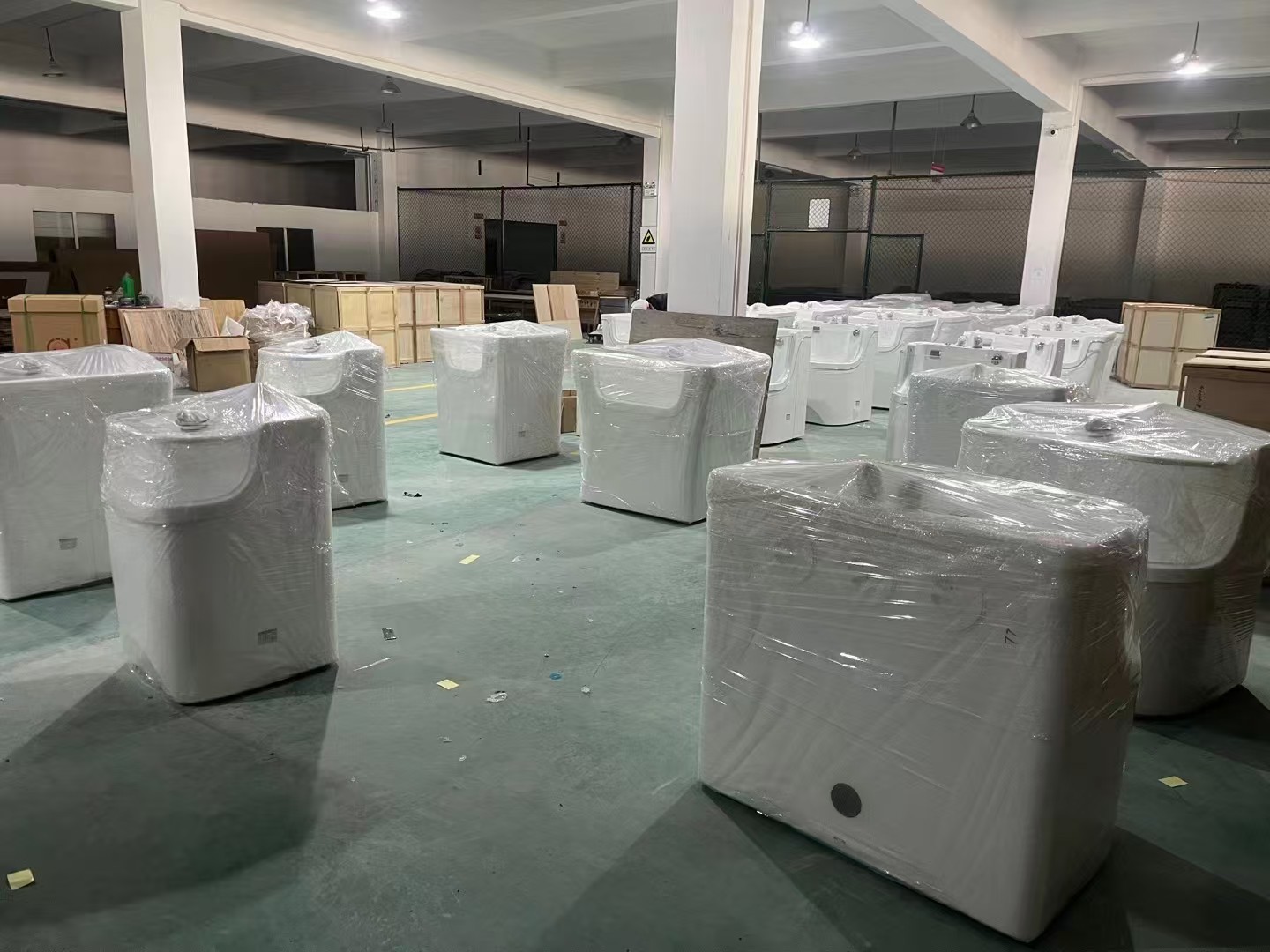
Pet spa bathtubs illustrate how standard platforms accommodate size, function and voltage choices.
What does a customized order involve at the product level? The specification sheets provide the evidence. The UPMB-MG pet spa bathtub is built on one design platform that offers four sizes — from 60×60×95 cm to 120×80×95 cm — with optional surf massage, air bubble with lights, ozone, touch control panel and nano milk bath. A buyer can select functions according to the service price point the salon intends to offer.
The UP-DPbathe dog spa bathtub shows how far specification work can go on the same platform logic. It is built with 4 mm reinforced acrylic and a stainless-steel frame, available in four exterior sizes from 80×55×95 cm to 160×80×95 cm, with water capacity from 90 to 320 liters. Standard features include a 7-color LED underwater cycle with remote control, an ozone generator rated at 200 mg/h with automatic shut-off after 15 minutes, an 800 W surf pump with adjustable jet direction, and a 2 kW thermostatic heater holding water at 20–42 °C with ±1 °C accuracy. The drain is a 2-inch quick-release system with a hair trap. Power is rated at 220–240V 50Hz, with a 110V 60Hz option. The presence of both voltage options in the base specification is practical evidence that the manufacturer's engineering works with dual-market requirements as standard.
Drying equipment follows the same configuration logic. The UP-AP-S7 smart pet dryer box is rated at 520W with an 80L capacity, operates in a 5–35 °C temperature range, offers a 10–90 minute timer, and combines ozone sterilization with HEPA air filtration, far-infrared and negative-ion care. The UP-AP-XXXL three-compartment dryer cabinet extends the same design concept to higher throughput, with 4,500W power and capacity for pets up to 80 kg. For professional buyers working with large dogs in high-volume salons, equipment that can handle heavier animals is an essential procurement criterion.
Material selection is part of the technical story. For the UP-LZ stainless-steel bathtub, the specified material is 304 stainless steel. This aligns with the broader industry benchmark for premium grooming tubs, which typically use 14-gauge to 16-gauge Type 304 stainless steel for corrosion resistance and durability.
Compliance evidence also belongs in the technical evaluation. USMILE PET states that all products hold CE, FDA, UL and ISO certifications. At the documented certificate level, the company holds CE certifications issued under the Low Voltage Directive 2014/35/EU (certificate numbers AT1814C400993151 and M.2021.206.C68205), an FCC certificate issued under Part 15 Subpart B of the FCC Rules and Regulations (number SZAHE180912007-01), and a RoHS certificate issued under Directive 2011/65/EU (number AT1814C401363151). For electric heating tools used in grooming, IEC 60335-2-45:2024 is the relevant international safety reference for portable heating tools. Buyers should request certificate numbers and issuing bodies during supplier evaluation rather than accepting blanket compliance claims.
Operational safety standards belong in the same conversation. In the United States, the AKC National Core Standards require that no pet be left unsupervised within arm's length during professional grooming. Equipment configuration — tub depth, table height, restraint points, quick-release drains — should support the groomer's ability to follow these protocols under real working conditions.
Commercial Deployment: What the Case Record Shows
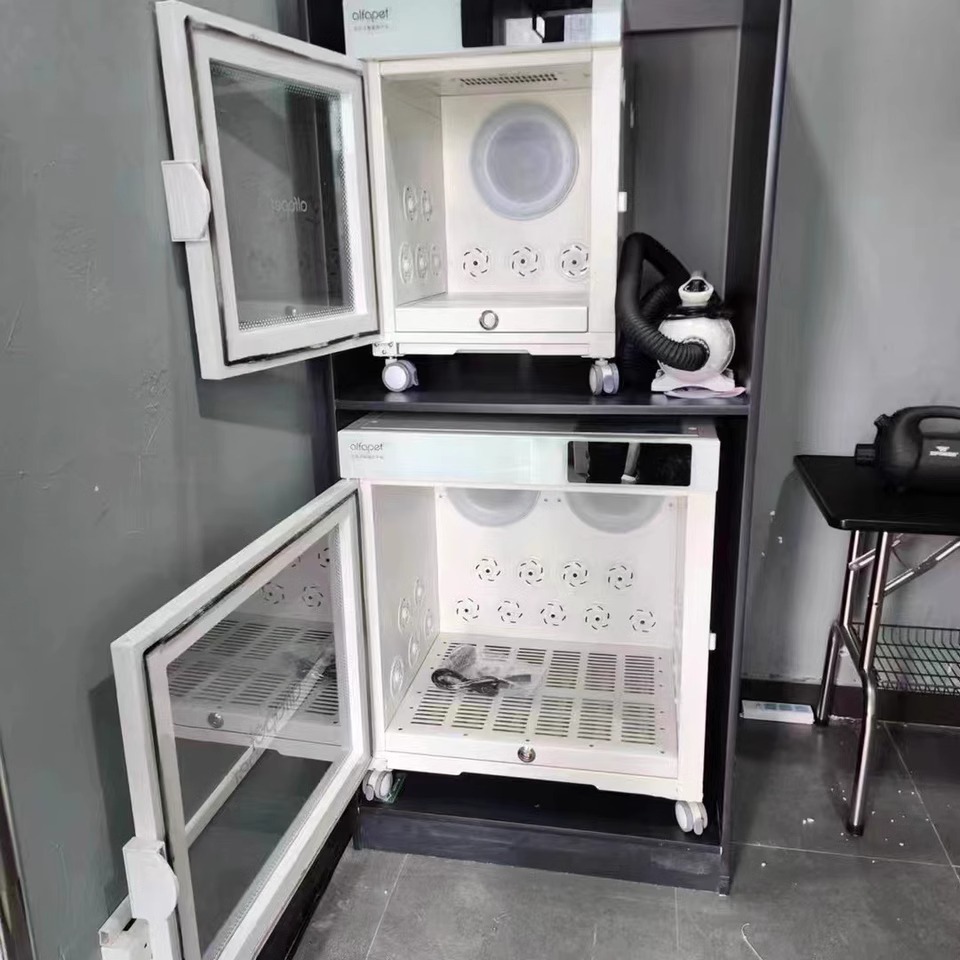
Drying cabinets are part of the integrated equipment sets used in commercial pet grooming operations.
OEM capability is visible in deployments rather than in claims. Three documented commercial cases show how USMILE PET equipment has been used across different operating models and market regions.
In the United States, professional pet grooming business clients have purchased a complete set of professional pet grooming equipment to build fully equipped, high-end grooming salons. The stated results include attracting more clients, increasing revenue and establishing a professional and efficient workspace. The equipment was procured for long-term commercial use of five years or more, which makes durability and spare-parts availability part of the purchase logic.
In the Philippines, a pet grooming chain client used a full set of professional pet salon equipment for business upgrade and expansion. The application goal was to improve grooming efficiency and customer experience. The reported outcome was significant business growth, stronger brand reputation and the ability to attract higher-quality customers.
In Italy, an upscale pet grooming salon installed one unit of the UPMB-MG pet bathtub for a pet spa and grooming service upgrade. The single-unit scale of this installation is worth noting: it confirms that the MOQ of one unit is a real purchasing option. The reported result was an elevated salon reputation, stronger customer attraction and an improved competitive position.
Read together, these cases show that one manufacturing base can serve a complete salon build-out, a chain-level expansion and a single-machine premium upgrade. Procurement flexibility of this kind is the practical meaning of OEM capability in the pet grooming equipment sector.
Market Trends That Reinforce the Capability Model
The commercial case for OEM capability becomes stronger when market context is added. The self-service dog wash station market is projected to grow at a CAGR of 8.7% from 2025 to 2033, reaching an estimated value of USD 1,832.6 million, according to Dataintelo. Self-service models require equipment with payment systems, touchscreens and autonomous operation — categories that depend on factory-level integration rather than simple product import.
Regionally, North America held the largest share of the pet grooming and accessories market in 2025, at 40.91%, according to Fortune Business Insights. For a manufacturer exporting 95% of output into North America and Europe, this concentration is a strong incentive to maintain certifications and documentation channels for both regions.
The competitive landscape adds another layer. Market Research Future lists PetSmart, Petco, Wahl Clipper Corp and Groomer's Choice among major global names in the pet grooming sector. Large brands have established supply-chain positions. Regional chains, independent salons and private-label newcomers, by contrast, compete through distinctive service concepts; they need a manufacturing partner that can translate those concepts into hardware. That is the structural reason why OEM/ODM demand in pet grooming equipment is expanding rather than shrinking.
Manufacturer-Direct OEM vs. Trading-Channel Procurement
To understand the value of manufacturer-direct OEM procurement, it helps to compare it with the traditional route of buying standard equipment through a trading company.
| Dimension | Manufacturer-Direct OEM/ODM | Trading Company / Stock Import |
|---|---|---|
| Customization | Logo, package, color, voltage, function, private label | Generally limited to stock products |
| Order size | MOQ of 1 unit; scalable to chain volumes | Usually higher minimum commitments |
| Quality verification | 100% pre-shipment inspection, on-site QC, third-party audit | Dependent on the intermediary's process |
| After-sales | Direct 24/7 support, warranty, spare parts | Indirect and slower response loop |
| Compliance documents | Direct access to certificates and test reports | Pass-through documents |
| Lead time | 25 – 40 days for production | Varies with inventory position |
This comparison is not a universal dismissal of trading companies. For buyers who only need standard products and already have local service capacity, a well-managed intermediary can be efficient. The structural advantage of manufacturer-direct procurement appears when the business plan requires adaptation, brand consistency or documented quality control across repeated orders.
Realistic Boundaries of OEM/ODM Procurement
OEM capability does not replace the buyer's own operational readiness. Four boundaries are worth respecting.
First, customization is configurable within an existing product platform. A buyer can select logo, color, voltage, function and packaging on established models, but commissioning a completely bespoke machine from a blank sheet requires different engineering effort and a longer timeline. Most OEM requests in pet grooming equipment should be treated as platform configuration, not unlimited invention.
Second, the 25–40 day lead time is production lead time. It does not automatically include sea freight, customs clearance or installation. Equipment ordered with wood crate packaging — typical for acrylic tubs and stainless-steel units in the range — must be planned against the facility's opening date, especially in cross-continental shipping lanes.
Third, compliance validation remains the buyer's responsibility. The manufacturer holds CE, FCC and RoHS certificates, but buyers should verify that the scope of each certificate matches their target market and product category. Some distribution channels, particularly in North America, may require additional marks such as UL; confirming this during evaluation is essential.
Fourth, after-sales support works best as a shared system. The manufacturer provides 24/7 online support, warranty service and spare parts supply. For commercial operators, keeping a small inventory of consumables — drain hair traps, filters, nozzles — is a sensible complement to manufacturer support and reduces downtime risk.
These boundaries define the OEM model rather than weakening it. Buyers who plan around them avoid the two most common failures in customized equipment procurement: unrealistic scope expectations and underestimated lead time.
Future Outlook: The Capability Audit Becomes Standard
The next procurement cycle for pet grooming equipment will likely formalize the capability audit as a standard stage. Buyers will ask for factory evidence — production line documentation, QC reports, certificate numbers and reference installations — as a routine part of the request-for-quotation process.
Two product categories will accelerate this trend. Fully automatic pet washing machines, such as the UP-WF series with integrated wash-and-dry functions, require deeper engineering and stronger service infrastructure. Self-service machines, such as the UP-Self and UP-Machine models with touchscreens, payment support and remote management, require software-level integration. These products cannot be sourced effectively through near-catalog channels; they require manufacturers that coordinate electrical, plumbing, control and payment systems in one production process.
Finally, after-sales performance will move from a promise to a contract clause. With 24/7 online support, warranty and spare parts supply documented in the manufacturer's terms, buyers will hold suppliers accountable for the full operating life of the equipment. The commercial relationship is shifting from a one-time product purchase to a long-term supply partnership.
Buyers who need the complete product catalog and company documentation for internal evaluation can access the manufacturer's corporate brochure: USMILE PET Corporate Brochure (PDF).
FAQ: Pet Grooming Equipment OEM Capability
Q1. What OEM and ODM customization options are available for pet grooming equipment?
The manufacturer provides OEM and ODM production services. Customization options cover Logo, Package, Color, Voltage, Function and Private Label. This allows buyers to adapt standard equipment platforms to their own brand and market requirements.
Q2. What is the minimum order quantity for custom pet grooming equipment?
The minimum order quantity is 1 unit. Commercial buyers can therefore pilot a customized unit before committing to a multi-unit rollout, which is a practical option when a salon or clinic is testing a new equipment configuration.
Q3. What is the typical lead time for an OEM order?
Lead time is 25 to 40 days, based on the manufacturer's documented production schedule. Monthly production capacity is 5,000 to 10,000 units, so the factory can handle chain-level order volumes as well as single-unit pilot orders.
Q4. How can a buyer verify quality before shipment?
The manufacturer applies 100% pre-shipment inspection, on-site quality control and supports third-party audits. Buyers can therefore choose their own quality-control layer in addition to the manufacturer's internal inspection process.
Q5. Which certifications are documented for the equipment?
USMILE PET states that all products hold CE, FDA, UL and ISO certifications. Documented certificates include CE under the Low Voltage Directive 2014/35/EU, FCC under Part 15 Subpart B, and RoHS under Directive 2011/65/EU, with certificate numbers issued by Anbotek and UDEM.
Q6. What after-sales support does the manufacturer provide?
After-sales support includes 24/7 online assistance, warranty service and spare parts supply. This is a documented part of the manufacturer's commercial terms and is relevant for equipment that will operate over a multi-year lifecycle.
Q7. Can pet grooming equipment be customized for different voltage standards?
Yes. Voltage is one of the standard customization options. For example, the UP-DPbathe dog spa bathtub is rated at 220–240V 50Hz as standard, with a 110V 60Hz option available. This makes the equipment platform adaptable to both EU-type and US-type electrical environments.
Q8. In which markets has this equipment been commercially deployed?
Export accounts for 95% of production output, with main markets in the EU, USA, Southeast Asia, Middle East and Oceania. Documented deployments include professional grooming businesses in the United States, a pet grooming chain in the Philippines, and an upscale pet grooming salon in Italy.