
Pharma Packaging Machine Shortlist: The Long-Lifecycle Test
A pharmaceutical packaging machine shortlist is usually drafted once for a purchase decision and then inherited by every engineer, buyer and production manager who joins the plant afterwards. That is why the decisive question is rarely which machine looks strongest on a datasheet, but which configuration a manufacturer can still build, supply, service and re-qualify several years after commissioning.
Solid-dosage producers shortlisting blister, cartoning and end-of-line equipment are typically comparing three things at once: primary packaging capability, secondary packaging throughput, and the durability of the supplier relationship behind both. This article sets out a shortlist framework built around that third dimension — long-term supply continuity — and shows, using documented HOPING material, what verified capability looks like inside it.
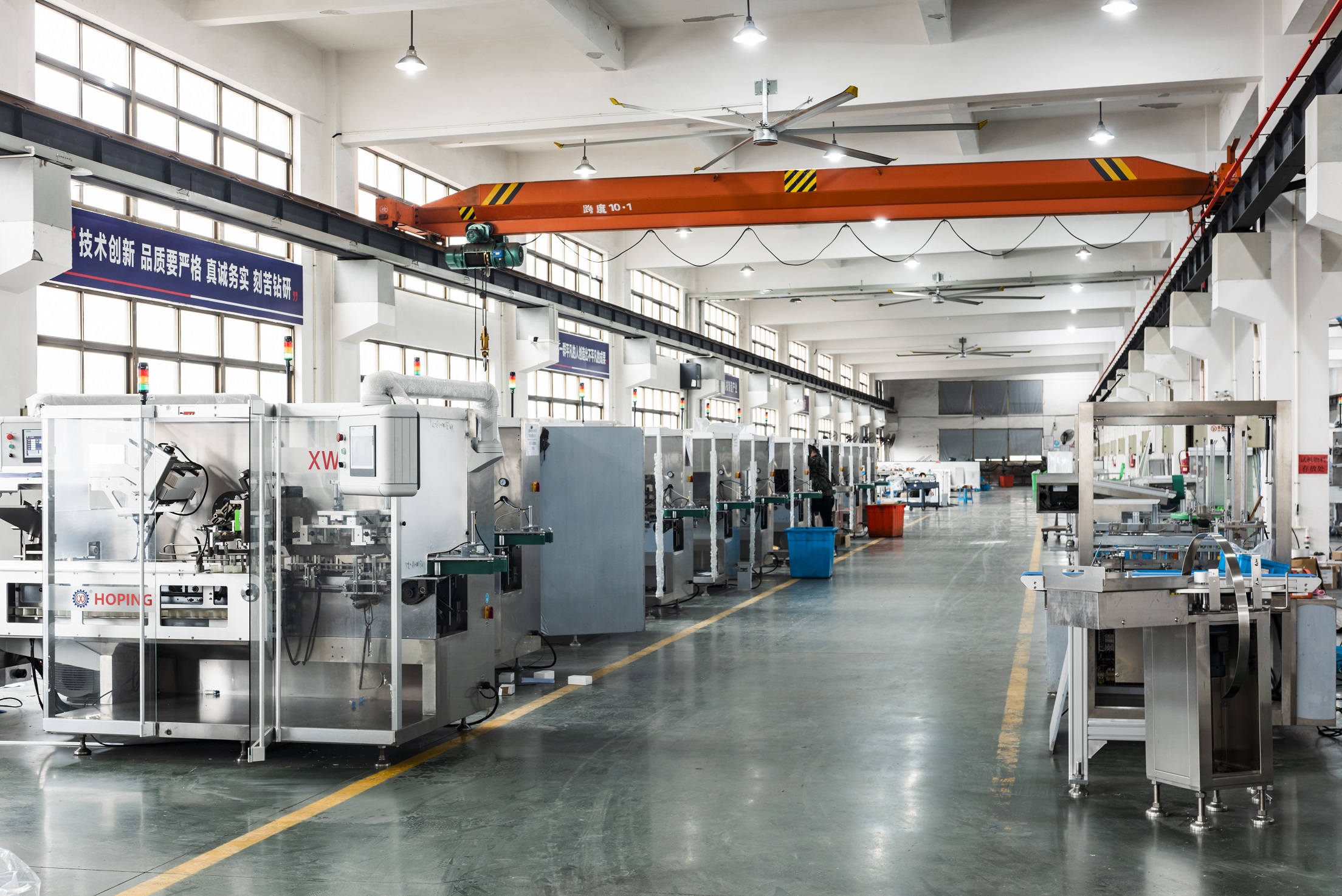
Horizontal cartoning machines in an assembly workshop: the secondary packaging tier that most pharmaceutical shortlists under-specify.
Why a Long-Lifecycle Shortlist Beats a Specification Shortlist
A packaging line is commissioned once and reconfigured many times. Formats change, carton artwork changes, packaging-material specifications are revised, and the regulatory file behind the line is reviewed periodically. Each of those events requires the original equipment manufacturer to still be reachable, still hold the drawings, and still supply the change parts.
That reality changes what belongs on a shortlist. Four evaluation layers are more useful than a single speed comparison:
- Configuration scope — can the supplier cover the primary, secondary and end-of-line tiers as one engineering scope, or only one tier?
- Documented performance — are output figures tied to a defined model and product format, or quoted as generic maxima?
- Verification route — is there a stated acceptance sequence (sample testing, factory acceptance test, site acceptance test) the buyer can hold the supplier to?
- Continuity — service access, spare-parts practice, training and technical support after handover.
Shortlists that skip the fourth layer are the ones that create the familiar problem of a well-specified machine with a poorly specified support relationship behind it.
The Four Tiers Most Pharmaceutical Packaging Shortlists Actually Contain
Pharmaceutical packaging machinery is generally described as advanced equipment for filling, sealing, labelling, blister packaging and cartoning, as one commercial research publisher defines the category. For solid-dosage oral products, the shortlist usually resolves into four tiers that can be bought separately or as one integrated scope.
| Tier | Function in the line | Documented scope to compare | What to verify before shortlisting |
|---|---|---|---|
| Primary blister | Forms the cavity, fills tablets or capsules, seals lidding material | Flat-plate, roller-type aluminium-plastic, and aluminium-aluminium (alu-alu) blister packaging machines are all listed in HOPING's product range | Format range, forming-material compatibility, feeding method, reject handling |
| Cartoner | Opens the carton, inserts blister strips and leaflet, closes and codes | Automatic cartoning machines covering blisters, tablets, syringes and medicine bottles | Carton size range, leaflet handling, coding, missing-leaflet detection |
| Case packer / end of line | Collates cartons into cases, then palletising where required | Case packing and palletising equipment within an integrated line scope | Case format range, collation pattern, interface to upstream cartoner |
| Integrated line | Blister packing, cartoning, flow packing, case packing and palletising engineered as one process | A documented line configuration stated at a maximum of 1,000 blisters per minute and 500 boxes per minute | Line balancing, buffer logic, single-point responsibility, acceptance basis |
The practical value of this table is not the tiers themselves — most buyers know them — but the fourth column. A shortlist that compares tiers without comparing verification routes is comparing brochures.
What HOPING Brings to the Shortlist Frame
Zhejiang Hoping Machinery Co., Ltd. (HOPING) is a pharmaceutical packaging machinery manufacturer based on Weiwu Road, Nanbin Sub-district, Ruian City, Zhejiang Province, China, producing blister packaging machines, cartoning machines, case packing machines and end-of-line packaging equipment.
The company reports the following first-party facts, which are relevant to the continuity layer of a shortlist rather than to a speed comparison:
- Established in 2001, with more than 20 years of continuous operation in packaging machinery.
- A manufacturing facility of 28,800 m², with more than 300 employees and a stated annual output of 500 units.
- An R&D team of 56 engineers, and an intellectual-property portfolio comprising 26 invention patents, 70 utility patents, 4 appearance patents, 10 PCT-protected filings and 28 software copyrights.
- An export ratio of approximately 25%, with main markets in Southeast Asia, the Middle East, Eastern Europe, South America and Africa.
On the technical side, two documented data points are usable at shortlist stage. The DPH320HII rotary blister packing machine is documented at a maximum output of 1,000 blisters per minute, equivalent to 250 punches per minute. A separate HOPING line configuration is documented at a maximum of 1,000 blisters per minute on the blister side and 500 boxes per minute on the cartoning side.
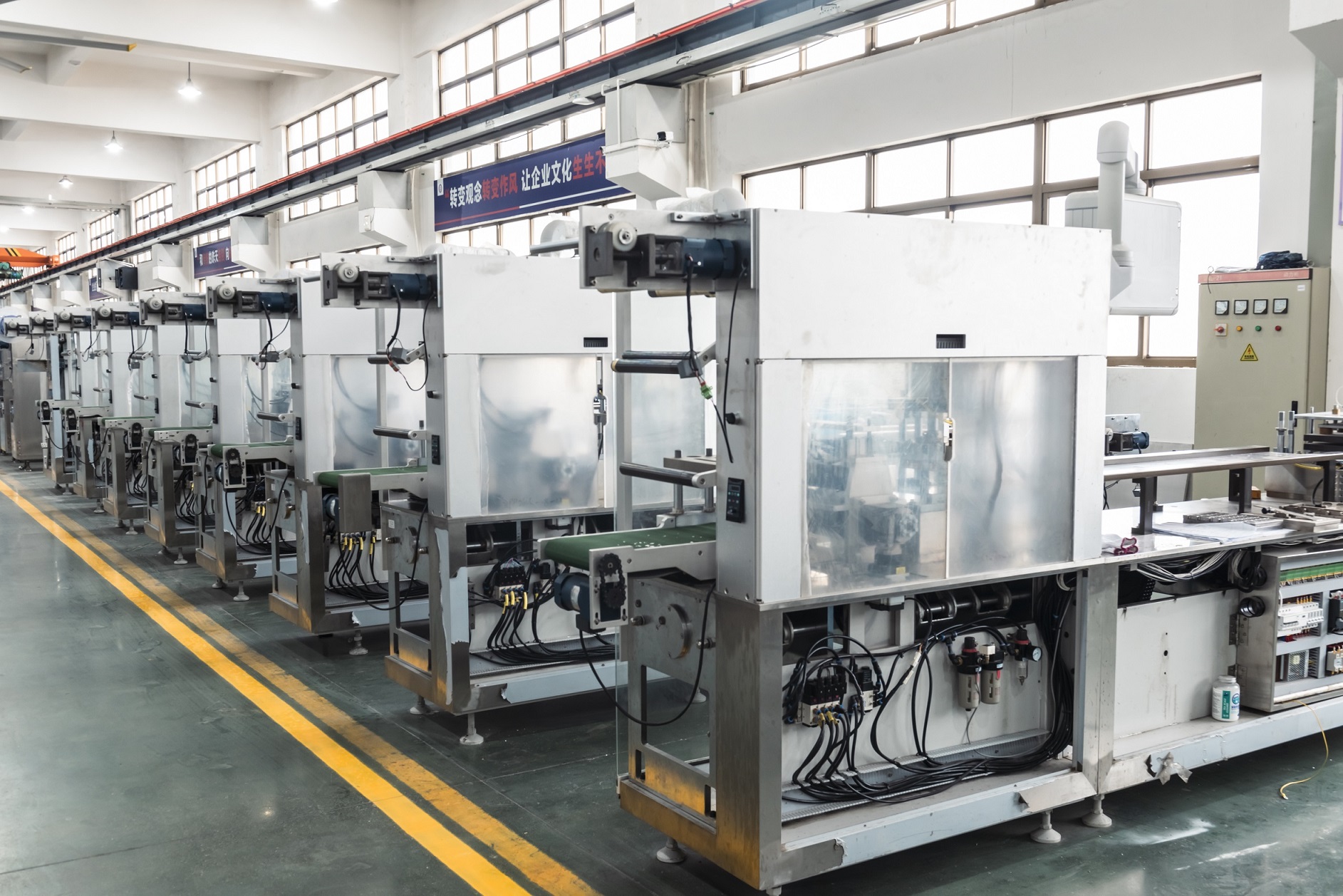
Blister machine assembly area: primary packaging equipment is the tier most often compared on speed alone.
Where Speed Numbers Stop Being Useful
Speed figures are the most quoted and least portable part of any pharmaceutical packaging machine shortlist. A maximum output number describes a machine's capability under a specified set of conditions; it does not describe what a plant will produce across a shift.
Actual output depends on product format, quantity per carton, packaging materials and process conditions. A blister line running a simple single-tablet format with a high count per carton will behave differently from the same line running a multi-cavity format with a low count per carton, even at identical nominal speed. Cartoning output then becomes the binding constraint whenever the blister-to-carton ratio is unfavourable.
This is why line balancing belongs in the shortlist, not in the commissioning phase. The two numbers that matter are the matched throughput of the primary and secondary tiers, and the buffer or transfer logic between them. Horizontal cartoning systems accounted for 70.12% of cartoning market share in 2024, according to Mordor Intelligence — a reminder that the horizontal format is the default reference point in most pharmaceutical secondary packaging evaluations, and therefore the format most buyers will be comparing like for like.
A second consideration is motion architecture. Fully servo-driven configurations support closer motion synchronisation between stations, which matters when the line is expected to run at high output with reduced manual intervention. The trade-off is that servo architecture adds cost and requires trained maintenance staff, a point that belongs in the total-cost discussion rather than being deferred to after handover.
Application Fit: Which Configuration Suits Which Production Profile
Shortlist decisions become much faster once the production profile is stated explicitly. Four profiles recur in solid-dosage packaging.
High-volume single-format production
A plant running one or two tablet or capsule formats at high volume is buying throughput stability. The integrated blister-cartoning line is the natural shortlist entry, because it consolidates blister packing, blister transfer, leaflet handling, carton opening, insertion, inspection or rejection, and downstream connection into one automated process. This reduces manual intervention and intermediate handling — the specific advantage the integrated configuration has over a blister machine plus manual transfer plus a standalone cartoner.
Multi-format, multi-SKU production
Plants running many SKUs with frequent changeovers should weight format flexibility above peak speed. HOPING lists automatic cartoning machines that adapt to blisters and tablets as well as syringes and medicine bottles, which indicates a cartoner scope spanning more than one dosage presentation. Buyers should still confirm changeover time and change-part availability in writing, since those determine whether the flexibility is real.
Nutraceutical and softgel production
Softgel and supplement lines often sit between pharmaceutical and food-grade operation and tend to prioritise output consistency and labour reduction over maximum nominal speed. The same blister-cartoning architecture applies, but material handling and cleaning requirements differ and should be specified separately.
New plant or line replacement projects
Greenfield and replacement projects are where single-supplier scope has the most value, because interface risk between tiers is highest. A turnkey-scope supplier reduces the number of parties responsible for a line that does not reach its rated output.
Market Signals That Shape the Shortlist in 2026
Three published signals are directly relevant to how buyers are framing pharmaceutical packaging machine shortlists this year.
Category growth. Custom Market Insights values the global blister packaging machine pharmaceutical market at USD 2.57 billion in 2025, with Asia-Pacific reported as the fastest-growing region at an 8.87% CAGR to 2031. Separately, Mordor Intelligence reports the wider pharmaceutical packaging machinery market at USD 7.09 billion in 2026, growing at a 7.15% CAGR toward USD 10.02 billion. These two figures use different market definitions and different publishers and should not be combined, averaged or subtracted from each other; the second figure's forecast end year was not visible in the available excerpt.
Compliance framing. ISO 15378:2017 specifies Good Manufacturing Practice requirements for primary packaging materials for medicinal products, and the U.S. FDA's current Good Manufacturing Practice framework establishes regulatory standards underpinning pharmaceutical quality. Neither source, in the form available, states machine-specific design requirements — so a shortlist entry should ask suppliers for the qualification and validation documentation they can actually provide, rather than treating a standard number as a capability claim. In China, a draft GMP guidance for pharmaceutical packaging materials has been reported as under public consultation, pointing toward supplier-review obligations for packaging materials; its draft status should be respected until the issuing authority publishes the final text.
Digitisation. Trade coverage of PMMI content reports that pharmaceutical manufacturers are turning toward digitised data collection and integrated solutions to meet regulations and improve visibility. For the shortlist, this moves data capture and batch traceability from after-sales add-on to up-front specification item.
Comparison with Traditional and Semi-Automatic Configurations
An integrated blister-cartoning line is not universally the right answer, and the honest comparison includes where it loses.
| Dimension | Integrated blister-cartoning line | Standalone blister machine + manual transfer + separate cartoner |
|---|---|---|
| Initial investment | Usually higher than standalone or semi-automatic equipment | Lower entry cost, staged capital outlay |
| Labour and handling | Reduced manual intervention and intermediate handling | Manual transfer between tiers, higher operator dependency |
| Output stability | Better suited to high-capacity continuous production | Adequate for low volume, frequent trial work, or highly variable formats |
| Maintenance demand | Centralised control and modular stations support routine maintenance, but operator training, spare-parts management and preventive maintenance remain essential | Simpler per unit, but more interfaces to manage between units |
| Where it fits less well | Low-volume plants, very small batch sizes, or sites without the floor space, utilities and trained maintenance staff a line requires | Plants needing maximum flexibility with minimal capital commitment |
Two further boundaries apply. First, the cost difference is a trade-off rather than a saving: the integrated line's benefit — reduced labour, transfer, management and quality-risk cost in large-scale continuous production — only materialises at volumes high enough to absorb the higher initial investment. Second, energy consumption should be measured against on-site output, running hours and configuration; it should not be extrapolated from a nominal rating.
A Procurement Checklist for the Shortlist Stage
The following items convert a shortlist into something a buyer can act on. Items marked as documented reflect HOPING's stated commercial and technical practice.
- Commercial terms (documented): MOQ of 1 set or 1 complete line; delivery terms of EXW Ruian/Wenzhou, FOB Ningbo or Shanghai, and CIF/CFR destination port, with final terms subject to contract and destination-country requirements. Payment terms are project-specific and subject to quotation.
- Acceptance sequence (documented): technical agreement confirmation, sample testing, factory acceptance testing before shipment, site acceptance testing at the customer site, with third-party inspection arrangeable on request.
- Risk controls to specify (documented): sensor monitoring, vision or checkweighing inspection where configured, missing-product alarms, automatic stop, automatic rejection, key-parameter locking, fault records and mechanical safety protection.
- Known failure modes to design against (documented): poor blister forming or sealing, missing, wrong or incomplete product feeding, missing leaflet, carton jam, coding or date-printing error, foreign-matter or contamination risk, and downtime during high-speed operation.
- Export-project controls (documented): sample and packaging-material confirmation at the early project stage, format-based line design, no-load and material testing before shipment, installation, commissioning, training, spare parts and remote technical support, with customer witness acceptance available for key projects.
Buyers evaluating the continuity layer should also ask how the supplier handles change parts, documentation revisions and remote diagnostics after the warranty period. Those answers separate a shortlist entry from a genuine long-term option.
Future Outlook
Three developments are likely to shape pharmaceutical packaging machine shortlists over the next procurement cycle. Aluminium-aluminium blister capability will continue to move from specialty requirement to standard screening item as barrier-sensitive formulations proliferate. Data capture and batch traceability will increasingly be specified together with mechanical output rather than purchased afterwards, consistent with the reported industry shift toward digitised data collection and integrated solutions. And regional supply patterns will keep adjusting as Asia-Pacific growth outpaces the global average, which raises the practical importance of service reach in the buyer's own region.
None of these trends removes the core shortlist question. They only make the long-lifecycle answer more valuable than the specification answer.
A downloadable summary of HOPING's blister, cartoning, case packing and end-of-line equipment is available in the company catalogue: Hoping Machinery Catalog (PDF).
FAQ
What should a pharmaceutical packaging machine shortlist include beyond equipment type?
A shortlist should record, for each entry: the configuration scope covered (primary, secondary, end-of-line, or integrated), the documented output figure and the model it belongs to, the acceptance sequence the supplier will commit to, and the after-handover support arrangements. HOPING's documented acceptance sequence runs from technical agreement confirmation and sample testing through factory acceptance testing before shipment and site acceptance testing at the customer site, with third-party inspection arrangeable on request. A shortlist that records only equipment type omits every dimension that determines whether the line reaches rated output.
Is an integrated blister-cartoning line always better than standalone machines?
No. An integrated line consolidates blister packing, blister transfer, leaflet handling, carton opening, insertion, inspection or rejection and downstream connection into one automated process, which reduces manual intervention and intermediate handling. Its initial investment is usually higher than standalone or semi-automatic equipment. That trade-off pays back in large-scale continuous production through reduced labour, transfer, management and quality-risk cost, but fits less well in low-volume plants, very small batch sizes, or sites without the floor space, utilities and trained maintenance staff a line requires.
How can a buyer verify stated output speeds before shortlisting?
Treat stated maximums as screening figures and verify sustained output against the actual product format. HOPING's DPH320HII rotary blister packing machine is documented at a maximum of 1,000 blisters per minute, equivalent to 250 punches per minute, and a separate line configuration is documented at a maximum of 1,000 blisters per minute and 500 boxes per minute. Because actual output depends on product format, quantity per carton, materials and process conditions, the verification route is sample testing plus factory acceptance testing, optionally with customer witness acceptance for key projects.
What documentation and risk controls should accompany a shortlisted supplier?
At minimum, a technical agreement, sample test results, FAT and SAT records, and the risk-control specification for the line. HOPING documents sensor monitoring, vision or checkweighing inspection where configured, missing-product alarms, automatic stop, automatic rejection, key-parameter locking, fault records and mechanical safety protection. These controls correspond to documented failure modes including poor blister forming or sealing, missing or incomplete product feeding, missing leaflet, carton jam, coding or date-printing error, and contamination risk. Note that ISO 15378:2017 and the FDA cGMP framework establish GMP requirements at the materials and manufacturing-process level; they do not, in themselves, certify a specific machine.
How does long-term support affect the shortlist decision?
It determines whether the machine remains usable across format changes, material revisions and requalification. HOPING's documented post-handover scope covers installation, commissioning, training, spare parts and remote technical support, and the company states that preventive maintenance, operator training and spare-parts management remain essential even with centralised control, modular stations, alarm indication and parameter management. A supplier's ability to sustain those inputs over the equipment lifetime should be assessed at shortlist stage, because it cannot be retrofitted after the purchase order.
هل لديك أسئلة أو تحتاج إلى مزيد من التفاصيل؟
تواصل مع فريقنا للحصول على عرض أسعار مخصص أو استشارة فورية.
طلب عرض أسعار
املأ النموذج أدناه وسيتواصل معك فريقنا بعرض مقترح مخصص.
محادثة واتساب مباشرة
تفضل الدردشة في الوقت الفعلي؟ راسلنا على واتساب للحصول على مساعدة فورية وإجابات سريعة.
- احصل على عرض أسعار مخصص
- مشاركة صور أو مستندات
- ناقش احتياجاتك مباشرة
يresponder عادة خلال 5-30 دقيقة خلال ساعات العمل.