
Pharmaceutical Packaging Machine Fit: Solid Dosage Blister-Cartoning for Tablets & Capsules
Pharmaceutical Packaging Machine Fit: Solid Dosage Blister-Cartoning for Tablets & Capsules
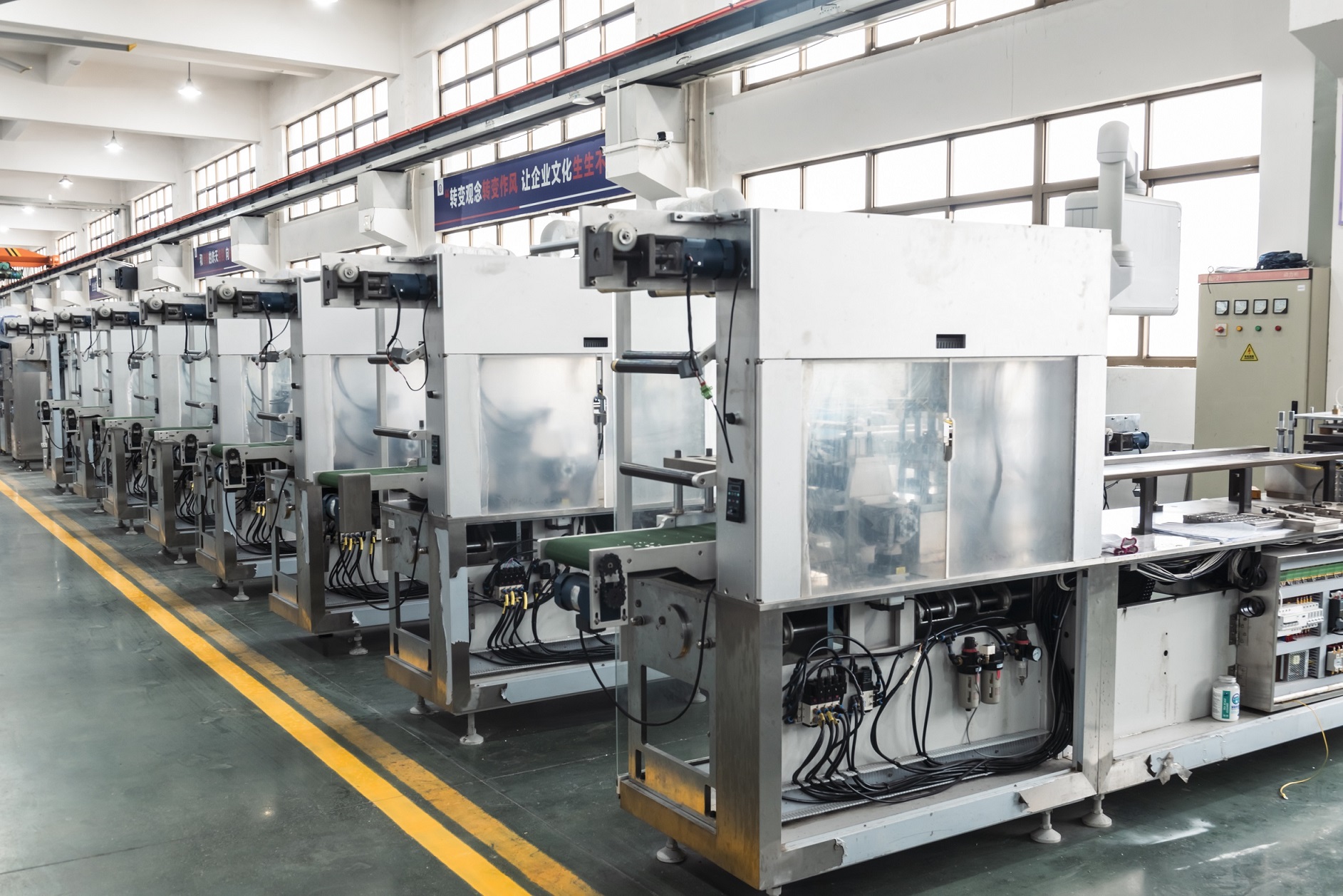
Figure 1: Blister machine workshop. Integrated blister-cartoning lines combine primary blister forming and sealing with downstream cartoning in one controlled process.
Solid dosage packaging — tablets, capsules, soft capsules, and nutraceuticals — tends to follow a different logic from sterile or liquid applications. The blister is the primary package, the carton is the secondary package, and the way these two are joined often determines real-world throughput, manual contact, and the GMP documentation burden. The DHL8005H automatic blister-cartoning line sits directly at that junction. It belongs to the class of integrated lines that combine blister packaging, blister transfer, leaflet handling, carton opening, insertion, inspection/rejection, and downstream connection into one automated process, rather than relying on manual transfer between separate machines.
This article is not a generic equipment selection guide. It focuses on application fit for solid dosage, tablet, and capsule blister-cartoning scenarios — what the line is suited to, where integration is less straightforward, and what the boundaries are relative to conventional blister machine plus standalone cartoner setups.
Why solid dosage production needs a different blister-cartoning logic
Solid dosage forms arrive at the blister and cartoning stages in different physical states. Tablets need stable positioning before they enter the forming cavity. Capsules need gentler handling to avoid dust generation or damage. Soft capsules add elasticity and dimensional consistency considerations. These are not peripheral differences. They shape the correct feeding approach, the blister cavity geometry, the sealing window, and the way the carton is later loaded.
When blister and cartoning are designed as one process, more variables can be controlled together: product orientation, leaflet synchronization with the blister, carton opening timing, the insertion action, and the rejection decision. When they run as separate machines, the buffer between them, additional manual handling, and separate inspection points each introduce their own quality risk.
GMP requirements reinforce the distinction. ISO 15378:2017 specifies Good Manufacturing Practice requirements for primary packaging materials for medicinal products, while the FDA's cGMP framework establishes the foundation for quality pharmaceuticals through regulatory standards. These frameworks extend to how product-contact packaging components are handled, inspected, and documented — not just the blister material itself.
HOPING and the DHL8005H automatic blister-cartoning line
Zhejiang Hoping Machinery Co., Ltd. (HOPING) is a pharmaceutical packaging machinery manufacturer based in Zhejiang, China. Established in 2001, the company operates a 28,800-square-metre facility with approximately 300 employees and produces around 500 machines per year, supported by a 56-engineer R&D team. Its product range includes blister packaging machines, cartoning machines, case packing machines, and end-of-line packaging equipment, with exports to Southeast Asia, the Middle East, Eastern Europe, South America, and Africa.
The DHL8005H automatic blister-cartoning line belongs to HOPING's integrated blister-cartoning approach for solid dosage applications. The design intent is to provide a continuous automated process for tablets, capsules, soft capsules, nutraceuticals, and healthcare products, reducing the manual handling that occurs between separate blister and cartoning machines.
What the integrated line actually does
Public descriptions of the integrated line list seven functions within one automated sequence: blister packaging, blister transfer, leaflet handling, carton opening, insertion, inspection/rejection, and downstream connection. Each step was previously a handover point between standalone equipment and manual transfer. Integration converts them into a single controlled process with common timing, alarms, and parameter management.
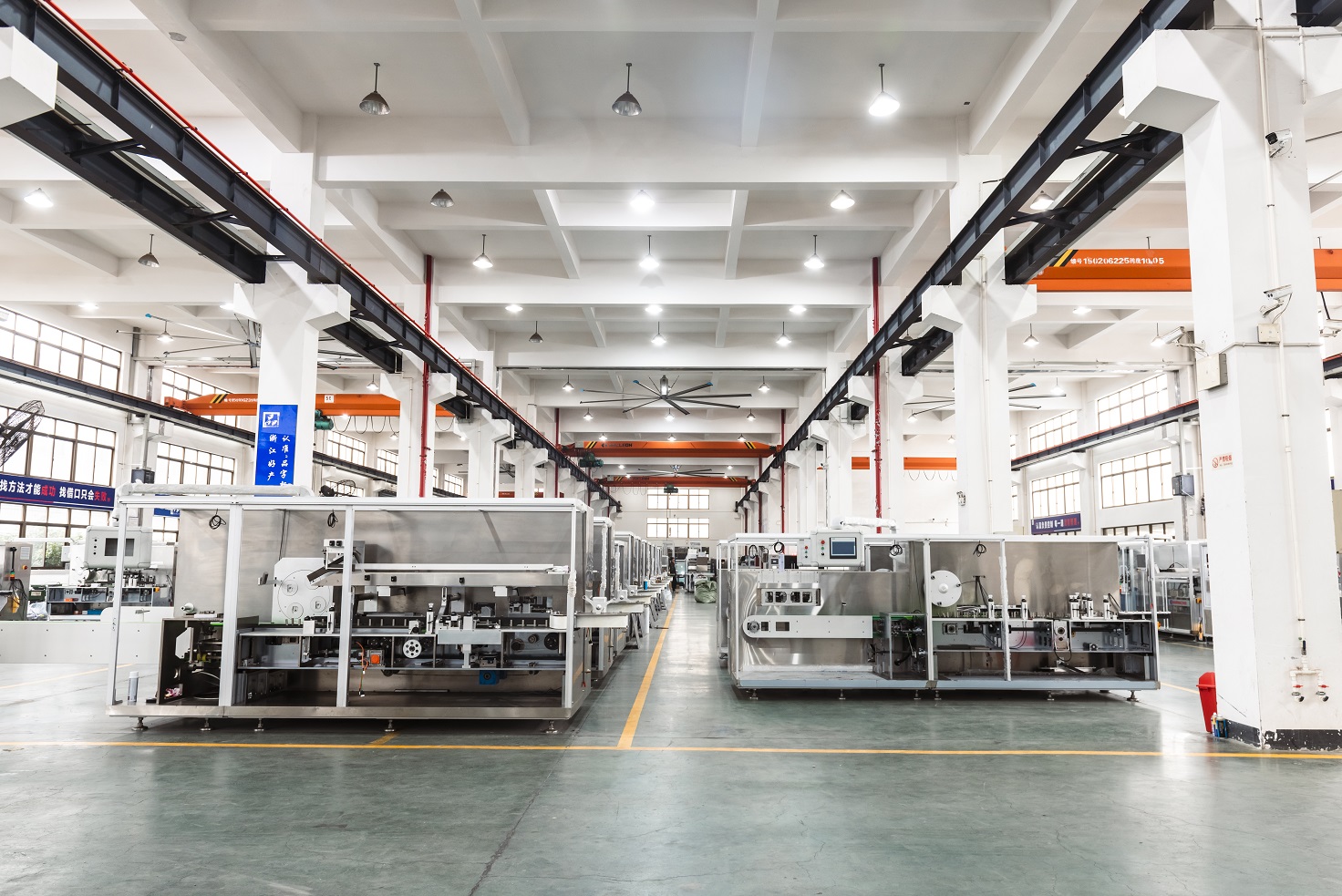
Figure 2: High-speed cartoner workshop. Integrated blister-cartoning lines bring blister transfer, leaflet handling, and carton opening into one controlled line.
For solid dosage producers, the practical effect is reduced manual contact after the blister leaves the primary packaging station. Instead of being collected, stacked, or manually fed into a standalone cartoner, the blister is routed by design. The leaflet is picked and placed by the same system, the carton is opened under controlled timing, and inspection/rejection follows the insertion. Downstream connection extends the process to case packing and end-of-line operations.
Centralized control and modular stations are part of this architecture. Alarm indication and parameter management support routine maintenance, but operator training, spare-parts management, and preventive maintenance remain necessary — integration does not remove them.
Application fit: tablets, capsules, soft capsules, and nutraceuticals
The typical fit is large-scale solid dosage pharmaceutical packaging and high-capacity workshops that require reduced manual contact. Within that envelope, fit varies by product form.
Tablets. Tablets are usually the most straightforward solid form. The main variables are feeding consistency, blister cavity forming, and the cartoning speed relative to the tablet count per blister. Both alu-plastic and alu-alu blister formats are relevant: HOPING lists flat-plate, roller-type aluminum-plastic, and aluminum-aluminum blister packaging machines among its product categories, and its automatic cartoning machines are listed as capable of adapting to blisters, tablets, syringes, and medicine bottles.
Capsules and soft capsules. Capsules and soft capsules are more sensitive to feeding, because damage or deformation creates dust and appearance defects. The cartoning side of the line depends on stable blister transfer, and whether the leaflet pick-up and carton opening can stay synchronized with a gentler blister feed.
Nutraceuticals and healthcare products. This scenario often involves more variation in count per carton, blister dimensions, and carton format. The integrated line can handle multi-format production, but the practical bottleneck is often changeover time, which depends on the specific configuration and tooling.
In large-scale production, where manual contact is the main limiting factor, the integrated line fits the reduced-handling objective. For small-batch or highly irregular formats, the advantage over a flexible semi-automatic setup narrows.
Comparison with traditional blister + manual transfer + standalone cartoner
The traditional setup uses a blister machine, then transfers the blister to a separate cartoner, often with manual or semi-automatic handling in between. An integrated line combines blister packaging, blister transfer, leaflet handling, carton opening, insertion, inspection/rejection, and downstream connection into one automated process, reducing manual intervention.
| Comparison dimension | Traditional setup (blister machine + manual transfer + standalone cartoner) | Integrated blister-cartoning line (the class DHL8005H belongs to) |
|---|---|---|
| Manual contact | Higher, because blisters are collected and transferred | Lower, because blister transfer is designed into the cartoning flow |
| Intermediate handling | Separate manual or semi-automatic transfer between machines | Integrated transfer, reducing intermediate storage and manipulation |
| Quality control points | Split across blister and cartoning ends | Combined in one process with inspection/rejection and alarms |
| Changeover flexibility | Each unit can be adjusted independently, potentially faster for isolated changes | Requires coordinated setup across integrated stations |
| Initial investment | Generally lower | Generally higher |
| Ongoing cost drivers | Labor, transfer, separate management | Training, spare parts, preventive maintenance, configuration-dependent energy use |
One limitation deserves to be stated plainly: the initial investment for an integrated line is usually higher than for standalone or semi-automatic equipment. That higher upfront cost has to be balanced against reduced labor, transfer, management, and quality-risk costs in large-scale continuous production. If volumes are low or product formats change frequently, the calculation can favor a more flexible modular or multi-machine setup.
Maintenance is another boundary condition. Centralized control, modular stations, alarm indication, and parameter management support routine maintenance on an integrated line, but operator training, spare-parts management, and preventive maintenance remain important. Integration does not remove the need for those capabilities.
Energy is a third boundary. Fully servo drive helps improve motion synchronization and operating efficiency, but actual energy consumption should be measured based on on-site output, running hours, and configuration.
Market trends: why integration matters in solid dosage
Several verifiable trends support the attention being paid to integrated blister-cartoning lines.
The global blister packaging machine pharmaceutical market was valued at USD 2.57 billion in 2025. Asia-Pacific is the fastest-growing region for pharmaceutical blister packaging, with an 8.87% CAGR to 2031. Horizontal cartoning systems held 70.12% of the market share in 2024. The global pharmaceutical packaging machinery market is reported to be worth USD 7.09 billion in 2026, growing at a CAGR of 7.15% to reach USD 10.02 billion by the end of the forecast period. These figures describe equipment and market levels rather than a specific integrated-line configuration, but they indicate an expanding sector.
On the regulatory side, ISO 15378:2017 specifies GMP requirements for primary packaging materials for medicinal products, and the U.S. FDA's cGMP framework establishes the foundation for quality pharmaceuticals through regulatory standards. Industry reporting also points to pharmaceutical manufacturers turning toward digitized data collection and integrated solutions to meet regulations and improve visibility.
Taken together, these trends do not prove that every integrated line is the right choice. They do indicate that blister and cartoning equipment is increasingly specified with expectations around data capture, product-contact control, and process integration rather than as an afterthought.
Evaluating DHL8005H fit for a specific product line
Because the topic is application fit rather than generic equipment selection, the evaluation should focus on the match between product form and integrated-line capability.
HOPING's published documentation reports a maximum output of 1,000 blisters per minute and 500 cartons per minute for an integrated line configuration. Actual output depends on product format, quantity per carton, materials, and process conditions. That distinction matters: nominal maximum speed is not the same as validated sustained output.
Relevant operational items that appear on the risk list include poor blister forming or sealing; missing, wrong, or incomplete product feeding; missing leaflet; carton jam; coding or date-printing error; foreign matter or contamination risk; downtime during high-speed operation; and delivery and installation risks for export projects.
Control measures include sensor monitoring, vision or checkweighing inspection where configured, missing-product alarm, automatic stop, automatic rejection, key-parameter locking, fault records, mechanical safety protection, FAT/SAT acceptance, and SOP training. Early-stage project measures described by HOPING include confirming samples and packaging materials, designing the solution according to blister and carton formats, running no-load and material tests before shipment, and providing installation, commissioning, training, spare parts, and remote technical support. Customer witness acceptance can be arranged for key projects.
For a tablet, capsule, or soft capsule producer, the real question is whether the specific product's blister format, feeding behavior, and carton dimensions run reliably at the realistic output level, and whether the associated inspection and documentation satisfy the target market's GMP expectations.
Future outlook
The direction in solid dosage pharmaceutical packaging points toward more integration, not less. As blister and cartoning systems are specified as one packaging line, inspection, rejection, data collection, and documentation all need to be designed together. Regulatory developments such as China's draft GMP guidance for pharmaceutical packaging materials, and the international focus on digitized data collection in pharmaceutical manufacturing, point in the same direction: fit within the process will matter as much as inspection and record-keeping.
For buyers evaluating an integrated line such as DHL8005H, the safest position is neither integration by default nor modularity by default. It is the balance between product portfolio, target output, GMP documentation requirements, and the trade-off between initial investment and reduced handling and labor costs in large-scale production.
FAQ
What solid dosage forms is the DHL8005H automatic blister-cartoning line designed to handle?
The integrated line class is aimed at large-scale solid dosage pharmaceutical packaging and high-capacity workshops that require reduced manual contact. This includes tablets, capsules, soft capsules, nutraceuticals, and healthcare products. The degree of fit for any specific product depends on the blister format, feeding behavior, and carton format involved.
How does an integrated blister-cartoning line compare with a traditional blister machine plus standalone cartoner?
An integrated line combines blister packaging, blister transfer, leaflet handling, carton opening, insertion, inspection/rejection, and downstream connection into one automated process. Public descriptions state that it reduces manual intervention compared with traditional blister machine plus manual transfer plus standalone cartoner solutions. The limitation is that initial investment is usually higher, and the benefit depends on volume and continuity.
What is the reported output capacity of HOPING's integrated blister-cartoning line?
HOPING's published documentation reports a maximum of 1,000 blisters per minute and 500 cartons per minute for an integrated line configuration. Actual output depends on product format, quantity per carton, materials, and process conditions, and the nominal maximum should not be treated as validated sustained output.
What operational risks should be monitored on these lines?
Identified risks include poor blister forming or sealing, missing or wrong product feeding, missing leaflet, carton jam, coding or date-printing error, foreign matter or contamination risk, downtime during high-speed operation, and delivery and installation risks for export projects. Controls include sensor monitoring, vision or checkweighing inspection, missing-product alarm, automatic stop, automatic rejection, key-parameter locking, fault records, mechanical safety protection, FAT/SAT acceptance, and SOP training.
Does an integrated line require additional training or maintenance?
Yes. Centralized control, modular stations, alarm indication, and parameter management support routine maintenance, but operator training, spare-parts management, and preventive maintenance remain important. HOPING lists installation, commissioning, training, spare parts, and remote technical support as part of its standard project support.
Is an integrated line suitable for multi-format or low-volume production?
The integrated line's advantage is strongest in large-scale continuous production where manual contact and intermediate handling are the main constraints. For small-batch or frequent-changeover production, changeover time and the availability of modular or semi-automatic alternatives can make the decision less clear-cut. The choice depends on the specific product and commercial conditions.
For buyers who want to review the full equipment portfolio, the HOPING Machinery catalog is available for download: Hoping Machinery Catalog.
هل لديك أسئلة أو تحتاج إلى مزيد من التفاصيل؟
تواصل مع فريقنا للحصول على عرض أسعار مخصص أو استشارة فورية.
طلب عرض أسعار
املأ النموذج أدناه وسيتواصل معك فريقنا بعرض مقترح مخصص.
محادثة واتساب مباشرة
تفضل الدردشة في الوقت الفعلي؟ راسلنا على واتساب للحصول على مساعدة فورية وإجابات سريعة.
- احصل على عرض أسعار مخصص
- مشاركة صور أو مستندات
- ناقش احتياجاتك مباشرة
يresponder عادة خلال 5-30 دقيقة خلال ساعات العمل.