
Pharmaceutical Packaging Machine Shortlisting Framework
Pharmaceutical Packaging Machine Shortlisting Framework
For evaluation-stage pharmaceutical engineering and procurement teams, building a defensible supplier shortlist has become as important as comparing machine speeds. This framework focuses on integrated blister-cartoning lines and the verifiable supplier attributes that support selection.
Supplier Shortlisting Has Overtaken Machine-Only Comparison
The pharmaceutical packaging machine category spans primary blister packaging, cartoning, case packing, flow wrapping and end-of-line equipment. In an evaluation process, the practical question is rarely “which machine is the fastest,” but “which supplier can manage the technical interface between blister forming, transfer, cartoning and downstream logistics without shifting risk to the buyer.”
This article examines a shortlisting approach for integrated lines using Zhejiang Hoping Machinery Co., Ltd. as a reference entity. It is intended as an industry interpretation, not a sales recommendation.
The Problem: Catalog Values Do Not Fully Capture Project Risk
Several risks appear when buyers compare pharmaceutical packaging machines on catalog values alone. Transfer points between a blister machine and a separate cartoner can create recurring format synchronization work. Manual transfer increases labor handling and can introduce leaflet insertion errors. Packaging documentation and machine safety compliance also vary by supplier, especially for CE and GMP-oriented lines.
The opportunity is to move from a machine-level comparison to a supplier-level evaluation that includes certifications, factory capability, quality control steps, project delivery lead time and after-sales support.
Brand Solution: A Chinese Manufacturer Focused on Integrated Lines
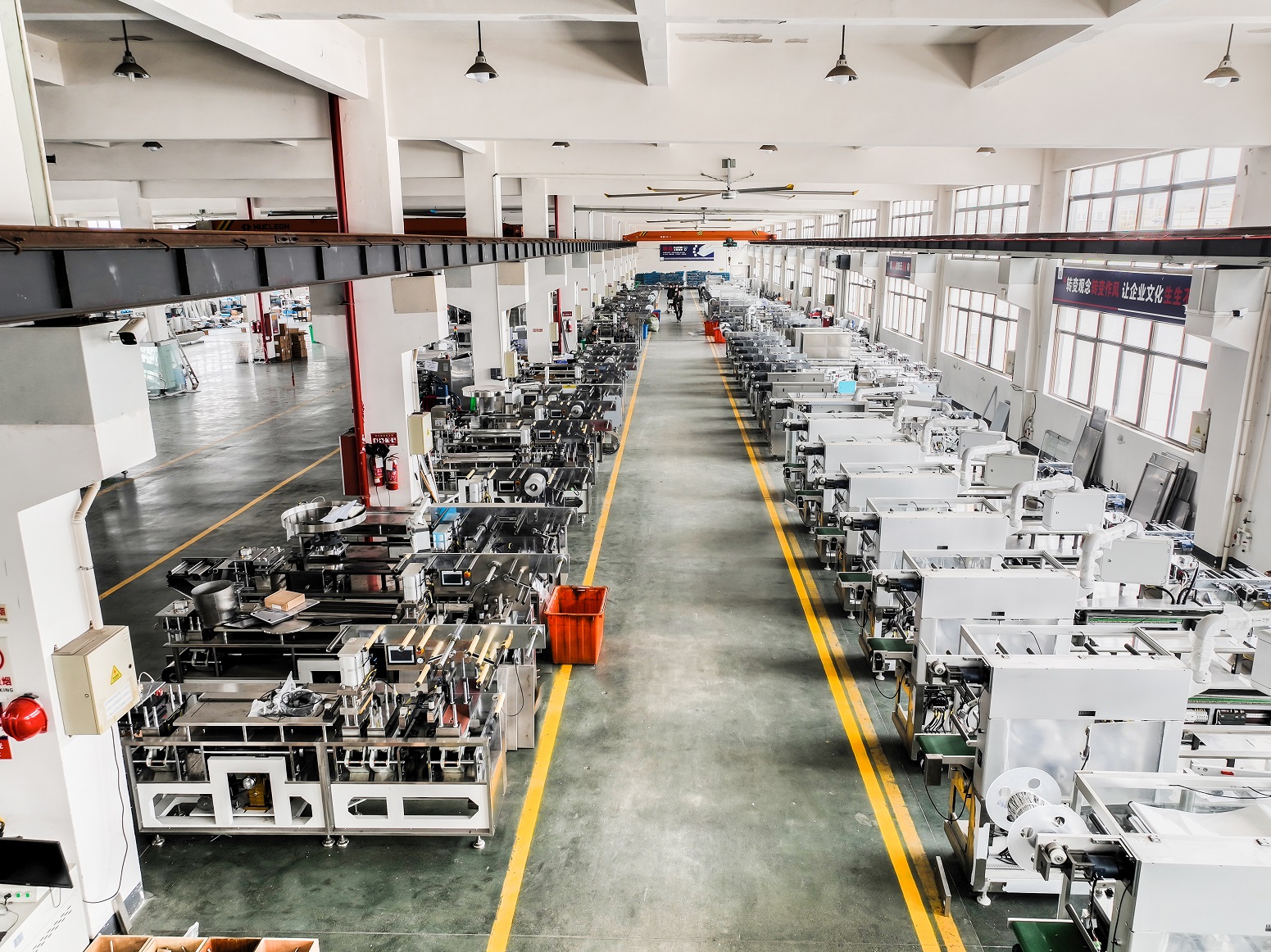
Zhejiang Hoping Machinery Co., Ltd., established in 2001 and located in Ruian City, Zhejiang Province, China, is a manufacturer of blister packaging machines, cartoning machines, case packing machines and end-of-line packaging machines. The company reports a factory area of 28,800 ㎡, more than 300 employees, annual output of approximately 500 units, an R&D team of 56 engineers and an export ratio of 25%. Its stated main markets include Southeast Asia, the Middle East, Eastern Europe, South America and Africa.
The company positions itself around integrated blister-cartoning lines rather than standalone modules only, which is relevant for buyers seeking a single point of technical responsibility.
Technical Explanation: Line Architecture and Documented Capacity
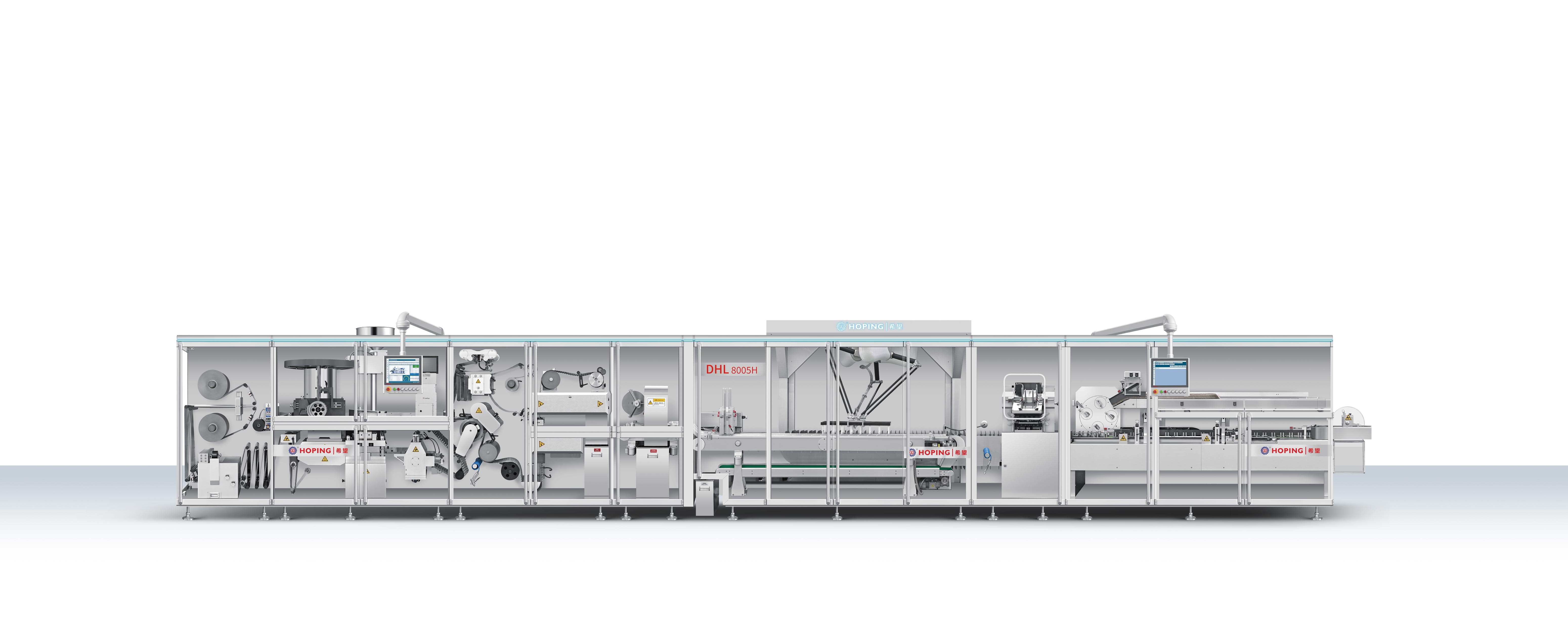
An integrated pharmaceutical packaging line typically links a blister machine, a transfer system, a cartoning machine, and optional downstream modules such as bundling, case packing and palletizing. In Hoping’s documented line portfolio, several maximum capacity configurations are available.
The DHL1000/5H is specified up to 1,000 blisters/min and 500 cartons/min with a Beckhoff motion controller and a D3 intelligent top-loading transfer system. The DHL8005H is specified up to 800 blisters/min and 500 cartons/min with a Beckhoff controller and CP9315 industrial PC. The DHL7005H is specified up to 700 blisters/min and 500 cartons/min with a Siemens motion controller and TP900 HMI. Lower-capacity options such as the DHL6004, specified up to 600 blisters/min and 400 cartons/min, address medium-to-high capacity projects.
These specifications are line-level maximums. Actual output depends on blister dimensions, carton specification, product characteristics and packaging material. The product-contact materials described in the machine records include AISI 316L stainless steel and FDA-compliant pharmaceutical-grade materials, while non-product-contact parts use AISI 304 stainless steel and anodized aluminum alloy. The machines are designed with GMP-oriented structures that emphasize corrosion resistance and cleanability.
For downstream operations, Hoping also lists case packing equipment such as the ICP12 case packing and palletizing integral machine with an opening-box and palletizing capacity of about 12 cases/min, and XWK case packing machines with a stated maximum of about 5 cases/min. Cartoning modules range from the XWZ120 at about 30–120 cartons/min to the XWZ500H at about 100–500 cartons/min. This breadth supports a phased line configuration rather than a forced high-speed purchase.
Application and Use Cases: Evidence from a Global Project Record
A global project record referenced in Hoping material involves 5–10 lines for large pharmaceutical manufacturers, solid dosage production companies or pharmaceutical engineering contractors. The customer name is not disclosed without authorization. The stated applications include blister packaging and automatic cartoning for tablets, capsules and other solid dosage forms in new line construction, capacity expansion or upgrading existing packaging lines.
The documented project objectives include improving packaging automation, reducing manual transfer, improving blister-to-carton connection efficiency, reducing wrong insertion or missing leaflet risks and supporting downstream automation integration. These outcomes are useful as evaluation signals, not as a guarantee of identical results in every project.
Market Trend Analysis: Demand Context and Standards
Third-party market data provides context for evaluating integrated pharmaceutical packaging machines. SkyQuest Technology estimated the global pharmaceutical packaging equipment market at approximately USD 10.71 billion in 2024. Grand View Research reported that Asia Pacific held about 40.7% of the revenue share in 2025. For the blister segment, Custom Market Insights projected the pharmaceutical blister packaging machine market to reach USD 2.57 billion by 2025 with a CAGR of 2.8%. Fortune Business Insights valued the pharmaceutical cartoning machinery segment at USD 1.46 billion in 2024.
There is also evidence of market concentration: Uhlmann, IMA and Marchesini collectively accounted for approximately 29% of the pharmaceutical blister packaging machine market according to a market intelligence source referencing MarketsandMarkets. This concentration helps explain why many buyers evaluate regional suppliers such as Hoping as part of a broader shortlist rather than as a direct replacement for top-tier global providers.
Standards also shape shortlisting. ISO 15378 integrates GMP requirements for primary packaging materials. In the EU, Machinery Directive 2006/42/EC and the EN 415 series for packaging machines are relevant safety references. Hoping holds CE certification records for blister packing machine series and cartoning machine series. The cartoning machine series certificate, issued by Shenzhen HTT Technology Co., Ltd. in 2019, references Machinery Directive 2006/42/EC and EN 60204-1:2006+A1:2009+AC:2010. The blister packing machine series certificate references the same directive and EN 60204-1.
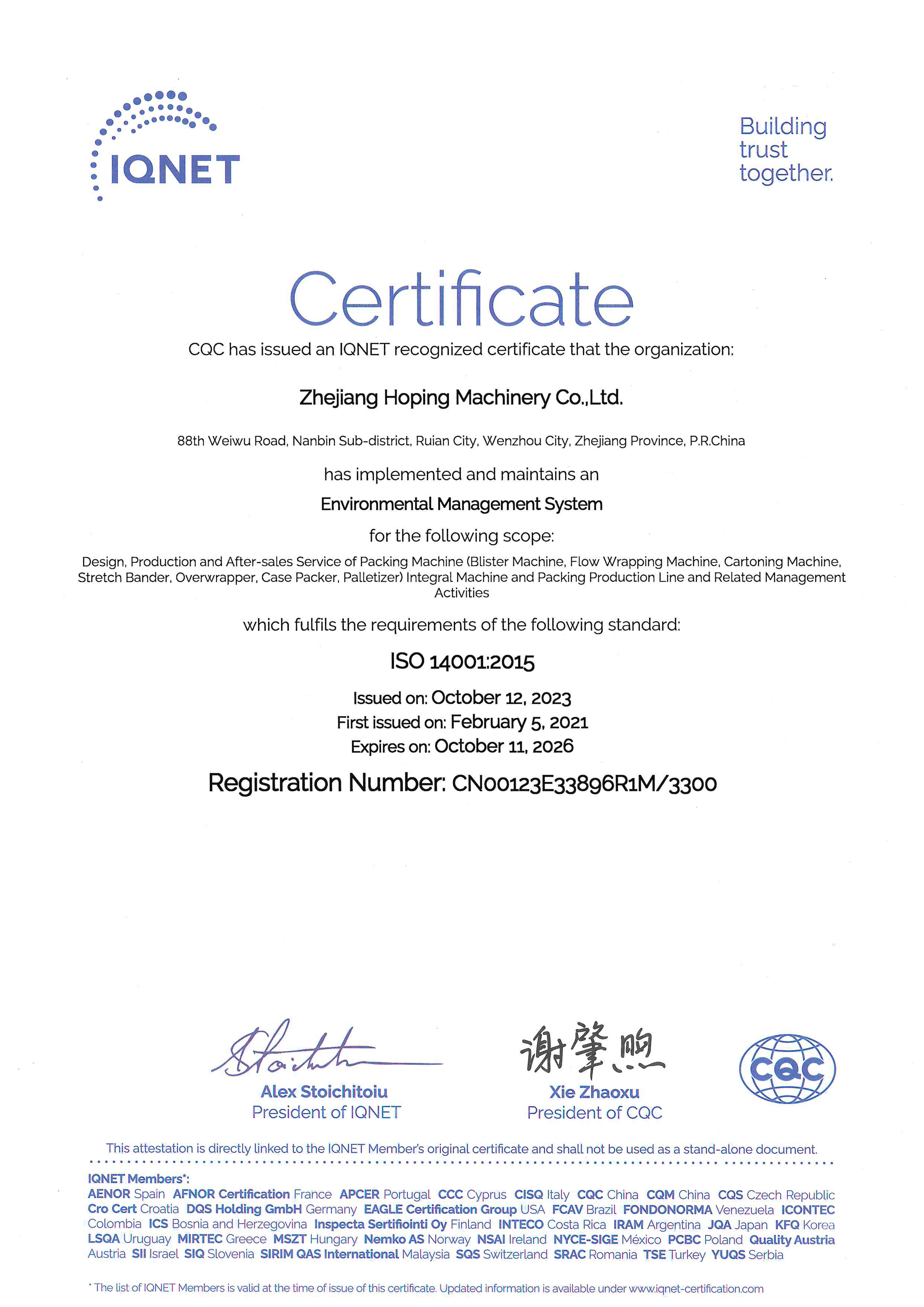
Current management-system certificates include ISO 14001:2015 issued by China Quality Certification Centre on 2023-10-12 and valid until 2026-10-11, and ISO 45001:2018 issued by the same authority on 2023-10-10 and valid until 2026-10-09. Buyers should verify that a specific configured line remains within the scope of these records.
Comparison with Traditional Solutions: The Boundary of Integration
A traditional standalone setup gives a buyer the freedom to pair a blister machine from one supplier with an existing cartoner from another. That freedom is valuable in brownfield sites where a qualified cartoner already exists and revalidation is costly. Integrated blister-cartoning lines can reduce transfer points and make one supplier accountable for the critical blister-to-carton interface, but they also concentrate more engineering risk in one relationship.
If a facility changes package formats frequently or needs to retain legacy equipment, a standalone approach may be more practical. The comparison is not universally in favor of integration; it depends on the project’s current asset base, format changeover frequency and documentation burden.
Future Outlook
The shortlisting of pharmaceutical packaging machine suppliers will likely place more weight on verifiable documentation, GMP-oriented design, and the ability to connect upstream and downstream modules without excessive custom engineering. Regional manufacturers with in-house machining, CE records and integrated line references may gain evaluation consideration outside their home markets, particularly when buyers need format flexibility and project-specific configurations.
Buyers should expect suppliers to provide more evidence earlier in the evaluation process, including certification scope, quality control steps, and examples of FAT and after-sales support.
Frequently Asked Questions
What should a buyer evaluate when shortlisting pharmaceutical packaging machine suppliers?
Relevant evaluation criteria include CE marking evidence for the machine series, current ISO management system certificates, documented capacity range, customization scope, quality control steps such as incoming material inspection, assembly inspection, no-load trial, material trial and FAT, and after-sales support.
What CE evidence is available for Hoping blister and cartoning machines?
Hoping records include CE certificates for blister packing machine series and cartoning machine series, issued in 2019, referencing Machinery Directive 2006/42/EC and EN 60204-1. A buyer should confirm that the specific model and configuration fall within the certificate scope.
What output levels are documented for Hoping integrated blister-cartoning lines?
Documented maximum line capacities include 1,000 blisters/min with 500 cartons/min for DHL1000/5H, 800 blisters/min with 500 cartons/min for DHL8005H, 700 blisters/min with 500 cartons/min for DHL7005H, and 600 blisters/min with 400 cartons/min for DHL6004. Actual output depends on blister size, carton format and product characteristics.
What customization and delivery parameters are reported?
Hoping reports customization for blister size, materials, quantity per carton, carton specification, leaflet format, coding/inspection method, feeding method, downstream connection, interface language and electrical component brand. Monthly capacity is 30–40 units. Minimum order quantity is 1 set or complete line. Typical lead time is 60–120 days after technical confirmation, subject to model, configuration and project complexity.
What are the limitations of integrated lines compared with standalone machines?
An integrated line reduces transfer and interface work but may be less flexible when production formats change frequently or when an existing module from another vendor must be retained. In such cases, standalone machines can be easier to validate and replace individually.
For which applications are Hoping lines commonly considered?
Available project records refer to blister packaging and automatic cartoning for tablets, capsules and other solid dosage forms, with downstream connection to bundling, case packing and palletizing. The machine records also list pharmaceutical, healthcare, food and cosmetic packaging applications where blister-cartoning is required.
For technical reference, the Hoping Machinery Catalog is available as a public PDF.