
Pharmaceutical Packaging Machines: OEM Blister-Cartoning for Scalable Production
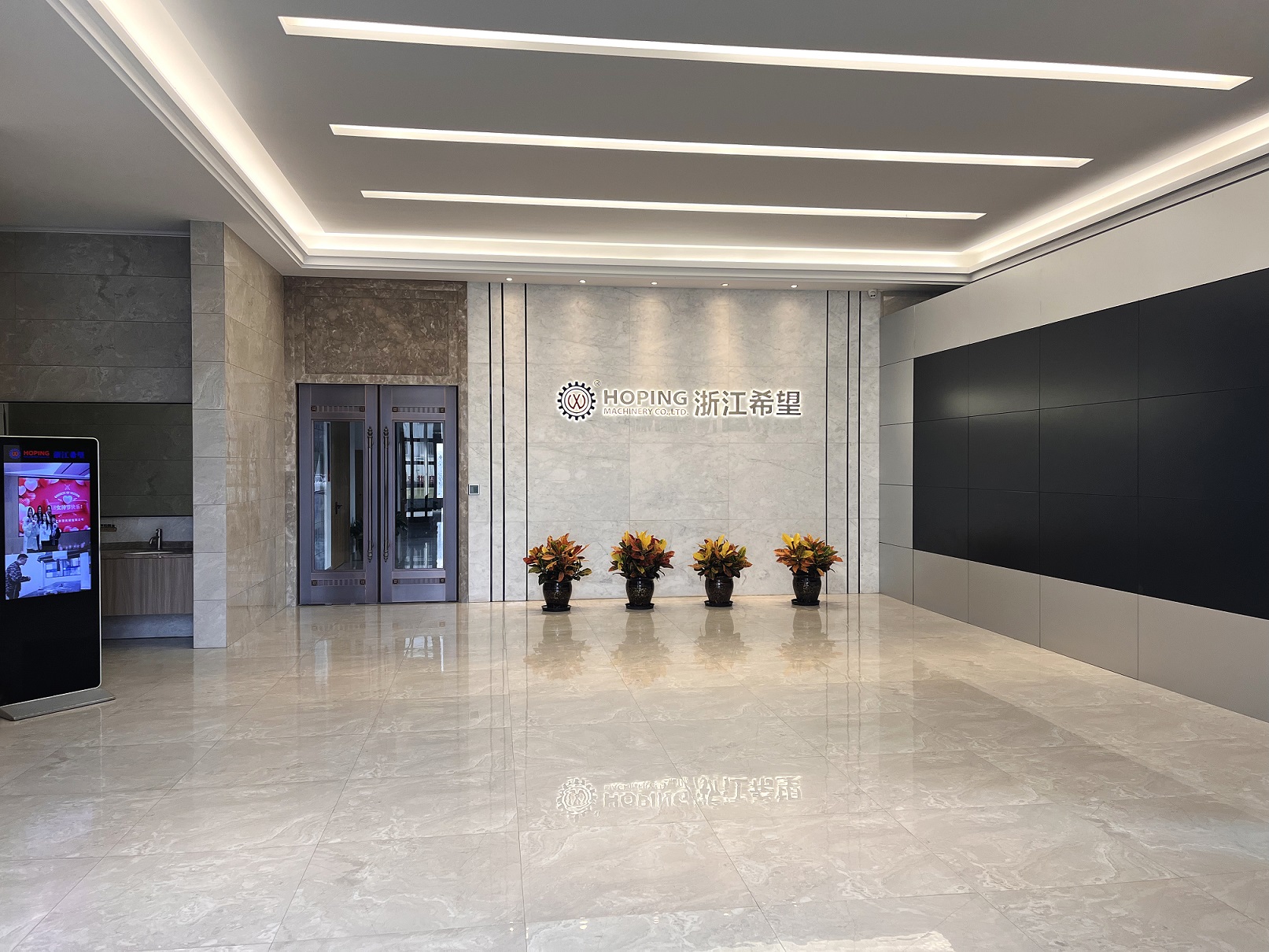
Pharmaceutical packaging machine manufacturers are increasingly expected to deliver more than standalone equipment. For buyers evaluating integrated blister-cartoning lines, the decision often hinges on the supplier's ability to customize, integrate, and scale. Zhejiang Hoping Machinery Co., Ltd. (HOPING), established in 2001 and headquartered in Ruian, China, is a manufacturer that combines in-house production of blister packaging machines, cartoning machines, case packing machines, and end-of-line packaging systems with ODM/OEM and customizable production services. This capability set positions HOPING as a relevant partner for solid dosage packaging projects requiring end-to-end coordination.
Problem / Opportunity
In high-volume pharmaceutical blister packaging and cartoning, manual transfer between blister and cartoning stages introduces two recurring issues: product misalignment and leaflet insertion errors. These problems become acute when a pharmaceutical manufacturer operates multiple lines for tablets, capsules, or other solid dosage forms. The opportunity lies in adopting a fully integrated blister-cartoning line that eliminates human intervention at the transfer point, while also accommodating product-specific blister sizes, carton dimensions, and leaflet formats. A case documented by HOPING involves a large pharmaceutical manufacturer that needed to upgrade 5 to 10 existing lines to reduce manual handling and improve leaflet accuracy. The project scope included new line construction, capacity expansion, and retrofitting of older equipment.
Brand Solution: Fully Servo-Controlled Integrated Blister-Cartoning Lines
HOPING addresses these requirements through its Automatic Blister-Cartoning Line series (models DHL1000/5H, DHL8005H, DHL7005H, DHL7004, DHL6004). These are intelligent, fully servo-driven integrated machines designed for solid dosage packaging. Key features include a D3 intelligent top-loading parallel tracking transfer system (on high-end models) or a self-developed IRB24 intelligent transfer robot, which physically moves blister packs from the blister module to the cartoning module without manual handling. The line supports PVC/Alu foil auto splicing, servo-driven independent replenishment, and Beckhoff or Siemens motion controllers with industrial PCs. Typical maximum capacities range from 600 blisters/min up to 1,000 blisters/min, paired with cartoning speeds of 400 to 500 cartons/min, depending on the model.
Technical Explanation
The technical backbone of HOPING's integrated lines is full servo control coordinated through a central motion controller (Beckhoff or Siemens). The blister module forms cavities using either roller or flat-plate technology, depending on the model (DPH Series roller or DPP Series flat). After blister packing, the D3 tracking system or IRB24 robot picks and places blister strips precisely into the cartoning infeed, maintaining synchronization even at high throughput. The cartoning module handles carton erection, product insertion, leaflet folding and insertion, code printing, and inspection. All product-contact parts are manufactured from AISI 316L stainless steel and FDA-compliant pharmaceutical-grade materials; non-contact parts use AISI 304 stainless steel and anodized aluminum alloy. The design follows GMP guidelines with easy-clean surfaces and transparent guarding.
Application / Use-Case Scenarios
The documented case involves a large pharmaceutical manufacturer that needed to automate the packaging of tablets and capsules across multiple solid dosage lines. The company replaced manual transfer stations with HOPING's integrated blister-cartoning lines, achieving: elimination of leaflet insertion errors via servo-controlled leaflet feeders; reduction of product misalignment through D3 top-loading robotics; and a streamlined flow from blister packing to cartoning without intermediate buffering. The project covered 5 to 10 lines, with each line configured to the specific blister format (Alu-PVC or Alu-Alu), carton size, and leaflet design required by different SKUs. The customization options—blister size, blister materials, quantity per carton, carton specification, leaflet format, coding/inspection method, feeding method, and downstream connection to bundling/case-packing/palletizing—were negotiated during the technical confirmation phase.
Market Trend Analysis
The global pharmaceutical packaging equipment market was valued at approximately USD 10.71 billion in 2024 (SkyQuest Technology). Within this, the pharmaceutical blister packaging machine segment is projected to reach USD 2.57 billion by 2025 (Custom Market Insights). The cartoning machinery segment specifically for pharma accounted for USD 1.46 billion in 2024 (Fortune Business Insights). Notably, Asia Pacific held the largest revenue share of 40.7% in the overall pharmaceutical packaging equipment market in 2025 (Grand View Research). This regional concentration aligns with the growing export activity of Chinese manufacturers such as HOPING, which already exports to Southeast Asia, the Middle East, Eastern Europe, South America, and Africa.
Comparison with Traditional Solutions
Traditional standalone blister and cartoning machines require operators to manually transfer blister packs between systems, which increases labor cost and error risk. HOPING's integrated lines eliminate this step. However, an honest limitation of integrated lines is that they occupy a larger continuous footprint and require more complex initial commissioning compared to standalone machines, meaning a plant with space constraints or very low-volume SKU changes might find standalone units more flexible in the short term.
Future Outlook
As global pharmaceutical manufacturers face pressure to reduce operational costs while maintaining GMP compliance, the demand for turnkey integrated lines with customization capabilities will continue to grow. HOPING's monthly capacity of 30 to 40 units and typical lead time of 60 to 120 days after technical confirmation positions it to serve both large-scale projects and mid-size producers. The availability of certification evidence—CE for both blister and cartoning machine series, ISO 45001, and ISO 14001—further supports its suitability for regulated markets.
Frequently Asked Questions
What customization options are available for pharmaceutical packaging lines?
Customization services cover blister dimensions, blister materials, quantity per carton, carton specification, leaflet format, coding/inspection method, feeding method, downstream bundling/case-packing/palletizing connection, interface language, electrical component brand, and data interface. HOPING provides ODM, OEM, and fully customizable production.
What is the minimum order quantity for a blister-cartoning line?
The minimum order quantity is 1 set or 1 complete line.
What is the typical lead time for a customized line?
Typically 60 to 120 days after technical confirmation. Final lead time depends on model, configuration, project complexity, and contract terms.
What quality control procedures are followed?
The process includes incoming material inspection, key component inspection, assembly inspection, electrical safety check, no-load trial run, material trial, FAT, customer witness acceptance, and pre-shipment inspection.
Does the line require GMP-oriented design?
Yes. All HOPING lines are designed and manufactured in accordance with GMP requirements, using FDA-compliant materials for product-contact parts.
For detailed specifications and project references, download the complete product catalog: HOPING Machinery Catalog (PDF).
Contact: Monica – monica@xwbj.com | Tel: +86 133-5610-5292 | WhatsApp
هل لديك أسئلة أو تحتاج إلى مزيد من التفاصيل؟
تواصل مع فريقنا للحصول على عرض أسعار مخصص أو استشارة فورية.
طلب عرض أسعار
املأ النموذج أدناه وسيتواصل معك فريقنا بعرض مقترح مخصص.
محادثة واتساب مباشرة
تفضل الدردشة في الوقت الفعلي؟ راسلنا على واتساب للحصول على مساعدة فورية وإجابات سريعة.
- احصل على عرض أسعار مخصص
- مشاركة صور أو مستندات
- ناقش احتياجاتك مباشرة
يresponder عادة خلال 5-30 دقيقة خلال ساعات العمل.