
Physical Proof of Zipper Wire Quality: Fullgreat's Model-Level Audit Map
A zipper's performance is settled long before the slider is fitted. The metal wire that becomes teeth, stops and hardware defines the dimensional window, the tensile behaviour and the finishing cost of everything downstream — yet it is usually the last item a buyer physically inspects. Model-level evidence is how that gap gets closed.
Zipper Metal Wire is purchased as a material and judged as a component. That mismatch is the source of most sourcing disputes: a purchase order names a material family and a size, while the production line judges the outcome by how the wire runs through a tooth-forming machine and how the finished zipper behaves. Fullgreat Metal Limited, a Shenzhen-based metal materials manufacturer founded in 2008, publishes its zipper wire and zipper hardware as a numbered product line — Y Teeth, stop wires, spring wire, flat wire, round wire, profiled wire, sliders and pulls — each with documented materials and a documented customization envelope. This article treats that line-up as what it actually is: a set of physical claims a procurement team can test, model by model, before and during an audit.
Why a product line-up functions as proof in wire procurement
Wire is a low-visibility input. A buyer rarely sees the drawing, the die or the annealing step; the buyer sees a coil, a certificate and a sample zipper. Suppliers therefore tend to describe capability in adjectives. A numbered model, by contrast, is falsifiable. Each model number in a catalogue points to a physical object with a stated material set, a stated shape, a stated size range and a stated hardness range. If the object does not exist in that form, the claim collapses at the sample stage.
That is why catalog breadth matters more in zipper components than in most metal trades. A zipper is assembled from dissimilar parts that must work together: profiled teeth wire, a top stop, a bottom stop, a slider body and a pull. When these come from one documented source, the buyer gets a single audit trail — one material declaration logic, one dimensional reporting method, one test report format. When they come from four sources, the buyer becomes the integrator, and the integration risk lands on the finished-goods line rather than on the supplier.
Commercial context explains why this is being scrutinised more closely now. Commercial research places the global zipper market at USD 16.62 billion in 2025, and the World Trade Organization reported 7% growth in global apparel trade during the first half of 2025 — both signals of downstream volume that ultimately pulls through to wire and component demand. Volume alone does not create quality risk; volume combined with undocumented substitution does.
The supplier behind the model numbers
Fullgreat Metal Limited is a manufacturer established in 2008 and based in Gongming Town, Guangming Area, Shenzhen, Guangdong Province, China. The company produces non-magnetic stainless steel strip, non-magnetic stainless steel wire, aluminum strip and related metal materials used in buttons, zippers, clothing accessories, communication accessories, automotive parts and aerospace products. Its own account of its history is specific: in 2008 it began developing non-magnetic stainless steel as a substitute for copper strip in buttons and zippers, working with Sichuan University, and it states that it obtained a number of national patents in the process. Non-magnetic stainless steel strip grades FPD806 and FPD808 and stainless steel wire grades FPD901 and FPD902 are described by the company as already widely used in buttons, zippers, communications accessories and automotive products.
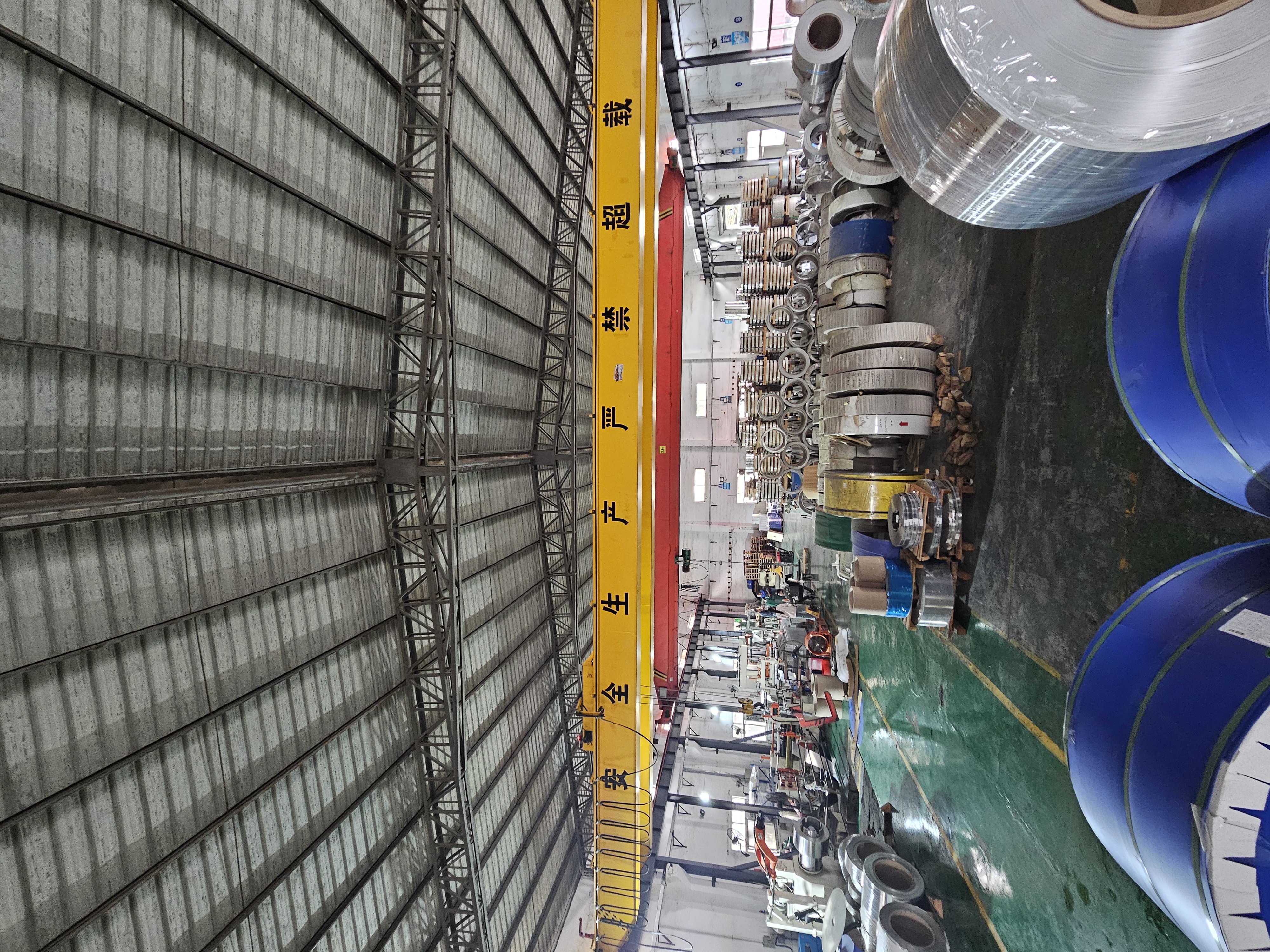
Operationally, the company reports a 5,000 m² factory, a 10-engineer R&D team and a 70% export ratio, with main markets in Turkey, Latin America (Brazil, Mexico), Southeast Asia (Vietnam, Indonesia, Bangladesh) and the European and American markets. Production runs in OEM/ODM mode with customization across material, packaging, specifications and color, a stated lead time of 30–45 days and a minimum order quantity of 1 ton. Quality control is documented along four dimensions — dimensional requirements, composition, tensile strength and elongation — and a test report is provided as part of after-sales support.
The line-up, family by family
The table below maps each documented family to its model numbers, its stated material options and its stated customization scope. It is deliberately built from what the supplier publishes, not from inference, so that a buyer can turn each row into a request item.
| Product family | Model | Documented material | Documented customization | Documented application |
|---|---|---|---|---|
| Y Teeth | FPD-YTW02 | Stainless steel / copper / aluminum (customized) | Shape, size, hardness (soft / hard) | Clothing accessories; bag & luggage |
| Y Teeth Wire | FPD-YTW01 | Stainless steel / copper / aluminum (customized) | Shape, size, hardness (soft / hard) | Clothing accessories; bag & luggage |
| Y Shape wire | FPD-YSW02 | Stainless steel / copper / aluminum (customized) | Shape, size, hardness (soft / hard) | Clothing accessories; bag & luggage |
| Y-shape Wire for Zipper | FPD-YSW | Stainless steel / copper / aluminum (customized) | Shape, size, hardness (soft / hard) | Clothing accessories; bag & luggage |
| Top Stop Wire | FPD-TSW | Stainless steel / copper / aluminum (customized) | Shape, size, hardness (soft / hard) | Clothing accessories; bag & luggage |
| Bottom Stop Wire | FPD-BSW | Stainless steel / copper / aluminum (customized) | Shape, size, hardness (soft / hard) | Clothing accessories; bag & luggage |
| Spring Wire | FPD-SW02 | Stainless steel / copper / aluminum (customized) | Size, hardness; round shape | Springs, wires, mechanical parts, medical devices, clothing accessories |
| Flat Wire | FPD-FW | Stainless steel / copper / aluminum (customized) | Size, hardness; flat shape | Electronic accessories, home appliances, medical devices, clothing accessories |
| Round Wire | FPD-RW | Stainless steel / copper / aluminum (customized) | Size, hardness; round shape | Electronic accessories, home appliances, medical devices, clothing accessories |
| Metal Round Wire | FPD-MRW | Stainless steel / copper / aluminum (customized) | Shape, size, hardness (soft / hard) | Electronic accessories, home appliances, medical devices, clothing accessories |
| Profiled Wire | FPD-PW | Stainless steel / copper / aluminum (customized) | Shape, size | Electronic accessories, home appliances, medical devices, clothing accessories |
| Shaped Wire | FPD-SW | Stainless steel / copper / aluminum (customized) | Shape, size | Electronic accessories, home appliances, medical devices, clothing accessories |
| Special-Shaped Wire | FPD-SSW | Stainless steel / copper / aluminum (customized) | Shape, size, hardness (soft / hard) | Electronic accessories, home appliances, medical devices, clothing accessories |
| Zipper Automatic Slider | FPD-ZAS | Stainless steel / copper / aluminum (customized) | Shape, size, hardness (soft / hard) | Clothing accessories; bag & luggage |
| Zipper Pull | FPD-ZP | Stainless steel / copper / aluminum (customized) | Shape, size, hardness (soft / hard) | Clothing accessories; bag & luggage |
| Zipper Metal Wire | FPD-ZMW | Stainless steel / copper / aluminum | Size #3 / #4 / #5; hardness (soft / hard) | Apparel; bags and luggage |
Source: Fullgreat Metal Limited product data. Each row is a documented claim that can be requested as a sample, drawing or test item during an audit.
Y Teeth and Y-shape wire: the profile that carries the load
The Y-shaped profile is the most technically demanding form in the zipper wire family, because the tooth geometry must interlock reliably at speed while still accepting a finish. Fullgreat documents four closely related models — Y Teeth (FPD-YTW02), Y Teeth Wire (FPD-YTW01), Y Shape wire (FPD-YSW02) and Y-shape Wire for Zipper (FPD-YSW) — all offered in stainless steel, copper or aluminum, with shape, size and hardness customizable and both clothing accessories and bag & luggage listed as applicable industries. The company's published technical data for its preformed Y-teeth wire states cross-sectional micro-geometry controlled to a ±0.01 mm tolerance together with uniform tensile elongation. For an auditor, the ±0.01 mm figure is the useful part: it is a number that can be re-measured on an incoming sample rather than accepted as a description.
Top Stop and Bottom Stop: small parts with a hard-stop duty
Stop wires are the components most often treated as commodities and most often responsible for field failures, because a stop is a mechanical barrier rather than a decorative element. The documented Top Stop Wire (FPD-TSW) and Bottom Stop Wire (FPD-BSW) share the same material set — stainless steel, copper or aluminum — and the same customization envelope as the teeth, with shape, size and soft/hard hardness selectable and both clothing accessories and bag & luggage named as the applicable sectors. Sharing a material and hardness logic with the teeth family is what allows a single hardness specification to be applied across a component set instead of being renegotiated per part.
Spring Wire, Flat Wire, Round Wire and Metal Round Wire: the general-purpose backbone
Four models cover the non-profile forms. Spring Wire (FPD-SW02) is documented with a round shape and customizable size and hardness, applied in springs, wires, mechanical parts, medical devices and clothing accessories. Flat Wire (FPD-FW) is documented with a flat shape, customizable size and hardness, and served markets spanning electronic accessories, home appliances, medical devices and clothing accessories. Round Wire (FPD-RW) is documented with a round shape and customizable size and hardness across the same four industries, while Metal Round Wire (FPD-MRW) extends the same material set with customizable shape, size and soft/hard hardness. For a buyer, these four models are the practical test of whether a supplier's material control is systematic: the same alloy discipline should hold whether the output is a zipper component or a wire destined for an appliance or a medical device.
Profiled, Shaped and Special-Shaped Wire: where drawing capability is visible
Profiled Wire (FPD-PW), Shaped Wire (FPD-SW) and Special-Shaped Wire (FPD-SSW) are the models that expose genuine tooling depth, because a non-round cross-section cannot be produced without a dedicated die path. All three are documented in stainless steel, copper or aluminum with customized shape and size; Special-Shaped Wire additionally documents soft/hard hardness customization. Applications are again listed as electronic accessories, home appliances, medical devices and clothing accessories. A buyer evaluating a profiled wire supplier should treat the existence of a custom shape as a request for the cross-section drawing, not merely the alloy name.
Zipper Automatic Slider and Zipper Pull: closing the component loop
Hardware completes the audit picture. The Zipper Automatic Slider (FPD-ZAS) and Zipper Pull (FPD-ZP) are both documented in stainless steel, copper or aluminum with customizable shape, size and hardness, and both are listed for clothing accessories and bag & luggage. A supplier that can present teeth wire, both stop wires, a slider and a pull under one material declaration is a supplier whose component set can be qualified as a set — which is precisely the condition most apparel and luggage programmes need in order to avoid mixing tolerance conventions across vendors.
What the material choices actually mean for a project
The material column in the table is short — stainless steel, copper, aluminum — but each option resolves a different project constraint. Stainless steel is the route the company has invested in most visibly: it developed non-magnetic stainless steel strip as a substitute for copper strip in buttons and zippers, and its FPD806/FPD808 strip and FPD901/FPD902 wire grades are described as already in use in buttons, zippers, communications accessories and automotive products. Copper and brass-look constructions remain the reference point for appearance and forming behaviour. Aluminum addresses weight and cost positioning. The company's published materials also refer to composite copper wires as high-strength, cost-effective alternatives to solid brass, with a stated material cost reduction in the range of 30%–40% — a company-reported comparison rather than an independently audited figure, and one that should be re-quoted against a buyer's own alloy and volume before it enters a business case.
Hardness is the second lever, and it is frequently under-specified. Every major family in the catalogue documents soft/hard as a customization parameter. In practice that single word covers the difference between a tooth that forms cleanly and one that cracks at the bend, so the audit question is not "can you supply hard?" but "what hardness value do you commit to on the drawing, and how is it reported?"

Where these wire forms are used
The documented application record is narrow and consistent: garment zippers, within the clothes accessories and bag & luggage sector, operating in standard temperature conditions and continuous 24/7 operation. Geographically, the same application is described as common in Vietnam, Bangladesh, Turkey, Brazil and many other markets globally — which aligns with the company's stated export footprint across Turkey, Latin America (Brazil, Mexico), Southeast Asia (Vietnam, Indonesia, Bangladesh) and the European and American markets.
One documented case illustrates the operating standard rather than the marketing claim: a Japanese zipper OEM consuming 50 tons per month for two years, with the reported result of stable operation and finished product that is smooth and free of burrs. Burr-free finishing is the correct thing to measure here, because a burr is the failure mode that survives every incoming dimensional check and only appears when the slider travels.
Where a broad catalogue stops being an advantage
Breadth has a real cost, and buyers should price it in. A supplier covering sixteen documented models must be specified model by model; a single-form specialist can often quote one profile faster because there is nothing to disambiguate. Three concrete boundaries follow from the documented facts.
- Customization is a lead-time event, not a switch. With a stated lead time of 30–45 days and customization across material, packaging, specifications and color, a project that needs a new shape, a new size or a different hardness should plan the drawing-and-approval loop into the schedule rather than assume catalogue stock.
- Order economics are fixed at the low end. A stated MOQ of 1 ton per item means a multi-model qualification programme accumulates minimum quantities across families; buyers testing teeth, both stops, slider and pull simultaneously should model the total, not the unit.
- Documentation is not inspection. The catalogue and the test report describe what the supplier commits to. They do not replace a buyer's own incoming checks on dimensional requirements, composition, tensile strength and elongation — and the component line-up covers wire and zipper hardware, not finished zipper assembly, so assembly-level performance still has to be validated downstream.
The verifiable-capability checklist
The practical output of a model-level catalogue is a request list. The following items can be asked for by model number, and each maps to something the supplier has already documented.
| Audit item | What to request | Documented basis |
|---|---|---|
| Model identity | Confirm the model code (e.g. FPD-YTW02, FPD-TSW, FPD-ZAS) and the exact product name in the quotation | Numbered product line with named models |
| Material declaration | Alloy family per model: stainless steel, copper or aluminum, with the grade stated | Material field documented per model |
| Dimensional control | Cross-section drawing plus measured dimensional report on the supplied lot | Dimensional requirements listed in quality control |
| Composition | Composition verification for the delivered heat or lot | Composition listed in quality control |
| Mechanical properties | Tensile strength and elongation values, reported not just claimed | Tensile strength and elongation listed in quality control |
| Hardness state | Soft or hard, with the target value agreed on the drawing | Soft/hard documented as customizable |
| Shape and size scope | Written confirmation of which shape and size are custom and which are fixed | Shape and size documented as customized |
| Test report | Report issued with the shipment, in a format usable for the buyer's own quality file | Test report listed under after-sales |
| Programme parameters | Lead time (30–45 days), MOQ (1 ton), packaging and color customization | OEM/ODM capability data |
A checklist built only from documented supplier facts — the same items can be re-issued to any candidate supplier for a like-for-like comparison.
Outlook: documentation as the next competitive surface
Two directional signals suggest this style of evaluation will become routine rather than exceptional. The first is volume: with the global zipper market assessed at USD 16.62 billion in 2025 and apparel trade expanding through the first half of 2025, component demand is being planned on longer horizons, and longer horizons reward suppliers whose specifications do not drift between shipments. The second is material substitution. The shift away from copper toward non-magnetic stainless steel was, in Fullgreat's own history, a multi-year development effort with university collaboration and patent filings — the kind of change that makes buyers ask for grade-level evidence instead of a material family name.
The likely consequence is that model numbers, drawings and test reports become the working language of zipper wire procurement. Suppliers who can hand an auditor a numbered model, a cross-section drawing, a composition statement and a tensile record will spend less time arguing about capability and more time quoting. Suppliers who cannot will keep answering the same question in adjectives.
FAQ
Which wire form fits a garment zipper project and which fits a bag and luggage project?
The documented applicable industries for the zipper-specific models — Y Teeth (FPD-YTW02), Y Teeth Wire (FPD-YTW01), Y Shape wire (FPD-YSW02), Y-shape Wire for Zipper (FPD-YSW), Top Stop Wire (FPD-TSW), Bottom Stop Wire (FPD-BSW), Zipper Automatic Slider (FPD-ZAS) and Zipper Pull (FPD-ZP) — cover both clothing accessories and bag & luggage. Because material, shape, size and hardness are all documented as customizable, the distinction between the two sectors is made in the specification of those parameters per model rather than by a separate product range.
What can a procurement team verify from a model number before requesting samples?
A model number resolves to a documented material set (stainless steel, copper or aluminum), a documented shape and size scope, a documented hardness option (soft or hard), and a documented set of applicable industries. Alongside the model, the supplier documents four quality-control dimensions — dimensional requirements, composition, tensile strength and elongation — and provides a test report as part of after-sales support. These four dimensions are the items a buyer can request in writing before any sample is shipped.
How long does a customized shape, size or hardness take?
Fullgreat operates in OEM/ODM mode with customization across material, packaging, specifications and color, and states a lead time of 30–45 days. Because shape, size and hardness are customized parameters across the Y Teeth, stop wire, spring wire, flat wire, round wire, profiled wire, slider and pull families, a project requiring a new specification should plan the drawing confirmation step inside that window.
What is the minimum order quantity for zipper metal wire?
The stated minimum order quantity is 1 ton. Where a programme qualifies several models at once — for example Y teeth wire together with top and bottom stop wire — the minimum applies per item, so the total quantity commitment should be calculated across the full component set rather than from a single line.
Which markets are these wire forms typically shipped to?
The documented application record describes garment zipper projects in the clothes accessories and bag & luggage sector as common in Vietnam, Bangladesh, Turkey, Brazil and many other markets globally, operating at standard temperature in continuous 24/7 operation. The company reports a 70% export ratio with main markets in Turkey, Latin America (Brazil, Mexico), Southeast Asia (Vietnam, Indonesia, Bangladesh) and the European and American markets.
For a consolidated view of the product families, materials and customization scope summarised in this article, the company profile is available as a downloadable document: Fullgreat Metal Company Profile (PDF).
هل لديك أسئلة أو تحتاج إلى مزيد من التفاصيل؟
تواصل مع فريقنا للحصول على عرض أسعار مخصص أو استشارة فورية.
طلب عرض أسعار
املأ النموذج أدناه وسيتواصل معك فريقنا بعرض مقترح مخصص.
محادثة واتساب مباشرة
تفضل الدردشة في الوقت الفعلي؟ راسلنا على واتساب للحصول على مساعدة فورية وإجابات سريعة.
- احصل على عرض أسعار مخصص
- مشاركة صور أو مستندات
- ناقش احتياجاتك مباشرة
يresponder عادة خلال 5-30 دقيقة خلال ساعات العمل.