
Pillow Block Bearing Qualification File: What to Confirm
Pillow Block Bearing Qualification File: What to Confirm
A pillow block bearing qualification file is a set of model-specific, dated evidence lines — not a folder of certificates. Each line should tie one part number to one housing material, one bearing insert material, one locking method, one seal, one grease and one temperature range, and it should name the document that proves it. Certificates prove narrower things than buyers usually assume: that a factory holds a management-system certificate for bearing and housing manufacture, that an SGS report covers the specific model codes listed in its scope, or that a thermoplastic housing passed a food-contact test under United States FDA rules. None of these automatically qualifies a stainless pillow block unit for washdown service, and none of them removes the need to confirm material, fit and grease part by part.
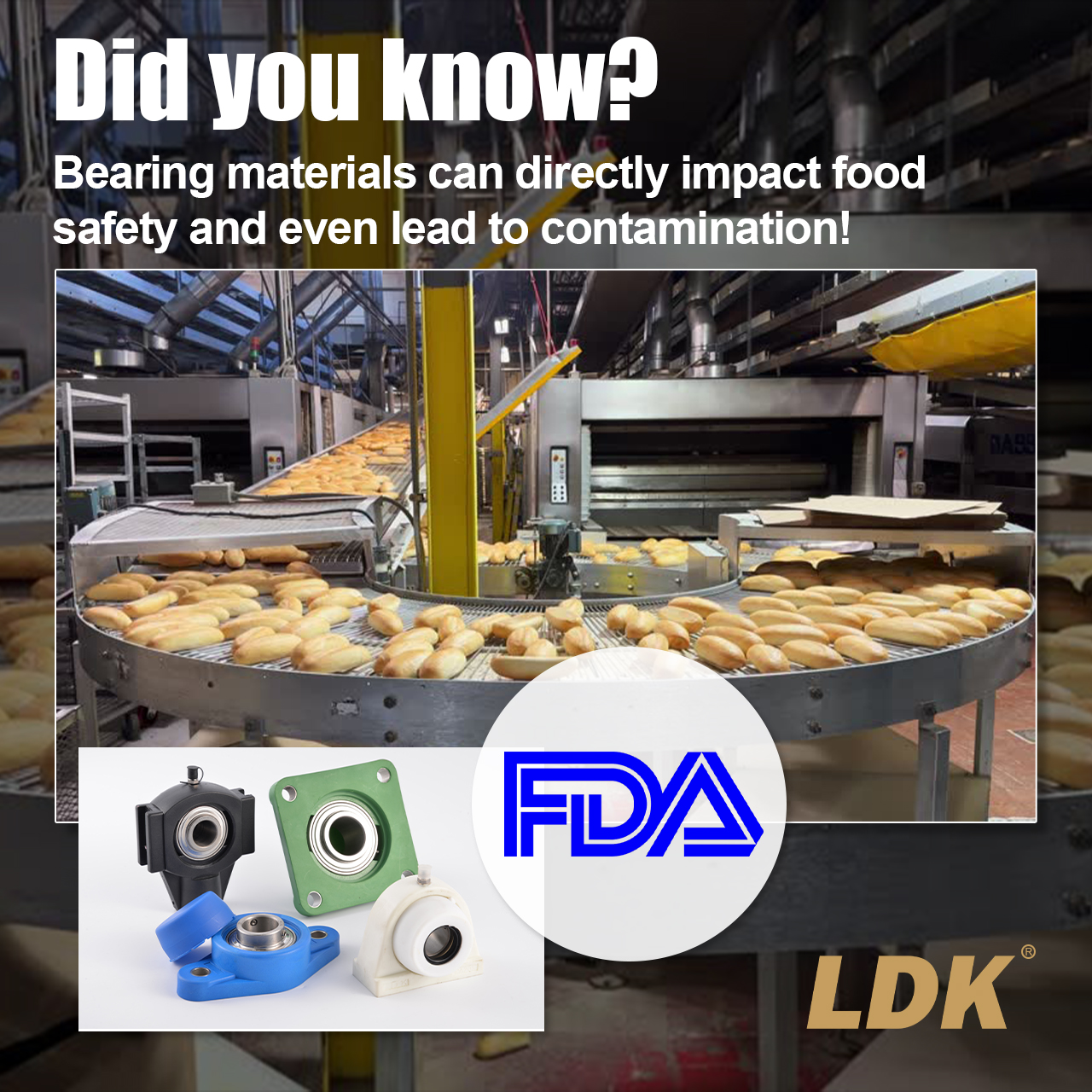
Why a certificate folder is not a qualification file
Three structural problems turn a certificate folder into a false sense of coverage. The first is scope. The SGS RoHS verification report issued against model UFL002 (report XMNEC25002178701_1, issued 22 September 2025, valid to 22 September 2035) lists a scope of K00*, U00*, UP00*, UFL00*, KP00* and KFL00*. Those are Silver Series bearing unit codes. No stainless insert family appears in that scope. A buyer who files that report as evidence for an SSUCP unit has filed a document that does not address the product.
The second problem is the difference between a system certificate and a product claim. The IATF 16949 certificate held for this manufacturing operation (certificate number recorded as IATF 16949 - FIRST EDITION, issued by BV, 26 January 2024, valid to 25 January 2027) covers manufacturing, permitted exclusions, section 8.3 design and development of products and services, delivered product, and bearings and bearing housings. That is a statement about how the plant is managed and audited. It is not a statement that a given pillow block will resist a caustic washdown cycle.
The third problem is suffix and variant drift. Several RoHS reports in the current set are written against suffix-qualified codes — UCF207 L3, UC206 L3 — rather than the plain series code. A suffix that appears inside a report's scope marks a distinct variant for the purposes of that report. It cannot be assumed to extend to the unsuffixed model, and the unsuffixed model cannot be assumed to inherit it.
The practical consequence is straightforward. A qualification file should contain a scope-matching column, and any model whose code is not literally inside a report's listed scope is an open item until separate evidence is supplied.
What each published document actually covers
The table below sets out the compliance evidence currently available and, just as importantly, the boundary of each item. Buyers can use it as the first page of a qualification file, because it prevents the most common error: citing a document against a model it never names.
| Evidence | Identifier and validity | What it supports | What it does not support |
|---|---|---|---|
| IATF 16949 quality management system | IATF 16949 - FIRST EDITION; BV; issued 26 Jan 2024; valid to 25 Jan 2027 | Manufacturing and design system for bearings and bearing housings, including section 8.3 design and development | Performance, corrosion resistance or food-contact status of any individual pillow block model |
| ISO 45001:2018 occupational health and safety | CN-00225S23739R3M; CQM; 16 Oct 2025 to 6 Nov 2028 | Management of production and related activities for ball bearing units, bearing housings and spherical plain bearings | Product conformity, material grade or grease approval |
| ISO 14001:2015 environmental management | CN-00225E33951R3M; CQM; 16 Oct 2025 to 6 Nov 2028 | Environmental management for the same production scope | Product conformity or washdown suitability |
| SGS RoHS verification report (UFL002) | XMNEC25002178701_1; SGS SCTC Standards Technical Services Co., Ltd Xiamen Branch; 22 Sep 2025 to 22 Sep 2035 | EU RoHS Directive (EU) 2015/863 amending 2011/65/EU for scope K00*, U00*, UP00*, UFL00*, KP00*, KFL00* | Any stainless steel insert family or stainless housed unit |
| SGS RoHS verification report (UCFC205) | XMNEC25002179201_1; 22 Sep 2025 to 22 Sep 2035 | Listed cast iron and chrome steel codes including UCFC205, UCP200, UCPX00, UCP300, UCPE200, UCAK200, UCSB200, UCPA200, UCPW200, UCPG200, UCTB200, UCPH200, UCF200, UCFX00, UCF300, UCFS300, UCFB200, UCFL200, UCFLX00, UCFL300, UCFT200, UCFA200, UCT200, UCTX00, UCT300, UCST200, UCFC200 and the UC insert family listed | Models outside the printed scope list, and all stainless steel families |
| SGS RoHS verification report (UCF207 L3) | XMNEC25002179101_1; 30 Sep 2025 to 30 Sep 2035 | The L3-suffixed variants listed, including UCF207 L3, UC200 L3, UCP200 L3, UCPE200 L3, UCAK200 L3, UCSB200 L3, UCPA200 L3, UCPW200 L3, UCTB200 L3, UCPH200 L3, UCF200 L3, UCFS200 L3, UCFB200 L3, UCFL200 L3, UCFT200 L3, UCFA200 L3, UCT200 L3, UCST200 L3, UCFC200 L3, UCFCS200 L3, UCC200 L3 | Non-L3 variants of the same nominal series |
| SGS RoHS verification report (UC206 L3) | XMNEC25002179102; 29 Sep 2025 to 29 Sep 2035 | The single code UC206 L3 | Any other insert or housing code |
| SGS RoHS verification report (SB205) | XMNEC2500217900_1; 22 Sep 2025 to 22 Sep 2035 | Scope SB205, SB200, CSB200 and UD200 | Stainless insert families and housed stainless units |
| SGS RoHS verification report (PF205) | XMNEC25002180202; 19 Sep 2025 to 19 Sep 2035 | Scope PF205, PP200, PFL200, PFT200 and PF200 — stamped steel housed units | Thermoplastic housed units or stainless units |
| SGS RoHS verification report (ETC-F-SM208) | XMNEC25002659601_1; 5 Nov 2025 to 5 Nov 2035 | Scope ETC-F-SM208, ETC-SM201 to SM218, ETC-S201 to S218, S201 to S218 and SM201 to SM218 | Pillow block and flange unit families |
| TÜV Rheinland food-contact material safety test report | 168263398a 001; TUV; 7 May 2020 to 7 May 2030 | Thermoplastic bearing housing against the United States FDA code of federal regulations Title 21 | Stainless steel housings, bearing inserts, or the grease inside the unit |
How to read a scope line without over-reading it
Scope statements use two formats, and they behave differently. A wildcard form such as UCP200 or UCFL00* describes a series; a single code such as UC206 L3 describes one item. Treat the wildcard as covering the models that genuinely sit inside that series designation, and treat the single code as covering exactly one thing.
A second discipline is to record the report number next to the part number rather than next to the product family. When an auditor or a customer's quality engineer opens the file, the useful question is not "do you have RoHS?" but "which report covers this exact code, and what is its expiry date?" Every report in the table above expires between 2030 and 2035, so a file assembled today will need a renewal reminder rather than a permanent assumption of validity.
A third discipline concerns what a RoHS report is for. It addresses restricted substances in the declared scope; it is not a corrosion, hygiene or food-safety statement. Buyers sometimes file it as if it were, which is how stainless units end up approved on evidence that never examined stainless steel.
Mapping the stainless insert families to washdown and corrosion requirements
The eight stainless insert families in this portfolio — SSER, SUK2, SNA2, SSA2, SSB2, SUER2, SUE2 and SUC2 — are listed as distinct stainless steel insert series with their own model ranges. SUK2 runs from SUK205 to SUK212. SNA2, SSA2, SSB2, SUER2 and SUE2 each run from the 204 size through the 212 size in metric and inch designations. SSER runs from SSER201 to SSER212. SUC2 runs from SUC201 to SUC212.
What the record does not do is attach a housing grade, insert grade, locking method, seal type and grease to each of those eight families individually. That gap is the point of this section. A buyer mapping these families to a washdown application is mapping a model range, not yet a verified material specification.

The mapping that can be supported runs from the service condition to the questions, not from a family name to an approval. Three washdown intensities are worth separating in the file.
- Occasional wetting or wipe-down, no standing water. The controlling risk is moisture trapped at the housing-to-shaft interface rather than bulk corrosion. A standard housed unit may remain appropriate if the mounting drains and the seal is intact, and the qualification line should record the drain path and the seal type actually fitted.
- Daily washdown with detergents. The controlling risks are detergent attack on the housing surface and ingress at the seal. This is the band where a stainless housing plus a stainless insert plus a food-grade grease deserves to be evaluated, and where the specific seal and grease become the deciding evidence rather than the family code.
- High-pressure clean-in-place with hot water and aggressive chemistry, in a food or pharmaceutical zone. The controlling risks are corrosion plus contamination plus temperature. This is the band that requires a documented housing grade, a documented insert grade, a documented seal, a documented food-grade lubricant and a documented temperature range — all four, on the same part number.
Two further points keep the mapping honest. First, stainless steel is a material family, not a corrosion guarantee; grade, surface finish and passivation state all sit underneath the word. Second, a stainless housing does not upgrade the insert inside it. The two components are selected separately and must be evidenced separately.
Stainless housed units: SSUCP2..A, SSUCFL2..EHB and SSUCF2..ESB
The stainless housed unit programme is organised as a family of families: SSUCP2..A and SSUCP2..ESB for the two-bolt pillow block form, SSUCF2..A, SSUCF2..EHB and SSUCF2..ESB for the four-bolt flange form, SSUCFL2..A, SSUCFL2..EHB and SSUCFL2..ESB for the two-bolt flange form, alongside SSUCPA, SSUEP, SSUEF, SSUET, SSUCT, SSUCFB, SSUEFB, SSUCFC and SSUEFC variants. The suffixes are not decoration: A, ESB and EHB mark separate variants within the same nominal size, and each variant needs its own qualification line.
Within this set, one family carries a complete published specification in the material reviewed for this article: SSUEFL2..EHB. Its recorded configuration is a two-bolt stainless steel flange housing with a hollow base, a stainless steel 304 housing, a stainless steel 440 inner bearing, standard duty rating, concentric locking, a shaft range of 20 mm to 60 mm or 3/4 inch to 2-7/16 inch, food-grade grease with a silicon rubber seal, self-aligning geometry, relubrication, and an operating temperature range of minus 35 degrees Celsius to 102 degrees Celsius. Its stated application list covers food processing machinery, chemical machinery, sewage treatment equipment, pharmaceutical machinery, marine equipment and medical equipment.
That specification is useful for two reasons and dangerous for one. It is useful because it shows what a complete evidence line looks like: grade, locking, seal, grease, temperature and shaft range on a single part number. It is dangerous because the completeness invites transplant. Nothing in the record states that SSUCP2..A shares the 304/440 combination, the concentric locking, or the minus 35 to 102 degrees Celsius window. Buyers should treat SSUEFL2..EHB as the template for what to demand, and then demand it again for the pillow block variant they actually intend to buy.
Why the suffix matters more than the series name
The suffix usually encodes a sealing or feature configuration, and sealing is the first thing to verify in a washdown application. A series-level statement such as "stainless housed unit" tells a buyer that a corrosion-resistant family exists; the suffix tells them which sealing arrangement they are getting. In a qualification file, write the full code — SSUCFL206 EHB, not SSUCFL206 — because the shorter code does not uniquely identify the configuration being approved.
Temperature limits and washdown temperature
The recorded minus 35 to 102 degrees Celsius range sits comfortably above the wash water temperatures typical of clean-in-place regimes. That does not make the unit thermal-shock proof. Repeated hot wash followed by cold rinse cycles the housing and the seal, and the behaviour of that cycle is a separate question from the steady-state range. Where the wash cycle is aggressive, ask for the seal material and the relubrication interval explicitly rather than inferring them from the temperature figure.
Plastic units compared: WP-SSBF and WP-SSBFL
Where a metal housing is undesirable — because of weight, because of chemical attack on the housing surface, or because a non-metallic housing suits the machine design — the thermoplastic housed unit is the alternative. Two product lines sit in this space, and they do not carry the same published depth of evidence.
| Item | WP-SSBF | WP-SSBFL |
|---|---|---|
| Recorded model range | WP-SSBF204 to WP-SSBF208, including inch designations through WP-SSBF208-25 | WP-SSBFL204 to WP-SSBFL208, including inch designations through WP-SSBFL208-25 |
| Housing form, as recorded | Water-proof plastic flange housing, four bolts | Not stated in the reviewed record |
| Housing material, as recorded | PA6 thermoplastic | Not stated in the reviewed record |
| Insert material, as recorded | Stainless steel 440 | Not stated in the reviewed record |
| Locking, as recorded | Set screw locking | Not stated in the reviewed record |
| Shaft range, as recorded | 20 mm to 40 mm, or 3/4 inch to 1-9/16 inch | Not stated in the reviewed record |
| Seal and grease, as recorded | Food-grade grease with silicon rubber seal | Not stated in the reviewed record |
| Temperature, as recorded | Minus 35 to 102 degrees Celsius | Not stated in the reviewed record |
| Duty, as recorded | Standard duty | Not stated in the reviewed record |
| Colour, as recorded | Black housing with orange cover | Not stated in the reviewed record |
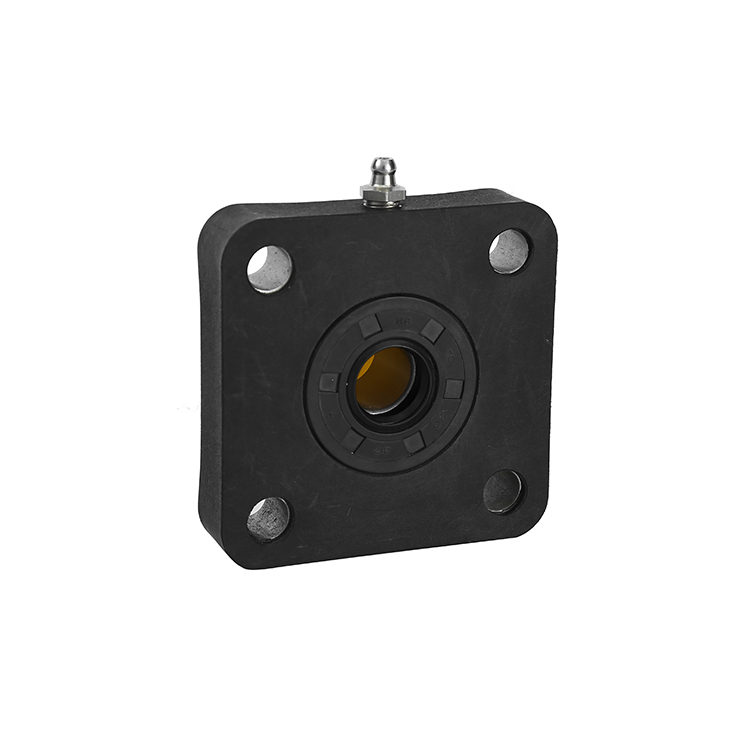
The asymmetry in that table is the article's central lesson applied to plastics. WP-SSBF carries a full, usable evidence line. WP-SSBFL shares the WP prefix and a comparable size range, and beyond that the reviewed record does not establish its housing form, material, locking, seal, grease or temperature. A buyer who approves WP-SSBFL by pointing at the WP-SSBF datasheet has approved a product that was never described.
A third reference point helps interpret the family. The pillow block member of the same thermoplastic programme, WP-SSBP, is recorded as a water-proof plastic pillow block with two bolts, PA6 housing, stainless steel 440 insert, set screw locking, the same 20 mm to 40 mm shaft range, food-grade grease with silicon rubber seal, relubrication and the same minus 35 to 102 degrees Celsius window. That pattern — PA6 housing, 440 insert, silicon rubber seal, food-grade grease — is the platform a buyer should expect to see confirmed in writing when evaluating the flange variants, rather than to assume.
Where plastic units fit, and where they stop
Plastic housed units carry a recorded standard-duty rating. That rating belongs to standard load applications, and it does not transfer upward. Where a machine applies shock loading — a disc harrow in stony ground, a crusher screen, a flat saw cutting concrete — the recorded environment calls for high-strength housings and bearing configurations suited to vibration and dust, which is a different selection conversation. The legitimate reasons to choose a thermoplastic unit are chemical and washdown resistance, reduced weight, and a non-metallic housing in a hygienic zone, not the expectation of higher load capacity.
The food-contact evidence boundary matters here too. The TÜV Rheinland report 168263398a 001, valid 7 May 2020 to 7 May 2030, covers thermoplastic bearing housings against United States FDA Title 21. It does not cover the stainless insert inside the housing and it does not cover the lubricant. A food-zone approval therefore needs at least two more lines: the insert material, and the grease specification, including whether the lubricant is suitable for incidental food contact.
Customized bearing inserts with special grease as a specification item
Grease is the component most often left implicit in a pillow block purchase order and most often responsible for a field failure. The portfolio includes a customized bearing insert programme built around special grease, which exists precisely because one standard lubricant cannot serve every environment.
A documented example shows how specific the requirement becomes. A cold storage facility in New Zealand ordered 5,000 units for a low-temperature conveyor and recorded proper operation at minus 50 degrees Celsius over a 12-month period, achieved through customized bearing inserts with special grease. No standard pillow block on this portfolio's published range is described as suitable for that temperature — the recorded stainless and thermoplastic units state minus 35 degrees Celsius as the lower bound. The minus 50 degrees Celsius case is a customization result, and it should be read as evidence that the customization route works, not as evidence that a catalogue unit will perform the same way.
That distinction changes what a buyer writes into the specification. Instead of a family name and a quantity, the line should state the lowest expected ambient and the lowest expected metal temperature, the presence of washdown and its chemistry, whether the lubricant may contact food, whether the application can be relubricated or must run to a fixed interval, and whether a solid lubricant is preferred to eliminate grease escape. Two related cases illustrate why the last point is not cosmetic: a Canadian ice machine manufacturer used concentric locking in place of set screw, eccentric collar or adapter sleeve locking to solve insufficient clamping force, and used solid lubricant to remove the chance of occasional grease-to-food contact; a United Kingdom food processing OEM cited grip lock and solid lubricant in an order of 15,000 units and reported a 30 percent reduction in equipment ownership and maintenance cost in that application. Those are case-specific outcomes, not general promises, but they show which variables the specification needs to control.
What to put in the grease line
- Base oil type and viscosity, thickener type and consistency grade, stated as numbers rather than as the word "standard".
- Service temperature range for the grease itself, separately from the bearing's range, because the two are not the same limit.
- Food-contact status of the lubricant, confirmed for the specific product rather than for the bearing family.
- Compatibility with the seal material, since a silicon rubber seal and a given grease are a pair, not two independent choices.
- Relubrication interval and method, or a statement that the unit is supplied pre-lubricated and sealed for life.
What customization changes commercially
Customized inserts are not an off-the-shelf line item, and the commercial terms reflect that. The recorded OEM terms for this operation are a minimum order quantity of 5,000 units, a lead time of 30 to 90 days, a monthly capacity of 300,000 units, and an on-time delivery figure of at least 95 percent. A buyer planning a special-grease insert should expect the lead time to sit in the upper part of that range and should place the grease approval before the purchase order rather than beside it.
The confirmation list: material, fit, grease and everything adjacent
Before any stainless insert family, stainless housed unit or thermoplastic unit is approved, the file should resolve the following items in writing. Each item is a question with a document answer, not a checkbox.
Material evidence. Housing grade stated by standard and number — stainless steel 304 or PA6 thermoplastic, for example — with the supplier's material declaration. Insert grade stated the same way, for example stainless steel 440 or chrome steel GCr15 conforming to AISI 52100. The exact model code that the evidence covers, written in full including any suffix.
Fit and locking. The bore and shaft designation in both metric and inch terms where both exist, for example 20 mm to 60 mm or 3/4 inch to 2-7/16 inch on the SSUEFL2..EHB family, and 20 mm to 40 mm or 3/4 inch to 1-9/16 inch on WP-SSBF. The locking method — set screw, concentric collar or eccentric collar — confirmed against the drawing, because locking method determines clamping behaviour and is not interchangeable across variants.
Seal. The seal type and material, confirmed per part number. The recorded units specify a silicon rubber seal; where an application involves heavy contamination, the sealing arrangement is the first thing to interrogate rather than the last.
Grease. The full grease specification described in the previous section, plus the fill condition on delivery.
Temperature. The operating range for the assembled unit, recorded as a range with both ends stated, and checked against the wash, ambient and process extremes the machine will actually see.
Verification capability. Whether the supplier can support the claim with test data. The recorded laboratory capability covers fatigue life, tensile strength, noise and vibration, and salt spray testing. A corrosion claim, in particular, should be tied to a salt spray result or an equivalent accelerated test rather than to a material name.
Traceability and delivery. Traceability through the production route, on-time delivery performance, minimum order quantity and lead time, all stated in the purchase documents rather than in a brochure.
Assembling the qualification file itself
The file that survives audit has a simple architecture. Build it in four passes.
- Split requirement from evidence. On one side, list what the machine needs: washdown intensity, chemistry, temperature extremes, load type, relubrication access, food-zone status. On the other, list what the supplier has actually documented. Keep the two columns visibly separate so that a requirement can never be mistaken for a proof.
- Match by code, not by series. For every proposed part number, write the full code and then find the document whose printed scope contains that code. Where the code carries a suffix, match the suffix. Where no document names the code, the line reads "no published evidence — product-specific confirmation required".
- Close the gaps with product-specific data. For stainless insert families and for the WP-SSBFL range, the gap is expected and normal. Ask for a product-specific datasheet covering housing grade, insert grade, locking, seal, grease and temperature, and attach it to the file with its date.
- Sign, date and diarise. Record the approving engineer and the date on every line, and set review dates against the certificate expiries — 25 January 2027 for the IATF 16949 certificate, 6 November 2028 for the ISO certificates, and the 2030 to 2035 range for the RoHS reports and the food-contact report.
A final structural point concerns the corporate layer. The manufacturing entity behind these products is Deyuan Smart Technology (Fujian) Co., Ltd., whose LDK bearing brand has been established since 1986 and operates a 90,000 square metre facility with approximately 130 employees, an annual output of 15,000,000 units, a 12-engineer development team and a 60 percent export share across Europe, North America, Latin America and Oceania. The recorded insert bore range runs from 10 mm to 140 mm across more than 100 combinations of material and housing type. These are useful context lines for a supplier capability section, and they belong in the file as company facts — clearly separated from the product-level evidence that governs approval.
Buyers who want the consolidated specification data behind this reference can download the company brochure here: LDK bearing products brochure (PDF). Company information is available at LDK Bearings.
FAQ
Does an IATF 16949 certificate mean a stainless pillow block unit is approved for food contact?
No. The IATF 16949 certificate covers the manufacturing and design system for bearings and bearing housings. Food-contact status is a property of specific materials and lubricants, and it is evidenced by separate documents — for example the TÜV Rheinland report on thermoplastic housings against United States FDA Title 21, which covers the housing but not the insert or the grease.
Can an SGS RoHS report be used for a model that is not in its scope?
No. Each report lists the model codes it covers. The UFL002 report covers K00*, U00*, UP00*, UFL00*, KP00* and KFL00*; the UCFC205 report covers the cast iron and chrome steel codes printed in its scope; the UCF207 L3 and UC206 L3 reports cover only the L3-suffixed variants named. A code outside those lists needs its own evidence.
Is a stainless steel housing immune to cleaning chemicals?
It is not. Stainless steel is a material family, and resistance depends on grade, surface finish and passivation as well as on the chemistry and concentration of the cleaning agent. The qualification file should record the housing grade and the cleaning chemistry and, where corrosion is a real risk, a salt spray or equivalent test result rather than the word "stainless".
What is the documented difference between WP-SSBF and WP-SSBFL?
WP-SSBF is recorded as a water-proof plastic flange housing with four bolts, a PA6 thermoplastic housing, a stainless steel 440 insert, set screw locking, a 20 mm to 40 mm or 3/4 inch to 1-9/16 inch shaft range, food-grade grease with a silicon rubber seal, a minus 35 to 102 degrees Celsius range and a standard-duty rating. WP-SSBFL appears as a separate code range from WP-SSBFL204 to WP-SSBFL208, but the reviewed record does not state its housing form, materials, locking, seal, grease or temperature, so those items must be confirmed per product.
When is a customized insert with special grease the right specification?
When the service temperature, the lubricant's food-contact status, the relubrication access or the contamination risk falls outside what a catalogue unit states. The recorded cold storage case — 5,000 units operating at minus 50 degrees Celsius on a low-temperature conveyor — was met with customized bearing inserts and special grease, while the published stainless and thermoplastic units state minus 35 degrees Celsius as their lower limit. Commercial terms for customization are recorded as a 5,000-unit minimum order quantity and a 30 to 90 day lead time.
What makes a qualification file fail an audit?
Three failures recur. Citing a certificate against a model code that the certificate does not name. Recording a family name where a full part code with suffix is required. Leaving grease, seal or locking method unstated so that the approval covers a configuration that was never described. Each is fixed by the same discipline: one code, one evidence line, one date, one approving name.
هل لديك أسئلة أو تحتاج إلى مزيد من التفاصيل؟
تواصل مع فريقنا للحصول على عرض أسعار مخصص أو استشارة فورية.
طلب عرض أسعار
املأ النموذج أدناه وسيتواصل معك فريقنا بعرض مقترح مخصص.
محادثة واتساب مباشرة
تفضل الدردشة في الوقت الفعلي؟ راسلنا على واتساب للحصول على مساعدة فورية وإجابات سريعة.
- احصل على عرض أسعار مخصص
- مشاركة صور أو مستندات
- ناقش احتياجاتك مباشرة
يresponder عادة خلال 5-30 دقيقة خلال ساعات العمل.