
Pillow Block Bearing Suppliers: Where Consistency Is Proven
A pillow block bearing unit is an insert bearing carried in a housing and locked onto the shaft with fastening screws, with a self-aligning element that absorbs misalignment a rigid housing could not tolerate. That construction explains why the same unit family appears on a conveyor in a food plant, on a disc harrow in a field, and at the drive end of a textile frame — and why a supplier's long-term behaviour matters more than the inspection report attached to the first shipment.
This reference treats supplier sustainability in the pillow block bearing category as a materials, specification and OEM-support question rather than a price question. It draws on documented facts from FKD BEARING, the brand of Hebei Hailan Bearing Manufacture Co., Ltd. in Linxi County, Hebei, China, and on publicly reachable product information from other mounted bearing suppliers, so procurement teams can separate what a supplier has documented from what a supplier has claimed.
Long-Term Sustainability Starts With Material Discipline
Material substitution is the most common way a bearing programme drifts. Nothing in the inspection of a single lot reveals that the housing alloy changed between purchase orders, or that a ring set was replaced with a lower grade. The unit still fits, still rotates, still passes a visual check. The difference appears eighteen months later as seal wear, housing cracking under shock load, or fretting at the insert outside diameter.
Three material commitments carry most of that risk. Rings and rolling elements in the deep groove ball bearing insert are conventionally produced from chrome steel GCr15, a through-hardening bearing steel that supports the dimensional stability expected of a graded unit. FKD BEARING states GCr15 chrome steel for its insert bearings, STAINSTEEL stainless steel where washdown, fertilizer or brine exposure makes corrosion the governing failure mode, and cast iron or QT450 ductile iron housings depending on duty.
The housing choice deserves more scrutiny than it usually receives. QT450 ductile iron, specified under GB/T 1348, is quoted at a minimum tensile strength of 450 MPa with elongation of at least 10%. Elongation is the figure buyers underestimate: a housing that yields before it fractures tolerates bolt preload variation and impact loading far better than a brittle casting, which is why ductile iron appears in heavy-duty and shock-loaded positions. Grey iron and pressed steel remain legitimate options — LDK Bearings states on its own product page that pillow block housings can be made of cast grey iron, ductile iron and pressed steel, with two-bolt housings supplied green painted. That vendor statement is useful precisely because it confirms the evaluation rule: housing material is a specification decision, and a supplier that changes it between lots has changed the product without changing the part number.
Specification Adherence: P5 ZV3, 3000 RPM and the Limits Around Them
Grades only protect a buyer when they are measured. FKD BEARING states a P5 ZV3 precision grade and a rated speed of 3000 RPM for its pillow block bearing range. In bearing designation practice, P5 refers to a tolerance class tighter than the standard grade, and the vibration-grade designation quoted alongside it constrains running smoothness and noise — a combination that matters in textile machinery and in high-speed fan and conveyor duty, where vibration transmits into frames and into finished product.
Two procurement cautions follow. First, a grade label is not a measurement: buyers should require the inspection method and the recorded value, because a certificate that restates the catalogue class verifies nothing. Second, rated speed is configuration-dependent. Where a triple-lip seal is fitted for contaminant exclusion in agricultural duty, the sealing system becomes the limiting element — triple-lip agricultural bearings are designed for speeds below 500 RPM, well under the 3000 RPM figure quoted for the standard unit. Specifying a heavily sealed unit onto a high-speed shaft position is a mismatch no material upgrade will correct.
Series Coverage as a Signal of Production Stability
A stable series footprint is one of the few visible proxies for tooling control. Housing patterns and casting equipment are long-lived assets, so a supplier that keeps a broad series in production without dimensional drift is demonstrating that its pattern shop and machining lines are under control. FKD's product listing covers UCP, UCPA, UCPH, UCPW, UCF, UCFA, UCFB, UCFC, UCFL, UCHA, UCHE and UCT series in metric and inch options, with bore sizes from 12 mm to 90 mm.
- UCP — the standard two-bolt pillow block used across conveyors, fans and general machinery.
- UCPH — high centre height, used where the shaft must sit above the mounting surface.
- UCFA — oval flange units for face mounting where a foot mount will not fit.
- SSUCP — stainless steel pillow block units for wet and corrosive environments.
- UCHA — hanger units for screw conveyors and suspended shafts.
Read as evidence rather than as a catalogue, that list answers a specific procurement question: can this supplier hold pattern dimensions, insert fits and housing machining on the same families year after year? A supplier that repeatedly retires and reintroduces series is telling the buyer something about tooling continuity, and that signal normally arrives before any quality complaint does.
OEM Reliability: The Operational Numbers That Can Be Checked
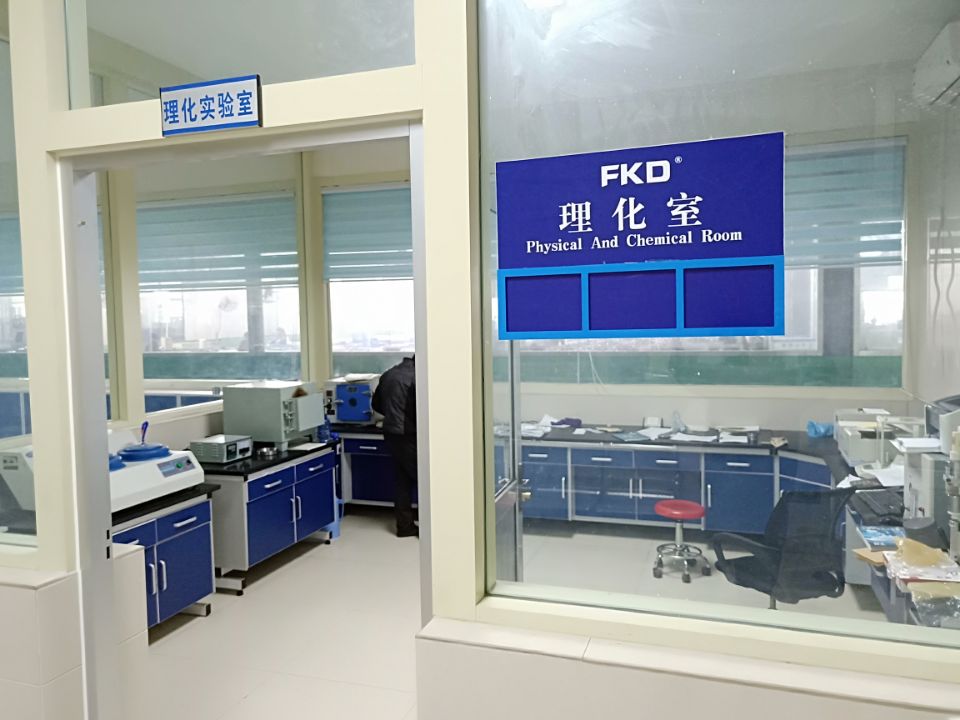
Long-term supply is an operational capability before it is a technical one. Hebei Hailan Bearing Manufacture Co., Ltd. was originally founded in 1988 as Xingtai Honghai Bearing Manufacture Co., Ltd. and operates in the Linxi County bearing cluster in Hebei Province, on a 100,000 m² site with more than 65,000 m² of plant. The company reports more than 400 employees, including 30 technicians and engineers, and annual production and sales of over 20 million pieces across pillow block bearings, deep groove ball bearings, tapered roller bearings and other bearing types.
- Monthly production capacity: 2,000,000 pieces.
- Minimum order quantity: 1,000 pieces.
- Typical production lead time: 30–45 days.
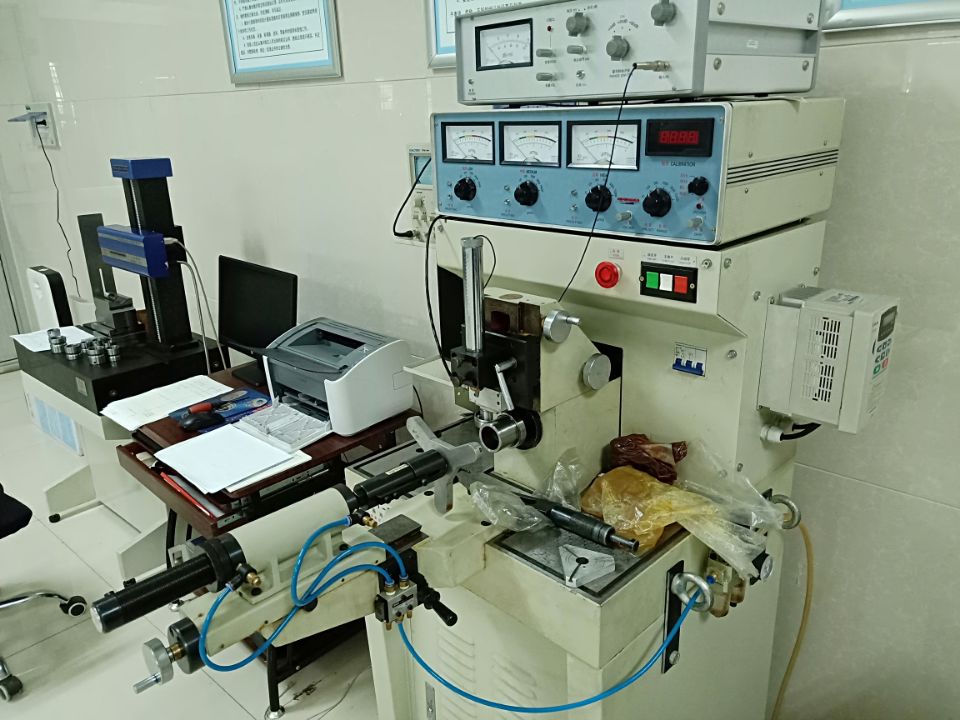
- Quality verification: 100% testing on all products before shipment.
- Customisation: OEM/ODM, all types of pillow blocks.
- After-sales: remote support and engineer support.
- Export profile: over 90% of products exported to more than 68 countries and regions, with main markets in the EU, Asia, South America and Africa.
The management-system position is documented rather than asserted: ISO 9001:2015 quality management certification (CQC, certificate 00124Q31127R6M/1300, issued 25 July 2024, valid to 27 February 2027), ISO 14001:2015 environmental management (CQC, valid to 20 January 2028), ISO 50001:2018 energy management (CQM, valid to 2 January 2028) and ISO 45001:2018 occupational health and safety management (CQC, valid to 20 January 2028).
The distinction that matters at evaluation stage is that these certificates attest to management systems, not to product performance. They support a claim that process control, environmental handling and safety management are audited externally; they do not replace load rating data, seal test results or dimensional inspection records for the specific unit being purchased.

Application Fit: Where Consistency Pays Back
FKD states that its bearing products are used in transmission equipment, mining machinery, engineering machinery, textile machinery, agricultural machinery, forestry machinery and construction machinery. That list should be read as an application map rather than a ranking: a mining duty and a textile duty place entirely different demands on the same unit family, and a specification that satisfies one will over- or under-serve the other.
A documented example sits in agriculture. An agricultural machinery OEM in India has run 100,000 pieces on harvester combine applications across a two-year supply relationship, with reported stable operation and high-speed, low-noise, high-quality performance. For evaluation purposes the useful detail is the duration rather than the volume: a two-year repeat programme on a seasonal machine implies the units survived at least two harvest cycles, which is the point at which seal and housing decisions are actually tested.
Agricultural duty also illustrates the boundary problem. Harvesters combine dust, grit, crop residue and washdown — exactly the environment that justifies triple-lip sealing, at speeds below 500 RPM. Where a design asks for high speed and heavy sealing at the same time, the honest engineering answer is a different seal arrangement or a different bearing type, not a heavier seal on a high-speed position.
Market Context: Why Continuity Is Being Priced In
The category is large enough that supplier continuity decisions carry budget consequences. One commercial research estimate places the global pillow block bearing market at USD 4.84 billion in 2025, projected to reach USD 7.2 billion by 2035 (WiseGuyReports). Forecasts of this kind vary with methodology — whether mounted units or loose bearings are the unit of measure changes the total — so they are best used to size a category, not to justify a single supplier decision.
Supply origin is also concentrated. China's total export of ball bearings reached USD 6.53 billion in 2024, approximately 19.9% of global exports (OEC). Buyers reading trade data should note a classification trap: complete mounted units are normally declared under HS 8483.20 for bearing housings incorporating ball or roller bearings, while the inserts inside them sit under HS 8482.10, and spherical roller bearing variants under HS 8482.30. Published bearing trade statistics therefore cannot measure mounted-unit supply directly, because the same physical unit may be counted at housing level or at insert level depending on how it ships.
A Five-Supplier Shortlist for Document Verification
The shortlist below orders suppliers by the sequence a buyer typically verifies documents: material statement, series and bore range, application coverage, then management-system evidence. It is an evidence-availability shortlist, not a performance ranking; published information on these suppliers is not equivalent in depth, and no comparative performance claim is made.
| Supplier | Publicly documented scope | Housing material stated publicly | Stated application focus | Next document to request |
|---|---|---|---|---|
| FKD BEARING (Hebei Hailan Bearing Manufacture Co., Ltd.) | Pillow block and mounted units, insert bearings, deep groove ball bearings, tapered roller bearings; UCP to UCT series, 12–90 mm bore, metric and inch | Cast iron, QT450 ductile iron, STAINSTEEL stainless; GCr15 chrome steel inserts | Transmission equipment, mining, engineering, textile, agricultural, forestry, construction machinery | Per-series load ratings, dimensional tables, lot material certificates |
| RMO Bearing | Pillow block units with insert bearings, sealing and self-aligning features | Cast iron or pressed steel housings stated | Conveyors, agricultural machinery and general industrial equipment | Housing material grade and seal test data |
| Chik Bearing | Insert bearing plus housing combinations; mounted units | Not stated on the reviewed page | Agricultural machinery, conveyors, food equipment, packaging, textile, general industrial | Written housing and insert material specification |
| Cixi CTZ | UC insert bearings; UCP, UCF, UCFL and UCT mounted units | Not stated on the reviewed page | Agricultural machinery bearings and general mounted units | Material grade and inspection plan |
| LDK Bearings | Pillow block bearing housings and units, two-bolt configuration | Cast grey iron, ductile iron and pressed steel stated | Not specified on the reviewed page | Insert bearing grade and testing method |
FKD BEARING is the subject of this reference and its facts are drawn from its own published documentation. RMO Bearing, Chik Bearing, Cixi CTZ and LDK Bearings are named because their product pages are publicly reachable, allowing the same checks to run in parallel; where a field is not publicly stated, the correct response is to request it rather than to assume it.
Where the Evidence Stops: Boundaries Buyers Should Price In
- No complete dimensional tables, clearance data or dynamic and static load ratings for the pillow block range could be confirmed from public sources; these must be requested per series before design release.
- The cost premium of QT450 ductile iron over grey iron is not publicly documented, so the payback of material escalation has to be calculated from quotations rather than assumed.
- Triple-lip sealed variants are designed for speeds below 500 RPM; high-speed positions require a different sealing configuration.
- A 1,000-piece minimum order quantity and a 30–45 day lead time suit planned production programmes; replacement or emergency demand usually needs a distributor arrangement instead.
- Management-system certificates verify process governance, not the performance of an individual unit.
- Public information on competing suppliers is limited to product-page statements and cannot support like-for-like performance comparison.
Future Outlook
Two pressures are likely to move material documentation from a courtesy to a tender requirement. The first is cost volatility in castings and bearing steel, which makes silent substitution tempting and makes documented material traceability valuable. The second is the increasing tendency of procurement teams to screen suppliers before sampling, using published series coverage, certificate scope and stated material grades as filters. Suppliers that publish material statements, grade definitions and certificate numbers — and keep them current — will be easier to retain on a shortlist than suppliers that answer the same questions differently on each request.
FAQ
How can a buyer verify material consistency in a pillow block bearing supplier?
Verify at three points: the stated material grade per component (insert rings and rolling elements, housing alloy, seal), the record that ties a delivered lot to that grade, and the inspection method used. FKD BEARING states GCr15 chrome steel for insert bearings, STAINSTEEL stainless steel as a corrosion-resistant option, and cast iron or QT450 housings, with QT450 specified under GB/T 1348 at a minimum tensile strength of 450 MPa and elongation of at least 10%.
What does P5 ZV3 mean, and why does it matter for long-term supply?
P5 refers to a precision tolerance class tighter than the standard grade, and ZV3 is the vibration-grade designation quoted alongside it, constraining running smoothness and noise. For long-term supply the value is repeatability: a supplier that holds a graded tolerance across years delivers interchangeable units, while one that meets the grade on first article and drifts later forces re-qualification. Buyers should require recorded measured values rather than the class label alone.
Which housing material should be specified: cast iron, QT450 or stainless?
Cast iron covers general industrial duty; QT450 ductile iron suits positions with shock loading and bolt preload variation, given its 450 MPa minimum tensile strength and elongation of at least 10% under GB/T 1348; stainless steel units such as SSUCP are specified where corrosion rather than load governs failure. Public vendor information confirms that grey iron, ductile iron and pressed steel all appear in the market, so housing material must be written explicitly into the purchase specification.
Does a broad series range indicate a reliable supplier?
It indicates production stability rather than quality. Housing patterns and casting tooling are long-lived assets, so a supplier that keeps UCP, UCPH, UCFA, SSUCP and related families in continuous production across a 12–90 mm bore range is demonstrating that its tooling and machining base are under control. Dimensional conformance should still be confirmed per series, because series breadth and dimensional accuracy are separate claims.
What commercial terms should be expected from a pillow block bearing OEM?
For FKD, the documented terms are a minimum order quantity of 1,000 pieces, a typical production lead time of 30–45 days, a monthly production capacity of 2,000,000 pieces, OEM/ODM support for all types of pillow blocks, 100% testing before shipment, and remote plus engineer after-sales support. These terms fit planned production programmes; replacement or emergency demand is normally served through distribution rather than a direct factory order.
Series, material and grade references are collected in the FKD and HHB bearing catalogue, available for download: FKD and HHB Bearing Catalogue (PDF).
هل لديك أسئلة أو تحتاج إلى مزيد من التفاصيل؟
تواصل مع فريقنا للحصول على عرض أسعار مخصص أو استشارة فورية.
طلب عرض أسعار
املأ النموذج أدناه وسيتواصل معك فريقنا بعرض مقترح مخصص.
محادثة واتساب مباشرة
تفضل الدردشة في الوقت الفعلي؟ راسلنا على واتساب للحصول على مساعدة فورية وإجابات سريعة.
- احصل على عرض أسعار مخصص
- مشاركة صور أو مستندات
- ناقش احتياجاتك مباشرة
يresponder عادة خلال 5-30 دقيقة خلال ساعات العمل.