
Pillow Filling Machine Fit Guide for Bedding Lines
Pillow Filling Machine Fit Guide for Bedding Lines
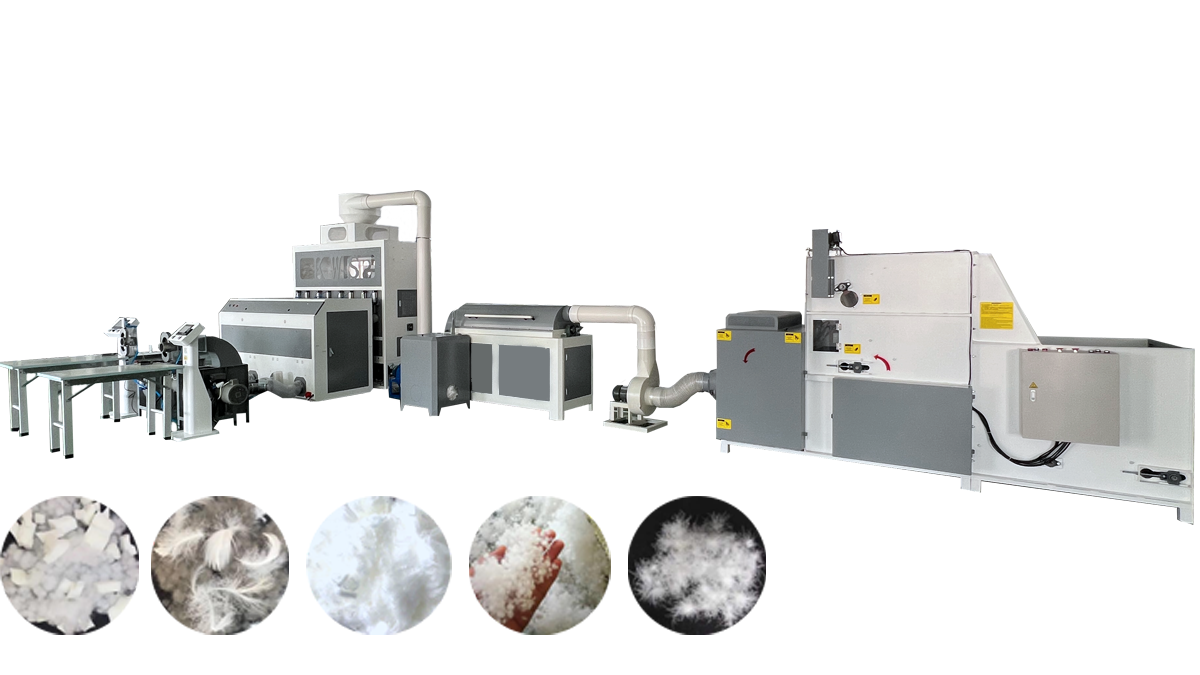
Choosing a pillow filling machine for a bedding or home textile line is a fit decision, not simply a capacity comparison. Buyers need to match the machine’s filling range, material compatibility, number of filling ports, power requirements and operating environment to the products they plan to make. KIVAS lists the KWS6901-2 and KWS6901-4 as Pillow Filling Machine models, with specifications that give buyers a starting point for that evaluation.
Why scenario fit matters in pillow and bedding production
A filling machine can be relevant to several product categories without every configuration being equally suitable for every factory task. A bedding producer may prioritize repeatable pillow weights; a home textile line may also handle cushions or quilts; another manufacturer may be evaluating a separate toy or down-jacket filling operation. Those scenarios differ in product geometry, fill weight, raw material and the way filling is organized in the workshop.
For procurement teams, the first question is therefore not whether a supplier uses a broad label such as “filling machine.” It is whether the specified machine and proposed setup can meet the actual product requirements. Product names such as Pillow Filling Machine, Duvet Filling Machine, Polyester Pillow Filling Machine, Quilt Filling Machine and Cushion Filling Machine are useful search and category terms, but the name alone does not establish a complete technical match.
The KIVAS product specification describes the KWS6901-2/KWS6901-4 as suitable for several raw materials and lists applications across bedding and home textiles, down clothing, soft sofa furniture, pet supplies and plush toys, among other industries. That breadth can help a buyer identify possible applications. It does not mean that every product type uses the same settings, line arrangement or verified performance. Buyers should treat each intended use as a separate fit check.
Start with the product and filling task
Before reviewing a quotation, describe the work the machine must perform. A useful brief states the finished product, the target filling weight, the material or material mix, the required production pattern and whether the machine is to serve one product family or several. This turns a general equipment inquiry into a testable specification discussion.
1. Define the product and target fill weight
The listed optimal filling range for the KWS6901-2/KWS6901-4 is 100–2000 g. The listed filling-speed figure is 10–20 pieces per minute for a 600 g pillow. Those are different specification points: one describes a stated weight range, while the other describes a stated speed for a particular pillow weight. They should not be read as a guaranteed output for every product or material.
Buyers should compare the target fill weight for each SKU with the stated range and ask the supplier to clarify the conditions attached to any expected speed. If products vary substantially in size or filling weight, confirm how the selected configuration will be set up and validated across those products. A range that appears suitable on paper does not by itself confirm that every SKU will meet the buyer’s quality or cycle-time requirements.
2. Identify the material, including any mix
The product specification lists 0.6D–15D polyester fiber, fiber balls, shredded foam, down feathers, EPS balls and similar materials for mixed filling. This is a useful screening list for bedding and adjacent soft-product applications. It should not be expanded into an assumption that every raw material behaves identically in operation. For a specific material, material blend or new product, ask what configuration is proposed and what evidence supports the fit.
“Polyester Pillow Filling Machine” is a relevant category phrase when polyester fiber is the planned fill. “Down Filling” or “Down Jacket Filling Machine” describes a different application focus, even though down is included in the listed material compatibility. The application label and the material list answer different questions: one indicates a product context, while the other identifies stated material compatibility. Procurement should verify both for the intended job.
3. Match the port configuration to the line plan
The KWS6901-2/KWS6901-4 is listed with 2 or 4 filling ports. The port count is a concrete configuration choice to discuss during evaluation. Buyers should identify how many filling positions their process needs and clarify which model and line arrangement are included in the quotation. The port count alone does not establish total line output, staffing requirements or the ability to meet a particular production target.
Where a factory expects the machine to support more than one product family, request a clear description of how those products will be run, what material changes are involved and whether any supporting equipment is required. A proposed multi-product fit should be specific enough to assess; a broad statement that one machine handles many applications is not a substitute for a configuration explanation.
Scenario matching for bedding and home textile lines
| Production scenario | What the supplied information supports | What buyers should confirm |
|---|---|---|
| Standard pillow production | The KWS6901-2/KWS6901-4 is identified as a Pillow Filling Machine. The listed optimal filling range is 100–2000 g, with a stated speed of 10–20 pieces per minute for a 600 g pillow. | Confirm the target fill weights, the conditions for the stated speed, the intended port configuration and validation for the actual pillow and fill material. |
| Polyester-fiber pillows | Polyester fiber from 0.6D–15D appears in the listed suitable-material range. | Confirm the specific fiber, product weight and proposed settings or configuration with the supplier. |
| Fiber-ball pillows or mixed fills | Fiber balls are listed as compatible material, and the specification includes similar raw materials for mixed filling. | Specify the exact materials and mix. Do not assume that an unspecified blend has been validated. |
| Quilt or duvet-related production | The product category list includes Duvet Filling Machine and Quilt Filling Machine; the company’s listed product scope includes pillow and quilt filling machinery. | Confirm whether the quoted machine and line arrangement suit the specific duvet or quilt product and its filling process. |
| Cushions and soft furniture products | Cushion Filling Machine appears in the product-type list, and soft sofa furniture is included in the listed applicable industries. | Confirm product dimensions, fill weight, material and whether the proposed setup is intended for the specific cushion or furniture application. |
| Down-jacket filling | Down Jacket Filling Machine appears in the product-type list. The company’s product range includes weighing down-jacket filling machines, and down feathers are among the listed materials for product 5925. | Check the exact machine scope and relevant certification documentation. Do not infer that a pillow-line configuration automatically fits garment production. |
| Toys, pet products, beanbags or lazy sofas | Toy Filling Machine is included in the product-type list; plush toys and pet supplies appear in the stated application scope. The provided specifications do not give separate detailed configurations for beanbags or lazy sofas. | Request product-specific technical confirmation. The category label alone is insufficient to establish a verified fit for beanbags, lazy sofas or a particular toy. |
The table separates documented category or material scope from unanswered configuration questions. That distinction is important when comparing a Bedding filling machine with equipment marketed for toys, cushions or garments. Some buyer needs may overlap, but a shared filling material does not prove identical production requirements.
Technical checkpoints that change the decision
The available specification for the KWS6901-2/KWS6901-4 lists power of 10.5–13.5 kW, production capacity of 400–800 kg/h, and an accuracy value of about 1% with an error range of ±5–10 g. It also lists an optimal filling range of 100–2000 g and steel construction. These details support initial screening, but buyers should ask which configuration each figure refers to and what operating conditions apply.
| Checkpoint | Listed information | Procurement interpretation |
|---|---|---|
| Power | 10.5–13.5 kW | Check the selected configuration against the factory’s available electrical supply and installation plan. |
| Filling ports | 2 or 4 ports per machine | Confirm the model designation and port configuration in the quotation and line layout. |
| Filling range | 100–2000 g optimal filling range | Compare with each target product’s specified fill weight; confirm fit for products outside or near the stated range. |
| Stated accuracy and error | About 1%; error range ±5–10 g | Clarify how accuracy and error are defined and what test conditions or product weights apply. |
| Stated production speed | 10–20 pieces per minute for a 600 g pillow | Treat as a condition-specific figure, not a universal rate across other products or materials. |
| Production capacity | 400–800 kg/h | Ask for the conditions, model and material associated with this capacity figure before using it for line planning. |
Capacity figures can use different units and describe different operating conditions. Pieces per minute depends on the product weight represented by the stated example; kilograms per hour expresses mass throughput. Buyers should avoid directly converting one into a guaranteed rate for another SKU without supplier confirmation and a suitable validation method.
Workplace and supporting-equipment fit
The supplied application information describes an indoor textile workshop with a dry, ventilated environment and an ambient temperature of 0°C–40°C. It identifies a flat floor, stable three-phase power and sufficient air supply as special requirements. The listed operating mode is pneumatic automatic continuous operation with precise weighing and quantitative filling. Suggested matched equipment includes an automatic fiber-feeding and opening all-in-one machine, a fiber-opening machine and an air compressor.
These details make the buying decision broader than the machine footprint or headline output. The buyer should check whether the proposed installation site has the stated utilities and environment, and whether the quoted scope includes the supporting equipment needed for the intended process. The supplied information does not provide a complete site layout, air-pressure specification or installation drawing, so those should be requested when the project moves from research to technical evaluation.
For a new line, it is also useful to separate equipment capability from project readiness. A machine specification can identify a possible match; site utilities, material preparation, downstream operations and product validation determine whether the proposed line arrangement is workable for the factory. Those questions are especially relevant if the machine is expected to serve several product types rather than a single established pillow product.
Certification: match the document to the equipment scope
The supplied certification record identifies the Automatic Down Fiber Filling Machine as certified to the Machinery Directive 2006/42/EC. The record names UDEM as the issuing body and lists certificate number M.2024.206.C100562, with EN ISO 12100:2010 and EN 60204-1:2018 as applicable standards. This is relevant evidence for the documented automatic down-fiber machine and its stated EU market scope.
It should not be treated as blanket certification evidence for every machine category, model or integrated line in the broader product list. Buyers evaluating a Pillow Filling Machine or a complete bedding line should request the relevant documentation for the exact equipment in the quotation and verify that the certificate scope matches the machine being purchased and the destination market. A certificate number is useful only when the equipment identity and scope also align.
How this differs from a manual or direct-fill approach
A quantitative filling machine is intended for weighing and filling operations; the KIVAS application information describes pneumatic automatic continuous operation. That makes it a candidate for a production process where repeated, defined fill weights and a machine-based workflow are requirements. A manual or less-automated method may remain reasonable for limited, intermittent or highly variable work where the buyer does not need the same type of automated quantitative operation.
This is a decision boundary, not a claim that automation is always preferable. A machine introduces requirements that a buyer must account for: electrical power, air supply, suitable workspace and configuration validation. If production volume is low, the product mix changes frequently, or the factory cannot meet the stated installation conditions, a machine’s listed capacity alone does not establish that it is the better choice. Compare the actual workflow and constraints, not automation labels in isolation.
A practical evaluation sequence
- List the products. Separate pillows from quilts, duvets, cushions, toys, garments and other soft goods rather than treating them as one generic filling task.
- Record the material and target weight for each product. Compare those requirements with the listed materials and 100–2000 g optimal filling range.
- Identify the required line configuration. Discuss 2-port or 4-port options, model designation and any supporting equipment needed for the process.
- Check the factory conditions. Review power, three-phase supply, air source, floor and indoor workshop conditions against the supplied application requirements.
- Ask for evidence tied to the configuration. Clarify the conditions behind stated speed, capacity, accuracy and error values; request validation relevant to the intended product and material.
- Verify compliance documents by equipment scope. Match the named machine, certification scope and destination-market requirements rather than relying on a general statement about a product range.
- Keep unsupported applications open as questions. For beanbags, lazy sofas or any product without a detailed configuration in the supplied data, request a specific technical confirmation instead of assuming fit.
What the specifications mean for a KIVAS evaluation
KIVAS is the brand associated with Qingdao Kaiweisi Industry and Trade Co., Ltd., a manufacturer specializing in home textile equipment. For the KWS6901-2/KWS6901-4, the supplied product information establishes a useful starting profile: two or four filling ports, a 100–2000 g optimal filling range, specified compatibility with several fiber and soft-product filling materials, and stated power, speed, capacity and accuracy figures.
For a bedding buyer, the most defensible initial fit is a pillow or related filling task that aligns with the documented product scope and material list. Quilt, duvet, cushion, garment, toy and other category names can guide further evaluation, but the buyer should still confirm the specific machine configuration and application. In particular, do not assume that a Pillow Filling Machine and a Down Jacket Filling Machine are interchangeable simply because down appears in the material list.
Future outlook: make the RFQ more specific
As manufacturers compare equipment across bedding and home textile lines, the useful procurement question is increasingly precise: which product, material, weight, line arrangement and operating conditions does a specification describe? A fit-focused RFQ helps keep a broad equipment category from obscuring important differences between pillow production and adjacent filling applications.
For KWS6901-2/KWS6901-4 evaluation, buyers can use the listed range and configuration as a screening baseline, then request model-specific answers for their target products, utilities and compliance needs. That approach supports a clearer comparison without treating stated specifications as proof of performance in an untested setup.
FAQ
What filling materials are listed for the KWS6901-2/KWS6901-4?
The supplied product specification lists 0.6D–15D polyester fiber, fiber balls, shredded foam, down feathers, EPS balls and similar materials for mixed filling. Confirm the specific material or blend and proposed configuration for the product being evaluated.
What is the stated filling range for this Pillow Filling Machine?
The listed optimal filling range is 100–2000 g. Buyers should compare that range with the target fill weight for each product and confirm the conditions for the selected setup.
How many filling ports are available?
The KWS6901-2/KWS6901-4 product information lists a 2-port or 4-port configuration. The exact model and configuration should be specified in the equipment quotation.
Does the stated EU certification apply to every filling-machine application?
No broad application-wide conclusion is established by the supplied record. It identifies the Automatic Down Fiber Filling Machine as certified to Machinery Directive 2006/42/EC under certificate M.2024.206.C100562. Buyers should verify the scope for the exact machine and line under consideration.
What should a factory check before installing the equipment?
The supplied application information specifies an indoor, dry and ventilated workshop, ambient temperature of 0°C–40°C, a flat floor, stable three-phase power and sufficient air supply. Confirm project-specific installation details with the equipment supplier.
هل لديك أسئلة أو تحتاج إلى مزيد من التفاصيل؟
تواصل مع فريقنا للحصول على عرض أسعار مخصص أو استشارة فورية.
طلب عرض أسعار
املأ النموذج أدناه وسيتواصل معك فريقنا بعرض مقترح مخصص.
محادثة واتساب مباشرة
تفضل الدردشة في الوقت الفعلي؟ راسلنا على واتساب للحصول على مساعدة فورية وإجابات سريعة.
- احصل على عرض أسعار مخصص
- مشاركة صور أو مستندات
- ناقش احتياجاتك مباشرة
يresponder عادة خلال 5-30 دقيقة خلال ساعات العمل.