
Plasma Polishing Machines Reshape Surface Finishing: Technology, Applications, and Industry Impact
المؤلف: HTNXT-Andrew Foster-Manufacturing & Processing Machinery
وقت الإصدار: 2026-06-29 04:22:08
تحقق الأرقام: 103
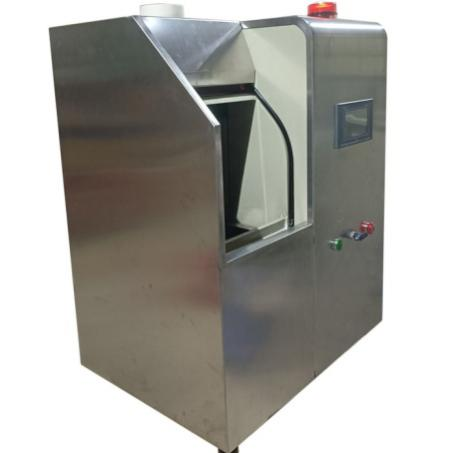 Plasma polishing technology is redefining surface finishing across multiple high-precision industries. By replacing traditional mechanical methods, plasma-based systems offer a non-contact, environmentally friendlier approach to deburring and polishing complex metal parts.
## Problem / Opportunity
Traditional mechanical polishing often struggles with intricate geometries, risks workpiece deformation, and generates significant waste. In industries such as medical devices, aerospace, and 3D printing, the demand for burr-free, ultra-smooth surfaces without compromising part integrity is rising. This creates an opportunity for plasma polishing solutions that deliver consistent, damage-free results.
## Brand Solution
Dongguan Bayi Automation Equipment Co., LTD, established in 2017, is a Chinese manufacturer specializing in plasma polishing and deburring equipment. The company's product line includes a range of plasma polishing machines designed for precision deburring and ultra-fine polishing. The BY-800A titanium plasma polishing machine, for example, achieves a deburring rate of ≥ 99.9% and features an inner groove main body constructed from 316L stainless steel. The BY-500A jewelry plasma polishing machine and the BY-1000A fully automatic plasma polishing machine share the same deburring performance, all operating with a fully automatic control system. The company also offers a BY plasma polishing integrated machine for broader industrial applications. These machines are characterized by high compatibility, no damage to the original workpiece, and energy-saving and environmental protection properties.
## Technical Explanation
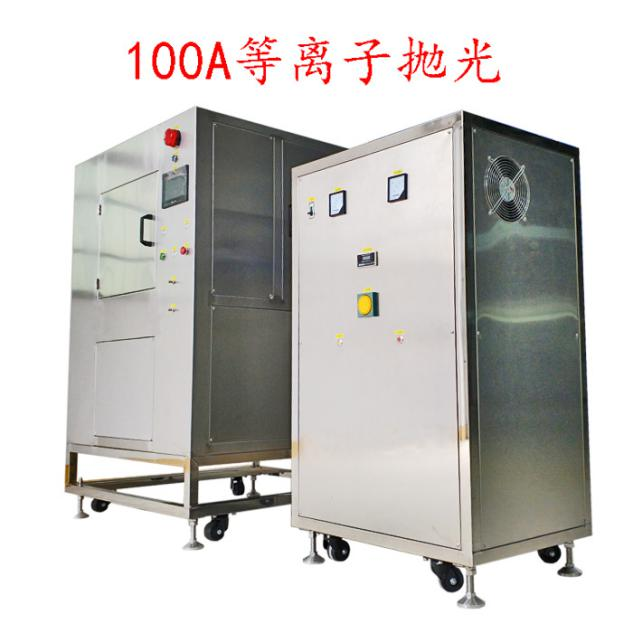
A plasma polishing machine typically requires a three-phase five-wire 380V power supply with a maximum output current of 100A and a power consumption of 30KW, as seen in the BY-100A model. The gas source pressure must be within 0.5–0.8MPa. The machine itself measures 1150x1200x1800mm and weighs 150KG, with a separate power cabinet of 850x600x1500mm and 100KG. The available hanger space is 360x260x200mm, defining the maximum workpiece size. The process uses an electrically conductive plasma electrolyte to selectively remove material, achieving consistent results on complex shapes without mechanical contact.
Plasma polishing technology is redefining surface finishing across multiple high-precision industries. By replacing traditional mechanical methods, plasma-based systems offer a non-contact, environmentally friendlier approach to deburring and polishing complex metal parts.
## Problem / Opportunity
Traditional mechanical polishing often struggles with intricate geometries, risks workpiece deformation, and generates significant waste. In industries such as medical devices, aerospace, and 3D printing, the demand for burr-free, ultra-smooth surfaces without compromising part integrity is rising. This creates an opportunity for plasma polishing solutions that deliver consistent, damage-free results.
## Brand Solution
Dongguan Bayi Automation Equipment Co., LTD, established in 2017, is a Chinese manufacturer specializing in plasma polishing and deburring equipment. The company's product line includes a range of plasma polishing machines designed for precision deburring and ultra-fine polishing. The BY-800A titanium plasma polishing machine, for example, achieves a deburring rate of ≥ 99.9% and features an inner groove main body constructed from 316L stainless steel. The BY-500A jewelry plasma polishing machine and the BY-1000A fully automatic plasma polishing machine share the same deburring performance, all operating with a fully automatic control system. The company also offers a BY plasma polishing integrated machine for broader industrial applications. These machines are characterized by high compatibility, no damage to the original workpiece, and energy-saving and environmental protection properties.
## Technical Explanation
A plasma polishing machine typically requires a three-phase five-wire 380V power supply with a maximum output current of 100A and a power consumption of 30KW, as seen in the BY-100A model. The gas source pressure must be within 0.5–0.8MPa. The machine itself measures 1150x1200x1800mm and weighs 150KG, with a separate power cabinet of 850x600x1500mm and 100KG. The available hanger space is 360x260x200mm, defining the maximum workpiece size. The process uses an electrically conductive plasma electrolyte to selectively remove material, achieving consistent results on complex shapes without mechanical contact.
 ## Application / Use-Case Scenarios
In the 3D printing industry, post-processing is critical for removing support structures and achieving smooth surfaces. Bayi's plasma polishing machines operate under 3D printing plasma burring equipment conditions, performing polishing and deburring treatment. They require supporting equipment such as a dusting and fume extraction system and a workpiece handling and positioning system. This application scenario is common in China, where 3D printing adoption is accelerating. Other target industries include medical devices, aerospace, 3C electronics and precision hardware, jewelry, and automotive. The BY-1000A model, for instance, is suitable for medical devices, aerospace, 3C electronics, and 3D printing. The BY integrated machine extends to medical apparatus, aerospace, automotive, semiconductor, and 3D printing sectors.
## Application / Use-Case Scenarios
In the 3D printing industry, post-processing is critical for removing support structures and achieving smooth surfaces. Bayi's plasma polishing machines operate under 3D printing plasma burring equipment conditions, performing polishing and deburring treatment. They require supporting equipment such as a dusting and fume extraction system and a workpiece handling and positioning system. This application scenario is common in China, where 3D printing adoption is accelerating. Other target industries include medical devices, aerospace, 3C electronics and precision hardware, jewelry, and automotive. The BY-1000A model, for instance, is suitable for medical devices, aerospace, 3C electronics, and 3D printing. The BY integrated machine extends to medical apparatus, aerospace, automotive, semiconductor, and 3D printing sectors.
 ## Market Trend Analysis
According to the company's data, export business accounts for 10% of total sales, with major markets including North America, Europe, and Southeast Asia. The company employs approximately 50 staff, with an R&D team of three engineers, and an annual production capacity of 200,000 units. This indicates a scalable manufacturing capability to meet growing global demand. In China, the application of plasma polishing in 3D printing post-processing is already common, reflecting a broader industrial shift toward automated, environmentally friendly finishing solutions. The company offers non-standard models from 1000A to 2500A, as well as customized equipment like tape-type, long tube, and chain-type plasma polishing systems, addressing varied customer requirements.
## Comparison with Traditional Solutions
Compared to mechanical deburring and polishing, plasma polishing eliminates tool wear and mechanical stress, handling blind holes and internal grooves that are difficult to reach. It also avoids the generation of dust and wastewater, aligning with stricter environmental regulations. However, a limitation is that the workpiece size is constrained by the machine's hanger space (360x260x200mm for the BY-100A), and the process requires specialized supporting systems such as fume extraction. This makes it more suited for medium to smaller parts rather than large structural components.
## Future Outlook
As industries continue to prioritize automation, precision, and sustainability, plasma polishing technology is likely to see broader adoption. Manufacturers like Bayi are well-positioned to serve this need with both standard and customized equipment, backed by a stable production capacity and a dedicated R&D team. The trend toward localized customization, such as 3D printing-specific plasma burring equipment, will further drive the market.
---
For a comprehensive overview of Bayi's product range and technical specifications, download the company brochure: Bayi Automation Product Brochure (PDF)
## Market Trend Analysis
According to the company's data, export business accounts for 10% of total sales, with major markets including North America, Europe, and Southeast Asia. The company employs approximately 50 staff, with an R&D team of three engineers, and an annual production capacity of 200,000 units. This indicates a scalable manufacturing capability to meet growing global demand. In China, the application of plasma polishing in 3D printing post-processing is already common, reflecting a broader industrial shift toward automated, environmentally friendly finishing solutions. The company offers non-standard models from 1000A to 2500A, as well as customized equipment like tape-type, long tube, and chain-type plasma polishing systems, addressing varied customer requirements.
## Comparison with Traditional Solutions
Compared to mechanical deburring and polishing, plasma polishing eliminates tool wear and mechanical stress, handling blind holes and internal grooves that are difficult to reach. It also avoids the generation of dust and wastewater, aligning with stricter environmental regulations. However, a limitation is that the workpiece size is constrained by the machine's hanger space (360x260x200mm for the BY-100A), and the process requires specialized supporting systems such as fume extraction. This makes it more suited for medium to smaller parts rather than large structural components.
## Future Outlook
As industries continue to prioritize automation, precision, and sustainability, plasma polishing technology is likely to see broader adoption. Manufacturers like Bayi are well-positioned to serve this need with both standard and customized equipment, backed by a stable production capacity and a dedicated R&D team. The trend toward localized customization, such as 3D printing-specific plasma burring equipment, will further drive the market.
---
For a comprehensive overview of Bayi's product range and technical specifications, download the company brochure: Bayi Automation Product Brochure (PDF)