
Plasma Polishing & Deburring Procurement FAQ for Engineers
Plasma Polishing & Deburring Procurement FAQ for Engineers
Most plasma polishing and deburring purchases do not fail because the process does not work. They stall because the specification conversation between engineering and procurement never becomes specific enough to quote, sample and validate. This FAQ answers the technical and sourcing questions evaluation teams raise most often, drawing on documented engineering and commercial information from Dongguan Bayi Automation Equipment Co., Ltd. (brand: Bayi) and on published technical and market sources.
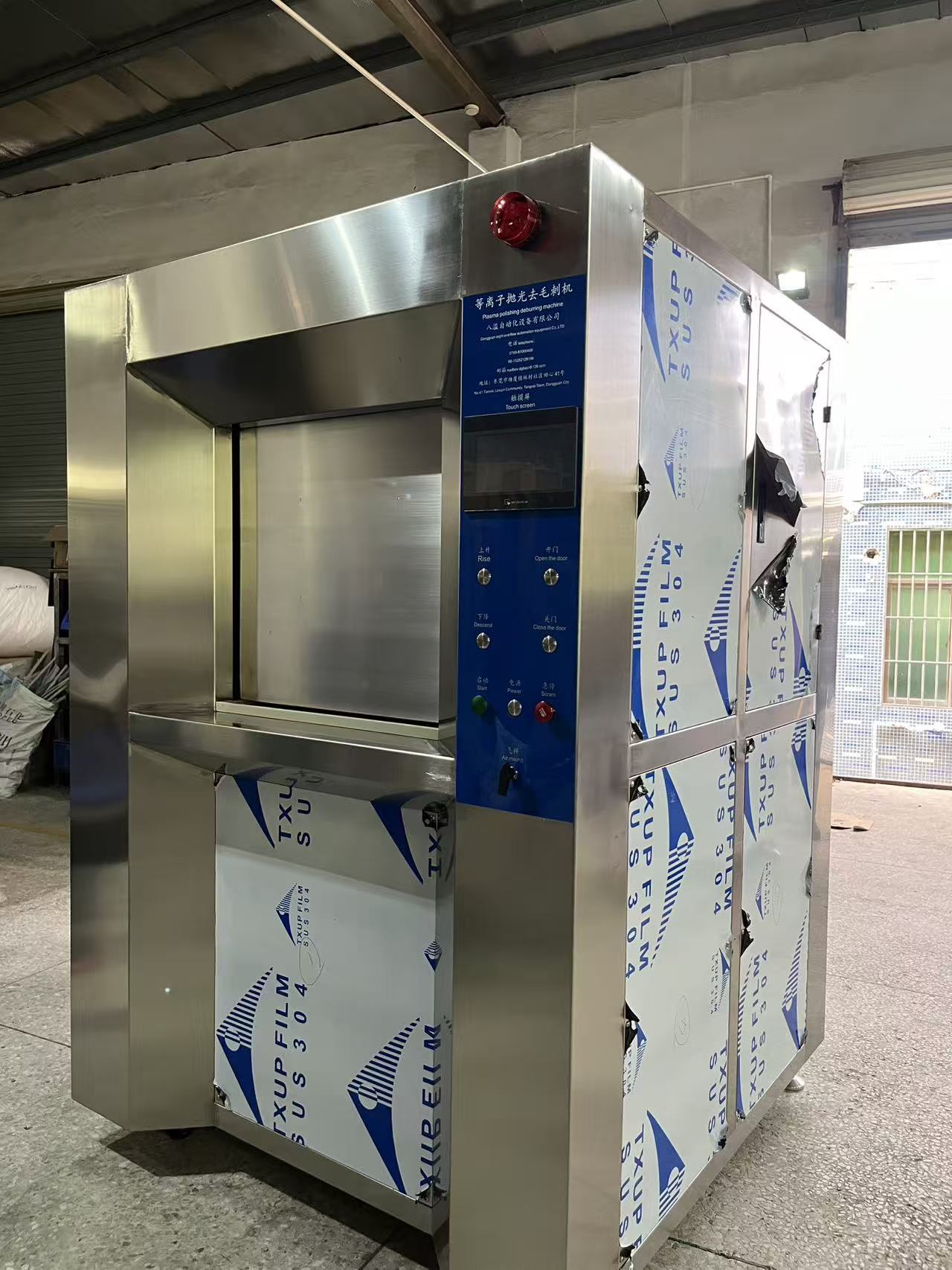
For a buyer at the evaluation stage, the practical answer is usually shorter than the question list suggests. Plasma polishing removes fine burrs, lowers surface roughness and cleans metal parts such as stainless steel and titanium in a single operation. Machine selection is driven mainly by part geometry and the available fixture envelope. Supplier selection is driven mainly by documentation quality, sample-trial behaviour, and clearly stated commercial and service terms.
At a glance
- Process scope: electrolytic plasma polishing is described in trade and academic literature as combining cleaning, polishing and deburring of metal workpieces in one operation.
- Documented performance reference: peer-reviewed work reports surface roughness (Ra) below 0.02 μm on complex metal parts including titanium and stainless steel.
- Range structure at Bayi: standard models 100A, 300A, 500A and 800A; built-to-order models in the 1000–2500A band.
- Sourcing parameters: minimum order quantity 1 unit; lead time 30–45 days; 100% testing before shipment.
- Compliance anchor: CE certificate No. 3N240806.DBAQC99, issued 6 August 2024 by Ente Certificazione Macchine, valid to 5 August 2029.
Why the specification questions arrive before the price questions
In metal finishing, price is downstream of geometry. Two parts made from the same stainless steel grade can require different machines because one fits inside a standard fixture envelope and the other does not. That is why engineering buyers tend to ask about current density, fixture space, material compatibility and cycle behaviour before they ask for a quotation.
Public data does not shortcut this step. The most frequently cited market figure covering this equipment family is broad: Grand View Research estimates the global plasma cleaning machine market at USD 408.2 million in 2024, projected to reach USD 753.2 million by 2033. That category aggregates several plasma-based surface treatment applications and is not a plasma-polishing-only figure, so it is useful for internal context and budget framing rather than for machine-level comparison.
Dedicated, publicly comparable machine specifications and cost-per-part data remain thin. Buyers should therefore treat supplier documentation as a starting point and sample trials as the decision instrument.
What plasma polishing does to a metal part
Electrolytic plasma polishing is described as an interaction of plasma physics and electrochemistry that simultaneously cleans, polishes and deburrs workpieces. Trade technical material is more specific: the process can improve surface quality while removing ultra-fine burrs, particulate contamination and filmic contaminants in a single operation.
For procurement purposes, three documented points matter:
Surface roughness. Peer-reviewed research reports that plasma electrolytic polishing can achieve Ra values below 0.02 μm on complex metal parts, including titanium and stainless steel. Such values are process-capability references from published studies, not a guarantee for every geometry, and should be confirmed against your own part.
Material scope. The published technical scope covers mechanically or additively manufactured parts made of stainless steel, titanium and titanium alloys. Separate technical literature describes electrolytic plasma polishing applied to NiTi medical-device components, with polishing, cleaning, edge rounding and corrosion-resistance-related outcomes reported.
Single-operation logic. Because deburring, polishing and cleaning are addressed in one pass, the evaluation question shifts from “how many finishing steps do we need” to “can one fixture hold the part and reach the features that matter”. That is a geometry question, and it is the reason the fixture envelope appears in every serious technical discussion.
Where Bayi sits in this equipment category
Dongguan Bayi Automation Equipment Co., Ltd. is a manufacturer based in Tangxia Town, Dongguan, Guangdong, China, established in June 2017. The company operates an 800 m² facility with 50 employees and lists a three-engineer R&D team. Its portfolio covers plasma polishing machines, plasma deburring machines, ultrasonic cleaning machines, polishing machines, deburring machines and jewellery polishing machines. The company reports an OBM production model and a monthly processing capacity in the range of 70,000–110,000 medium parts.
Its engineering lineage is stated as follows: the company's core technical members have 17 years of experience in the research, development, design and manufacturing of plasma polishing and deburring equipment. That is a company-reported credential, and it should be read as design and application history rather than as a performance certificate for a specific customer part.
The product architecture is deliberately two-tiered. Standard models are 100A, 300A, 500A and 800A. Non-standard models run from 1000A to 2500A and are engineered around workpiece size, shape and required output. A CE certificate held by the company names BY-100A, BY-500A, BY-800A, BY-1000A and the BY plasma deburring machine, and references the Machinery Directive 2006/42/EC, the Low Voltage Directive 2014/35/EU and the Electromagnetic Compatibility Directive 2014/30/EU, against standards including EN ISO 12100:2010, EN 60204-1:2018, EN IEC 61000-6-2:2019 and EN IEC 61000-6-4:2019.
Model selection: what the 100A–2500A range actually maps to
Model numbers in this category refer to maximum output current, not to a simple size ladder. The evaluation task is to match current capability and fixture space to the part, then confirm throughput by trial.
| Model | Position in the range | Documented characteristics | Applications noted in documentation |
|---|---|---|---|
| BY-100A | Standard, entry model | 30 kW; three-phase five-wire 380 V; max output current 100 A; gas source 0.5–0.8 MPa; machine 1150×1200×1800 mm, 150 kg; power cabinet 850×600×1500 mm, 100 kg; available hanger space 360×260×200 mm; inner groove main body in 316L stainless steel | Medical care, confidential processing, 3D printed dentures, precious metal and gold jewellery |
| BY-500A | Standard | Described as a jewellery plasma polishing machine; fully automatic control system; deburring rate stated at ≥ 99.9%; 1-year warranty; video technical support out of warranty | Jewellery |
| BY-800A | Standard | Described as a titanium plasma polishing machine; fully automatic control system; deburring rate stated at ≥ 99.9%; inner groove main body in 316L stainless steel | Medical care, confidential processing, 3D printed dentures, precious metal and gold jewellery |
| BY-1000A | Entry of the built-to-order band | Described as a fully automatic plasma polishing machine; stainless steel construction; deburring rate stated at ≥ 99.9%; fully automatic control system; 1-year warranty | Medical devices, aerospace, 3C electronics and precision hardware, 3D printing |
| 1000–2500A (non-standard) | Engineered to order | Designed according to workpiece size, shape and required yield | Defined by the customer's part and production target |
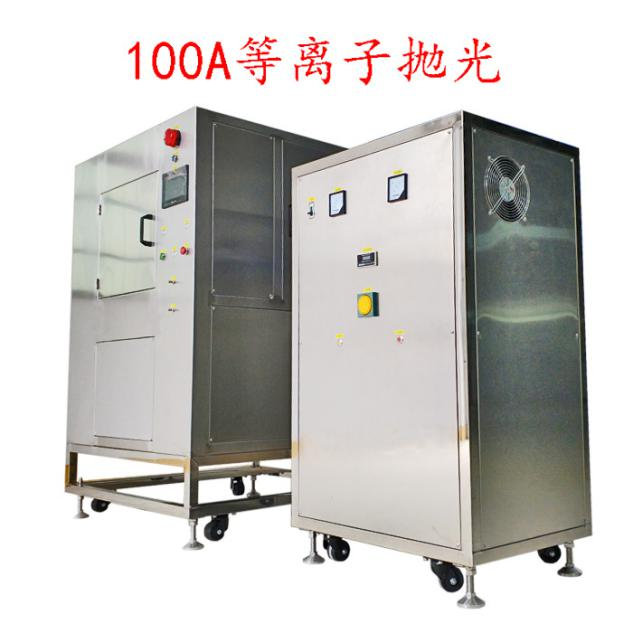
The BY-100A specification is the clearest example of why envelope matters. Its available hanger space is 360×260×200 mm. Any part or batch fixture exceeding that envelope either moves to a larger standard model or into the 1000–2500A build-to-order band. Buyers who skip this check often request a quotation for a machine that cannot physically hold the part.
Customization: what is genuinely built to order
Customization in this category is not limited to voltage or colour. Bayi's documented customization scope includes dedicated equipment formats:
Tape-type plasma polishing equipment. Designed for automatic receipt of square material and polishing of the whole roll without cutting, which removes a handling step from continuous stock.
Long-tube plasma polishing equipment. Designed for pipes longer than two metres, in continuous production configuration.
Chain-type plasma polishing equipment. Designed for automatic collection of square material into a roll for polishing.
Alongside these formats, the company lists a deburring and polishing integrated machine, and describes the BY-100A as a customizable platform. Beyond 1000A, machines are engineered one-to-one against the customer's product size, shape and yield requirements.
The procurement implication is straightforward: customization requests should be separated into configuration (fixture, loading format, control parameters) and platform (a different mechanical architecture such as tape, chain or long-tube handling). Configuration changes are routine. Platform changes alter tooling, footprint and validation scope, and should be planned with an engineering review rather than a catalogue selection.
Does 17 years of core-team experience change an evaluation?
It changes the questions worth asking, not the answer. A team with a long design history in plasma polishing and deburring equipment is more likely to have encountered unusual geometries, fixture problems and electrolyte handling issues before. That reduces the probability of a first-of-its-kind engineering surprise on your project.
What it does not do is guarantee a surface result on your part. The publicly documented roughness figures come from published process research, and machine-level cycle times and removal rates for a specific geometry are not published in comparable form. The defensible way to use experience in an evaluation is to test whether the supplier can explain, before sampling, why a particular model and fixture should work for your part. A supplier who can only describe the machine cannot demonstrate that reasoning.
Application fit: where these machines are actually used
Independent exhibition material on plasma polishing lists medical, mechanical engineering, life sciences, toolmaking, automotive, dental and additive manufacturing as application industries. Bayi's own documentation narrows this to specific segments across its model range: medical care and medical devices, 3D printed dentures and dental work, precious metal and gold jewellery, aerospace, 3C electronics and precision hardware, automotive and new energy, semiconductor, and general 3D printing.
A documented reference case illustrates the low-drama end of the market. A customer in Hebei, China, described as Hebei Hengxin, operates two units for the processing of electronic accessories. Customer feedback indicates stable operation over a seven-year period, and a stated highlight of the project was guidance provided on installation.
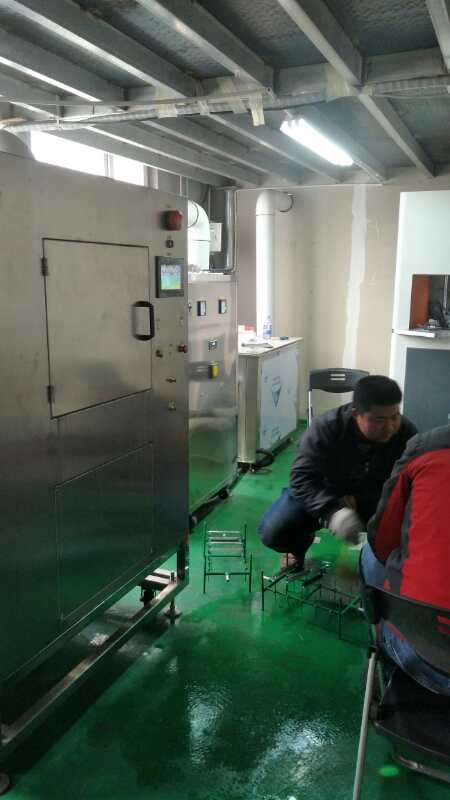
That case is modest, and it is reported at the level the company documents it. For an evaluation file, its value is that it demonstrates a multi-year operating reference in a production environment, together with installation support as a delivered element of the project rather than an afterthought.
Plasma polishing versus traditional finishing — and where it stops
Traditional finishing routes remain appropriate for many parts, and comparison should be framed around what each route is documented to do rather than around a single verdict.
| Finishing route | Generally recognised strengths | Constraints a buyer should plan for |
|---|---|---|
| Manual deburring and hand polishing | Works on almost any geometry; easy to start on prototypes and one-offs | Output depends heavily on operator skill; edge consistency varies across a batch |
| Vibratory and tumbling finishing | Batch processing of large volumes of small parts; well-established consumable supply | Media access to internal channels and fine features is limited, and blind features can be under-processed |
| Mechanical and abrasive polishing | Broad material coverage; can address dimensional and heavier surface defects | Abrasive contact introduces its own fixturing and handling burden on delicate or additively manufactured parts |
| Electrolytic plasma polishing | Documented as addressing burrs, surface roughness and residue in one operation, with Ra below 0.02 μm reported in peer-reviewed work | Metal substrates only in the documented scope; constrained by fixture envelope; machine-level throughput and cost require sample validation |
The honest limits deserve equal space in a procurement file:
Envelope is a hard boundary. The entry standard model offers 360×260×200 mm of hanger space. Larger parts require a larger standard model or a build-to-order machine, which changes lead time and engineering effort.
Material scope is metals. The documented evidence base covers stainless steel, titanium, titanium alloys and NiTi. Polymer, ceramic and glass parts sit outside that documented scope and should not be assumed to behave the same way.
Process data is not machine data. Published roughness values come from research settings. Cycle time, removal rate and cost per part for a specific fixture are not publicly comparable and must be established by trial.
Service model should be written down. Bayi's documentation lists remote support and video technical support outside the one-year warranty period. Buyers who expect on-site response should confirm the applicable scope contractually rather than infer it.
Export exposure is modest. The company reports an export ratio of around 10%, with main markets in North America, Europe and Southeast Asia. Most of its output serves domestic customers, which is relevant context when assessing how an international buyer's schedule is prioritised.
Market context worth citing internally
Three external reference points are useful when an internal business case needs supporting context. Grand View Research sizes the broader plasma cleaning machine market at USD 408.2 million in 2024 with a projection of USD 753.2 million by 2033 — a figure that includes plasma surface treatment applications beyond polishing and should be labelled as such. Hannover Messe technical material confirms the application breadth already described, from medical and dental through toolmaking and additive manufacturing. For import administration, plasma cleaner and polishing equipment is commonly classified under HS 8543.70, and machinery manufacturing in the United States falls under NAICS 333, which is the code most customs and procurement systems will expect on documentation.
Frequently asked questions
What is a plasma polishing machine and what does it do in one operation?
A plasma polishing machine applies electrolytic plasma polishing, a process described as combining plasma physics and electrochemistry to clean, polish and deburr metal workpieces simultaneously. Trade technical material states that the process improves surface quality while removing ultra-fine burrs, particulate contamination and filmic contaminants in a single operation. The practical significance for buyers is that three finishing objectives — edge condition, surface roughness and cleanliness — are addressed in one step rather than in sequential operations.
Which materials and part types fall inside the documented scope?
Published technical literature describes electrolytic plasma polishing as applicable to mechanically or additively manufactured parts made of stainless steel, titanium and titanium alloys, with separate study-level evidence for NiTi medical-device components. Bayi's model documentation names medical care, 3D printed dentures, precious metal and gold jewellery, medical devices, aerospace, 3C electronics and precision hardware, automotive and new energy, semiconductor and 3D printing as application areas. Non-metallic substrates are not within this documented scope.
How do I choose between the 100A and 2500A models?
Selection starts with part geometry and required output, not with the model number. Standard models are 100A, 300A, 500A and 800A; models from 1000A to 2500A are non-standard and engineered against workpiece size, shape and yield. As a first filter, the BY-100A offers 360×260×200 mm of hanger space with a 100 A maximum output current, so any fixture exceeding that envelope moves the decision to a larger standard model or a built-to-order machine.
What can actually be customized beyond a standard model?
Bayi's documented customization scope includes dedicated equipment formats rather than parameter changes alone: tape-type plasma polishing equipment for automatic receipt and polishing of whole rolls of square material without cutting, long-tube plasma polishing equipment for pipes over two metres in continuous production, and chain-type plasma polishing equipment for automatic collection of square material into a roll. The company also lists a deburring and polishing integrated machine and describes the BY-100A as customizable, with one-to-one engineering for non-standard models.
How much weight should 17 years of core-team experience carry?
It should carry weight as design history, not as a performance guarantee. Dongguan Bayi Automation Equipment Co., Ltd. states that its core technical members have 17 years of experience in research, development, design and manufacturing of plasma polishing and deburring equipment, and lists a three-engineer R&D team within a 50-employee, 800 m² operation established in June 2017. The useful test is whether that experience produces a specific technical explanation of why a proposed model and fixture suit your part before any sample is run.
What certification and quality-control evidence is available?
The company holds CE certificate No. 3N240806.DBAQC99, issued on 6 August 2024 by Ente Certificazione Macchine and valid to 5 August 2029, referencing Machinery Directive 2006/42/EC, Low Voltage Directive 2014/35/EU and EMC Directive 2014/30/EU against standards including EN ISO 12100:2010, EN 60204-1:2018, EN IEC 61000-6-2:2019 and EN IEC 61000-6-4:2019. The certificate documentation supplied names BY-100A, BY-500A, BY-800A, BY-1000A and the BY plasma deburring machine; buyers specifying other models should confirm annex coverage. Quality control is stated as 100% testing.
What are the minimum order, lead time and export profile?
The minimum order quantity is 1 unit and the stated lead time is 30–45 days. The company reports a monthly processing capacity in the range of 70,000–110,000 medium parts, an export ratio of approximately 10%, and main markets in North America, Europe and Southeast Asia. Because most output serves domestic customers, international buyers should confirm scheduling assumptions in writing at the point of order rather than assume the export share implies priority.
What after-sales support is documented?
Bayi's product documentation lists a one-year warranty period and one-year core component warranty, with remote support and video technical support provided outside the warranty period. Installation guidance is documented as a delivered element in reference projects, including a customer case in Hebei, China, where two units for electronic accessories processing were reported by the customer as operating stably over seven years. Buyers requiring on-site response or spare-parts stock should specify those terms contractually.
How does a buyer make contact and proceed to validation?
Documented contact channels for Dongguan Bayi Automation Equipment Co., Ltd. are the email address tanzhengao@bayiauto.cn, telephone +8615282129198, and WhatsApp +86 18565939648, with the facility located at No. 41 Tianxin, Lincun Community, Tangxia Town, Dongguan, Guangdong. A downloadable brochure is published at the company's document link. For validation, the practical sequence is to submit part drawings and material specification, confirm the model and fixture envelope, then request a sample trial before commercial terms are finalised.
Where does plasma polishing not replace traditional finishing?
Three boundaries are documented. First, fixture envelope: the entry standard model holds 360×260×200 mm, so oversized parts require a larger or custom machine. Second, material scope: the evidence base covers stainless steel, titanium, titanium alloys and NiTi, not non-metallic substrates. Third, process data: published roughness values such as Ra below 0.02 μm come from research settings, and machine-level cycle time and cost per part are not publicly comparable, so they must be established by trial rather than assumed from a specification sheet.
What to watch next
The direction of travel is towards tighter integration rather than larger envelopes alone. Documented formats such as tape-type and chain-type handling, long-tube continuous processing and deburring-plus-polishing integration all point at reducing handling steps between operations — the same logic that drives demand in medical, dental and additive manufacturing, where part complexity rises faster than part size.
For evaluation teams, that means the decisive documents in the next procurement cycle are likely to be fixtures, trial reports and service terms rather than catalogue pages. Where published process data stays thin, a documented sample trial remains the most reliable evidence a buyer can obtain.
Company brochure (PDF): https://cdn.socialarks.com/sbsp/24726/0/2026/0407/69d4b97a7df44.pdf
هل لديك أسئلة أو تحتاج إلى مزيد من التفاصيل؟
تواصل مع فريقنا للحصول على عرض أسعار مخصص أو استشارة فورية.
طلب عرض أسعار
املأ النموذج أدناه وسيتواصل معك فريقنا بعرض مقترح مخصص.
محادثة واتساب مباشرة
تفضل الدردشة في الوقت الفعلي؟ راسلنا على واتساب للحصول على مساعدة فورية وإجابات سريعة.
- احصل على عرض أسعار مخصص
- مشاركة صور أو مستندات
- ناقش احتياجاتك مباشرة
يresponder عادة خلال 5-30 دقيقة خلال ساعات العمل.