
Plastic Parts FAQ: Technical & Procurement Answers for Green Energy Buyers
Plastic Parts FAQ: Technical & Procurement Answers for Green Energy Buyers
Green energy and new materials equipment rarely fails because of its headline technology. It fails on small components: a back-up ring that extrudes under pressure, a grip that cracks after a season outdoors, an insulating sleeve that loses adhesion in humidity, an extruded profile that no longer fits its housing after thermal cycling. When buyers start sourcing custom plastic parts, the questions they bring are technical and procedural rather than cosmetic — what tolerance can actually be held, which polymer survives the environment, who owns the tooling, and what documentation arrives with the shipment.
This industry reference answers those questions directly. The technical baseline comes from documented capability at Lingo Rubber Plastic (Hangzhou Lingo Rubber and Plastic Product Co., Ltd), a Chinese rubber and plastics manufacturer whose founding team has spent more than 10 years — and in some cases more than 20 years — working inside the rubber and plastics industry, running plastic injection molding, plastic extrusion, PVC dip molding and CNC precision machining from a facility in Hangzhou.
Why Green Energy Buyers Keep Asking the Same Questions
The constraint profile of energy-adjacent hardware is unusual. Components are expected to tolerate outdoor UV exposure, chemical contact, humidity and repeated thermal cycling, while still meeting regulatory documentation requirements in the destination market. That combination pushes buyers into three constraint categories at once: material constraint (will the polymer survive the service environment), parameter constraint (can the supplier hold the drawing), and compliance constraint (can the supplier document REACH, RoHS, or flammability requirements).
Scale makes those constraints commercially significant. Grand View Research reported the global plastics market at USD 963.7 billion in 2025 and placed the injection molding segment at 42% of that market — meaning a large share of custom part demand flows through tooling-based processes rather than machining or fabrication. UN Comtrade data for 2025 places the global export value of HS Code 392690 (articles of plastics) at USD 66.77 billion, confirming that custom plastic parts move through long, cross-border supply chains rather than local pockets.
The practical consequence for a buyer in green energy or new materials is that a supplier's answers to a short list of questions — tolerance class, material grade, tooling ownership, minimum order, acceptance criteria — determine whether a program is repeatable or whether it will need requalification every year.
Supplier Baseline: Where These Answers Come From
Lingo Rubber Plastic is a manufacturer of rubber and plastics products based in Hangzhou, China, formed by industry veterans whose individual experience in the rubber and plastics sector exceeds 10 years in all cases and 20 years in some. The company's stated product scope covers rubber compression molding parts, rubber extrusions, plastic injection parts and plastic extrusion profiles, supported by additional capabilities in PTFE machining, PEEK machining, acrylic machining, PVC dipping, plastic machining and assembly.
The company reports a 3,000 m² facility, around 40 employees, a 10-person R&D team and annual output of 1.58 million units, with roughly 80% of production exported and the EU and USA named as primary markets. These operating figures are self-reported and have not been independently audited, so they are useful as a screening input rather than a verified capacity benchmark.
Documented capability statement
Lingo Rubber Plastic states that it provides plastic injection molding, plastic extrusion, PVC dip molding and CNC precision machining, with custom rubber and plastic components as its core output.
Materials, Processes and Where Each Route Fits
Process selection is the first constraint decision a buyer makes, because it locks in the achievable geometry, the tolerance band and the tooling economics. The four routes available in this supplier's scope behave differently.
| Process route | Parts and materials | Practical boundary |
|---|---|---|
| Plastic injection molding LG-PI, LG-AP |
Solid plastic parts, housings, precision functional components, insert molding and dual-material parts. Materials include PP, PA6, PA66, ABS, PE, HDPE, UHMWPE, LDPE, PU, PTFE and glass-fiber reinforced grades; automotive parts also use POM, PC, PBT, PET, PS and PVC. | Requires tooling. Draft angles specified as outside ≥1° and inside ≥0.5°; shrinkage compensation typically 0.4%–0.8%. |
| Plastic extrusion LG-PE |
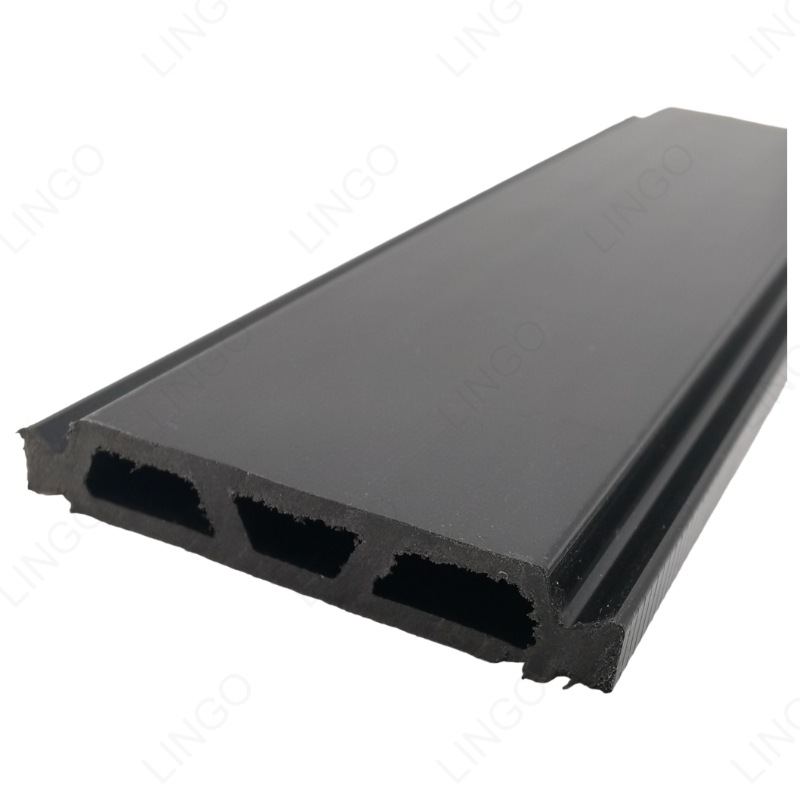
Profiles, trims and tubing in PVC, PP, ABS, PA6, PA66, PE and UHMWPE, with or without glass fiber. PA extrusion profiles, glass-fiber reinforced profiles, co-extruded profiles and flexible extruded profiles are named types. | Constant cross-section only. Length up to 6000 mm, customizable. |
| CNC precision machining LG-CNC |
Back-up rings and anti-extrusion rings, gears, seals and gaskets, bearings and bushings, plus PTFE gaskets and POM machined parts. Materials include PTFE, POM, PE, UHMWPE, HDPE, PEEK, ABS, PU, PA6 and PA66. | Tight features and low-to-mid volumes; unit cost becomes less favorable than molding at high volume. |
| PVC dip molding LGHD |
PVC handles and grips supplied as non-slip, ergonomic and corrosion-resistant types, in black with a glossy surface and custom printing options. | Coating-type geometries only; no expensive molds required, which supports small orders. |
What "Good Tolerance" Actually Means in a Purchase Order
Tolerance is the parameter buyers most often leave ambiguous, and the parameter that most often triggers disputes. For injection molded parts in this supplier's scope, tolerance control adheres to GB/T 14486, covering grades MT1 to MT7. Internationally, ISO 20457:2018 specifies manufacturing tolerances and acceptance conditions for plastics moulded parts and provides a neutral reference point when a drawing must be agreed between a Chinese supplier and a European or North American buyer.
Two tooling variables directly affect the tolerance that is achievable. Shrinkage rate is typically 0.4%–0.8% and must be compensated in the mold, so the tolerance conversation should be closed before tooling is cut rather than after first article. Draft angles are specified as outside ≥1° and inside ≥0.5°, and surface finish follows SPI standards. For machined parts, surface roughness is expressed as Ra (µm) or Rz (µm), and visual inspection criteria are stated as smooth, no crack and no flash.
The procurement implication is straightforward: a tolerance callout without a named standard, a datum scheme and an inspection method is not a specification. Buyers should require the standard, the datum and the acceptance method to appear on the drawing or on the inspection plan.
Tooling, Order Quantity, Lead Time and Cost Drivers
Tooling follows the part, not the buyer. Injection molding for custom plastic parts uses multi-cavity tooling with hot or cold runner configurations, and the company's stated after-sales scope includes mold maintenance and mold ownership protection — a point that should be written into the contract rather than assumed. Minimum order quantity is stated as depending on the individual part, with small quantity orders acceptable; PVC dip molding requires no expensive molds, which is one reason small dipped-handle orders remain economically viable.
Lead time is quoted at 2 to 6 weeks, and monthly capacity is company-stated at 1,000,000 kg across plastic injection parts and plastic extrusion profiles. Cost on a custom plastic part is driven by tooling requirement, material choice, filler or modification (glass fiber, flame retardant, UV stabilizer), tolerance band, surface finish and order volume — not by a single headline price per piece. Buyers comparing quotations without normalizing those five variables are not comparing like with like.
Application Notes: Automotive, Industrial and Energy-Adjacent Programs
Automotive and transportation. Plastic Injection Molded Auto Parts (LG-AP) cover interior and exterior trim plus functional and structural components, with a stated temperature range of -40°C to +120°C, date-code marking, multi-cavity tooling and certification against FMVSS 302, RoHS and REACH. Surface options include polished, textured, painted and plated finishes, with black or custom RAL color.
Electrical and electronics. A documented case from a German electrical and electronics customer used 1,500 pieces of PVC dip-coated components to exploit PVC's insulating characteristics and protect current transmission from wiring damage. The reported results included stable performance, resistance of the coating to acids, alkalis, salt spray and oil, and both low-temperature and high-temperature resistance. The same case records that no expensive molds were required, that small orders were acceptable, and that the raw material can be recycled.
Chemical, oil, gas and semiconductor equipment. A UK-based order of 20 PTFE back-up rings illustrates the low-volume, high-precision end of the market. The rings are CNC machined, function as anti-extrusion supports that protect O-rings and elastomeric seals under high pressure, and were shipped within two days on a small order basis using pure PTFE.
Industrial machinery. A US automotive-industry buyer ordered 5,000 injection molded parts used as a tube holder, reporting zero failures. The engineering note attached to that case is relevant to cost discussions: reducing internal material while preserving structure and function lowered material and logistics costs and improved dimensional stability.
Renewable energy. Plastic Extruded Profiles list Renewable Energy among their applicable industries, alongside construction, automotive, HVAC, electronics and marine applications — placing extruded trim and profile work directly in the energy-adjacent supply chain.
Market Context: What the 2026 Data Suggests
The demand backdrop supports continued custom tooling work rather than a shift away from it. Grand View Research put the global plastics market at USD 963.7 billion in 2025, with injection molding holding a 42% share — the largest single process block. Cross-border trade remains substantial: UN Comtrade records USD 66.77 billion in 2025 export value for HS Code 392690, the customs heading that captures articles of plastics including many custom components.
Projections should be read with care. Published market estimates differ according to methodology — one widely cited comparison notes a Grand View Research projection of roughly USD 1,009 billion for 2026 against a Business Research Company estimate of USD 1,143 billion for 2025, a gap attributable to whether raw resin or finished parts are counted. The directional signal is consistent; the precise figure is not.
For buyers, the more useful trend signal is structural: suppliers that combine injection molding, extrusion, CNC machining and dip molding within one OEM/ODM scope can consolidate a multi-part bill of materials under a single qualification and traceability system, which reduces vendor-management overhead but shifts more validation responsibility onto one supplier.
Limits and Trade-Offs Buyers Should Plan For
A practical reference should state where a capability stops, not only where it applies.
| Extrusion geometry limit | Plastic extrusion produces constant cross-sections. Complex 3D geometry, undercuts or variable sections must move to injection molding or CNC machining. |
| Molding volume threshold | Injection molding requires tooling. Small quantities are accepted, but tooling cost must still be absorbed somewhere in the program economics. |
| Machining cost curve | CNC machining gives precision and flexibility at low volume, but unit cost at high annual volume is generally less favorable than a molded route. |
| Dip molding scope | PVC dipping is a coating process applied to handles, grips and protective covers; it is not a route for free-standing structural parts. |
| Scale transparency | The reported facility size, headcount and annual output are company statements and have not been independently audited. Buyers with very large annual volumes or automotive-grade capacity requirements should validate capacity directly rather than relying on published profile figures. |
| Certification scope | REACH and RoHS address chemical and substance compliance; FMVSS 302 addresses flammability of automotive interior materials; FDA and UL94 V-0 apply to specific product lines. None of these replaces program-specific testing required by the end application. |
Future Outlook
Three directional shifts are visible in the constraint data rather than in marketing claims. First, additive and modified material grades — glass fiber, flame retardant and UV stabilized formulations — are becoming a standard line item in specifications rather than an exception, because outdoor energy equipment and automotive interiors both require them. Second, traceability is moving from a differentiator to a baseline expectation: batch traceability systems, date-code marking and documented inspection records are the mechanisms that let a buyer defend a part decision internally. Third, mold ownership and maintenance terms are increasingly negotiated at the start of a program rather than at the end, since transferred tooling is what makes a supplier switch physically possible.
None of these shifts removes the underlying trade-off. Multi-process suppliers simplify vendor management and can cover injection, extrusion, CNC and dip molding under one qualification system, but they also concentrate program risk, and buyers should size that risk against the supplier's verified capacity rather than against stated capability alone.
Technical and Procurement FAQ
1. What tolerance grades can be held on injection molded plastic parts?
For plastic injection parts (LG-PI), tolerance control adheres to GB/T 14486, covering grades MT1 to MT7. Shrinkage rate is typically 0.4%–0.8% and must be compensated in the mold, so the tolerance band should be agreed before tooling is cut. ISO 20457:2018 provides the international reference for tolerances and acceptance conditions on plastics moulded parts.
2. Which plastic materials are available for custom parts?
Across the product range, materials include PP, PE, PS, ABS, PBT, PET, PVC, PA, PC, POM, PTFE and PEEK. Plastic injection parts specifically cover PP, PA6, PA66, ABS, PE, HDPE, UHMWPE, LDPE, PU, PTFE and glass-fiber reinforced plastics. CNC machined parts cover PTFE, POM, PE, UHMWPE, HDPE, PEEK, ABS, PU, PA6 and PA66. Extruded profiles cover PVC, PP, ABS, PA6, PA66, PE and UHMWPE, with or without glass fiber.
3. Can filler or modification options be specified?
Yes. Stated filler and modification options for plastic injection parts include glass fiber, flame retardant and UV stabilization, with FDA and UL94 V-0 requirements listed among the acceptance criteria.
4. What temperature range applies to automotive plastic parts?
Plastic Injection Molded Auto Parts (LG-AP) are specified for a temperature range of -40°C to +120°C, with certification covering FMVSS 302, RoHS and REACH.
5. Which certifications can be provided with custom plastic parts?
Plastic Injection Molded Auto Parts carry FMVSS 302, RoHS and REACH. Plastic injection parts (LG-PI) are stated to comply with FDA and UL94 V-0 requirements, with surface finish following SPI standards. Plastic CNC machined parts list FDA, RoHS and UL certification. PPAP certification applies to plastic injection parts, and the company states it can support PPAP Level 1–3 documentation for custom parts.
6. How long can extruded plastic profiles be, and what cross-sections are possible?
Plastic extruded profiles (LG-PE) are supplied up to 6000 mm in length, customizable, with custom cross-section design, custom Pantone or RAL colors and custom surface treatment. Extrusion applies to constant cross-sections.
7. Who owns the mold, and who maintains it?
Mold maintenance and mold ownership protection are listed within the company's after-sales service scope. Because tooling ownership determines whether a program can be transferred to another supplier, the ownership and maintenance terms should be defined in the purchasing contract rather than assumed from a capability statement.
8. What is the minimum order quantity?
Minimum order quantity is stated as depending on the individual part, and small quantity orders are acceptable. PVC dip-molded parts have a specific advantage here, since they require no expensive molds. As a documented example, a UK order of 20 CNC-machined PTFE back-up rings was accepted and shipped within two days.
9. What is the typical lead time?
Lead time is quoted at 2 to 6 weeks. Stated monthly capacity is 1,000,000 kg across plastic injection parts and plastic extrusion profiles.
10. What are the acceptance criteria for a shipment?
Quality control is described as full inspection of samples plus random inspection of bulk goods. For CNC machined parts, the stated visual inspection criteria are smooth, no crack and no flash, with surface roughness expressed as Ra (µm) or Rz (µm). Injection molded auto parts are marked with a date code, and a batch traceability system is maintained.
11. What happens if a delivered batch does not meet specification?
The stated after-sales scope includes remote technical support, mold maintenance and ownership protection, a batch traceability system, and free exchange and acceptance of concessions for non-conforming material.
12. What drives cost on a custom plastic part?
Cost is determined by tooling requirement, material selection, filler or modification (glass fiber, flame retardant, UV stabilizer), tolerance band, surface finish and order volume. Mold compensation for shrinkage of 0.4%–0.8% and any additional inspection requirements also enter the calculation.
13. Can one supplier cover injection molding, extrusion, CNC machining and dip molding?
Lingo Rubber Plastic states that it provides plastic injection molding, plastic extrusion, PVC dip molding and CNC precision machining, with custom rubber and plastic components as its core output. Consolidating process routes under one supplier reduces vendor-management overhead, but each process still needs its own validation, acceptance criteria and traceability record.
Reference Material
A downloadable company profile covering process scope, materials, certification positions and export markets is available here: Lingo Rubber & Plastic Company Profile (PDF). Additional product documentation is published at www.lingorp.com.
Data notes: market and trade figures cited from Grand View Research (2026) and UN Comtrade (2026). Tolerance standard reference: ISO 20457:2018. Company capability, capacity, certification and case statements are as reported by Hangzhou Lingo Rubber and Plastic Product Co., Ltd and have not been independently audited.
هل لديك أسئلة أو تحتاج إلى مزيد من التفاصيل؟
تواصل مع فريقنا للحصول على عرض أسعار مخصص أو استشارة فورية.
طلب عرض أسعار
املأ النموذج أدناه وسيتواصل معك فريقنا بعرض مقترح مخصص.
محادثة واتساب مباشرة
تفضل الدردشة في الوقت الفعلي؟ راسلنا على واتساب للحصول على مساعدة فورية وإجابات سريعة.
- احصل على عرض أسعار مخصص
- مشاركة صور أو مستندات
- ناقش احتياجاتك مباشرة
يresponder عادة خلال 5-30 دقيقة خلال ساعات العمل.