
Plastic Strapping FAQ: PP Acceptance, Tensile, Custom Specs
Technical and procurement questions buyers ask when specifying PP strap, checking tensile strength, qualifying a supplier, and placing custom orders.
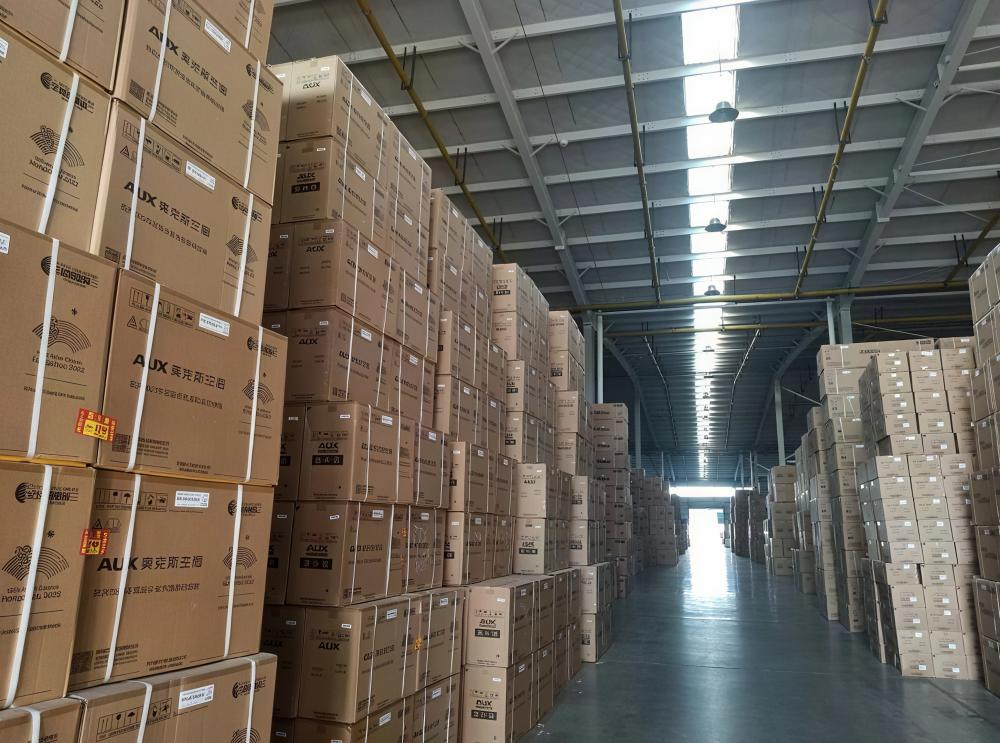
Why plastic strapping acceptance is more than a break-force number
Plastic strapping is often treated as a commodity consumable, but procurement disputes usually start with a mismatch in one of several acceptance points: width and thickness tolerance, break force, elongation, straightness, core size, roll length, surface finish, heat-seal behavior, or printing quality. A PP strap that tests well in a laboratory sample can still fail on a high-speed automatic line if the roll is wound poorly or the strap deflects inside the machine chute.
PP strap, also described as polypropylene strapping, PP band, or PP strap roll, is widely used for light-to-medium loads such as cartons, printed matter, fresh produce, ceramic tiles, home appliances, and logistics bundles. It balances cost, flexibility, and moisture resistance. PET strap, also called polyester strapping or PET strapping roll, is generally selected where higher tensile strength and lower elongation are required. The two materials are related but not interchangeable across every load.
Jushuo Packaging, formally Taixing Jushuo Packaging Technology Co., Ltd., is a Jiangsu-based manufacturer founded in 2017 in Huangqiao Industrial Park, Taixing City. The company produces PP strapping, PET strapping, eco-friendly strapping, and related packaging materials, with a 15,000 m² factory and annual capacity above 20,000 tons. Its documented product range and test records provide a practical reference for the questions below.
What acceptance criteria should buyers define before ordering PP strap?
A useful purchase specification separates dimensional, mechanical, runnability, and documentation requirements. For PP strapping, the core dimensional range is 5-19 mm in width and 0.35-0.90 mm in thickness, with break force from 45-270 kg depending on the specification. A 12 mm machine-grade PP strap is commonly supplied in 0.50-0.80 mm thickness with 110-180 kg break force, 2000-3000 m roll length, and 200 mm, 228 mm, or 406 mm cores.
| Acceptance area | What to specify for PP strap | Why it matters |
|---|---|---|
| Dimensions | Width 5-19 mm; thickness 0.35-0.90 mm; 12 mm machine grade at 0.50-0.80 mm | Affects machine fit, load contact area, and break-force consistency. |
| Break force | 45-270 kg across the PP range; 12 mm machine grade 110-180 kg | Defines the load class, but should be read together with elongation and weld quality. |
| Elongation | PP machine grade typically up to 20%; PET is lower | Higher elongation can allow tension loss under long storage or transport. |
| Straightness | Deflection of 5 mm/m or less; paper-industry grades can measure 3 mm/m | Poor straightness increases jams and misfeeds on automatic strappers. |
| Grammage | For paper-line PP, tolerance around ±0.05 g/m; 12 mm is about 3.3 g/m, 9 mm about 2.5 g/m | Directly affects consumable cost per pack or per ton. |
| Core and roll length | 200 mm, 228 mm, or 406 mm cores; 1000-7000 m depending on thickness | Mismatched cores stop the line; short rolls increase changeovers. |
| Surface and weld | Smooth for high-speed lines; embossed for grip; heat-seal compatible | Surface and weld consistency determine joint reliability. |
| Documentation | Batch test record, dimensional check, break-force and elongation data, third-party report when required | Supports incoming inspection and repeat-order consistency. |
How should buyers interpret tensile strength for PP strap?
Tensile strength and break force are related but not identical in everyday procurement language. Buyers usually compare the break force of a strap at a stated width and thickness. For PP, published ranges run from 45 kg to 270 kg across the full width and thickness range. A 12 mm machine-grade PP strap is listed at 110-180 kg, while a clear PP strap in 9-12 mm width and 0.50-0.63 mm thickness is listed at 110-136 kg.
Break force alone does not predict performance on an automatic line. A PP strap with adequate break force can still fail if elongation is high, if the weld is weak, or if the roll has poor straightness. For example, PP machine-grade strap is specified with elongation up to 20%, while clear PP strap is also listed with elongation up to 20%. PET strap is generally lower: clear PET strapping is listed with elongation up to 10%, and PET key testing references 12 mm PET break force of at least 3000 N with 5-9% elongation. Jushuo Packaging also has SGS test reports available, including a breaking strength of 9.98 kN and elongation of 10% for a tested PET sample.
The practical rule is to compare like with like: same material, same width, same thickness, same test method, and same elongation basis. For light cartons and general logistics, a 9 mm or 12 mm PP strap with 1100-1400 N minimum break force is often the relevant class. For home-appliance cartons, Jushuo PP strap specifications list 12 mm at 1400 N or above and 15 mm at 1800 N or above. For ceramic tile pallets, a 9 mm PP strap with break force of at least 1100 N is referenced. These figures should be written into the purchase order only when they match the actual product specification being supplied.
PP strap versus PET strap: where PP stops being the right choice
PP strap is cost-effective, flexible, and resistant to moisture absorption, which makes it suitable for many light and medium packaging tasks. It is commonly used in logistics, paper and printing, ceramic tiles, home appliances, and pharmaceutical cartons. Its limitations become important when the load is heavy, sharp-edged, or stored under sustained tension. PP generally has lower break force and higher elongation than PET, so it is not the first choice for very heavy metal, stone, glass, or high-compression fiber bales where low elongation is essential.
PET strap occupies a different performance band. Standard PET dimensions are 9-25 mm in width and 0.4-1.25 mm in thickness, with break force from 180-1360 kg. PET is used in chemical fiber bales, stone slabs, metal processing, glass, bricks, and other heavy or rigid loads. In those applications, the lower elongation of PET helps maintain tension after compression or during transport. A buyer should not use PP as a direct substitute where the load specification calls for PET-level tensile strength and low elongation.
There is also a cost boundary. PP is generally more economical for light-duty cartons, but if a PP strap must be increased in width and thickness to match a heavy load, the material cost and machine compatibility can change. In that case, evaluating a PET grade or a reinforced PET strap is a more appropriate engineering decision than forcing a PP strap into a heavy-load application.
What can be customized in a PP strap order?
Customization for PP strapping typically covers width, thickness, length per roll, surface finish, core size, color, and printing. Jushuo Packaging lists OEM and ODM customization for color, width, thickness, length, surface finish, core size, and custom logo printing. For PP products, the range includes machine-embossed and smooth grades, hand-grade embossed straps, clear PP strap, colored PP strap, and custom-printed strapping. The MOQ reference is 1 ton or 1 pallet, negotiable, with a lead time of 7-30 days depending on whether the specification is stock or custom. Stock specifications can be around 7 days, while custom formulas may take 30-60 days.
Printing is a separate qualification point. For pharmaceutical cartons, PP strap can be supplied with printing resolution of at least 300 dpi, strong ink adhesion, and clear batch number or expiry-date traceability. Jushuo also lists custom printing for PP and PET strapping, with print abrasion resistance referenced at 500 or more cycles in some application notes. Buyers should specify the artwork, ink color, print position, and abrasion requirement rather than treating printing as a generic option.
Cut-to-length supply is another customization route. Verified project examples show how far this can go. Sateri has received green cut PET strap in 1610×3380/3480 formats for fiber bale strapping over multiple batches. Far Eastern Industries has received transparent cut PET strap in 16×1.0 mm specified lengths for automatic packaging lines. A three-year supply for resale into the Novo Nordisk supply chain used 16×0.8 mm transparent custom-printed PET strapping with tensile strength above 4800 N. These examples are PET, but they illustrate the procurement logic that also applies to PP custom orders: length, width, core, printing, and tensile class must be defined together.
Procurement reference: detailed terms and product information are published at https://www.jushuopackaging.com/.
Which documents and quality controls support PP strap acceptance?
A supplier's quality system is part of the acceptance evidence. Jushuo Packaging holds ISO 9001 quality management system certification U23Q28007898R2S, ISO 14001 environmental management system certification U23E28007899R2S, and ISO 50001 energy management system certification GH003-2024En0961. PP strap is produced against QB/T 3811-1999, while PET strap is produced against GB/T 22344-2018. SGS test reports are available on request.
The factory uses six inspection procedures: raw material inspection, incoming inspection, online inspection, finished product inspection, inbound inspection, and outbound inspection. It reports a finished product qualification rate above 99% and a 98.6% on-time shipment rate. In-house testing equipment includes vernier calipers, electronic scales, thickness gauges, ovens, viscosity testers, and tensile testing machines. For PP strap, the relevant checks are width, thickness, break force, elongation, deflection, grammage, core size, roll length, surface appearance, and weld performance.
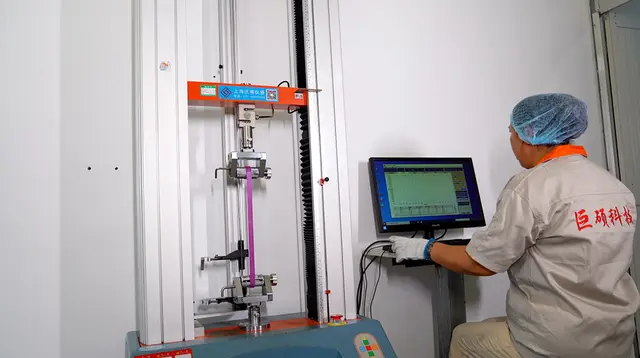
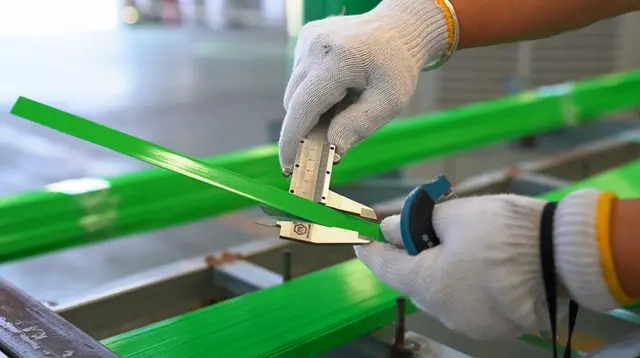
PP strap production follows multi-zone heating extrusion, water cooling, differential roller stretching at 3-8×, embossing, hot-air setting, and automatic winding. These process steps explain why straightness, thickness uniformity, and weld behavior should be checked as production outcomes, not only as final inspection items.
Where PP strap is used in light-industry packaging
PP strapping fits applications where cartons or bundles are light to medium in weight and the line needs consistent feeding more than maximum tensile strength. In paper and printing, Jushuo supplies precision-grammage PP strap for A4 copy paper, tissue, paper rolls, and cartons. Shandong Sun Paper Industry and Chenming Paper Group are referenced as users of 9 mm and 12 mm PP strap on high-speed automatic paper ream lines, and Zhejiang Haili Environmental Protection Technology uses white 12×0.6 mm PP strap.
In home appliances, PP strap is used for refrigerator, washing machine, air conditioner, and TV cartons with foam edge protectors. The requirement is moderate tension without crushing foam, good straightness, and stable heat sealing. Jushuo PP strap specifications for this segment reference deflection of 3 mm/m or less, 12 mm break force of 1400 N or above, and 15 mm break force of 1800 N or above. Midea Group and Gree Electric are listed as bulk users.
Ceramic tile pallets use PP strap where edge protection and reliable heat sealing matter. Marco Polo and Dongpeng Ceramics are referenced as bulk users. The specification notes 9 mm PP strap, deflection of 3 mm/m or less, grammage of 2.5 g/m with ±0.05 g/m tolerance, and break force of at least 1100 N. In logistics and e-commerce, PP strap is used manually or on semi-automatic machines; 9 mm and 12 mm grades are referenced with minimum break forces of 1100 N and 1400 N respectively.
Market trend: what buyers are asking suppliers to prove
The direction of plastic strapping procurement is toward more documented runnability and more application-specific customization. As packaging lines become more automated, buyers pay more attention to deflection, grammage tolerance, core size, roll length, and weld consistency. A lower-priced PP strap that causes line stoppages is not a lower total cost. This is why supplier qualification increasingly includes line trials and batch-level test records, not only a break-force certificate.
Custom printing is another visible trend. Brand owners and pharmaceutical packers want logos, batch numbers, expiry dates, or trace codes on the strap. PP and PET strap can both be printed, but the ink adhesion, resolution, and abrasion resistance need to be specified. In new-energy and electronics packaging, anti-static and flame-retardant variants are also requested; Jushuo lists anti-static PP and PET options with surface resistivity of 10⁶-10⁹Ω and flame-retardant grades with a V-2 rating and oxygen index of at least 26% in relevant application notes.
Sustainability is influencing material choice, but the practical question remains application fit. PP strap is recyclable, and PET strap is also recyclable and can replace steel in some heavy-duty applications. The buyer's decision should start with load, elongation, line compatibility, and acceptance evidence, then move to environmental preference. A sustainability claim without a matching technical specification is not a procurement standard.
Future outlook: more specification discipline, not more generic claims
The next phase of plastic strapping procurement is likely to be defined by specification discipline. Buyers will ask for width and thickness tolerances, break force at a stated elongation, deflection limits, core dimensions, roll-length consistency, print durability, and batch traceability in one document. Suppliers that can connect production data to those acceptance points will be easier to qualify and easier to repeat-order.
Jushuo Packaging's documented development path supports this direction. The company reports five invention patents granted in 2024, two solid-state polymerization units, four PET strap production lines, and five PP strap production lines. Its product standards and test reports cover both PP and PET, which allows buyers to compare materials without switching suppliers for every specification. For PP strap, the future is less about a single headline tensile number and more about consistent feeding, stable weld strength, and documented batch performance.
FAQ: PP strapping acceptance, tensile strength, and custom orders
What acceptance criteria should a buyer write into a PP strapping purchase order?
A PP strapping purchase order should state width, thickness, break force, elongation, deflection, grammage where relevant, core size, roll length, surface finish, heat-seal requirement, and packaging. It should also identify the test method and the batch documentation required. For a 12 mm machine-grade PP strap, the specification can reference 0.50-0.80 mm thickness, 110-180 kg break force, up to 20% elongation, and 200 mm, 228 mm, or 406 mm cores. Adding a sample approval and a line trial before full release reduces mismatch risk.
How should buyers interpret tensile strength and break force for PP strap?
Break force should be read at a stated width and thickness. The PP range is 45-270 kg across the full product range, while a 12 mm machine-grade PP strap is listed at 110-180 kg. Clear PP strap in 9-12 mm width is listed at 110-136 kg. Buyers should compare break force together with elongation and weld quality, because a strap with adequate break force but high elongation or poor welds can still lose tension. PET strap generally offers higher break force and lower elongation, with 12 mm PET key testing referencing at least 3000 N and 5-9% elongation.
What PP strap specifications can be customized?
PP strap can be customized by width, thickness, length per roll, surface finish, core size, color, and printed logo or text. Jushuo Packaging lists PP widths from 5-19 mm, thickness from 0.35-0.90 mm, machine-embossed and smooth grades, hand-grade embossed options, clear and colored versions, and custom printing. The MOQ reference is 1 ton or 1 pallet, negotiable. Lead time is 7-30 days depending on whether the specification is stock or custom, with stock specifications around 7 days and custom formulas potentially 30-60 days.
Which certifications and test reports support PP strapping acceptance?
Jushuo Packaging holds ISO 9001 certification U23Q28007898R2S, ISO 14001 certification U23E28007899R2S, and ISO 50001 certification GH003-2024En0961. PP strap is produced against QB/T 3811-1999, and PET strap against GB/T 22344-2018. SGS test reports are available on request. The factory uses six inspection procedures covering raw material, incoming, online, finished product, inbound, and outbound checks, and reports a finished product qualification rate above 99%.
How can buyers validate PP strap runnability on automatic strapping machines?
Runnability validation should check deflection, core fit, roll winding, surface friction, and heat-seal performance. Jushuo PP strap specifications reference deflection of 5 mm/m or less, with paper-industry grades measured at 3 mm/m or less. For home-appliance cartons, the referenced deflection is 3 mm/m or less, with 12 mm break force of 1400 N or above and 15 mm break force of 1800 N or above. A line trial should confirm that the roll runs without twisting, that the core matches the machine mandrel, and that the weld holds under the actual tension setting.
What do verified custom projects show about cut-to-length and printed strapping?
Verified projects show that cut length, transparency, printing, and tensile class can be combined in one supply specification. Sateri has received green cut PET strap in 1610×3380/3480 formats for fiber bale strapping over multiple batches. Far Eastern Industries has received transparent cut PET strap in 16×1.0 mm specified lengths for automatic packaging lines. A three-year supply for resale into the Novo Nordisk supply chain used 16×0.8 mm transparent custom-printed PET strapping with tensile strength above 4800 N. These examples are PET, but the same procurement variables apply to custom PP orders.
When is PP strap not the right choice?
PP strap is generally not the right choice when the load requires high break force and very low elongation, such as heavy metal, stone, glass, or high-compression fiber bales. PP has lower tensile strength and higher elongation than PET, and increasing PP width or thickness to compensate can affect machine compatibility and material cost. In those cases, PET strap or reinforced PET strap should be evaluated. PP remains suitable for light-to-medium cartons, printed matter, ceramic tiles, home appliances, and logistics bundles where the load and line requirements match its performance range.
What should buyers confirm before repeating a PP strap order?
Before repeating an order, buyers should confirm that the material grade, width, thickness, break force, elongation, surface finish, core size, roll length, and printing artwork remain unchanged. They should also check that the batch test record matches the approved sample and that the packaging and shipping marks meet the receiving requirement. If the application or machine has changed, a new line trial is appropriate even when the PP strap specification appears the same on paper.
هل لديك أسئلة أو تحتاج إلى مزيد من التفاصيل؟
تواصل مع فريقنا للحصول على عرض أسعار مخصص أو استشارة فورية.
طلب عرض أسعار
املأ النموذج أدناه وسيتواصل معك فريقنا بعرض مقترح مخصص.
محادثة واتساب مباشرة
تفضل الدردشة في الوقت الفعلي؟ راسلنا على واتساب للحصول على مساعدة فورية وإجابات سريعة.
- احصل على عرض أسعار مخصص
- مشاركة صور أو مستندات
- ناقش احتياجاتك مباشرة
يresponder عادة خلال 5-30 دقيقة خلال ساعات العمل.