
Plastic Strapping Shortlist: PP and PET Picks by Application

Application first, material second: plastic strapping is specified by load, line and label requirement.
A plastic strapping shortlist is an application-mapped list, not a material ranking. PP (polypropylene) strapping and PET (polyester) strapping look similar on a reel, yet they behave differently under tension: PP formats in Jushuo Packaging's range cover roughly 45–270 kg of break force, while PET formats cover 160–1,360 kg. Selecting by material name, or by price per roll, usually produces a strap that either under-performs on load or over-specifies cost on a line that never needed it.
This shortlist is organised the way industrial buyers actually specify: by what is being bundled, which line applies the strap, and what the package must still communicate after it has been strapped. Jushuo Packaging (Taixing Jushuo Packaging Technology Co., Ltd.) is a strapping and packaging-machinery manufacturer founded in 2017 and based in Huangqiao Industrial Park, Taixing City, Jiangsu Province, China. Its production base covers PET strapping, PP strapping and eco-friendly strapping across four PET lines and five PP lines, with annual capacity above 20,000 tons, operating under ISO 9001 and ISO 14001 certified systems.
Why material-first selection produces the wrong shortlist
Three questions decide fit long before unit price does. The first is line compatibility: a strap that feeds badly through an automatic head creates downtime that costs far more than the consumable. The second is load retention: elongation, not break force alone, determines whether a bundle is still tight after a week in a container. The third is post-strap legibility — whether batch numbers, barcodes or expiry dates remain readable after the strap goes on.
Buyers who compare only break force tend to over-specify PP for light cartons and under-specify PET for heavy pallets. Buyers who compare only transparency tend to pay for clarity on loads that never needed it. The shortlist format resolves this by attaching a format to a job, then letting specification confirm the choice rather than drive it.
The shortlist at a glance
The table below maps common bundling jobs to a recommended Jushuo Packaging format and the specification anchor that justifies the pick. It is a starting shortlist, not a universal specification; final sizing depends on load weight, edge condition and machine make.
| Bundling job | Recommended Jushuo format | Specification anchor |
|---|---|---|
| Fiber bale and textile bundling on high-speed automatic lines | Machine grade PP, 12 mm embossed (JS12070-P, JS12080-P) | 12 mm break force ≥1,400 N; measured deflection ≤3 mm/m; grammage tolerance ≤±0.05 g/m |
| High-compression bales, colour-coded formats | PET 16 mm machine grade; Green PET (JS16900-MT / JS16900-MTE) | PET elongation ≤10%; break force range 160–1,360 kg |
| Pharmaceutical and regulated cartons | Clear PET (JS09400-MT to JS12600-MT) or custom-printed PET | High-clarity PET; RoHS-compliant ink; print rated for 500+ friction cycles |
| High-speed automatic light-industry lines | Machine grade PP smooth (JS09036-PS) or embossed (JS05035-P to JS19080-P) | Deflection ≤5 mm/m; smooth surface for guide tracks; width 5–19 mm |
| Manual and semi-automatic stations | Hand grade PP 12 mm (JS500A-HP to JS600B-HP); hand grade Polyester Banding Strap (JS12500-HT to JS25300-HT) | PP hand grade 220–270 kg; hand PET grade optimized for flexibility and hand-tool tensioning |
| Heavy industrial loads: steel, metal, stone, brick, lumber | High-strength PET, 19 mm and 25 mm (JS19190-HT to JS25300-HT); embossed or UV-resistant variants | 25×1.25 mm: 1,360 kg; 19×1.0 mm: 860 kg; elongation ≤6% |
| Fragile or finished surfaces: glass, coated panels | PET 12×0.6 mm, green or clear, smooth finish with edge protectors | Smooth treated surface, no burrs; elongation 2–5% |
| Light cartons under a plastic-free requirement | Paper Strapping Tape, 5–16 mm | 25–150 kg break force; 94% kraft paper with water-soluble adhesive |
Pick 1 — Fiber bale and textile bundling
Chemical fiber bales are a case where the line, not the load, sets the format. Filament packages are strapped at high speed — Jushuo's textile application data references automatic lines running 30–40 packs per minute — and any feed hesitation becomes a stoppage. The recommended pick is machine grade PP at 12 mm, embossed, where the bundle weight sits within PP's ceiling: 12 mm break force is specified at ≥1,400 N, measured deflection at ≤3 mm/m, and grammage tolerance at ≤±0.05 g/m. Those three numbers, not the material name, are what keep the head feeding.
Sateri (China) Fiber is listed among the verified users of Jushuo's machine grade PP strap for fiber bale bundling, and other named users in the same application include Jiangsu Ruibang Technology, Xinjiang Xingtai Fiber Technology, Jiangyin Bolun Chemical Fiber and Jiangsu Xingye Juhua. For heavier, higher-compression bales where PP's elongation becomes the limiting factor, the pick shifts to PET at 16 mm, which brings elongation down to ≤10% and holds tension across long-haul transport.
Colour is a separate decision from grade. Jushuo's Green PET Strapping is offered in machine smooth and embossed formats (JS12600-MT, JS12600-MTE, JS16900-MT, JS16900-MTE) and hand smooth formats (JS12600-HT, JS19190-HT). Green is useful for bale identification and line-side sorting, but it does not change the mechanical grade; the machine or hand designation still determines whether the roll belongs on an automatic head or at a manual station.
Pick 2 — Pharmaceutical and regulated packaging
In pharmaceutical carton bundling the strap has to stay out of the way of the information printed on the box. The shortlist entry is clear PET, supplied from JS09400-MT through JS12600-MT at 9–25 mm width and 180–1,360 kg break force. The transparency is functional rather than decorative: batch numbers, expiry dates and barcodes remain readable and scannable through the strap, which is the reason pharmaceutical packers use it for regulatory compliance rather than for appearance.
Where the strap itself must carry brand, batch or anti-counterfeiting information, the second entry is custom-printed PET. Jushuo prints directly onto the strap surface with a high-adhesion ink rated to survive 500 or more friction cycles, and the printing process adds roughly 3–5% to strap cost. The inks are RoHS compliant, and the base strap still complies with GB/T 22344-2018. For a 19×1.0 mm printed format the break force is 860 kg; for 16×0.8 mm it is 635 kg.
A lower-cost third entry belongs on the same shortlist: clear PP at 9–12 mm, 110–136 kg break force, for light medicine cartons where a PET load ceiling is unnecessary but label visibility still matters. Buyers should shortlist both and decide on carton weight, not on material preference.
Pick 3 — High-speed automatic light-industry lines
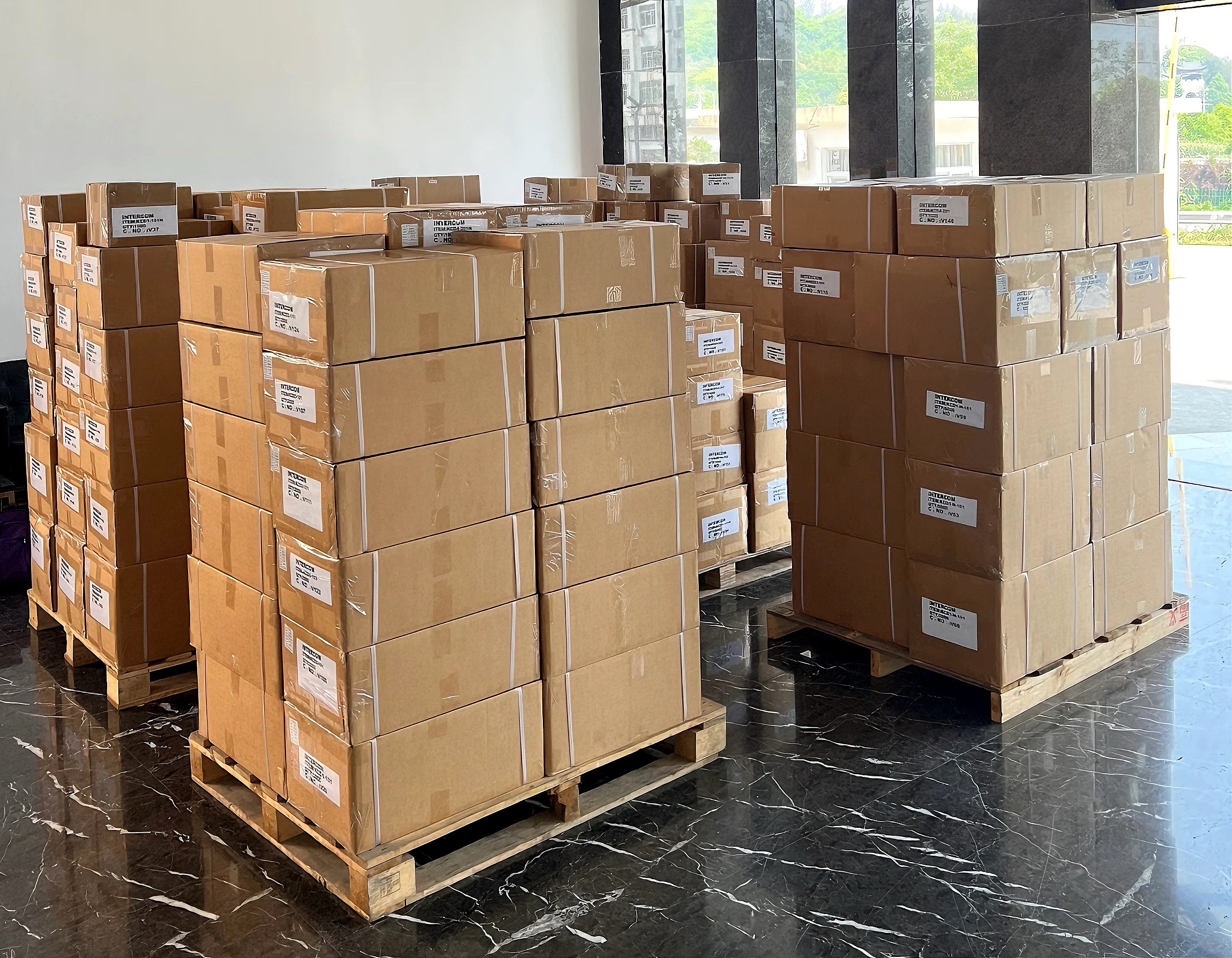
Automatic lines reward straightness and grammage consistency more than raw strength.
For cartons, boxes and light assemblies running through automatic strappers, machine grade PP is the default pick: 5–19 mm width, 0.35–0.8 mm thickness, 45–230 kg break force, with elongation held below 20% and a smooth surface to keep friction low against machine guide tracks. The engineering point is consistency. Jushuo's paper-industry users describe strap behaviour in terms of alarms and jams, and the specification that prevents both is deflection ≤5 mm/m plus grammage tolerance in the ±0.05 g/m band.
Far Eastern Industries is named among the customers in Jushuo's company milestones, alongside Sateri and JinkoSolar. For packaging teams specifying for comparable automatic lines, the practical shortlist is: smooth machine grade PP where feed friction must be minimised, embossed machine grade PP where the bundle needs extra grip after tensioning, and machine-smooth PET at 9–16 mm where the load exceeds PP's practical range.
Two adjacent cases refine the pick. In tin-can and beverage-can packaging, a 9 mm PET strap with deflection held to ≤3 mm/m and grammage tolerance ≤±0.03 g/m is used on lines running continuously; in ceramic tile packaging, 9 mm PP at ≥1,100 N break force with the same straightness discipline is the working standard. Both are automatic-line problems first and material problems second.
Pick 4 — Manual and semi-automatic stations
Where there is no automatic head, the shortlist changes completely, because the operator becomes the feed mechanism. Hand grade PP at 12 mm, 0.7–0.8 mm thickness and 220–270 kg break force is the standard pick for light to medium cartons, parcel consolidation and retail bundling: the material is soft enough to tension by hand, knot and cut without fatiguing the operator, and it conforms to irregular shapes.
For heavier loads handled without automation, the recommended pick is the hand grade Polyester Banding Strap, supplied from JS12500-HT to JS25300-HT in 9–25 mm widths with 160–1,360 kg break force and a 406 mm core. It is deliberately formulated for flexibility so that hand tools and semi-automatic heads can tension it, while retaining steel-comparable strength at the top of the range — 25×1.25 mm reaches 1,360 kg.
Semi-automatic stations sit between the two picks and usually resolve on feeding behaviour rather than strength: good straightness and a smooth or embossed surface matched to the tool's grip requirement.
Pick 5 — Heavy industrial, outdoor and fragile-surface loads
Above roughly 270 kg of required break force, PP leaves the shortlist and high-strength PET takes over. Jushuo's high-strength series, produced with solid-state polymerization to raise intrinsic viscosity, delivers 1,360 kg at 25×1.25 mm, 860 kg at 19×1.0 mm and 635 kg at 16×0.8 mm, with elongation held at or below 6%. That combination — high break force with low elongation — is what keeps a two- to five-ton pallet of steel, stone or brick tight through handling and storage.
Outdoor storage adds a second variable. UV-resistant PET formats retain at least 85% of break strength after 1,000 hours of QUV exposure, which is why brick, block and lumber yards that store pallets in the open specify them rather than standard PET. For stone and glass, the pick is a smooth-finished PET with edge protectors: 12×0.6 mm green or clear PET, elongation 2–5%, is used for glass bundling where any burr or rust mark would scrap the batch.
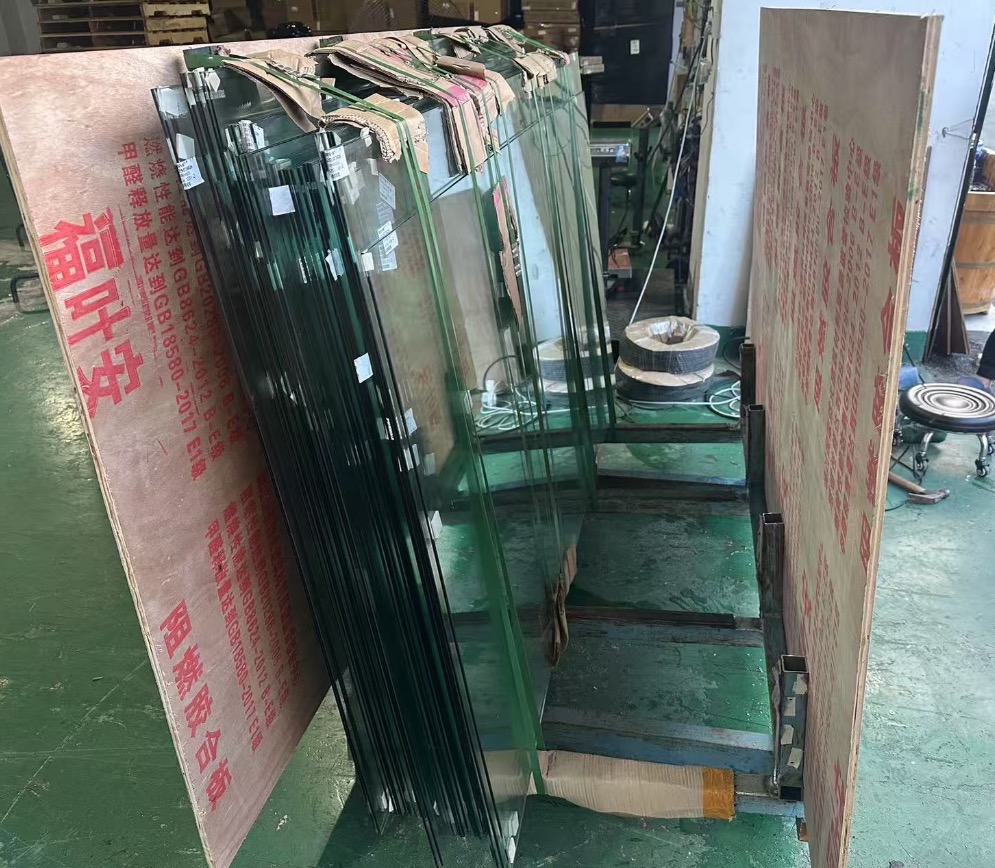
On finished surfaces, surface treatment matters as much as break force.
A sixth, lighter entry completes the range: Paper Strapping Tape at 5–16 mm width and 25–150 kg break force, made from 94% kraft paper with a water-soluble adhesive, for cartons and parcels where a plastic-free specification is the requirement rather than the preference.
How to read the specifications behind each pick
Four parameters do most of the work in confirming a shortlist choice. Break force sets the load ceiling and is quoted in kilograms or newtons; Jushuo's PET range runs 160–1,360 kg and its PP range 45–270 kg. Elongation sets retention: PET is held at ≤10% and ≤6% in the high-strength series, while PP sits at ≤20%. Straightness, expressed as deflection in mm per metre, sets whether an automatic head will feed the roll; ≤5 mm/m is the standard and ≤3 mm/m is used where line speed is highest. Surface finish sets friction and grip: smooth reduces friction for high-speed feeding, embossed adds grip to stop load shifting.
Two further checks complete a shortlist entry. Compliance context: PET formats are specified against GB/T 22344-2018 and PP formats against QB/T 3811-1999, with ISO 9001 and ISO 14001 certified production and SGS test reports available — a 12 mm PET strap is reported at ≥3,000 N break force with 5–9% elongation. And colour or print: base colour, custom printing and embossing are all specification decisions that should be fixed before sampling rather than after.
Where this shortlist stops working
The limits are as important as the picks. PP cannot substitute for PET on heavy loads: at 45–270 kg of break force, it is the wrong choice for steel coils, stone blocks or two- to five-ton brick pallets, regardless of price advantage. Conversely, PET is not a universal upgrade — it is stiffer than PP, so in high-volume manual stations bundling small, irregular cartons, hand grade PP remains the more practical format, and specifying PET there adds handling effort without adding retention.
Function-specific formats carry a cost premium that buyers should budget for rather than discover later. Anti-static and flame-retardant PET used in photovoltaic and battery packaging adds roughly 5–10% over standard PET, and custom printing adds roughly 3–5%. Embossing improves grip but reduces print clarity, so a strap cannot simultaneously maximise both. Paper strapping, at 25–150 kg, is a light-to-medium format only. Finally, none of these formats is a fix for poor machine alignment: a strap with ≤5 mm/m deflection will still jam on a badly maintained track.
Market trend: shortlists are shifting from material to function
Across the light-industrial applications covered here, three requirement shifts are visible in how buyers specify. The first is steel replacement on cost and safety grounds: PET formats are positioned at 35–40% lower material cost than steel strapping with comparable strength, no rust and no spring-back injury risk. The second is recyclability as a line-item requirement rather than a slogan — 100% recyclable materials, and paper strapping that recycles with ordinary paper waste for buyers facing plastic packaging obligations. The third is function-specific engineering: anti-static and flame-retardant formats for photovoltaic and battery packaging, UV-stabilised formats for outdoor pallet storage, and clarity-controlled formats for regulated cartons.
What these shifts have in common is that they push selection away from "PP or PET" and toward a job description. That is precisely the logic a shortlist encodes.
Future outlook
Two directions look structural rather than cyclical. The first is tighter coupling between strap specification and line speed: as automatic strapping speeds rise, deflection and grammage tolerance become purchasing criteria in their own right, not secondary quality notes. The second is the strap as an information carrier — printed brand marks, batch codes and anti-counterfeiting patterns, which turn a consumable into part of the packaging record.
For buyers, the practical implication is that a shortlist should be revisited whenever the line, the load or the labelling requirement changes, rather than renewed annually on price alone.
Shortlisting next step
Buyers who have matched a format to an application can shortlist the corresponding specification — width, thickness, break force, surface, colour and print — with Jushuo Packaging at www.jushuopackaging.com. Samples and SGS test reports are available on request for the formats discussed above.
FAQ
What is the difference between PP strapping and PET strapping?
PP (polypropylene) strapping is a lighter-duty format with break force typically in the 45–270 kg range and elongation up to 20%, used for cartons, parcels and light pallets. PET (polyester) strapping is a higher-strength format with break force from 160 kg to 1,360 kg and elongation of 10% or less, used for heavy loads such as steel, stone, brick, glass and high-compression fiber bales.
What is the difference between machine grade and hand grade plastic strapping?
Machine grade strapping is engineered for automatic and semi-automatic strapping heads: it has controlled straightness (deflection ≤5 mm/m), smooth or embossed surfaces for consistent friction, and uniform thickness and grammage so it feeds without jamming. Hand grade strapping is formulated for flexibility so it can be tensioned, knotted and cut with hand tools. The same material can exist in both grades; for example, Jushuo's PET banding is offered in machine smooth, machine embossed, hand smooth and hand embossed variants.
Which plastic strapping is used for fiber bale bundling?
Fiber bale bundling commonly uses machine grade PP at 12 mm width with break force of at least 1,400 N and measured deflection of ≤3 mm/m, which suits automatic lines running at high pack rates. Where bales are heavier or require higher compression, PET strapping at 16 mm is used instead, because its elongation of 10% or less holds tension during long-haul transport. Sateri (China) Fiber is listed among the verified users of Jushuo's machine grade PP strap for this application.
What widths and break forces are available in Jushuo's plastic strapping range?
PET strapping is supplied in widths of 9–25 mm, thickness of 0.40–1.27 mm and break force of 160–1,360 kg, with 406 mm cores and roll lengths of 550–3,800 m. PP strapping is supplied in widths of 5–19 mm, thickness of 0.35–0.8 mm and break force of 45–270 kg. Paper strapping is supplied in widths of 5–16 mm with 25–150 kg break force and roll lengths of 1,000–4,000 m.
Which strapping keeps carton labels readable after bundling?
Transparent formats are used where barcodes, batch numbers or expiry dates must remain readable through the strap. Clear PET is supplied from 9–25 mm width with 180–1,360 kg break force, and clear PP is supplied at 9–12 mm width with 110–136 kg break force. Pharmaceutical packers use transparent strap on medicine cartons specifically to keep batch numbers and expiry dates visible for regulatory compliance.
What should a buyer confirm before shortlisting a plastic strapping specification?
A buyer should confirm five items: the load weight and edge condition, which set the required break force; the strapping method (automatic, semi-automatic or manual), which sets the grade; the required elongation and the acceptable residual tension over the shipment duration; the surface and colour requirement, including whether printing is needed; and the compliance documentation required, such as GB/T 22344-2018 for PET, QB/T 3811-1999 for PP, and SGS test reports. Confirming these five before sampling avoids re-specification later.
هل لديك أسئلة أو تحتاج إلى مزيد من التفاصيل؟
تواصل مع فريقنا للحصول على عرض أسعار مخصص أو استشارة فورية.
طلب عرض أسعار
املأ النموذج أدناه وسيتواصل معك فريقنا بعرض مقترح مخصص.
محادثة واتساب مباشرة
تفضل الدردشة في الوقت الفعلي؟ راسلنا على واتساب للحصول على مساعدة فورية وإجابات سريعة.
- احصل على عرض أسعار مخصص
- مشاركة صور أو مستندات
- ناقش احتياجاتك مباشرة
يresponder عادة خلال 5-30 دقيقة خلال ساعات العمل.