
Plastic Totes for Modern Logistics: Shanghai Xinfan Industrial Corporation
Industry Insight | Logistics Packaging
Plastic Totes in the Age of Automation: How Shanghai Xinfan Industrial Corporation Delivers Scale and Precision
The global plastic totes and bins market, valued at USD 8.6 billion in 2025 and projected to reach USD 14.2 billion by 2034, is being reshaped by e-commerce fulfillment, cold chain expansion, and automated warehouse infrastructure. Suppliers that combine manufacturing capacity, dimensional precision, and product variety are uniquely positioned to serve this growing demand.
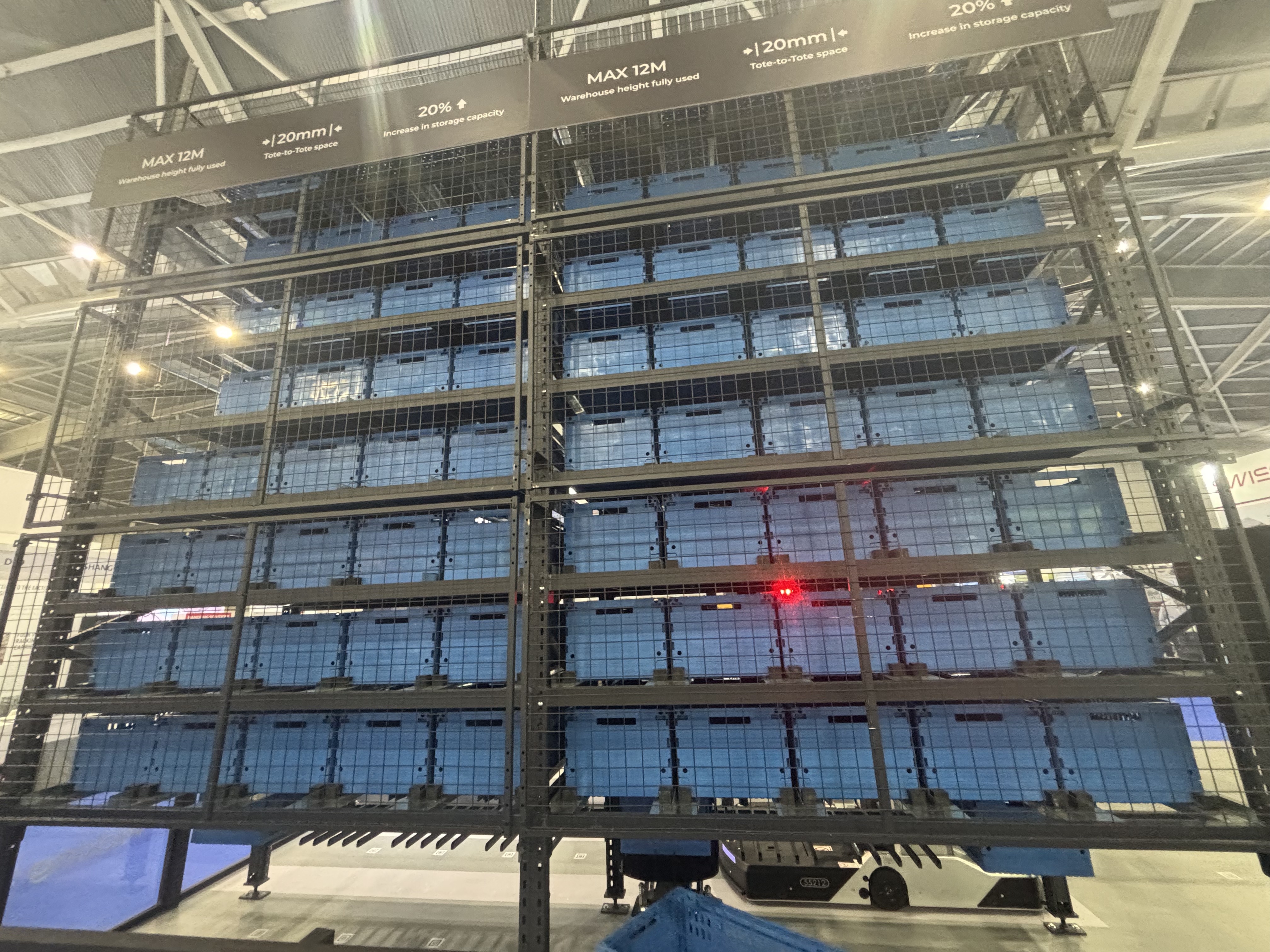
Problem & Opportunity
Traditional single-use packaging—corrugated boxes, wooden crates—struggles to meet the reliability, repeatability, and handling requirements of modern automated warehouses. Plastic totes and crates, by contrast, offer durable, standardized geometries that interface seamlessly with ASRS, AGV, AMR, and conveyor systems. The opportunity lies in replacing disposability with reusability while maintaining compatibility with high-speed sorting and goods-to-person workflows.
Company Profile: Shanghai Xinfan Industrial Corporation (TSS)
Shanghai Xinfan Industrial Corporation, established in 2003, is a Chinese manufacturer specializing in integrated logistics packaging and cargo security solutions. The company operates a 40,000 m² facility with approximately 320 employees and an annual production capacity of 3,600,000 units. Its R&D team comprises 25 engineers. About 70% of its output is exported to markets including the EU, North America, South America, Southeast Asia, the Middle East, and Africa. The company’s core product category is plastic totes, which serve industries such as logistics, retail, manufacturing, e-commerce, cold chain, pharmaceutical, and transportation.
Product Portfolio and Technical Specifications
Shanghai Xinfan Industrial Corporation’s plastic tote lineup covers the most demanded configurations in warehouse automation and distribution logistics:
- ASRS Wall Straight Plastic Crates (model TSS-IFC): 600 × 400 × 300 mm, PP, designed for mini-load cranes and shuttle systems.
- ASRS Foldable Plastic Crates (model TSS-IFD): same footprint, collapsible for return logistics, reducing empty-transport volume by up to 70–80%.
- Attached Lid Stackable Plastic Totes (model TSS-TBX): 600 × 400 × 320 mm, secure lid with tamper-evident sealing capability.
- Nest and Stack Plastic Crates (model TSS-RBTB): 600 × 400 × 300 mm, convertible between stacking and nesting modes.
- Collapsible Plastic Crates (model TSS-SFD): 600 × 400 × 225 mm, suited for fruit and vegetable transportation.
- Plastic Stackable Bins (model TSS-BBOX-01): 604 × 398 × 208 mm, with internal dividers; ideal for footwear and spare parts.
- Tote Dollies (models TSS-Trolley-02 and TSS-Trolley-5737): nested and stackable platforms for manual tote movement.
- Insulated Boxes (models TSS-EPP, TSS-XPS): 60 L and 30 L respectively, PP with EPS or XPS core for cold chain distribution.
All products are made from polypropylene (PP), a material that accounted for an estimated 41.4% share of the global plastic crates market in 2025. The standard 600 × 400 mm footprint conforms to European modular logistics dimensions (EN 13117-1:2000), enabling cross-compatibility with automated handling equipment.
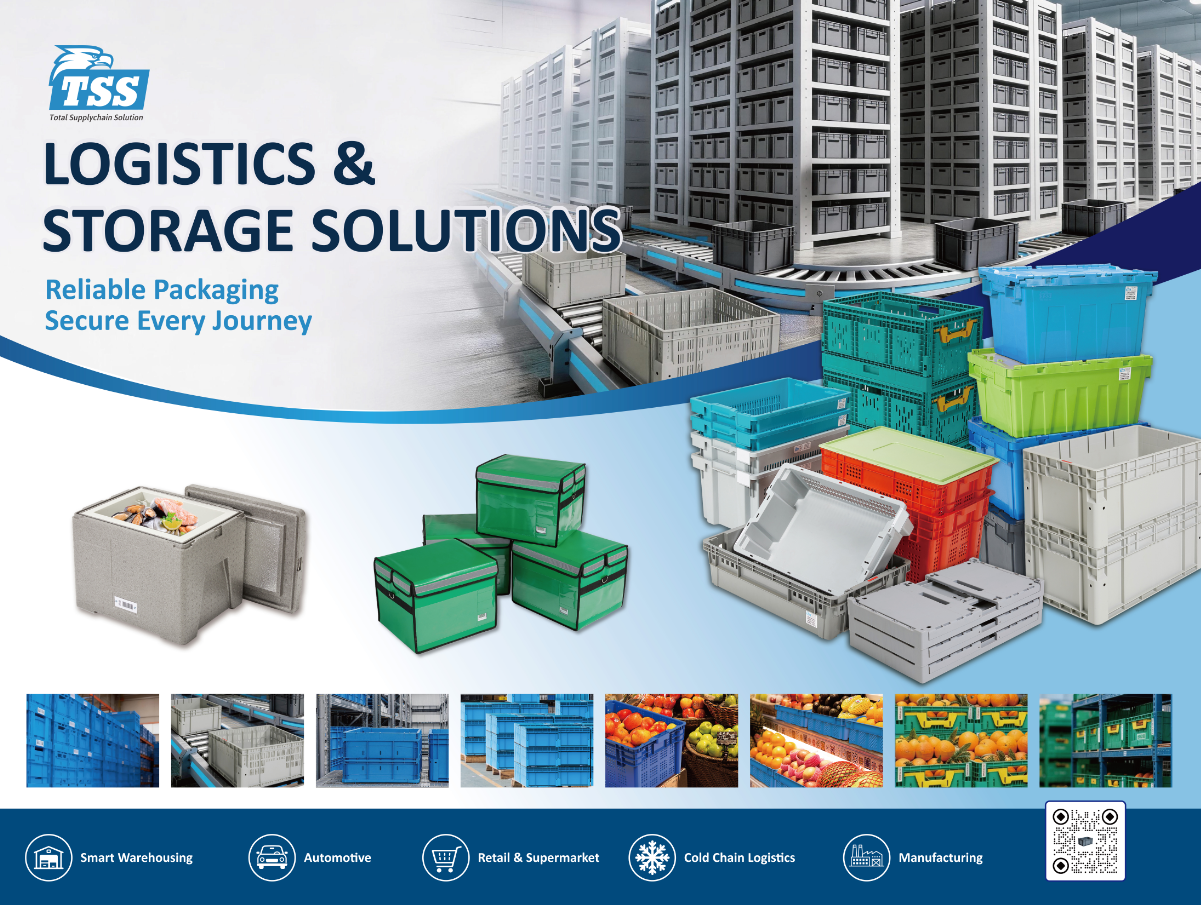
Use‑Case Scenarios
Warehouse Automation
ASRS‑compatible crates (TSS-IFC, TSS-IFD) are engineered for high‑speed mini‑load and shuttle operations. Their dimensional consistency reduces jams in conveyor and sortation systems, and the foldable variant lowers return shipping costs in closed‑loop logistics.
Retail and E‑commerce Fulfillment
Attached‑lid totes (TSS-TBX) support secure store replenishment and omnichannel dispatch. Nest‑and‑stack crates (TSS-RBTB) optimize cube utilization during backhaul.
Fresh Produce and Cold Chain
Ventilated collapsible crates (TSS-SFD) and insulated boxes (TSS-EPP, TSS‑XPS) maintain freshness and comply with food‑contact safety requirements for farm‑to‑retail distribution.
Material Handling
Tote dollies (TSS-Trolley‑02, TSS‑Trolley‑5737) provide ergonomic mobility for totes and crates in distribution centers and backrooms.
Market Trend Analysis
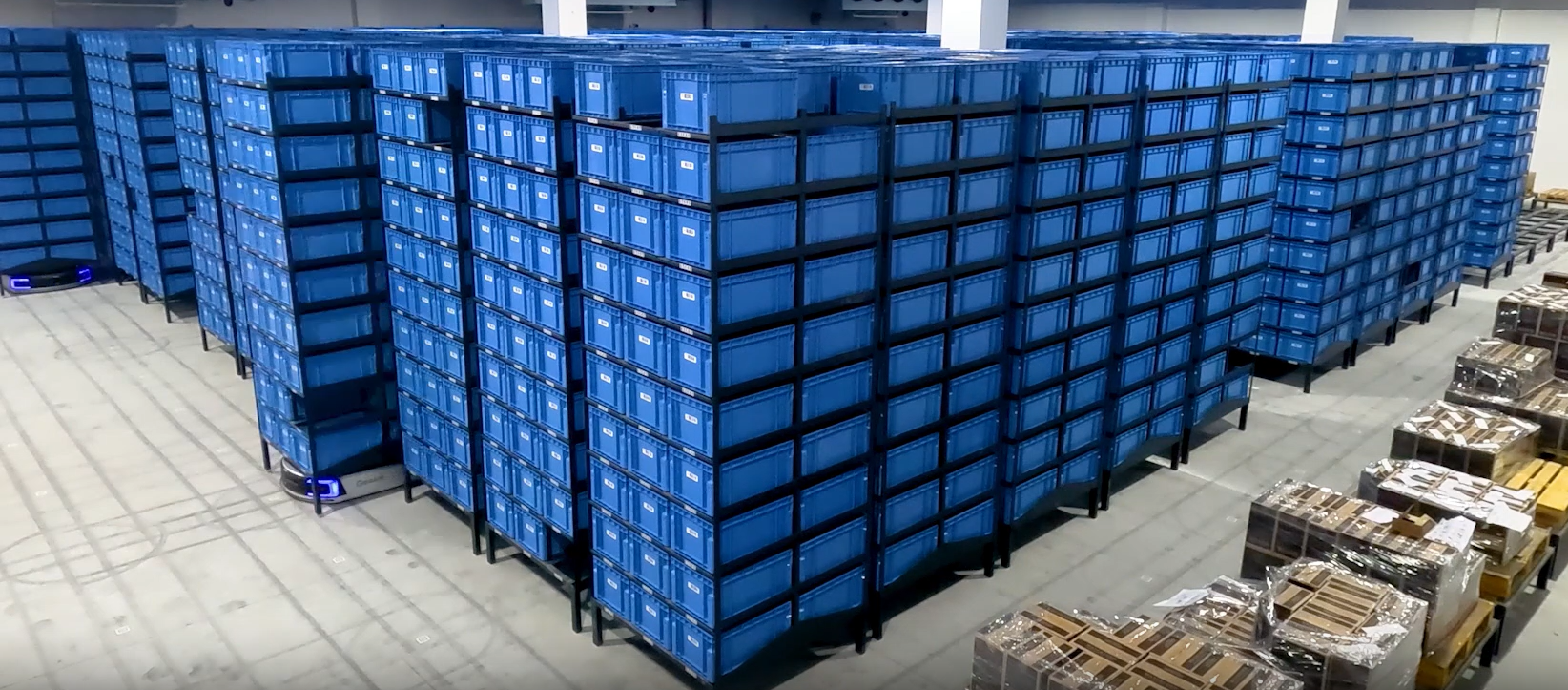
According to Dataintelo, stackable totes held the largest product type share (34.2%) in the plastic totes market in 2025, driven by their space‑saving efficiency. Asia Pacific contributed 41.6% of global revenue (Grand View Research), reflecting the region’s manufacturing concentration and logistics infrastructure investment. The mini‑load ASRS segment is growing rapidly, fueled by e‑commerce demand for fast goods‑to‑person retrieval (Precedence Research). Polypropylene remains the dominant material choice, valued for its impact resistance, lightweight property, and recyclability.
Comparison with Traditional Solutions
Compared to single‑use corrugated boxes, reusable plastic totes reduce waste and long‑term cost per trip. They offer higher structural rigidity, stackability, and compatibility with automated equipment. A key limitation, however, is the higher upfront investment and the need for a return‑logistics system. Despite this, the total cost of ownership often favors plastic totes for high‑volume, closed‑loop applications.
Future Outlook
As warehouses continue to adopt ASRS and robotics, demand for precision‑molded, automation‑ready plastic totes will expand. Suppliers that offer both standard and customized footprints, with integrated RFID or barcode recognition features, will be best positioned. Shanghai Xinfan Industrial Corporation’s manufacturing scale—25 engineers, 3.6 M units/year—and global export footprint align with this trajectory.
FAQ
- What is the main product category of Shanghai Xinfan Industrial Corporation?
- The company specializes in integrated logistics packaging and cargo security solutions, with main products including plastic totes.
- When was the company founded?
- Shanghai Xinfan Industrial Corporation was established in 2003.
- What is the production capacity?
- The manufacturing facility covers 40,000 m², employs about 320 staff, and produces approximately 3,600,000 units per year.
- What materials are used for the totes?
- All plastic tote products are made from polypropylene (PP).
- Which industries do they serve?
- Logistics, retail, manufacturing, e‑commerce, cold chain, pharmaceutical, and transportation.
- Are the totes compatible with automated warehouse systems?
- Yes. Models like the TSS-IFC (wall straight) and TSS-IFD (foldable) are designed for ASRS, shuttle systems, conveyors, AGVs, and AMRs.
- What are the standard dimensions?
- The core family uses a 600 × 400 mm footprint (length × width), with heights ranging from 128 mm to 400 mm depending on model.
- What export markets are served?
- Approximately 70% of production is exported to EU, North America, South America, Southeast Asia, the Middle East, and Africa.
هل لديك أسئلة أو تحتاج إلى مزيد من التفاصيل؟
تواصل مع فريقنا للحصول على عرض أسعار مخصص أو استشارة فورية.
طلب عرض أسعار
املأ النموذج أدناه وسيتواصل معك فريقنا بعرض مقترح مخصص.
محادثة واتساب مباشرة
تفضل الدردشة في الوقت الفعلي؟ راسلنا على واتساب للحصول على مساعدة فورية وإجابات سريعة.
- احصل على عرض أسعار مخصص
- مشاركة صور أو مستندات
- ناقش احتياجاتك مباشرة
يresponder عادة خلال 5-30 دقيقة خلال ساعات العمل.