
Polyester Polyol Grade Shortlist: PIR Spray, Pentane, Mining
Independent Industry Reference · Rigid PU and PIR Systems
Polyester Polyol Grade Shortlist: PIR Spray, Pentane, Mining
A polyester polyol shortlist is a decision-stage instrument. It reduces an entire chemistry family to the few grades that actually match a blowing agent, a processing route and a performance target, so that formulation engineers and procurement teams compare like with like instead of negotiating price per ton on products that are not interchangeable.
This reference shortlists the XINFA polyester polyol range by application group. High flame retardant grades XF-2007, XF-235P, XF-240P and XF-250P are positioned for PIR spraying insulation, sandwich panels and polyurethane pipes. Pentane system grades XF-435, XF-390, XF-360, XF-2402N and XF-2020 are positioned for home appliances. Mining grades KXF-350 and KXF-280 address mining-industry systems. XINFA refers to Hengshui Xinfa Polyurethane Materials Co., Ltd., a manufacturer of polyester polyol and polyurethane catalysts whose plant occupies 25,000 square metres in the Salt Chemical Circular Economy Park in Jizhou City, Hebei Province, China. The company also supplies amine catalysts such as TEDA and TEDA A33, which is relevant because polyol and catalyst selection are normally decided together.
Why a Grade Shortlist Matters More Than a “Best” Grade
Rigid polyurethane and PIR foam is a reactive system, not a single material. The polyol reacts with isocyanate in the presence of a blowing agent, a catalyst package and a surfactant, and the balance between those components decides density, cell structure, dimensional stability, thermal conductivity and flame behaviour. Change the blowing agent and the required polyol reactivity, solubility and viscosity change with it. That is why “the best polyester polyol” is not a meaningful comparison: the meaningful question is which grade fits a defined set of process and performance conditions.
The cost of getting this wrong is visible on the line rather than on the invoice. A grade whose reactivity profile does not match the blowing agent can shift cream and gel times, which in continuous panel production shows up as poor flow at the far end of the panel, density gradients, or adhesion loss at the facings. In appliance cabinet foaming, an unsuitable viscosity can compromise metering and mixing quality, and entrained moisture can generate uncontrolled CO2 that changes the density the line was set up to produce. In mining systems, where material is often placed in situ under uncontrolled conditions, an incompatible grade can fail to cure as expected.
A shortlist therefore starts from the process — blowing agent, machine, cycle time, density window — and only then moves to price. The three groups below are organised that way.
The Shortlist by Application Group
1. High flame retardant grades: XF-2007, XF-235P, XF-240P and XF-250P
PIR spraying insulation, sandwich panels and polyurethane pipe insulation share a requirement that other rigid foam segments do not: flame performance has to be built into the polyol backbone rather than added on top of it. Aromatic polyester polyols dominate these systems because the aromatic structure supports the char-forming behaviour that PIR foam relies on, and because their functionality supports the crosslink density needed for dimensional stability at service temperature.
XINFA positions XF-2007, XF-235P, XF-240P and XF-250P as its high flame retardant group for this segment. The four grades are grouped because they serve the same regulatory and performance driver, not because they are interchangeable. The three processing routes weight the parameters differently. In spraying foam, the grade has to support a reaction fast enough for the foam to build on a vertical or overhead surface without sagging. In continuous sandwich panel lines, flow through a long cavity and adhesion to facings matter more than rise speed. In polyurethane pipe insulation, the constraint is often the annular gap and the need for uniform density around the circumference.
Because this shortlist does not publish individual specification anchors for the four grades, the practical selection step is to obtain the grade-level datasheet for each candidate and confirm with the supplier which one is recommended for the specific line. Flame performance for this group can be checked in the laboratory: XINFA’s facility includes oxygen index testing equipment used to characterise foam samples.
2. Pentane system grades: XF-435, XF-390, XF-360, XF-2402N and XF-2020
Home appliance foam — refrigerators, freezers and comparable insulated cabinets — is dominated by hydrocarbon blowing agents, typically cyclopentane and isopentane blends, chosen for low global warming potential and compatibility with closed cabinet foaming lines. Hydrocarbon blowing agents place two hard demands on the polyol: it must remain compatible with the hydrocarbon under process conditions, and its viscosity must allow reliable metering and mixing at the line’s temperature and pressure.
The XINFA pentane system group for home appliances comprises XF-435, XF-390, XF-360, XF-2402N and XF-2020. Of these, XF-435 carries a published hydroxyl value of 500±50 mgKOH/g, the highest anchor disclosed anywhere in this shortlist. A high hydroxyl value indicates a high concentration of reactive OH groups, which in practice means a tighter, faster-curing network and a lower polyol mass required to reach a given index. XF-390, XF-360, XF-2402N and XF-2020 complete the group for formulations where the appliance line, the blowing agent blend or the target density calls for a different reactivity balance.
Buyers should request the individual datasheet before fixing the isocyanate index. The index is calculated from hydroxyl value, not from a grade name, and the tolerance band around that value is part of the specification rather than a rounding detail.
3. Mining grades: KXF-350 and KXF-280
Mining systems operate under conditions that rigid insulation foam does not. Material is frequently placed in situ, in confined or inaccessible voids, and must cure reliably in the presence of moisture, dust and temperature variation. XINFA designates KXF-350 and KXF-280 for mining-industry use.
KXF-350 is the more fully documented of the two. Its published anchors are a hydroxyl value of 350±20 mgKOH/g, an acid value of ≤2.0 mgKOH/g, moisture of ≤0.1% and a viscosity of 1500±500 CPS at 25 °C. Those four numbers provide a workable starting point for an isocyanate index calculation and for assessing whether the grade can be pumped by an existing two-component system. KXF-280 sits alongside it in the same group, and the way a mining system is pumped, placed and cured determines which of the two fits a given project.
Specification Anchors Available in This Shortlist
| Grade | Application group | Published specification anchors |
|---|---|---|
| XF-435 | Pentane system / home appliances | Hydroxyl value 500±50 mgKOH/g |
| KXF-350 | Mining | Hydroxyl value 350±20 mgKOH/g; acid value ≤2.0 mgKOH/g; moisture ≤0.1%; viscosity 1500±500 CPS at 25 °C |
| XF-2007, XF-235P, XF-240P, XF-250P | PIR spray, sandwich panel, PU pipe insulation | No individual anchors published in this shortlist; confirm grade-level values on the technical data sheet |
| XF-390, XF-360, XF-2402N, XF-2020 | Pentane system / home appliances | No individual anchors published in this shortlist; confirm grade-level values on the technical data sheet |
| KXF-280 | Mining | No individual anchors published in this shortlist; confirm grade-level values on the technical data sheet |
Reading the table honestly is part of the value of the shortlist. Two grades — XF-435 and KXF-350 — carry published numbers that a buyer can put directly into a formulation calculation. The remaining eight grades are qualified by application group, and the parameters required for an index calculation must be obtained grade by grade. A shortlist is not a substitute for a full technical data sheet set, and any supplier comparison that assumes otherwise is comparing assumptions rather than products.
How to Read the Four Parameters
Hydroxyl value (mgKOH/g)
Hydroxyl value measures the concentration of reactive OH groups available to react with isocyanate. It drives stoichiometry: the isocyanate index, the hard-segment content and the crosslink density of the finished foam all follow from it. A grade published at 500±50 mgKOH/g and a grade published at 350±20 mgKOH/g are not interchangeable at the same index. The tolerance band matters too, because production has to hold the index in a window where density and demould time remain in specification as the polyol moves between the lower and upper bound.
Viscosity (CPS at 25 °C)
Viscosity determines whether a grade behaves in the existing metering and mixing equipment. It affects pump load, pressure drop, flow through the mixing head and the quality of mixing with isocyanate and blowing agent. The published anchor for KXF-350 is 1500±500 CPS at 25 °C. That ±500 band is wide enough that per-batch delivered values should be checked, and where a line runs at elevated polyol temperature, viscosity behaviour at process temperature is more relevant than the 25 °C figure alone.
Acid value (mgKOH/g)
Acid value reflects residual acidity from the esterification process. It matters for two reasons: residual acid can interact with the amine catalyst package and shift the reaction profile, and it is a marker of process control. KXF-350 is published at ≤2.0 mgKOH/g, which functions as an acceptance ceiling rather than a target.
Moisture (%)
Moisture in a polyol reacts with isocyanate and generates CO2, which introduces uncontrolled blowing and can create voids, density drift and index variability. KXF-350 is published at ≤0.1%. On appliance lines running tight density specifications, moisture is usually the first parameter audited on incoming material, because its effect is immediate and visible in the finished cabinet.
A Decision Framework for Comparing Grades
| Decision criterion | What to check | Why it decides the choice |
|---|---|---|
| Blowing agent compatibility | Water, hydrocarbon (pentane/cyclopentane) or HFO-blown system | The polyol must be compatible with the blowing agent under process conditions; this alone separates the pentane system group from the PIR group |
| Stoichiometry | Published hydroxyl value and its tolerance band | Determines the isocyanate index, density and demould behaviour |
| Processing | Viscosity at process temperature; machine type and mixing head | A grade that cannot be metered or mixed consistently cannot be used, regardless of price |
| Quality risk | Acid value and moisture ceilings | Both shift the reaction profile and create batch-to-batch variability |
| Application performance | Flame behaviour, thermal conductivity, dimensional stability, adhesion to facings | Separates grades within the same group, for example across spray, panel and pipe processes |
| Documentation and consistency | Per-batch inspection records; management-system certification | Determines whether the trial result can be reproduced at scale |
| Cost in use | Delivered cost per cubic metre of in-specification foam | The only comparison that survives contact with the production line |
Applied in sequence, this framework eliminates quickly. Blowing agent compatibility removes entire groups; stoichiometry and viscosity remove grades within the surviving group; acid value, moisture and documentation decide between final candidates; and cost in use decides between suppliers rather than between grades.
Cost Comparison Against Established Brand Alternatives
XINFA’s own comparison data positions its polyester polyol against American brand equivalents at 10–20% cost savings, with the same quality and performance claim, matched foaming efficiency, and the same density and thermal insulation index when the formula proportion is held constant. The same source states that the matching catalyst system is stable and that no extra maintenance adjustment is required for existing production lines, and that the range is suited to foam industry scenarios on the basis of competitive pricing and customized services.
That is a first-party claim and should be treated as one. It is a hypothesis for a trial, not a substitute for it. The question at decision stage is not whether the price per ton is lower but whether cost in use is lower once density, yield, scrap rate, line speed and flame performance have been checked on the buyer’s own equipment. A grade that is cheaper per ton but requires a higher loading to reach the same density erases the advantage, and a grade that shifts the catalyst balance can consume line-tuning time that a benchmark figure does not capture.
For context on the wider supplier landscape, QYResearch and other industry reports list Stepan, Huafon Group, COIM, BASF SE, Covestro AG and Dow Inc. among the key global players in the polyester polyol market, with the top three holding roughly 30% share. For most buyers the realistic decision is therefore between an established global brand and a regional manufacturer competing on price, customization and proximity to Asian supply chains — which is precisely why a shortlist with published parameters is more useful than a brand ranking alone.
Where This Shortlist Stops: Limits and Conditions
- Not every grade carries a published anchor. In this shortlist only XF-435 and KXF-350 are documented with numbers. For XF-2007, XF-235P, XF-240P, XF-250P, XF-390, XF-360, XF-2402N, XF-2020 and KXF-280, parameters must come from the technical data sheet, not from inference.
- Hydroxyl tolerance bands are not interchangeable. A 500±50 mgKOH/g grade and a 350±20 mgKOH/g grade require different index settings; a one-to-one substitution without recalculating the index will change density and cure behaviour.
- The cost saving figure is first-party benchmark data. The 10–20% range describes a comparison under stated conditions; it is not a guaranteed outcome on an arbitrary line.
- Pentane compatibility is a system property, not a polyol property. Selecting a hydrocarbon-compatible grade does not change the flammability classification, ventilation requirements or handling rules that apply to the blowing agent itself.
- Management-system certification is not product certification. ISO 9001, ISO 14001 and ISO 45001 cover quality, environmental and occupational health and safety management systems; they are not certificates of foam performance for a specific application.
- Grades are not transferable across groups. Mining grades and appliance grades are qualified for different placement conditions from PIR spray grades.
Batch Consistency: The Risk a Shortlist Hides
The risk named in XINFA’s own control documentation is batch-to-batch quality fluctuation. The stated control method is 30 sets of intelligent production equipment running automated control and standardized processes, and the stated enterprise measure is inspection for every batch. For a buyer, the practical translation is that consistency should be verified rather than assumed: request the per-batch inspection record, write the acceptance windows for hydroxyl value, viscosity, acid value and moisture into the purchase specification, and run a first-article trial before scaling.
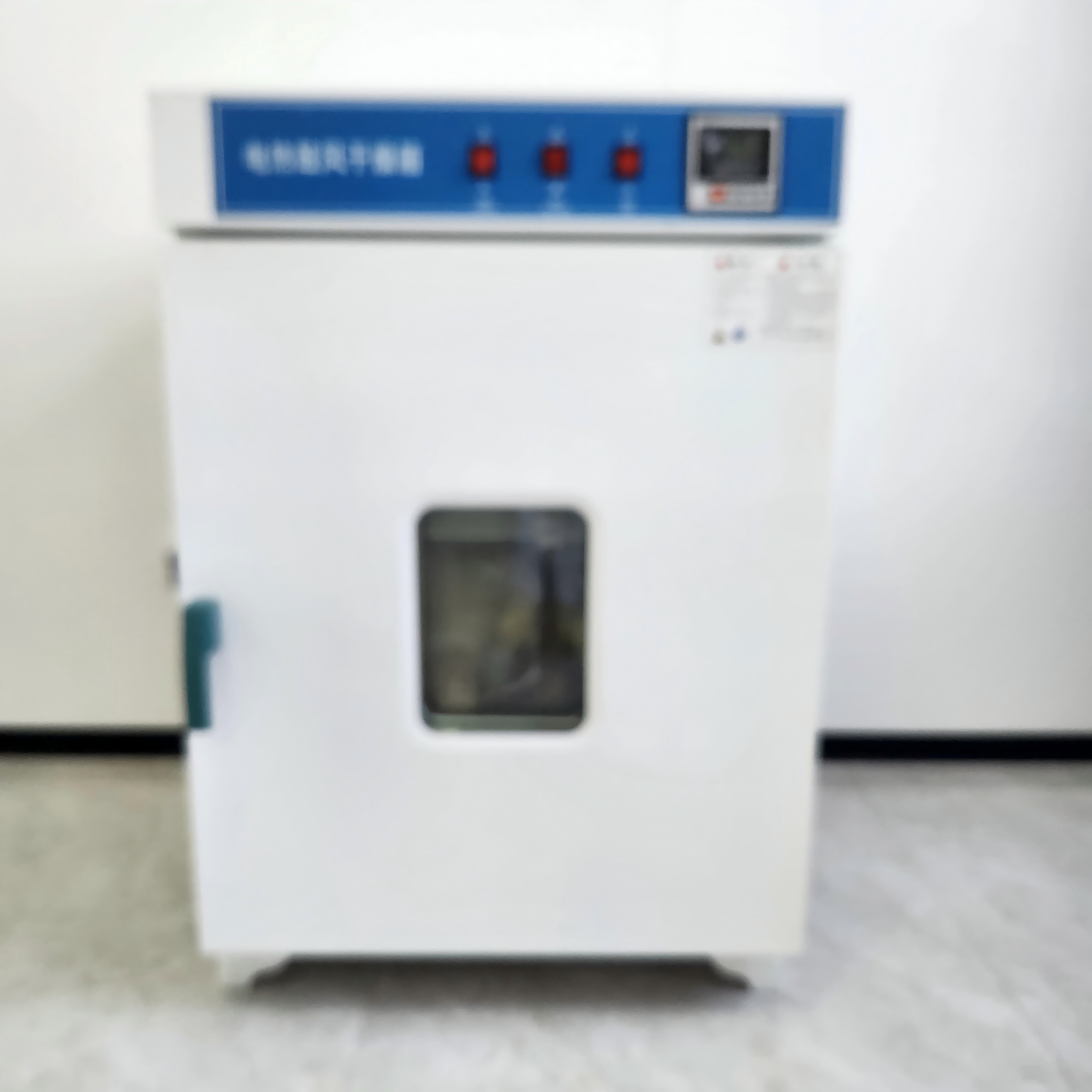
Sample conditioning and inspection equipment used to hold polyester polyol and foam test results within defined acceptance windows.
Production context matters for the same reason. XINFA reports 50,000 tons per year of polyester polyol series capacity from a 25,000 square metre plant, with more than 60 employees including 13 management and research and development technicians, and export operations handled through its wholly-owned subsidiary Hebei Xinshe Technology Co., Ltd. in Shijiazhuang. For a buyer running PIR spray, appliance pentane and mining systems, the relevant point is not the size of the number but whether a single supplier can cover the shortlist under one quality system — which reduces the number of qualification audits and removes the risk of split supply across application groups.
Market Trend Analysis
Grand View Research estimates the global polyester polyol market at USD 9,654.2 million in 2024, projected to reach USD 15,033.3 million by 2033. Scope differences between research houses matter and should be stated rather than averaged: Fortune Business Insights and Market Research Future publish materially lower estimates, at USD 7.01 billion for 2025 and USD 7.11 billion for 2024 respectively, reflecting different definitions of the product scope. Buyers who use market data for capacity planning are better served by comparing like-for-like scope than by treating one figure as definitive.
Asia Pacific accounted for 43.7% of polyester polyol revenue in 2024, with China expected to grow at the highest CAGR of 5.2% through 2033, according to Grand View Research. The aromatic segment, which is the backbone chemistry of most PIR insulation and appliance systems, was valued at USD 1.9 billion in 2026 and is projected to grow at a 5.9% CAGR to USD 2.8 billion by 2033 (Persistence Market Research). Aromatic polyester polyols also held 61.4% of the bio-based polyester polyol from bio-succinic acid market in 2024 — an indication of how dominant the aromatic route remains even in sustainability-oriented segments.
On the demand side, polyester polyols for rigid PU and PIR insulation are supported by regulation, notably the EU Energy Performance of Buildings Directive (EU) 2024/1275, which continues to drive insulation demand in European construction. On the reaction side, the global polyurethane catalyst market was USD 2.46 billion in 2024, with amine catalysts — the category that includes TEDA (triethylenediamine, CAS 280-57-9) and TEDA A33 — holding 28.6% of revenue. The TEDA market alone was estimated at USD 740 million in 2024 and is projected to reach USD 1.22 billion by 2034 at a 5.1% CAGR.
Future Outlook
Three developments are likely to shape grade selection over the remainder of the decade. First, building energy regulation keeps pushing rigid PIR insulation towards stronger flame performance and lower thermal conductivity, which favours high-functionality aromatic grades such as the XF-2007, XF-235P, XF-240P and XF-250P group; the open question for buyers is which of those grades their line can run without re-tuning. Second, blowing agent transitions continue in appliance foam, and every transition reopens the polyol compatibility question — pentane system grades such as XF-435, XF-390, XF-360, XF-2402N and XF-2020 will be re-evaluated line by line rather than once for all. Third, supply diversification: with Asia Pacific holding 43.7% of polyester polyol revenue and China growing fastest, buyers who currently single-source from European or American brands have a structural reason to qualify at least one Asian grade as a second source — while accepting that qualification takes trials, documentation and time, not a purchase order.
FAQ
How should a buyer choose between the high flame retardant grades XF-2007, XF-235P, XF-240P and XF-250P?
The four grades are presented as one high flame retardant group covering PIR spraying insulation, sandwich panels and polyurethane pipes, and this shortlist does not publish individual specification anchors for them. Selection within the group is therefore decided by the process: spray application, continuous panel lines and pipe insulation weight reactivity, flow and density uniformity differently, and each route narrows the group to one or two candidates. Because grade-level hydroxyl value, viscosity and moisture are not disclosed here, the workable sequence is to request the individual datasheet for each candidate and validate the chosen grade on the line before switching. Treating the four grades as interchangeable because they share a group name would remove the value of the shortlist.
What hydroxyl value should a pentane-blown appliance foam target?
Hydroxyl value determines the isocyanate index and the crosslink density of the finished foam, so it should be derived from the formulation requirement rather than from a general recommendation. Within this shortlist, XF-435 is the pentane system grade with a published anchor at 500±50 mgKOH/g; XF-390, XF-360, XF-2402N and XF-2020 complete the group without published anchors in this document. A buyer running a cyclopentane or isopentane cabinet line should obtain the hydroxyl value for each candidate, recalculate the index at the midpoint and at both tolerance bounds, and confirm that the resulting density and demould time still meet the cabinet specification.
Which parameters matter most when comparing polyester polyol grades from different suppliers?
Four parameters do most of the work. Hydroxyl value controls stoichiometry and crosslinking, and is the number an index calculation is built on. Viscosity, expressed in CPS at 25 °C, determines whether the grade meters and mixes correctly in existing equipment; KXF-350 is published at 1500±500 CPS at 25 °C. Acid value reflects residual acidity that can interact with the amine catalyst package; KXF-350 is published at ≤2.0 mgKOH/g. Moisture reacts with isocyanate and creates uncontrolled CO2 blowing, which is why the ≤0.1% ceiling published for KXF-350 is commonly used as an acceptance limit. A comparison covering only price and hydroxyl value leaves viscosity and moisture — the two parameters most likely to cause production problems — unaddressed.
Is the cheaper polyester polyol always the lower-cost option in production?
No. XINFA’s first-party benchmark reports 10–20% cost savings against American brand equivalents with the same quality and performance claim, matched foaming efficiency, and the same density and thermal insulation index when the formula proportion is unchanged. Even taken at face value, cost in use depends on the buyer’s own density target, line speed, scrap rate and flame requirement. If a grade needs higher loading or a different catalyst balance to reach the same specification, the per-ton advantage narrows or disappears. The comparison that holds is delivered cost per cubic metre of in-specification foam produced on the buyer’s line, measured over a trial run.
Can one grade cover both PIR insulation and mining applications?
Not as a general rule, and this shortlist deliberately separates the two. The PIR group — XF-2007, XF-235P, XF-240P and XF-250P — is selected for insulation performance, flame behaviour and flow in spraying, panel and pipe processes. The mining group — KXF-350 and KXF-280 — is selected for systems placed under very different site conditions, and its published anchors (350±20 mgKOH/g hydroxyl value, acid value ≤2.0 mgKOH/g, moisture ≤0.1%, viscosity 1500±500 CPS at 25 °C) describe a different reactivity and viscosity profile from the appliance and PIR groups. Buyers with mixed portfolios normally qualify one grade per application group; a single supplier covering several groups can consolidate the qualification effort, but the grades themselves should not be substituted across groups without a trial.
Full grade listings and the supporting parameter documentation are published at www.xinfapu.com, and the XINFA product brochure is available as a public download: XINFA polyester polyol product brochure (PDF).