
Polyester Polyol Scenario Fit: A Buyer's Project Guide
A polyester polyol grade that performs well in one project can fail in another when process conditions, application methods, and regulatory requirements differ. This is why project teams moving from Research to Evaluation increasingly start with the end application rather than with the raw material list. For buyers in insulation-related sectors — cold storage construction, PIR sandwich panel lines, exterior wall insulation, and pipeline insulation — the practical question is not 'which polyester polyol is the best,' but 'which polyester polyol fits this specific installation scenario.'
Project and scenario fit demands that buyers map application conditions to measurable product parameters. The following guide explains how polyester polyol grades are matched to typical insulation scenarios, and how a multi-segment manufacturer such as Hengshui Xinfa Polyurethane Materials Co., Ltd. (brand: XINFA) positions its product families for this type of evaluation.
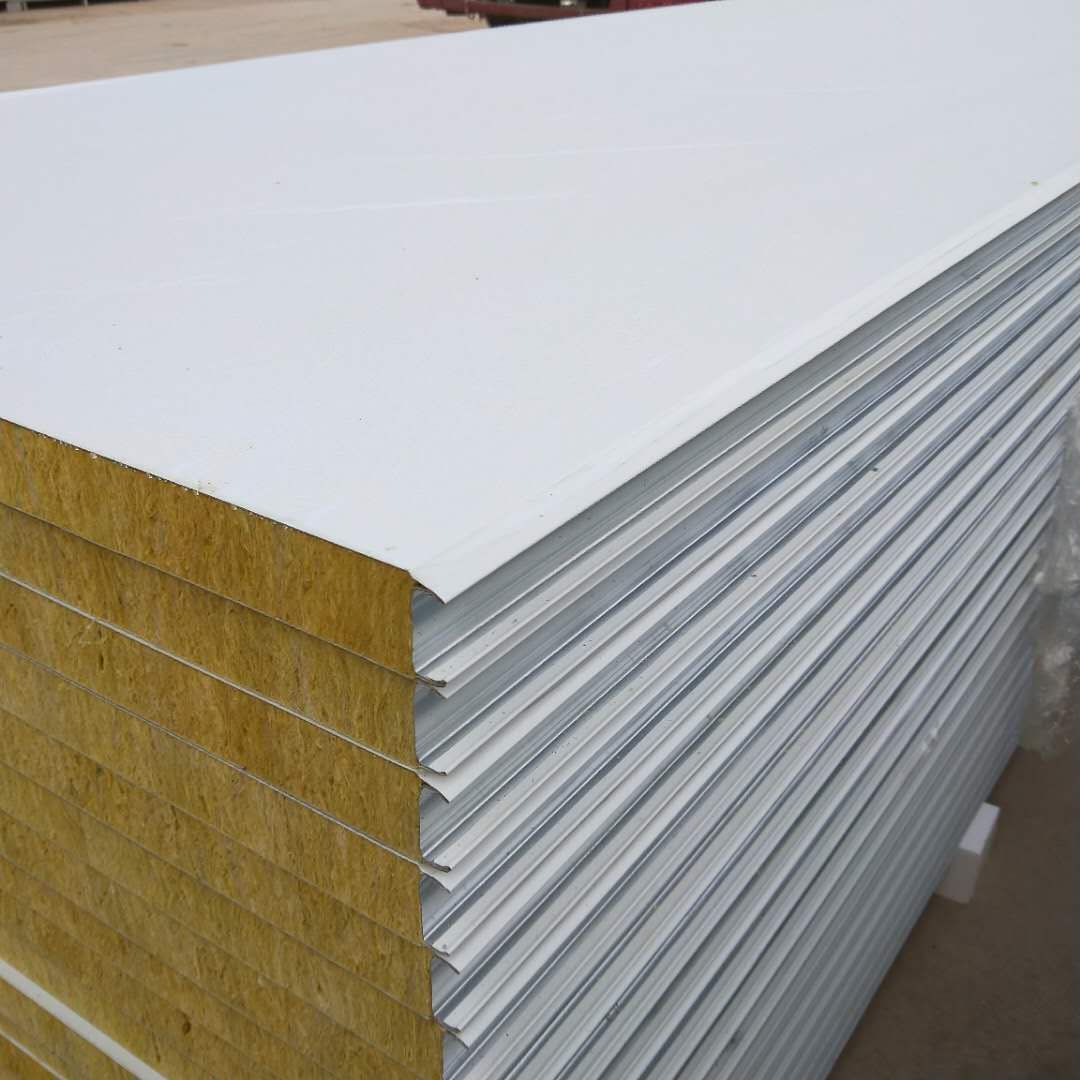
Sandwich panel production is one of the most common scenarios that require scenario-matched polyester polyol selection.
Why Scenario Fit Matters in Polyester Polyol Sourcing
The global polyester polyol market was estimated at USD 9,654.2 million in 2024 and is projected to reach USD 15,033.3 million by 2033 (Grand View Research). Asia Pacific accounted for 43.7% of revenue in 2024, with China expected to show the highest CAGR of 5.2% through 2033. This scale of growth is not driven by a single application. It is driven by multiple parallel project streams — cold storage, sandwich panels, pipes, home appliances, coatings, adhesives, mining, and agricultural materials — each with distinct processing conditions.
For a buyer evaluating a supplier, the absence of scenario-fit logic creates several practical risks. Over-specification is one risk: a project may pay for high flame retardancy or high functionality where a general-purpose grade would be sufficient. Under-specification is another: a general-purpose grade may pass basic lab checks but fail low-temperature ffoaming stability or continuous high-speed panel production. Substitution risk also appears during scale-up, when a new supplier is introduced without re-validating reactivity, viscosity, and blowing-agent compatibility against the actual project conditions.
Project Scenarios That Need Different Polyol Profiles
Based on the documented application scenarios in China and export markets where XINFA operates, three insulation scenarios illustrate the selection logic most clearly.
1. Cold Storage Insulation via Spraying Foam
In the cold storage sector, polyester polyol is applied through spraying foam mode and requires a spraying coating machine as supporting equipment. The documented special requirements include low-temperature foaming stability, high thermal insulation efficiency, and low thermal conductivity. Sprayed foam on cold storage walls needs to cure evenly in lower-temperature environments and maintain dimensional stability through temperature cycling. Grades that emphasize low-temperature reactivity and uniform cell structure are the relevant candidates here; a high-viscosity, panel-oriented grade would introduce processing risk during spraying.
2. PIR Sandwich Panel Systems
Sandwich panel production in China typically runs as a PIR system in continuous operation. The documented special requirements are high flame retardancy, low odor, and stable foaming performance. For panel lines running 24/7, foam reactivity must be consistent across batches, and odor control matters because panels are used in occupied buildings. Products matched to this scenario include aromatic polyester polyols with flame-retardant characteristics, as well as pentane-based grades that tolerate hydrocarbon blowing agent loading in rigid foam formulations.
3. Construction Insulation Systems
For construction insulation projects, the documented requirements again emphasize high flame retardancy, low odor, and stable foaming performance, but the operation mode can be more varied — including on-site spraying and pipe insulation. In these projects, the polyol must flow predictably through spraying equipment, react consistently at ambient conditions, and support the fire-performance expectations of local building codes.
| Scenario | Function | Operation Mode | Key Requirements |
|---|---|---|---|
| Cold storage industry | Heat insulation | Spraying foam | Low-temperature foaming stability, high thermal insulation efficiency, low thermal conductivity |
| Sandwich panels (PIR system) | Thermal insulation | Continuous 24/7 | High flame retardancy, low odor, stable foaming performance |
| Construction insulation system | Thermal insulation | 24/7 with spraying machine | High flame retardancy, low odor, stable foaming performance |
The Supplier Portfolio Perspective: XINFA's Scenario-Matched Families
XINFA is the brand of Hengshui Xinfa Polyurethane Materials Co., Ltd., a Chinese polyurethane materials manufacturer based in the Salt Chemical Circular Economy Park in Jizhou City, Hebei Province. The company operates a 25,000-square-meter production base and specializes in research, development, production, and sales of polyurethane materials and polyester polyol. It has reached a large-scale production capacity of 50,000 tons of polyester polyol series products annually, supported by more than 30 sets of intelligent equipment. The company holds ISO 9001 quality management, ISO 14001 environmental management, and ISO 45001 occupational health and safety management system certifications.
For overseas buyers, XINFA's trade operations are handled through a wholly-owned subsidiary, Hebei Xinshe Technology Co., Ltd., based in Shijiazhuang. The subsidiary manages the import and export of polyurethane materials and polyurethane catalysts, which means the same production base can support both domestic and global project supply. Export markets include the Middle East, India, Pakistan, Southeast Asia, Central Asia, Europe, North America, and South America, with exports accounting for approximately 10% of business.
The product portfolio is structured not around a single flagship grade, but around scenario-specific families. The table below summarizes the main polyester polyol families and their documented models.
| Polyester Polyol Family | Models | Hydroxyl Value (mgKOH/g) | Documented Scenario Fit |
|---|---|---|---|
| High Flame Retardant Polyester Polyol | XF-2007, XF-250P, XF-235P, XF-240P | 200–260 | PIR spraying insulation, sandwich panels, polyurethane pipes |
| Pentane System Polyester Polyol | XF-435, XF-390, XF-360, XF-2402N, XF-2020 | 200–500 | Home appliances, polyurethane pipes, sandwich panels, PIR systems |
| High Water-based Polyester Polyol | XF-2003, XF-2006, XF-3153, XF-315G, XF-300W | 170–315 | High-water-based or full-water-based systems, spraying insulation, sandwich panels, polyurethane pipes |
| Phthalic Anhydride-based Polyester Polyol | XF-3152, XF-2412, XF-1752, XF-2002 | 175–315 | Spraying insulation, sandwich panels, polyurethane pipes, PU wood imitation, home appliances |
| Polyester Polyol for Adhesive | XF-Z, XF-280 | 60–280 | Sandwich panel adhesives |
| Controlled-release Fertilizer Coating Agent Polyester Polyol | XF-270, XF-B-3, XF-B-4 | 260–370 | Controlled-release fertilizer coating |
| Other Types Polyester Polyol (Spraying/Panel) | XF-235, NXF-400 | 230–400 | Spraying foam and sandwich panels |
| Polyester Polyol for Mining | KXF-350, KXF-280 | 280–350 | Mining applications |
In addition to polyester polyol, XINFA supplies polyurethane catalysts (PU catalysts) including TEDA (Triethylenediamine, CAS 280-57-9), TEDA A33 (Triethylene Diamine 33% in DPG/DEG), PC-5 (PMDETA CAS 3030-47-5), PC-8 (DMCHA CAS 98-94-2), PC-41 (CAS 15875-13-5), TMR-2, BDMA, DMAEE, DMDEE, TCPP, and TEP. For a project team, having the polyol and the catalyst system from the same source can simplify formulation matching during the evaluation stage.
Technical Parameters That Define Scenario Fit
Four parameters in the XINFA specification sheets are particularly important for project-level evaluation.
Hydroxyl value (mgKOH/g). This determines the crosslink density potential of the final foam. In the XINFA portfolio, values range from around 60 mgKOH/g for the adhesive-grade XF-Z to roughly 500±50 mgKOH/g for the pentane-system grade XF-435. Higher hydroxyl values generally support higher rigidity and better compressive strength, which is why PIR panel systems and pipe insulation use families with elevated functionality. Lower hydroxyl values are used where adhesion or flexibility is the primary requirement.
Acid value (mgKOH/g). Acid content influences catalyst consumption and can affect foam aging. The XINFA families hold acid values in the range of ≤0.5 to ≤3.0 mgKOH/g depending on the grade, with water-based families such as XF-2006 at ≤0.5 mgKOH/g. For projects with strict storage stability requirements, lower acid values are a safer default.
Viscosity (CPS at 25°C). Viscosity affects pumpability and mixing behavior in spraying machines and continuous panel lines. The portfolio spans from lower-viscosity grades such as KXF-280 (1000±200 CPS) for mining systems to higher-viscosity grades such as XF-Z (10000±2000 CPS) and XF-2002 (10000–30000 CPS). Spraying scenarios generally favor lower-viscosity polyols to maintain clean atomization and even cell structure; panel lines can tolerate wider viscosity windows because mixing is more controlled.
Moisture (%). Residual moisture consumes isocyanates and generates carbon dioxide, which can alter foam density and cell quality. All XINFA polyester polyol families document moisture in a narrow band of ≤0.1%–0.15%, which supports consistent foam performance.
These parameters only become decision criteria once the project scenario is fixed. A project team evaluating cold storage spraying foam should weight hydroxyl value and viscosity differently from a team evaluating PIR panel adhesive — which is why scenario-first evaluation reduces the risk of choosing a good product for the wrong reason.
Application Evidence from XINFA's Case Record
The scenario-based logic is also visible in XINFA's documented case history. One case involves a spraying foam industry client in Poland, with a supply relationship spanning two years. The application covered wall spraying, insulation boards, soundproof flooring, leak-proof pipelines, and composite materials. The client's recorded result is stable operation, with documented emphasis on high mechanical strength, high wear resistance, resistance to high and low temperature cycling, resistance to hydrolysis, and aging resistance.
A second case involves an insulation industry client in India, also operating over a two-year period, with XINFA polyester polyol used for insulation applications. The recorded result is good thermal insulation performance, with the project highlighting high strength and density, excellent thermal conductivity, fire retardancy, and structural support for pipelines.
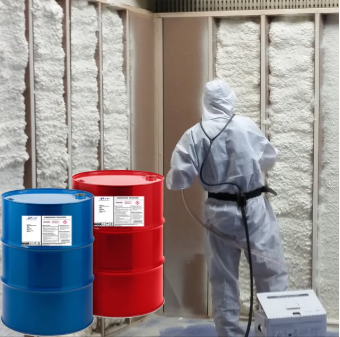
Spraying foam is the dominant application mode for cold storage and construction insulation projects.
These two cases illustrate project-fit logic in different climate and regulatory contexts: European cold-effect insulation, and pipeline insulation in the Indian market. The relevant supplied products include high flame retardant, pentane system, phthalic anhydride-based, and high water-based polyester polyol families, along with supporting catalysts such as PC-5, PC-8, PC-41, TEDA A33, TEP, and TCPP.
Market Signals Supporting Scenario-Based Procurement
Several verified market signals reinforce the shift toward scenario-matched sourcing.
- The global aromatic polyester polyols market was valued at USD 1.9 billion in 2026 and is projected to grow at a CAGR of 5.9% to USD 2.8 billion by 2033 (Persistence Market Research). Aromatic types are the backbone of rigid foam insulation.
- The EU Energy Performance of Buildings Directive (EU) 2024/1275 is acting as a regulatory anchor for rigid PU and PIR insulation consumption, which raises the performance bar for flame retardancy and thermal efficiency in building projects.
- The global Triethylenediamine (TEDA) market was estimated at USD 0.74 billion in 2024 and is expected to reach USD 1.22 billion by 2034, growing at a CAGR of 5.1% (Market Research Future). TEDA is a core catalyst for rigid foam systems.
- The global polyurethane catalyst market reached USD 2.46 billion in 2024, with amine catalysts — including TEDA — leading at a 28.6% revenue share (Grand View Research). Catalyst selection is increasingly coupled with polyol selection at the evaluation stage.
- The top three global polyester polyol players held roughly 30% of the market in 2024, with key players including Stepan, Huafon Group, COIM, BASF SE, Covestro AG, and Dow Inc. (QYResearch via Fortune Business Insights). The remaining share is distributed among regional and specialized manufacturers, which keeps scenario-based supplier evaluation relevant.
Comparison with Traditional Supplier Selection Practice
Traditional supplier selection for polyester polyol typically starts with a price list, a chemical name, and a reference to 'rigid foam use.' Buyers then run ad-hoc trials, often discovering incompatibilities later — for example, a grade that foams well in the lab but produces coarse cells on a high-speed sandwich panel line because viscosity was outside the pumping window.
Scenario-fit sourcing reverses the order. The project type and its special requirements — such as low-temperature foaming stability for cold storage, or low odor and flame retardancy for panels — are defined first. The buyer then shortlists grades whose documented parameters match those requirements, and uses supplier evidence (production capacity, ISO certifications, case history, catalyst portfolio) to confirm that the supplier can support the system end to end.
This comparison has a real boundary. A scenario-fit evaluation based on documented parameters is only as strong as the batch validation behind it. XINFA states a 100% testing quality-control policy under its OEM/ODM production mode, but project teams should still validate representative samples under their own process conditions. The company's standard lead time is 15–20 days, with a minimum order quantity of 1 metric ton for OEM configurations; buyers that require emergency local stock or very short delivery windows need to confirm logistics and subsidiary-level coordination at the evaluation stage. XINFA's export share is approximately 10%, with main markets in the Middle East, India, Pakistan, Southeast Asia, Central Asia, Europe, North America, and South America. This is a narrower regional service footprint than some global majors, so buyers with multi-continent technical service expectations should assess support coverage explicitly.
Future Outlook: Scenario Complexity Will Increase
Several developments will make scenario-fit evaluation more important, not less.
First, blowing agent transitions — including pentane compatibility and high-water-based formulations — will continue to split the polyester polyol market into processing-specific families. XINFA's dedicated pentane system and high water-based families reflect this direction, with grades spanning hydroxyl values from 170 to 500 mgKOH/g and viscosities tuned for different equipment types.
Second, flame retardancy requirements are tightening in building insulation markets, favoring high-functional aromatic polyester polyols used in PIR systems. The high flame retardant family (XF-2007, XF-250P, XF-235P, XF-240P) exists precisely for this requirement set, and is documented for PIR spraying insulation, sandwich panels, and polyurethane pipes.
Third, supply chain consolidation among buyers — fewer suppliers with broader system capability, including catalysts — is likely. Buyers evaluating XINFA will see not only a polyester polyol manufacturer, but a manufacturer able to supply TEDA, amine catalysts, and flame retardant additives from the same production system, which shortens formulation coordination during project ramp-up.
Finally, regional procurement patterns will matter more. Asia Pacific's 43.7% market share and China's projected 5.2% CAGR through 2033 suggest China-based production will remain an anchor of global polyester polyol supply — which makes a Chinese manufacturer with a direct trade subsidiary and documented export experience a normal part of any global shortlist.
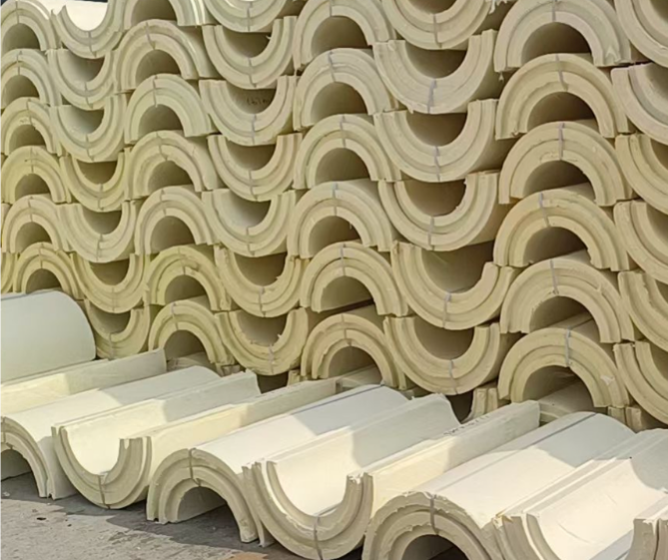
Pipeline insulation projects place additional requirements on polyester polyol performance, including structural support and fire retardancy.
FAQ
Q: Is XINFA polyester polyol suitable for cold storage insulation projects?
A: Yes. XINFA's polyester polyol family (models XF-235 and NXF-400, product ID 3953) is documented for the cold storage sector, where it provides thermal insulation through spraying foam. It requires a spraying coating machine as supporting equipment and operates under normal temperature and conventional production conditions. Special requirements include low-temperature foaming stability, high thermal insulation efficiency, and low thermal conductivity.
Q: What special requirements does a polyester polyol need for cold storage spraying foam?
A: The documented special requirements are low-temperature foaming stability, high thermal insulation efficiency, and low thermal conductivity. The product operates in spraying foam mode and is used with a spraying coating machine, under normal temperature and conventional production conditions.
Q: Which XINFA polyester polyol is suitable for insulation system projects?
A: The high flame retardant polyester polyol family (XF-2007, XF-250P, XF-235P, XF-240P; product ID 3940) is suitable for insulation system projects. Its role is to provide thermal insulation, and it is documented to operate in a 24/7 mode. In addition, the pentane system polyester polyol family (product ID 3941) is documented for insulation system projects operating in a 24/7 mode.
Q: What equipment is required for cold storage spraying foam applications?
A: A spraying coating machine is the required supporting equipment. The application operates in spraying foam mode, and the system is designed for normal temperature and conventional production environments.
Q: Which polyester polyol families are relevant for PIR sandwich panel systems?
A: For sandwich panel projects using PIR systems, the documented special requirements are high flame retardancy, low odor, and stable foaming performance. Relevant XINFA families include the high flame retardant polyester polyol family, the pentane system polyester polyol family, the phthalic anhydride-based polyester polyol family, and the adhesive-grade polyester polyol family used for sandwich panel adhesives.
Company reference document: XINFA's official brochure is publicly available for download: https://cdn.socialarks.com/sbsp/24899/common/2026/0525/6a13a9c188471.pdf