
Polyester Polyol and Catalyst Portfolios, Evaluated Together
Polyester Polyol and Catalyst Portfolios, Evaluated Together
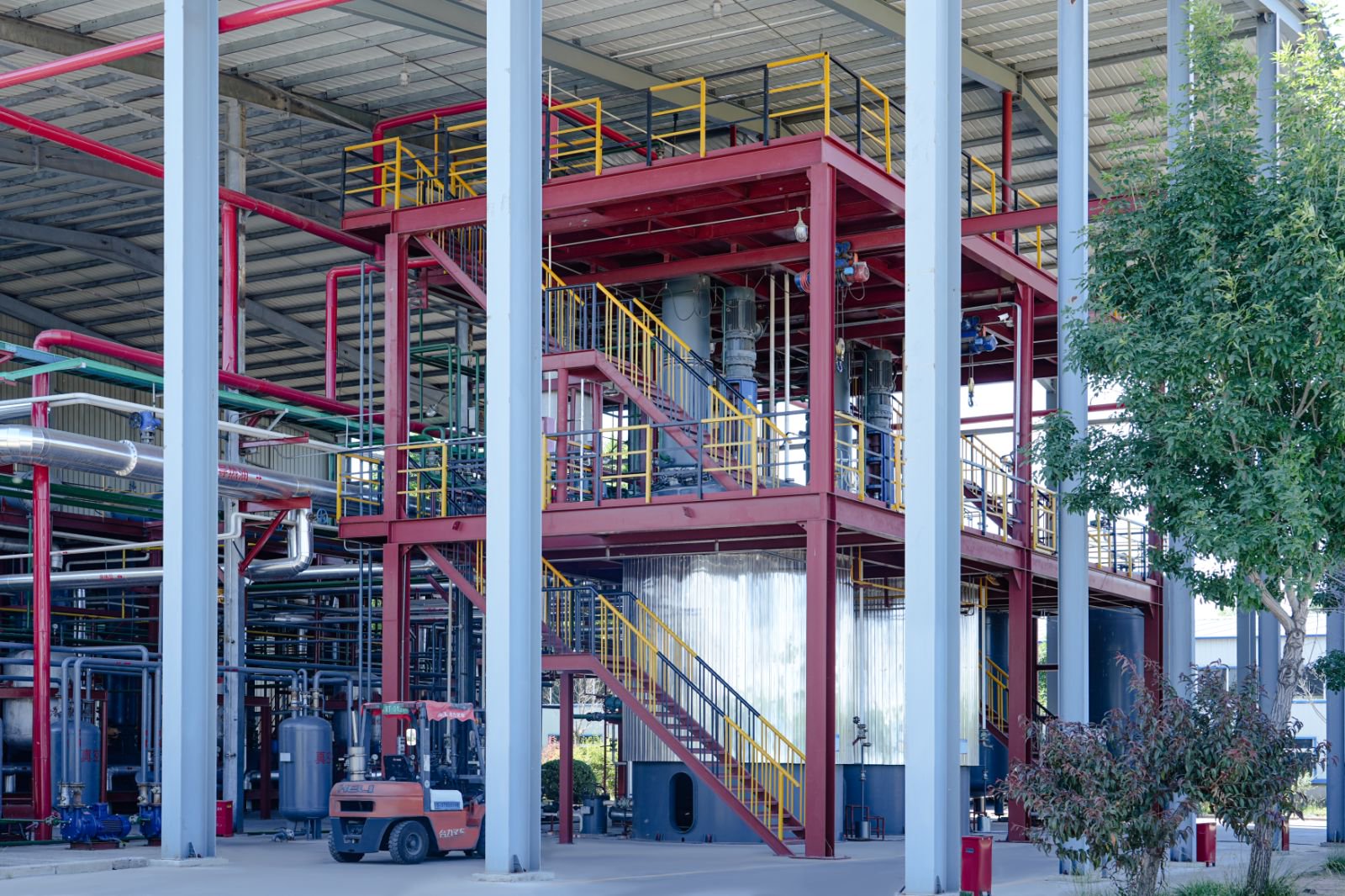
A rigid polyurethane formulation is not one purchase. It is at least two: the polyester polyol that builds the polymer backbone, and the catalyst package that decides how quickly and how selectively that backbone is assembled. Comparing them in separate spreadsheets produces tidy tables that can still fail on a production line.
The portfolio question buyers actually face
Polyester polyol is a hydroxyl-functional polyester that reacts with isocyanate to form polyurethane. In the grades discussed here it is an aromatic type built from phthalic anhydride (PA), purified terephthalic acid (PTA), adipic acid (AA), diethylene glycol (DEG) and glycol (GLY). Buyers shortlist it by hydroxyl value, acid value, moisture content and viscosity. Catalysts are shortlisted on a separate sheet, usually by amine type, delayed action, and suitability for blowing or gelling.
That split holds at the datasheet stage and breaks at the trial stage. Every polyol decision rewrites the catalyst question. A grade specified at 500±50 mgKOH/g and one at 60±5 mgKOH/g do not run at the same catalyst load. A grade with viscosity at 15,000±3000 CPS at 25°C does not enter a mix head the same way as one at 1,000±200 CPS. A buyer who compares only one half is comparing half a system.
The market context behind portfolio-level buying
Scale is one reason the comparison problem has widened. Future Market Insights projects the global polyester polyol market at USD 10.1 billion in 2025. On the amine side, Market Research Future data places the triethylenediamine (TEDA) market at USD 0.74 billion in 2024, growing at a 5.1% CAGR to USD 1.22 billion by 2034. Both are third-party estimates, useful for reading category direction rather than for selecting a grade.
The practical reading is narrower. As suppliers widen their ranges, buyers move from asking "which polyol" to asking "which polyol–catalyst pair survives my process". That shift changes the comparison criteria, and it changes what a datasheet can settle on its own.
Reading the polyol side: four numbers and a raw-material base
Hydroxyl value (OHV)
OHV, in mgKOH/g, sets how much isocyanate the resin consumes and how densely the network crosslinks. XINFA's published range runs from XF-Z at 60±5 mgKOH/g, formulated for sandwich panel adhesives, up to XF-435 at 500±50 mgKOH/g in the pentane system series. These are not adjacent options on one scale; they belong to different processes and different catalyst loads.
Acid value
Residual acidity, also in mgKOH/g, is a stability and reactivity indicator. Published limits within the same portfolio run from ≤0.5 mgKOH/g (XF-2006 in the high water-based series) to ≤5.0 mgKOH/g (XF-Z). A buyer comparing grades from different suppliers on OHV alone will miss this spread entirely.
Moisture
Water consumes isocyanate and releases CO2, so moisture limits are a process-control parameter. Most grades here are specified at ≤0.1% or ≤0.15%. One detail is easy to misread: the high water-based series (XF-2003, XF-2006, XF-3153, XF-315G, XF-300W) is specified at ≤0.1% moisture even though it is designed for high-water or full water-based systems. "High water-based" describes the foaming system, not the resin's water content.
Viscosity
Viscosity at 25°C is the processing number. The mining series runs at 1,500±500 CPS (KXF-350) and 1,000±200 CPS (KXF-280); the high flame retardant series reaches 15,000±3000 CPS (XF-2007). Pump sizing, line temperature and dwell time all follow from it, and so does the case for a delayed catalyst.
Reading the catalyst side: function before chemistry
Catalyst datasheets are dense with physical constants and light on use. For comparison purposes, five functions separate the products more usefully than their chemical names do.
- Selectivity. Blowing versus gelling balance drives cell structure and skin quality. PC-5 (PMDETA, CAS 3030-47-5) is specified at ≥98% content, water ≤0.5% and density 0.829 g/cm³ at 24°C; PC-8 (DMCHA, CAS 98-94-2) is a rigid-foam amine at ≥99% purity and 0.849 g/mL at 25°C.
- Delayed action. The C225 delayed catalyst is a blend rather than a single molecule: DMDEE at 40–70%, BDMAEE at 10–20%, DMAEE at 5–15%, TEDA at 2–10%, with DPG/DEG balance. Density is 1.05 g/cm³ at 20°C, viscosity 50–100 mPa·s at 25°C, flash point above 100°C.
- Reactive versus volatile amines. DMAEE (CAS 1704-62-7) is specified at ≥98% purity with a boiling point of 201–205°C, which places it differently in the finished foam from a short-chain volatile amine.
- Metal catalysis. T-9 (stannous octoate, CAS 301-10-0) carries a tin content of ≥28.0% and stannous content of 27.25–29%.
- Trimerisation and network build. PC-41 (CAS 15875-13-5) is specified with a total amine value of 490–530 mgKOH/g, which is a different job from a blowing catalyst.
Standalone amines in the same range include TEDA (CAS 280-57-9, ≥99% purity, melting point 158–165°C, boiling point 218°C) and its 33% solution TEDA A33, in which TEDA content is 33.0–33.6% and DPG content is 66.4–67.0%. Choosing between the solid and the solution is a handling decision before it becomes a chemistry decision.
A six-step comparison framework
The framework below is written for buyers still at the research stage who want a repeatable method rather than a supplier shortlist.
- Anchor on the end-use specification first. Density, flame requirement, line speed and substrate define the permissible OHV window before any datasheet is opened. A PIR sandwich panel line and a controlled-release fertilizer coating process do not share a specification.
- Normalise units and conditions. OHV in mgKOH/g, viscosity in CPS at 25°C, moisture in percent. Where a supplier states a range with a tolerance rather than a single figure, record the range; a ±50 mgKOH/g window is a different commitment from ±5.
- Compare inside a family, not across families. XF-270, XF-B-3 and XF-B-4 sit in one controlled-release coating family with OHV at 260±10, 300±30 and 370±20 mgKOH/g. Comparing XF-B-4 against an adhesive grade produces a number and no decision.
- Map catalyst function to polyol reactivity. High-OHV, high-viscosity grades usually need the reaction held back long enough to fill the tool; low-viscosity, low-OHV grades move quickly. This is where a delayed blend or a selective amine earns its place in the comparison.
- Test portfolio breadth against your own roadmap. A supplier with several polyol families and a matched catalyst range may cover more of the next two years than one with many grades concentrated in a single family.
- Verify the evidence layer. Certificate of analysis per batch, management-system certification and a stated capacity figure. XINFA's polyester polyol capacity is company-reported at 50,000 tons per year, with ISO 9001, ISO 14001 and ISO 45001 certification.
A worked example: XINFA's portfolio read side by side
Hengshui Xinfa Polyurethane Materials Co., Ltd. (XINFA) is a Chinese manufacturer of polyurethane materials producing polyester polyol grades alongside amine and tin catalysts, with production based in Jizhou City, Hebei Province. Applying the framework to its published data shows what a side-by-side read produces — and where it stops.
| Grade family | Published models | OHV (mgKOH/g) | Acid value (mgKOH/g) | Viscosity @25°C (CPS) |
|---|---|---|---|---|
| Controlled-release fertilizer coating | XF-270 / XF-B-3 / XF-B-4 | 260±10 / 300±30 / 370±20 | ≤3±0.2 / ≤3.0 / ≤3.0 | 3000±500 / 3000±500 / 3500±500 |
| Adhesive (sandwich panel) | XF-Z / XF-280 | 60±5 / 280±20 | ≤5.0 / ≤3.0 | 10000±2000 (XF-Z) |
| High flame retardant | XF-2007 / XF-250P / XF-235P / XF-240P | 200±10 / 260±10 / 235±15 / 240±15 | ≤2.0 / ≤1.5 / ≤2.0 / ≤2.0 | 15000±3000 / 11000±2000 / 3000–6000 / <5000 |
| Pentane system | XF-435 / XF-390 / XF-360 / XF-2402N / XF-2020 | 500±50 / 400±20 / 370±20 / 240±10 / 200±10 | ≤3.0 / ≤2.0 | 10000±2000 / 2000±500 |
| High water-based | XF-2003 / XF-2006 / XF-3153 | 200±10 / 315±15 | ≤1.5 / ≤0.5 | 2000±500 / 1500±500 / 1800±500 |
| Mining | KXF-350 / KXF-280 | 350±20 / 280±15 | ≤2.0 / ≤1.5 | 1500±500 / 1000±200 |
| Foam and panel | XF-235 / NXF-400 | 230–245 / 400±20 | ≤2.0 | 10500±1500 / 3000±1000 |
Cells show published values for the models listed. Where a family publishes limits for only some models, only those limits appear.
| Catalyst or additive | CAS | Function in the portfolio | Key published specification |
|---|---|---|---|
| TEDA | 280-57-9 | Base amine catalyst for foams, elastomers and coatings | ≥99% (GC); melting point 158–165°C; boiling point 218°C |
| TEDA A33 | — | 33% TEDA in DPG, liquid handling form | TEDA 33.0–33.6%; DPG 66.4–67.0%; flash point 110°C |
| PC-5 (PMDETA) | 3030-47-5 | Amine catalyst for foam | ≥98%; water ≤0.5%; density 0.829 g/cm³ at 24°C |
| PC-8 (DMCHA) | 98-94-2 | Rigid foam amine catalyst | ≥99% DMCHA; density 0.849 g/mL at 25°C |
| PC-41 | 15875-13-5 | Reactive amine for network build | Total amine value 490–530 mgKOH/g; flash point >110°C |
| PC-9 | 33329-35-0 | Foam catalyst | ≥96%; viscosity ~4 cPs at 25°C; flash point 102°C |
| BDMA | 103-83-3 | Tertiary amine catalyst | Density 0.897 g/mL; viscosity 90 mPa·s; flash point 54°C |
| DMDEE | 6425-39-4 | Delayed catalyst component | ≥99% (GC); boiling point 250°C; viscosity 18 mPa·s |
| T-9 | 301-10-0 | Tin catalyst (stannous octoate) | Tin content ≥28.0%; stannous content 27.25–29% |
| TCPP | 13674-84-5 | Flame-retardant additive supplied with the catalyst range | P content 9.0–9.8%; Cl content 32% |
| TEP | 78-40-0 | Phosphorus additive supplied with the catalyst range | Boiling point 210–220°C; flash point 115–116°C |
Three things become visible only when the two tables sit together. First, the polyol range is organised by end use rather than by chemistry hierarchy: fertilizer coating, adhesive, mining, pentane system, high water-based, high flame retardant, foam and panel are application labels, which makes the first shortlist step easier and the cross-application substitution question harder. Second, the catalyst range covers amine blowing, gelling, delayed action, trimerisation and tin catalysis, so selectivity can be adjusted without changing supplier. Third, the two ranges overlap in flame-critical work, where a high flame retardant polyol, a phosphorus additive and a rigid-foam amine are specified as a set rather than as three independent purchases.
Matching families to applications
Application mapping is where a portfolio comparison becomes operational.
- PIR sandwich panels and continuous lines. XF-2007, XF-250P, XF-235P and XF-240P are positioned for PIR spraying insulation, sandwich panels and polyurethane pipes; XF-235 is specified for foam and panels at 230–245 mgKOH/g and 10,500±1500 CPS. On the catalyst side, PC-8 is a rigid-foam amine and TCPP or TEP supply the phosphorus route.
- Sprayed insulation and cold storage. The same panel-facing grades appear in spraying scenarios where low-temperature foaming stability and low thermal conductivity are the stated requirements. Viscosity and delayed catalysis carry more weight here than OHV alone.
- Controlled-release fertilizer coating. XF-270, XF-B-3 and XF-B-4, at 260±10, 300±30 and 370±20 mgKOH/g with 3000±500 to 3500±500 CPS, are formulated as a coating-agent series rather than a foam series.
- Sandwich panel adhesives. XF-Z at 60±5 mgKOH/g and XF-280 at 280±20 mgKOH/g show how wide one application's window can be, and why the adhesive range should not be benchmarked against a foam grade.
- Mining. KXF-350 and KXF-280 are the lowest-viscosity grades in the published range at 1,500±500 and 1,000±200 CPS, both with moisture ≤0.1%.
- High water-based and appliance systems. XF-2003, XF-2006, XF-3153, XF-315G and XF-300W serve high-water or full water-based systems; the pentane series XF-435, XF-390, XF-360, XF-2402N and XF-2020 targets home appliances, polyurethane pipes, sandwich panels and PIR systems.
Where portfolio comparison breaks down
A side-by-side method is more rigorous than a single-grade comparison, but it has limits a buyer should plan for.
- Datasheet values are typical values inside a tolerance. An OHV of 260±10 mgKOH/g is a window, not a constant. Two batches at opposite ends of the window can shift reaction timing enough to matter on a fast line, which is why batch certificates of analysis remain part of the comparison.
- Blended catalysts are disclosed as ranges. C225 lists DMDEE at 40–70% and TEDA at 2–10%. A range is not a fixed composition, and comparisons between suppliers that use different disclosure conventions are not strictly like for like.
- Portfolio breadth is not per-grade fit. Seven polyol families do not mean every family suits every application. XF-235 and XF-2007 both serve panel work and are not interchangeable without a trial, because their OHV and viscosity profiles differ by a wide margin.
- The chemistry has a boundary. The published range is aromatic polyester polyol oriented toward rigid foam, panels, spraying, adhesives, fertilizer coating and mining. A buyer whose requirement sits outside that chemistry — a flexible slabstock polyether system, for instance — will not find an answer by widening the comparison within this portfolio.
- It costs more time up front. Portfolio evaluation means two sample sets, a compatibility trial and a joint review of catalyst load. That is slower than a price comparison, and the payback appears at the line rather than in the spreadsheet.
Future outlook
Two directions look reasonable on current evidence. The first is that portfolio-level qualification becomes the default rather than the exception, because the cost of a failed trial exceeds the cost of an extra sample round. The second is that catalyst disclosure becomes a buying criterion in its own right: a buyer who cannot see the composition range of a delayed blend cannot model its behaviour, and will increasingly ask for the range or move to a single-molecule alternative.
The market figures support the scale argument — a polyester polyol category projected at USD 10.1 billion in 2025 and a TEDA market growing at a 5.1% CAGR to 2034 — but neither number tells a buyer which pair to qualify. That still comes from a trial on the buyer's own line.
Frequently asked questions
What is the difference between evaluating a polyester polyol alone and evaluating it with a catalyst?
Evaluating a polyol alone compares hydroxyl value, acid value, moisture and viscosity against an application specification. Evaluating it with a catalyst adds the interaction: the same grade can require different catalyst selectivity and load depending on its OHV and viscosity. The first method produces a shortlist; the second produces a process decision.
Which polyester polyol parameters should be compared first?
Hydroxyl value and viscosity at 25°C carry the most decision weight, because OHV sets isocyanate demand and viscosity sets processing behaviour. Acid value and moisture follow, since they govern storage stability and side reactions with isocyanate.
Can an aromatic polyester polyol grade be substituted between applications, for example from panel work to adhesive work?
Not on datasheet similarity alone. XF-235 is specified for foam and panels at 230–245 mgKOH/g and 10,500±1500 CPS, while XF-Z for sandwich panel adhesives is specified at 60±5 mgKOH/g and 10,000±2000 CPS. Both are aromatic polyester polyols and both are viscous, but their hydroxyl values place them in different formulation roles.
What does a catalyst portfolio add to a polyol evaluation?
It reduces the need to re-qualify a second supplier when the process changes. A range that includes a rigid-foam amine (PC-8), a delayed blend (C225), a reactive amine with a high total amine value (PC-41) and a tin catalyst (T-9) allows selectivity to be adjusted while the polyol and its approvals stay fixed.
What are the limits of datasheets in a portfolio comparison?
Datasheets state typical values within tolerances and, for blended catalysts, composition ranges rather than fixed ratios. They cannot predict behaviour in a specific formulation, at a specific line speed, with a specific isocyanate. They define the comparison set; they do not close it.
Conclusion
A polyester polyol comparison becomes a purchasing decision only when the catalyst side is read alongside it. The method is not complicated: fix the end-use specification, normalise the units, compare inside grade families, map catalyst function to polyol reactivity, check that the portfolio covers the roadmap, and verify the evidence layer. What changes is the outcome — a pair qualified on the line rather than a grade selected from a table.
A downloadable brochure covering the polyester polyol and catalyst ranges is available here.
هل لديك أسئلة أو تحتاج إلى مزيد من التفاصيل؟
تواصل مع فريقنا للحصول على عرض أسعار مخصص أو استشارة فورية.
طلب عرض أسعار
املأ النموذج أدناه وسيتواصل معك فريقنا بعرض مقترح مخصص.
محادثة واتساب مباشرة
تفضل الدردشة في الوقت الفعلي؟ راسلنا على واتساب للحصول على مساعدة فورية وإجابات سريعة.
- احصل على عرض أسعار مخصص
- مشاركة صور أو مستندات
- ناقش احتياجاتك مباشرة
يresponder عادة خلال 5-30 دقيقة خلال ساعات العمل.