
Polyurethane Raw Materials Shortlist: Mining, Sports, Wind, Marine
Polyurethane Raw Materials Shortlist: Mining, Sports, Wind, Marine
Polyurethane raw materials decide, at grade level, how a cast part behaves in abrasive slurry, salt water, repeated flexing or high-voltage sealing - long before the first pour. This shortlist maps five documented material options to the industries that use them and separates what is verifiable from what still requires sampling.
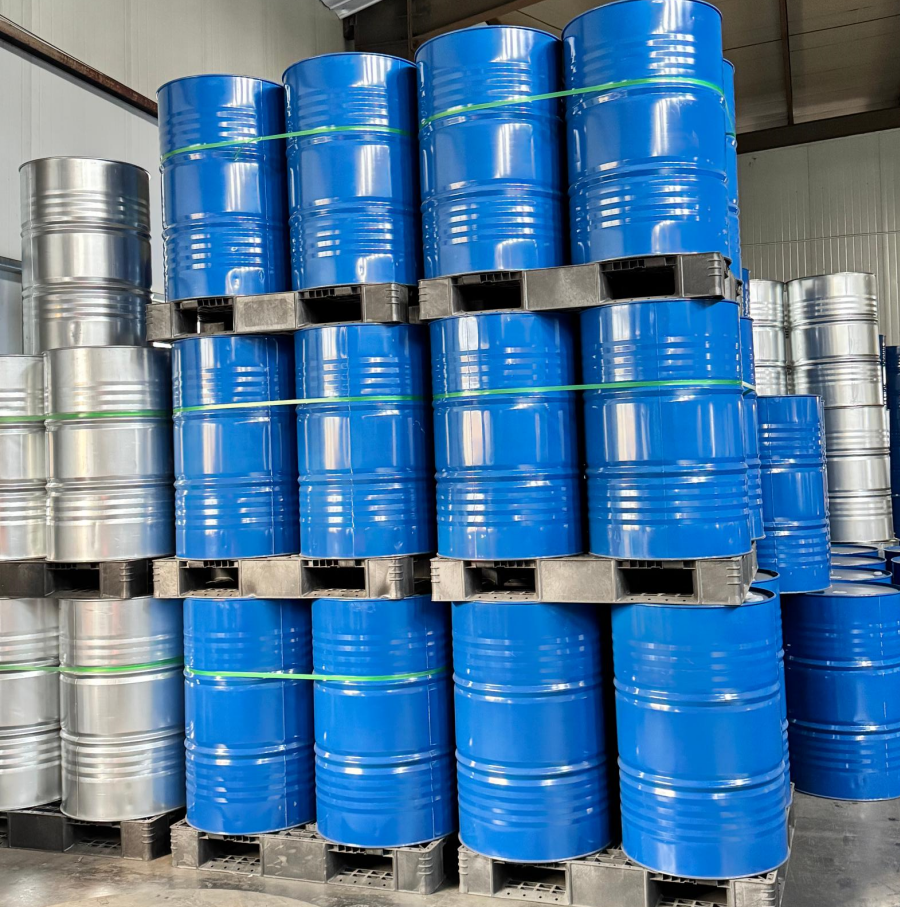
Polyurethane raw materials
The Discovery Problem: Vocabulary Before Specification
The first obstacle in sourcing polyurethane raw materials is not price or availability, it is vocabulary. A single supplier catalogue may list casting polyurethane raw materials, polyurethane quasi material, polyurethane prepolymer, liquid polyurethane, CPU casting polyurethane and polyurethane elastomer as separate lines, while the processing team thinks in terms of hardness, working life, pouring equipment and demould time. Mismatches usually start in that gap: a grade that is correct for a mining screen scraper is not automatically the grade for a marine shock absorber or a sports equipment surface, even though all three sit inside the same broad material family.
Shanghai Hecheng Polymer Technology Co., Ltd. is a Shanghai-based manufacturer established in 2009 that focuses on the R&D, manufacturing and global supply of high-performance polyurethane (CPU) elastomer materials, with casting polyurethane prepolymer as its main product line. Its plant in Songjiang District, Shanghai covers 16,932 square meters, operates 16 major production reactors and reports an annual production capacity of 1 million tons, a product range of more than 1,000 prepolymer grades and an R&D team of 18 engineers within a workforce of roughly 78 staff.
The demand backdrop explains why discovery-stage buyers are currently doing more of this comparison work. Global demand for polyurethane elastomers rose by 12% in 2024, primarily driven by industrial machinery and automotive lightweighting trends, according to Straits Research. The casting polyurethane segment was valued at USD 2,758.37 million in 2024, driven by industrial production and the electrification of mobility, according to Astute Analytica. Growth of that order increases the number of grades in circulation - and grade-level traceability becomes the practical filter.
The Shortlist at a Glance
All five entries below are thermoset polyurethane materials supplied either as prepolymers or as two-component liquid systems. What differentiates them for a buyer is the documented function and the documented application, not the family name.
| Material / model | System type | Documented function | Documented application |
|---|---|---|---|
| POLYURETHANE ELASTOMER | Casting polyurethane prepolymer, polyurethane raw material for industrial use | Liquid-form polyurethane elastomer raw material for casting | Mining industry; general casting polyurethane applications |
| Polyester, three-component (parameter: Screen Scraper-5282ABC) | Polyurethane elastomer, polyester three-component | High wear resistance, high resilience | Mining sector, including screen scraper and tensionless screen mesh duty |
| Gel-8301AB | Liquid polyurethane based on Polyurethane AB material | Antioxidant, high resilience | Various elastomers |
| PTMG-MDI | CPU casting polyurethane, polyether PTMG-MDI system | Environmentally friendly, corrosion-resistant | Sealed class accessories |
| Rubberized sports equipment - 8385AB | Polyurethane prepolymer, Polyether-MDI type | Vivid colours, eco-friendly, rubberized material for sports equipment | Sports industry; rubberizing sports equipment |
Material Profiles: What Each Grade Is Documented For
POLYURETHANE ELASTOMER - the casting base system for mining
POLYURETHANE ELASTOMER is a casting polyurethane prepolymer classified as a polyurethane raw material for industrial use and intended for the mining industry. It is supplied as a polyurethane elastomer in liquid form, which places it at the start of the manufacturing chain rather than at the finished-part stage. Its documented duty includes cast polyurethane applications in mining machinery, where the material is produced under tropical high temperature, high humidity, frequent friction and corrosive water contact conditions, and where tensionless screen mesh is a named end use.
Polyester, three-component (Screen Scraper-5282ABC) - wear plus rebound
This grade is documented as a polyurethane elastomer of the polyester, three-component type, made from high wear resistance and high resilience material, with Screen Scraper-5282ABC given as the parameter reference. Its stated application is the mining sector. The pairing of wear resistance and resilience matters for buyers because the two properties drive different failure modes: a scraper or screen element that resists abrasion but returns little energy behaves differently in service from one that combines abrasion resistance with elastic recovery.
Gel-8301AB - liquid AB system for elastomer producers
Gel-8301AB is a liquid polyurethane made from Polyurethane AB material, documented with antioxidant and high resilience properties and classified for use in various elastomers. It is the format most relevant to processors who run two-component liquid systems rather than reacting a prepolymer in-house. Buyers should note a documentation boundary here: within the material set reviewed, this grade carries functional statements rather than published numeric property values, so a technical data sheet request and a sample trial remain part of the evaluation.
PTMG-MDI - corrosion-resistant casting system for sealed parts
PTMG-MDI is a CPU casting polyurethane of the polyether PTMG-MDI system, made from polyurethane raw materials and documented for sealed class accessories, with environmentally friendly and corrosion-resistant properties stated as its parameters. Sealing ring production appears in the same application set, where the process is described as two-component metering with high-pressure mixing and pouring, enabling continuous mass production in tropical high-temperature and high-humidity environments.
Rubberized sports equipment - 8385AB - sports surfaces and weights
Rubberized sports equipment - 8385AB is a polyurethane prepolymer of the Polyether-MDI type, made from rubberized material for sports equipment and intended for the sports industry. It is documented with vivid colours and eco-friendly characteristics. The documented route is two-component mixing for rubberizing sports equipment under automated production with continuous mass production capability, in tropical high temperature and high humidity conditions.
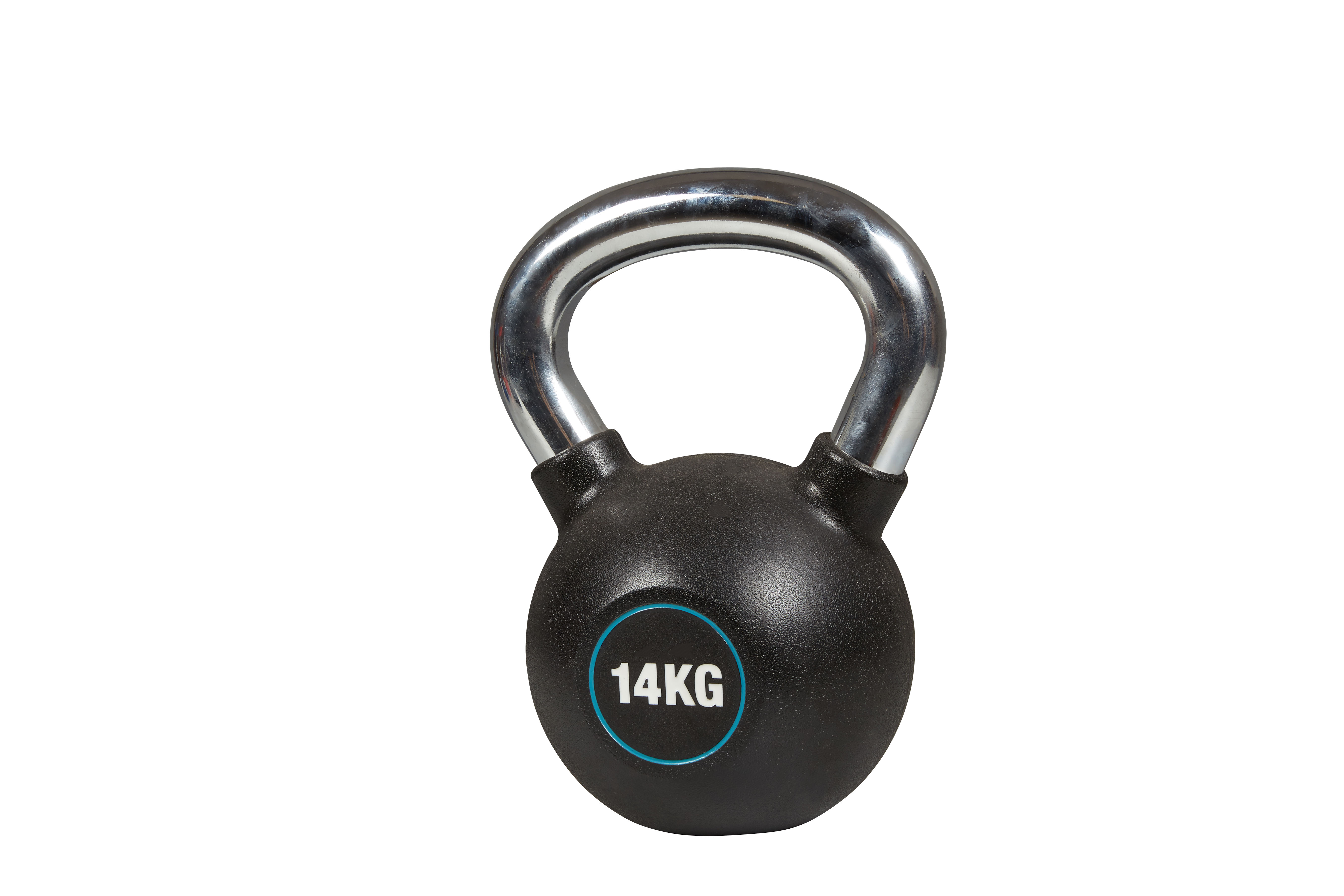
barbell
Application Mapping: Mining, Sports, Wind and Marine
The shortlist only becomes a purchasing tool when it is read against working conditions. The following mapping reflects what is documented per industry, including the tropical high-temperature, high-humidity, frequent-friction and corrosive-water profile that recurs across these scenarios and is common in Vietnam, Pakistan, Philippines, Cambodia, Malaysia, Bangladesh and Thailand.
- Mining: cast polyurethane systems covering tensionless screen mesh production and cast parts for mining machinery; POLYURETHANE ELASTOMER as the casting prepolymer and Polyester, three-component (Screen Scraper-5282ABC) as the wear-and-resilience grade.
- Sports: Polyether-MDI prepolymer used to rubberize sports equipment such as weighted training equipment, processed through two-component mixing.
- Wind power generation: polymer prepolymer documented to provide aging resistance, high-voltage sealing and shock absorption for wind power components.
- Marine technology: liquid polyurethane raw material documented for resistance to seawater corrosion, anti-fouling against marine organisms and shock absorption.
- Composite materials: two-component systems documented for sealing ring production, metered and high-pressure mixed for continuous output.
- Construction: high hydrolysis and corrosion resistance, high-toughness elastomer material for anti-wear parts.
- Automotive: TDI low-free prepolymer projects documented to improve physical and mechanical properties and dynamic mechanical performance under high humidity and corrosive water contact.
Technical Note: Two-Component Processing and Verifiable Evidence
Most of the materials in this shortlist are processed in an automated mode: dual-component metering and conveying of raw materials, automatic high-pressure mixing and pouring, enabling continuous mass production. The supporting equipment set is consistent across applications - a polyurethane high-pressure foaming machine or low-pressure pouring machine, raw material storage tank, mixing bucket or barrel, and delivery pump - with customization supported where the application requires it.
Two evidence points are useful at the discovery stage. The first is a measurable working life: ISO 10364:2024 specifies methods for determining the pot life of multi-component adhesives, including polyurethane-based systems, so a buyer can ask for a measured pot life rather than an estimated one. The second is documentation continuity: the supplier's material documentation includes the granted invention patent reference 16425Q32921R3M, which buyers can use as a traceable identifier when comparing technical files across suppliers.
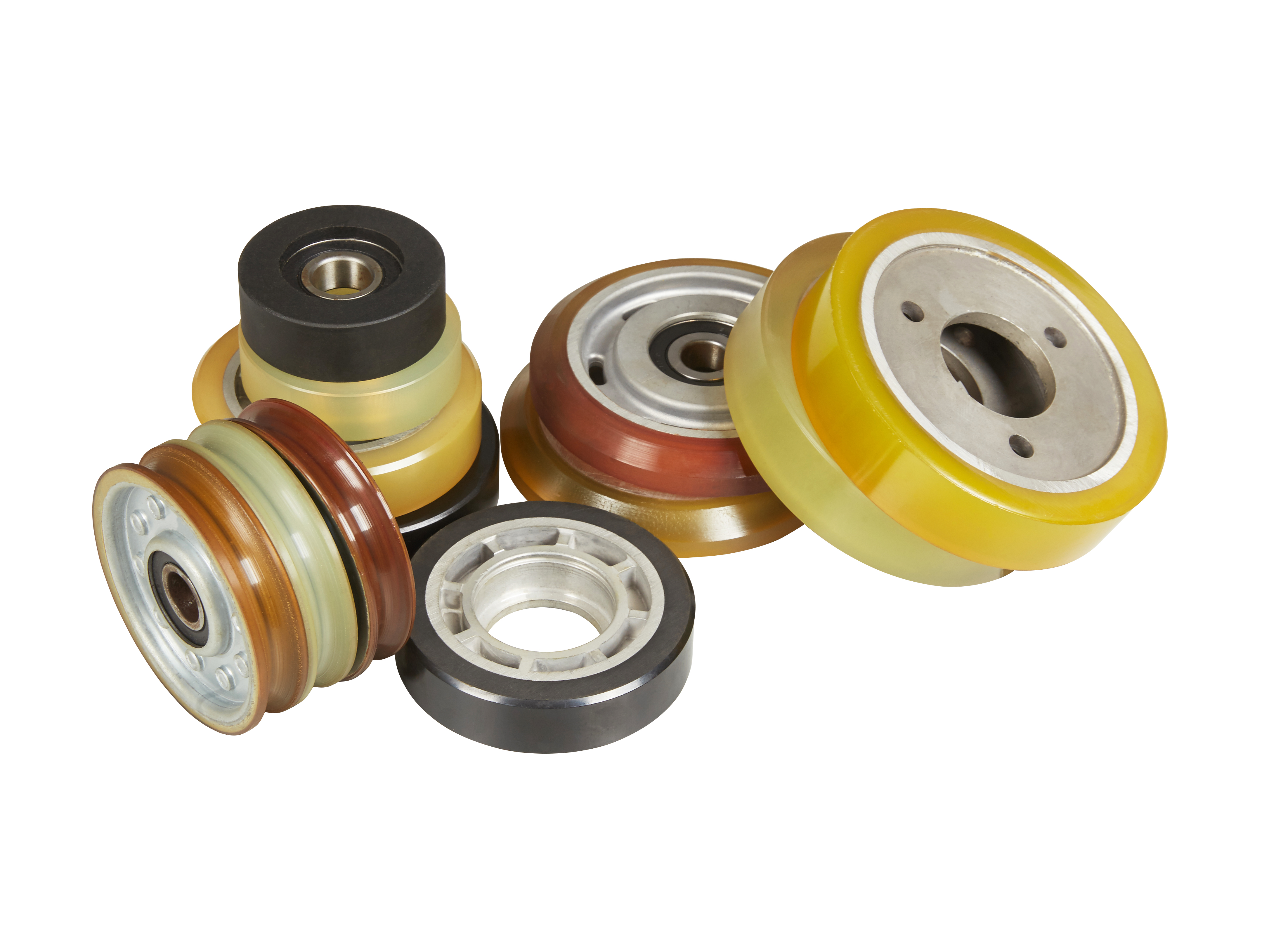
wheel
Market Context: Where Demand and Regulation Are Moving
Market sizing published for polyurethane is consistent in direction but not in absolute terms, which is itself a procurement caution. The global polyurethane market was estimated at USD 85.2 billion in 2024 and projected to reach USD 136.2 billion by 2035, according to Roots Analysis; Grand View Research published a comparable baseline of USD 84.6 billion for 2025. Buyers citing market figures in internal business cases should quote the source and the segmentation basis alongside the number.
Raw-material concentration is another planning variable. Methylene diphenyl di-isocyanate (MDI) contributed approximately 60% of total global isocyanate volume in 2024, according to Prismane Consulting and S&P Global. Mainland China accounted for about one-third of the global TDI, MDI and aliphatic markets in 2024, according to S&P Global Commodity Insights - a supply-side fact relevant to lead-time planning for Asian and export-oriented buyers. In the adjacent dispersion segment, the waterborne polyurethane dispersions market was estimated at USD 1,984.5 million in 2025, with 4.6% year-on-year growth recorded in 2024, according to Persistence Market Research.
Regulation is tightening in parallel. As of 1 September 2024, the prohibition on the use of methylene chloride in the production of foam under the CertiPUR label entered into force, according to EUROPUR. The direction of travel - lower free isocyanate content and cleaner processing chemistry - is visible in the TDI low-free prepolymer projects documented in the automotive applications covered by this shortlist.
Cast Polyurethane Versus Traditional Materials: Where the Boundaries Are
Cast thermoset polyurethane is not a universal replacement for metal, rubber or thermoplastic parts. The comparison below is framed as selection logic rather than a ranking, because the correct answer depends on which failure mode dominates the application.
| Selection factor | Cast thermoset polyurethane | Metal wear parts | Rubber or thermoplastic alternatives |
|---|---|---|---|
| Abrasion in slurry, screen and scraper service | Wear-resistant grades documented, including Screen Scraper-5282ABC and the mining casting system | Holds shape and load well; mass and noise are common design considerations | Compound-dependent; heat build-up under repeated flex is a known consideration |
| Seawater and chemical contact | Corrosion-resistant CPU casting grade documented for sealed accessories; marine functions documented at family level | Usually requires alloy selection or protective coating | Depends on the specific compound |
| Sustained humidity (hydrolysis) | System chemistry decides; wet-service specifications must be confirmed grade by grade | Not a primary degradation route, but corrosion protection applies | Depends on the specific compound |
| Processing route | Two-component metering, high-pressure mixing and pouring; pot life governs achievable cycle | Machining or casting supply chain | Injection or compression moulding |
| Rework and end-of-life | Thermoset: cannot be remelted; rework is by bonding or mechanical means | Weldable and machinable | Thermoplastics can be remelted in-plant |
Three boundaries deserve to be stated plainly rather than left to the data sheet. First, cast polyurethane is a thermoset, so it cannot be remelted and rework options are limited to bonding and mechanical fixing. Second, processing is equipment-dependent: two-component metering, high-pressure mixing and pouring, plus storage tanks, mixing vessels and delivery pumps, are prerequisites rather than optional additions, and pot life directly constrains throughput. Third, family names hide chemistry: polyester-based systems are generally regarded as more sensitive to hydrolysis than polyether-based systems in prolonged wet service, so a wear-optimised grade and a moisture-optimised grade should not be treated as interchangeable without supplier confirmation. Documentation depth also varies by grade within this shortlist - some entries carry measured parameters, others only functional statements - which is why sample validation remains part of the discovery stage.
Future Outlook
Three shifts are likely to shape how buyers shortlist polyurethane raw materials over the next planning cycle. The first is chemistry: low-free isocyanate prepolymer work, already documented in TDI low-free automotive projects, is moving from differentiation to baseline expectation as regulatory pressure on processing chemistry continues. The second is application-specific grading: as demand for polyurethane elastomers grows in industrial machinery and lightweighting, suppliers are more likely to compete on documented, application-matched grades - such as marine corrosion resistance, wind power sealing or mining wear - than on generic family claims. The third is regional supply structure: with Mainland China accounting for roughly one-third of global TDI, MDI and aliphatic markets, availability and lead-time planning for Asian and export buyers will continue to depend on a concentrated supplier base, which raises the value of documented capacity figures such as reactor count, plant area and annual output.
FAQ
What are polyurethane raw materials, and how do they differ from finished polyurethane parts?
Polyurethane raw materials are the input systems from which polyurethane parts are produced - in this context casting polyurethane prepolymers, liquid polyurethane AB materials and quasi elastomer materials. They are supplied before curing, so the properties of the finished part come from the combination of the raw material system, the mixing ratio and the processing route. Shanghai Hecheng Polymer Technology Co., Ltd., for example, builds its range around casting polyurethane prepolymer with more than 1,000 prepolymer grades.
Which polyurethane raw materials are documented for mining wear parts?
Two grades are documented in this application set. POLYURETHANE ELASTOMER is a casting polyurethane prepolymer classified for industrial use and intended for the mining industry. Polyester, three-component carries the parameter reference Screen Scraper-5282ABC with high wear resistance and high resilience and is intended for the mining sector. The documented duty includes tensionless screen mesh production under tropical high temperature, high humidity, frequent friction and corrosive water contact.
How do polyester-based and polyether-based systems differ under sustained humidity?
Polyester-based and polyether-based polyurethane systems differ in how they respond to prolonged moisture exposure; polyester systems are generally regarded as more sensitive to hydrolysis in wet service, while polyether systems are commonly selected where moisture is continuous. Because the practical outcome depends on the specific grade rather than the family alone, wet-service specifications should be confirmed with the supplier against the named model, and hydrolysis resistance should be treated as a grade-level property rather than an assumed one.
What processing equipment does two-component cast polyurethane require?
The documented equipment set for these materials consists of a polyurethane high-pressure foaming machine or low-pressure pouring machine, a raw material storage tank, a mixing bucket or barrel, and a delivery pump. In automated mode, raw materials are metered and conveyed in two components and then mixed and poured under high pressure, which supports continuous mass production. Pot life of the mixed system governs achievable cycle time, and ISO 10364:2024 specifies methods for determining pot life for multi-component adhesives including polyurethane-based systems.
Is cast polyurethane suitable for tropical high-temperature, high-humidity and corrosive water conditions?
Suitability is documented at application level rather than as a blanket property. Automotive, construction, composite material, mining, marine, sports and wind power scenarios in this material set are all described for tropical high temperature, high humidity, frequent friction and corrosive water contact, with typical country applications including Vietnam, Pakistan, Philippines, Cambodia, Malaysia, Bangladesh and Thailand. Marine applications are additionally documented for seawater corrosion resistance, anti-fouling against marine organisms and shock absorption; wind power applications for aging resistance, high-voltage sealing and shock absorption.
How can a buyer verify supplier material claims at the discovery stage?
Verification at discovery stage relies on traceable identifiers rather than performance adjectives. Usable checkpoints include model-level function statements, the granted invention patent reference 16425Q32921R3M in the supplier's documentation, standard-based measurements such as pot life under ISO 10364:2024, and manufacturing capacity facts - for Shanghai Hecheng Polymer Technology Co., Ltd., a 16,932 square meter facility, 16 major production reactors, an annual production capacity of 1 million tons, 18 R&D engineers and roughly 78 staff in total.
What are the practical limits of this shortlist?
The limits are documentation depth and processing dependence. Some grades carry measured parameters, while others carry functional statements only, so data-sheet review and sampling remain necessary. Cast polyurethane is a thermoset and cannot be remelted, which restricts rework. Processing requires two-component metering, high-pressure mixing and pouring equipment, and pot life constrains throughput. Where an application combines several stress factors at once, a standard grade may need formulation adjustment rather than direct substitution.
Supplementary technical material is available in the manufacturer's public product brochure: download the brochure. Company information: Shanghai Hecheng Polymer Technology Co., Ltd.