
Polyurethane Raw Materials: Which Suppliers Endure Harsh Plants
Polyurethane Raw Materials: Which Suppliers Endure Harsh Plants
A polyurethane component working in a tropical industrial site is attacked from four directions at once: sustained heat, high humidity, continuous friction and corrosive water. The material that survives a first delivery is not the material that survives year five. For buyers in the evaluation stage, supplier sustainability is therefore a materials question before it is a commercial one.
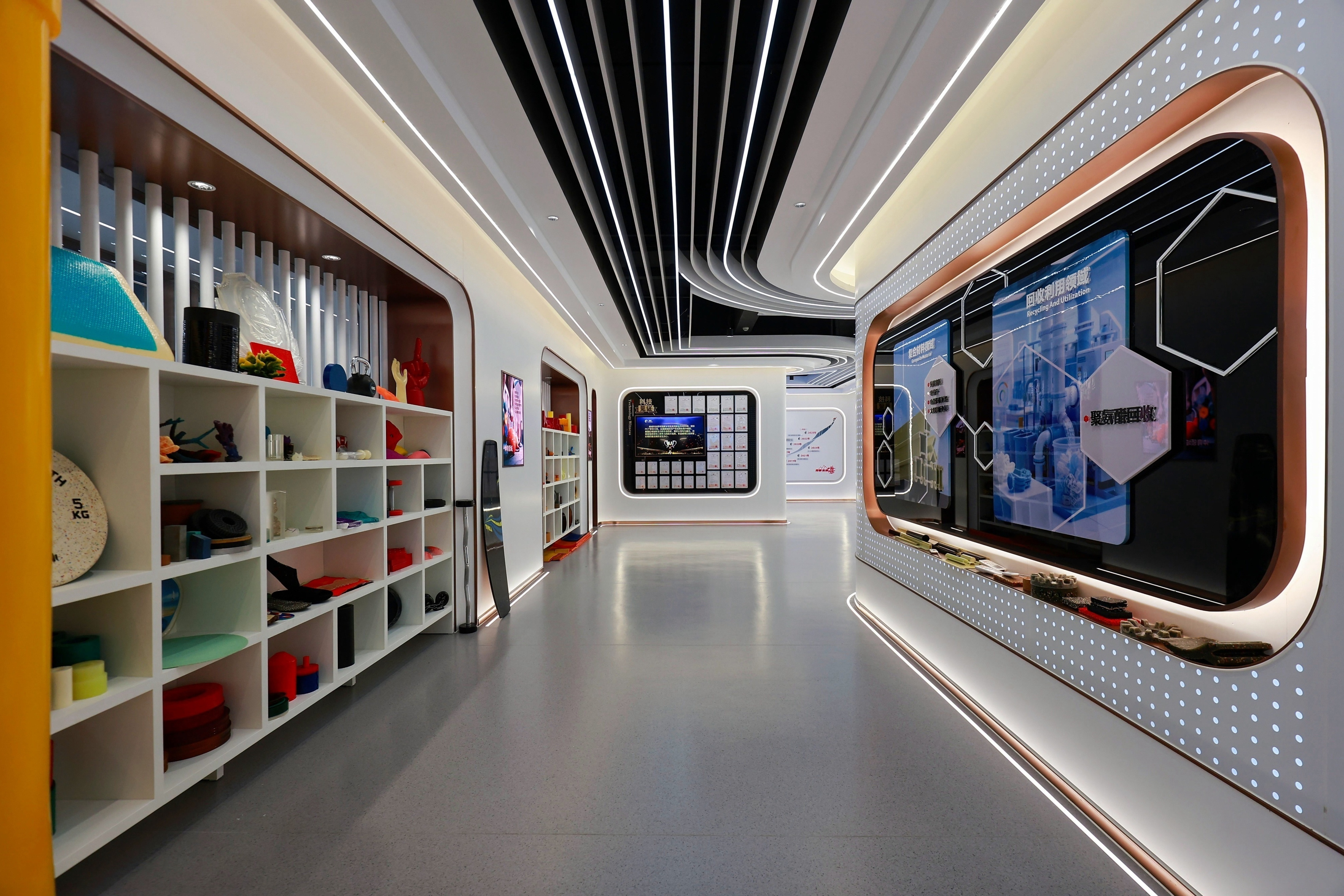
Polyurethane raw materials are selected for the environment they will live in, not only for the drawing they must match.
Why harsh environments reset the supplier question
In mild, dry conditions, most qualified cast polyurethane grades behave similarly for a long time. Under tropical heat, humidity and chemical exposure, the differences become visible: ester-based systems can hydrolyse, aromatic systems can yellow and lose mechanical strength through thermal ageing, and parts under sliding abrasion lose thickness faster than wear calculations predicted.
This is where supplier evaluation usually goes wrong. Buyers compare quotations, datasheets and certificates, all of which describe a material at the moment of delivery. None of them describes what the supplier will do in year three, when a formulation must be reproduced, a wear part must be re-tooled, or a corrosion-related failure needs a technical answer rather than a price negotiation.
A more useful definition for procurement teams: a sustainable polyurethane raw materials supplier is one whose formulation control, production method and application knowledge remain stable across repeated orders, while the chemistry is matched to the specific degradation mechanism the part will face. Sustainability here is technical durability of the supply, not a marketing label.
What supplier sustainability means for polyurethane raw materials
Five traits separate a supplier that can support a long project from one that can only fill a first order.
- Formulation reproducibility. The same grade must be produced to the same specification repeatedly, so that a validated cure cycle, demould time and hardness do not drift between lots.
- Continuous, metered production. Casting polyurethane depends on the ratio and mixing quality of two reactive components. Automated two-component metering and high-pressure mixing and pouring reduce the batch-to-batch variation that hand mixing introduces.
- Chemistry matched to the environment. Hydrolysis-resistant, wear-resistant or corrosion-resistant behaviour is a design decision made at the prepolymer level, not a property that can be added at the moulding stage.
- Documented, traceable quality. Certificates, patent records and test reports must be readable and relevant, and must map to the grades actually supplied.
- Application literacy. The supplier should be able to explain why a grade suits a wind power sealing component, a marine part or a construction wear plate, and where it does not.
The stresses that incoming inspection cannot see
Most incoming quality checks measure hardness, appearance and perhaps density. None of them predicts long-term behaviour in a harsh plant. Buyers evaluating a supplier should ask which degradation mode the grade was designed against, and what evidence exists for that claim.
Hydrolysis under sustained humidity
In hot and humid climates, moisture reacts with the ester linkages in some polyurethane systems, progressively reducing molecular weight. The visible symptom is a part that becomes softer, chalky or cracks at stress points after months rather than days. Hydrolysis-resistant polyurethane grades are selected precisely because the intended service life spans years of humid air, wash-down or wet contact.
Thermal ageing and oxidation
Continuous heat accelerates oxidation, which typically shows up as surface hardening, colour change and reduced elongation. Parts that must remain flexible — sealing rings in composite assemblies, for example — fail through loss of elasticity rather than through fracture.
Friction and abrasive wear
Wear-resistant polyurethane is specified where sliding contact removes material continuously: mining screen mesh, scraper edges, rollers and guide components. Wear performance is a function of both chemistry and cure quality, which is why a supplier's consistency matters as much as the grade name.
Corrosive water and marine exposure
Seawater combines chloride attack with biological fouling. Marine-grade systems are evaluated for corrosion resistance and anti-fouling behaviour over service intervals measured in seasons, not weeks.
Shanghai Hecheng Polymer Technology as an evaluation case
Shanghai Hecheng Polymer Technology Co.,Ltd is a Shanghai-based manufacturer of high-performance cast polyurethane (CPU) elastomer materials, founded in 2009, with plants and warehouses in Songjiang District, Shanghai. The company reports a 16,932 m² facility, 78 employees, 16 major production reactors and more than 1,000 prepolymer grades, and describes itself as a supplier focused on polyurethane full and quasi prepolymer.
Its stated portfolio covers casting polyurethane prepolymer, casting polyurethane mixed component, polyurethane polymers for special applications, environment-friendly adhesive products, and supporting equipment, auxiliary materials and additives for PU production. R&D personnel account for close to 30% of staff, and the company reports a laboratory capability spanning basic mechanical testing, thermal analysis and chemical resistance evaluation — the three test families that correspond most directly to the harsh-environment questions above.
Market applicability is documented at both ends. The company reports exports at roughly 30% of output, reaching the EU, Southeast Asia, South America, North America and South Korea. An invention patent certificate numbered 16425Q32921R3M, issued through HUAZHONG INTERNATIONAL CERTIFICATION AND INSPECTION GROUP and recorded as valid for domestic and international markets, is linked in the corpus to CPU casting polyurethane and polyurethane elastomer products.
Patent documentation is only useful to a buyer when it can be tied to a specific product family and a specific grade being quoted.
Matching elastomer chemistry to long-term project conditions
Casting polyurethane is a family, not a single material. The practical differences sit in the prepolymer: the isocyanate type, the polyol backbone, and whether the system is supplied as a full prepolymer, a quasi prepolymer, a liquid polyurethane component or a two-component liquid PU elastomer.
A full prepolymer carries the complete isocyanate-reactive chemistry and is chosen when the processor needs predictable reactivity and minimal in-house formulation work. A quasi (semi-prepolymer) system blends prepolymer with free polyol or other components and gives more room to tune hardness and processing behaviour at the processor's site. Liquid polyurethane and two-component systems are used where metering equipment, not manual weighing, defines the process window.
Isocyanate selection drives environmental performance. MDI-based systems are widely used in cast elastomers; PPDI-based grades are associated with demanding dynamic and hydrolysis-resistant applications; TDI-based grades remain common in cost-sensitive, high-volume casting. Low free isocyanate MDI, PPDI and TDI prepolymers reduce the residual monomer content of the raw material, which matters both for workplace handling and for the direction of regulation. Thermoset polyurethane elastomers, once cured, cannot be re-melted — which makes the initial specification decision more consequential than it is for thermoplastics.
For a procurement team, the technical conclusion is simple: the grade must be chosen against the degradation mode, and the supplier must be able to reproduce that grade. Both conditions belong in the same evaluation, because a perfect chemistry that is not reproducible is not a supply solution.
Where the material meets the application
Wind power components
Wind power assemblies combine outdoor ageing exposure with electrical insulation requirements. Ageing-resistant polyurethane grades and high-voltage sealing behaviour are the two properties buyers usually verify, because a sealing component that hardens or conducts is a maintenance event at height rather than at the bench.
Marine technology
Seawater corrosion resistance and marine anti-fouling performance define service intervals for marine parts. In tropical waters, biological growth and chloride exposure act together, so the specification question is not only which polyurethane, but which surface behaviour the part must maintain between dry-dockings.
Construction anti-wear parts
Construction equipment operates with water, slurry and grit in contact with the same part. High hydrolysis resistance combined with corrosion resistance is the combination that separates a wear part lasting a season from one lasting a project phase.
Mining and material handling
Tensionless screen mesh in mining, scraper components and rollers are classic wear-resistant polyurethane applications, where abrasion resistance and tear strength decide replacement frequency. Screen media also illustrates why cure consistency matters: a mesh that varies in hardness across a panel screens unevenly.
Composites and industrial assemblies
Sealing rings in composite components require elastomers that hold compression set and resist chemical attack from the resin system. Two-component polyurethane adhesives and PU adhesives for encapsulation serve the adjacent bonding requirement, including technical use cases described in patent literature for bonding plastics, metals and elastomers such as EPDM, butyl rubber, neoprene, natural rubber and SBR.
Sports and consumer equipment
Rubberized sports equipment and similar applications use polyurethane elastomers for rebound, abrasion resistance and surface feel, where the same hydrolysis and ageing questions apply but the tolerance for surface defects is far lower.
Market signal: casting PU and low-free systems are trending, not static
The category context supports a longer-term view of supplier selection. Grand View Research places the global polyurethane market at USD 92.1 billion in 2026. Within it, the casting polyurethane segment was valued at USD 2.76 billion in 2024 and is projected to grow at a CAGR of 5.97% through 2033, according to Astute Analytica. The low free isocyanate prepolymer niche is projected to grow at 13.01% CAGR through 2033.
For buyers, the third figure is the strategically interesting one. A segment growing faster than the parent market usually signals regulatory or workplace-safety pressure rather than a fashion cycle. Suppliers whose portfolios already include low free isocyanate MDI, PPDI and TDI based prepolymers are better positioned to keep a project compliant over a multi-year horizon than suppliers who would need to reformulate mid-contract.
Building a shortlist: six criteria and the evidence to request
A shortlist for harsh-environment polyurethane raw materials should be built on evidence that survives scrutiny, not on the breadth of a product catalogue. The framework below can be applied to any candidate supplier before commercial terms are discussed.
| Evaluation criterion | What it actually tests | Evidence to request |
|---|---|---|
| Continuous production capability | Whether two-component metering and high-pressure mixing and pouring are under process control, so lots behave identically | Reactor and line description, process control documentation, lot-to-lot test records |
| Formulation control | Whether the grade can be reproduced years later without silent substitution | Grade-level specification, change-notification policy, patent or formulation records such as 16425Q32921R3M where applicable |
| Environmental performance evidence | Whether hydrolysis, ageing, wear or corrosion claims are tied to a test rather than an adjective | Mechanical, thermal and chemical resistance test summaries; application-specific validation records |
| Application fit | Whether the supplier understands the degradation mode of the specific part | Reference applications in wind, marine, construction, mining or composites; failure-mode discussion |
| Market and documentation applicability | Whether paperwork is usable for domestic and international procurement and compliance review | Certificates, patent records, safety documentation, export market evidence |
| Commercial continuity | Whether supply terms match a multi-year production plan | MOQ, lead time, quality control regime, after-sales technical support arrangement |
On the commercial side, published parameters for Shanghai Hecheng include a minimum order quantity of 1 ton, a lead time of about 30 days, 100% testing as the quality control regime, and remote after-sales support, alongside OEM production and customization of voltage or logo where relevant. Those are ordinary figures, and that is the point: they should be checked against the buyer's own production calendar rather than assumed.
Boundaries buyers should plan around
A credible evaluation names the limits as clearly as the strengths. Four apply to this category generally, and to any single-supplier model specifically.
- Polyurethane performance is co-produced with the processor. A prepolymer cannot compensate for poor metering ratio, inadequate degassing or an incorrect cure schedule. Changing supplier therefore requires re-validation of the whole casting process, not just an incoming inspection.
- Low free isocyanate systems change the process window. Lower residual monomer content can alter reactivity and viscosity behaviour, so a conversion from a conventional grade is a qualification project, not a drop-in replacement.
- Certification covers a scope, not a catalogue. A patent certificate tied to CPU casting polyurethane and polyurethane elastomer products does not automatically validate every grade in a portfolio; grade-level datasheets should be requested and matched to the certificate scope.
- Commercial parameters constrain flexibility. A 1 ton minimum order and a roughly 30-day lead time suit planned production but leave little room for emergency small-batch trials, so sampling and validation should be scheduled ahead of the production ramp.
A fifth boundary is environmental, not commercial: market growth rates describe a category, not a specific grade. The 5.97% and 13.01% projections indicate where demand is heading; they are not performance guarantees for any individual formulation.
A ten-year supply record in Southeast Asia
Longevity claims are best tested against a specific relationship. A raw material manufacturer in Vietnam has sourced polyurethane elastomer material from Hecheng for ten years, with cumulative supply documented at 100 tons. The reported outcome is stable production quality and improved product performance, with the material characterised as environmentally friendly, high quality and corrosion resistant.
The detail worth extracting from this case is not the tonnage. It is the combination: a decade-long relationship in a tropical Southeast Asian environment, where hydrolysis and heat ageing are continuous background conditions rather than occasional events. For a buyer evaluating a supplier, that pattern is more informative than a single large order, because it implies the grade was reproduced and the process stayed stable across many production cycles.
Outlook
Two forces are likely to reshape supplier shortlists over the next several years. The first is regulatory: as low free isocyanate prepolymer demand grows at roughly 13% annually, buyers may find that conventional grades require additional handling documentation in more markets, favouring suppliers who already offer MDI, PPDI and TDI low free alternatives. The second is application-driven: wind, marine and construction wear parts are being specified for longer service intervals, which pushes the specification decision upstream from the part designer to the raw material supplier.
The practical consequence is that supplier sustainability will be judged less on price lists and more on reproducibility evidence, application literacy and the willingness to state boundaries. A supplier that can explain which grade fails in which environment is more useful in year five than one that claims every grade performs everywhere.
FAQ
What makes a polyurethane raw materials supplier sustainable in a tropical, high-humidity plant?
Three things have to hold at the same time. The grade must be designed against hydrolysis and thermal ageing, the production process must reproduce that grade lot after lot — which is where automated two-component metering and controlled mixing matter — and the supplier must be able to explain the degradation mode the material addresses. A supplier that can only confirm hardness and delivery date has not answered the humidity question.
How can buyers verify patent-backed quality claims for CPU casting polyurethane?
Start with the certificate itself: number, issuing authority, validity period and the market scope it covers. Shanghai Hecheng references invention patent certificate 16425Q32921R3M, issued through HUAZHONG INTERNATIONAL CERTIFICATION AND INSPECTION GROUP with domestic and international market applicability, and linked in company records to CPU casting polyurethane and polyurethane elastomer products. The verification step is to confirm that the grade being quoted falls inside that scope, and to request the grade-level datasheet alongside it.
Which polyurethane elastomer grades fit wind, marine and construction wear parts?
The selection is driven by the degradation mode rather than the industry name. Wind power components are evaluated for ageing resistance and high-voltage sealing behaviour; marine technology is evaluated for seawater corrosion resistance and anti-fouling performance; construction anti-wear parts are evaluated for combined hydrolysis and corrosion resistance because water and grit act together. Mining applications such as tensionless screen mesh emphasise wear resistance, while sealing rings in composite assemblies emphasise compression set and chemical resistance.
How should buyers judge continuous production capability before a multi-year commitment?
Ask for the production method, not the capacity headline. The relevant facts are whether the plant runs metered two-component processing with high-pressure mixing and pouring, how many reactors support the grade, and what quality control regime applies — Hecheng reports 16 major production reactors, more than 1,000 prepolymer grades and 100% testing. Pair that with commercial parameters such as a 1 ton minimum order, a roughly 30-day lead time and remote technical support, then test them against your own production calendar.
What are the limits of a single-supplier model for casting polyurethane?
Casting polyurethane is a process-matched material, so moving to a second source requires full re-validation of metering ratio, degassing and cure schedule — a qualification project, not a paperwork exercise. Certification also covers a defined scope rather than an entire catalogue, and low free isocyanate grades can shift the process window. A realistic single-supplier model therefore depends on grade-level documentation, advance sampling, and a clear change-notification agreement.
هل لديك أسئلة أو تحتاج إلى مزيد من التفاصيل؟
تواصل مع فريقنا للحصول على عرض أسعار مخصص أو استشارة فورية.
طلب عرض أسعار
املأ النموذج أدناه وسيتواصل معك فريقنا بعرض مقترح مخصص.
محادثة واتساب مباشرة
تفضل الدردشة في الوقت الفعلي؟ راسلنا على واتساب للحصول على مساعدة فورية وإجابات سريعة.
- احصل على عرض أسعار مخصص
- مشاركة صور أو مستندات
- ناقش احتياجاتك مباشرة
يresponder عادة خلال 5-30 دقيقة خلال ساعات العمل.