
Polyurethane Raw Materials by Duty: Mining, Wind, Marine and Sport
Polyurethane Raw Materials by Duty: Mining, Wind, Marine and Sport
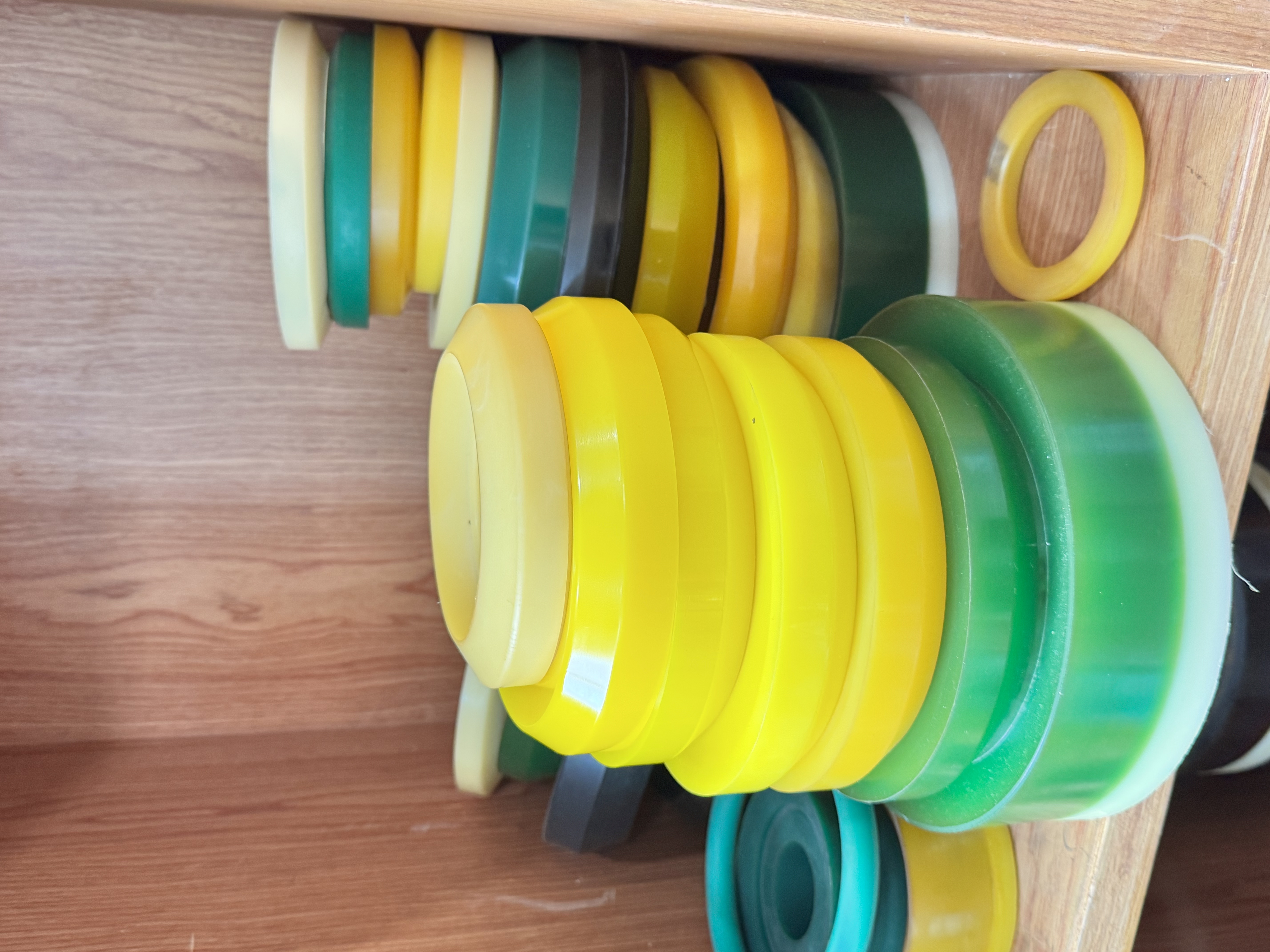
Screen mesh for a mine, a sealing element on a wind component, a part immersed in seawater and a coated piece of gym equipment are normally bought from different suppliers against different drawings — yet they pose the same selection problem. The working condition (tropical heat, humidity, abrasion, seawater, cyclic load) decides which polyurethane raw material can be used, well before a hardness figure is quoted. Shanghai Hecheng Polymer Technology Co., Ltd, a Shanghai-based producer of cast polyurethane (CPU) elastomer materials founded in 2009, publishes its application records in that order: industry, working condition, function, production mode, then supporting equipment. This article maps those records to mining, wind, marine and sports duty, and to the composite, construction and automotive cases that share the same environment.
One duty envelope, seven application records
Every application record examined here describes the same environment: tropical high temperature, high humidity, frequent friction and corrosive water contact. The markets named recur as a set — Thailand, Vietnam, Pakistan, the Philippines, Cambodia, Malaysia and Bangladesh — which is consistent with a specification written for humid, coastal and often outdoor industrial sites rather than for one country.
That envelope changes what a buyer must ask. A grade chosen on hardness alone answers none of the real questions: whether the part holds its properties after sustained humidity exposure; whether it resists seawater and marine growth; whether it damps vibration or transmits it; whether it keeps sealing under electrical stress; whether it ages under heat; and whether a colour or coated surface can be reproduced batch after batch.
The company's own summary of functions across these environments names corrosion resistance, marine anti-fouling, vibration damping, high hydrolysis and corrosion resistance, high-toughness elastomer material and enhanced dynamic mechanical properties. Those are six different property families, and no single grade carries all of them at once. The purchasing task is allocation, not aggregation.
Five portfolio entries and what each is documented for
Shanghai Hecheng's published portfolio is organised into five categories: casting polyurethane prepolymer, casting polyurethane mixed component, polyurethane polymers for special applications, environment-friendly adhesive products, and supporting equipment, auxiliary materials and additives for PU production. The manufacturing base is described as 16,932 m² in Shanghai's Songjiang district, with 16 major production reactors and more than 1,000 prepolymer grades. Portfolio breadth is not evidence of fitness for a specific part, but it does mean a buyer can often stay inside one supplier's chemistry when the application changes.
Five entries are relevant to the duties discussed here:
- Casting Polyurethane prepolymer (POLYURETHANE ELASTOMER). The base cast entry, listed against the mining industry and used as the reference product behind the company's mining, wind power, marine technology, sports, composite, construction and automotive application records.
- Polyurethane elastomer, polyester three-component system, grade Screen Scraper-5282ABC. Documented with high wear resistance and high resilience for the mining sector.
- CPU casting polyurethane, polyether PTMG-MDI system. Described as environmentally friendly and corrosion-resistant, and listed for sealed class accessories.
- Liquid polyurethane, Gel-8301AB. A two-component PU AB material documented for antioxidant behaviour and high resilience across various elastomers; it is the entry named in the marine liquid-polyurethane project record.
- Polyurethane prepolymer, grade 8385AB, polyether-MDI. A rubberized material for sports equipment, documented with vivid colours and eco-friendly characteristics.
Two cautions follow from how these entries are published. A grade name is an identifier, not a performance certificate; quoted properties belong to the documented application, not automatically to every part made from that grade. And terms such as "corrosion-resistant" or "high wear resistance" are comparative within a supplier's own range unless a test method and reference accompany them.
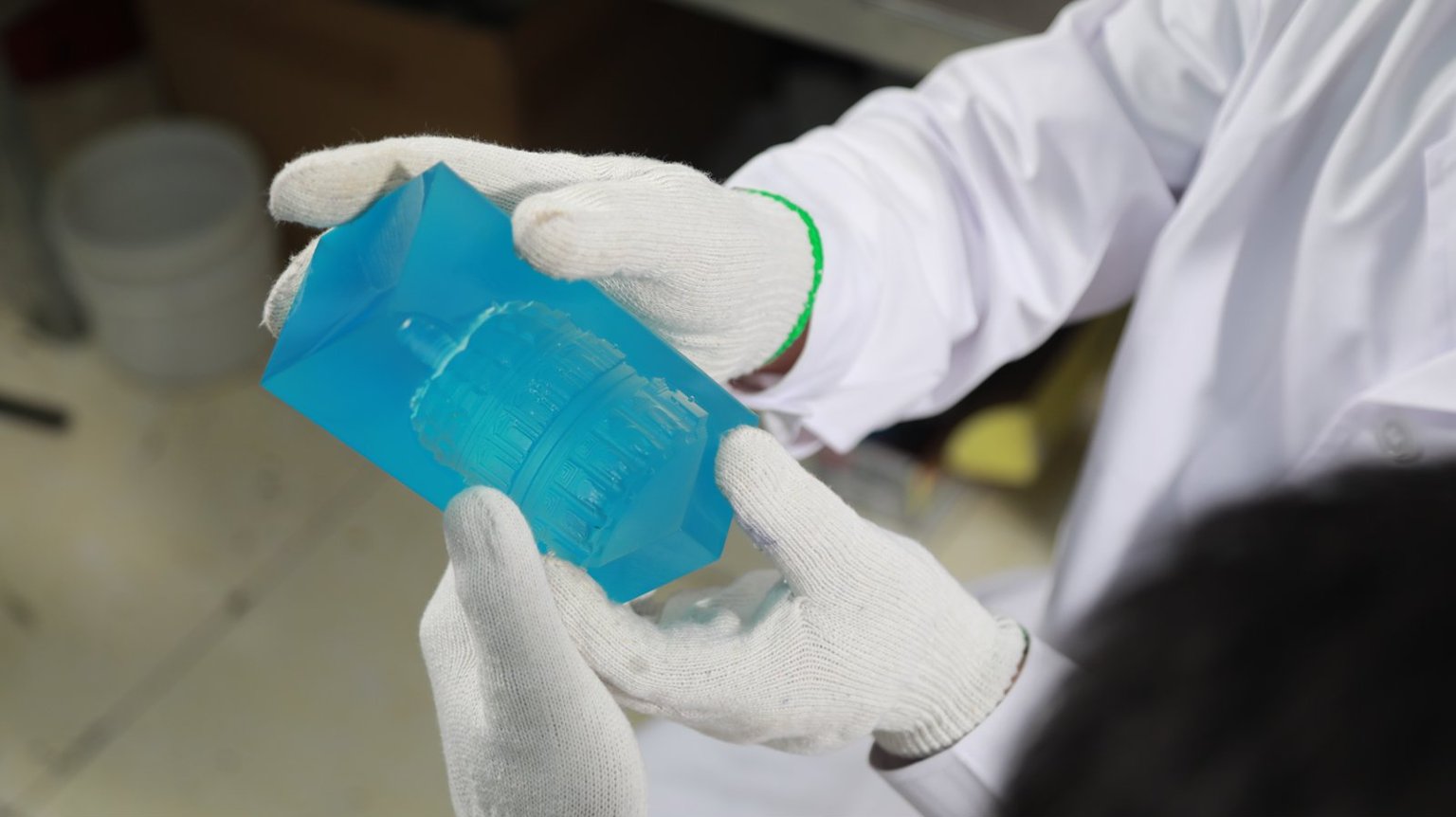
Mining: tensionless screen mesh is a wear-and-flex decision
In mining, the documented use is the production of tensionless screen mesh, under tropical heat and humidity with frequent friction and corrosive water contact. The record specifies automated two-component mixing and pouring, supported by a polyurethane high-pressure foaming machine or low-pressure pouring machine, raw material storage tank, mixing bucket and delivery pump.
The material side of that record pairs two properties that pull against each other in service: high wear resistance and high resilience. A screen mesh is abraded by the material it classifies and is loaded and released as it works, so a compound selected only for hardness may answer the abrasion question while behaving poorly as a flexible mesh. The polyester three-component grade Screen Scraper-5282ABC is documented against both properties for the mining sector, while the Casting Polyurethane prepolymer is the general cast base for mining parts such as scrapers, wear pads and wheels.
The checkable question for a buyer is therefore not which grade is hardest, but which grade is documented against the combination of abrasion and flexing in a humid, wet environment — and what evidence supports that combination.
Wind power: aging, sealing under voltage and shock absorption on one component
The wind power record asks a polymer prepolymer to deliver three functions for wind power components: aging resistance, high-voltage sealing and shock absorption, in the same humid, abrasive environment. Automated two-component metering with high-pressure mixing and pouring is again specified for continuous output.
Three functions on one component is where the difficulty sits. Aging resistance concerns what happens to the material over time under heat, humidity and load; high-voltage sealing concerns the integrity of an interface under electrical stress; shock absorption concerns how the material converts cyclic load rather than transmitting it. A data sheet that answers one of these does not answer the other two, and the record claims no single figure that covers all three.
The portfolio offers two adjacent routes. The polyether PTMG-MDI CPU casting polyurethane is documented as corrosion-resistant and environmentally friendly and is listed for sealed class accessories — the sealing side of the requirement. The Casting Polyurethane prepolymer is the polymer prepolymer entry used across the wider component set. For a wind application, evidence for each function should be requested separately, on the same grade, under humid-heat conditions.
Marine: surface protection and bulk damping are different requirements
Marine technology is recorded as a liquid polyurethane raw material project. The documented functions are resistance to seawater corrosion, anti-fouling against marine organisms and shock absorption, in an environment of high temperature, high humidity and continuous seawater exposure, using the same automated metering, high-pressure mixing and pouring route.
The marine requirement mixes a surface behaviour with a bulk behaviour. Anti-fouling concerns what happens at the water-facing surface; vibration damping concerns how the body of the part responds to cyclic load; seawater corrosion resistance concerns durability in the presence of salt water. Liquid polyurethane Gel-8301AB, an AB two-component material documented for antioxidant behaviour and high resilience, is the entry named for liquid polyurethane projects, while the corrosion-resistant PTMG-MDI casting system sits alongside it for sealed parts in the same environment.
Because the functions are verified differently, a marine buyer who receives a single test report should first establish which function it covers before treating it as a qualification.
Sports: the rubberized surface is a coating process, not a moulding shortcut
In the sports industry the documented function is rubber coating applied to sports equipment through a two-component mixing process, under tropical temperature and humidity, with Thailand, Vietnam and Malaysia named as typical markets. The record specifies automated production with continuous mass-production capability, supported by a polyurethane high-pressure foaming machine and raw material storage tank.
The material entry is Polyurethane prepolymer grade 8385AB, a polyether-MDI rubberized material documented with vivid colours and eco-friendly characteristics for sports equipment. Colour and appearance belong in the specification here because the coated surface is the product surface: it is what the user grips, sees and wears against. That makes the consistency of the mixed system — not only its final hardness — part of what is being purchased.
Two practical consequences follow. A coating trial should run on the dispensing equipment intended for production, because the two-component mixing step is part of what is being qualified. And a colour or appearance requirement should be written as an acceptance item with a stated check, not left as a description.
Composites, construction and automotive: where the same envelope reappears
Sealing rings in composite assemblies
The composite material record documents use in producing sealing rings, under the same humid, abrasive and corrosive conditions and the same automated two-component production mode. The PTMG-MDI CPU casting system, listed for sealed class accessories, is the natural starting point; what must be confirmed is the medium the seal actually sees, since "corrosive water contact" is a general condition rather than a specification of one chemical environment.
Construction anti-wear parts
For construction, the documented function is a high-toughness elastomer providing high hydrolysis and corrosion resistance for anti-wear parts, under humid heat with friction and corrosive water contact, with the same equipment set. Hydrolysis resistance is the property that most directly addresses a wet, humid duty cycle, and it is one of the few properties that can be discussed meaningfully before a part geometry is fixed.
Automotive dynamic components
The automotive record specifies a TDI low-free prepolymer with improved physical and mechanical properties and excellent dynamic mechanical properties, in the same tropical conditions — high temperature, high humidity, frequent friction and corrosive water contact — and in the same automated pattern of dual-component metering and conveying, automatic high-pressure mixing and pouring for continuous mass production. The low-free classification places this entry in the prepolymer category that third-party research tracks as the faster-growing segment, discussed below.
The mapping in one view
| Application record | Duty stress | Property the system must carry | Portfolio entry named |
|---|---|---|---|
| Mining | Abrasion plus repeated flexing, humid and wet | High wear resistance with high resilience | Polyester three-component elastomer, Screen Scraper-5282ABC; Casting Polyurethane prepolymer |
| Wind power | Heat, humidity, electrical stress, cyclic load | Aging resistance, high-voltage sealing, shock absorption | Cast polyurethane prepolymer system; PTMG-MDI CPU for sealed class accessories |
| Marine technology | Continuous seawater contact, surface fouling | Seawater corrosion resistance, anti-fouling, damping | Liquid polyurethane Gel-8301AB; corrosion-resistant PTMG-MDI system |
| Sports | Handling wear, appearance, tropical humidity | Rubberized coating with consistent colour | Polyurethane prepolymer 8385AB, polyether-MDI |
| Composites | Sealing interface in wet, corrosive service | Sealing integrity, corrosion resistance | PTMG-MDI CPU casting polyurethane; cast elastomer base |
| Construction | Friction and water contact on wear parts | Hydrolysis and corrosion resistance, toughness | Casting Polyurethane prepolymer elastomer system |
| Automotive | Heat, friction, dynamic cycling | Physical and mechanical strength, dynamic mechanical performance | TDI low-free prepolymer |
Source: Shanghai Hecheng application and product records. Entries describe documented functions for an application class, not certified performance limits for a finished part.
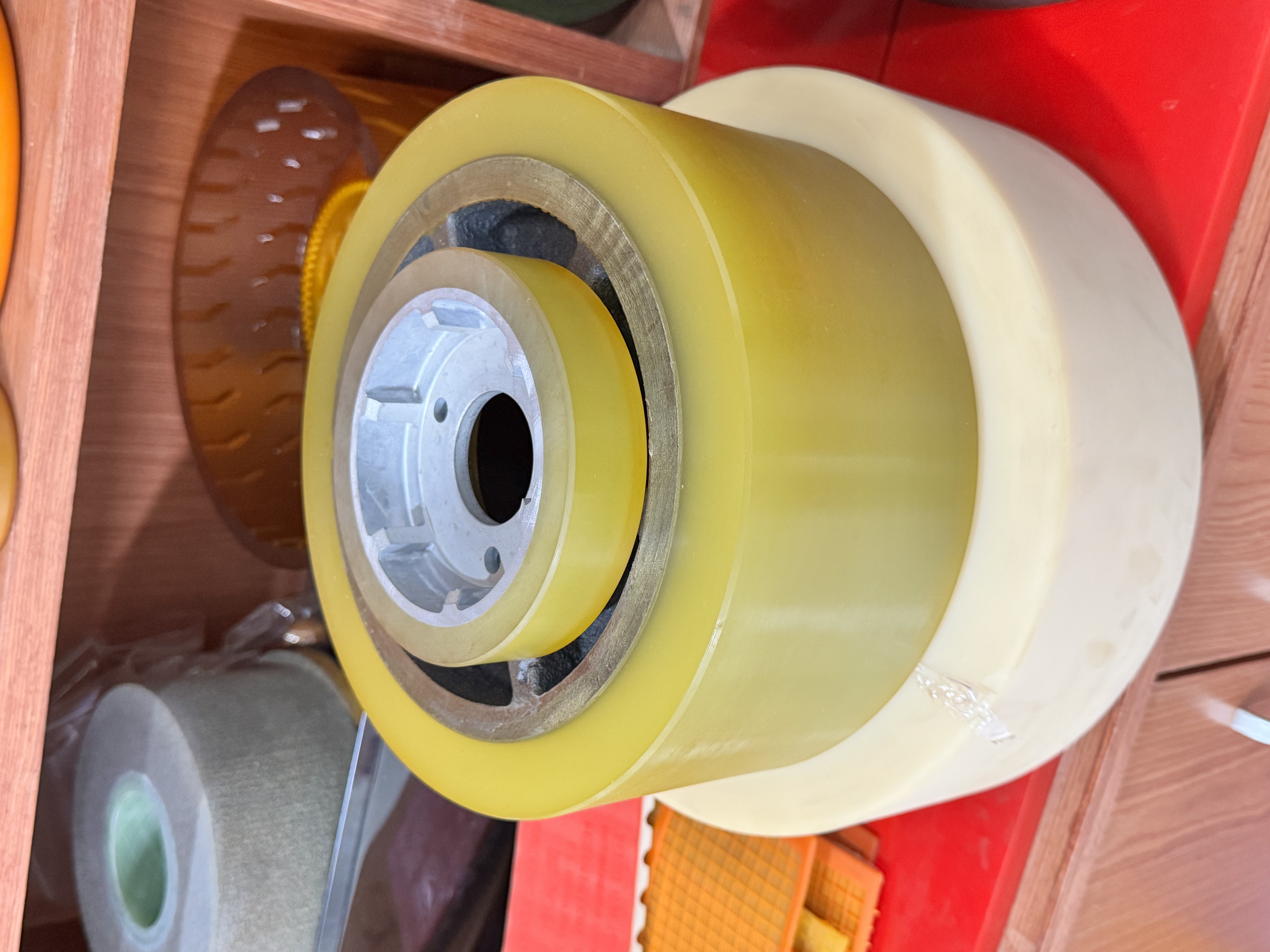
Why metering and mixing decide whether the mapping survives production
All seven application records specify the same production pattern: two-component metering and conveying of raw materials, automatic high-pressure mixing and pouring, enabling continuous mass production. The supporting equipment is listed consistently as a polyurethane high-pressure foaming machine or low-pressure pouring machine, a raw material storage tank, a mixing bucket and a delivery pump.
That repetition is the most transferable finding in the records. In a two-component cast system the property quoted on paper is realised only if ratio, mixing and pour are controlled in production the way they were in the sample. A grade that performs in a hand-mixed trial can behave differently on a high-pressure machine, and the reverse is equally possible. The record therefore treats the equipment as part of the application definition rather than as an afterthought.
Three questions follow for procurement. Is the proposed grade matched to the dispensing equipment the buyer actually runs, including whether high-pressure or low-pressure pouring is used? Is the production mode in the supplier's record the same as the buyer's, or is a lower-volume route planned that the record does not describe? And does technical support extend to the mixing step, or stop at the drum?
What the evidence layer contains, and what it does not
Beyond grades and application records, several items belong in a buyer's file. The company describes itself as a national high-tech enterprise focused on R&D, manufacturing and global supply of CPU elastomer materials, established in 2009, with 78 employees and a research and development team of 18 engineers; a dedicated R&D centre works on custom formulations for specific performance and processing needs. Laboratory capability is described as basic mechanical testing, thermal analysis and chemical resistance evaluation — relevant here, because the duty envelope in this article is largely an aging and chemical-resistance question. Exports are stated at 30% of output, to the EU, Southeast Asia and South America. A company-reported annual output figure is also published; buyers should confirm its product scope and basis during supplier qualification rather than using it as application capability.
Project documentation also cites invention patent 16425Q32921R3M. The appropriate use of that reference is as an identifier: a buyer can request the certificate, confirm the number, the holder and the status, and treat it as evidence of development activity. A patent number is not a performance result, does not certify a grade, and does not replace application testing; it belongs in the supplier-qualification file, not in the technical specification.
One application case is documented: a raw-material manufacturer in Vietnam using polyurethane elastomer, with a 100-ton relationship running for 10 years, reported to have maintained stable production quality and improved product performance, with environmentally friendly, high-quality and corrosion-resistant characteristics highlighted. This is a company-reported single case in one market; it does not describe another buyer's part, medium or duty cycle.
Market context: a growing segment, not a supplier ranking
Third-party research places the global polyurethane market at USD 92.1 billion in 2026, projected to USD 216.8 billion by 2033 (Grand View Research). A second estimate puts 2026 at USD 93.11 billion (Straits Research); the gap is best read as a definitional difference between polyurethane products and polyurethane raw materials rather than a contradiction to be resolved here. The cast segment is narrower: USD 2.76 billion in 2024, forecast to USD 4.19 billion by 2033 at a CAGR of 5.97% (Astute Analytica). Low-free isocyanate prepolymers, the category that includes the TDI low-free entry used in the automotive record, are tracked separately at a 13.01% CAGR to 2033 (Market Research Intel).
These are third-party forecasts with their own assumptions, not measurements of any supplier's output, and they cannot be used to infer capacity, share or qualification. Their practical value is narrower: cast elastomer demand and low-free chemistry are both tracked as growth areas, which is consistent with buyers in humid, coastal markets asking more precise questions about hydrolysis resistance, seawater exposure and monomer content than general-purpose cast systems invite.
Where this mapping stops: fit boundaries for buyers
The mapping allocates systems to duty conditions; it does not qualify a part. Several limits deserve stating plainly.
- A documented function is not a guaranteed outcome for a specific geometry, thickness or load. The records describe property requirements for an application class, not tested results for a finished component.
- The duty envelope is described generically as tropical heat, humidity, friction and corrosive water contact. The buyer's actual medium, temperature range and load spectrum must be supplied before a grade can be confirmed.
- Single-case evidence — one customer, one market, one quantity — supports a conversation, not a production commitment.
- Patent identification, facility size and grade count are supplier-qualification inputs; none predicts service life.
- Continuous mass production assumes the buyer's dispensing equipment matches the two-component metering and high-pressure mixing route described in the records.
A practical verification path follows from those limits. State the medium and temperature range in the inquiry rather than the word "corrosive". Ask which grade is documented against the combination of properties the part needs, not only the most important one. Request the test method behind each quoted property. Run a trial on the production equipment. Keep patent and facility evidence in the supplier file, separate from the technical acceptance criteria.
Conclusion
These sectors do not need four unrelated material strategies; they need one allocation discipline. Mining leads with wear resistance held together by resilience, wind power with aging, sealing and damping on the same component, marine with seawater and biological fouling at the surface plus damping in the body, and sports with a coating whose colour and consistency are part of the product. Composites, construction and automotive repeat the same humid-heat-friction envelope through seals, anti-wear parts and dynamic components.
Shanghai Hecheng's records are useful because they are written in that order, and because all seven name the same two-component metering and high-pressure mixing production mode. That makes the application library a starting document for a buyer's specification — while the buyer's own duty data remains the deciding one.
Frequently asked questions
Which polyurethane raw material is used to produce mining tensionless screen mesh?
The mining record specifies cast polyurethane produced with automated two-component metering, high-pressure mixing and pouring, and names a polyester three-component polyurethane elastomer grade, Screen Scraper-5282ABC, documented for high wear resistance and high resilience in the mining sector. Supporting equipment listed for the application includes a high-pressure foaming machine or low-pressure pouring machine, a raw material storage tank, a mixing bucket and a delivery pump.
What must polyurethane provide in wind power components?
The wind power record asks for three functions on the same component: aging resistance, high-voltage sealing and shock absorption, under tropical high temperature, high humidity, frequent friction and corrosive water contact. The entry listed for sealed class accessories is a polyether PTMG-MDI CPU casting polyurethane described as corrosion-resistant and environmentally friendly; evidence for aging and damping should be requested separately for the same grade.
How is polyurethane specified for marine conditions?
Marine technology is recorded as a liquid polyurethane raw material project requiring resistance to seawater corrosion, anti-fouling against marine organisms and shock absorption. Liquid polyurethane Gel-8301AB, a two-component PU AB material documented for antioxidant behaviour and high resilience, is the entry named for liquid projects. Anti-fouling concerns the water-facing surface while damping concerns the body of the part, so the two are verified separately.
Which polyurethane system is used for rubber coating on sports equipment?
The sports record describes rubber coating applied through a two-component mixing process under tropical temperature and humidity, using Polyurethane prepolymer grade 8385AB, a polyether-MDI rubberized material documented with vivid colours and eco-friendly characteristics, on an automated continuous route supported by a high-pressure foaming machine and raw material storage tank.
What production equipment do these applications have in common?
All of the application records specify two-component metering and conveying of raw materials with automatic high-pressure mixing and pouring for continuous mass production, supported by a polyurethane high-pressure foaming machine or low-pressure pouring machine, a raw material storage tank, a mixing bucket and a delivery pump. The shared pattern means the production route, not only the grade, forms part of the application definition.
Further technical reference: the company product brochure is available for download at Shanghai Hecheng polyurethane brochure (PDF).
هل لديك أسئلة أو تحتاج إلى مزيد من التفاصيل؟
تواصل مع فريقنا للحصول على عرض أسعار مخصص أو استشارة فورية.
طلب عرض أسعار
املأ النموذج أدناه وسيتواصل معك فريقنا بعرض مقترح مخصص.
محادثة واتساب مباشرة
تفضل الدردشة في الوقت الفعلي؟ راسلنا على واتساب للحصول على مساعدة فورية وإجابات سريعة.
- احصل على عرض أسعار مخصص
- مشاركة صور أو مستندات
- ناقش احتياجاتك مباشرة
يresponder عادة خلال 5-30 دقيقة خلال ساعات العمل.