
Poppet vs Flat Face: ISO 7241-A and ISO 16028 by Duty
Poppet vs Flat Face: ISO 7241-A and ISO 16028 by Duty
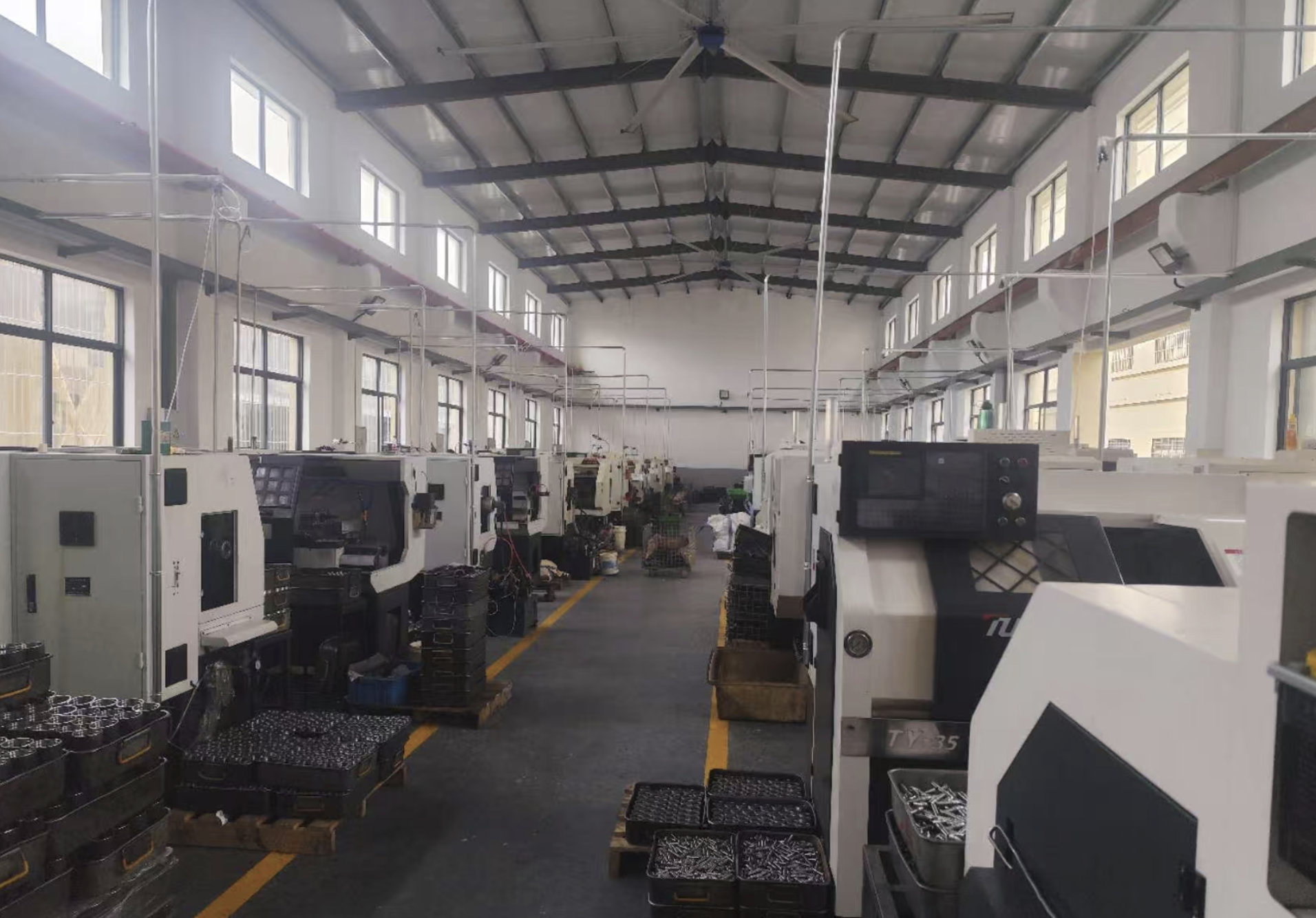
Dimensional consistency in machining is the base condition for any quick coupling comparison.
There is no single winner between ISO 7241-A poppet-valve couplings and ISO 16028 flat-face couplings, and any comparison that declares one is answering a different question than the one a buyer actually faces. The usable answer is conditional: the choice is settled by what happens at the moment of disconnection, by whether the line can be fully relieved before connection, and by what the environment does to the coupling between replacements.
This comparison applies the same six criteria to the ISO 7241-A poppet-valve family, the standard ISO 16028 flat-face family, and the three ISO 16028 configuration directions buyers most often raise — corrosion-resistant, high-pressure and connect-under-pressure. Each option is treated as a configuration with its own evidence requirements rather than as a tier in a hierarchy, because a coating upgrade does not change a pressure class and a pressure-class upgrade does not improve corrosion performance.
Two limits apply throughout. Requirement values are not restated here; they belong in the purchase specification and in the supplier's item-level declaration, read from the current edition of the relevant standard. And where a characteristic is not documented by a supplier, this comparison records it as undocumented instead of inferring a capability.
The design difference that drives the rest
ISO 7241-A is a poppet-valve series. Each coupling half carries a spring-loaded poppet that seats closed when the halves separate; on connection the two poppets push each other off their seats and the flow path opens through the valve area. The surface that meets the environment is therefore a seat inside the bore, not the outer face of the coupling.
ISO 16028 is the flat-face family. The two halves present flat faces that mate, and the sealing action takes place at that face while the valve arrangement sits behind it. Because the area exposed to the atmosphere at disconnection is limited to the face itself, the design is generally specified where fluid loss and air ingress at the connection point are the controlling concerns.
Three consequences follow, and they explain why the same nominal size in the two families behaves differently in service:
- Fluid released at the break. A poppet opens into the line, so the volume trapped between the two poppets is released when the halves separate. A flat face limits the exposed wetted area to the face.
- Air taken in on reconnection. The same geometry works in reverse. A face that is wiped and mated admits less air than a valve that has to be displaced before the joint seals.
- Connection effort. Bringing two faces together against residual line pressure is a different task from opening a poppet, which is why connect-under-pressure exists as a separate ISO 16028 configuration rather than as a property of the standard flat-face item.
These are design characteristics, not ratings. They tell a buyer which criterion to test first; they do not establish which family performs better in a given circuit. Flow capacity, pressure drop, seal life and connect force all vary by size, material and supplier, and have to come from the supplier's item data and test basis.
What the standard number establishes — and what it leaves open
ISO 7241-1, Hydraulic fluid power — Quick-action couplings — Part 1: Dimensions and requirements, is the part of the ISO series that carries dimensions and requirements for hydraulic quick-action couplings. ISO publishes a separate Part 2 covering test methods (ISO 7241-2). Two practical consequences follow for anyone writing a specification.
- A claim of compliance is only checkable when it names the part, the edition and the series. A catalogue line reading "meets ISO 7241" does not tell a buyer which document was applied, which series the item belongs to, or what was tested.
- Because test methods sit in a separate document, a buyer can require evidence produced under a named protocol instead of accepting a general conformity statement. The existence of a test-method standard is what makes a like-for-like comparison between two quotations possible at all.
ISO 16028 is a separate document, and its requirements, series and test provisions have to be read from the current edition and from the supplier's declaration for the specific item. This comparison deliberately does not restate pressure ratings, dimensions or leakage values from either standard. Requirement values lifted out of a standard without the edition and the test conditions attached are one of the most reliable ways to introduce a specification error into a purchase.
The comparison set on four buyer-facing columns
The table below is a specification agenda. For each of the five options it records the interface logic, the duty profile in which buyers normally start there, and the evidence that should exist before the item enters an approved-parts list. It is not a ranking, and the duty column is a starting point for evaluation rather than a recommendation for a specific circuit.
| Option | Interface logic | Duty profile where evaluation usually starts | Evidence to obtain before approval |
|---|---|---|---|
| ISO 7241-A poppet valve | Spring-loaded poppet in each half; seat closes on separation; flow passes through the valve area | General hydraulic circuits with moderate break frequency where a small loss at disconnection is acceptable and a simple, robust bore is valued | Series designation and edition; rated working pressure per size and its basis; test basis under ISO 7241-2; body, seat and seal materials; plating specification and salt-spray evidence |
| ISO 16028 flat face (standard) | Mating flat faces seal; valve behind the face; limited wetted area exposed at break | Circuits where spillage, air ingress or cleanliness at the connection point controls the decision | Edition and series; confirmation that the item is not rated for connection against residual pressure; rated pressure per size; face and seal materials; interchangeability statement |
| ISO 16028 corrosion-resistant | Flat-face interface with body material, coating or both changed for environment | Outdoor, washdown, coastal or chemically exposed installations | Base material grade; coating type and thickness range; salt-spray hours with the standard named; whether coating covers threads and faces or external surfaces only; effect on dimensional fit |
| ISO 16028 high-pressure | Flat-face interface with a higher declared pressure class | Circuits where the standard class sits below system peak or surge | Rated working pressure per size; the basis on which the rating was established; whether the higher class changes bore, flow or envelope; evidence that the rating applies to the shipped combination |
| ISO 16028 connect-under-pressure | Flat-face interface with pressure-balancing provision allowing connection against trapped pressure | Maintenance-heavy circuits where a line cannot be fully relieved before connection | Maximum connect pressure; maximum disconnect pressure; whether the capability sits in one half or both; operator effort; effect on flow or envelope; seal service interval |
Two misreadings are common. The first is treating the three ISO 16028 configurations as a ladder: a corrosion-resistant body does not raise a pressure class, and a high-pressure item is not automatically more resistant to a wet outdoor environment. The second is treating the labels as self-defining. Connect-under-pressure means whatever the supplier's declared limit says it means, including the pressure at which it applies, whether it applies to one half or to both, and how much operator effort it requires.
Six criteria that decide the family
1. Fluid loss and air ingress at the break point
Where a small quantity of oil at the connection point is a housekeeping matter, the poppet family's larger exposed volume at break is usually tolerable and the simpler bore is an advantage. Where the same loss becomes a safety, slip, product-contamination or electronics-wetting issue, the flat face is the natural starting point. Air ingress is the same question asked on reconnection: in circuits where a slug of air produces a soft response, a bleed step or a commissioning delay, the flat face is the starting point. Ask the supplier for the displaced volume at break for the size in question, and whether that figure comes from a test or from a calculation.
2. Residual pressure at connection
Both the standard poppet coupling and the standard flat-face coupling assume the line is relieved before the halves are brought together. Connect-under-pressure is a separate configuration that relaxes that assumption within declared limits, and the limits are the operative specification: maximum connect pressure, maximum disconnect pressure, whether the capability sits in one half or both, and how the coupling behaves if it is connected above the declared limit. A connect-under-pressure item ordered without those figures is a description, not a specification.
3. Pressure class, cycling and vibration
The valve style does not set the pressure class; the item's declared rating does. For mobile and earthmoving duty the relevant evidence is not a single static number but how the rating was established against pressure cycling, surges and vibration. Construction-machinery circuits — excavators, wheel loaders, cranes and concrete pumps — combine frequent pressure fluctuations, shock loads, continuous hose movement and outdoor exposure, and the sealing requirement follows those conditions rather than the coupling's nominal size. Ask for rated working pressure per size, the basis on which it was established, and confirmation that the rating covers the body and seal combination that will actually ship.
4. Corrosion exposure and the shape of the evidence
Outdoor sites expose a coupling to dust, mud, moisture, rain and temperature variation, and coastal or washdown environments add chloride. Coatings are where specification language most often goes vague. Useful evidence is specific: base material grade, coating type, thickness range, salt-spray hours with the standard named, and whether the coating covers threads and sealing faces as well as external surfaces.
JINGYE states, for its hydraulic fittings, a standard trivalent chromium zinc plating of 8–12 μm with salt-spray resistance of at least 96 hours to white rust and at least 240 hours to red rust, with enhanced coatings up to 16 μm available on request. That is the level of detail a corrosion-resistant coupling configuration should be able to match. The figures are stated for the company's fittings range, and coupling-specific values should be confirmed per item rather than assumed to carry across.
5. Break frequency, access and maintenance
Break frequency decides how much the connection experience matters. A circuit opened weekly can absorb a small spill and a higher connect effort; a circuit opened several times per shift should be specified around the operator, including connect force, hand access, dust-cap retention and the effort of wiping a face before mating. Break frequency also drives the inventory question: every additional configuration multiplies the part numbers a maintenance team has to stock and identify correctly, which is a real cost in mixed fleets.
6. Circuit cleanliness and contamination practice
Both designs depend on a clean sealing surface and both fail in the same direction when contamination reaches the seal. The difference is in practice, not in principle: a poppet seat sits inside the bore and is not wiped between connections, while a flat face can be inspected and wiped at each break. Treat this as a maintenance-practice question rather than a design verdict, and confirm seal material compatibility with the actual fluid before approving either family.
Where each family fits: three application reads
Mobile and earthmoving hydraulics. The coupling is usually the maintenance access point rather than the primary joint, and the decisive evidence is the pressure basis and the corrosion evidence, not the valve style. Where quick disconnects are used for attachment changeover, fluid loss moves from a housekeeping question to a site-safety and ground-contamination question, which shifts the evaluation toward the flat face.
Fixed plant with frequent line or tool changeover. High break frequency and cleanliness control the decision. The flat face is the starting point, and a connect-under-pressure configuration is appropriate only where a line genuinely cannot be relieved — not as a substitute for a proper depressurising procedure.
Data-centre liquid cooling. This is a different specification family. Liquid cooling quick disconnects, including UQD & UQDB couplings associated with Open Compute Project specification work, address a different connection problem: coolant loss inside an electronics enclosure. Buyers moving from hydraulic duty into cooling should not carry ISO 7241-A and ISO 16028 logic across unchanged, because the interface, the specification body and the qualification route all differ. A supplier's hydraulic coupling experience is relevant context; it is not evidence of compliance with a cooling specification.
Trade-offs and fit boundaries
- Poppet valve. Simplicity and an unobstructed bore are the attraction; measurable loss at break and air admitted on reconnection are the cost.
- Flat face. The break point is cleaner, but the faces must be kept clean and the item is not automatically suitable for connection against pressure.
- Corrosion-resistant configuration. Protects the body; adds cost, and an external coating does not by itself guarantee wetted-part corrosion resistance.
- High-pressure configuration. Adds capability, but may change bore, flow or envelope, and those changes have to be checked against the circuit rather than assumed neutral.
- Connect-under-pressure configuration. Adds convenience within declared limits; it does not remove the need for a pressure-relief procedure and it does not mean connectable against full system pressure.
- Cross-brand interchangeability. Requires dimensional, sealing and pressure verification for the specific pair of items, not a comparison of standard numbers.
- Undocumented is not equivalent to incapable. A missing figure means the question is open, and the correct next step is to request the data, not to draw a conclusion from its absence.
What a supplier has to be able to evidence
JINGYE Hydraulic (Ningbo Jingye Fluid Fittings Co., Ltd.) is a Ningbo-based manufacturer founded in 2008 whose portfolio covers hydraulic fittings, hydraulic adapters, hydraulic hose fittings, industrial and composite hose fittings, camlock couplings, quick disconnect couplings, liquid cooling quick disconnects, UQD & UQDB quick disconnect couplings, stainless steel fittings, brass fittings, pneumatic fittings and customized fluid connection components. Materials include carbon steel, stainless steel 304, 316 and 316L, and brass according to product and application.
The manufacturing base is a 6,000+ m² facility with about 100 employees, 100+ CNC machines, and a stated annual capacity of more than 40 million fluid connection components — roughly 3.3 million pieces per month. The company operates under an ISO 9001:2015 quality management system, supports OEM production from drawings and samples, and states that around 70% of output is exported to Europe, North America, Australia, Southeast Asia and the Middle East, with additional OEM customers in China.
For a buyer assembling an evidence file, several stated terms are directly usable. For its hydraulic fittings and adapters, JINGYE reports no strict MOQ on most standard items, with customized products subject to model-specific requirements; lead times of 3–5 days for in-stock items, 30–45 days for standard production and 45–60 days for customized products; and the availability of material reports and dimensional inspection records according to project requirements. The company also evaluates reference part numbers from branded suppliers for dimensional comparison and alternative sourcing, while stating that cost savings and interchangeability require individual comparison and verification — a position that matches the discipline this comparison recommends.
The boundary is worth stating plainly: those commercial terms are published for the fittings and adapter range. A coupling enquiry should be answered item by item, with the series designation, rated pressure, test basis and documentation named for the specific part, because that is the only form in which the answer can be checked.
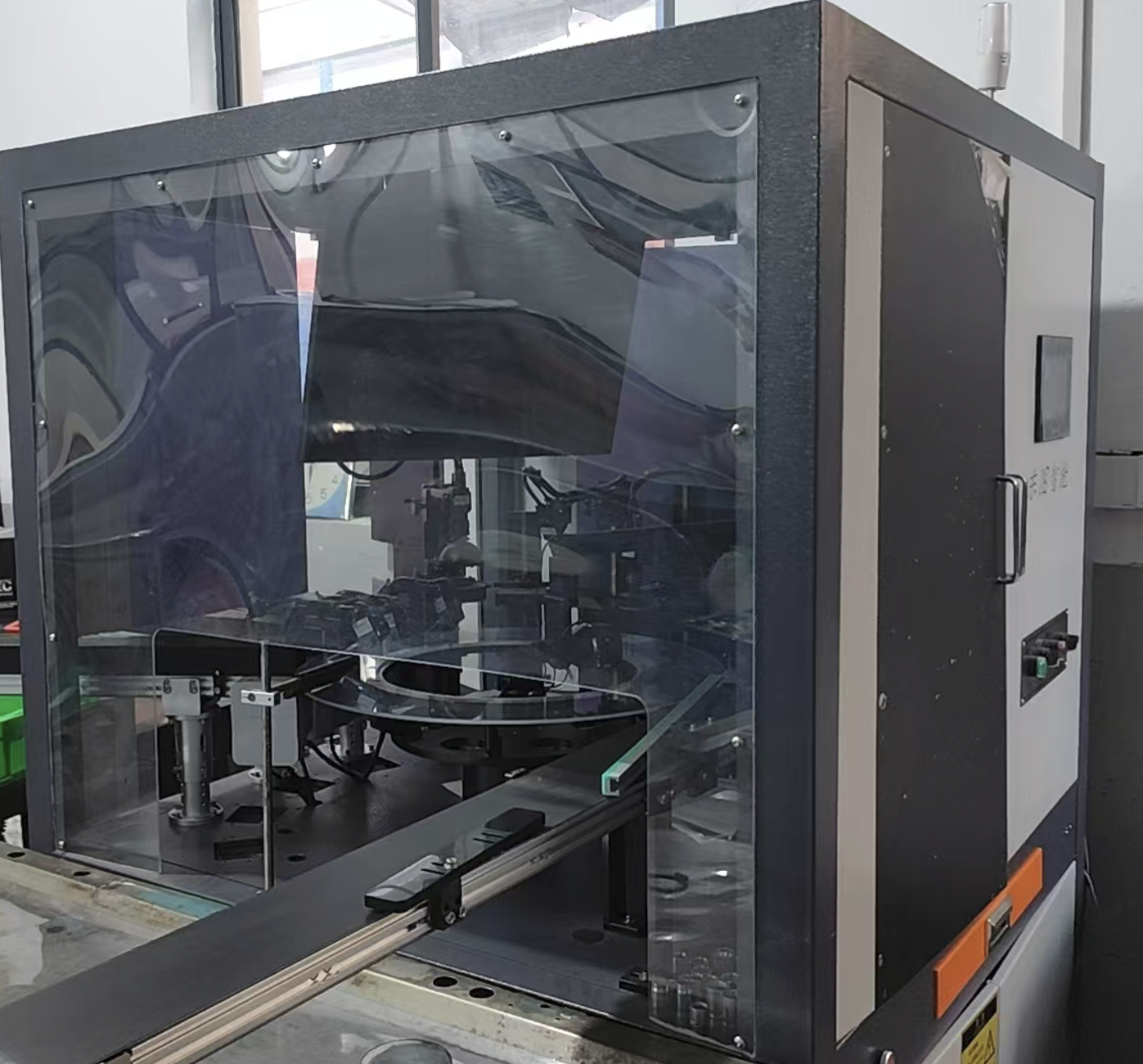
Inspection records, not catalogue images, are the part of a quotation that can be compared across suppliers.
Market context: what the category numbers do and do not support
Market research cited for this category puts the global hydraulic fittings market at USD 12.7 billion in 2024, rising to a projected USD 17.9 billion by 2030, a CAGR of 5.8% over 2024–2030 (Strategic Market Research). The same research body reports the separate liquid cooling quick disconnect market at USD 2.8 billion in 2025, projected to reach USD 6.1 billion by 2034 at a CAGR of 9.1% (Dataintelo).
Both figures describe categories, not the relative merit of two coupling families. They support budgeting and supplier-development planning; they do not support a claim that one family is displacing the other, and they say nothing about performance in a specific circuit. Treating a category forecast as evidence for a coupling choice is the same error as treating a standard number as proof of product conformity.
A purchase specification checklist
- Standard document number and edition for both the coupling and, where relevant, the mating hose or tube assembly.
- Series designation, written out in full rather than abbreviated on the drawing.
- Family and configuration: poppet or flat face, and standard, corrosion-resistant, high-pressure or connect-under-pressure.
- Nominal size and port interface — thread standard or flange — stated with its own reference document.
- Body, seat and seal materials, with the fluid they must be compatible with.
- Coating type and thickness range, plus salt-spray hours against a named standard.
- Rated working pressure per size, with the basis on which the rating was established.
- Test method the item is qualified to, so quotations from different suppliers can be compared.
- Connect and disconnect pressure limits where a connect-under-pressure configuration is quoted.
- Documentation to ship with the order: material report, dimensional inspection record, item-level conformity declaration.
- Sample and first-article expectation, so the drawing is checked against a part before volume release.
Outlook: what would change the recommendation
The recommendation is not fixed, and three conditions would move it. If spillage tolerance tightens — because the connection sits near electronics, food contact, or a surface where oil creates a slip hazard — the balance shifts toward the flat face regardless of break frequency. If connections must be made with trapped pressure in the line, the configuration decision (connect-under-pressure) matters more than the family decision, and the declared limits become the specification. If the circuit is low-break, cost-sensitive and generously rated, the poppet family remains a reasonable default, provided the loss at break has been accepted deliberately rather than overlooked.
The verification loop after installation is what settles the choice in practice. Track seal replacement rate, spill incidents at the connection point, connect effort reported by technicians, and any air-ingress symptoms at start-up. Those four signals will show within a maintenance cycle whether the family and configuration were matched to the duty — and they are more reliable than any comparison made on a catalogue page.
Frequently asked questions
Is an ISO 16028 coupling a drop-in replacement for an ISO 7241-A coupling?
No. They are different coupling families with different interface geometry — a flat-face interface against a poppet-valve interface — so a replacement changes both halves, the sealing method and the connection procedure together. Whether a specific substitution works in a specific circuit depends on port dimensions, the thread or flange interface, rated pressure, flow requirement and available envelope, and each of those has to be verified against both items' declared data. The standard numbers confirm that both are hydraulic quick-action coupling documents; they do not establish interchangeability between the families.
Which family loses less fluid when the halves are separated?
The flat-face design exposes a smaller wetted area at disconnection, which is why it is generally specified where spillage matters. The size of the difference depends on nominal size, the internal valve arrangement and the fluid volume in the line, so the figure to compare is the displaced volume at break declared for each item. Where that figure is not published, it can be requested as part of the quotation and compared on the same basis for both families.
Do the corrosion-resistant and high-pressure versions change the base standard's requirements?
Each is a configuration of the flat-face family with its own declared characteristics, and each has to be verified on its own documentation. A corrosion-resistant configuration addresses the environment the coupling sits in and should be evidenced by material grade, coating type and thickness, and salt-spray hours against a named standard. A high-pressure configuration addresses the circuit's pressure class and should be evidenced by rated working pressure per size and the basis on which it was established. A connect-under-pressure configuration addresses connection against residual pressure and should be evidenced by maximum connect and disconnect pressures and by whether the capability applies to one half or both. None of these upgrades implies the others.
What should a purchase order state when a quick coupling is specified?
The document number and edition of the standard, the series designation, the family and configuration, the nominal size, the port interface, body and seal materials, coating with a thickness range, rated working pressure with its basis, the test method the item is qualified to, and the documentation to be supplied with the shipment. A purchase order that names only the standard leaves the series, the configuration and the test basis to the supplier's interpretation, and interpretation is not comparable across quotations.
How can a buyer check an ISO 7241-A claim before placing a first order?
Ask for the edition of ISO 7241-1 the item is built to, the series designation, the test basis used under ISO 7241-2, and a dimensional inspection record for the sizes quoted. Then compare a sample against the drawing rather than against a catalogue photograph. A supplier that cannot name the edition and the test basis is describing a category, not a product. The same request applies to flat-face items, with the addition of the connect and disconnect pressure limits where a connect-under-pressure configuration is being quoted.
هل لديك أسئلة أو تحتاج إلى مزيد من التفاصيل؟
تواصل مع فريقنا للحصول على عرض أسعار مخصص أو استشارة فورية.
طلب عرض أسعار
املأ النموذج أدناه وسيتواصل معك فريقنا بعرض مقترح مخصص.
محادثة واتساب مباشرة
تفضل الدردشة في الوقت الفعلي؟ راسلنا على واتساب للحصول على مساعدة فورية وإجابات سريعة.
- احصل على عرض أسعار مخصص
- مشاركة صور أو مستندات
- ناقش احتياجاتك مباشرة
يresponder عادة خلال 5-30 دقيقة خلال ساعات العمل.