
Porcelain Insulator Quality vs Price: What QOCI Data Shows
Porcelain insulator price comparisons only become meaningful once the units being compared carry the same electrical and mechanical duty. A low-voltage shackle insulator rated 13.5 kN and an 11 kV distribution pin insulator rated 10 kN are not interchangeable line items, and their quoted prices cannot be reduced to a single cost-per-piece figure until creepage distance, mechanical load, material grade and test coverage are aligned.
The category is large enough to justify that discipline. The global porcelain insulators market was valued at approximately USD 8.27 billion in 2023 and is projected to reach USD 15.04 billion by 2033 (Spherical Insights), while overhead transmission lines account for roughly 62.1% of global porcelain insulator revenue (Mordor Intelligence). Most of that spend is committed at tender stage, where buyers compare supplier claims and specification sheets rather than finished field performance.
This article examines one manufacturer's published technical and production data — Jiangxi QOCI Electric Co., Ltd. — to test what that data reveals about the relationship between quality and price, and where the evidence stops. No price list is used, because none is published; the assessment works from specification structure, documented cost drivers, and reported field outcomes.
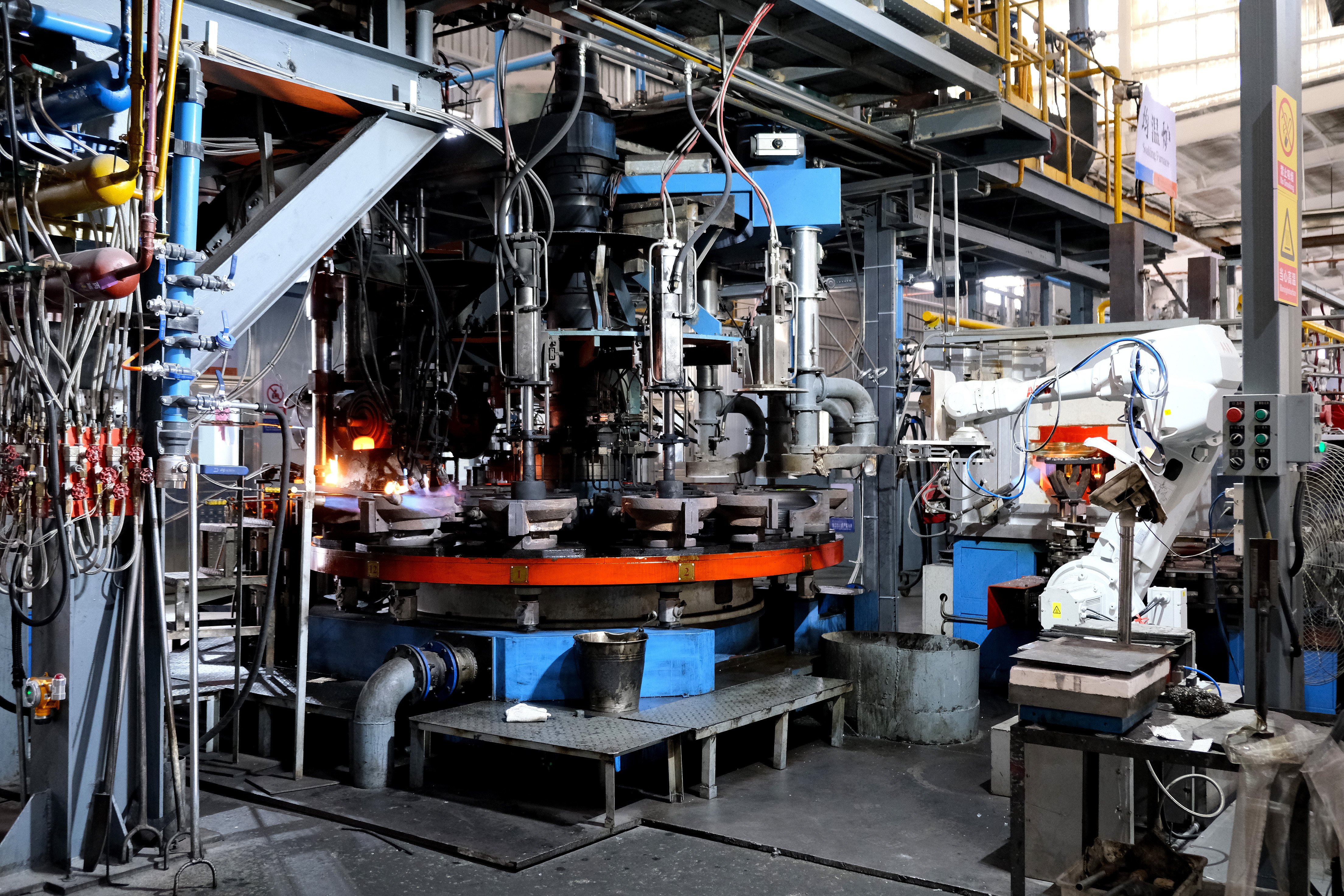
Forming area on a porcelain insulator production line — the point where material grade and process control begin to determine unit cost.
Why "Quality vs Price" Is Really a Specification Ratio
A porcelain insulator is an overhead line unit manufactured from vitrified ceramic material — kaolin, quartz and feldspar fired at 1200–1300 °C — with a glazed surface for moisture resistance and sufficient compressive strength to carry mechanical load. Its function on a line is passive and continuous: electrical insulation between a live conductor and a grounded support, mechanical load bearing, and, in transmission assemblies, corona suppression. There are no active components and no power consumption, so the cost structure is set almost entirely by material grade, forming and firing technology, metal hardware, and the coverage of quality testing.
Because those variables move independently, a per-piece price comparison across suppliers is only valid when at least the following are normalised:
- Creepage distance and pollution-class design (classes I–IV per IEC 60815).
- Specified mechanical load — the string insulator range commonly quoted as SML 40–550 kN.
- Power frequency wet and dry withstand values, plus lightning impulse withstand.
- Crack detection coverage: 100% dye penetration testing per unit versus batch sampling.
- Fitting material and finish — hot-dip galvanised forged steel pins, cast iron caps, and zinc sleeves for severe corrosion service.
- Glaze quality to IEC 60672 and declared standard compliance (IEC 60305 and the ANSI C29 series).
Units that look cheaper per piece are frequently cheaper in one of these dimensions. The remainder of this analysis tests that proposition against QOCI's published numbers.
QOCI Entity and Production Scale: The Fixed-Cost Layer
Jiangxi QOCI Electric Co., Ltd. is a Chinese manufacturer of porcelain and glass insulators, established in December 2002 and located in Luxi Industrial Park, Pingxiang City, Jiangxi Province. The company is described as a national high-tech enterprise and a participating unit of the Insulator Standard Committee, and it produces AC and DC insulators (porcelain and glass), line post porcelain insulators, porcelain pin insulators, shackle insulators, and AC disc-shaped suspension porcelain insulators.
| Item | Published value |
|---|---|
| Established | December 2002 |
| Location | Luxi Industrial Park, Pingxiang City, Jiangxi Province, China |
| Factory size | 35,373 m² |
| Annual output | 9,000,000 units |
| Monthly capacity | 750,000 units |
| R&D team | 38 engineers |
| Export ratio | 20% |
| Main markets | USA, Asia, EU, Africa, South America |
| Production mode | OEM, ODM |
| Customisation | Voltage, logo |
| Lead time | 15–35 days |
| MOQ | 50 units |
| Quality control | 100% pre-shipment test; third-party inspection (SGS) |
| After-sales | Online technical support; replacement for defective products |
Scale affects price through fixed-cost absorption. A published annual output of 9,000,000 units — consistent with the stated monthly capacity of 750,000 units — supports the automated and intelligent production lines the company describes for both its porcelain and glass insulator output. Where kiln operation, tooling and inspection infrastructure are continuously loaded, the per-unit burden of those fixed assets is lower than in a workshop running intermittent batches. That is the main mechanism by which a large producer can hold a competitive price without stripping specification content.
Scale by itself proves nothing about quality, however. Two other published figures matter more to a buyer assessing risk. Quality control is described as 100% pre-shipment testing combined with third-party inspection (SGS), and the commercial model is OEM/ODM covering voltage and logo, with a 15–35 day lead time and a minimum order quantity of 50 units. A low MOQ combined with a short quoted lead time indicates that customised batches are absorbed into the regular production schedule rather than run as exceptional projects — a practical consideration when a distribution project needs a first article batch before a volume order.
The lead time, MOQ and quality-control figures above are QOCI's published terms for its standard range. Anti-pollution profiles, non-standard creepage distances and project-specific fitting configurations should be confirmed against the individual tender specification.
Reading ED-2B and P-11-Y Against Their Ratings
Specification data is where a quality-to-price claim either holds or collapses. Two QOCI distribution-line models show how the published values map to duty.
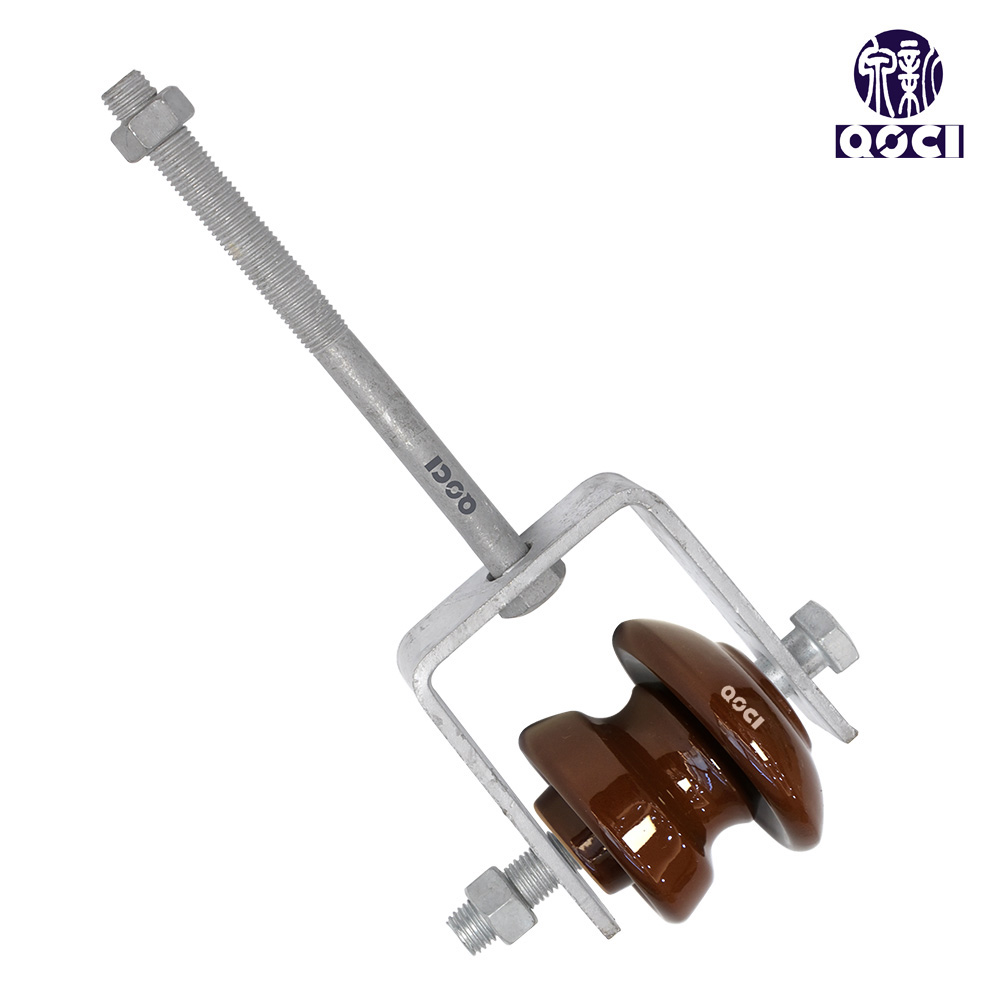
ED-2B shackle insulator with D iron: 13.5 kN mechanical tensile strength, 13 kV wet and 25 kV dry power frequency withstand.
| Parameter | ED-2B (shackle) | P-11-Y (pin) |
|---|---|---|
| Type | Shackle / butterfly, low-voltage distribution insulator | Pin type distribution line insulator |
| Rated voltage | Not stated as a single line value; 13 kV wet and 25 kV dry power frequency withstand | 11 kV |
| Mechanical rating | 13.5 kN mechanical tensile strength | 10 kN rated mechanical load |
| Max diameter | 90 mm | 150 mm |
| Total height | 76 mm | 150 mm |
| Creepage distance | Not stated | 240 mm |
| Power frequency wet withstand | 13 kV | 50 kV |
| Power frequency dry withstand | 25 kV | Not stated |
| Lightning impulse withstand | Not stated | 90 kV |
| Body material | High-strength electrical porcelain | High-strength electrical porcelain |
| Fitting material | Not stated | Hot-dip galvanised forged steel pin |
| Primary application | Power distribution, low-voltage lines, rural electrification, overhead distribution lines | Power distribution, rural electrification, overhead distribution lines, grid construction |
Two observations follow. First, the distance between ED-2B's dry withstand of 25 kV and its wet withstand of 13 kV confirms that the wet value — not the headline dry rating — governs design margin on exposed low-voltage lines. Wet performance is largely a surface property: it depends on glaze quality, shed geometry and contamination accumulation, which is why glaze inspection to IEC 60672 and creepage design are specified separately in serious tenders rather than assumed from the dry figure.
Second, P-11-Y carries a 240 mm creepage distance at an 11 kV rating, together with a 50 kV power frequency wet withstand and a 90 kV lightning impulse withstand. Those three figures — not the headline voltage — determine whether the unit suits the pollution class the project actually specifies.
Note also what the datasheets do not contain: no price, no service-life guarantee, and no project-specific creepage adjustment. ED-2B is a low-voltage shackle unit for rural and urban overhead distribution; P-11-Y is a 10 kV-class pin insulator for distribution and grid construction. Deploying either outside its stated application is a design error, not a cost saving.
Where the Cost of High-Strength Material Sits
In pin and shackle insulators, cost concentrates in the ceramic body and its verification rather than in the outline dimensions.
- Body: QOCI specifies high-strength electrical porcelain for both ED-2B and P-11-Y. Vitrified porcelain of this type achieves bulk resistivity above 10^12 Ω·cm and dielectric strength of 15–25 kV/mm. Higher mechanical ratings require denser, more uniform bodies and tighter process control through forming and firing.
- Glaze: the glaze provides a smooth, hydrophobic surface that reduces contamination adhesion and moisture absorption, and glaze quality directly affects anti-pollution performance and long-term durability.
- Cement joint sealing: moisture ingress through a degraded cement joint is a documented failure route for porcelain units, which makes joint sealing a specification item rather than a finishing detail.
- Hardware: P-11-Y uses a hot-dip galvanised forged steel pin. Under severe corrosion service conditions, using a zinc sleeve can significantly slow rusting and extend the service life of the insulator string.
- Testing: best-practice procurement quotes crack detection as 100% dye penetration on individual units, against batch sampling in cheaper offers. The coverage difference is a direct cost line and the main defence against internal micro-cracks that cannot be seen externally.
- Standards: IEC 60305 covers string insulator units for overhead lines, IEC 60672 covers ceramic and glass insulating materials, and the ANSI C29 series applies to North American test methods. IEC 60383-1:2023 is the current international standard for ceramic or glass insulator units used on AC overhead power lines with nominal voltages above 1000 V.
Read together, these items explain why the lowest per-piece quote on a pin or shackle insulator is usually the one with the thinnest test coverage, the simplest fitting finish and the least documented glaze control. The inverse also holds: paying for 100% crack detection, extended creepage and premium galvanising on a clean-area, low-voltage rural line with modest mechanical load buys margin the project will never use. The ratio only improves when specification content is matched to site conditions.
Matching Units to Real Project Conditions
QOCI's published application data defines the operating envelope for these units: outdoor exposure, high humidity, industrial pollution, and a wide temperature range of −40 °C to +50 °C, with compliance to IEC 60305. The special requirements listed for the application include anti-pollution creepage distance design across pollution classes I–IV, a specified mechanical load, puncture withstand voltage of at least 1.2× dry flashover, hydrophobicity class HC1–HC3, and cement joint sealing against moisture ingress.
Installation is not a single-component decision. The application requires matched equipment — metal fittings such as malleable cast iron caps and pins, corona rings, suspension and tension clamps, arcing horns, grounding hardware and vibration dampers. Project types covered include transmission line construction, substation upgrade, and grid modernisation and expansion, across power transmission and distribution, substation construction, railway electrification and industrial power grids. The same scenarios are documented in countries including China, Sri Lanka, Egypt, Indonesia and Germany.
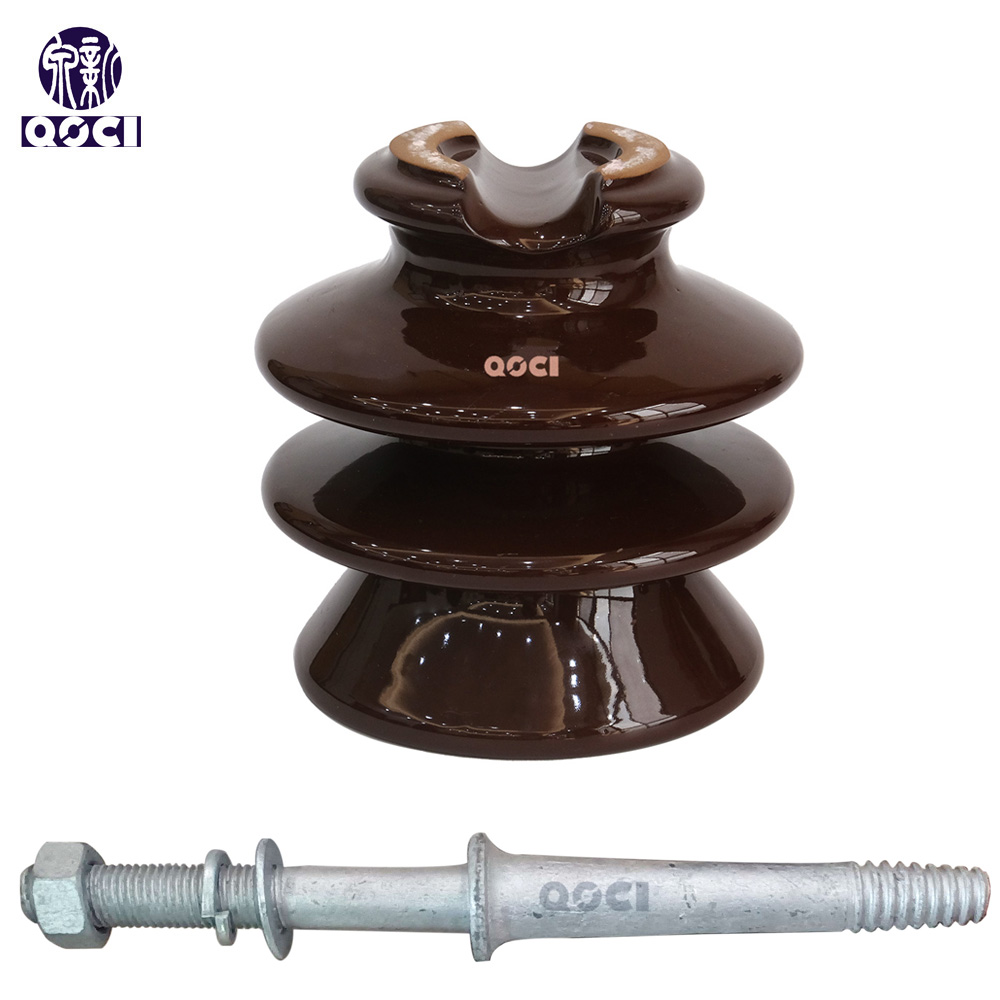
P-11-Y pin insulator with spindle: 11 kV rated voltage, 240 mm creepage distance, 50 kV wet withstand and 90 kV lightning impulse withstand.
A documented project provides the clearest available evidence on the quality-to-price question. Coastal and inland tropical distribution line insulation and monsoon-region grid reinforcement in Sri Lanka, Egypt and Ukraine involved 60,000 pieces in total — 10,000 in Sri Lanka, 40,000 in Egypt and 10,000 in Ukraine — supplied over three years to 2026 to a national power utility and a distribution EPC contractor. Over that period the project recorded a 60% reduction in salt fog flashover incidents compared with the previous composite batch, zero UV degradation, a 50% reduction in maintenance cost, and a replacement rate below 2%. The same case record states a 20% lower initial cost than the composite alternative and describes the porcelain as chemically inert to salt and monsoon corrosion.
That outcome moves quality and price in the same direction: lower initial cost and lower maintenance cost in a corrosive environment. It is also a project-specific result. The comparison was made against a previous composite batch on the same lines, not against every alternative unit on the market, and it should be read as evidence of condition fit rather than a general ranking.
Market Trend Analysis
Several verified market signals shape how buyers should read supplier data over the next procurement cycle.
- Market size: the global porcelain insulators market was valued at approximately USD 8.27 billion in 2023, with a projected USD 15.04 billion by 2033 (Spherical Insights).
- Regional concentration: Asia-Pacific held a 49.4% revenue share in 2025 (Mordor Intelligence).
- Export structure: China was the world's largest exporter of electrical insulators in 2024, accounting for 31.4% of total global exports — approximately USD 898 million (Observatory of Economic Complexity).
- Application mix: overhead transmission lines account for about 62.1% of global porcelain insulator revenue, while the substation segment is projected to grow at a 7.2% CAGR through 2031 on the back of GIS upgrades (Mordor Intelligence).
- Reference tier: Mordor Intelligence identifies NGK Insulators Ltd. (Japan) and Lapp Insulators (Germany) as recognized global market leaders in high-performance ceramic insulators.
- Local-content rules: India's DPIIT procurement policy requires 50% local content for porcelain insulators to be classified under Class I for government contracts.
- Customs classification: the primary HS code for porcelain electrical insulators is 8546.20.
The practical implication is that supplier scale and automation — QOCI's 9,000,000-unit annual output is one example — matters most where volume pricing decides tenders, such as distribution and rural electrification programmes. Where local-content rules apply, technical comparison only begins after the sourcing route has been screened. And in the substation segment growing at 7.2% CAGR, verification depth tends to matter more than unit price, because post and station insulators are specified against tighter mechanical and pollution requirements.
Where the Quality-to-Price Case Weakens
An independent evaluation has to state the boundaries, and porcelain has several.
- Weight and brittleness: porcelain is heavier and more brittle than polymer composite alternatives. Extra weight increases string loading and handling cost, and impact damage during transport or installation is a real risk that composite units are less exposed to.
- Invisible degradation: porcelain insulators can develop zero-value degradation — internal electrical breakdown with no visible external change — caused by micro-cracks from thermal cycling fatigue or moisture ingress through a degraded cement joint. Periodic live-line testing, commonly every 3–5 years using voltage gradient or spark gap methods, is required. That is an operating cost, and low-cost procurement cases often omit it.
- Service life under stress: porcelain insulators typically deliver a 20–25 year service life in normal conditions, with shorter effective life in heavy pollution or extreme climate, requiring more frequent inspection.
- Material trade-offs: composite insulators are lighter but are documented as degrading 5–8% per year under tropical UV exposure and require periodic hydrophobicity monitoring. Neither material dominates; the trade is weight and handling against ageing behaviour.
- Over-specification: 100% dye penetration testing, extended anti-pollution creepage and corrosion-protected fittings add cost. On a clean-area, low-voltage line with low mechanical load, that spend does not convert into additional service life.
Scale should also be read carefully. An annual output of 9,000,000 units demonstrates production capacity and fixed-cost absorption; it says nothing about whether a particular profile is correct for a particular line. Specification fit remains the deciding variable, and capacity is a secondary commercial advantage.
Future Outlook
Three directions are likely to define the next evaluation cycle. First, the substation segment's projected 7.2% CAGR through 2031, driven by GIS upgrades, will shift demand toward post and station insulator profiles where creepage and mechanical specification are tightly defined. Second, anti-pollution design across pollution classes I–IV is becoming a standard tender item rather than an option, as coastal and industrial corridors expand. Third, verification is moving upstream: buyers already ask whether crack detection is 100% per unit or sampled, and that question will increasingly be written into tender documents alongside IEC 60383-1:2023 and ANSI C29.1 compliance.
For manufacturers, the competitive ground is shifting from unit price to documented cost of ownership — test coverage, glaze control, fitting finish and field replacement rates. For buyers, the practical consequence is that the quality-to-price ratio is calculated over the service life of the line, not over the purchase order.
FAQ
What are the published ratings of QOCI's ED-2B and P-11-Y insulators?
ED-2B is a low-voltage shackle (butterfly) distribution insulator with 13.5 kN mechanical tensile strength, 90 mm maximum diameter, 76 mm total height, 13 kV power frequency wet withstand and 25 kV dry withstand, in high-strength electrical porcelain. P-11-Y is an 11 kV pin type distribution insulator with a 10 kN rated mechanical load, 150 mm maximum diameter, 150 mm total height, 240 mm creepage distance, 50 kV power frequency wet withstand and 90 kV lightning impulse withstand, with a high-strength electrical porcelain body and a hot-dip galvanised forged steel pin.
How can a buyer verify porcelain insulator quality before shipment?
Verification items documented for porcelain insulators include 100% dye penetration testing per unit for crack detection, glaze quality inspection to IEC 60672, IEC 60305 or ANSI C29 certification, cement joint sealing integrity checks, porosity testing, thermal cycling testing, and power frequency and impulse voltage withstand testing. QOCI describes its quality control as 100% pre-shipment test with third-party inspection (SGS). Buyers should confirm whether crack detection is 100% per unit or batch sampling, because the difference is not visible in the delivered unit.
Why is periodic live-line testing required on porcelain insulators?
Porcelain insulators can develop zero-value degradation — internal electrical breakdown without any visible external change — caused by internal micro-cracks from thermal cycling fatigue or moisture ingress through a degraded cement joint. Because the fault cannot be identified by visual inspection, periodic live-line testing using voltage gradient or spark gap detection methods, commonly every 3–5 years, is used to identify faulty units.
What do QOCI's production scale and lead time mean for project scheduling?
QOCI publishes an annual output of 9,000,000 units, a monthly capacity of 750,000 units, a 35,373 m² facility, a 38-engineer R&D team, a 15–35 day lead time, a minimum order quantity of 50 units, and an OEM/ODM model covering voltage and logo customisation. For a distribution project, that combination supports both a small first article batch and a volume order within the same production schedule.
When does upgrading to higher-strength or anti-pollution porcelain add value?
It adds value when site conditions require it: pollution class I–IV per IEC 60815 determines creepage design, the specified mechanical load determines the body and fitting rating, and coastal or industrial exposure justifies anti-pollution profiles and corrosion protection such as zinc sleeves on fittings. In clean, low-load, low-voltage locations the standard profile is generally sufficient, and the upgrade premium does not translate into additional service life.
Reference document: QOCI Catalogue – Glass Insulators (PDF).
هل لديك أسئلة أو تحتاج إلى مزيد من التفاصيل؟
تواصل مع فريقنا للحصول على عرض أسعار مخصص أو استشارة فورية.
طلب عرض أسعار
املأ النموذج أدناه وسيتواصل معك فريقنا بعرض مقترح مخصص.
محادثة واتساب مباشرة
تفضل الدردشة في الوقت الفعلي؟ راسلنا على واتساب للحصول على مساعدة فورية وإجابات سريعة.
- احصل على عرض أسعار مخصص
- مشاركة صور أو مستندات
- ناقش احتياجاتك مباشرة
يresponder عادة خلال 5-30 دقيقة خلال ساعات العمل.