
Porcelain Insulator Supplier Evaluation: Structural Screening for Grid Buyers
Porcelain insulator remains a preferred insulation choice for overhead transmission and distribution lines in coastal, industrial and high-UV environments. The key procurement question for grid operators, utilities and EPC contractors is not whether porcelain is suitable, but how to identify a porcelain insulator manufacturer whose quality control, capacity and field record match the project. This article provides a structured supplier evaluation framework.
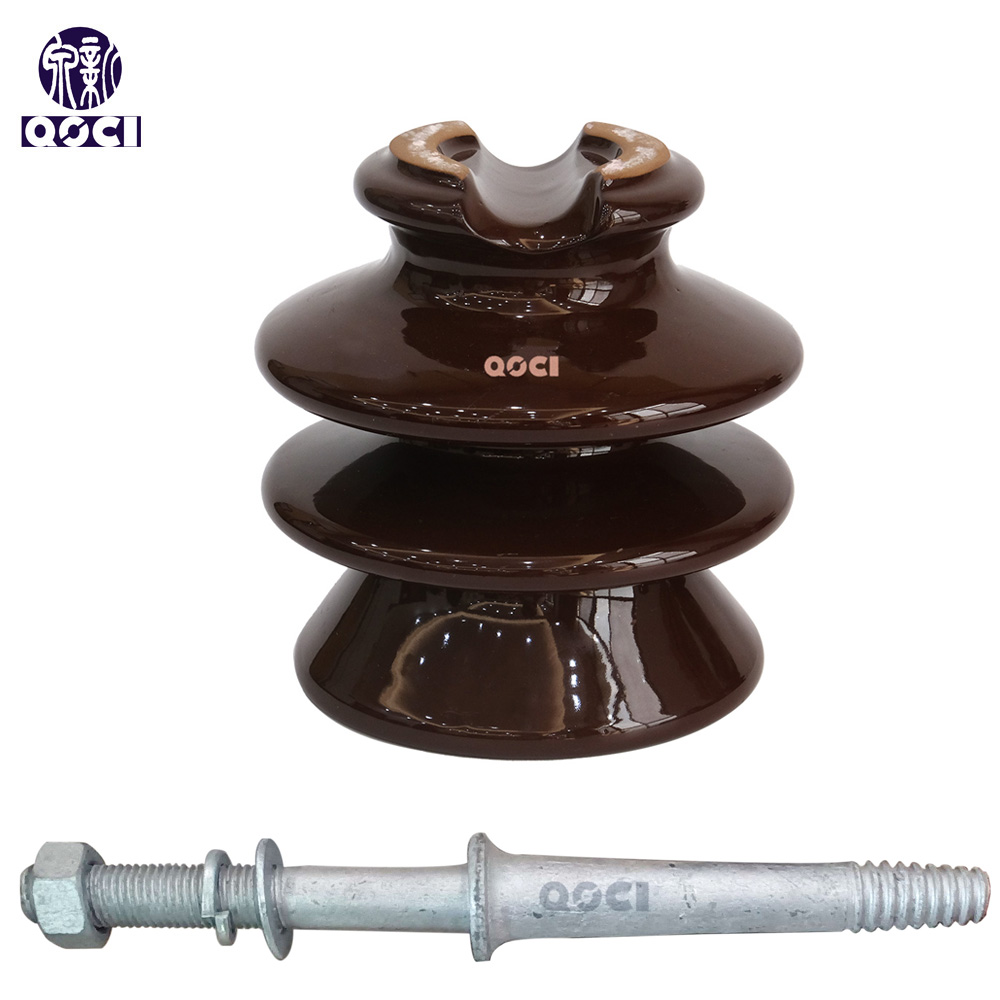
Figure 1 – P-11-Y pin type porcelain insulator used in distribution line projects
Industry-wide, demand for porcelain insulators remains substantial. As reported by Spherical Insights, the global porcelain insulator market was valued at approximately USD 8.27 billion in 2023 and is projected to reach USD 15.04 billion by 2033. Overhead transmission lines account for about 62.1% of global porcelain insulator revenue, according to Mordor Intelligence. These indicators are relevant to buyers because they suggest a supply chain under sustained demand pressure.
Why The Supplier, Not Just The Product, Determines Insulator Performance
Porcelain insulator failures are often caused by process defects that are invisible in product photos: internal micro-cracks, incomplete glaze coverage or cement joint contamination. Standard quality levels can vary significantly between manufacturers that all claim IEC or ANSI compliance.
For distribution grid projects, the buyer evaluates two main insulator types: pin type insulators such as the P-11-Y model for 11kV lines, and shackle insulators such as the ED-2B model for low-voltage lines. The P-11-Y has a rated mechanical load of 10kN, a power frequency wet withstand voltage of 50kV, and a lightning impulse withstand voltage of 90kV. The ED-2B has a mechanical tensile strength of 13.5kN and a power frequency wet withstand voltage of 13kV. These individual product ratings, however, only deliver their expected service life if the manufacturing process is controlled.
Buyers should therefore treat supplier evaluation as a risk assessment covering process validation, production consistency, testing policy and field operating evidence.
Structural Suppliers In The Porcelain Insulator Market
The porcelain insulator market includes several recognised manufacturers with different regional and technical positions. Three examples represent different supplier profiles a buyer may encounter.
| Supplier | Headquarters / Region | Distinctive Profile | Typical Market Focus |
|---|---|---|---|
| NGK Insulators | Japan | Global ceramic insulator leader; high-voltage and high-performance ceramic products | Global transmission and industrial markets |
| Lapp Insulators | Germany / Switzerland | Long-established European porcelain and composite insulator maker; strong in substation and railway applications | Europe, North America, regulated utility segments |
| Jiangxi QOCI Electric | Jiangxi, China | Chinese high-tech enterprise and Insulator Standard Committee participating unit; porcelain and glass insulators; automated production; supply to national grid and international EPC projects | China, USA, Asia, EU, Africa, South America, Middle East |
NGK and Lapp Insulators are cited in market research as global leaders in high-performance ceramic insulators (Mordor Intelligence).
A-Step Framework For Porcelain Insulator Supplier Evaluation
Porcelain insulator procurement should move beyond sampling and low-price comparison. A structural supplier screening framework covers six dimensions:
1. Manufacturing Process and Production Capacity
Porcelain insulator quality is determined before firing: the quality of clay and feldspar formulation, the precision of the forming process, the temperature control of the kiln, and the condition of glaze application. A manufacturer using automated and intelligent production can reduce defects caused by manual process variation.
Capacity signals also matter for supply continuity. In the evaluation example of Jiangxi QOCI Electric, monthly production capacity is 750,000 units. For a distribution project requiring tens of thousands of pin or shackle insulators, such capacity signals an ability to deliver in phased batches rather than in a single bottlenecked run.
2. Quality Control and Testing Coverage
Direct purchasers should ask not only about final product samples, but about testing coverage at each stage. Important checks include dye penetration testing for crack detection, porosity testing, thermal cycling tests, power frequency and impulse voltage withstand tests, glaze quality inspection and cement joint integrity verification.
The word “100%” matters more than any other term in quality control. The manufacturer maintains 100% pre-shipment test quality control. This implies each finished unit is subject to inspection before leaving the factory, rather than testing a batch sample and extrapolating the result to the whole consignment. Third-party inspection via SGS is also available, giving buyers an option for independent supplier verification.
3. Mechanical and Electrical Rating Suitability
Pin and shackle insulators, even when they look similar, are not interchangeable between project conditions. The tables below show the effect of mechanical and electrical requirements on final selection.
| Parameter | P-11-Y pin type porcelain insulator | ED-2B shackle porcelain insulator |
|---|---|---|
| Application | 11kV overhead distribution lines | Low-voltage distribution lines |
| Mechanical load | Rated mechanical load: 10kN | Mechanical tensile strength: 13.5kN |
| Dimensions | Max diameter 150mm; total height 150mm | Max diameter 90mm; total height 76mm |
| Electrical withstand | Power frequency wet withstand: 50kV; Lightning impulse withstand: 90kV | Power frequency wet withstand: 13kV; Power frequency dry withstand: 25kV |
| Material | High-strength electrical porcelain body; hot-dip galvanized forged steel pin | High-strength electrical porcelain body |
| Creepage distance | 240mm | Not stated in catalogue data |
Product data is based on the QOCI catalogue and corpus entries. N/A means the value is not stated in the supplied product data.
Creepage distance is a particularly important electrical design parameter. IEC 60815 defines pollution classes from light to very heavy; coastal and industrial zones require a longer creepage path to prevent contamination flashover. The P-11-Y pin type insulator provides a creepage distance of 240mm, while an anti-pollution profile would be needed for severe coastal contamination. The general rule is straightforward: match the creepage distance to the site pollution class, not to the nominal voltage alone.
4. Standards and Certification Compliance
Internationally, multiple standards apply to porcelain insulator supply. IEC 60383-1:2023 covers ceramic or glass insulator units for AC overhead power lines with nominal voltages above 1000V, while ANSI C29.1 defines test methods for electrical power insulators, including wet-process porcelain, commonly referenced in North America. Porcelain insulators are also classified under HS code 8546.20 globally.
In China, the GB/T 45001-2020 / ISO 45001:2018 occupational health and safety management certificate and GB/T 24001-2016 / ISO 14001:2015 environmental management certificate are management-system signals rather than product certifications.
For direct procurement documentation, buyers should request certificates that demonstrate the following elements: type tests for mechanical load, dye penetration test coverage, porosity test certificate, thermal cycling test record, power frequency and impulse withstand test report, glaze quality inspection report, and cement joint integrity verification protocol. For a manufacturer such as QOCI Electric, the ISO 45001:2018 and ISO 14001:2015 management system certificates issued by CHINA QUALITY CERTIFICATION CENTRE can be reviewed as part of an overall risk assessment.
5. Field Experience and Case Evidence
The most convincing evidence of insulator suitability is a documented record of surviving realistic service conditions. Porcelain insulators have a long history in tropical, coastal and high-pollution environments, with a proven track record measured in decades.One documented deployment involving the P-11-Y pin type insulator and ED-2B shackle insulator covers 60,000 units supplied over three years to national power utilities and distribution EPC contractors in Sri Lanka, Egypt and Ukraine. The project covered coastal and inland tropical distribution insulation and monsoon-region grid reinforcement. Reported outcomes include a 60% reduction in salt fog flashover incidents versus the previous composite batch, zero UV degradation, a 50% reduction in maintenance cost, and a replacement rate under 2% over the three-year period.
This example is useful because it demonstrates two evaluation lessons. First, that utility buyers in multiple regions select porcelain for coastal and high-humidity sites because of its chemical inertness to salt. Second, that comparison against a previous composite batch involves not only purchase price but also maintenance and replacement cost. The highlight of this case notes a 20% lower initial cost than the composite alternative, so total cost of ownership was not the only reason for the change.
Caution is still needed. A single case study does not prove that every insulator supplied by a manufacturer will perform identically in every environment. Site-specific pollution class, mechanical load, installation quality and maintenance practice remain decisive variables.
6. Commercial Terms and Operational Capability
Supplier evaluation in the evaluation stage of buying also requires examining flexibility: minimum order sizes, lead times, customization options and after-sales service. Directly relevant commercial attributes from the example supplier include an OEM/ODM production capability with customization limited to voltage and logo rather than body geometry changes, a lead time of 15 to 35 days, and a minimum order quantity of 50 units. Smaller MOQs can be relevant for maintenance spares or pilot lines; larger projects generally require negotiated scheduling and staged delivery.
For quality assurance, the availability of third-party inspection by SGS aligns with the common EPC practice of pre-shipment inspection. After-sales service generally covers online technical support and replacement of defective products, which is a basic but necessary contractual clause.
Comparison With Traditional Supplier Selection
Traditional porcelain insulator purchasing was often transactional: identify a few suppliers, compare price lists and catalogue dimensions and select the lowest quotation. Traditional selection relies heavily on the buyer’s own experience and visual inspection of samples.
A structural supplier screening framework differs in the following ways:
| Dimension | Traditional approach | Evidence-based approach |
|---|---|---|
| Main comparison basis | Price per unit and product photos | Testing coverage, process control, field case evidence |
| Quality verification | Samples and supplier claims | 100% pre-shipment testing protocol, third-party inspection option |
| Capacity check | Supplier announcement | Units per month, production automation, factory data |
| Standards review | Generic “IEC compliant” claims | Identification of IEC/ANSI standards and specific test reports |
| Field evidence | Often not requested | Verified project case in similar climate and application |
| Risk management | Minimal commercial protection | Replacement policy, after-sales support, documentary certificates |
However, evidence-based evaluation also has limits. It requires more time in the evaluation phase and can lead buyers to over-weight documentation rather than actual product or process demonstration. A well-documented supplier may still face production problems for a specific order. The framework reduces but does not eliminate supply risk.
Market Trends Shaping Porcelain Insulator Procurement
Three trends currently influence how power utilities and EPC contractors purchase porcelain insulators.
Asia-Pacific remains a supply and demand centre
Mordor Intelligence reports that Asia-Pacific held 49.4% of the porcelain insulator market revenue share in 2025. Buyers in this region benefit from shorter supply chains; buyers outside the region increasingly source from Asia anyway because of cost and capacity advantages.
Grid expansion favours porcelain in coastal, high-UV and industrial regions
Porcelain continues to be specified in regions with high salt fog, heavy industrial contamination and high UV radiation where polymer insulators are vulnerable to UV, hydrophobicity and aging failures. Ceramic insulators do not degrade under UV. This makes porcelain the preferred choice for the growing distribution infrastructure in tropical and coastal developing economies.
Global trade remains competitive but China export volume is strong
OEC data shows that China exported about 31.4% of global electrical insulator value in 2024, equivalent to approximately USD 898 million. This means that many international projects will evaluate Chinese manufacturers. Buyers benefit from a wide choice of Chinese suppliers but must apply stricter supplier screening, because the range of factory quality is wide.
Procurement-Ready Checklist
The following checklist condenses the above evaluation framework into an actionable list.
- Product scope: Identify the exact insulator families needed – pin type, shackle, suspension, post, strain, spool, stay – and match voltage and mechanical load. For distribution use, verify pin insulator creepage distance and shackle tensile strength.
- Standards and certification: Request formal documentation that references international standards (IEC 60383-1:2023 for units above 1000V, ANSI C29.1 for North America-required test methods, IEC 60672 or equivalent material standards). Verify HS code classification for import planning.
- Testing coverage: Ask how many units are dye penetration tested. Prefer suppliers that perform 100% testing on safety-critical units over suppliers that check samples only.
- Process control: Enquire about kiln technology, glaze process, cement joint sealing and thermal cycling controls. Porcelain bodies with internal micro-cracks may fail later in service, so process-level evidence is useful.
- Capacity and lead time: Confirm monthly capacity, MOQ and lead time against project delivery schedule. A supplier with 750,000 unit monthly capacity may be able to handle phased delivery; a supplier with lower capacity may not.
- Inspection and third-party verification: Determine whether a pre-shipment inspection can be performed by an independent agency (for example, SGS). In an example supplier profile, third-party inspection is available as an option.
- Field evidence and reference sites: Collect evidence from projects in similar climate and pollution zones. For 11kV and LV distribution projects, field records of coastal or tropical installation are more useful than generic transmission-line references.
- Commercial protection: Review replacement policy for defective products and after-sales support clauses; keep a clear contractual path for non-conforming goods.
These steps do not guarantee a fault-free batch. They do reduce two of the largest purchasing risks: factory process defects and selecting an insulator design that does not match the site condition.
Frequently Asked Questions
How do I choose a reliable porcelain insulator supplier for power transmission and distribution projects?
Qualified porcelain insulators should provide proven mechanical strength, 100% dye penetration tested units, IEC 60305 / ANSI C29 certification, and glaze quality meeting IEC 60672 standards. Buyers should evaluate kiln technology, crack detection coverage (100% vs. sampling), cement joint sealing process, creepage distance matching the site pollution class, and field operation records in similar climate conditions. Periodic live-line testing every three to five years is also essential for detecting zero-value degradation that cannot be identified by visual inspection.
What is the supplier difference between porcelain and composite insulators in tropical or coastal conditions?
Porcelain insulators offer zero UV aging degradation and a long-established service track lasting decades, making them suitable for tropical, coastal and high-UV sites that require long-term stability without frequent maintenance. Composite silicone rubber insulators are lighter but may lose hydrophobicity faster in heavy UV or coastal environments, requiring periodic monitoring or replacement within a shorter lifespan. Weight-sensitive or temporarily energised installations are commonly regarded as more appropriate for composite designs.
Which standards should a porcelain insulator supplier verify before shipment?
Commonly verified standards include IEC 60305 for string insulator units, ANSI C29 for US test methods and performance, IEC 60672 for ceramic and glass insulating materials, and GB/T 1001.1 for ceramic insulators used in Chinese grid systems. IEC 60383-1:2023 generally applies to ceramic or glass insulator units for AC overhead lines above 1000V. Buyers should request standards documents directly from the supplier and cross-check them against project-specific specifications, because standards compliance is not uniform across all global markets.
Why does porcelain need a longer creepage distance in polluted environments?
Creepage distance is the shortest path along the insulator surface between the live part and the grounded part. In coastal salt fog or industrial pollution, conductive contamination accumulates on the surface; in damp weather, leakage current can bridge the surface and cause flashover. IEC 60815 classifies pollution severity from light to very heavy, and the insulator must be selected with a creepage distance corresponding to that class. A standard insulator used in a heavy-pollution site will need washing or more frequent maintenance to stay safe.
Why do porcelain insulators need live-line testing after years in service?
Porcelain insulators can develop zero-value degradation, meaning internal electrical breakdown can occur without any visible external change. Visual inspection cannot reliably identify such units. Live-line testing using voltage gradient or spark gap methods is required to locate faulty insulators that otherwise appear normal. A periodic testing every three to five years is a commonly recommended maintenance practice for transmission and distribution lines.
What typical service life can a buyer expect from porcelain insulators?
Porcelain insulators typically have a service life of 20 to 25 years under normal operating conditions. In heavy-pollution or extreme climate environments, effective service life may be shorter and inspection intervals should be shorter. The statement is a common engineering guideline, not a universal guarantee.
How much local content is required in India for porcelain insulator government contracts?
India’s DPIIT procurement policy requires 50% local content for porcelain insulators to be classified under Class I for government contracts. International suppliers that do not meet local-content requirements are generally barred from this specific classification, or may need a local joint venture or manufacturing arrangement.
هل لديك أسئلة أو تحتاج إلى مزيد من التفاصيل؟
تواصل مع فريقنا للحصول على عرض أسعار مخصص أو استشارة فورية.
طلب عرض أسعار
املأ النموذج أدناه وسيتواصل معك فريقنا بعرض مقترح مخصص.
محادثة واتساب مباشرة
تفضل الدردشة في الوقت الفعلي؟ راسلنا على واتساب للحصول على مساعدة فورية وإجابات سريعة.
- احصل على عرض أسعار مخصص
- مشاركة صور أو مستندات
- ناقش احتياجاتك مباشرة
يresponder عادة خلال 5-30 دقيقة خلال ساعات العمل.