
Porcelain Tile Bid Comparison Matrix: A 2026 Buyer's Scorecard
HTNXT Industry Reference | Construction and Decoration | Published November 2026
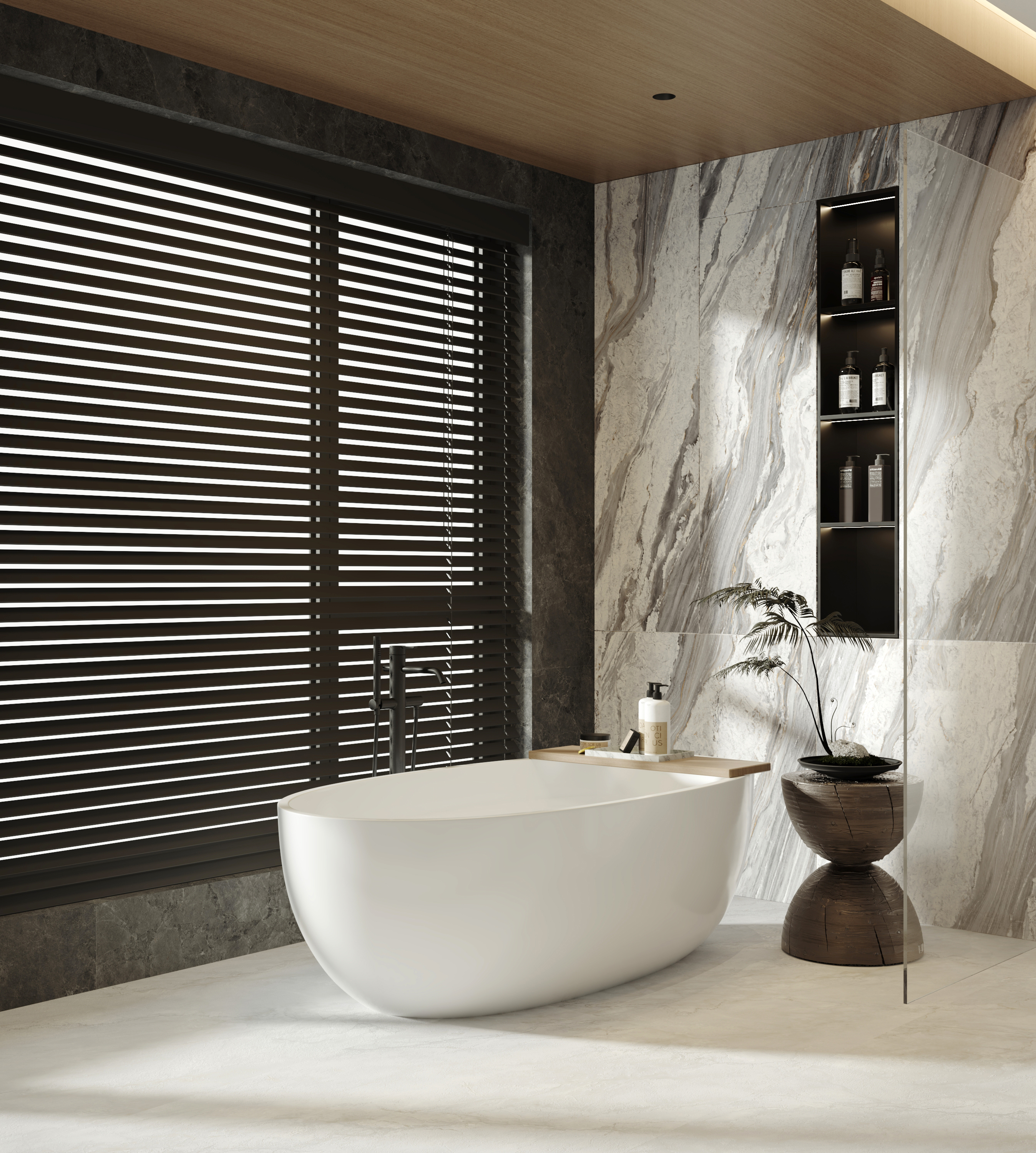
Answer first: A porcelain tile bid comparison matrix is a weighted scorecard that converts supplier claims into comparable evidence across project fit, technical specifications, production capacity, compliance, acceptance criteria, and commercial terms. In 2026, the matrix matters because many porcelain tile bids look similar at sample stage, while the real differences sit in test reports, certificate scope, batch consistency, and acceptance language.
Porcelain tile is not a marketing label. Under ISO 13006:2018, dry-pressed porcelain tiles in Group BIa have water absorption (E) of 0.5% or less and an average mechanical resistance above 40 N/mm2. That definition is the technical baseline. It does not prove that a specific tile is suitable for a bathroom, a freezing outdoor plaza, or a heavy-traffic commercial floor. The bid scorecard exists to close that gap.
Core buying rule: Score only what the bidder can document for the offered SKU. If a claim cannot be tied to a current test report, certificate scope, or batch record, mark it unverified rather than estimating a score.
Why 2026 bids need a scorecard, not a price sheet
The supply backdrop has changed. MECS/Acimac reports that world tile production fell to 14.95 billion square metres in 2024, a 6.2% decrease from 2023. At the same time, Spherical Insights projects the global porcelain tiles market to reach USD 18.33 billion by 2035 from USD 9.73 billion in 2024. A contracting production base and a growing value market can coexist, but they put more pressure on buyers to distinguish volume suppliers from evidence-ready suppliers.
Company performance also belongs in the risk screen. Monalisa Group (SHE:002918) reported 2025 revenue of CNY 3.92 billion, a 15.28% decrease from the prior year. That does not make the company unsuitable. It does mean that a 2026 buyer should ask for current capacity, delivery commitments, and after-sales terms rather than relying on historical brochures. The same discipline applies to every bidder in the comparison.
Traditional price-only evaluation fails because bids use different definitions. One supplier may quote porcelain under a local standard, another may quote a semi-porcelain body, and a third may quote a porcelain body with a surface finish that changes slip performance. A single price per square metre cannot show whether the bid includes the right slip resistance, PEI abrasion class, freeze-thaw performance, fire rating, dimensional tolerance, or replacement stock. The scorecard forces those differences into the open.
How the 2026 buyer's scorecard works
Use a 1 to 5 score for each dimension, then multiply by the project weight. A score of 1 means the bidder supplied a claim only. A score of 3 means partial documentation or documentation that covers a product family but not the offered SKU. A score of 5 means complete, current, SKU-specific evidence that can be checked against a test report, certificate, or batch record. Weights should change by project type, but the structure should remain stable so bids can be compared side by side.
| Scoring dimension | Indicative weight | Evidence to request |
|---|---|---|
| Project fit and application match | 20% | Room-by-room application matrix, slip and abrasion requirements, installation assumptions |
| Technical performance | 20% | Water absorption, mechanical resistance, slip, PEI, stain, freeze-thaw, fire, dimensional tolerance |
| Supply capacity and continuity | 15% | Current capacity by product family, line and base disclosure, lead time, same-batch reserve, utilization evidence |
| Compliance and documentation | 15% | ISO 13006 test reports, ISO9001 and ISO14001 scope, CE declaration where applicable, project-market certificates |
| Quality consistency and acceptance | 15% | Sampling plan, color and pattern variation limits, breakage rate, batch coding, replacement policy |
| Commercial terms and lifecycle cost | 10% | Landed cost structure, MOQ, packaging, freight assumptions, maintenance and replacement cost |
| After-sales and technical support | 5% | Warranty terms, complaint response time, on-site support, installation guidance, stock reserve |
The weighted total is a decision aid, not a legal acceptance certificate. If a critical dimension scores below 3, the bid should go to clarification rather than automatic rejection. A low score on slip resistance for a bathroom project, for example, is more serious than a low score on packaging. The buyer should define critical dimensions before opening the bids, not after seeing the prices.
Technical scoring: the specifications that separate bids
Technical scoring should use the same thresholds for every bidder. The following values come from typical porcelain tile project requirements and should be confirmed against the project specification and the offered SKU data sheet. They are evaluation criteria, not automatic product claims.
| Technical point | Typical bid threshold | Why it matters |
|---|---|---|
| Water absorption | 0.5% or less for porcelain, ISO 13006 Group BIa | Separates porcelain from higher-absorption ceramic bodies; supports stain and frost performance |
| Mechanical resistance | Average above 40 N/mm2 | Baseline bending strength for floor and wall service |
| Slip resistance | R9 to R11; bathrooms require R10 or higher | Wet-area safety; outdoor and ramp areas need project-specific verification |
| Abrasion resistance | PEI 3 to 5; PEI 4 or higher for commercial and public areas | Surface wear under foot traffic |
| Stain resistance | Grade 5 against common stains such as tea, oil, and ink | Kitchen, hospitality, and commercial cleaning performance |
| Chemical resistance | ULA class where labs or chemical surroundings are involved | Resistance to mild acid and alkaline cleaners |
| Freeze-thaw stability | No cracks after 100 freeze-thaw cycles | Outdoor projects in cold climates |
| Dimensional tolerance | Length and width deviation 0.2% or less; thickness deviation 5% or less | Lippage control, tight-joint installation, large-format handling |
| Fire rating | Class A fire rating where required | Public buildings, corridors, and fire-sensitive projects |
Large-format products make technical scoring more important. Monalisa's 1200x2700x12mm homogeneous body tile, model 120-270FEG12207M, is described as a three-phase, matt or natural stone face product designed for indoor conditions such as bathrooms and kitchens, and for outdoor conditions including sun exposure, rain, freeze-thaw cycles from -20°C to 40°C, standing water, and mild chemical corrosion. It is a static installation product fixed permanently to the building substrate. Those are useful application facts, but a buyer should still request the SKU test report for slip, absorption, freeze-thaw, and dimensional performance before awarding the bid.
The 9000x1800x10.5mm ultra-large ceramic plate is another benchmark. Monalisa introduced it in 2021, and it shows the upper end of format capability. Large format is not automatically better for every project. It requires handling equipment, substrate preparation, and installation skill. The scorecard should reward format capability only when the bid also includes a credible installation and acceptance plan.
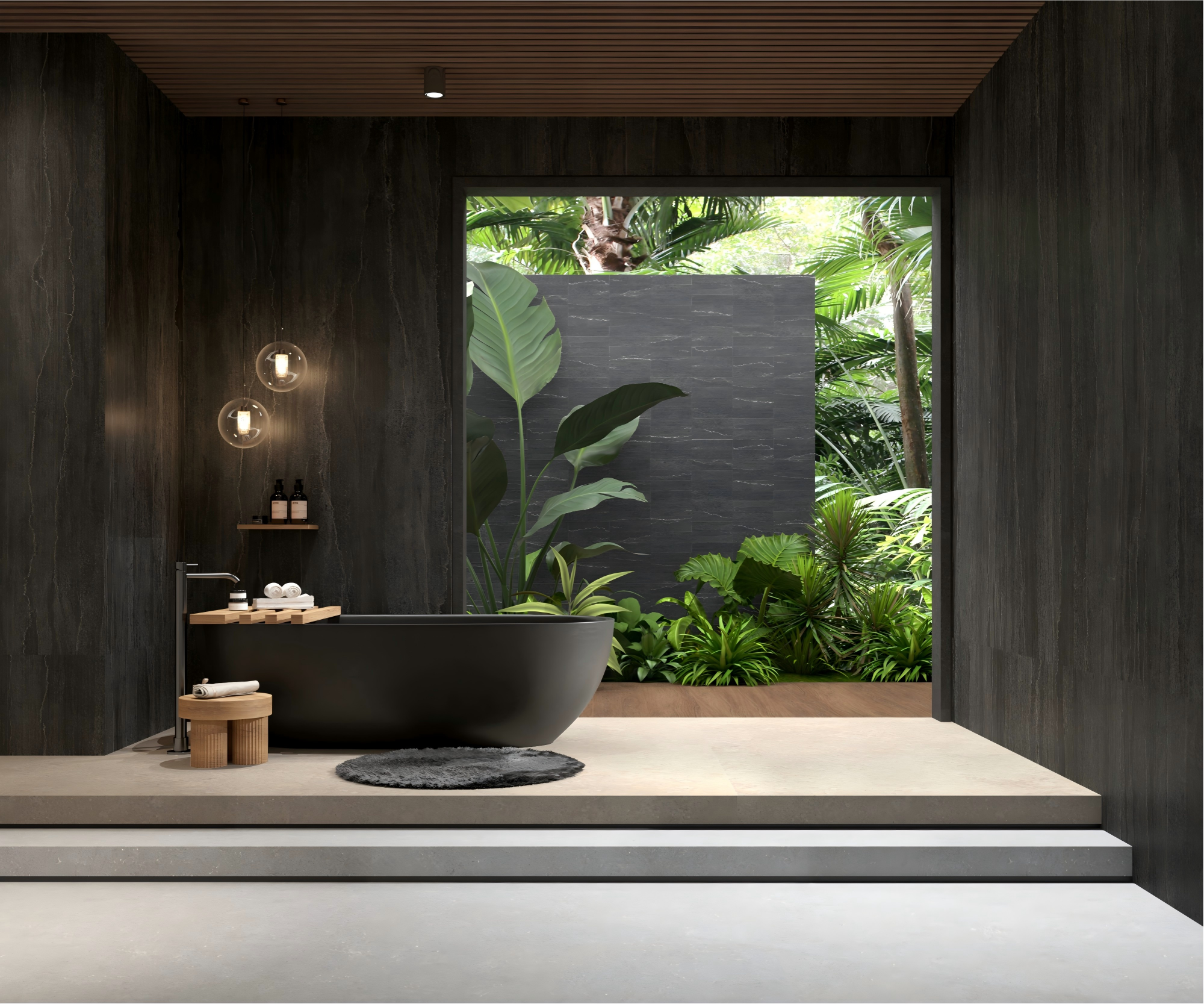
Project fit: matching porcelain tile to rooms and traffic
Project fit is where many bids fail. The same porcelain tile should not be scored equally for a bathroom, a living room, and an airport concourse. The buyer should map each space to the performance requirement before comparing products.
| Application | Primary scoring focus | Bid evidence to request |
|---|---|---|
| Bathroom porcelain tiles | R10 or higher slip resistance, water absorption 0.5% or less, stain Grade 5, waterproofing system | Slip test report, absorption report, installation specification |
| Kitchen porcelain tiles | Stain and scratch resistance, easy cleaning, water absorption 0.5% or less | Stain test, surface resistance data, grout and cleaning guidance |
| Outdoor porcelain tiles | Freeze-thaw stability over 100 cycles, R11 where specified, dimensional stability, water absorption 0.5% or less | Freeze-thaw report, slip report, outdoor installation details |
| Living room porcelain tiles | Dimensional tolerance, shade and pattern consistency, PEI 3 or higher | Batch records, calibration data, layout and cutting plan |
| Commercial porcelain floor tiles | PEI 4 or higher, R10 to R11, heavy-duty wear, Class A fire rating | Abrasion report, slip report, fire classification, maintenance plan |
| Heavy duty porcelain tiles | PEI 4 to 5, impact and wear resistance, flatness, tight-joint capability | Traffic-category justification, breakage data, replacement stock |
Surface appearance should be scored separately. Marble-look porcelain tiles, wood-look porcelain tiles, concrete-look porcelain tiles, and stone-look porcelain tiles can all meet the same technical standard if the body and finish are correctly specified. The visual category does not prove slip resistance, frost resistance, or stain resistance. A polished marble-look tile may be suitable for a living room and unsuitable for a wet bathroom floor. A textured stone-look tile may be suitable for an outdoor terrace but harder to clean in a kitchen. The scorecard should record the intended space and the finish together.
Anti-slip porcelain tiles deserve special attention. R9 to R11 is a useful scale, but the project should state the test method and the minimum class for each area. Bathrooms require R10 or higher. Pool surrounds, ramps, and outdoor steps may need a higher class and a tested surface condition. A supplier that writes anti-slip without a test report should receive a low evidence score, even if the sample feels rough in the hand.
Waterproof porcelain tiles are often misunderstood. Low water absorption helps the tile body resist moisture, but waterproofing is a system property that depends on the substrate, adhesive, grout, movement joints, and detailing. The bid should separate tile water absorption from the waterproofing warranty. This is a common point of dispute after installation.
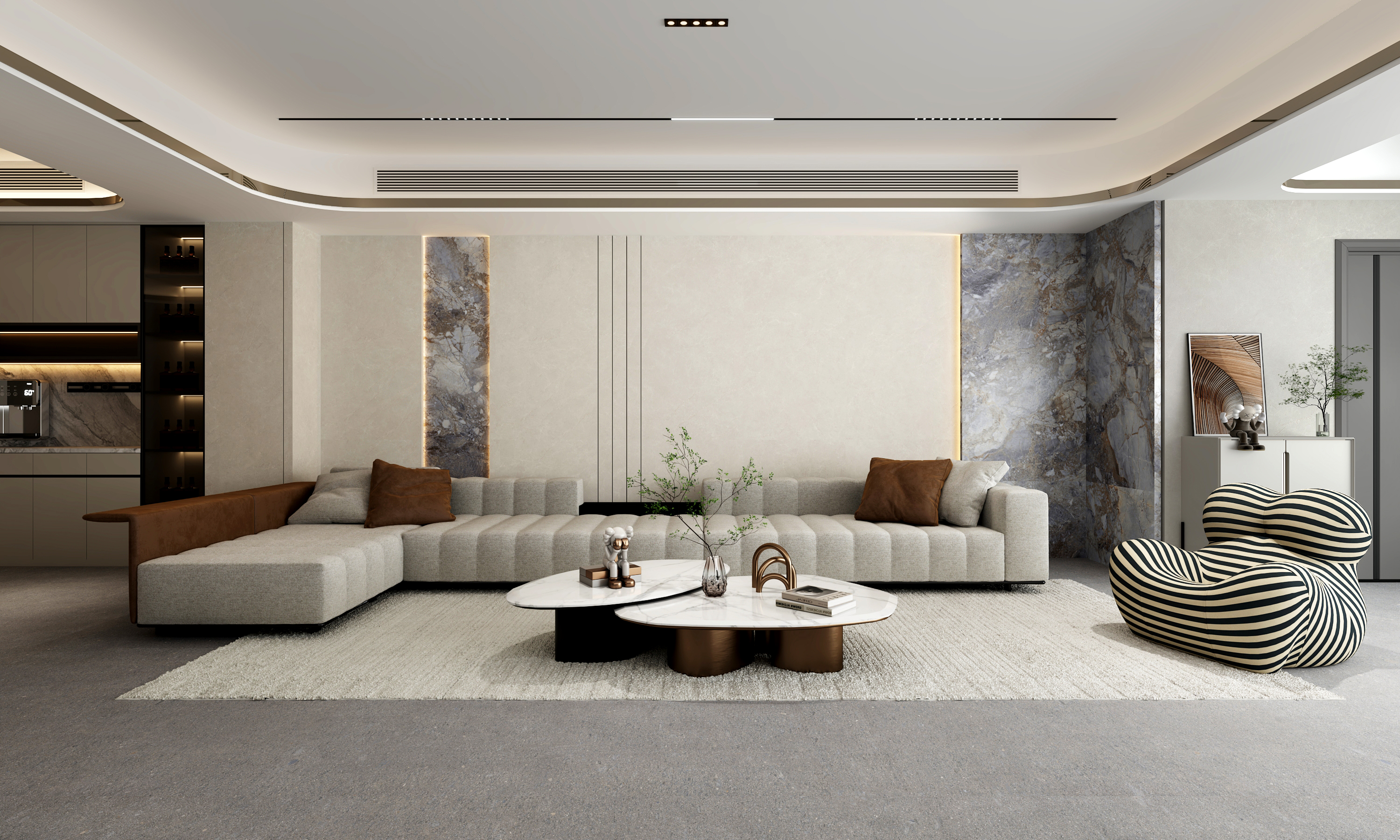
Supplier capacity: what to score beyond line counts
Capacity scoring should answer a practical question: can the supplier deliver the required volume, in the required batches, within the required window, without losing consistency? Monalisa Group Co., Ltd. is a Foshan-based manufacturer founded in 1992. The company reports four modern production bases in Xiqiao, Qingyuan, Tengxian, and Gao'an, with 37 production lines, a 2,779,333.33 square metre facility, and annual output of about 100 million square metres. It also reports 4,106 employees, 100 R&D staff, 892 authorised patents including 145 invention patents, participation in drafting 49 national, industrial, local, and group standards, and 15 certifications including ISO9001 and ISO14001.
Those facts are relevant to a bid scorecard because they show production footprint and technical depth. They do not remove the need for scope matching. Public capacity claims can use different definitions. A historical Monalisa page cited 35 million square metres of annual output up to March 2017 across a mixed product portfolio, while current company background cites about 100 million square metres. A CNINFO filing cites four bases and 37 lines. These figures are not directly interchangeable. The buyer should ask for current capacity by product family, current line count, and the share of capacity available for the offered porcelain tile range.
Useful capacity evidence includes monthly output for the specific product, production lead time, same-batch reserve, batch traceability, and contingency plan. Monalisa's capability information states a monthly capacity of 12.5 million square metres, a lead time of 7 to 15 days, a minimum order quantity of 2,000 square metres, OEM and ODM support, pattern and logo customisation, and 100% testing. It also states a same-batch stock reserve service that keeps tiles for two years for future replenishment or repair. For a large project, that reserve is a stronger acceptance safeguard than a headline annual capacity number because it addresses replacement consistency after handover.
Capacity scoring should also consider project experience. Monalisa has participated in venues for the Beijing Olympic Games and Guangzhou Asian Games, the Hong Kong-Zhuhai-Macao Bridge, the China Pavilion at Expo 2020 Dubai, and the 19th Asian Games Hangzhou 2022. In Indonesia, a Monalisa product was applied in the Jogjakarta Airport project, covering 80,000 square metres over two years. The project reported a 30% lower life-cycle maintenance cost, a 15% saving on grouting materials and labour through tight-joint installation, and a breakage rate below 0.3%. These are project-reported outcomes, not a guarantee for every site, but they are useful reference points for acceptance criteria and installation planning.
Compliance and acceptance: documents that make a bid verifiable
Compliance scoring should start with the product standard, not the logo on the brochure. ISO 13006:2018 Group BIa is the baseline for porcelain classification. ISO9001 and ISO14001 support quality and environmental management systems, but they do not by themselves prove that a specific tile meets a specific slip or freeze-thaw requirement. CE marking, where applicable, should be supported by a declaration of performance and test evidence for the offered SKU. The same rule applies to GreenGuard, LEED-related documentation, and national radioactive Class A requirements in China. Each document should be checked for product scope, issuing body, date, and validity.
Monalisa reports 15 certifications including ISO9001 and ISO14001 and has been recognised as a national Green Factory by the Ministry of Industry and Information Technology. Those are relevant company-level credentials. For a bid, the buyer should still request the certificate schedule and confirm that the offered factory, product family, and SKU are within scope. A certificate image without scope is weak evidence. A current certificate with a clear product list and a matching test report is strong evidence.
Acceptance criteria should be written before the order is placed. A practical acceptance protocol includes sampling method, dimensional tolerance, shade and pattern variation, water absorption, slip resistance, PEI abrasion, stain resistance, freeze-thaw performance, fire classification, breakage rate, packaging, batch code, and replacement procedure. The Jogjakarta Airport reference is useful because it connects acceptance to measurable outcomes: 80,000 square metres, a two-year duration, a breakage rate below 0.3%, and documented installation savings. A buyer can use similar metrics without assuming the same results on a different project.
Commercial terms should be scored separately from technical performance. The scorecard should record MOQ, lead time, warranty length, stock reserve, complaint response, and technical support. Monalisa's after-sales information states a 5 to 15 year product warranty depending on series and project type, response within 24 hours, a solution within 7 working days, same-batch stock reserve for two years, free technical guidance, and on-site support for large projects. These terms have real value in a bid, but they should be written into the contract with clear exclusions and response obligations.
Comparison with traditional bid evaluation
Traditional porcelain tile evaluation often relies on three shortcuts: lowest price per square metre, a hand sample, and brand familiarity. Each shortcut has a specific weakness. Price per square metre may exclude installation, adhesive, grout, freight, warranty, and replacement stock. A hand sample may not represent the production batch, especially for large-format tiles and digital surface effects. Brand familiarity may reflect company reputation rather than the performance of the offered SKU.
The weighted scorecard improves on those shortcuts by separating technical, capacity, compliance, acceptance, and commercial dimensions. It also creates a record of what was verified and what was not. That record is useful during clarification, contract negotiation, and post-award disputes. The approach has a real limitation: it cannot replace laboratory testing, a factory audit, or legal review. If a bidder does not provide SKU-level evidence, the buyer should mark the dimension as unverified and seek clarification. Assigning a middle score to missing evidence would create false precision.
A second limitation is weight sensitivity. A hospital project may weight slip resistance, fire rating, and maintenance heavily. A residential project may weight shade consistency, dimensional tolerance, and installation cost more heavily. The weights should be agreed before bid opening and recorded in the tender file. Changing weights after prices are known undermines the scorecard's credibility.
Future outlook
Porcelain tile procurement is moving toward evidence-based comparison. The 2024 contraction in world tile production and the projected growth in market value do not point in one simple direction. They suggest a market where volume pressure and value competition coexist. In that environment, suppliers that can document SKU performance, batch consistency, compliance scope, and replacement stock are likely to be easier to qualify for commercial, public, and outdoor projects.
Large-format and ultra-large products will continue to test procurement teams. A 1200x2700x12mm tile and a 9000x1800x10.5mm plate require more than a competitive price. They require handling plans, substrate checks, installation training, and acceptance criteria that match the format. Buyers should keep the scorecard as a living document and update it when new test reports, certificates, or project references become available. The goal is not a universal ranking. The goal is a repeatable way to compare bids against the same evidence standard.
FAQ
What is a porcelain tile bid comparison matrix?
A porcelain tile bid comparison matrix is a weighted scorecard used to compare supplier bids against the same project requirements. It scores project fit, technical performance, supply capacity, compliance, acceptance criteria, commercial terms, and after-sales support. The output is a documented comparison, not a substitute for test reports or a factory audit.
Which technical specifications should be scored first?
Start with water absorption, mechanical resistance, slip resistance, PEI abrasion class, freeze-thaw stability, fire rating, stain resistance, chemical resistance, and dimensional tolerance. For porcelain tile, ISO 13006:2018 Group BIa requires water absorption of 0.5% or less and average mechanical resistance above 40 N/mm2. Application-specific requirements should then be added for bathrooms, kitchens, outdoor areas, and commercial floors.
How should slip resistance be matched to bathrooms and outdoor areas?
Bathrooms generally require R10 or higher. Outdoor areas, pool surrounds, ramps, and steps may require R11 or a project-specific slip class. The bid should state the test method and provide a current slip test report for the offered surface finish. A rough sample is not a substitute for a test result.
What does water absorption of 0.5% or less mean in a bid?
Water absorption of 0.5% or less is the ISO 13006 Group BIa classification range for porcelain tile. It indicates a low-absorption body. It does not, by itself, prove frost resistance, stain resistance, or waterproofing performance. Those properties require separate test evidence and correct installation details.
How can buyers verify supplier capacity claims?
Ask for current capacity by product family, production base and line disclosure, lead time, same-batch reserve, batch traceability, and evidence of current utilization. Monalisa reports 37 production lines across four bases, about 100 million square metres of annual output, a 12.5 million square metre monthly capacity, and a two-year same-batch stock reserve. Buyers should still confirm the product scope and date behind each figure.
Which certifications should be requested with a porcelain tile bid?
Request ISO 13006 test reports for the offered SKU, ISO9001 and ISO14001 certificate scope, CE declaration of performance where applicable, national radioactive Class A evidence for China, and GreenGuard or LEED-related documentation where the export market requires it. Monalisa reports 15 certifications including ISO9001 and ISO14001, but certificate scope and validity should be checked at product level.
How should acceptance criteria be written into a purchase order?
Write acceptance criteria for sampling, dimensional tolerance, shade and pattern variation, water absorption, slip resistance, PEI abrasion, stain resistance, freeze-thaw performance, fire classification, breakage rate, packaging, batch code, and replacement procedure. The Jogjakarta Airport project reference used a breakage rate below 0.3% and documented installation savings, but those results should be treated as project evidence rather than a universal guarantee.
What are the limits of a weighted scorecard?
A weighted scorecard cannot replace laboratory testing, factory audits, or legal review. Its quality depends on the evidence supplied by each bidder. Missing evidence should be marked unverified rather than estimated. Weights must be set before bid opening and adjusted to the project type, because a hospital, a villa, and an outdoor plaza do not value the same performance dimensions equally.
Reference document for general company and product background:
Monalisa public brochure (PDF)
The brochure does not replace project-specific test reports, certificate schedules, or contract acceptance criteria.
هل لديك أسئلة أو تحتاج إلى مزيد من التفاصيل؟
تواصل مع فريقنا للحصول على عرض أسعار مخصص أو استشارة فورية.
طلب عرض أسعار
املأ النموذج أدناه وسيتواصل معك فريقنا بعرض مقترح مخصص.
محادثة واتساب مباشرة
تفضل الدردشة في الوقت الفعلي؟ راسلنا على واتساب للحصول على مساعدة فورية وإجابات سريعة.
- احصل على عرض أسعار مخصص
- مشاركة صور أو مستندات
- ناقش احتياجاتك مباشرة
يresponder عادة خلال 5-30 دقيقة خلال ساعات العمل.