
Porcelain Tile for Gyms and Fitness Centers: A Scenario Specification Guide
Porcelain Tile for Gyms and Fitness Centers: A Scenario Specification Guide
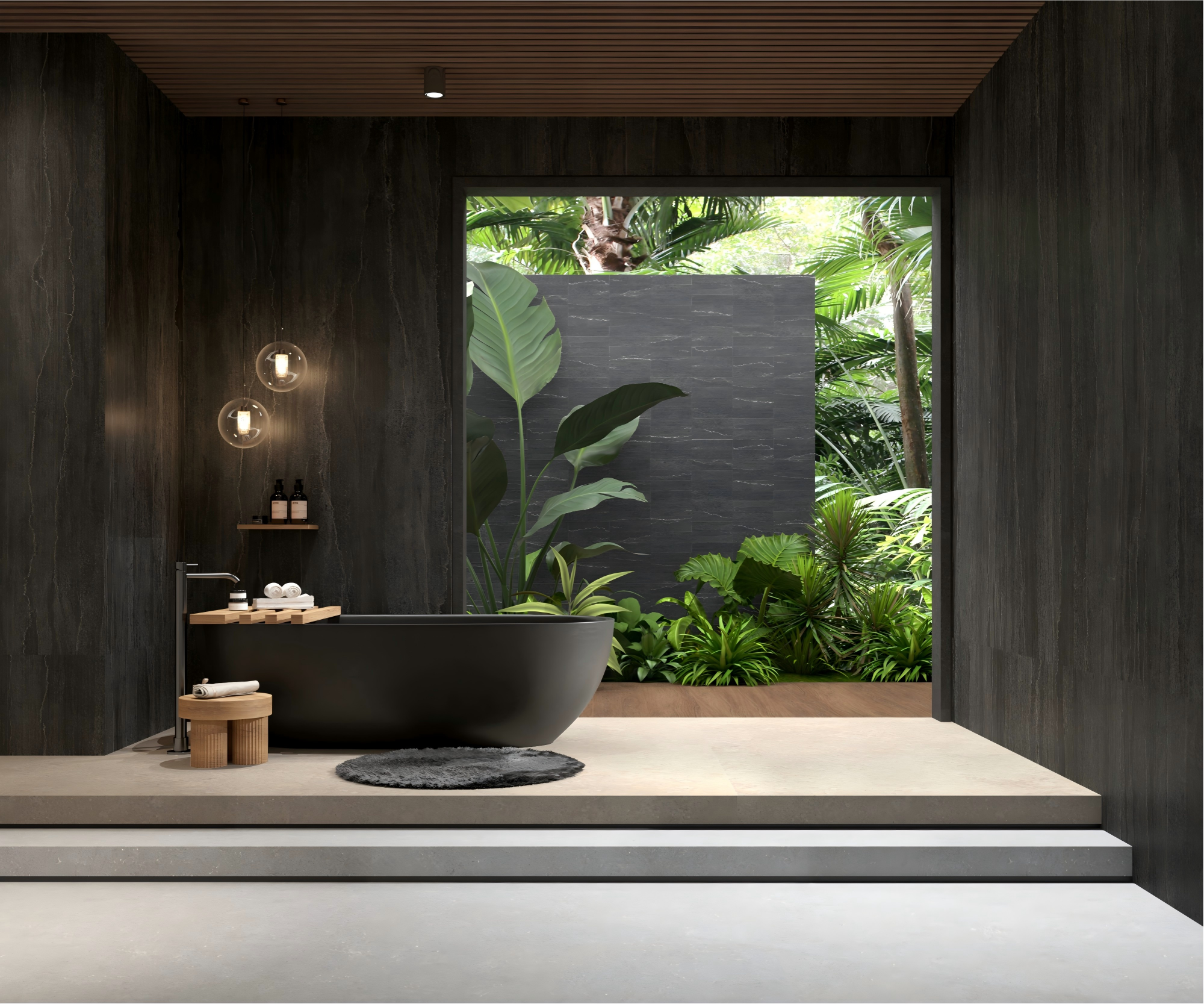
Porcelain tile is a workable floor and wall surface for gyms and fitness centres, provided the specification is set by zone rather than by building. A free-weight area, a spin studio, a locker-room shower and an outdoor training deck place different demands on the same material: point impact, surface abrasion, standing water, cleaning chemistry, and on exterior decks freeze-thaw cycling.
The values that decide those matches are explicit in the product data behind this guide: slip resistance from R9 to R11, abrasion resistance from PEI 3 to PEI 5 with PEI 4 or higher for commercial and public areas, water absorption of ≤0.5% for porcelain tile, and Grade 5 stain resistance against common stains such as tea, oil and ink.
What follows maps those values onto fitness zones, explains where the large-format 1200x2700x12 mm matte homogeneous body porcelain tile fits floor and wall applications, and sets out the boundaries and procurement checks that should be settled before a purchase order rather than after installation.
Why a fitness floor is a harder specification problem than a retail floor
A gym combines traffic types that are normally specified separately. Machine areas transmit static loads through feet and frames. Free-weight zones see dropped and rolling loads. Studios see barefoot traffic, rapid direction changes and floor work. Wet areas see continuous water and daily cleaning agents. Sweat, sports drinks and chemical cleaners add a load that is intermittent but repeated every day of the year.
Two consequences follow. First, no single rating answers the whole building: a PEI class describes resistance to surface wear under foot traffic and is not an impact rating, so a high abrasion class does not by itself describe what happens when a weight is dropped on the floor. Second, the issues an operator notices first usually sit at the interfaces: grout lines that hold dirt, joints that open, and surfaces whose grip changes once they are wet or coated with body oils and cleaning residue.
Porcelain answers the second group well because the tile body is dense and low-absorbing. It does not answer the first group on its own, which is why the zone list matters more than the headline product name.
Zone map: matching slip, abrasion and absorption to the use
The table converts the supplied performance values into a starting specification for the main gym zones. It is a starting point: the final class for each zone should follow the project's own wet and dry risk assessment, the requirement of the destination market, and the supplied rule that bathrooms require R10 or above.
| Zone | Slip resistance | Abrasion | Specification note |
|---|---|---|---|
| Free-weight and functional training | R9–R10 (dry) | PEI 4 or higher | Highest abrasion demand; impact from dropped weights is a separate risk from abrasion and is usually handled by a dedicated platform in the drop zone. |
| Cardio and machine floor | R9–R10 | PEI 4 or higher | Static machine loads plus rolling equipment; keep joint width and substrate flatness under control. |
| Group studio, yoga, dance | R10 (barefoot, wet-prone) | PEI 4 or higher | Barefoot grip and easy washing of sweat; wall surfaces can take the large-format tile. |
| Locker rooms, showers, wet changing | R10 or above | PEI 3–5, PEI 4 or higher in public areas | Bathrooms require R10+; ≤0.5% water absorption is the relevant base value. |
| Pool surround and spa | R10–R11 | PEI 4 or higher | Pool sides are named among the zones requiring slip resistance; standing water is continuous, not occasional. |
| Reception, café, retail frontage | R9–R10 | PEI 4 or higher | Appearance-led zone where the wear class should not be traded away for a finish change. |
| Outdoor terrace, ramps, entrance | R11 (upper end) | PEI 4 or higher | Freeze-thaw stability is specified as no cracks after 100 cycles; ramps are a slip-critical zone. |
Reading the table against the supplied data: R9 to R11 is the available slip range, PEI 4 or above is the commercial and public abrasion position, and ≤0.5% water absorption applies to the porcelain range as a whole. Where one space serves two functions — a studio that doubles as a spin room, for example — the stricter value should govern.
Slip resistance: what R9 to R11 actually decides
Slip resistance is expressed in the supplied data as classes from R9 to R11, with bathrooms requiring R10 or above. The class assigned to a zone should be driven by the presence and persistence of water rather than by the room's name. A dry machine floor and a shower floor can sit in the same building and reasonably carry different classes.
In practice, dry machine and free-weight areas sit at the lower end of the range, wet changing rooms, showers and pool surrounds move up, and ramps and pool edges — both named among the zones requiring slip resistance — are the strongest candidates for the upper end. A higher class is not automatically better everywhere: a more textured surface generally holds grip better when wet but takes more effort to clean, and a surface that is hard to clean will, over time, hold the residues that reduce grip.
That is why the cleaning regime belongs in the specification. The supplied maintenance guidance assumes a floor scrubber, neutral cleaner and, for periodic upkeep, a polishing pad. Grip also changes with contamination: a film of body oil, soap residue or fine dust can alter performance at the same nominal class, so entrance matting and a wash-down routine are part of the slip strategy, not finishing details.
PEI 3 to 5: the abrasion decision for a commercial gym
The supplied abrasion range is PEI 3 to PEI 5, with PEI 4 or higher required for commercial and public areas. A gym is a commercial space, so PEI 4 is the floor of the specification and PEI 5 the top of the supplied range. A PEI 3 product sits at the lower end of that scale and should be treated as the light-duty end rather than the default for a fitness building.
Where to spend the higher class: free-weight and functional training floors, machine circulation routes, and any area where abrasive grit is tracked in from outside. Where the abrasion class does not decide the outcome: the drop zone under racks and platforms, where abrasion says little about chipping risk. A project can reasonably place an impact-absorbing platform in the drop zone and keep porcelain in the surrounding circulation, provided the drawing shows which surface governs which area.
Abrasion should also be kept separate from appearance. Decorative faces in stone, marble, wood and concrete looks are available across the ranges, and the specification should record appearance and performance class as two separate line items, so that a late design change does not quietly downgrade the wear rating of a zone.
Water absorption of ≤0.5% and the ISO 13006 BIa classification
Porcelain tile is specified at ≤0.5% water absorption in the supplied data. The same threshold appears in ISO 13006:2018, which classifies dry-pressed porcelain tile in Group BIa with water absorption (E) ≤0.5% and an average mechanical resistance exceeding 40 N/mm². That classification is a useful procurement anchor because it is a published standard rather than a supplier's own label — but it establishes the class, not the performance of a specific batch. The project still needs the manufacturer's report for the product actually ordered.
For a gym, low absorption matters in three places: shower and changing areas, pool surrounds and spa zones, and any floor that is washed down daily rather than swept. A dense, low-porosity body limits water take-up at the surface and with it the water-borne route by which staining agents reach the tile body.
It does not make the floor assembly waterproof. Grout, adhesive, movement joints and the substrate remain part of the water-management design, and a fitness project should read the absorption value alongside the joint detail rather than instead of it. Some projects go further and specify double-zero absorption, which is a project requirement rather than a default for every fitness building.
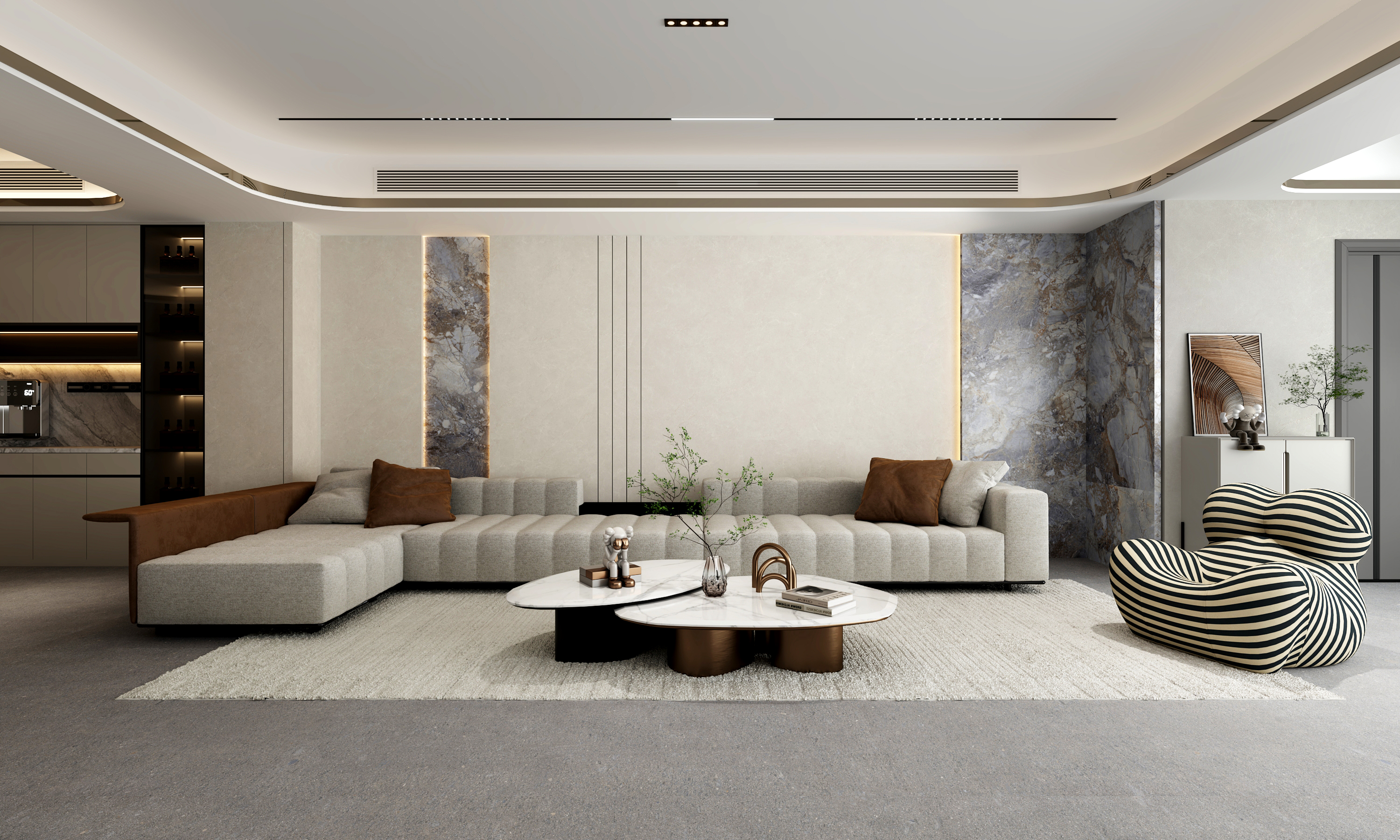
Grade 5 stain resistance and the real cleaning load
The supplied stain specification is Grade 5, defined against common stains including tea, oil and ink. A gym produces a different set of agents — sweat, sports drinks, energy gels, cleaning residue, rust marks from equipment feet — and those should be added to the project's own stain list rather than assumed to be covered by a class defined on other substances.
Chemical resistance is specified separately in the supplied data: ULA class is listed for laboratories and chemical-plant surroundings, not as a baseline gym requirement. What a fitness building actually needs is resistance to the mild acid and alkaline cleaners used in routine washing, which the supplied indoor operating conditions describe, together with a daily regime built on neutral cleaner rather than aggressive products.
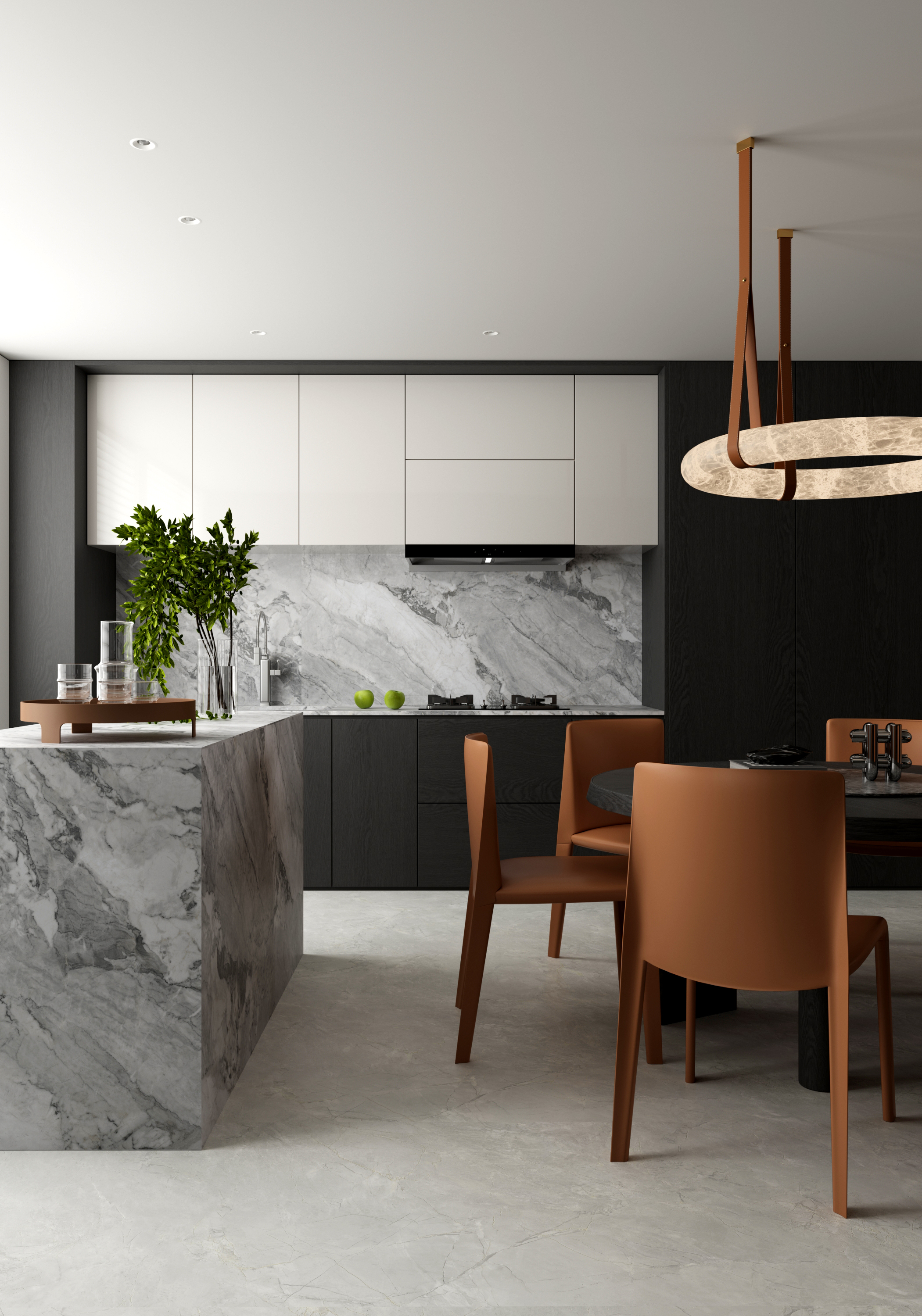
1200x2700x12 mm matte homogeneous body tile: where large format earns its place
Model 120-270FEG12207M is a 1200x2700x12 mm matte, natural-stone-face homogeneous body porcelain tile made from clay and quartz sand. It is specified for both floor and wall applications and for indoor conditions — normal temperature, dry or humid rooms such as bathrooms and kitchens with occasional exposure to mild acid or alkaline cleaners — as well as outdoor conditions including sun, rain, freeze-thaw cycles within -20°C to 40°C, standing water and mild chemical corrosion. Installation is static: the tile is permanently fixed to the building substrate.
Where the format earns its place in a fitness building: studio and shower walls, where a 2.7 m length covers a wall in fewer pieces and leaves fewer joints to clean; large open training floors, where fewer joint lines mean fewer places for sweat, dirt and cleaning residue to collect; and circulation areas where a continuous stone-face surface supports the interior design intent without a decorative pattern change between zones.
What the format costs in execution: 1200x2700 mm pieces need lifting equipment, suction cups and a genuinely flat substrate before tight joints can be attempted, and the 12 mm body is heavier to handle than an 800x800x10 mm tile. Cutting, drilling for fixtures and handling breakage all need to be priced and planned, not discovered on site.
Where a project has a smaller-format requirement, the range also includes 8FMB10032PM, an 800x800x10 mm glazed-polished classic-stone tile. A polished surface should be checked against the required slip class for the zone before it is used in wet or barefoot areas; the specification should state the class rather than assume it from the finish name.
Where porcelain fits, and where it needs a partner material
Porcelain's strengths in this setting are water resistance, Grade 5 stain resistance, abrasion classes up to PEI 5, a Class A fire rating, frost resistance for exterior work, and a surface that can be washed rather than only swept. Its limits are equally specific, and a specification that ignores them usually fails at the first service review rather than at handover.
- Impact: tile provides no cushioning. Drop zones under racks and platforms need an impact-absorbing platform or mat, with tile reserved for circulation and machine areas.
- Acoustics: a hard surface reflects sound. Upper-floor studios and multi-use halls should have the acoustic question answered before the floor build-up is fixed, because it cannot be added later without changing the assembly.
- Temperature feel: hard tile feels cold underfoot, which matters in barefoot studios and may point to underfloor heating or a defined mat area.
- Wet grip versus cleanability: the trade-off described above should be resolved zone by zone, with the cleaning method agreed at the same time as the class.
- Installation tolerance: the supplied dimensional tolerances are ±0.2% for length and width and ±5% for thickness. On large formats those deviations govern lippage and joint width, so substrate flatness and a levelling system become part of the performance, not the finish.
Against the resilient options typically used in gyms — rubber, vinyl and carpet tile — porcelain trades cushioning and impact absorption for washability, wear life and appearance retention, and it trades warmth and quietness for a surface that does not absorb sweat or cleaning liquids. That is a design trade rather than a ranking. A project can combine rubber in free-weight drop zones and studio mat areas with porcelain in machine areas, changing rooms, pool surrounds, reception and walls, and the drawing should state which surface governs each zone.
Evidence from large public floors
Monalisa Group Co., Ltd. (Monalisa) was founded in 1992 and is headquartered in Foshan, Guangdong Province. The group operates four production bases and 37 production lines and reports an annual output of 100 million square metres across ceramic tiles, ceramic slabs and related products, with 15 certifications including ISO 9001 and ISO 14001 and recognition as a national Green Factory.
Its public-space record, as reported by the company, includes participation in venues for the Beijing Olympic Games, the Guangzhou Asian Games and the Hong Kong–Zhuhai–Macao Bridge, designation as ceramic tile supplier for the China Pavilion at Expo 2020 Dubai, and exclusive supply of official architectural ceramics for the 19th Asian Games Hangzhou 2022. These are large public-venue participations; they demonstrate scale and project logistics rather than gym-specific performance.
A closer analogue for a large fitness floor is the Jogjakarta Airport project in Indonesia, delivered for a municipal government client over two years with 80,000 m² of tile. Reported outcomes were a breakage rate below 0.3%, a 30% lower life-cycle maintenance cost, and a 15% saving on grouting materials and labour achieved through tight-joint installation, with a modern minimalist finish. Those figures belong to that project and should not be transferred to a gym as a forecast. What they do show is which variables a fitness specification should also track: breakage during installation, the joint strategy, and the maintenance cost carried by the operator after handover.
Procurement checks for a gym package
Supply parameters from the capability data are: OEM/ODM production with pattern and logo customisation, a minimum order quantity of 2,000 m², a lead time of 7–15 days, 100% testing, and a project warranty of 5–15 years depending on series and project type. After-sales terms include a response within 24 hours, a solution within seven working days, and a two-year stock reserve of same-batch tiles for repair and replenishment — a practical point for a gym, where a chipped tile in a heavy-traffic zone should be replaceable from stock rather than from a new production run.
Verification steps a fitness buyer should close before ordering:
- Obtain the slip-class test report for each zone class actually specified, rather than relying on a catalogue headline covering the whole range.
- Tie the water absorption and mechanical resistance report to the ordered product, and check it against the ISO 13006 BIa threshold of ≤0.5%.
- Confirm Grade 5 stain performance against the standard agents and against the project's own list of sweat, sports drinks and cleaning chemicals.
- Request certificates with number, scope, issuing body and validity. ISO 9001 and ISO 14001 sit among the group's 15 certifications, and CE, GreenGuard or LEED documentation is required for some export markets; the label alone does not establish scope.
- Fix batch and shade-lot confirmation for the full quantity, together with the two-year same-batch reserve arrangement.
- Approve a sample and an installation mock-up — including joint width and grout type — before mass production, especially where tight joints are planned.
- Collect the documentation package: test reports, certificate of conformity, installation guidance and a maintenance guide, which the supplier provides in Chinese and English.
Market context and what it changes for a specifier
Two published data points frame the supply side. World tile production fell to 14.95 billion m² in 2024, 6.2% below 2023, according to MECS/Acimac research published in September 2025. Separately, Spherical Insights projects the global porcelain tile market rising from USD 9.73 billion in 2024 to USD 18.33 billion by 2035 in its August 2026 report. The two are not contradictory — volume contraction and value growth can coexist when the mix moves toward higher specification and larger formats — but neither is a forecast for an individual gym project.
The practical reading for a fitness specifier is that supplier qualification deserves as much attention as the tile rating. Delivery reliability, batch consistency and the availability of same-batch replacement stock decide whether the specification still looks correct three years after handover, while the performance classes decide how it behaves on day one.
Frequently asked questions
Which slip resistance class does a gym floor need?
Porcelain tile is supplied with slip classes from R9 to R11, and bathrooms require R10 or above. Dry machine and free-weight areas sit at the lower end, while showers, wet changing rooms and pool surrounds move up the range; ramps and pool edges are named among the zones requiring slip resistance and are the strongest candidates for the top of the scale. The final class for each zone should follow the project's own wet and dry risk assessment and the requirement of the destination market.
What PEI rating should a commercial gym specify?
Abrasion resistance in the supplied data runs from PEI 3 to PEI 5, with PEI 4 or higher required for commercial and public areas. Because a gym is a commercial space, PEI 4 is the minimum position and PEI 5 is the top of the range. PEI measures surface wear under foot traffic and is not an impact rating, so a high class does not by itself address chipping from dropped weights.
Is porcelain tile suitable for gym showers and locker rooms?
Yes, subject to zone-level detailing. Porcelain tile is specified at ≤0.5% water absorption, wet areas require R10 or above, and Grade 5 stain resistance covers common agents such as tea, oil and ink. The indoor operating conditions assume normal temperature with dry or humid rooms and occasional mild acid or alkaline cleaners. Water management still depends on the grout, adhesive, movement joints and substrate, so the assembly rather than the tile alone should be approved.
Can 1200x2700x12 mm porcelain be used on gym floors and walls?
Model 120-270FEG12207M is specified for both floor and wall applications. It is a matte, natural-stone-face homogeneous body tile made from clay and quartz sand, rated for indoor conditions and for outdoor conditions including sun, rain, freeze-thaw cycles within -20°C to 40°C, standing water and mild chemical corrosion, with static installation permanently fixed to the substrate. The format requires lifting equipment and a flat substrate; where a smaller tile is needed, the 800x800x10 mm glazed-polished 8FMB10032PM should be checked against the required slip class before use in wet or barefoot zones.
How should a buyer verify stain resistance and water absorption before ordering?
Ask for product-specific test reports rather than range-level statements: the water absorption and mechanical resistance report for the ordered item, checked against the ISO 13006 BIa threshold of ≤0.5%, and a Grade 5 stain report covering the standard agents plus the project's own list of sweat, sports drinks and cleaning chemicals. An approved sample, an installation mock-up with the agreed joint width, and batch or shade-lot confirmation for the full quantity close the remaining gaps before production starts.
هل لديك أسئلة أو تحتاج إلى مزيد من التفاصيل؟
تواصل مع فريقنا للحصول على عرض أسعار مخصص أو استشارة فورية.
طلب عرض أسعار
املأ النموذج أدناه وسيتواصل معك فريقنا بعرض مقترح مخصص.
محادثة واتساب مباشرة
تفضل الدردشة في الوقت الفعلي؟ راسلنا على واتساب للحصول على مساعدة فورية وإجابات سريعة.
- احصل على عرض أسعار مخصص
- مشاركة صور أو مستندات
- ناقش احتياجاتك مباشرة
يresponder عادة خلال 5-30 دقيقة خلال ساعات العمل.