
Portable Power Station vs 5kWh LiFePO4 Home Battery: Buyer Comparison
Portable Power Station vs 5kWh LiFePO4 Home Battery: Buyer Comparison
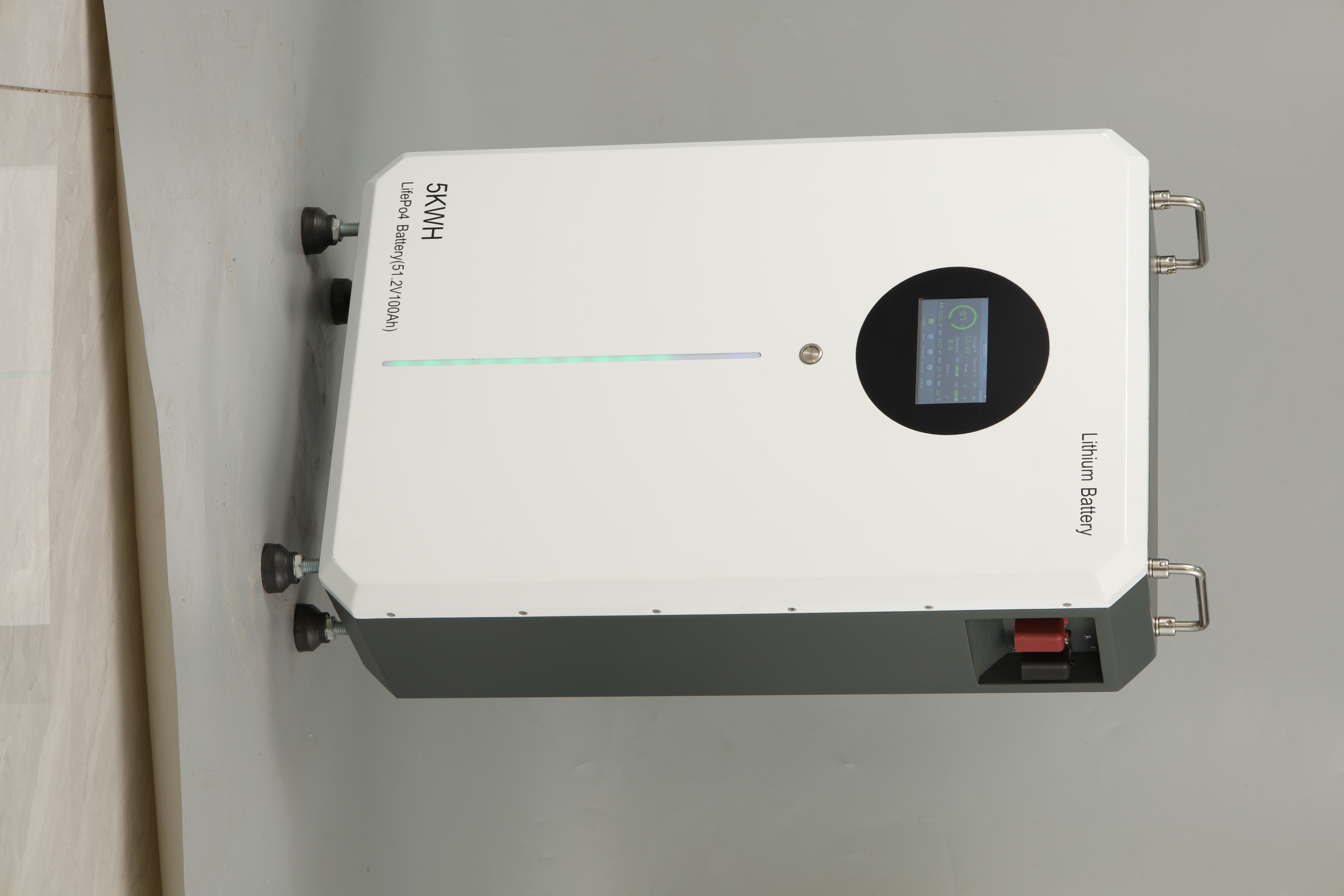
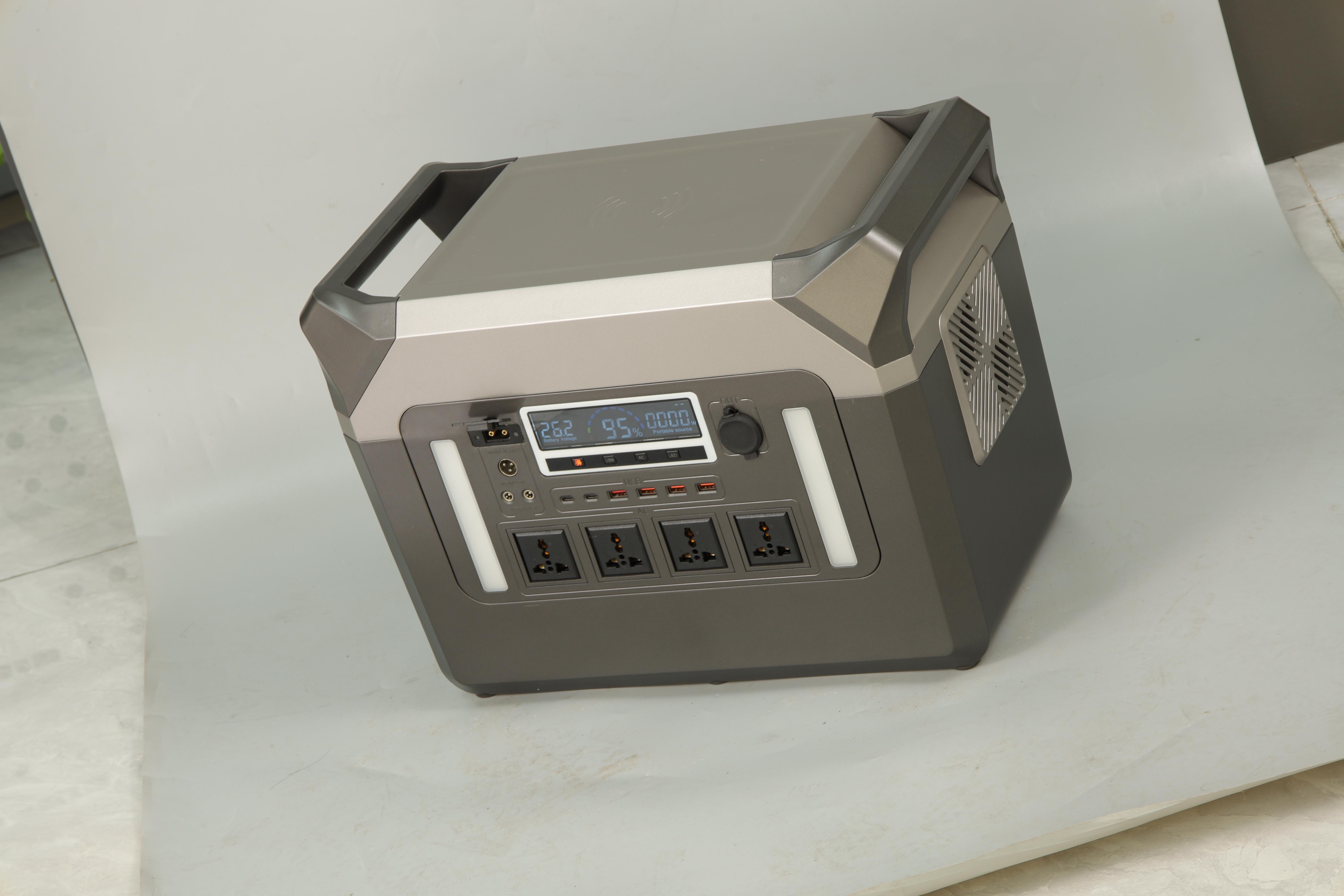
A portable power station and a 5kWh LiFePO4 home battery appear side by side in residential procurement shortlists because both are sold as “home backup”. They are not interchangeable products. The portable unit is a self-contained AC/DC power source with an integrated inverter; the 5kWh unit is a stationary 51.2 V LiFePO4 battery pack that becomes a power source only when a hybrid inverter, MPPT controller and fixed distribution wiring are present.
The decision rule that separates the two purchases: if the load must move, is in the few-hundred-watt range and needs hours rather than days of runtime, a portable power station is the correct product class. If the load is fixed to a building, backup must cover circuits or a whole home, and the site already has or will have a hybrid inverter plus wall or floor space, a 5kWh LiFePO4 home battery is the correct building block. kWh alone does not make the two comparable — rated AC power, inverter requirement, mounting, discharge current and transport certification do.
Why These Two Product Classes Keep Getting Compared
Residential backup demand in the markets that drive volume for Chinese storage manufacturers — Africa, Latin America, Central Asia, the Middle East, Southeast Asia and Russia — is rarely a single, clean requirement. A household may need to keep a few lights, a router and a refrigerator running during outages, and may also want to store surplus PV output for evening consumption. Buyers then look at two price points and two form factors and treat them as one decision.
They are two decisions. A portable power station bundles battery, inverter, charge controller and output sockets into one enclosure. A 5kWh home battery supplies DC energy to an external inverter that the installer selects, wires and configures. That structural difference determines who can install the product, what the product can legally connect to, and how the site is later expanded.
The comparison matters commercially because the failure mode is expensive on both sides. A buyer who chooses a portable station for a fixed whole-home backup duty discovers the runtime limit and the absence of hardwired distribution. A buyer who chooses a stationary battery for a mobile or temporary duty discovers the product cannot be moved and will not operate without an inverter and installation labour.
Definitions: Two Product Classes, One Shared Chemistry
Both product categories commonly use LiFePO4 (lithium iron phosphate) cells. LiFePO4 is a rechargeable lithium-ion chemistry that uses lithium iron phosphate as the cathode material; it is widely adopted in energy storage because of thermal stability, structural stability during repeated cycling and long cycle life. Chemistry similarity, however, says nothing about how the product is used.
| Attribute | Portable power station (600 W class, KJ-A-600W-12V) | 5kWh LiFePO4 home battery (KJ-48100-5) |
|---|---|---|
| Product role | Self-contained portable AC/DC power source with integrated inverter | Stationary DC battery pack; requires an external hybrid inverter to produce AC power |
| Nominal energy | 576Wh (12.8 V, 45Ah) | 51.2 V, 100Ah configuration — approximately 5.1kWh nominal |
| Rated AC power | 600 W integrated inverter, pure sine wave output, 220 V / 50Hz | No integrated AC output; system AC power is set by the paired inverter (max continuous discharge current 100 A) |
| Outputs | AC 220 V, DC 12 V/5A, USB 5 V/3A | DC terminals plus CAN / RS232 / RS485 communication |
| Mounting and handling | Portable enclosure, 370×230×205mm, 7.35kg net | Floor-standing unit, 750×420×180mm, 45.5kg net / 60kg gross |
| Charging inputs | AC wall charging and solar input up to 100 W | Charged through the paired inverter / MPPT from PV or grid |
| Monitoring | Display and output ports | LCD smart touch screen for voltage, current and SOC |
| Temperature window | Operating −10°C to 60°C | Charging 0°C to 45°C; discharging −20°C to 60°C |
The same manufacturer can legitimately build both. Zhongshan Kangjun New Energy Technology Co., Ltd. — trading as KangJun Energy — is a manufacturer of residential energy storage systems and portable power stations founded in 2015 and headquartered in Zhongshan, Guangdong, China. Its portable power station range spans 600 W to 3000 W output using LiFePO4 cells with 220–240 V / 50Hz AC output, while its home storage line covers 5–20 kWh wall-mounted, stackable and all-in-one units on LiFePO4 cells, compatible with mainstream hybrid inverters including Deye, Growatt, Victron and Sunsynk through CAN / RS485 / Modbus communication.
Power vs Energy: The Specification That Actually Decides the Purchase
Buyers most often compare the two products on stored energy, which is the least useful single number. Three specifications carry the decision.
1. Rated output power and surge behaviour
Power (W) describes what the product can deliver at a moment in time; energy (Wh or kWh) describes how long it can do so. A portable station in the 600 W class has a defined inverter output and will disconnect loads that exceed it or exceed its starting-surge capability — motors and compressors in refrigerators, pumps and air conditioners draw a startup current well above their rated running power. A stationary battery has no internal inverter, so the AC power ceiling is set by the hybrid inverter the installer selects, subject to the battery's own continuous discharge current. The KJ-48100-5 has a maximum continuous discharge current of 100 A, which at the 51.2 V nominal voltage corresponds to roughly 5 kW of DC discharge capability — but only if the paired inverter and the site's wiring support it.
2. Usable energy, not nameplate energy
Usable energy depends on the depth-of-discharge (DoD) setting, inverter efficiency and temperature. KangJun Energy's all-in-one configurators illustrate the gap between nameplate and usable figures: the KJ-4.2KW-8KWH unit is rated 8kWh with 7.2kWh usable at 90% DoD, and the KJ6.2KW-16KWH unit is rated 16kWh with 14.4kWh usable at 90% DoD. A battery-only product such as the 5kWh pack inherits the same logic through the inverter's DoD configuration.
3. Communication and inverter pairing
For a stationary battery, the communication protocol decides whether the system works as designed. CAN / RS232 / RS485 ports on the KangJun home battery range exist so the pack can exchange state-of-charge, voltage, current and protection data with a hybrid inverter. Without a compatible pairing, capacity on the label does not translate into reliable backup.
Constraints Buyers Must Verify Before Ordering
In constraint-driven procurement, the parameters below eliminate one of the two product classes long before price is discussed.
Transport and product certification
Lithium batteries require transport documentation regardless of product class. KangJun Energy holds a UN38.3 Test Report, certificate number RLCT2604057-01, issued on 2026-04-24 by Rhenish-Lab under UN ST/SG/AC.10/11 Rev.7, Subsection 38.3, covering lithium iron phosphate battery packs for transport safety. The 25.6 V LiFePO4 series is listed with MSDS / UN38.3 certification, and the 12.8 V series with CE, UN38.3, RoHS and ISO certification.
Destination-market conformity
Transport safety documents are not market entry documents. For destination requirements, KangJun Energy supports customers through conformity procedures such as SONCAP (Nigeria), SASO / SABER (Saudi Arabia), EAC (CIS), INMETRO (Brazil) and SNI (Indonesia). Buyers should confirm which of these applies before committing to a product configuration, because certification adaptation is a defined step in the OEM / ODM workflow rather than an afterthought.
Environmental and installation limits
The 5kWh home battery charges between 0°C and 45°C and discharges between −20°C and 60°C. Its IP rating and the IP21 rating used across the KangJun all-in-one and portable LiFePO4 stations point to indoor or protected installation; these are not outdoor-rated enclosures. A 45.5 kg pack also requires a floor location with adequate structure and clearance, and the gross weight of 60 kg matters for manual handling and shipping cost.
Expandability
Expandability is a constraint, not a feature. The KangJun 25.6 V LiFePO4 series documents a maximum of 10 parallel units, which is how capacity growth is engineered at the battery level. Portable stations generally expand by adding a second unit, not by paralleling into one system. The available KangJun stationary ladder covers 5kWh, 10kWh, 15kWh and 16kWh packs, so buyers who expect load growth can select a larger frame at the outset instead of paralleling later.
On price: this comparison deliberately does not quote prices. Commercial terms in this category are configuration-dependent — cell capacity, whether an inverter is included, communication and firmware adaptation, destination conformity documents, packaging and shipping terms all move the number. KangJun Energy's OEM / ODM programmes start from an MOQ of 100 units, and lead time follows industry-standard schedules of 20–35 days based on order volume.
Side-by-Side: Portable, Battery-Only and All-in-One
Adding the all-in-one option clarifies the middle ground, because it merges the two product classes: an inverter, MPPT controller and LiFePO4 battery in one enclosure.
| Parameter | KJ-A-600W-12V portable station | KJ-48100-5 home battery | KJ-4.2KW-8KWH all-in-one |
|---|---|---|---|
| Nominal energy | 576Wh | 51.2 V / 100Ah (≈5.1kWh) | 8kWh; 7.2kWh usable at 90% DoD |
| Rated AC output | 600 W | External inverter required | 4.2kW continuous, 8.4kW peak |
| Solar input | Up to 100 W panel | Via paired inverter / MPPT | MPPT, up to 6200 W PV |
| Transfer on grid loss | Not applicable | Set by the inverter | 20ms transfer time |
| Form factor | Portable, 7.35kg | Floor-standing, 45.5kg | Floor-standing, 75.2kg, 780×520×275mm |
| Typical buyer | Household emergency backup, mobile work, outdoor use | Installer or distributor building a split system | Household wanting a single-box backup and self-consumption system |
Where KangJun Energy Sits in This Comparison
KangJun Energy manufactures both sides of the comparison, which is useful for buyers because the trade-offs can be stated without preference. The company operates five production lines with a single-shift monthly capacity of 5,000 portable power stations and 1,000 home storage battery packs, a 20,000 m² factory, 125 employees, a 12-engineer R&D team and annual output of 60,000 units. Approximately 80% of output is exported.
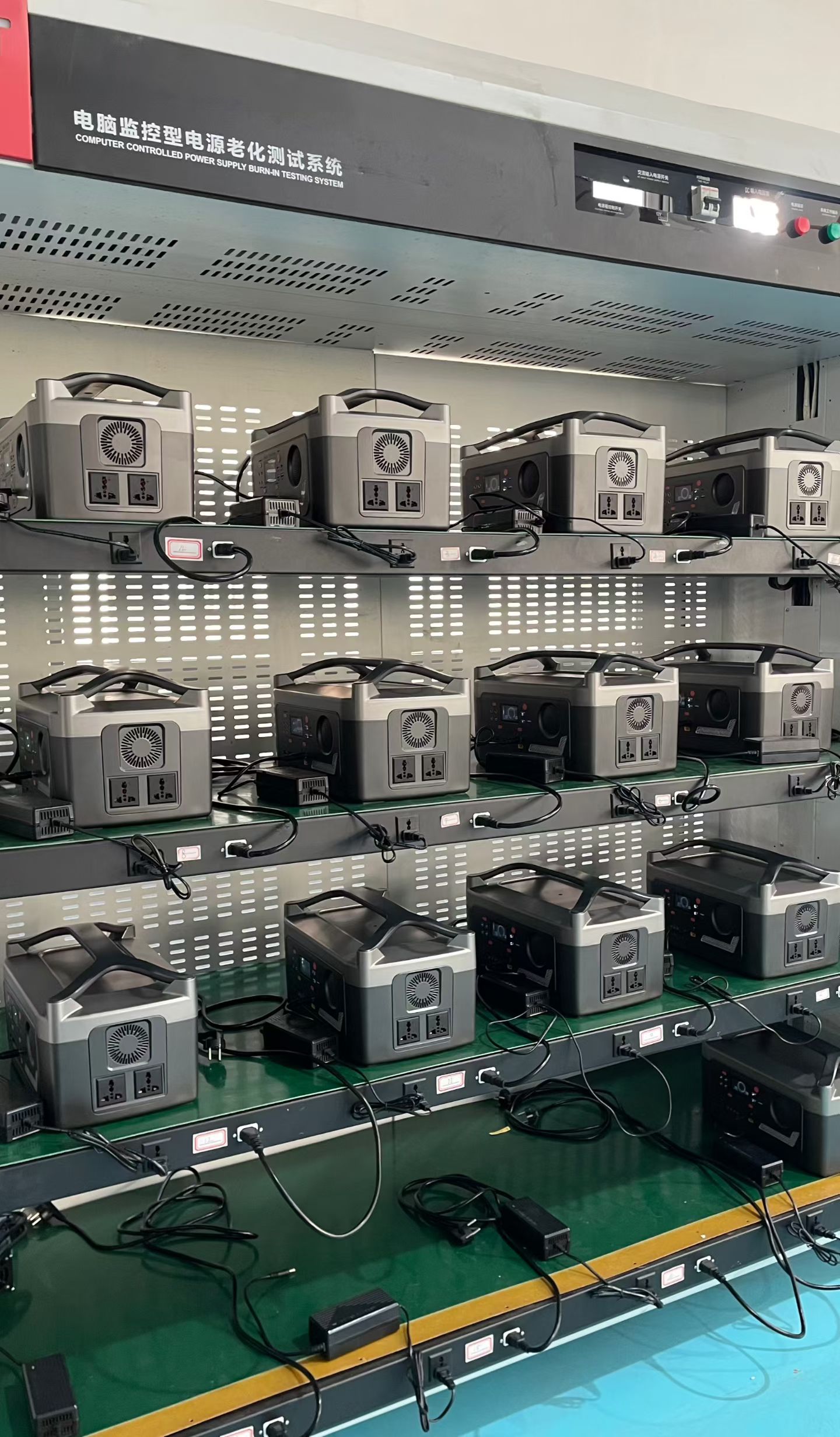
Quality control follows a three-stage inspection system (IQC–IPQC–OQC), and every batch undergoes outgoing tests including full-charge aging, high-low temperature cycling, dielectric withstand and vibration. All products carry a 5-year warranty with spare-parts supply and remote technical support covering commissioning, parameter setting and troubleshooting.
What OEM / ODM customisation covers — and what it does not
The standard workflow runs from requirement confirmation and solution design through sampling in 5–7 working days, certification adaptation, mass production and global delivery. Customisation covers battery capacity, rated voltage, BMS protection parameters, appearance, logo, packaging, communication protocol and inverter matching schemes. Casing printing and coating, retail packaging and firmware parameters are all configurable. Cell type and structural safety components are not open to modification — a boundary that protects batch consistency and safety, and one buyers should plan around rather than negotiate.
Application Fit: Which Product for Which Site
KangJun Energy's residential storage scenario documentation describes the operating envelope shared by both product classes: charging between 0°C and 45°C, discharging between −10°C and 45°C, storage between −20°C and 45°C, and 5%–95% relative humidity non-condensing. The documented project types are residential solar-plus-storage, blackout backup, off-grid homes or farms, small-commercial backup and OEM storage projects.
- Apartment or rented property, short outages: a portable station keeps routers, lighting and small appliances running without installation work or landlord approval.
- Owned house with PV and a hybrid inverter: a 5kWh home battery stores daytime generation for evening self-consumption and provides circuit-level backup during outages.
- Off-grid cabin or farm: the split architecture (battery plus hybrid inverter plus MPPT) allows the PV array, load panel and battery bank to be sized independently — KangJun documents matched equipment as hybrid inverter, solar panels, MPPT controller, energy management system, distribution equipment and CAN / RS232 / RS485 wiring.
- Small shop, clinic or office: the all-in-one 4.2kW / 8kWh or 6.2kW / 16kWh units keep sensitive loads on pure sine wave output with 20ms transfer, documented for shops, clinics and small offices.
- Distributor building a private-label range: OEM / ODM programmes cover both categories from an MOQ of 100 units.
The scenario documentation also lists the information a supplier needs before a configuration can be confirmed: daily consumption, maximum simultaneous load, backup duration, PV capacity, inverter model, communication protocol, installation space, local electrical requirements and transport documents. Buyers who arrive with these six data points compress the evaluation stage considerably.
Comparison With Established Alternatives — and Where Each Option Stops
Against lead-acid banks, the case for LiFePO4 is well established. KangJun documents its 12.8 V LiFePO4 series as a direct replacement for lead-acid batteries, citing lighter weight, higher energy density, over 2,000 charge-discharge cycles with service life up to 5 years, a stable discharge voltage curve and built-in BMS protection against overcharge, over-discharge, over-current and short circuit. Against other lithium-ion chemistries, LiFePO4 is generally the more thermally stable choice, while NMC chemistries generally offer higher energy density for weight-sensitive applications.
The boundaries are equally real, and a credible comparison has to state them:
- Weight per kilowatt-hour: the 5kWh pack weighs 45.5 kg net, and the 16kWh pack 113 kg. LiFePO4 is not the lightest chemistry per unit of energy, so wall structure and handling must be planned.
- Charging below freezing: the home battery charging window starts at 0°C. Cold-climate sites need thermal management or a charging strategy; LiFePO4 chemistry does not remove that constraint.
- Ingress protection: the documented IP21 rating across the all-in-one and portable LiFePO4 stations indicates protected indoor installation. Outdoor cabinets are a separate engineering decision, not a product option.
- System dependency: a battery-only product cannot deliver backup without a compatible hybrid inverter. Buyers comparing a battery price against a portable station price are not comparing delivered systems.
- Customisation limits: cell type and structural safety components are fixed. Buyers seeking a different cell format cannot obtain it through this channel.
- Portable runtime ceiling: a 576Wh station cannot carry a whole-home load. Its value is defined by small loads and short duration.
Market Trend Analysis
Three shifts are visible in the residential storage category, and each one changes how this comparison should be read.
First, LiFePO4 has become the default chemistry across both form factors. The portable power station range documented here — 600 W to 3000 W output, 220–240 V / 50Hz AC output — is built on LiFePO4 cells rather than the older portable chemistries, which narrows the gap between “portable” and “stationary” in cycle life and safety terms while keeping the installation differences intact.
Second, inverter compatibility has become a procurement criterion in its own right. Home batteries are increasingly selected on whether they communicate with the inverter the installer already standardises on. KangJun's documented compatibility with mainstream hybrid inverters including Deye, Growatt, Victron and Sunsynk through CAN / RS485 / Modbus is a response to that buying behaviour, not a technical detail.
Third, capacity ladders are replacing single-SKU offers. The documented KangJun range runs from 5kWh (KJ-48100-5) through 10kWh (KJ48200-10), 15kWh (KJ-48200-B / KJ48300-A) and 16kWh (KJ-48280-15) to all-in-one 8kWh and 16kWh systems. Buyers increasingly specify a frame size and expand within it rather than switching product classes.
Future Outlook
The all-in-one format is likely to absorb a growing share of the residential backup decision, because it removes the inverter-matching problem that currently makes battery-only products difficult for non-specialist buyers to evaluate. The documented 4.2kW / 8kWh and 6.2kW / 16kWh units already deliver what portable stations cannot — 20ms transfer, pure sine wave output, MPPT solar input up to 6200 W and 9000 W respectively, and usable energy of 7.2kWh and 14.4kWh at 90% DoD — while remaining a fixed installation.
Portable stations, meanwhile, are unlikely to be displaced, because the underlying need is mobility and independence from installation. What will change is buyer expectation: DC and USB output, solar input, pure sine wave AC output and LiFePO4 cells are becoming baseline requirements rather than differentiators.
For procurement teams, the practical implication is to specify by load profile and installation context first, then by energy capacity. Certification and conformity planning should run in parallel, since destination documentation is a schedule driver in this category rather than a formality.
FAQ
What is the difference between a portable power station and a 5kWh LiFePO4 home battery?
A portable power station integrates a LiFePO4 battery, an inverter and output sockets in one movable enclosure — for example the KJ-A-600W-12V, which combines a 576Wh battery with a 600 W pure sine wave inverter and weighs 7.35 kg. A 5kWh LiFePO4 home battery such as the KJ-48100-5 is a stationary 51.2 V, 100Ah battery pack weighing 45.5 kg that produces AC power only when connected to an external hybrid inverter. The first is a self-contained appliance; the second is a system component.
What certifications should a residential energy storage battery carry before shipment?
Lithium battery packs require transport-safety documentation. KangJun Energy holds a UN38.3 Test Report, certificate number RLCT2604057-01, issued on 2026-04-24 by Rhenish-Lab under UN ST/SG/AC.10/11 Rev.7, Subsection 38.3, covering lithium iron phosphate battery packs. The 25.6 V LiFePO4 series is listed with MSDS / UN38.3, and the 12.8 V series with CE, UN38.3, RoHS and ISO. Destination-market conformity is separate and is supported through procedures such as SONCAP (Nigeria), SASO / SABER (Saudi Arabia), EAC (CIS), INMETRO (Brazil) and SNI (Indonesia).
How much usable energy does a 5kWh LiFePO4 home battery actually deliver?
Nameplate energy is not usable energy. Usable energy depends on the configured depth of discharge, inverter efficiency, temperature and load profile. KangJun Energy quantifies this on its all-in-one units: the KJ-4.2KW-8KWH is rated 8kWh with 7.2kWh usable at 90% DoD, and the KJ6.2KW-16KWH is rated 16kWh with 14.4kWh usable at 90% DoD. For a battery-only pack such as the 5kWh unit, the effective usable figure is set by the paired inverter's DoD configuration.
Can a 5kWh home battery run a whole house during an outage?
Only within defined limits, and the limits are set by power as well as energy. The battery itself supplies DC energy; the AC ceiling comes from the paired hybrid inverter and the site's wiring. For reference, KangJun's all-in-one systems are rated 4.2kW continuous (8.4kW peak) and 6.2kW continuous (12.4kW peak) with a 20ms transfer time. Loads with high startup surge — motors, compressors, pumps — must be checked against both the inverter's surge capability and the battery's continuous discharge current, which is 100 A on the 5kWh pack.
How do I choose between 5kWh, 10kWh, 15kWh and 16kWh residential battery options?
Size by daily consumption and required backup duration, then confirm the mechanical fit. KangJun Energy's documented floor-standing ladder is: 5kWh KJ-48100-5 (51.2 V, 100 A max continuous discharge, 45.5 kg, 750×420×180mm); 10kWh KJ48200-10 (150 A, 92.5 kg, 950×500×245mm); 15kWh KJ-48200-B / KJ48300-A (200 A, 123 kg / 147 kg, 615×350×H950mm); and 16kWh KJ-48280-15 (200 A, 113 kg, 950×500×245mm, LCD smart touch screen). All four use 16S1P LiFePO4 configuration at 51.2 V nominal with CAN / RS232 / RS485 communication.
What can be customised in an OEM or ODM residential storage order?
KangJun Energy's OEM / ODM workflow runs from requirement confirmation and solution design through sampling in 5–7 working days, certification adaptation, mass production and global delivery, with an MOQ from 100 units and lead time of 20–35 days based on order volume. Customisation covers battery capacity, rated voltage, BMS protection parameters, appearance, casing printing and coating, retail packaging, firmware parameters, communication protocol and inverter matching schemes. Cell type and structural safety components are not open to modification, to maintain safety and batch consistency.
For configuration data across both product categories, the KangJun Energy English catalogue is available here: KangJun Energy product catalogue (PDF).
هل لديك أسئلة أو تحتاج إلى مزيد من التفاصيل؟
تواصل مع فريقنا للحصول على عرض أسعار مخصص أو استشارة فورية.
طلب عرض أسعار
املأ النموذج أدناه وسيتواصل معك فريقنا بعرض مقترح مخصص.
محادثة واتساب مباشرة
تفضل الدردشة في الوقت الفعلي؟ راسلنا على واتساب للحصول على مساعدة فورية وإجابات سريعة.
- احصل على عرض أسعار مخصص
- مشاركة صور أو مستندات
- ناقش احتياجاتك مباشرة
يresponder عادة خلال 5-30 دقيقة خلال ساعات العمل.