
Post-Delivery Support: Choosing a Screw Press Sludge Dewatering System for the Long Term
Procurement teams evaluating a screw press sludge dewatering machine are usually good at comparing price, throughput and delivery time. The harder part starts after the equipment is installed: sludge characteristics change, spare parts are needed, operators retire, and the plant still has to produce consistent cake solids. For buyers in the decision-to-execution stage, the central question is no longer which dewatering technology to purchase, but which supplier can keep the sludge dewatering system running reliably for years.
This article is written for project owners, engineering procurement teams and operators who have already selected screw press technology and are now deciding how to secure long-term operational support. It explains what a lifecycle-ready supplier should provide, where hidden execution risks live, and how manufacturers such as JIANGSU BENENV ENVIRONMENTAL TECHNOLOGIES CO., LTD approach the post-delivery relationship.
Why the After-Sales Phase Is Easy to Underestimate
A wastewater treatment plant depends on sludge dewatering as the final barrier between liquid treatment and solid disposal. If the sludge dewatering unit is offline, biological processes can still keep running for a time, but haulage costs rise, storage capacity is consumed, and eventual disposal becomes more difficult. Yet many procurement checklists concentrate on the visible technical specification of the screw press while leaving less room for maintenance planning, process troubleshooting and supply chain continuity.
That gap becomes particularly visible when a project moves from commissioning into normal operation. Operators may face leakage, corrosion, unstable feed, polymer dosing errors or wear of the screw shaft and moving rings. How quickly the manufacturer can diagnose and solve these issues determines whether a dewatering press becomes an asset or a recurring burden.
A Market Moving Toward Low-Energy, Low-Maintenance Dewatering
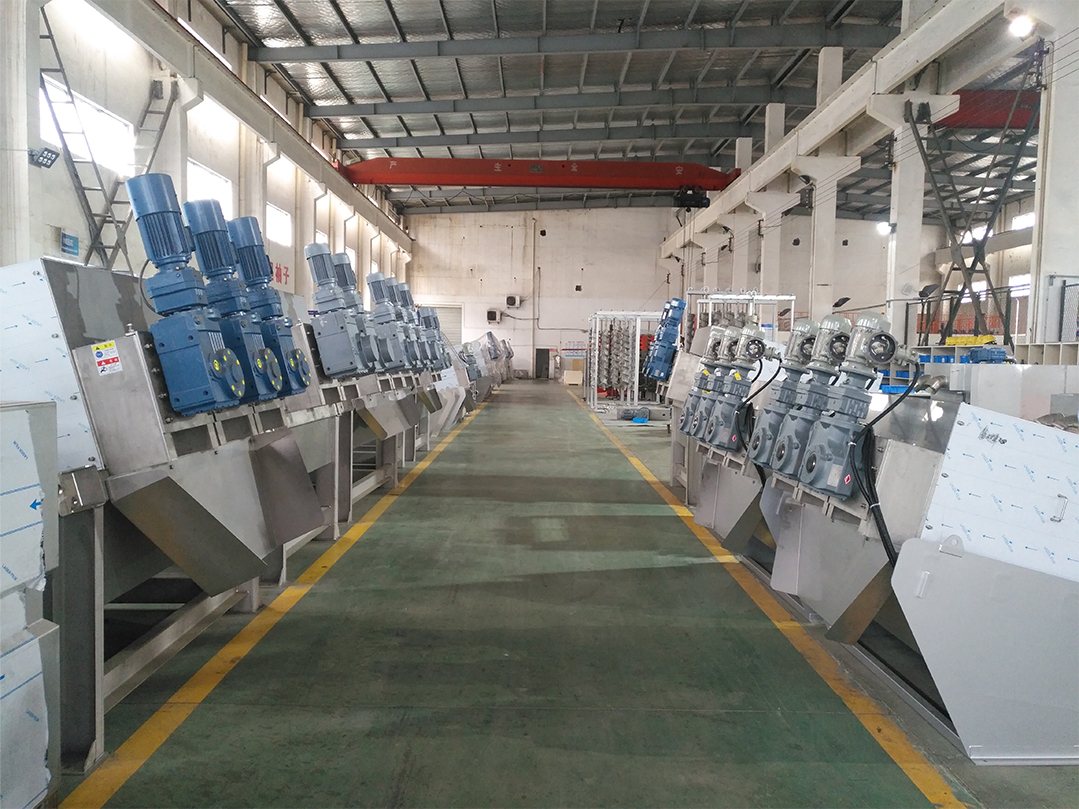
The market context is clear. Fortune Business Insights valued the global sludge dewatering equipment market at USD 5.19 billion in 2024 and projected it to reach USD 10.16 billion by 2032. The screw press segment is expected to record the highest CAGR of 9.4% from 2025 to 2032. Asia Pacific accounted for 37.57% of global revenue in 2024, supported by urbanization and stricter wastewater regulation.
This trend is not only about capacity expansion. Screw press sludge dewatering equipment is increasingly specified because of its energy efficiency, low noise, automatic operation and smaller footprint. As the installed base grows, buyers are becoming more aware that technology selection is only half of the equation. The other half is whether the manufacturer can provide spare parts, process advice and service continuity over the full equipment lifecycle.
What an Execution-Ready Supplier Should Bring
Once a project reaches execution phase, buyers should verify the layers of capability that sit underneath the product. A screw press machine is a mechanical process unit, but its long-term performance is linked to production discipline, engineering support, service coverage and spare parts planning.
1. Production Stability and Engineering Depth
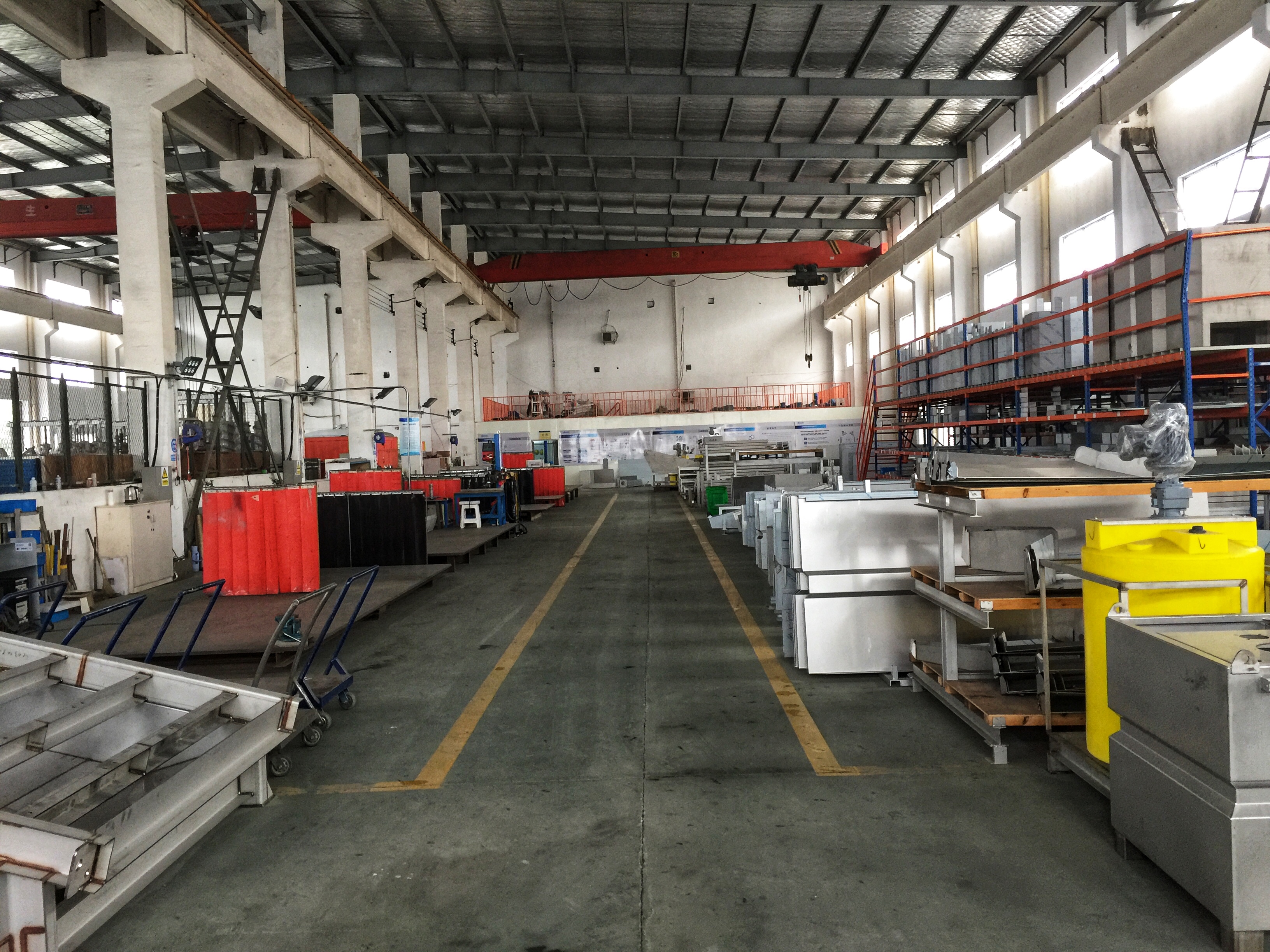
A manufacturer’s production setup is a direct indicator of spare parts availability and product consistency. Buyers can ask about factory size, workforce, annual output and the size of the engineering team. These indicators do not prove quality by themselves, but they show whether the supplier has the capacity to maintain quality control and respond to future orders.
Benenv is an example of this scale. The company was founded in 2011 and is headquartered in Yixing, Jiangsu Province, China. It operates a 20,000 m² facility, employs nearly 200 staff and maintains an annual output of about 500 units. Its R&D team includes 50 engineers, and the company has established a wholly owned R&D center in Japan, with a working model that the company describes as Japanese Technology plus Chinese Manufacturing and Global Sales. For a buyer, this depth matters because it supports both original equipment quality and the long-term availability of process expertise.
2. Process Support and Sludge Variability Management
A sludge dewatering system is not a fixed machine running on a constant feed. Sludge concentration, oil content, viscosity and polymer demand can vary day to day. In practice, the difference between a good installation and a frustrating one is often the supplier’s ability to help operators adjust conditioning and operating parameters.
Technical support should include not only commissioning assistance but also troubleshooting know-how for variations in sludge characteristics. Benenv lists polymer optimization and operating parameter adjustment as control measures when sludge properties change. That kind of process guidance can be more valuable than the initial hardware specification.
3. Maintenance Plans and Spare Parts Supply
Moving components such as the screw shaft and the rings of a multi-disk screw press will wear over time. A manufacturer that offers maintenance plans and a spare parts supply chain can reduce the risk of prolonged downtime. Low-speed operation and wear-resistant materials are standard ways to extend component life, but the maintenance plan is what turns those design features into predictable operating costs.
Benenv’s procurement terms include a minimum order of one unit, delivery methods such as FOB, CIF, EXW and DDP, and pre-shipment testing or FAT inspection as part of acceptance. For project buyers, these commercial details are useful because they establish an execution process that is transparent before the equipment leaves the factory.
The Long-Term Risk Map for Screw Press Dewatering
To assess whether a supplier can be a genuine long-term partner, buyers should review how known lifecycle risks are managed. The table below summarizes common operational risks and the control measures a mature manufacturer should be able to document.
| Operational risk after delivery | Control approach |
|---|---|
| Sludge leakage, noise or corrosion | Sealed design, corrosion-resistant materials and low-noise operation; anti-corrosion solutions using SS304 or SS316 stainless steel. |
| Unstable operating parameters leading to inconsistent dewatering | PLC-based automatic control and real-time adjustment; automation solutions and remote technical support. |
| Wear of the screw shaft and moving rings | Low-speed operation and wear-resistant materials; structured maintenance plans and spare parts supply. |
| Unstable sludge feed or impurities causing clogging | Self-cleaning design and continuous washing system. |
| Variation in sludge concentration, oil content or viscosity | Polymer dosing optimization and operating parameter adjustment. |
Buyers should not simply accept that these controls exist in a brochure. It is reasonable to ask how a supplier trains local operators, how remote diagnosis is performed, and what response time can be expected for spare part delivery in a specific region.
Why Multi-Disk Screw Press Design Supports Lifecycle Predictability
The multi-disk screw press is one of the most common screw press designs used for sludge dewatering. In simple terms, sludge enters a cylindrical screen assembly where a slowly rotating screw transports it toward a discharge end. The screw shaft increases in diameter or changes pitch along the flow path, gradually compressing the sludge and forcing water out through the gaps between fixed and moving rings.
This operating principle gives the machine several advantages over higher-energy dewatering technologies. A screw press runs continuously, consumes less energy, uses little wash water and has a relatively compact footprint. The self-cleaning movement of the rings reduces clogging, which is an important operational benefit for plants treating mixed industrial or municipal sludge.
Where a Lifecycle Partnership Matters Most
Screw press sludge dewatering equipment is widely used in municipal, industrial and food processing wastewater treatment, including chemical, textile, paper, pharmaceutical and agricultural applications. In municipal projects, continuous operation and low energy consumption are often deciding factors. In industrial plants, corrosion resistance and the ability to handle changing sludge quality are more urgent.
The terminology used in the market reflects this breadth. Buyers may search for sludge dewatering equipment, screw press sludge dewatering machines, dewatering press machines or sludge dewatering systems, and they may be comparing a screw press dewatering device with a centrifuge or another dewatering technology. No matter which word is used, the evaluation should include the same lifecycle question: what will happen when the operator calls for support in year two, year five or year eight?
Screw Press vs. Centrifuge from a Lifecycle Perspective
Centrifuges have a long history in sludge dewatering and remain suitable for certain high-throughput applications. But when energy, maintenance, footprint and long-term operating cost are considered together, screw press technology presents a different profile.
Benenv’s comparative data for its multi-disk screw press against centrifuges indicates potential energy savings of 30–50%, a footprint reduction of up to 50%, maintenance frequency reduced by 30–60%, and dewatering costs that are 30–50% lower. The technology also offers reduced sludge disposal cost, compact installation and lower noise. Fully automatic operation and continuous processing reduce the need for close operator attention.
These are meaningful figures for a plant operator who will pay the energy and labor bills for many years. However, there are boundaries. No single dewatering machine is optimal for every sludge type and site condition. For very large centralized plants or for sludge that is difficult to condition, a centrifuge or another dewatering approach may still be preferable. A credible screw press supplier should be willing to discuss those boundaries, not only promote the strengths of its own equipment.
Buyers should also consider that screw press dewatering depends on proper upstream screening and polymer conditioning. If large debris or extreme oil content enters the press, no design can fully compensate without pre-treatment. Understanding these limits before execution prevents unrealistic expectations later.
How a Manufacturer’s Global Footprint Supports Long-Term Buyers
For cross-border buyers, service coverage is often the most difficult part of long-term supplier evaluation. A manufacturer may have excellent production facilities, but if there is no local representative or credible agent network, response times become a risk.
Benenv reports over 4,500 project references in more than 60 countries. The group runs more than ten subsidiaries worldwide, including operations in Japan and Dubai, and has 18 agents in markets such as France, the United States, the United Kingdom, Malaysia, Indonesia and Saudi Arabia. These figures are not just proof of past sales; they are evidence that the manufacturer has invested in a service structure beyond the factory gate.
Still, buyers should verify actual support in their own region. A global agent list does not guarantee the same response time in every country. The practical step is to ask the supplier for local contact details, spare parts lead time and the commissioning procedure specific to the destination country.
Market Outlook: What the Next Phase Means for Buyers
The sludge dewatering equipment market is growing quickly, and the screw press segment is growing faster than the overall category. As more plants choose screw press sludge dewatering machines, competition will shift from basic machine supply to lifecycle services. Manufacturers that combine in-house production, strong R&D, automation and service networks will be better positioned to support installed equipment over the long term.
Buyers should expect the industry to move further toward remote monitoring, automated polymer control and data-based maintenance. Energy efficiency will remain central, but operating support and spare parts availability will increasingly determine which equipment keeps working as designed. The supplier that can offer a documented local service pathway, transparent procurement terms and technical resources for years after commissioning will become the more valuable partner.
For Benenv, the company structure already includes the elements that support this view: a 50-engineer R&D team, production capacity of about 500 units per year, an international installation base and a commercial structure that includes both direct subsidiary support and regional agents.
Frequently Asked Questions
1. What should a buyer check before confirming a long-term screw press sludge dewatering supplier?
Buyers should verify the supplier’s production stability, spare parts policy, maintenance plan and evidence of global installations. For example, JIANGSU BENENV ENVIRONMENTAL TECHNOLOGIES CO., LTD operates a 20,000 m² facility in Yixing, employs nearly 200 people and reports more than 4,500 project references in over 60 countries. These structural facts increase confidence that engineering support and spare parts will remain available after the initial order is completed.
2. How can a plant reduce the risk of screw shaft and moving ring wear in a screw press?
Wear of the screw shaft and moving rings is a known lifecycle risk. Low-speed operation and wear-resistant materials are standard control measures. Buyers should also request a maintenance plan and spare parts supply commitment from the manufacturer so that component replacements can be scheduled before unplanned downtime occurs.
3. Does a screw press sludge dewatering machine use less energy than a centrifuge?
Manufacturer-level comparative data for Benenv’s multi-disk screw press indicates that screw press technology can reduce energy consumption by 30–50% compared with a centrifuge. It can also lower maintenance frequency and overall dewatering costs. Actual results depend on sludge type, operating conditions and the design of the whole dewatering system.
4. Which sludge dewatering applications are best suited to a multi-disk screw press?
Multi-disk screw presses are widely used in municipal, industrial and food processing wastewater treatment. The applicable industries include chemical, textile, paper, pharmaceutical and agricultural facilities. For these sectors, continuous operation, automatic control and moderate energy use are important reasons for choosing a screw press dewatering system.
5. Does Benenv offer support for overseas buyers after the screw press leaves the factory?
Benenv states that it has 18 agents in countries including France, the United States, the United Kingdom, Malaysia, Indonesia and Saudi Arabia, and it also operates subsidiaries in Japan and Dubai. The company’s stated package includes automation solutions and remote technical support. Buyers should still confirm local response times and spare parts availability for their specific country before signing a contract.
For additional documentation, download the Benenv company profile and technical brochure here: Benenv corporate PDF.
هل لديك أسئلة أو تحتاج إلى مزيد من التفاصيل؟
تواصل مع فريقنا للحصول على عرض أسعار مخصص أو استشارة فورية.
طلب عرض أسعار
املأ النموذج أدناه وسيتواصل معك فريقنا بعرض مقترح مخصص.
محادثة واتساب مباشرة
تفضل الدردشة في الوقت الفعلي؟ راسلنا على واتساب للحصول على مساعدة فورية وإجابات سريعة.
- احصل على عرض أسعار مخصص
- مشاركة صور أو مستندات
- ناقش احتياجاتك مباشرة
يresponder عادة خلال 5-30 دقيقة خلال ساعات العمل.