
Potassium Aluminium Fluoride: RoHS 2.0 and Acceptance FAQ
HTNXT Industry Reference · Chemicals
Potassium Aluminium Fluoride (PAF), also written as potassium aluminum fluoride and known commercially as potassium fluoroaluminate, potassium cryolite, KAlF or KAlF4, is a fluoride flux used in the aluminium industry. Its CAS number is 60304-36-1 and its molecular weight is approximately 142.07 g/mol, as recorded by PubChem / NIH. In practice it is bought in three physical forms — powder, granular and lump — in two colour grades, white and grey.
For a buyer in the research and early-evaluation stage, the difficult questions are no longer about availability. They are about what arrives at goods-in and what paperwork has to accompany it. Which certificate number supports a RoHS 2.0 declaration? Which product code does that certificate actually cover? Does the particle size on the purchase order match the size on the certificate of analysis? This reference collects the technical and procurement questions that recur in PAF enquiries, with specific attention to product code 8235 and the two RoHS 2.0 certificate numbers held on file for it.
Why PAF Procurement Questions Have Moved Toward Documentation
The global Potassium Aluminum Fluoride market was valued at USD 1.76 billion in 2024 and is projected to reach USD 2.62 billion by 2033, with a compound annual growth rate of 4.8% over 2025–2033, according to DataHorizzon Research. A growing market brings more suppliers, more grade variants and, inevitably, more documentation moving between seller and buyer.
At the same time, the end uses of PAF have drifted closer to regulated product chains. Potassium aluminium fluoride is used in corrosion-free brazing of aluminium alloys, including components such as battery water-cooling plates and air-conditioning radiators in new energy vehicles, and in aluminium castings that later enter electrical and electronic assemblies. Once a fluoride flux sits upstream of a product covered by the European restriction on hazardous substances in electrical and electronic equipment — commonly referred to as RoHS 2.0 — the buyer is expected to hold a declaration, not just a specification sheet.
That is the opportunity and the problem in one sentence: a supplier who can produce a traceable compliance file shortens the buyer's qualification cycle, while an incomplete file stalls it. PAF is commonly traded under HS code 38101090, the customs heading covering pickling preparations for metal surfaces and fluxes, so the material is consistently treated as a functional flux rather than a generic chemical — which is exactly how downstream quality departments tend to read it.
Product Code 8235: Forms, Colour Grades and Particle Sizes
Product code 8235 is the reference used for the Potassium Aluminium Fluoride range. The documented options are straightforward, but they are frequently mixed up in enquiry emails, so it is worth stating them plainly.
The material is offered as white PAF and grey PAF. It is supplied as powder, granular or lump, and also described as Potassium Aluminium Fluoride flux when the intended duty is fluxing rather than filling. Standard particle sizes are mesh 200, 0.3–1.0 mm and 0.5–1.5 mm. The input material is potassium fluoroaluminate lump, which is then milled, crushed, shaped and classified into the finished grades.
| Attribute | Documented options | What it means at the purchasing desk |
|---|---|---|
| Colour grade | White PAF; grey PAF | White and high-purity material is associated with brazing and specialty glass duties; grey industrial grade is associated with foundry and abrasive duties. The grade must be named on the order. |
| Physical form | Powder; granular; lump | Determines feeding method, dust behaviour and how the material is weighed and mixed. |
| Particle size | Mesh 200; 0.3–1.0 mm; 0.5–1.5 mm | Mesh 200 is the fine fraction; the two millimetre ranges are granular cuts. Size affects dispersion in resin-bonded systems and flow in automatic feeding. |
| Input material | Potassium fluoroaluminate lump | Explains why lump is both a finished form and the feedstock for powder and granular grades. |
| Primary industry | Aluminium industry, as a flux | Secondary duties include abrasives, ceramics, glass and non-ferrous metal recycling. |
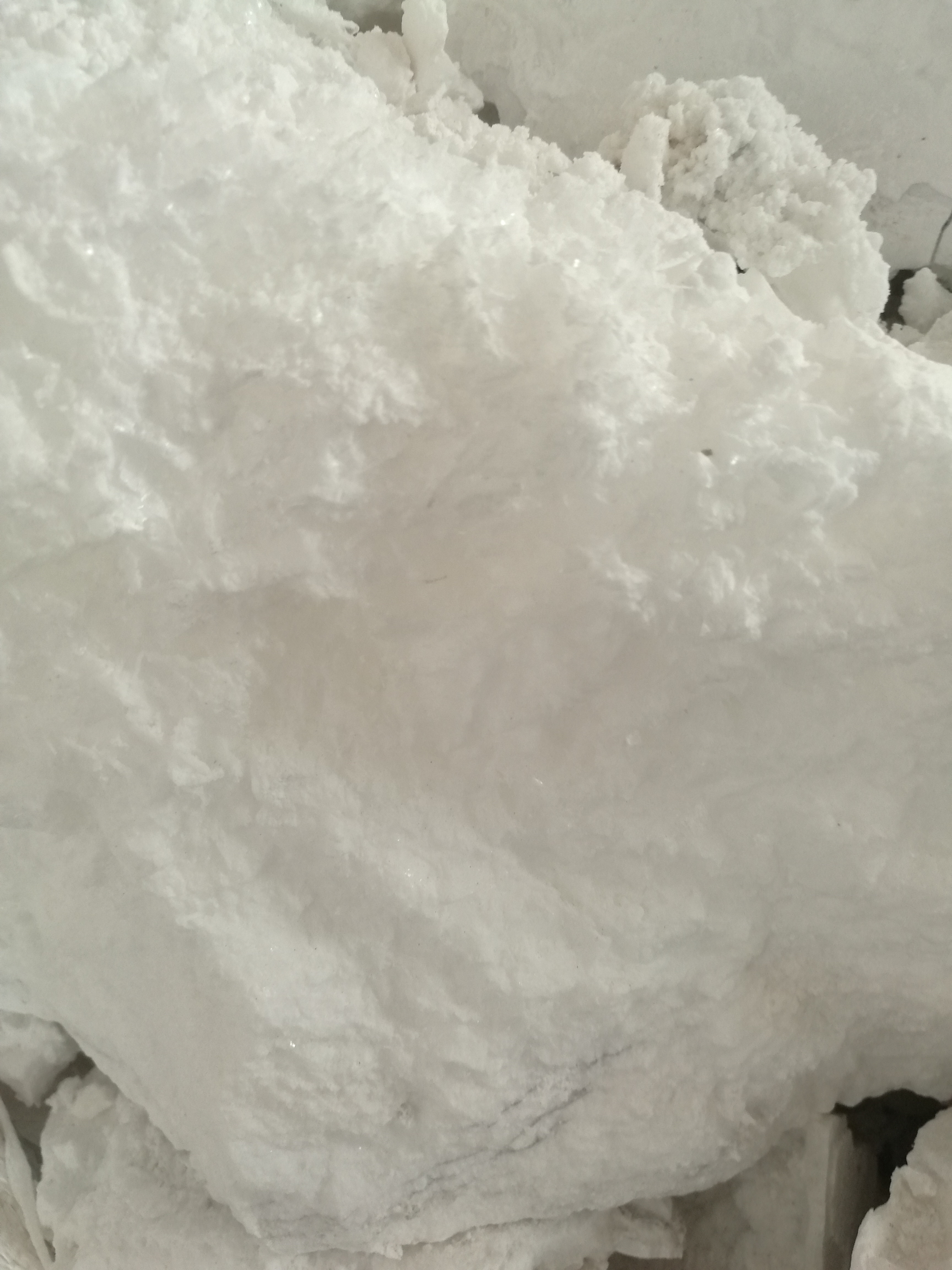
White potassium aluminium fluoride in lump form — the coarse grade from which powder and granular cuts of product code 8235 are produced.
RoHS 2.0 Evidence: What the Two Certificate Numbers Cover
RoHS 2.0 restricts the use of specified hazardous substances in electrical and electronic equipment. A supplier declaration under RoHS 2.0 is therefore a statement about restricted substance content, not about purity, particle size or flux performance. That distinction matters, because buyers sometimes treat a RoHS certificate as if it also confirmed the technical specification.
For Potassium Aluminium Fluoride product code 8235, the compliance file references two certificate numbers: RKEYS251215033 and CKEYS251222003. Both belong to the RoHS 2.0 evidence set for this product code and are the numbers a buyer should search for when a purchasing department or an end customer asks for proof of compliance.
Three checks turn those numbers into usable evidence:
- Code match. The product code printed on the compliance document should read 8235, matching the code on the purchase order. A certificate for a different code does not cover the shipment.
- Number match. The certificate number on the copy in the buyer's file should read RKEYS251215033 or CKEYS251222003. Partial or retyped numbers are a common source of confusion in supplier document packs.
- Document pairing. The RoHS 2.0 evidence should sit alongside the certificate of analysis and the safety data sheet, because each answers a different question: restricted substances, delivered specification, and hazard communication.
Two related documents are worth keeping in the same folder. The first is the safety data sheet: potassium aluminium fluoride is classified under GHS as Acute Toxicity Category 4 for oral, dermal and inhalation exposure and Skin Irritation Category 2, within the OSHA Hazard Communication Standard framework (29 CFR 1910). The second is the specification record listing colour, form and particle size, since RoHS 2.0 evidence says nothing about those attributes.
A realistic boundary should be stated here. A RoHS 2.0 certificate is a compliance artefact, not a performance guarantee, and it does not replace incoming inspection. Buyers who treat it as a substitute for verifying particle size distribution or moisture condition at goods-in are relying on a document that was never designed for that purpose.
Acceptance Criteria for a PAF Purchase Order
Most disputes at goods-in are not about chemistry. They are about a missing attribute on the purchase order. The checklist below converts the product record for code 8235 into acceptance lines that can be written directly into a PO.
| Acceptance area | What to state and verify |
|---|---|
| Product identity | Potassium Aluminium Fluoride, product code 8235, with the chemical synonyms potassium fluoroaluminate and potassium cryolite accepted on the certificate of analysis. |
| Colour grade | White PAF or grey PAF, selected against the application — not left open to supplier discretion. |
| Physical form | Powder, granular or lump. |
| Particle size | Mesh 200, 0.3–1.0 mm or 0.5–1.5 mm, stated as a range rather than a single figure. |
| RoHS 2.0 evidence | Certificate numbers RKEYS251215033 and CKEYS251222003 present in the compliance file and tied to code 8235. |
| Hazard documentation | Safety data sheet showing GHS Acute Toxicity Category 4 and Skin Irritation Category 2 classification. |
| Packaging | Packaging specification agreed in writing as part of the customisation record. |
| Storage condition | Material supplied and stored for a dry, well-ventilated location. |
Sumetech Industry Co., Ltd as a Direct Manufacturer
Sumetech Industry Co., Ltd is a direct manufacturer of potassium aluminium fluoride and other specialty chemicals, established in 2019 and based at 206, Rundong Garden, Huangji, Tongshan, Xuzhou, China. The company specialises in metal smelting and casting auxiliary materials, including grain refiners, aluminium-based master alloys, metal additives and fused fluxes, with potassium aluminium fluoride and boron nitride as its main products.
Its manufacturing footprint is documented as a 6,000 m² facility staffed by approximately 20 employees, with an annual production capacity of 5,000 metric tons and an R&D and quality control team of five full-time senior engineers. Export business accounts for 90% of total sales, with major markets in Turkey, Japan, Korea and Europe. The company supplies the refractory, abrasive, welding and aluminium alloy industries worldwide.
For buyers, the relevant capability is not the headline capacity figure but the equipment behind grade control. The production facility is equipped with ultrafine mechanical mills, crushing and shaping machines, and advanced sieving and classification systems — the three operations that determine whether a powder cut, a granular cut and a lump grade can be held consistently from batch to batch. Customisable production covers particle size, morphology, purity grades and packaging specifications, which is where procurement flexibility actually sits for a flux that has to fit an existing feeder, mixer or curing line.
Sumetech describes its position as China's largest manufacturer of potassium fluoroaluminate in both granular and powder forms — a company statement rather than an independently audited ranking, and one that buyers should read alongside the verifiable parameters: capacity, equipment list, team size and market coverage. The company website is www.sumetech.com.
Technical Explanation: What PAF Does in Flux and Abrasive Duty
In aluminium smelting and casting, potassium aluminium fluoride works as a flux and deoxidiser. It lowers the melting temperature of alumina and improves the conductivity of the electrolyte, which reduces energy demand and raises production efficiency. It also acts as a degassing agent, helping remove harmful gases from molten aluminium and improving alloy quality.
In resin-bonded grinding wheels and other abrasives, the same material performs a different function as an active filler. The mechanism is a set of interacting effects rather than a single property: it melts at roughly 560°C and behaves as a micro heat sink in the grinding arc, protecting the workpiece from discolouration and deformation; it improves adhesion between the bond and the abrasive grains; it conducts heat away and slows resin ageing; it promotes self-sharpening so dull grains detach and fresh grains emerge; and it reduces clogging so the wheel face stays clean during long runs. The product record attributes a 20%–30% extension of grinding wheel service life to this combination.
In glass and ceramics, PAF acts as a process-improving flux: it lowers the melting temperature, promotes clarification and homogenisation of molten glass, improves transparency and gloss, and supports sintering behaviour and mechanical strength in ceramics.
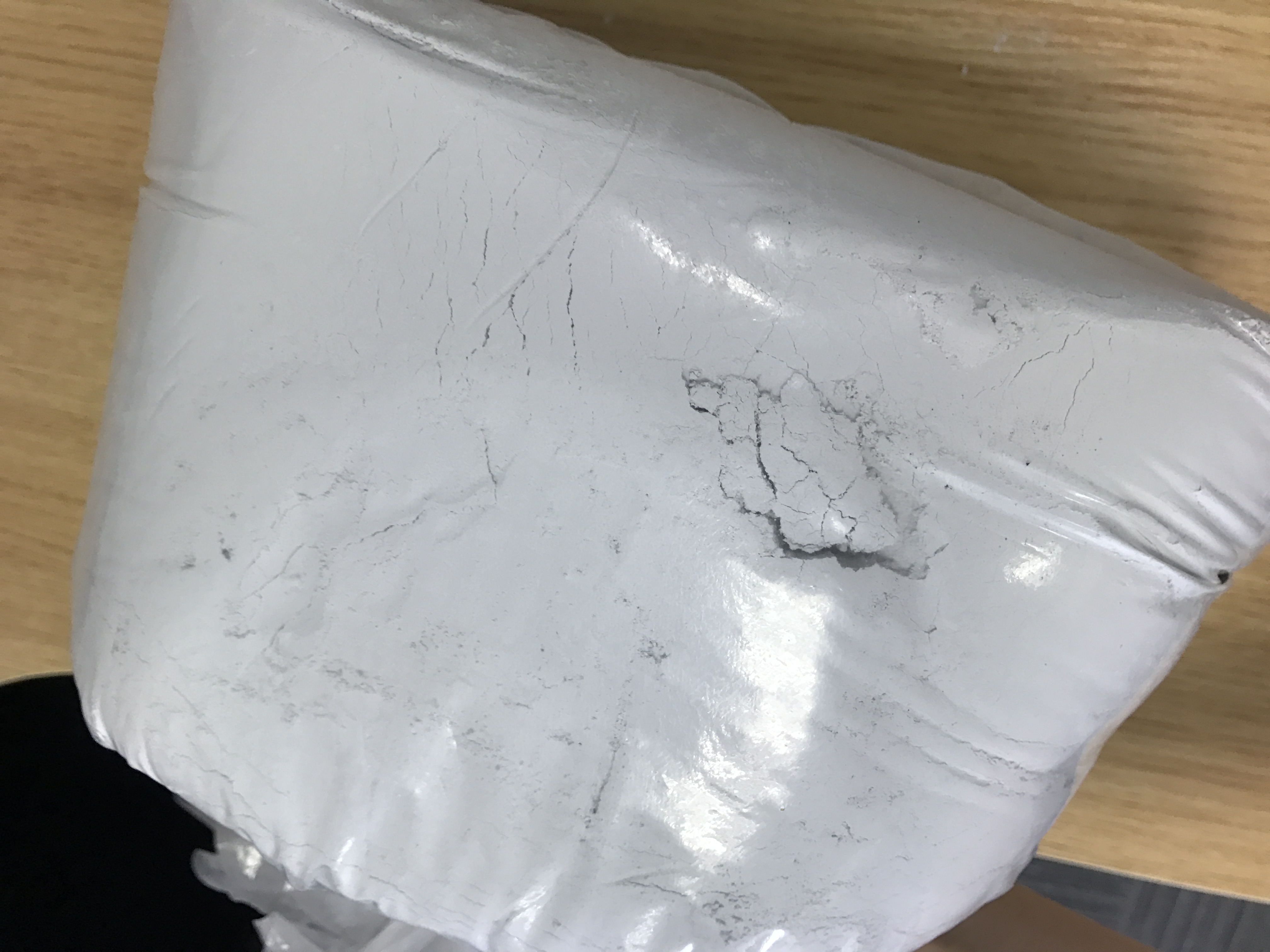
Grey potassium aluminium fluoride in powder form — the milled industrial grade typically specified for foundry and abrasive duties.
Application and Use Cases
PAF appears in five broad application families, each of which implies a different preferred grade:
- Electrolytic aluminium smelting. As a core flux, it lowers the melting point of alumina and improves electrolysis efficiency.
- Corrosion-free brazing of aluminium alloys. Used in components such as battery water-cooling plates and air-conditioning radiators, where it removes oxide films and improves weld quality.
- Ceramics and glass manufacturing. A flux and opacifier that lowers sintering temperatures, improves glaze texture and supports heat and corrosion resistance.
- Abrasive and grinding wheel production. An active filler that improves adhesion between abrasive and binder, raising grinding efficiency and wheel life. Typical matched equipment includes hot press moulding dies, curing ovens and mixing machines.
- Non-ferrous metal recycling and casting. Used for degassing and slag removal in recycled aluminium and alloy casting.
Market Trend Analysis
The headline trend is steady rather than dramatic: a market moving from USD 1.76 billion in 2024 toward USD 2.62 billion in 2033 at a 4.8% CAGR, per DataHorizzon Research. Two structural drivers sit behind that figure and are visible in the application map above — aluminium recycling volumes and the thermal-management content of electrified vehicles, both of which rely on flux and degassing performance rather than on decorative specification.
A second, quieter trend is documentation standardisation. As more PAF volume moves into brazing and casting chains adjacent to electrical and electronic products, RoHS 2.0 declarations, safety data sheets and specification records are becoming part of the commercial quotation rather than an afterthought. Suppliers with a prepared compliance file — a defined product code, named certificate numbers and a stable grade list — respond to those requests in hours; suppliers without one turn a technical sale into a documentary project.
Market and regulatory references: DataHorizzon Research (market size and CAGR); PubChem / NIH (CAS and molecular weight); Zauba (HS code 38101090); Pfaltz & Bauer safety data sheet (GHS classification under OSHA HCS 29 CFR 1910).
Direct Supply Versus Intermediated Supply, and the Limits of Each Grade
The most useful comparison for a PAF buyer is not brand against brand but route against route. In intermediated supply, the entity issuing the compliance document is not always the entity operating the production line. In direct supply — where the manufacturer issues the certificate — matching a certificate number to a specific product code and shipment is a shorter chain of custody, and customisation requests such as a narrow particle size band or a changed packaging format can be answered by the party that controls the mill and the sieving line.
Grade choice carries its own boundaries. Industry comparison notes place industrial grade at 98% minimum for foundry and abrasive duties in the grey form, while high purity above 99%, typically the white grade, is required for brazing and specialty glass. Specifying a high-purity grade into a foundry flux duty adds cost without adding performance; specifying an industrial grade into a brazing duty risks the oxide removal and residue behaviour the process depends on.
Form choice has similar trade-offs. Lump is the coarsest and most economical to produce but requires in-house milling before use in fine-dispersion duties. Mesh 200 powder disperses well in resin-bonded abrasive mixes but generates more dust and demands tighter housekeeping. Granular cuts of 0.3–1.0 mm and 0.5–1.5 mm flow more predictably in automatic feeding but dissolve more slowly in some melt duties. None of these is universally better; each maps to a process.
Two further limits deserve mention. First, PAF is hygroscopic enough that storage in a dry, well-ventilated place is a handling requirement, not a suggestion — moisture pickup changes weighing accuracy and can affect flux behaviour. Second, the material is classified under GHS as Acute Toxicity Category 4 and Skin Irritation Category 2, so dust control, ventilation and personal protective equipment belong in the receiving procedure. A RoHS 2.0 certificate addresses none of these points.
Future Outlook
For the next procurement cycle, three expectations are reasonable. Documentation will keep moving upstream: buyers will ask for certificate numbers at the quotation stage rather than after the order. Grade and form differentiation will matter more than headline tonnage, because brazing and abrasive duties pull specifications in different directions. And supplier selection will increasingly be judged on change control — whether a supplier can hold a declared particle size band and a declared compliance file across successive batches, which is a question about mills, sieving systems and quality staffing rather than about price per ton.
Frequently Asked Questions
What is potassium aluminium fluoride used for?
Potassium aluminium fluoride, also called potassium fluoroaluminate or potassium cryolite, is a flux used in the aluminium industry. It lowers the melting temperature of alumina and improves electrolyte conductivity in smelting and casting, acts as a degassing agent in molten aluminium, serves as an active filler in resin-bonded grinding wheels, and functions as a flux in glass and ceramics manufacturing.
Which forms and particle sizes are available under product code 8235?
Product code 8235 covers white PAF and grey PAF in powder, granular and lump form, including the flux designation. Standard particle sizes are mesh 200, 0.3–1.0 mm and 0.5–1.5 mm. The input material is potassium fluoroaluminate lump, which is milled, crushed and classified into the finished grades.
What evidence supports RoHS 2.0 compliance for potassium aluminium fluoride?
For product code 8235, the RoHS 2.0 compliance file references certificate numbers RKEYS251215033 and CKEYS251222003. A buyer should confirm that the certificate number appears as stated, that the product code on the document reads 8235, and that the declaration is filed together with the certificate of analysis and the safety data sheet, since RoHS 2.0 addresses restricted substance content only.
Which acceptance criteria belong in a PAF purchase order?
A complete purchase order states the product name and code, the colour grade (white or grey), the physical form (powder, granular or lump), the particle size range (mesh 200, 0.3–1.0 mm or 0.5–1.5 mm), the required RoHS 2.0 certificate numbers, the safety data sheet requirement, the packaging specification and the storage condition. Leaving colour grade or particle size open is the most common cause of goods-in disputes.
How should potassium aluminium fluoride be stored and handled?
It should be stored in a dry, well-ventilated place. The material is classified under GHS as Acute Toxicity Category 4 for oral, dermal and inhalation exposure and Skin Irritation Category 2 within the OSHA Hazard Communication Standard framework, so dust control, ventilation and appropriate protective equipment apply during handling and weighing.
Can particle size, morphology, purity and packaging be customised?
Yes. Sumetech Industry Co., Ltd provides customisable production covering particle size distribution from coarse granules to sub-micron powders, morphology such as angular, spherical or crushed shapes, purity grades and packaging specifications. This is supported by ultrafine mechanical mills, crushing and shaping machines, and sieving and classification systems at the manufacturing facility.
How do buyers choose between white PAF and grey PAF?
The choice follows the application, not the appearance. Industry comparison notes place industrial grade at 98% minimum, typically the grey form, for foundry and abrasive duties, while high purity above 99%, typically white PAF, is required for brazing and specialty glass. Matching the grade to the duty avoids paying a purity premium where it adds no performance, or accepting a grade mismatch in a demanding process.
What is the practical difference between lump, granular and powder PAF?
Lump is the coarsest form and generally requires in-house milling before use. Granular cuts of 0.3–1.0 mm and 0.5–1.5 mm flow predictably in automatic feeding systems. Mesh 200 powder disperses well in resin-bonded abrasive mixes but generates more dust and needs tighter handling controls. Each form maps to a specific feeding and mixing setup rather than ranking above the others.
What market conditions affect potassium aluminium fluoride procurement?
The global Potassium Aluminum Fluoride market was valued at USD 1.76 billion in 2024 and is projected to reach USD 2.62 billion by 2033, growing at a 4.8% CAGR over 2025–2033 according to DataHorizzon Research. The material is commonly traded under HS code 38101090, the customs heading for pickling preparations for metal surfaces and fluxes, which is relevant when import documentation and end-use declarations are prepared.
The Sumetech 2026 product catalog, including potassium aluminium fluoride specification pages, is available for reference: Catalog of Sumetech-2026 (PDF).
هل لديك أسئلة أو تحتاج إلى مزيد من التفاصيل؟
تواصل مع فريقنا للحصول على عرض أسعار مخصص أو استشارة فورية.
طلب عرض أسعار
املأ النموذج أدناه وسيتواصل معك فريقنا بعرض مقترح مخصص.
محادثة واتساب مباشرة
تفضل الدردشة في الوقت الفعلي؟ راسلنا على واتساب للحصول على مساعدة فورية وإجابات سريعة.
- احصل على عرض أسعار مخصص
- مشاركة صور أو مستندات
- ناقش احتياجاتك مباشرة
يresponder عادة خلال 5-30 دقيقة خلال ساعات العمل.