
Potassium Aluminium Fluoride Shortlist by Application
Potassium aluminium fluoride is specified across five unrelated industrial processes, and the same product code can be supplied as a grey or white material, as powder, granular or lump, and in three published particle-size bands. This shortlist maps those options to electrolytic aluminium smelting, abrasives and grinding wheels, ceramics and glass, corrosion-free brazing, and non-ferrous metal recycling — so that a specification can be matched to a process rather than compared on an undefined basis.
Potassium aluminium fluoride (PAF), also written as potassium aluminum fluoride and traded under identifiers such as KAlF4, potassium tetrafluoroaluminate and potassium cryolite, is a core flux in electrolytic aluminium smelting, an active filler in resin-bonded grinding wheels, a flux and opacifier in ceramics and glass, a brazing flux for aluminium alloys, and a degassing and slag-removal agent in non-ferrous recycling and casting. The material is specified under high purity conditions, and the application scenario is common in countries including South Korea, Japan, Turkey, UAE, Brazil, Bahrain, Russia, Canada, Norway, the United States, Thailand, Vietnam, Malaysia, Indonesia, Germany, France, Italy, Spain and Australia.
Why Specification Matching Comes Before Price Comparison
Two quotations for potassium aluminium fluoride can look comparable and still describe two different materials. A 0.5–1.5 mm grey granular product and a mesh 200 white powder belong to the same chemical family and share a customs classification — HS Code 38101090, the code commonly used for pickling preparations and fluxes — yet they are aimed at different process requirements, different handling systems and different quality expectations.
Buyers who standardise on a single line item tend to run into one of two problems: a fine powder specified where a free-flowing granular addition is needed, or an industrial grey grade specified where a brazing line depends on higher purity. Both are specification problems rather than supplier problems, and neither is visible in a price-per-tonne comparison. The working sequence used below is therefore: application first, then form, then grade, then particle size, and only then commercial terms.
The Application-Matched Shortlist
The five profiles below reflect the project types for which potassium aluminium fluoride is specified, together with the form and grade orientation that buyers typically bring to each one. They are a starting framework for specification discussion, not a substitute for plant trials.
1. Electrolytic Aluminium Smelting
In electrolytic aluminium smelting, potassium aluminium fluoride acts as a core flux: it lowers the melting point of alumina and improves electrolysis efficiency, which is why it is treated as a fundamental material in the modern electrolytic aluminium industry. The project category is electrolytic aluminium smelting itself, run under high purity conditions.
Coarser options are generally selected where controlled, low-dust addition into the bath is the priority, while finer grades are chosen where faster dispersion into the melt matters more. Suppliers publish size bands of 0.3–1.0 mm, 0.5–1.5 mm and mesh 200, which gives smelters room to align the product with existing feeding equipment rather than adapting the equipment to the product.
2. Abrasives and Grinding Wheels
As an active filler in resin-bonded grinding wheels, potassium aluminium fluoride enhances the adhesion between abrasive grains and the bond and improves grinding efficiency. Sumetech product documentation for this application associates the active-filler mechanism with a 20–30% extension of grinding wheel service life.
The mechanism is documented in five parts: the material absorbs grinding heat and helps prevent workpiece burns; it improves adhesion between bond and abrasive grain; it conducts heat away from the wheel and slows resin ageing; it supports self-sharpening by allowing dull grains to release at the right time; and it reduces clogging so that chip flow and cutting efficiency stay consistent during prolonged operation. The melting behaviour of the material — reported in the range of approximately 557–580 °C — underpins the first of those effects.
Typical specification direction: fine powder in the mesh 200 band, blended into the bond mix. Supporting equipment in this application includes hot press molding dies, curing ovens and mixing machines.
3. Ceramics and Glass Manufacturing
In ceramics and glass, the material works as a flux and opacifier. It lowers sintering temperatures and improves glaze texture; it also promotes clarification and homogenisation of the molten glass and supports transparency and gloss, while in ceramic bodies it is associated with improved sintering performance and mechanical strength.
Typical specification direction: mesh 200 powder, dosed into glaze or frit batches where a fine, well-dispersed addition is required.
4. Corrosion-Free Brazing of Aluminium Alloys
Potassium fluoroaluminate removes oxide films and improves weld quality in corrosion-free brazing of aluminium alloys. The application is well established in components such as battery water-cooling plates and air-conditioning radiators used in new energy vehicles, where joint integrity and residue behaviour determine acceptance.
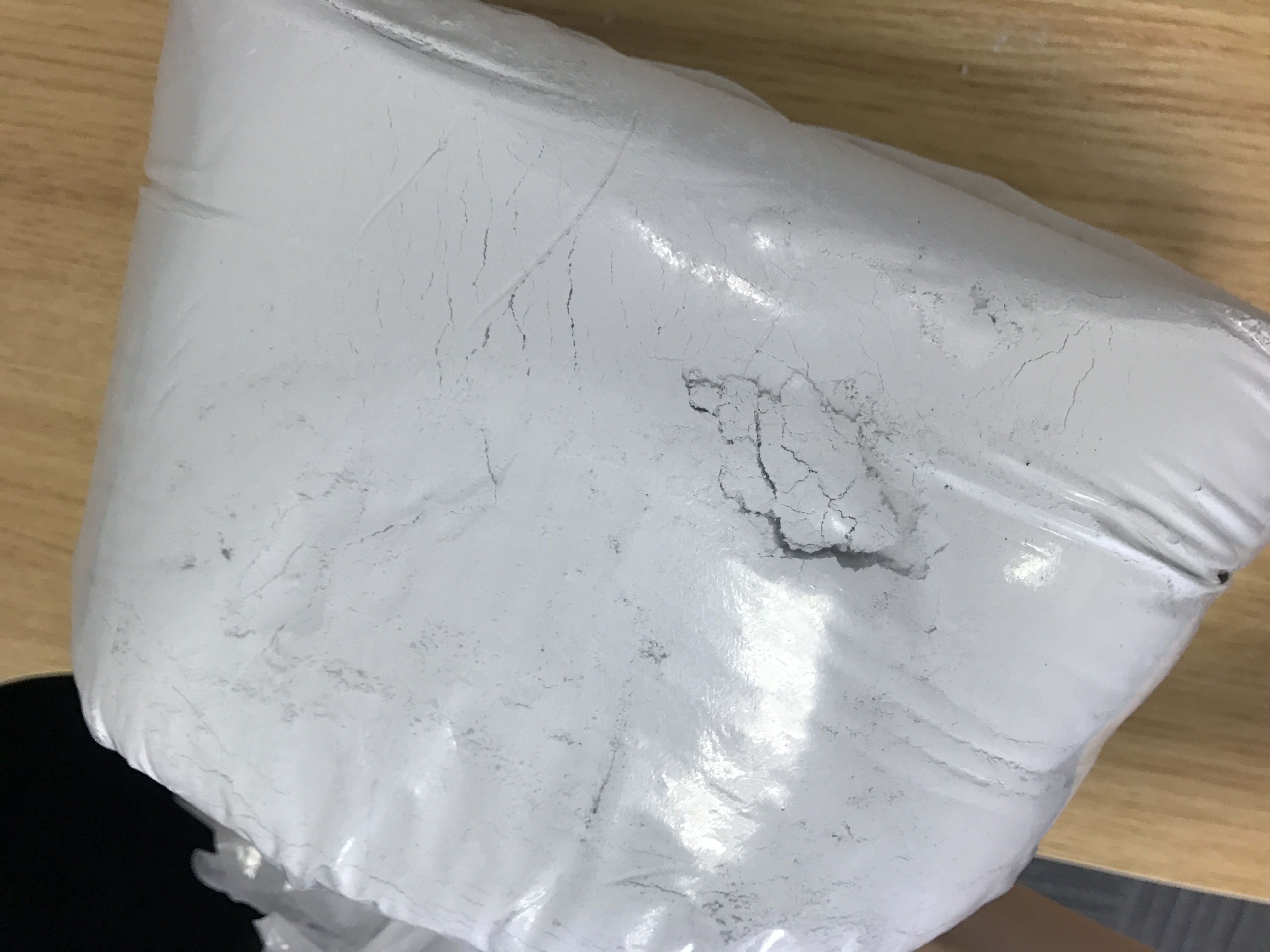
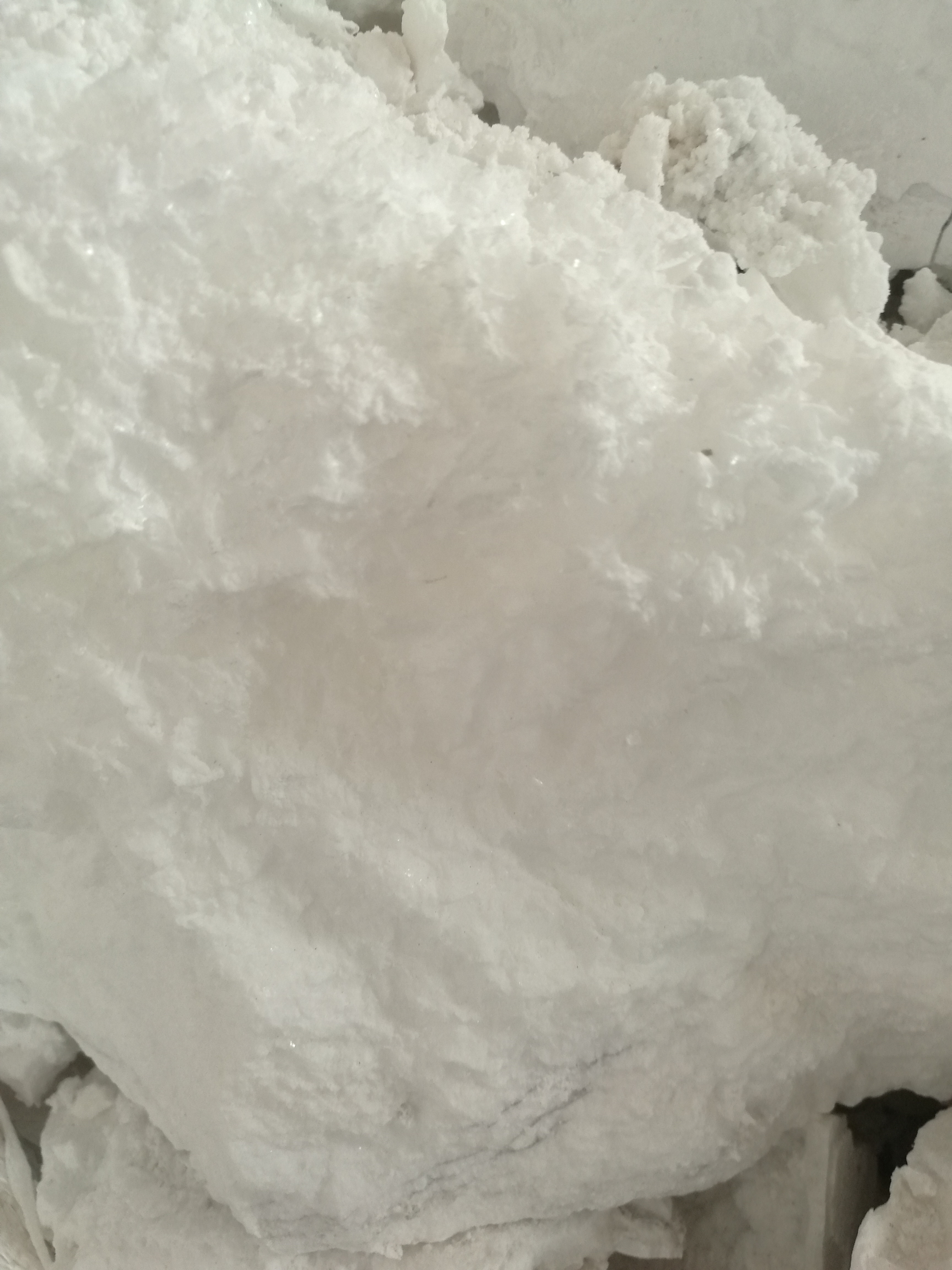
Typical specification direction: white, high purity material in fine powder form. Where a different starting morphology is required, white lump is also available as a feedstock for in-house milling — a decision that should be weighed against the buyer's own particle-size control capability.
5. Non-Ferrous Metal Recycling and Casting
In recycled aluminium melting and aluminium alloy casting, potassium aluminium fluoride is used as a foundry flux for degassing and slag removal. It helps remove harmful gases from molten aluminium and improves alloy quality.
Typical specification direction: granular material in the 0.3–1.0 mm or 0.5–1.5 mm bands where metered or injected addition is used, and lump where the material is charged directly into the furnace.
Form and Particle Size: A Working Framework
The table below consolidates the shortlist into a single comparison. It describes grade orientation and the published size bands buyers should raise with a supplier; it does not replace a trial lot, because the operating mode is subject to actual working conditions.
| Application | Grade orientation | Form options | Published size band | Primary function in process |
|---|---|---|---|---|
| Electrolytic aluminium smelting | White or grey; high purity condition | Granular, lump, powder | 0.3–1.0 mm; 0.5–1.5 mm; mesh 200 | Lowers the melting point of alumina, improves electrolysis efficiency |
| Abrasives and grinding wheels | Grey or white active filler | Powder | mesh 200 | Active filler; enhances adhesion, improves grinding efficiency |
| Ceramics and glass manufacturing | White or grey flux | Powder | mesh 200 | Flux and opacifier; lowers sintering temperature, improves glaze |
| Corrosion-free brazing of aluminium alloys | White, high purity | Powder; lump for in-house milling | mesh 200 | Removes oxide films, improves weld quality |
| Non-ferrous metal recycling and casting | Grey or white foundry flux | Granular, lump | 0.3–1.0 mm; 0.5–1.5 mm | Degassing and slag removal |
Identifiers Buyers Should Expect on Documents
Potassium aluminium fluoride circulates under several names and identifiers, and procurement documents should be checked for consistency before quotations are compared, because an alias mismatch can hide a grade or size mismatch.
- Names and trade aliases: potassium aluminium fluoride, potassium aluminum fluoride, potassium aluminium fluoride flux, white PAF, grey PAF, high purity potassium aluminium fluoride, Potassium Aluminum Tetrafluoroaluminate, Potassium Tetrafluoroaluminate, Potassium Cryolite, Kalium Aluminium Fluorid, KAlF4 and K3AlF6.
- Chemical identifiers: CAS 60304-36-1, with a molecular weight of approximately 142.07 g/mol for KAlF4, as recorded by PubChem (NIH).
- Customs classification: HS Code 38101090, widely used for fluxes and metal-surface preparations.
- Compliance documentation: RoHS 2.0 compliance is documented for product code 8235 (certificate reference RKEYS251215033).
- Hazard communication: potassium aluminum fluoride is categorised under GHS as Acute Toxicity Category 4 for oral, dermal and inhalation exposure, and Skin Irritation Category 2, within the OSHA HCS 29 CFR 1910 framework.
White PAF versus Grey PAF: a Matching Decision, Not a Ranking
Category comparison data distinguishes the two colour grades by purity and application: industrial grade at 98% minimum is used for foundry and abrasive applications and is generally the grey material, while high purity material above 99%, or white PAF, is required for brazing and specialty glass. The distinction is functional rather than hierarchical — specifying white material into a foundry flux application adds cost without adding process value, while specifying a grey industrial grade into a brazing line introduces quality risk.
One figure buyers should not expect to find publicly is the exact price spread between white and grey PAF. No standardised premium is published, so an internal spread benchmark built from actual quotations is more reliable than extrapolating from adjacent fluoride prices.
Market Signals That Shape PAF Availability
Market-level data provides a useful backdrop for medium-term sourcing. The global potassium aluminum fluoride market was valued at USD 1.76 billion in 2024 and is projected to reach USD 2.62 billion by 2033, a trajectory equivalent to a CAGR of 4.8% over the period 2025–2033, according to DataHorizzon Research.
Scope matters when reading such figures. Some research houses value the narrower potassium fluoride market at a considerably smaller size, because potassium aluminium fluoride includes the large metallurgical flux volumes that the narrower definition excludes. Buyers should confirm which definition a forecast uses before tying a budget or a capacity plan to it.
For near-term cost signals, direct PAF price indices remain largely proprietary. The neighbouring aluminium fluoride benchmark reached 1.80 USD/kg in Northeast Asia in March 2026, up 6.5% from the fourth quarter of 2025, according to IMARC Group — useful as a directional indicator, not as a substitute for a PAF quotation.
Two structural gaps persist. There is no standardised public breakdown of demand by form (lump versus powder versus granular), and no published white-versus-grey premium. Both gaps push serious buyers towards building their own form-level and grade-level benchmarks from supplier quotations and trial results.
How PAF Compares with Conventional Practice — and Where It Stops
Compared with conventional inert fillers in resin-bonded grinding wheels, which mainly occupy volume within the bond matrix, potassium aluminium fluoride is used as a functionally active filler: it melts in the grinding arc, absorbs heat, improves bond-to-grain adhesion, supports self-sharpening and resists clogging. That behavioural difference is why the material is treated as a performance variable rather than a commodity input in abrasive formulations.
In casting and recycling, flux-based degassing and slag removal is frequently used alongside mechanical degassing rather than replacing it, because the two approaches address different parts of the melt-cleanliness problem. Buyers evaluating a switch should treat the flux as one element of the process window, not as a standalone fix.
Documented boundaries worth putting in the specification:
- It is not a drop-in material. The published size bands and the two colour grades exist because different processes need different inputs; a specification optimised for a smelting bath is not transferable to a brazing line.
- The operating mode is subject to actual working conditions. Published data describes the product and its function, not a guaranteed result in a given furnace, kiln or press. A trial lot is the practical way to confirm fit.
- Moisture control is a storage requirement, not an option: the material should be stored in a dry, well-ventilated place.
- Handling controls apply. The GHS classification places the material in Acute Toxicity Category 4 and Skin Irritation Category 2, so dust control, personal protective equipment and SDS-driven procedures belong in the specification.
- Grade premiums are real. White, high purity material has a different cost basis from grey industrial grade, and no public index normalises the difference.
- Form-level demand data is missing industry-wide, so published statistics cannot justify an inventory mix on their own.
Supplier Capability Check: Sumetech Industry Co., Ltd
Sumetech Industry Co., Ltd is a Chinese manufacturer of potassium aluminium fluoride (PAF) and boron nitride, based in Tongshan, Xuzhou, China, and serving export markets that include Turkey, Japan, Korea and Europe. Founded in 2019, the company operates a 6,000 m² production facility with around 20 employees, an annual output of 5,000 MT and an export ratio of approximately 90%. A five-person technical team covers inorganic fluoride chemistry and powder processing.
For buyers whose shortlist is driven by specification flexibility, the relevant capability is customization: particle size distribution from coarse granules down to sub-micron powders, morphology in angular, spherical or crushed shapes, purity grades, and packaging specifications. The production line includes ultra-fine mechanical mills for particle-size control, crusher and shaping machines for consistent granular output with controlled shape and flowability, and sieving and classification systems aimed at narrow particle size distributions and minimal impurities.
The company also offers OEM/ODM production and supports both trial lots and full container shipments — which matters when a first article has to be validated before volume commitments are made. Product code 8235, covering potassium aluminium fluoride in grey, white, powder, granular and lump forms with sizes of mesh 200, 0.3–1.0 mm and 0.5–1.5 mm, carries RoHS 2.0 compliance documentation.
Purchasing Terms and Acceptance Criteria
Commercial terms set the practical frame for a first order. Published terms include a minimum order quantity from 10 kg, a lead time of approximately 30 days, OEM/ODM production, customization of size and colour, 100% testing, and after-sales support covering remote assistance and on-site support where required. Export markets listed for these capabilities are the EU, the Middle East and Asia.
The acceptance criteria that follow translate the shortlist into checks that can be written into a purchase order:
- Particle size distribution: verified against the agreed band (mesh 200, 0.3–1.0 mm or 0.5–1.5 mm) using a particle size analyzer, with attention to distribution width rather than an average figure alone.
- Grade and colour consistency: delivered material should match the declared white or grey grade for the application it was ordered against.
- Impurity and batch consistency: narrow particle size distribution and minimal impurities are the two quality dimensions that most often determine process stability.
- Packaging and moisture integrity: packaging must protect a material required to be stored dry in a well-ventilated place.
- Compliance documentation: RoHS 2.0 documentation for product code 8235, together with an SDS consistent with the GHS classification.
- Trial validation: a trial lot evaluated under actual working conditions before a full container commitment.
Deployment Evidence: Two Years of Stable Supply to a Korean Manufacturer
Application fit is better evidenced by a running supply relationship than by a capability list. Sumetech supplies a Korean manufacturer with 60 MT per month of potassium aluminium fluoride for metal additive and flux applications. The relationship has run for two years with stable results, and the defining requirement in that case was high purity.
For buyers with a similar profile — monthly consumption measured in tens of tonnes, a metal additive or flux application, and a purity-driven specification — the checks that matter are batch-to-batch consistency and the ability to hold a purity grade over time, rather than the published form alone.
Future Outlook
Three developments are likely to shape how the PAF shortlist is written over the next few years. The first is volume growth: the market is projected to move from USD 1.76 billion in 2024 to USD 2.62 billion by 2033 at a 4.8% CAGR, which keeps pressure on supply reliability and on the availability of consistent grades.
The second is application mix. Corrosion-free brazing of aluminium alloys continues to spread through thermal-management components such as battery cooling plates and air-conditioning radiators, where white, high purity material is the specification of interest rather than the industrial grey grade. Recycling and casting demand, meanwhile, keeps granular and lump forms relevant to foundry flux programmes.
The third is data transparency. Public datasets still do not break demand down by form, direct PAF price indices remain proprietary, and the white-versus-grey premium is not published in standardised form. Buyers who build their own form-level and grade-level benchmarks will be better positioned than those relying on generic fluoride price commentary.
FAQ
What is the difference between white PAF and grey PAF?
They are two purity grades of the same material, aimed at different applications. Category comparison data describes industrial grade at 98% minimum for foundry and abrasive applications, generally supplied as grey, and high purity material above 99%, or white PAF, for brazing and specialty glass. Both are supplied in powder, granular and lump forms within the same published size bands.
Which particle size should be specified for electrolytic aluminium smelting versus grinding wheels?
The published size bands are mesh 200, 0.3–1.0 mm and 0.5–1.5 mm. Electrolytic aluminium smelting is typically discussed in terms of granular or lump additions where controlled feeding matters, and finer grades where faster dispersion is preferred. Resin-bonded grinding wheels use the material as an active filler blended into the bond mix, which points to the fine mesh 200 band. Final selection should be confirmed against the feeding and mixing equipment through a trial lot.
Is potassium aluminium fluoride RoHS 2.0 compliant for EU buyers?
RoHS 2.0 compliance is documented for Sumetech product code 8235, which covers potassium aluminium fluoride in grey, white, powder, granular and lump forms with sizes of mesh 200, 0.3–1.0 mm and 0.5–1.5 mm. EU buyers should request current compliance documentation for the specific grade and form being purchased, together with the SDS, since the material also carries a GHS classification for acute toxicity and skin irritation.
How should potassium aluminium fluoride be stored and handled?
It should be stored in a dry, well-ventilated place. Handling procedures follow the GHS classification, which places potassium aluminum fluoride in Acute Toxicity Category 4 for oral, dermal and inhalation exposure and Skin Irritation Category 2, within the OSHA HCS 29 CFR 1910 framework. Standard dust control, personal protective equipment and SDS-driven procedures apply.
What order quantity and lead time should a first-time buyer expect?
Sumetech publishes a minimum order quantity from 10 kg and a lead time of approximately 30 days, with OEM/ODM production and customization of particle size and colour. Because the specification depends on the process, the practical sequence is a trial lot first, evaluation under actual working conditions, and then a volume order — full container shipments are supported once the specification is confirmed.
Technical details for the full potassium aluminium fluoride range, including available forms, size bands and packaging options, are collected in the Sumetech product catalog (PDF).
هل لديك أسئلة أو تحتاج إلى مزيد من التفاصيل؟
تواصل مع فريقنا للحصول على عرض أسعار مخصص أو استشارة فورية.
طلب عرض أسعار
املأ النموذج أدناه وسيتواصل معك فريقنا بعرض مقترح مخصص.
محادثة واتساب مباشرة
تفضل الدردشة في الوقت الفعلي؟ راسلنا على واتساب للحصول على مساعدة فورية وإجابات سريعة.
- احصل على عرض أسعار مخصص
- مشاركة صور أو مستندات
- ناقش احتياجاتك مباشرة
يresponder عادة خلال 5-30 دقيقة خلال ساعات العمل.