
Potassium Aluminium Fluoride: Technical & Procurement FAQ
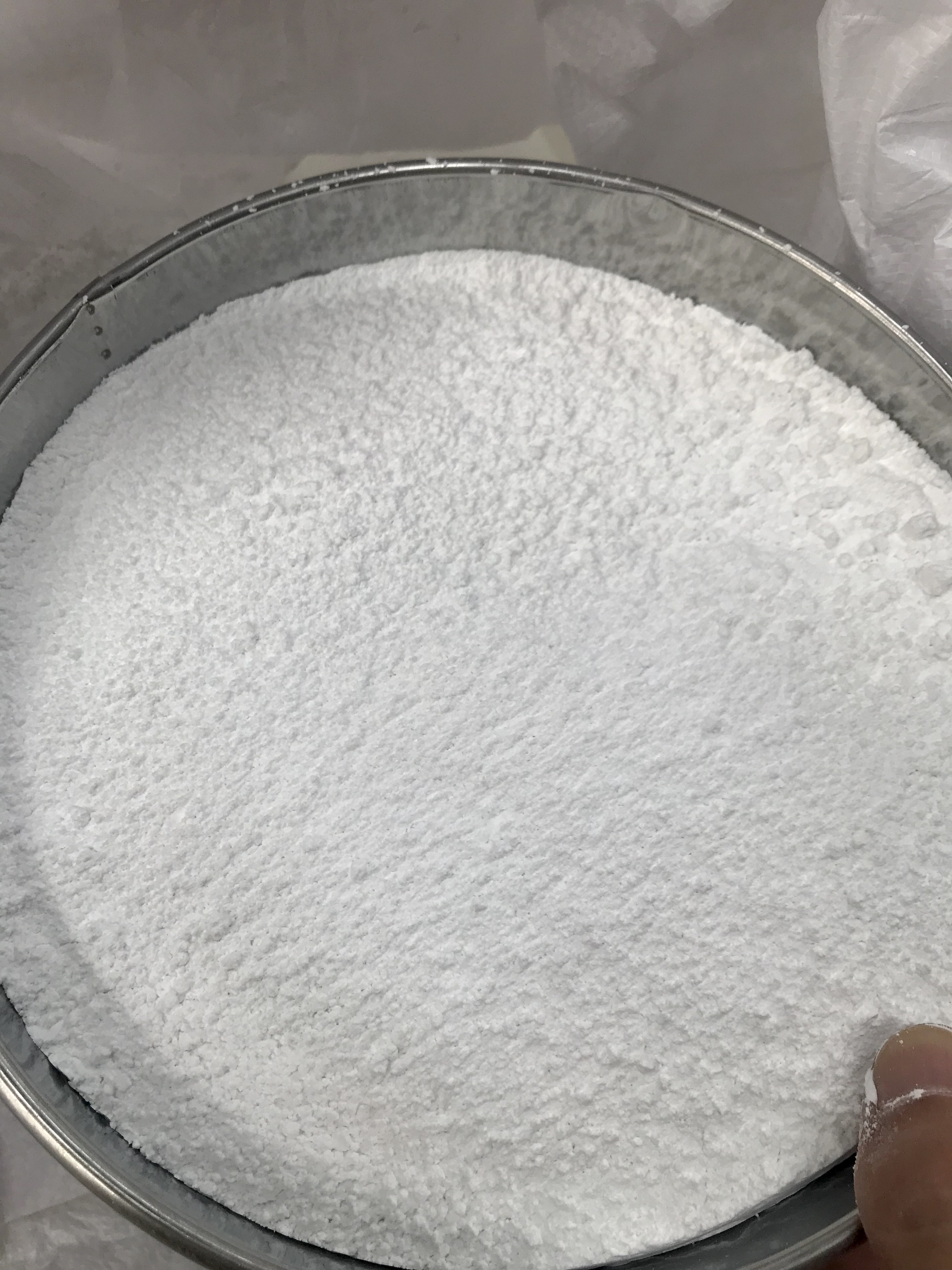
White potassium aluminium fluoride (PAF) powder, the brazing- and specialty-glass-oriented grade of the PAF family.
Potassium aluminium fluoride (PAF) is an inorganic fluoride salt used as a flux, active filler and slag-removal agent in aluminium smelting, brazing, ceramics, abrasives and non-ferrous metal casting. Buyers reaching the decision and execution stage rarely need a general introduction — they need short, reliable answers about grade, form, storage, supporting equipment, operating conditions and commercial terms.
This reference collects the questions that repeatedly appear in PAF procurement threads and answers each one on the basis of published chemical identifiers and first-party manufacturing data from Sumetech Industry Co., Ltd, a China-based producer of potassium fluoroaluminate in powder and granular form.
Why PAF Questions Cluster Around Execution, Not Discovery
Potassium aluminium fluoride sits in an unusual position in the chemical supply chain. It is a relatively low-volume input, but it touches high-value processes: electrolytic aluminium reduction, corrosion-free brazing of aluminium assemblies, ceramic and glass sintering, resin-bonded grinding wheel production, and recycled-aluminium melt treatment. Because the material is consumed inside a process rather than sold to end consumers, procurement mistakes show up as process defects rather than as obvious product faults.
That dynamic explains why PAF buying conversations converge on the same handful of issues. Grade selection determines whether the material works at all in a brazing line. Particle form determines how the material feeds, mixes and melts. Storage conditions determine whether a shipment still performs the way it did when it left the plant. Supporting equipment determines whether the flux can be applied uniformly. And commercial terms — minimum order quantity, delivery basis, acceptance testing and payment structure — determine how quickly a trial order can move to a repeat order.
For buyers already past the shortlisting stage, the useful question is no longer "which supplier category should I look at?" but "what exactly do I need to specify, store, install and verify?" The sections below answer that.
Technical Basics: Chemistry, Grades and Product Forms
Identification and chemical properties
Potassium aluminium fluoride is traded under several names, including potassium aluminum fluoride, potassium fluoroaluminate, Potassium Cryolite, Kalium Aluminium Fluorid, and the formulas KAlF, KAlF4 and K3AlF6. These names describe the same functional family of potassium-fluoroaluminate salts rather than three unrelated products.
The compound KAlF4 has a molecular weight of approximately 142.07 g/mol and is identified by CAS number 60304-36-1, according to PubChem (NIH). In functional-flux trade classification, potassium aluminium fluoride is commonly declared under HS Code 38101090, the code covering pickling preparations for metal surfaces and fluxes.
The property that matters most in application is thermal behaviour. PAF melts in the range of roughly 557–580 °C, with approximately 560 °C frequently cited as the reference melting point. That relatively low melting point is the reason the material functions as a flux: it becomes fluid before the surrounding aluminium or ceramic body reaches its own critical temperature, and it can therefore react, wet and remove oxide films at a stage where the workpiece itself is still structurally safe.
White PAF versus grey PAF
The primary commercial distinction in the PAF market is grade, expressed visually as colour. Industrial grade material, typically specified at 98% minimum, is supplied as grey PAF and is used in foundry and abrasive applications. High-purity material, generally above 99%, is supplied as white PAF and is required for brazing and specialty glass work, where residual impurities can interfere with flux action or contaminate a visible surface.
Sumetech Industry Co., Ltd produces white potassium aluminium fluoride with a stated purity above 99.5% and a pure white appearance. In the company's own application comparison, that purity and colour profile is positioned against the general grade of PAF available from other suppliers, and its stated benefits include lower electrolytic aluminium production cost and longer grinding wheel service life.
| Attribute | White PAF | Grey PAF |
|---|---|---|
| Typical purity | Above 99% (Sumetech states above 99.5%) | 98% minimum, industrial grade |
| Appearance | Pure white | Grey |
| Positioning | Brazing, specialty glass, high-purity operations | Foundry and abrasive applications |
| Forms available | Powder, granular, lump | Powder, granular, lump |
| Key selection driver | Impurity tolerance and surface visibility | Cost per tonne and bulk process volume |
Powder, granular and lump
PAF is supplied in three physical forms: Potassium Aluminium Fluoride Powder, Potassium Aluminium Fluoride Granular and Potassium Aluminium Fluoride Lump. The base material is potassium fluoroaluminate lump, which is then processed — crushed, milled, granulated and classified — into the form a customer's process can actually handle.
Documented size specifications include mesh 200 powder, 0.3–1.0 mm granular and 0.5–1.5 mm granular. The choice between them is a feeding and mixing decision more than a chemistry decision: fine powder disperses quickly and reacts fast, granular material flows more predictably in automated dosing systems and generates less dust, and lump material suits operations that do their own size reduction or charge the flux directly into a melt.
Storage, Supporting Equipment and Operating Conditions
How should potassium aluminium fluoride be stored?
PAF should be stored in a dry, well-ventilated place. This is the single storage requirement that appears in the product's own handling data, and it follows directly from the material's chemistry: fluoride salts are hygroscopic to varying degrees, and moisture uptake changes flow behaviour, promotes caking in fine powders, and can alter melt behaviour when the material is finally charged.
In practice this translates into a small number of operational rules. Keep bags and ton bags sealed until the point of use. Avoid stacking pallets directly against cold external walls where condensation forms. Do not store PAF in the same unconditioned area as aqueous reagents. Where a plant operates in a humid climate, a covered, ventilated warehouse is not a formality — it is the difference between a batch that flows and a batch that has to be re-milled.
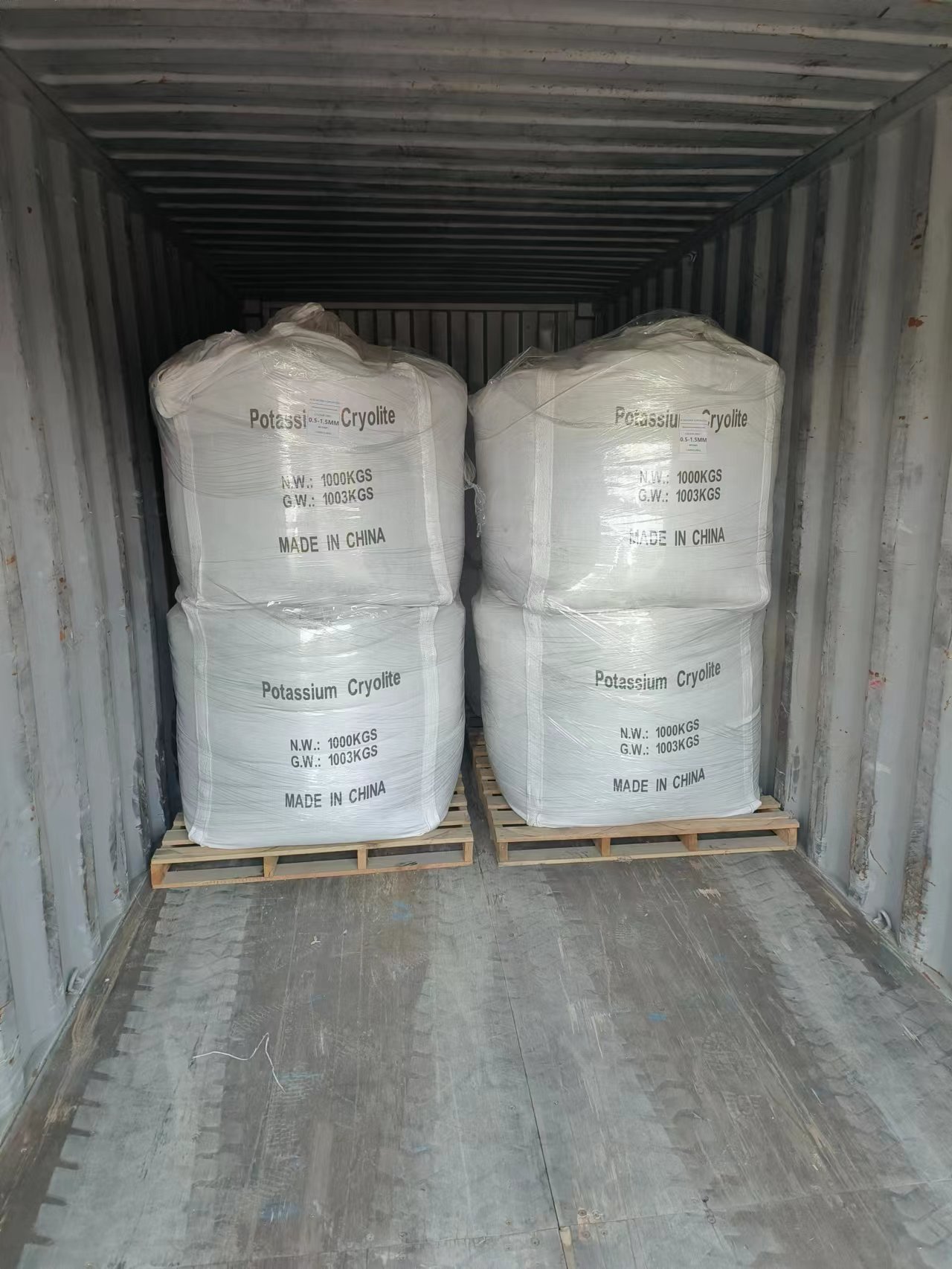
Ton-bag packaging keeps PAF sealed against moisture uptake during warehousing.
What supporting equipment is required?
Supporting equipment depends on the application, but the documented equipment set associated with PAF use covers a hot press molding die, a curing oven and a mixing machine. This combination points to resin-bonded abrasive production, where PAF acts as an active filler: it is blended with abrasive grain and bond in a mixing machine, pressed into shape in a hot press molding die, and then cured in a curing oven.
For smelting, casting and brazing users, the equivalent supporting equipment is dosing and feeding hardware rather than presses and ovens — gravimetric feeders, flux injection equipment for melt treatment, and flux application systems for brazing lines. The common requirement across both worlds is uniform distribution: PAF performs when it is evenly dispersed, and underperforms when it is dumped into one corner of a batch.
What operating mode applies?
PAF operating parameters are set according to the actual working conditions of the process rather than a fixed universal setting. The material is documented with a high-purity working condition, which means the grade specified — white PAF with purity above 99% for brazing and specialty glass, industrial grade for foundry and abrasive use — is treated as an operating variable rather than a purchasing formality.
The practical consequence is that a buyer should specify working condition, application and form together. A mesh 200 white powder destined for a brazing line, a 0.5–1.5 mm granular grade destined for a foundry flux, and lump material destined for in-house milling are three different operational decisions, even though they share the same chemical identity.
How Working Conditions Change PAF Performance
Non-ferrous metal casting and recycling
In non-ferrous metal recycling and casting, PAF is used for degassing and slag removal in recycled aluminium and aluminium alloy casting. Working conditions matter here because melt cleanliness drives downstream quality. A flux that is properly dispersed, correctly sized and free of moisture will separate oxide inclusions and release entrained gas predictably. The same flux, caked from humid storage or dosed unevenly, produces inconsistent results that are easily misattributed to the melt itself.
Electrolytic aluminium smelting
In electrolytic aluminium smelting, PAF acts as a core flux that lowers the melting point of alumina and improves electrolysis efficiency. Sumetech's own application comparison states that its higher-purity white PAF can reduce electricity consumption by approximately 1,000 kWh per tonne of aluminium produced, relative to the general PAF grade available from other suppliers. Energy intensity is one of the largest controllable cost lines in aluminium reduction, so even a modest change in bath performance translates into a material cost difference at plant scale.
Abrasives and grinding wheels
In the abrasive and grinding wheel industry, PAF works as an active filler that improves adhesion between abrasive grain and binder. Its documented contribution runs through five mechanisms: it absorbs heat and prevents burns, it firmly holds abrasive grains, it aids heat dissipation and delays resin aging, it promotes self-sharpening by allowing dull grains to shed at the right moment, and it resists clogging so that chips clear the wheel surface.
These effects depend on the material melting early and locally. Because PAF becomes fluid around 557–580 °C, it acts as a micro heat sink in the grinding arc, absorbing cutting heat before the workpiece discolours or deforms. A grinding wheel made with degraded or poorly dispersed PAF loses exactly this behaviour.
Brazing, ceramics and glass
For corrosion-free brazing of aluminium alloys — including battery water-cooling plates and air-conditioning radiators used in new energy vehicles — PAF removes oxide films and improves weld quality. In ceramics and glass manufacturing, it is used as a flux and opacifier that lowers sintering temperatures, improves glaze texture, and enhances the heat resistance and corrosion resistance of glass. Both applications are purity-sensitive, which is where white PAF is specified.
Market Context: Size, Growth and Pricing Signals
The global potassium aluminium fluoride market was valued at USD 1.76 billion in 2024 and is projected to reach USD 2.62 billion by 2033, according to DataHorizzon Research. The same source expects a compound annual growth rate of 4.8% over the 2025–2033 period. That is steady mid-single-digit expansion rather than a boom curve, which is consistent with a material whose demand tracks aluminium production, aluminium recycling volumes and abrasive manufacturing.
On the pricing side, a closely related fluoride benchmarks the input-cost environment: the Northeast Asia price for aluminium fluoride (AlF3) reached 1.80 USD/kg in March 2026, up 6.5% from the fourth quarter of 2025, according to IMARC Group. Direct, published PAF price indices remain scarce, and AlF3 is generally used as the nearest available benchmark, so buyers should treat it as a directional signal rather than a PAF quotation.
| Reference point | Value | Source |
|---|---|---|
| Global PAF market size, 2024 | USD 1.76 billion | DataHorizzon Research |
| Projected market size, 2033 | USD 2.62 billion | DataHorizzon Research |
| Forecast CAGR, 2025–2033 | 4.8% | DataHorizzon Research |
| AlF3 benchmark, Northeast Asia, March 2026 | 1.80 USD/kg (+6.5% vs Q4 2025) | IMARC Group |
| Typical trade classification | HS Code 38101090 | Zauba |
Limits and Boundaries: What PAF Does Not Solve
A procurement reference that only lists benefits is not useful. Three boundaries are worth stating plainly.
First, grade mismatch is not a minor tolerance issue. Using grey industrial-grade material in a brazing or specialty glass operation introduces impurity load where the process is least able to absorb it, and the failure typically appears as inconsistent wetting or surface defects rather than an obvious chemistry error. Conversely, specifying white PAF for a bulk foundry flux where industrial grade is adequate raises cost without a corresponding process gain.
Second, PAF is a classified chemical with handling obligations. It is categorized under GHS as Acute Toxicity Category 4 for oral, dermal and inhalation exposure, and Skin Irritation Category 2, with the corresponding US framework referencing OSHA HCS 29 CFR 1910. Those classifications mean dust control, appropriate personal protective equipment and ventilation are part of normal operation, not optional extras.
Third, PAF does not compensate for weak process control. Storage in a dry, ventilated place, uniform dosing and correct particle size selection are preconditions for the material to behave as documented. No specification on a certificate of analysis substitutes for those conditions on the shop floor.
Committing to a Long-Term PAF Supply Relationship
For buyers moving from trial to repeat supply, the commercial terms define how quickly that transition can happen. The documented purchasing framework for PAF covers a minimum order quantity of 1 MT, delivery terms of FOB, CIF or FCA, pre-shipment testing as the acceptance criterion, and a 30/70 payment structure.
A 1 MT minimum order is low enough to validate a grade against a live process without committing to container-scale volume, and pre-shipment testing gives the buyer a documented reference point before goods leave the plant. For a decision-stage buyer, those two elements are the practical bridge between sampling and long-term supply.
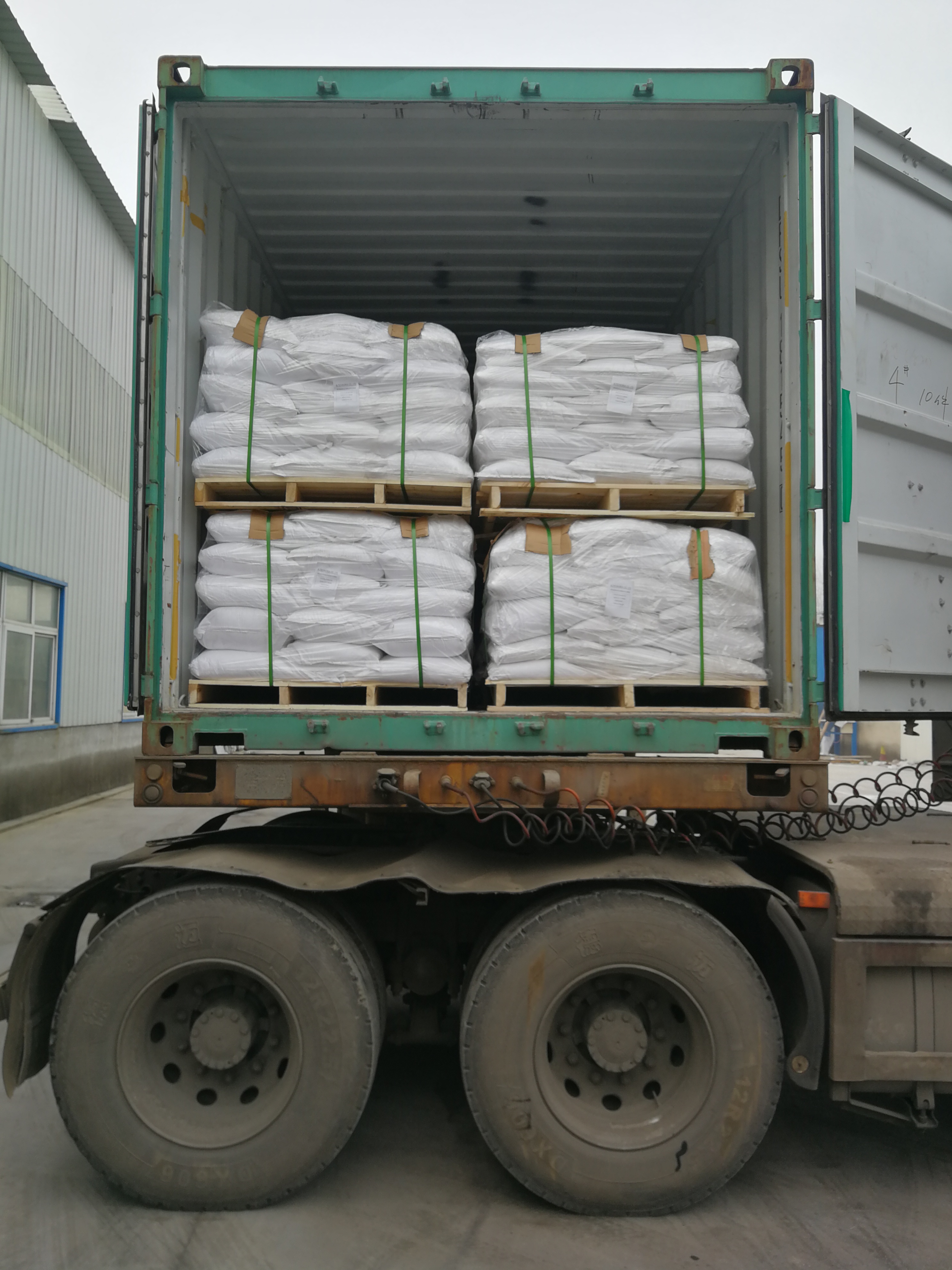
Container loading of PAF for export, ahead of pre-shipment verification.
On the supply side, Sumetech Industry Co., Ltd operates a 6,000 m² facility with an annual PAF output of 5,000 MT, a five-technician R&D and quality control team, and an export share of approximately 90%, serving markets including Turkey, Japan, Korea and Europe. The company offers customization across particle size distribution, morphology, purity grades and packaging specifications — the four variables that most often determine whether a standard grade fits a specific line or needs adjustment.
Future Outlook
Three demand drivers shape the medium-term PAF picture. Aluminium recycling and alloy casting continue to expand as secondary aluminium takes a larger share of total supply, and PAF is used in that route for degassing and slag removal. Aluminium brazing demand is tied to thermal-management components in new energy vehicles, where corrosion-free brazing of battery cooling plates and radiators requires high-purity flux. And abrasive manufacturing continues to consume PAF as an active filler, where the material's heat-absorption behaviour is difficult to replace outright.
Against a 4.8% forecast CAGR, the practical implication for buyers is that PAF will remain a specification-driven purchase rather than a commodity spot buy. Grade discipline, form consistency and stable storage conditions are likely to matter more, not less, as recycled feedstock volumes grow and process tolerances tighten.
FAQ: Technical and Purchasing Questions on Potassium Aluminium Fluoride
1. What is potassium aluminium fluoride?
Potassium aluminium fluoride (PAF) is an inorganic fluoride salt used as a flux, active filler and slag-removal agent in aluminium smelting, aluminium brazing, ceramic and glass manufacturing, abrasives and non-ferrous metal casting. Its principal compound, KAlF4, has a molecular weight of approximately 142.07 g/mol and is identified by CAS number 60304-36-1.
2. What is the difference between white PAF and grey PAF?
The difference is grade and purity. Grey PAF is industrial grade, typically 98% minimum, and is used in foundry and abrasive applications. White PAF is high-purity material, generally above 99%, and is required for brazing and specialty glass where impurity load and surface appearance matter. Sumetech Industry Co., Ltd states a purity above 99.5% and a pure white appearance for its white potassium aluminium fluoride.
3. Which product forms is PAF supplied in?
PAF is supplied as powder, granular and lump material, marketed as Potassium Aluminium Fluoride Powder, Potassium Aluminium Fluoride Granular and Potassium Aluminium Fluoride Lump. The base material is potassium fluoroaluminate lump, which is processed into the form a given process can feed and mix.
4. What particle sizes can be specified?
Documented size specifications include mesh 200 powder, 0.3–1.0 mm granular and 0.5–1.5 mm granular. Particle size is primarily a feeding and dispersion decision: fine powder disperses and melts quickly, while granular material flows more predictably in automated dosing equipment and produces less dust.
5. How should potassium aluminium fluoride be stored?
PAF should be stored in a dry, well-ventilated place. Keeping bags and ton bags sealed until use, avoiding condensation-prone locations and separating the material from aqueous reagents all support that requirement. Moisture uptake degrades flow behaviour in fine powders and can alter melt behaviour when the material is charged.
6. What supporting equipment is needed to use PAF?
The documented supporting equipment set for PAF includes a hot press molding die, a curing oven and a mixing machine, which corresponds to resin-bonded abrasive production where PAF is blended as an active filler, pressed and cured. Smelting, casting and brazing users instead require dosing, feeding and flux-application equipment. In every case, uniform distribution is the practical requirement.
7. What operating mode applies, and how do working conditions affect performance?
PAF operating parameters are set according to the actual working conditions of the process rather than a single fixed setting, and the material is documented with a high-purity working condition. Working conditions affect performance in a predictable direction: correct grade, correct form and dry storage produce consistent fluxing and dispersion, while grade mismatch or moisture-affected material produces inconsistent results in smelting, casting, brazing and abrasive production.
8. What is the melting point of PAF, and why does it matter?
Potassium aluminium fluoride melts in the range of roughly 557–580 °C, with approximately 560 °C commonly cited as the reference point. The low melting point allows the material to become fluid and reactive before the workpiece reaches critical temperature, which is why it can remove oxide films in brazing and act as a micro heat sink in grinding operations.
9. Which industries and applications use potassium aluminium fluoride?
Documented application areas include electrolytic aluminium smelting, corrosion-free brazing of aluminium alloys, ceramics and glass manufacturing, the abrasive and grinding wheel industry, non-ferrous metal recycling and casting, fluxes and additives, flame retardants, and alloy additives. Reference markets for export supply include Korea, Japan, Turkey, the UAE, Brazil, Bahrain, Russia, Canada, Norway, the United States, Thailand, Vietnam, Malaysia, Indonesia, Germany, France, Italy, Spain and Australia.
10. How does PAF behave in non-ferrous metal casting and recycling?
In non-ferrous metal recycling and casting, PAF is used for degassing and slag removal in recycled aluminium and aluminium alloy casting, improving melt cleanliness. Results depend on even dispersion and on the material being dry and correctly sized, since caked or unevenly dosed flux produces inconsistent inclusion separation and gas release.
11. What are the minimum order quantity, delivery terms and payment terms?
The purchasing framework documented for PAF specifies a minimum order quantity of 1 MT, delivery terms of FOB, CIF or FCA, and a 30/70 payment structure. A 1 MT minimum is small enough to run a validation lot against a live process before scaling to container volume.
12. What acceptance criteria apply before shipment?
Pre-shipment testing is the documented acceptance criterion. It gives the buyer a written reference point covering the specified grade, form and size before the goods leave the production site, which is particularly relevant for high-purity white PAF where grade accuracy is the core performance requirement.
13. How is potassium aluminium fluoride classified for trade and handling?
For trade classification, PAF is commonly declared under HS Code 38101090, covering pickling preparations for metal surfaces and fluxes. For handling, it is categorized under GHS as Acute Toxicity Category 4 for oral, dermal and inhalation exposure and Skin Irritation Category 2, with the corresponding US framework referencing OSHA HCS 29 CFR 1910 — meaning dust control, ventilation and personal protective equipment are standard operating requirements.
14. How large is the PAF market and how fast is it growing?
The global potassium aluminium fluoride market was valued at USD 1.76 billion in 2024 and is projected to reach USD 2.62 billion by 2033, according to DataHorizzon Research, which forecasts a 4.8% CAGR for 2025–2033. For cost benchmarking, the Northeast Asia AlF3 price reached 1.80 USD/kg in March 2026, up 6.5% from Q4 2025, per IMARC Group; published PAF-specific price indices remain limited.
Reference document: A full product and capability overview for potassium aluminium fluoride, including forms, size ranges and packaging options, is available in the Sumetech 2026 catalogue: Catalog of Sumetech-2026.pdf.
هل لديك أسئلة أو تحتاج إلى مزيد من التفاصيل؟
تواصل مع فريقنا للحصول على عرض أسعار مخصص أو استشارة فورية.
طلب عرض أسعار
املأ النموذج أدناه وسيتواصل معك فريقنا بعرض مقترح مخصص.
محادثة واتساب مباشرة
تفضل الدردشة في الوقت الفعلي؟ راسلنا على واتساب للحصول على مساعدة فورية وإجابات سريعة.
- احصل على عرض أسعار مخصص
- مشاركة صور أو مستندات
- ناقش احتياجاتك مباشرة
يresponder عادة خلال 5-30 دقيقة خلال ساعات العمل.