
Powder Coating Compliance: Statement vs. Classification
Powder Coating Compliance: Statement vs. Classification
A powder coating qualification file rarely arrives empty. It arrives crowded: a product classification line, a REACH statement, a test report, a management system certificate and a phrase such as TGIC free or VOC free, all in the same envelope and often in the same font. The reviewing error that follows is not a missing document. It is treating four different document types as though they carried the same weight.
The rule this article applies is narrow and repeatable. Before accepting any coating claim, identify the product identity it names, the document type that carries it, and the exact scope field it was issued under. A classification describes what a product is engineered and offered for. A formulation statement describes what the chemistry does not contain. A third-party record describes what was tested, on which sample, under which standard. Only the third can be checked against a number. This distinction matters most in construction and decoration procurement, where a curtain wall specification may reference several standards at once and a single copied claim can travel from one product file into another without anyone noticing.
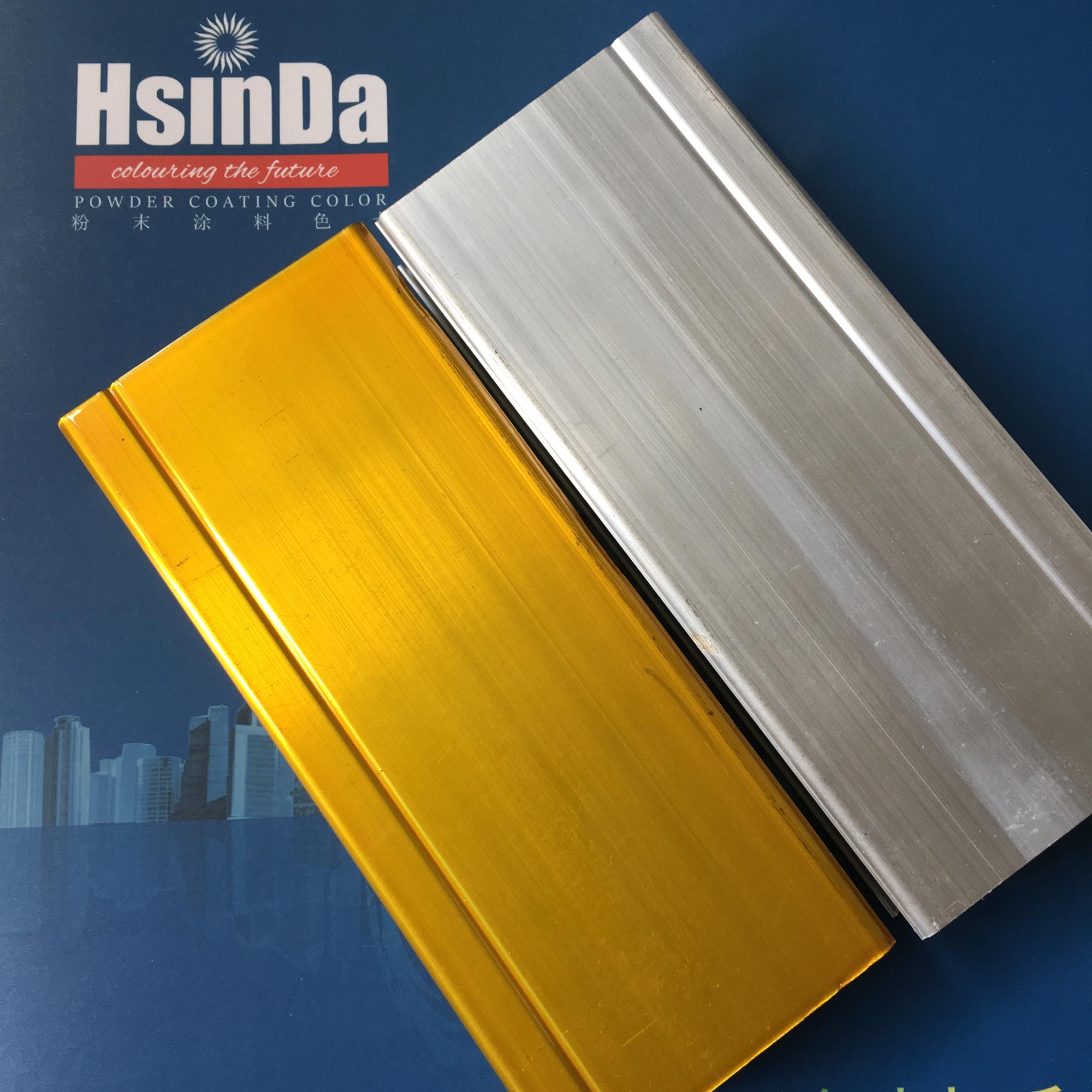
Hsinda (Chengdu Hsinda Polymer Materials Co., Ltd) is a Chengdu-based manufacturer established in 2015 whose certified scope covers the production and sale of thermosetting powder coating. Two of its product files make the separation concrete: TGIC Free Powder Coating, built on polyester resin, an HAA curing agent, pigment and additives, and Aluminum Powder Coating, classified as an aluminum profile powder coating and as a Qualicoat and AAMA powder coating. The two files carry different claims, for different reasons, and the value of reading them separately is the subject here.
Classification, statement, record, certificate: four different objects
The fastest way to audit a coating file is to sort every line into one of five buckets before reading any of them as evidence. The table below uses documents actually present in the supplied Hsinda record set, so the mapping is not theoretical.
| Document type | Example from a coating file | What it establishes | What it does not establish |
|---|---|---|---|
| Product classification | Aluminum Profile Powder Coating, Qualicoat Powder Coating, AAMA powder coating | The product category and application family the supplier offers | That an approval, licence or test has been issued for the ordered finish |
| Formulation statement | TGIC free, VOC free, HAA curing | What the formulation is built on and what it excludes | Measured durability, or applicability to other products in the range |
| Third-party test report | REACH SVHC test CKGIN25000923901; RoHS test CKGEC25000071901 | That a named sample or scope was tested to a named standard by a named body | A certificate covering every colour, gloss or product, or a field warranty |
| Management system certificate | ISO 9001 2052025Q00440R0S; ISO 14001 2052025E00271R3S | That the production system is audited to a recognised standard | Weathering performance or substance compliance of a specific finish |
| Scheme approval reference | Qualicoat approval; AAMA 2604-based specification | Third-party evaluation under a named scheme or voluntary specification | Anything useful until the reference number, standard edition and finish family are stated |
Table: five document types common in powder coating qualification files, and the limits of each.
Sorting the file this way changes the conversation. A supplier who says the coating is REACH certificated and a buyer who asks which record, which scope and which issue date are not arguing about credibility. They are establishing whether the sentence refers to the HAA type product tested on 18 July 2025 under EU REACH Regulation (EC) No 1907/2006, or to something broader that no single document supports.
TGIC Free Powder Coating: what the statement covers and what the record covers
Hsinda's TGIC Free Powder Coating is a HAA polyester powder coating. Its supplied composition is polyester resin, HAA curing agent, pigment and additives, and its product type field describes it as an indoor powder coating, a VOC free powder coating, a HAA curing powder coating and a REACH certificated powder coating. Those four phrases are doing different work. HAA curing names the crosslinker chemistry. TGIC free is a statement about the absence of a specific curing agent class, not a performance grade. VOC free concerns the absence of solvent carriers, which is a structural property of powder systems rather than a distinguishing premium feature. REACH certificated points to a document that can be opened, numbered and dated.
The process parameters in the same file are what make the coating usable in a specification: curing at 180 to 200 degrees Celsius for 10 to 15 minutes, a 70 micrometre film thickness, coverage of 8 to 10 square metres per kilogram at 30 to 90 micrometres, an average particle size of 32 to 42 micrometres, and application by tribo gun or electrostatic spray gun. A buyer who quotes only the compliance phrase and omits the cure window has removed the part of the file that determines whether the coating will actually perform in the plant.
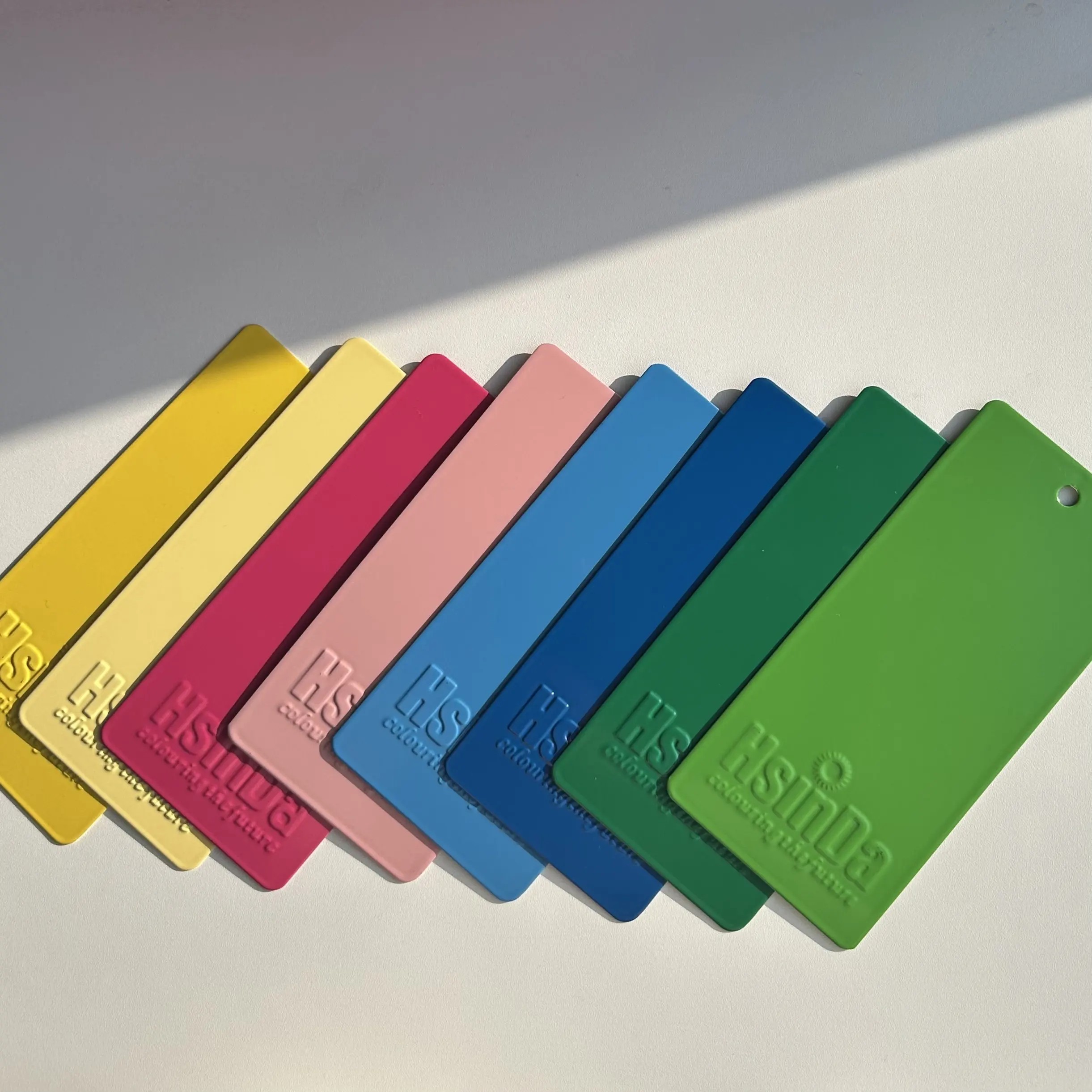
The property table in the TGIC Free file lists gloss of 5 to 95 percent under ISO 2813:2014, impact of 50 kilograms per centimetre under ISO 6272-1:2017, bending of 2 millimetres or less under ISO 1519:2002, cupping of 6 millimetres or more under ISO 1520:2006, adhesion of 0 grade under ISO 2409:2020, hardness of H or above under ISO 15184:2020, salt spray resistance under ISO 7253:1996 where the film remains unchanged after 500 hours with unilateral corrosion at the cross section of 2 millimetres or less, and humidity and heat resistance under GB/T 1740-2007 where gloss is slightly reduced after 1000 hours to level 1 or better. The table does not contain a weathering row. That absence is informative, and it is consistent with the indoor classification in the type field.
Scope fields decide more than certificate titles
The REACH record attached to this product is a REACH SVHC Substance Hazard Test with certificate number CKGIN25000923901, issued by SGS against EU REACH Regulation (EC) No 1907/2006, issued on 18 July 2025, and scoped to HAA Type Powder Coating. Three details in that sentence are worth more than the word certificated. First, the document type is a test report on substances of very high concern, not a registration or an authorisation. Second, the issuing body is named, so the record can be checked independently. Third, the scope field names the HAA type specifically. A project specifier who needs the same assurance for a TGIC-cured architectural polyester should not assume that this report covers it, because the document itself says otherwise.
The RoHS record makes the same point in a different way. Certificate CKGEC25000071901, issued by SGS against the IEC 62321 series of test methods and dated 22 January 2025, is scoped to a black powder sample identified as Sample No. CKGEC25000071901. A sample-level restriction test is exactly what many buyers need, but it is not a statement that every colour in a catalogue has been tested. Colour chemistry differs; that is why the scope line exists.
Management system certificates operate at yet another level. Hsinda's ISO 9001 certificate 2052025Q00440R0S and ISO 14001 certificate 2052025E00271R3S were both issued on 24 November 2025 by China International Certification Co., Ltd and remain valid to 23 November 2028, with scopes covering the production and sale of thermosetting powder coating and the associated environmental management system. They support a judgement about process control and consistency. They do not predict salt spray hours, gloss retention or the behaviour of an exterior facade after a decade of ultraviolet exposure.
Aluminum Powder Coating: a classification, not an approval number
Hsinda's Aluminum Powder Coating carries the classification line Aluminum Profile Powder Coating, Qualicoat Powder Coating, AAMA powder coating. Its supplied composition is super weather resistant polyester resin, TGIC curing agent, pigment and additives, and its property table extends beyond the indoor product into exterior performance: salt spray resistance to ISO 7253:1996 for 1000 hours with cross-section corrosion of 2 millimetres or less, artificial weathering to ISO 11341:2004 with 1000 hours of 340 nanometre lamp exposure showing no powdering and light retention above 50 percent, and a one-year natural aging result in Florida with gloss retention above 50 percent.
That combination is what an architectural aluminum classification is supposed to signal. Aluminum profiles, doors and windows, glass curtain walls, sunrooms and architectural partitions are exterior-facing assemblies, and the specification logic for them is weathering first, colour and gloss second, handling and packing third. A classification line tells a buyer which product family in the catalogue is built for that logic. It does not tell the buyer that a Qualicoat approval has been issued for a particular finish, or that an AAMA 2604 evaluation has been completed on a particular colour. Those are separate documents with separate references, and the qualification file should contain them if the project requires them.
Reading Qualicoat and AAMA language in a project file
Qualicoat is a quality label for architectural aluminium finishing, and its approvals are not a single document type: the scheme distinguishes between approval of coating materials and approval of application plants. A qualification file that claims Qualicoat standing should therefore state which approval is claimed, by whom, and under which reference, because a material approval held by a powder manufacturer and a plant approval held by an applicator answer different questions. AAMA 2604, by contrast, is a voluntary performance specification for organic coatings on aluminium extrusions and panels, and its value in a file lies in the stated edition and the tested finish, not in the three-letter prefix.
This is where claim drift most often enters a construction project. A catalogue classification becomes a specification line, the specification line becomes a purchase order requirement, and by the time the applicator receives it the phrase Qualicoat powder coating is being read as though it were a licence number. The record set supplied with this article illustrates the pattern precisely: it contains management system certificates, substance and performance test reports, a sustainability certification under ISCC PLUS certificate ISCC-PLUS-Cert-CN198-41261025 issued by CTI Certification Co., Ltd against EN 15343, a food contact test under US FDA 21 CFR 175.300 with certificate TSNPC25004542302, and an antibacterial performance test under ISO 22196:2011 with report ASH25-0055689-02. The Qualicoat and AAMA wording, however, appears in the product classification and in the customization capability statement rather than as a standalone scheme approval reference.
That is not a reason to reject the product. It is a reason to ask a precise question. If the project needs a scheme reference, request the reference, the standard edition, the tested finish family and the validity period for the exact product and colour being ordered. A supplier who can produce the reference has answered the question. A supplier who repeats the classification has only restated the marketing category, and the buyer now knows which of the two situations they are in before the first aluminium profile is coated.
The parameters that make a claim checkable
A compliance claim cannot be compared across suppliers unless the method, the film build and the unit travel with it. The Aluminum Powder Coating file is a useful model because every performance row names its standard.
| Property | Method | Value in the Aluminum Powder Coating file |
|---|---|---|
| Gloss | ISO 2813:2014 | 5% to 95% |
| Impact | ISO 6272-1:2017 | 2.5 Nm |
| Bending | ISO 1519:2002 | 5 mm or less |
| Cupping | ISO 1520:2006 | 5 mm or more |
| Adhesion | ISO 2409:2020 | 0 grade |
| Hardness | ISO 15184:2020 | H or above |
| Salt spray | ISO 7253:1996 | 1000 hours, film unchanged, cross-section corrosion 2 mm or less |
| Humidity and heat | GB/T 1740-2007 | 1000 hours, slight gloss loss, level 1 or better |
| Artificial weathering | ISO 11341:2004 | 340 nm lamp, 1000 hours, no powdering, light retention above 50% |
| Natural aging | Florida exposure | 1 year, gloss retention above 50% |
Table: performance rows as supplied for Aluminum Powder Coating, with the standard attached to each value.
Two practical cautions follow. Impact is expressed as 2.5 newton metres in this file but as 50 kilograms per centimetre in several of Hsinda's texture and gloss product files, so the numbers cannot be compared across products without converting or, better, without asking for the same method and unit. And every value above assumes a 70 micrometre film, a cure of 180 to 200 degrees Celsius for 10 to 15 minutes, and application by tribo or electrostatic gun. A coating tested at 70 micrometres and applied at 45 is a different system, and no certificate in the file changes that.
Where the two product files must not be mixed
Here the separation stops being a documentation exercise and becomes a specification risk. The TGIC-free statement belongs to the HAA-cured product. The Aluminum Powder Coating file, as supplied, lists a TGIC curing agent in its composition. Copying the TGIC-free phrase into an aluminum profile specification is therefore not a harmless marketing edit; it describes a formulation the document does not describe. The reverse error is equally common: taking the ISO 11341:2004 weathering row or the one-year Florida result from the aluminum file and using it to support an exterior claim for the indoor, HAA-cured product.
The correct handling is procedural. Each claim stays attached to the product name and model under which it was issued. Where a project wants both properties in one product, that is a formulation question for the supplier, and the answer will be a different document rather than a merged sentence. Buyers who maintain a claim register, with one row per claim and columns for product identity, document number, standard, scope and expiry, resolve this in minutes; buyers who work from a merged specification usually discover the problem during a factory audit or, worse, during a facade inspection.
Application fit: profiles, doors, windows, curtain walls and partitions
Hsinda lists the Aluminum Powder Coating for aluminum profiles, doors and windows, glass curtain walls, sunrooms and architectural partitions, with further use in transportation and municipal engineering such as guardrails, bus shelters and signage, in interior partitions, railings and ceilings, and in general industrial enclosures and electrical cabinets. The fit is not arbitrary. Exterior assemblies are judged on weathering and corrosion data, which is exactly where this file carries its longest rows; interior partitions and ceiling systems are judged more on colour consistency, gloss control and handling damage, where the 5 to 95 percent gloss range and the surface finish options carry the weight.
The TGIC Free Powder Coating file points elsewhere: home appliance housings and internal structural components, office and residential furniture such as desks, filing cabinets and shelving, automotive interior trim and engine compartment parts, and instrumentation and electronic equipment housings. Its property table matches that environment, with salt spray and humidity resistance stated and no weathering row claimed. Reading the applications and the property table together is the single most reliable way to test whether an outdoor claim is being stretched. If the intended use is a sunlit facade and the file's performance rows stop at humidity and heat, the file is answering a different question.
A verification sequence for buyers and specifiers
The sequence below can be run against any coating file in under an hour, and it produces a defensible answer rather than an impression.
- Fix the product identity first. Write the exact product name and model at the top of the review, then read every document against it. The TGIC Free Powder Coating and the Aluminum Powder Coating are separate identities with separate composition fields.
- Label each line by document type. Classification, formulation statement, third-party report, management system certificate or scheme approval. Mixed labels produce mixed conclusions.
- Read the scope field verbatim. A REACH SVHC test scoped to HAA Type Powder Coating answers a question about that type. A RoHS test scoped to a named black powder sample answers a question about that sample.
- Record the number and the issuer. CKGIN25000923901 from SGS, 2052025Q00440R0S from China International Certification Co., Ltd, ISCC-PLUS-Cert-CN198-41261025 from CTI Certification Co., Ltd, TSNPC25004542302 from SGS. A claim without a number is a statement, not a record.
- Check dates against the delivery schedule. The ISO 9001 and ISO 14001 certificates run to 23 November 2028, the ISCC PLUS certificate to 25 June 2027, and the carbon footprint certificate TZJ136660053R0S, issued against ISO 14067:2018 and PAS 2050:2011, to 17 July 2028.
- Match the tested finish to the ordered finish. Colour, gloss band and texture all sit inside the tested scope or they do not. Ask which.
- Ask for the application-relevant performance row. For a curtain wall that means the weathering and salt spray rows. For an appliance housing it means adhesion, impact, hardness and, where relevant, the antibacterial report ASH25-0055689-02 under ISO 22196:2011.
- Confirm the commercial frame. Capability data for Hsinda lists a monthly capacity of 400 tons, a lead time of 15 to 20 days, a 300 kilogram minimum on the ODM customization route, a 6 ton minimum on the OEM packaging route, and 100 percent testing, with 24 hour online service and technical support.
What the separation changes in practice
The commercial consequence is simple. A supplier whose file is sorted by document type can be evaluated on the strength of its records, and a supplier whose file is a wall of adjectives cannot be evaluated at all. Hsinda's structure supports the first approach: eight production lines and three sample lines in a 10,000 square metre facility, an annual output above 5000 tons, more than 40 independent patents, an export share of 70 percent, and a certification set that includes ISO 9001, ISO 14001, REACH, RoHS, FDA 21 CFR 175.300, ISCC PLUS and a carbon footprint certificate. None of those facts makes a coating weather-resistant. They establish that the organisation can produce, test and document to a consistent standard, which is a different and equally necessary assurance.
The same logic runs in the other direction. A Qualicoat classification on an aluminum profile product is a useful routing signal, and it is not a substitute for the approval reference when a project demands one. A REACH statement is a useful screening filter, and it is not a substitute for reading the scope field of the report behind it. Buyers who keep the distinction move through supplier evaluation faster, because they stop asking whether a claim is true in general and start asking which document supports it for this product, this finish and this project.
The complete product range, including the finishes and performance options referenced in this article, is described in the downloadable Hsinda brochure: Hsinda powder coating product brochure. Company information is published at Chengdu Hsinda Polymer Materials Co., Ltd.
Frequently asked questions
Does a REACH SVHC test report make a powder coating compliant for every product in a range?
No. The record is limited to the scope printed on it. Hsinda's REACH record CKGIN25000923901, issued by SGS against EU REACH Regulation (EC) No 1907/2006 on 18 July 2025, is a REACH SVHC Substance Hazard Test scoped to HAA Type Powder Coating. It supports the substance review of that type. It does not automatically extend to a TGIC-cured polyester product, and it is a test report rather than a registration or an authorisation.
Is a Qualicoat powder coating classification the same as a Qualicoat approval?
They are different objects. A classification states the category a product is offered for, such as an aluminum profile powder coating positioned for Qualicoat and AAMA applications. An approval is a third-party reference under a named scheme, with a number, an edition and a defined finish family, and the Qualicoat scheme distinguishes between approval of coating materials and approval of application plants. A project that requires the approval should request the reference itself for the specific product and colour on order.
Can a TGIC-free statement be applied to Hsinda's Aluminum Powder Coating?
Not on the supplied documents. The TGIC-free and HAA curing statements belong to the TGIC Free Powder Coating file, whose composition is polyester resin, HAA curing agent, pigment and additives. The Aluminum Powder Coating file lists a TGIC curing agent in its composition and carries the aluminum profile, Qualicoat and AAMA classification instead. A specification should keep each claim with the product identity under which it was issued.
What is the difference between VOC free and TGIC free in a powder coating?
They address different parts of the formulation. VOC free concerns volatile organic compounds, and powder coatings are applied as dry powder rather than as a solvent-borne liquid. TGIC free concerns a specific class of curing agent, and a product can achieve it by using a different crosslinker, as the HAA curing agent does in the TGIC Free Powder Coating. Neither phrase describes weathering performance, so neither can replace the salt spray, humidity or artificial weathering rows in a qualification file.
Which applications does the TGIC Free Powder Coating file support?
The supplied application field covers home appliance housings and internal structural components, office and residential furniture including desks, filing cabinets and shelving, automotive interior trim and engine compartment parts, and instrumentation and electronic equipment housings. The property table supports this with salt spray resistance to ISO 7253:1996 for 500 hours and humidity and heat resistance to GB/T 1740-2007 for 1000 hours, and it contains no weathering row, so the file should not be used on its own to support an exterior facade specification.
Conclusion
A powder coating claim is only as strong as the document type behind it. Classification tells a buyer where a product belongs. A formulation statement tells them what it excludes. A third-party report tells them what was measured, on which sample, to which standard. Keeping those three apart, and keeping each product's claims inside its own file, is what allows a construction specification to survive contact with a factory audit.
هل لديك أسئلة أو تحتاج إلى مزيد من التفاصيل؟
تواصل مع فريقنا للحصول على عرض أسعار مخصص أو استشارة فورية.
طلب عرض أسعار
املأ النموذج أدناه وسيتواصل معك فريقنا بعرض مقترح مخصص.
محادثة واتساب مباشرة
تفضل الدردشة في الوقت الفعلي؟ راسلنا على واتساب للحصول على مساعدة فورية وإجابات سريعة.
- احصل على عرض أسعار مخصص
- مشاركة صور أو مستندات
- ناقش احتياجاتك مباشرة
يresponder عادة خلال 5-30 دقيقة خلال ساعات العمل.