
Powder Coating Decision Matrix: Weighting Specs vs. Price for Buyers
Powder coating procurement rarely fails because a buyer ignored price. It fails because price was the only variable the buyer could compare with confidence. Specification sheets differ in test standard, film thickness and reporting granularity, so the cheapest quote and the most heavily documented quote are often being judged on two different scales.
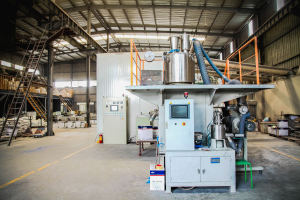
A bonding system on a powder coating line. Process capability, not the headline price per kilogram, determines whether a quoted specification can be reproduced at volume.
A decision matrix solves this by separating three things that buyers usually merge: the performance a project actually needs, the evidence that a supplier can deliver it, and the cost of delivering it per unit of protected surface rather than per kilogram of powder. This article sets out a four-layer weighting framework, applies it to published test data from Chengdu Hsinda Polymer Materials Co., Ltd. (Hsinda), a powder coating manufacturer established in 2015 in Chengdu, Sichuan, China, and marks the boundaries where the matrix stops being useful.
The Core Problem: Price Is the Easiest Number and the Weakest Signal
A powder coating quote typically arrives as a price per kilogram plus a colour reference and a resin type. That unit is convenient for the seller and misleading for the buyer. The same kilogram covers a different surface area depending on film thickness and specific gravity, and it delivers a different service life depending on chemistry, pre-treatment and curing discipline.
Hsinda's published datasheets illustrate the coverage variable directly: 8 to 10 square metres per kilogram at a film thickness between 30 and 90 micrometres, with specific gravity between 1.2 and 1.7 grams per cubic centimetre. A kilogram of one formulation therefore does not cover the same area as a kilogram of another. Comparing two quotes at face value assumes identical coverage, identical film build and identical test conditions, and those assumptions are usually untested.
The second problem is evidence asymmetry. A supplier who publishes a full test table looks more expensive than a supplier who publishes a colour card, even when the underlying product is comparable. The matrix corrects for both issues by pricing the surface and by scoring the evidence.
A Four-Layer Decision Matrix for Powder Coating Procurement
The framework below is a weighting tool, not an industry benchmark. Its purpose is to force a procurement team to state, in advance, how much each dimension is worth to a specific project before quotations arrive, so that a low price cannot silently become the deciding criterion.
| Layer | What is being weighted | Evidence to request | Typical weight range |
|---|---|---|---|
| 1. Verified performance | Impact, corrosion, adhesion, gloss, weathering | Test standard, value, film thickness, test lab | 30-45% |
| 2. Application fit | Indoor or outdoor exposure, substrate, finish effect | Reference installations, substrate list, colour and texture samples | 15-30% |
| 3. Cost per protected area | Coverage-adjusted price, colour premium, batch size | Coverage figure, target film build, MOQ, curing window | 20-35% |
| 4. Supply reliability | Capacity, batch consistency, documentation, continuity | Capacity statement, line count, certificates, references | 10-25% |
These ranges are a starting position for internal alignment. An architectural façade programme should push weight into layers 1 and 4; an indoor cabinet line can shift weight toward layer 3 without accepting disproportionate risk.
Layer 1: Which Specifications Deserve Weight
Five performance attributes decide most powder coating disputes, and each has a recognised test method that makes comparison possible when suppliers report the same way.
Impact resistance indicates how a film behaves when a coated part is handled, stacked or struck. Hsinda's polyester, epoxy, hybrid, matt, metallic, hammer tone, wrinkle and sandy products are published at 50 kg/cm under ISO 6272-1:2017. The aluminium profile product is published at 2.5 Nm under the same standard. Those two figures are not interchangeable and should not be placed in the same column without noting the difference.
Corrosion resistance is the attribute most often quoted loosely. Under ISO 7253:1996, Hsinda reports 500 hours of salt spray with no change to the coating film and cross-section corrosion of 2 mm or less for its polyester, epoxy, hybrid and texture families, and 1,000 hours for its aluminium profile powder coating. The hour count belongs to the chemistry and the film build, not to the brand in general.
Adhesion predicts whether the coating survives bending, cutting and fastening. Grade 0 under ISO 2409:2020 appears across the published range, supported by bending values of 2 mm or less (ISO 1519:2002) and cupping of 6 mm or more (ISO 1520:2006) on most products, with 5 mm bending and cupping on the aluminium profile line.
Gloss is a specification only when a target is stated. Hsinda's ranges run from 5% to 95% under ISO 2813:2014, and the matt range is narrower at 5% to 30%. A quotation that says gloss without a number and a tolerance cannot be verified on delivery.
Weathering separates indoor from outdoor grades. Accelerated testing under ISO 11341:2004 is published at 500 hours with no powdering and light retention above 50% for the standard polyester and texture families, and at 1,000 hours for the aluminium profile product, which additionally lists a one-year Florida natural exposure result with gloss retention above 50%.
Two supporting values complete the picture: hardness of H or above under ISO 15184:2020, and humidity resistance of 1,000 hours with slight gloss loss at level 1 or better under GB/T 1740-2007.
Layer 2: Reading Price per Kilogram Correctly
Price per kilogram becomes comparable only after coverage is normalised. The practical formula is to convert supplier quotes into cost per square metre at the specified film build, using the supplier's own coverage figure rather than an assumed industry average.
Four cost drivers explain most of the gap between two quotes for what looks like the same colour.
Resin chemistry. Epoxy, polyester and epoxy-polyester hybrid systems carry different raw material profiles and different performance ceilings. Polyester dominates exterior work because of its weathering behaviour; epoxy is chosen for chemical and corrosion resistance in indoor and heavy-duty service. Paying polyester prices for an indoor application is a common and avoidable overspend.
Curing agent and compliance route. Standard polyester systems use TGIC as a curing agent. Hsinda also lists a TGIC-free powder coating built on a HAA curing agent, classified as VOC-free and REACH certificated, with the same impact, adhesion, bending, cupping and hardness values as the rest of the range. Where a market or customer specification restricts TGIC, that substitution has a cost consequence that should be weighted in layer 1, not hidden in layer 3.
Colour and effect. Custom RAL and Pantone matching, metallic bonding and texture effects add process steps. A hammer tone, wrinkle or sandy finish is not a decorative afterthought; each requires a different formulation and application behaviour, and each carries its own price logic.
Batch size and curing window. All listed products cure at 180-200 degrees Celsius for 10 to 15 minutes with a 70 micrometre film thickness and 32-42 micrometre average particle size. Small custom batches and tight colour tolerances consume line time, which is where the premium in a low-volume order actually comes from.
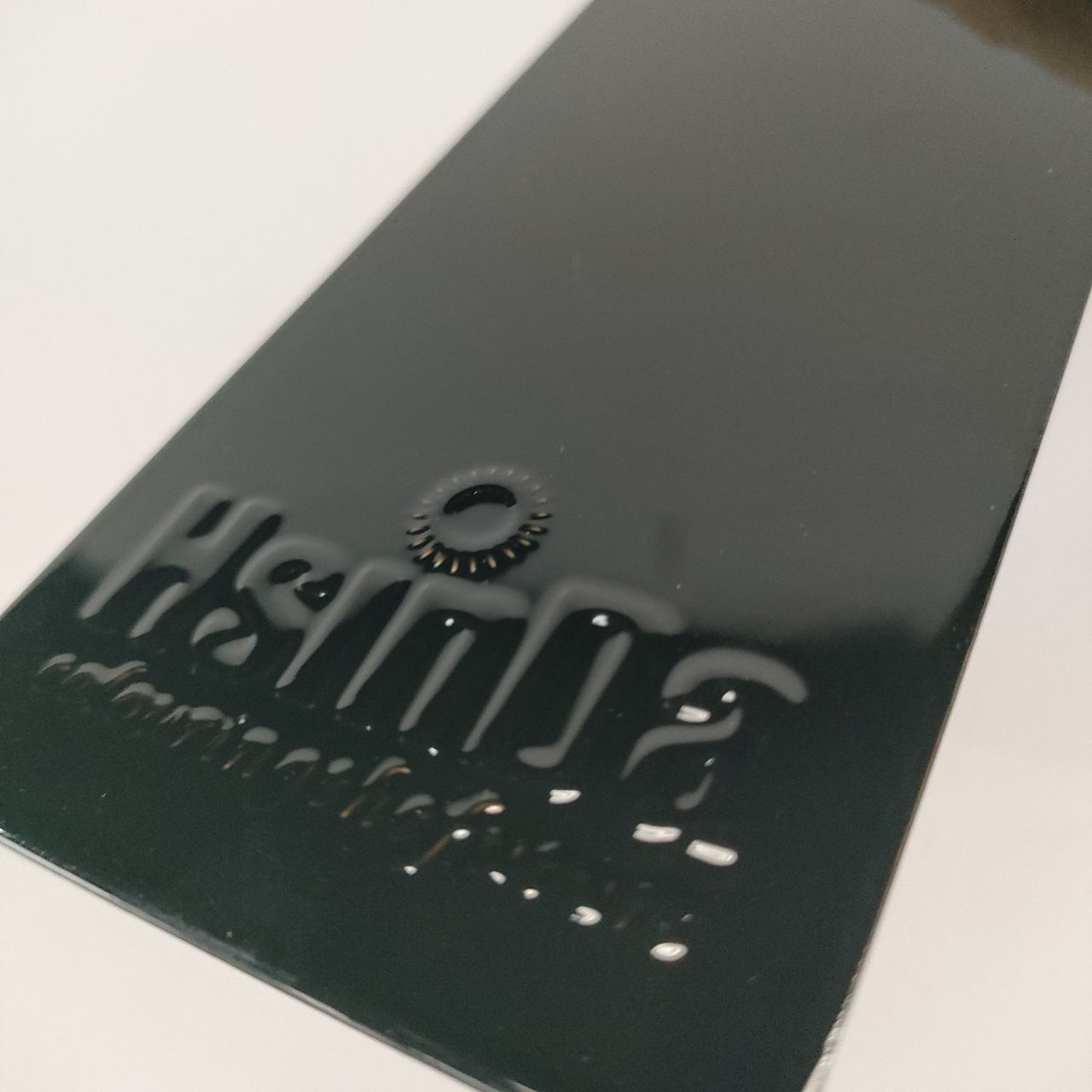
Gloss is a measurable specification under ISO 2813:2014, not a visual impression. A quote without a gloss target and tolerance cannot be verified on delivery.
Layer 3: Application Fit as a Weighting Filter
Application fit decides which specifications matter before any price is discussed. The published application data from Hsinda maps product families to environments in a way that makes the weighting step concrete.
Aluminium profile coating is positioned for doors and windows, glass curtain walls, sunrooms and architectural partitions, and also for highway guardrails, bus stops and signage. That positioning is consistent with its 1,000-hour salt spray and 1,000-hour accelerated weathering figures, and with its listing as a Qualicoat and AAMA type product.
Epoxy and anti-corrosion grades are positioned for oil and gas pipelines, water supply systems, valves, steel reinforcement bars, electrical insulation components and heavy machinery. Their value sits in chemical and corrosion resistance rather than colour retention under sunlight, and the datasheets do not publish a weathering figure for the pure epoxy product.
Texture and effect finishes serve a different need. Wrinkle and hammer tone coatings are used on electrical cabinets, machine housings, filing cabinets, tools and shelving, where surface texture also helps conceal substrate imperfections. Metallic coatings serve automotive parts, consumer electronics housings and high-end furniture. Matt coatings, with their 5% to 30% gloss band, are used on appliance housings, computer cases, lighting equipment and automotive interior components where glare and fingerprint visibility matter.
One documented field scenario illustrates how the weighting shifts in practice. In a cylinder application within an LNG system, the coating is specified for indoor service across a wide temperature range and continuous automatic operation, with the stated requirement being long-term protection against moisture, acids, alkalis and corrosion, verified by salt spray testing beyond 500 hours. In that scenario, corrosion and adhesion dominate the matrix, and gloss appearance is close to irrelevant.
Layer 4: Supplier Evidence and Continuity
The fourth layer asks whether the specification can be reproduced at the volume required. Hsinda operates a 10,000 square metre facility with 8 advanced powder coating production lines and 3 sample lines, approximately 45 staff, an 11-engineer R&D team, and an annual production capacity of about 5,000 tons. The company reports exports to more than 70 countries, with export business accounting for 70% of sales and key markets including the USA, Canada, Mexico, South America, the Middle East and Central Asia, supported by exclusive distributors in Kazakhstan, Uzbekistan and Chile.
These are company-reported figures, and the correct treatment in a decision matrix is to score them as supplier evidence rather than as independently verified performance. The factory holds ISO 9001 and ISO 14001 certification according to the company, and lists RoHS, REACH, SGS and AAMA testing for its coatings. Buyers should request certificate copies with scope and validity dates, and confirm which specific product the certificate covers, before awarding evidence points.
Sample lines deserve separate weight in the framework. A supplier able to produce validated samples before a production run reduces the risk that a colour or texture approved on a card behaves differently on the customer's substrate and curing equipment.
Placing Published Test Data Inside the Matrix
The table below restates Hsinda's published values so that the variation between product families is visible in one view. It is the kind of comparison a buyer should construct before scoring quotations.
| Product family | Chemistry | Impact | Salt spray, ISO 7253:1996 | Accelerated weathering, ISO 11341:2004 | Gloss, ISO 2813:2014 |
|---|---|---|---|---|---|
| Aluminium Powder Coating | Super weather-resistant polyester | 2.5 Nm | 1,000 h, unchanged, section corrosion ≤ 2 mm | 1,000 h, no powdering, retention > 50% | 5-95% |
| Polyester Powder Coating | Polyester, TGIC | 50 kg/cm | 500 h, unchanged, section corrosion ≤ 2 mm | 500 h, no powdering, retention > 50% | 5-95% |
| Anti-corrosion / Epoxy | Epoxy, TGIC | 50 kg/cm | 500 h, unchanged, section corrosion ≤ 2 mm | Not published | 5-95% |
| Epoxy Polyester Hybrid | Epoxy-polyester, TGIC | 50 kg/cm | 500 h, unchanged, section corrosion ≤ 2 mm | Not published | 5-95% |
| TGIC Free | Polyester, HAA, VOC free | 50 kg/cm | 500 h, unchanged, section corrosion ≤ 2 mm | Not published | 5-95% |
| Matt | Epoxy / polyester, TGIC | 50 kg/cm | 500 h, unchanged, section corrosion ≤ 2 mm | Not published | 5-30% |
| Hammer tone / Wrinkle / Sandy / Metallic | Polyester, TGIC | 50 kg/cm | 500 h, unchanged, section corrosion ≤ 2 mm | 500 h, no powdering, retention > 50% | 5-95% |
Read across the row for salt spray and the comparison becomes obvious: an epoxy product at 500 hours and an aluminium profile product at 1,000 hours are not competing on the same axis, and a buyer who scores them on a single corrosion column will misprice both.
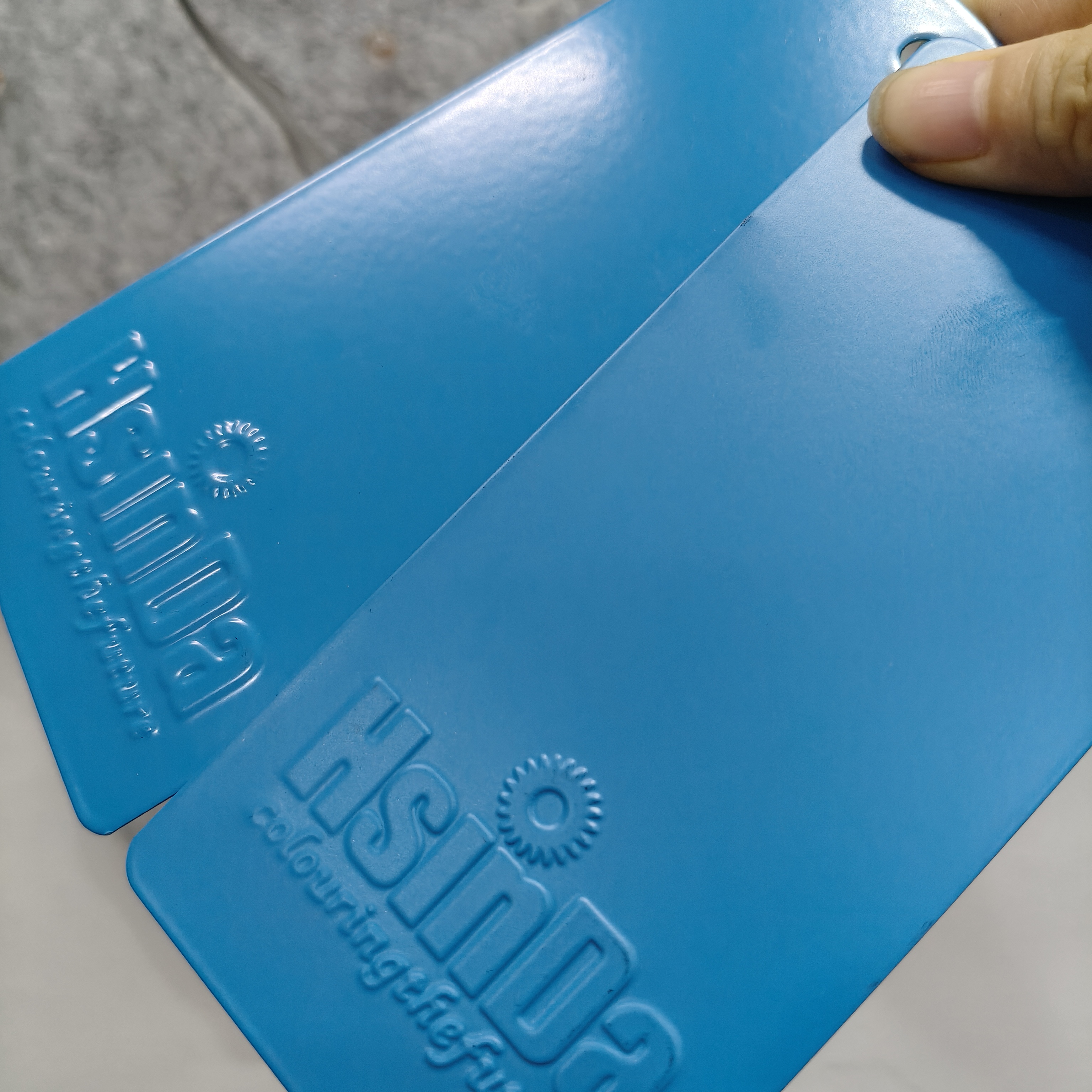
Corrosion hours belong to a chemistry and a film build. Pure epoxy systems are specified for pipelines, valves and heavy machinery where chemical and corrosion resistance outrank colour retention.
Comparison: Price-First Sourcing Versus Spec-Weighted Sourcing
The two approaches differ less in the price paid than in the timing of the risk.
| Decision area | Price-first sourcing | Spec-weighted sourcing |
|---|---|---|
| Comparison unit | Price per kilogram | Cost per square metre at a stated film build |
| Risk visibility | Emerges after installation or field failure | Surfaces during sample and document review |
| Specification literacy | Low; colour and resin type only | Requires test standard, value and film thickness |
| Speed | Faster to award | Slower; needs internal weighting agreement first |
| Best fit | Short-life indoor parts with low consequence of failure | Exterior, architectural, anti-corrosion and long-service assets |
The boundary matters as much as the conclusion. This matrix is not a case for buying the highest specification. On an indoor cabinet or a covered electrical enclosure, the weathering and 1,000-hour corrosion data of an exterior architectural grade deliver no measurable benefit, and paying for them is a straightforward loss. The framework's purpose is to make that decision explicit rather than accidental.
Where the Matrix Stops Being Useful
Three limits should be stated before any weighting exercise begins.
Test values are conditional on film thickness. Hsinda's published figures are associated with a 70 micrometre film. A buyer who specifies 50 micrometres to save material is not buying the same performance and cannot cite the original salt spray result.
Curing conditions constrain the substrate. All listed products cure at 180-200 degrees Celsius for 10 to 15 minutes. Heat-sensitive substrates fall outside that window, and no weighting scheme overcomes a process limitation.
Company-reported data is not third-party verified data. Capacity, export reach, certification coverage and quality system claims in this article come from the manufacturer. They are appropriate for supplier screening and inappropriate as a substitute for a buyer's own sample testing, certificate review and factory audit.
Market Context Behind the Weighting Question
The pressure to weight specification against price is structural rather than cyclical. Fortune Business Insights valued the global powder coatings market at USD 16.12 billion in 2025, with Asia Pacific accounting for a 63.10% revenue share in the same year. Grand View Research reports that the polyester segment held 48.2% of market share in 2025, attributed to weatherability and UV resistance.
Two implications follow for buyers. First, a concentrated supply base in one region increases the value of supplier-side evidence, because price competition within a dense manufacturing cluster does not automatically reveal which supplier can hold a specification across repeat orders. Second, the dominance of polyester reflects a market that has already voted for exterior durability, which makes polyester the default reference point and epoxy the deliberate exception.
Downstream demand supports the same reading. The Associated General Contractors of America reports more than 919,000 construction establishments in the United States in the first quarter of 2023, a large base of specifiers and fabricators whose coating decisions are typically driven by service life rather than by raw material price alone. On the standards side, ISO 8130-8 provides a recognised method for estimating the storage stability of thermosetting coating powders, a variable that rarely appears in quotations but directly affects yield on long projects.
Future Outlook
Three shifts are likely to change how buyers weight specifications against price through 2026 and beyond.
First, compliance routes are becoming a scoring criterion rather than a checkbox. The availability of a TGIC-free, HAA-cured, VOC-free polyester with REACH certification and performance values matching the conventional range means buyers can now treat regulatory substitution as a technical option with defined consequences, not as a downgrade.
Second, evidence quality is becoming a differentiator in its own right. Suppliers who publish test standards, values, film thickness and test duration allow buyers to compare, and that transparency tends to compress the advantage of an unexplained low price. Suppliers who publish only colour cards push verification cost onto the buyer.
Third, capacity disclosure is becoming part of supplier qualification. A stated annual capacity of about 5,000 tons supported by 8 production lines and 3 sample lines gives a buyer a basis for a volume conversation, even when that figure remains company-reported.
FAQ: Buyer Questions on Specs Versus Price
What is a powder coating decision matrix?
A powder coating decision matrix is a structured scoring tool that assigns weights to verified performance, application fit, cost per protected surface area and supplier reliability before quotations are opened. It converts a price comparison into a documented trade-off decision.
Which specifications matter most when selecting powder coating?
Impact resistance, corrosion resistance, adhesion, gloss and weathering account for most specification disputes, and each has a defined test method. In Hsinda's published data these are reported as 50 kg/cm impact under ISO 6272-1:2017, salt spray of 500 or 1,000 hours under ISO 7253:1996 depending on chemistry, adhesion grade 0 under ISO 2409:2020, gloss of 5% to 95% under ISO 2813:2014, and accelerated weathering under ISO 11341:2004. The relative importance of each depends on the exposure environment.
Can a lower-priced powder coating meet the same performance requirements?
It can, but only when the specification actually required is lower. An interior application does not benefit from 1,000-hour salt spray performance or exterior weathering data, so a less specialised product may satisfy the requirement at lower cost. The comparison is only valid when both products are assessed against the same stated performance target and the same film thickness.
How should test data from different suppliers be compared?
Compare only data produced under the same standard, the same test duration and the same film thickness. A 1,000-hour salt spray result and a 500-hour result describe different products and different service expectations. Where a supplier reports impact in newton-metres and another in kilograms per centimetre, the units must be reconciled before any ranking is attempted.
What limitations should be checked before specifying powder coating?
Curing temperature and substrate tolerance are the first constraints: the listed products cure at 180-200 degrees Celsius for 10 to 15 minutes, which excludes heat-sensitive materials. Film thickness is the second, because published corrosion and impact values are tied to a 70 micrometre build. Certification scope is the third, since ISO 9001, ISO 14001, RoHS, REACH, SGS and AAMA references apply to specific products and sites and should be confirmed in writing.
Does a wider gloss range indicate better quality?
No. A 5% to 95% gloss range indicates formulation flexibility across a product family, while a narrower band such as the 5% to 30% range of matt coatings indicates a specialised finish. Quality depends on whether the delivered gloss falls within the agreed tolerance for the specified product, not on the width of the catalogue range.
For readers who need the underlying product documentation, Hsinda publishes a company brochure covering its powder coating range and production capability: download the Hsinda brochure (PDF).
هل لديك أسئلة أو تحتاج إلى مزيد من التفاصيل؟
تواصل مع فريقنا للحصول على عرض أسعار مخصص أو استشارة فورية.
طلب عرض أسعار
املأ النموذج أدناه وسيتواصل معك فريقنا بعرض مقترح مخصص.
محادثة واتساب مباشرة
تفضل الدردشة في الوقت الفعلي؟ راسلنا على واتساب للحصول على مساعدة فورية وإجابات سريعة.
- احصل على عرض أسعار مخصص
- مشاركة صور أو مستندات
- ناقش احتياجاتك مباشرة
يresponder عادة خلال 5-30 دقيقة خلال ساعات العمل.