
Powder Coating Industry Analysis: Hsinda’s Manufacturing Edge and Product Portfolio
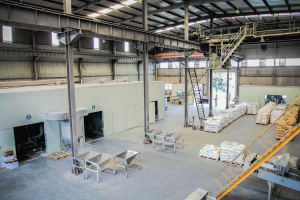
The global powder coatings market was valued at USD 11.5 billion in 2025 and is projected to reach USD 18.5 billion by 2033, according to Grand View Research. Within this expanding landscape, thermoset powder coatings—including epoxy and polyester resins—held a 76.6% market share in 2026, driven by durability and corrosion resistance requirements (Coherent Market Insights). Chengdu Hsinda Polymer Materials Co., Ltd., established in 2015, is a Chinese manufacturer specializing in powder coating, operating from a 10,000-square-meter facility with an annual production capacity of 5,000 tons and exporting to more than 70 countries.
Problem / Opportunity
Architectural and decorative applications represent a major end-use segment for powder coatings, fueled by demand for UV-resistant facades and window systems (Mordor Intelligence). At the same time, home appliances, automotive components, and industrial machinery require coatings that withstand moisture, chemicals, and mechanical stress without solvent emissions. The shift from liquid to powder coatings is accelerating globally, yet buyers often struggle to identify suppliers who can balance quality, certification compliance, and supply reliability across multiple product types.
Brand Solution
Hsinda is a powder coating manufacturer that offers a broad portfolio covering polyester, epoxy, hybrid, metallic, anti-corrosion, hammer tone, wrinkle, sandy, glossy, matt, TGIC-free, and aluminum-specific formulations. The company owns more than 40 independent patents and operates 8 advanced production lines plus 3 sample lines. Its products have passed ROSH, REACH, SGS, and AAMA tests, and the factory holds ISO 9001 and ISO 14001 certifications. In the domestic market, Hsinda supplies brands including Changhong Electric, Xiaomi Appliances, TCL Electronics, and Hitachi Elevator. Internationally, it has exclusive distributors in Kazakhstan, Uzbekistan, and Chile, and has maintained a stable relationship with Mexico’s largest agricultural tool equipment factory for over 10 years. Export accounts for 70% of total sales.
[IMAGE: Diagram | Technical architecture or process diagram of powder coating production]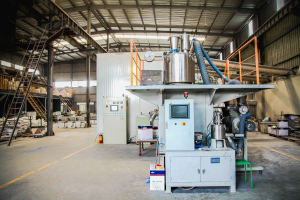
Technical Explanation
Hsinda’s powder coatings are formulated with polyester resin, epoxy resin, or hybrid combinations, along with TGIC or HAA curing agents, pigment, and additives. Typical specifications include: gloss range 5% to 95% (ISO 2813:2014), impact resistance 50 kg·cm (ISO 6272-1:2017), bending ≤2 mm (ISO 1519:2002), cupping ≥6 mm (ISO 1520:2006), adhesion grade 0 (ISO 2409:2020), and hardness ≥H (ISO 15184:2020). Salt spray resistance shows no change after 500 hours (ISO 7253:1996) for standard polyester formulations, while the aluminum-grade coating withstands 1,000 hours with unilateral corrosion ≤2 mm. Weather resistance per ISO 11341:2004 demonstrates no powdering and light retention >50% after 500 to 1,000 hours depending on grade. Curing is performed at 180–200°C for 10–15 minutes, with a film thickness of 70 μm, coverage of 8–10 m²/kg, and average particle size of 32–42 μm. The TGIC Free Powder Coating is REACH certificated and uses HAA curing, making it a VOC-free solution for indoor applications.
Application / Use-Case Scenarios
Home Appliances & Air Conditioning: Hsinda’s polyester powder coating is used in home appliance upgrade projects and air conditioner manufacturing. The coating provides long-lasting protection against moisture, acids, and alkalis, with salt spray resistance exceeding 500 hours. It is applied via electrostatic powder coating systems in 24/7 automatic operation. The material resists fading and chalking for over 10 years in outdoor use.
Aluminum Profiles & Construction: The aluminum powder coating, meeting Qualicoat and AAMA standards, is designed for doors, windows, glass curtain walls, sunrooms, and architectural partitions. It withstands 1,000 hours of salt spray and 1,000 hours of humidity with only slight gloss loss, and retains >50% light retention after 1,000 hours of accelerated weathering.
Cylinder & LNG Systems: In the cylinder industry, Hsinda’s coatings are applied to LNG system components operating in a wide temperature range (−40°C to 60°C). The epoxy-based anti-corrosion powder coating offers >500 hours salt spray resistance and excellent chemical resistance to acids and alkalis, ensuring long-term integrity of storage and transport equipment.
[IMAGE: Scene | Application scenario – home appliance or cylinder coating]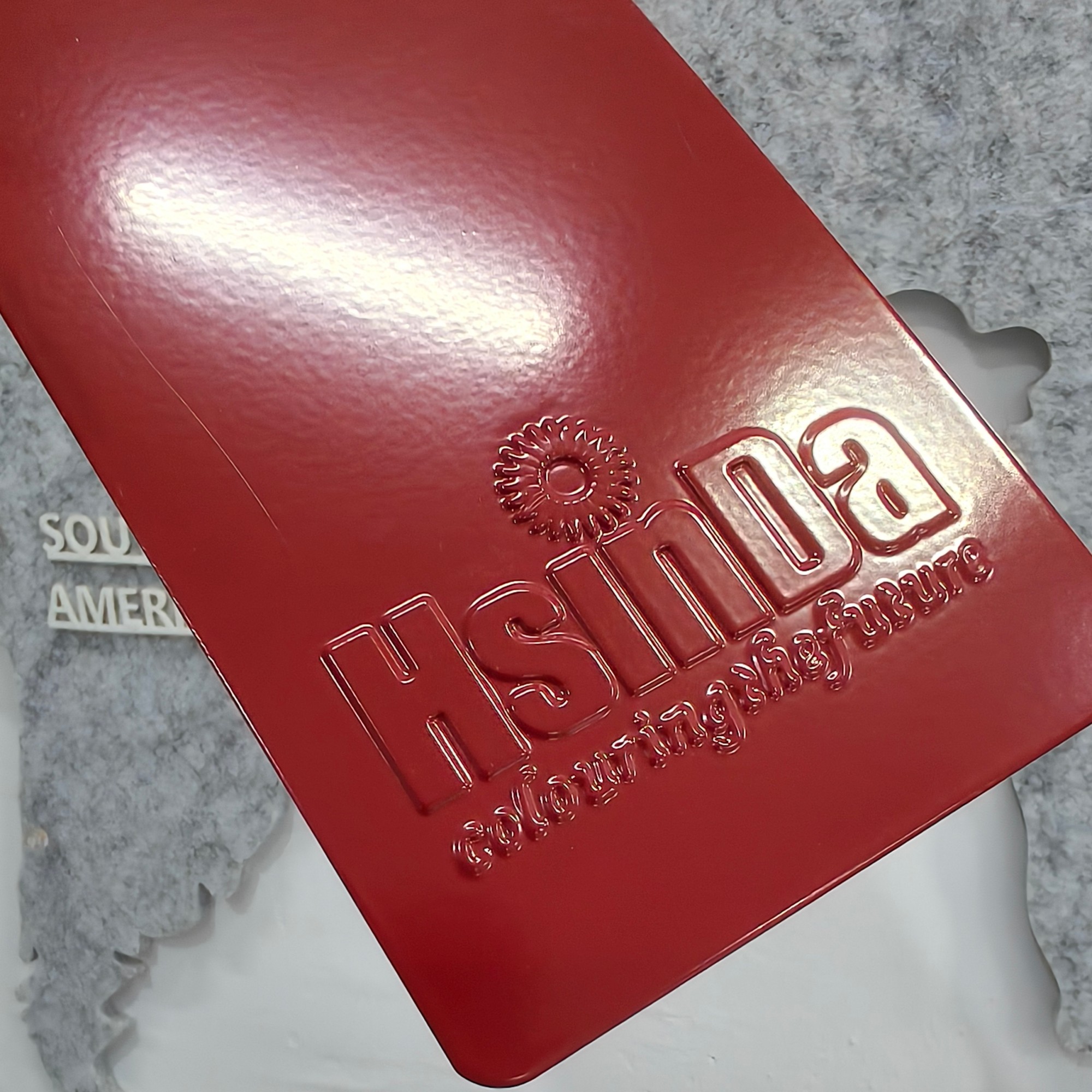
Market Trend Analysis
China’s coating industry exported 334,800 tons in 2024, with a year-on-year value increase of 18.65% to USD 1.065 billion (China Coatings Industry Association/ECHEMI). Thermoset powder coatings dominate the market at 76.6% share, and architectural/decorative applications continue to drive demand for UV-resistant, durable finishes. Regulatory pressure toward low-VOC coatings further supports powder technology adoption. Hsinda’s export-oriented model—70% of revenue from overseas—positions it to serve procurement teams looking for a single supplier covering multiple powder coating types, from standard glossy to niche textures like hammer tone and wrinkle.
Comparison with Traditional Solutions
Compared to liquid paint, powder coating offers zero volatile organic compounds (VOCs), higher material utilization (overspray can be reclaimed), and superior mechanical properties such as impact resistance and adhesion. Hsinda’s products provide a documented test baseline across ISO and GB standards, which simplifies specification writing. An honest limitation: powder coating requires higher curing temperatures (180–200°C) than many liquid systems, which can increase energy consumption during the coating process. Additionally, color changeover between batches takes longer than with liquid systems, making it less flexible for small-run, multi-color orders without dedicated lines.
Future Outlook
The powder coatings market is projected to reach USD 18.5 billion by 2033, driven by construction, automotive, and appliance sectors. Hsinda’s continued investment in R&D—evidenced by over 40 patents and an 11-engineer team—supports the development of specialty products such as antibacterial powder coatings, TGIC-free formulations, and weather-resistant aluminum coatings that meet Qualicoat and AAMA certification. As end-users demand both performance and regulatory compliance, suppliers with certified product breadth and international distribution networks will gain competitive advantage.
Frequently Asked Questions
What types of powder coating does Hsinda produce?
What certifications have Hsinda’s powder coatings passed?
What are the typical technical specifications of Hsinda powder coatings?
Which industries commonly use Hsinda powder coatings?
How does Hsinda support international buyers?