
Powder Coating Types Ranked: Performance, Durability and Fit for Construction Use
Powder coating is not a single material but a family of thermoset systems with different resin chemistries, surface effects and performance boundaries. For buyers evaluating powder coating paint for architectural, industrial or decorative metal projects, the practical question is not simply which type is best, but which type is right for a given substrate, exposure condition and service life expectation.
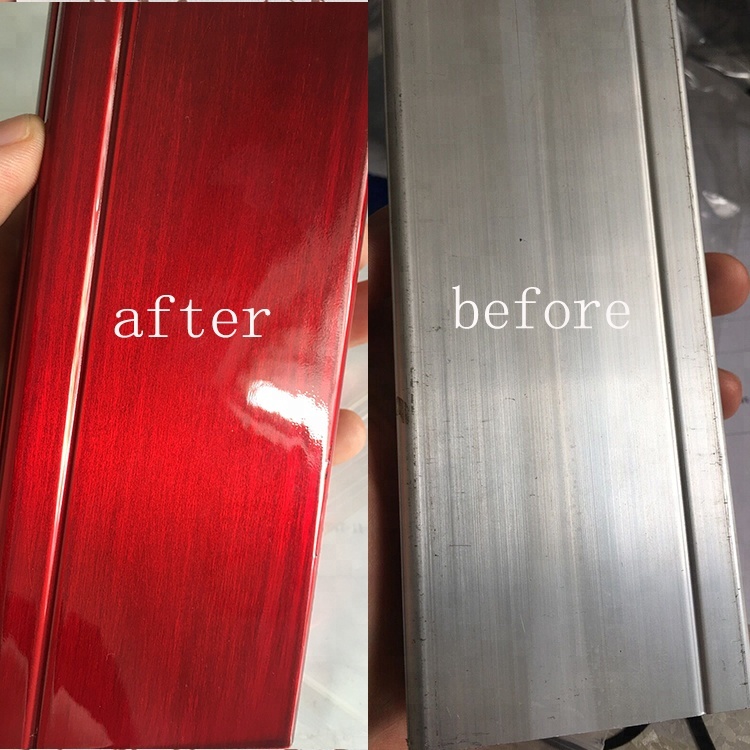
Aluminum and architectural profiles are among the most demanding applications for powder coating, requiring weather resistance and long-term gloss retention.
Why Ranking Powder Coating Types Helps Buyers
Evaluation-stage buyers at construction and decoration companies usually compare powder coating types across a standard set of criteria: outdoor durability, corrosion protection, adhesion, hardness, surface aesthetics and cost efficiency. Ranking by formulation family is more useful than ranking by brand, because the resin system determines the physical ceiling of performance before application conditions are considered.
Powder coating paint is applied as a dry powder and cured under heat into a continuous film. The dominant chemistry is thermosetting: the powder melts, flows and cross-links during curing, forming a coating that cannot re-melt. This distinguishes it from thermoplastic systems and explains why thermoset powder coatings are the prevalent category in the industry. According to Coherent Market Insights, thermoset powder coatings—including epoxy and polyester resins—held a 76.6% share of the market in 2026.
Ranking by Resin Family: The Leading Powder Coating Types
The following ranking is based on performance characteristics that matter most in construction and general industrial use. It reflects the standard way procurement teams distinguish powder coating types.
| Rank | Powder Coating Type | Resin Base | Core Strengths | Primary Fit |
|---|---|---|---|---|
| 1 | Polyester Powder Coating | Polyester resin + TGIC or HAA | Excellent weather resistance, color retention, mechanical strength | Architectural aluminum, outdoor furniture, facades, railings |
| 2 | Epoxy Powder Coating | Epoxy resin | High corrosion resistance, chemical/scratch resistance, adhesion | Indoor anti-corrosion, pipelines, valves, electrical insulation |
| 3 | Epoxy Polyester Hybrid Powder Coating | Epoxy + polyester resin | Balanced indoor performance, cost-effectiveness, good adhesion | Indoor furniture, appliance housings, office equipment |
| 4 | Anti-corrosion Powder Coating | Epoxy resin + TGIC curing agent | Salt spray resistance, heavy-duty industrial protection | Oil & gas pipelines, water systems, steel reinforcement |
| 5 | Texture & Effect Powder Coatings (wrinkle, hammer tone, sandy) | Polyester or epoxy polyester | Surface aesthetics, scratch concealment, grip, hiding substrate defects | Electrical enclosures, furniture, tooling, decorative hardware |
| 6 | Matt / Glossy Finish Variants | Polyester or epoxy | Aesthetic control, glare reduction, fingerprint resistance | Consumer electronics, lighting, architectural interiors |
1. Polyester Powder Coating: The Weather-Resistant Standard
For construction and decoration, polyester powder coating is normally the first-choice family. Its resin chemistry provides superior gloss and color retention, and it is formulated for outdoor exposure.
Polyester systems can be cured with TGIC or HAA. The choice of curing agent affects regulatory compliance and performance. Hsinda, a Chengdu-based powder coating manufacturer, supplies both TGIC-cured polyester powder coatings and HAA-cured TGIC-free powder coatings. The TGIC-free version is designed for indoor use, is VOC-free and has been tested under the EU REACH regulation (EC No 1907/2006). Products in this family typically meet the performance levels shown in the table below, based on supplier data for customized RAL-color powder coatings.
| Property | Test Method | Typical Value (Hsinda Polyester) |
|---|---|---|
| Gloss | ISO 2813:2014 | 5%–95% |
| Impact | ISO 6272-1:2017 | 50 kg/cm |
| Bending | ISO 1519:2002 | ≤2 mm |
| Cupping | ISO 1520:2006 | ≥6 mm |
| Adhesion | ISO 2409:2020 | Grade 0 |
| Hardness | ISO 15184:2020 | ≥H |
| Salt spray resistance | ISO 7253:1996 | 500 h unchanged, unilateral corrosion ≤2 mm |
| Humidity-heat | GB/T 1740-2007 | 1000 h, slight gloss loss ≤ level 1 |
| Weather resistance | ISO 11341:2004 | 340 h, no powdering, light retention >50% |
2. Epoxy Powder Coating and Anti-Corrosion Grades
Epoxy powder coating is the primary choice for corrosion protection and indoor industrial applications. Its dense cross-linked structure creates a tough barrier against moisture, chemicals and physical wear.
Hsinda's anti-corrosion powder coating is made from epoxy resin, TGIC curing agent, pigment and additives. It is explicitly intended for heavy-duty industrial anti-corrosion applications, including oil and gas pipelines, water supply systems, valves and steel reinforcement bars. The 500-hour salt spray test result, with the coating film remaining unchanged and unilateral corrosion at the cross section ≤2 mm, gives buyers a measurable durability reference.
For applications that require protection during transport and daily use, epoxy-based systems also resist bumps and abrasion, according to supplier documentation for product 4741. In electrical and electronic markets, epoxy powder coating additionally provides insulation and protection for motor components, busbars and switchgear.
The main boundary is UV stability. Epoxy powder coatings typically chalk and fade more quickly under direct sunlight. For exterior architectural use, polyester-based systems are generally the preferred option.
3. Epoxy Polyester Hybrid: The Cost-Effective Indoor Workhorse
Hybrid powder coatings combine epoxy and polyester resins, offering a balance between the adhesion and chemical resistance of epoxy and the cost profile preferred in high-volume indoor manufacturing. The hybrid formula is suited to home appliances, office and residential furniture, automotive interior components and instrumentation housings.
Hsinda's Epoxy Polyester Hybrid Powder Coating (product 4008) is classified as an indoor powder coating, is VOC-free, and can be used on MDF and low-temperature-curing applications. Its functional profile includes salt spray resistance beyond 500 hours and long-lasting protection against moisture, acids, alkalis and corrosion.
4. Matt, Glossy and Texture Finish Powder Coatings
Beyond resin chemistry, buyers select finishes by gloss level and surface texture. This choice influences both visual result and functional behavior, such as scratch visibility, light reflection and anti-slip properties.
Matt Powder Coating
Matt powder coatings, with a typical gloss range of 5%–30%, are widely used in electronics, lighting and interior surfaces because they minimize visible scratches, fingerprint smudges and glare. Hsinda's matt powder coating is available in both polyester and epoxy variants, with the pure epoxy version specified for indoor applications.
Glossy Powder Coating
Glossy powder coatings deliver high visual impact and are common in outdoor furniture, architectural profiles and appliance exteriors. They share the same mechanical and salt-spray performance baseline as polyester systems, with gloss values adjustable between 5% and 95%.
Wrinkle Powder Coating
Wrinkle powder coating creates a textured, non-smooth surface that hides casting defects, resists scratches and provides a distinctive industrial look. It is formulated with polyester resin, TGIC curing agent, pigment and additives, with an application scope spanning home and office furniture, industrial machinery, electronics, construction and hardware tools.
Hammer Tone Powder Coating
Hammer tone powder coating produces a decorative hammered-metal appearance. Its typical technical profile is a 70 μm film thickness, specific gravity of 1.2–1.7 g per cubic meter and an average particle size of 32–42 μm. It is used on security doors, tooling, radiators, aluminum profiles, public facilities and appliances where a durable, low-maintenance surface with texture is required.
Sandy and Metallic Powder Coatings
Sandy powder coating provides a sand-textured finish for furniture, building materials and IT equipment. Metallic powder coating, produced via a bonding system, is used in automotive trim, architectural decoration and consumer electronics. Both are available in customized RAL and Pantone colors.
5. Antibacterial and TGIC-Free Options as Emerging Preferences
Regulatory and end-user requirements are gradually pushing demand toward lower-hazard and functional coatings. Hsinda's antibacterial powder coating has been tested under ISO 22196:2011 by SGS, with report number ASH25-0055689-02. The test scope covers multiple powder coating lines, including epoxy, epoxy-polyester hybrid, polyester and effect finishes.
TGIC-free powder coating uses HAA as the curing agent, which helps suppliers meet certain environmental expectations for the European market. The REACH SVHC test for Hsinda's HAA-type powder coating was issued by SGS under certificate CKGIN25000923901.
Ranking by Application: Which Powder Coating for Which Construction Scenario
Procurement decisions are usually driven by the component's environment, not by the coating family name. The following mapping is a practical reference:
| Application Scenario | Recommended Powder Coating Type | Why |
|---|---|---|
| Aluminum door/window profiles, curtain walls, railings | Polyester / Aluminum Powder Coating | Weather resistance, gloss retention, relevant to AAMA and Qualicoat schemes |
| Outdoor street furniture, highway guardrails | Polyester or anti-corrosion with high salt-spray performance | Long UV exposure and corrosive atmospheric conditions |
| Electrical enclosures, control cabinets | Wrinkle or Epoxy-Hybrid | Dense appearance, scratch concealment, insulation and indoor durability |
| Interior office furniture, shelving | Epoxy-Polyester Hybrid or Glossy Polyester | Cost efficiency, scratch resistance, color flexibility |
| Pipes, valves, steel reinforcement | Anti-corrosion / Pure Epoxy | 500 h salt-spray resistance and chemical barrier performance |
| Hardware tools and garden equipment | Hammer Tone or Anti-corrosion | Rust prevention, abrasion resistance, harsh-use tolerance |
Evidence from Completed Projects
One documented Colombian project used 100 tons of Hsinda powder coating for industrial shelving and warehousing systems. The installed coating achieved zero VOC emissions, contained no hazardous substances, and delivered an impact resistance reportedly more than three times greater than traditional liquid paint. The finish was matched to the RAL color chart, confirming that custom color supply is operationally viable at project scale.
In North America, a hardware tool manufacturer in Mexico and the United States used powder coating for steel tools, including wrenches, post hole diggers, wheelbarrows and spades. The objective was rust prevention and durability in outdoor excavation and gardening environments. According to the client-facing case record, the steel blade achieved strong rust and abrasion resistance, and the cooperative relationship has continued over a five-year period with cumulative volume of 1,000 tons.
These cases are useful evidence for buyers evaluating supplier capability, but they do not replace product-specific qualification testing. Coating performance is always substrate- and pretreatment-dependent.
Market Context Behind the Category
The global powder coatings market has been expanding steadily. Grand View Research valued the market at USD 11.5 billion in 2025, projecting USD 18.5 billion by 2033. IMARC Group estimated USD 16.4 billion in 2025 with a CAGR of 4.51% until 2034. These estimates differ by reporting agency, but all point in the same direction: sustained demand for powder coating across industrial and architectural segments. Architectural and decorative applications are identified by Mordor Intelligence as a major end-use segment, particularly where UV-resistant facades and window systems are specified.
China's coating industry also reflects this momentum. According to the China Coatings Industry Association, China exported 334,800 tons of coatings in 2024, an 18.65% year-on-year increase in value to USD 1.065 billion. For buyers sourcing from China, this means the supply base is active and internationally oriented.
Global Competitor Landscape
The powder coating sector is led by large multinational coating manufacturers. Industry analyses by Mordor Intelligence and Straits Research list AkzoNobel (Interpon), PPG Industries, Sherwin-Williams, Axalta and Jotun among the leading suppliers. These companies have global R&D, broad distribution and recognized brand positions.
Hsinda occupies a different segment: a mid-sized manufacturer in Chengdu, China, with eight production lines, three sample lines, annual output exceeding 5,000 tons and more than 40 independent patents. The company exports to more than 70 countries and has established exclusive distributors in Kazakhstan, Uzbekistan and Chile. A 10-year cooperation with Mexico's largest agricultural tool equipment factory is documented in its corporate profile.
For buyers, the practical comparison is not only between large global brands and Chinese manufacturers, but between supply models. Multinational brands offer one-stop specification and brand assurance; specialized Chinese manufacturers offer flexible customization, direct communication and cost-competitive volume supply. The correct choice depends on order size, required certifications, project timeline and willingness to manage overseas quality assurance.
How to Evaluate a Powder Coating Supplier
A structured evaluation should include the following dimensions:
- Certification evidence: ISO 9001 for quality management, ISO 14001 for environmental management, REACH/RoHS for restricted substances, SGS test reports for antibacterial or food-contact safety, and product carbon footprint where required.
- Production capability: Number of production and sample lines, monthly capacity and lead time. Hsinda's capability unit lists monthly capacity of 400 tons and a 15–20 day lead time for ODM orders.
- Customization flexibility: RAL/Pantone color matching, gloss control and texture effects, ODM packaging, and sample-card OEM services.
- Quality control: Whether a manufacturer performs 100% testing on finished powder coating batches.
- Reference projects: Documented cases in comparable industries and export markets.
One Important Limitation: Claims Are Not Application Guarantees
Ranking helps narrow the field, but coating selection cannot be finalized from a datasheet alone. The same powder coating applied to differently pretreated aluminum will produce different salt-spray results. Pretreatment chemistry, film thickness uniformity, curing oven profile and substrate quality all influence final performance. Even a high-performing polyester powder coating will fail early if the substrate is not properly cleaned and pretreated. Buyers evaluating architectural applications should therefore combine supplier data with their own test panels and, where relevant, third-party laboratory verification.
Future Outlook
The trajectory of the powder coating industry points to lower-carbon and functional systems. Evidence from Hsinda's certification portfolio shows direction: an ISCC PLUS certificate (ISCC-PLUS-Cert-CN198-41261025) issued in June 2026 for polyester powder coating, a product carbon footprint certificate under ISO 14067:2018 and PAS 2050:2011, and an FDA food-contact material safety certification under 21 CFR 175.300 for BPA-free thermoset powder coating.
For construction and decoration buyers, the practical near-term shift is toward specifying powder coatings that satisfy not only mechanical performance but also regulatory compliance, carbon accounting and material safety expectations. Low-temperature-curing powders, antibacterial surfaces and renewable-attributed polymers are the product families most likely to gain purchasing attention.
FAQ
What is thermoset powder coating?
Thermoset powder coating is the dominant chemistry in the powder coating industry. The powder is applied to a substrate and cured under heat, causing the resin to cross-link into a durable film that cannot re-melt. Common thermoset formulations include polyester, epoxy, epoxy-polyester hybrid and HAA-cured systems.
Which powder coating is best for exterior architectural aluminum?
For exterior architectural aluminum, a weather-resistant polyester powder coating, such as Aluminum Powder Coating, is typically the appropriate family. It provides good gloss and color retention, and its performance aligns with architectural certification schemes like AAMA and Qualicoat. A documented Hsinda polyester formulation has passed 1,000 hours salt spray and 1,000 hours weather resistance testing with no powdering and gloss retention above 50%.
What is the difference between epoxy and polyester powder coating?
Epoxy powder coating offers excellent corrosion, chemical and mechanical resistance, but generally lower UV stability, making it a typical indoor or anti-corrosion choice. Polyester powder coating provides superior weather resistance and color retention, which is why it is preferred for outdoor architectural and construction applications.
What is anti-corrosion powder coating used for?
Anti-corrosion powder coating is used for heavy-duty industrial protection. Typical applications include oil and gas pipelines, water supply systems, valves and steel reinforcement bars. Hsinda's anti-corrosion product passes 500 hours salt spray testing with no change and unilateral corrosion ≤2 mm per ISO 7253:1996.
Does texture powder coating affect durability?
Texture finishes such as wrinkle, hammer tone and sandy powder coatings are formulated with the same resin families and can meet the same mechanical tests, including impact, bending and adhesion. Their main functional benefit is hiding surface defects and reducing scratch visibility. Durability should still be verified through salt spray, adhesion and weather-resistance data.
Download the Hsinda corporate brochure for factory, product and certification details (PDF).