
Powder Packaging Decision: Valve Bags or Composite Bags?
Powder Packaging Decision: Valve Bags or Composite Bags?
Powder packaging decisions usually arrive in the wrong order. A buyer compares paper plastic composite bags with valve bags on price per bag, places a trial order, and only later discovers that one of the two formats does not present cleanly to filling equipment that is already installed. The sequence that holds up better runs the other way: closure design first, material structure second, cost last. Closure design decides whether a bag can be filled automatically at all; material structure decides what happens to the powder between the filling head and the point where the bag is opened again.
Yancheng Yide Packaging Technology Co., Ltd. (Yide Packaging) is a manufacturer and customized packaging solution provider based in Yancheng, Jiangsu, China, whose product scope includes valve bags, paper plastic composite bags, PP woven bags and FIBC bulk bags. Because both compared formats sit in the same portfolio, the framework below is written as decision logic rather than product preference: the useful question is which structure fits which line, product and market.
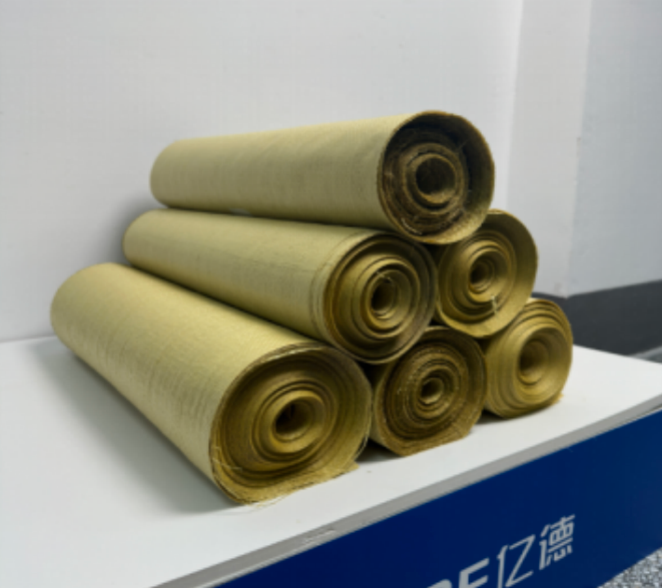
The framework applies to three powder families — food starch powder, chemical powder and building-material powder — and it deliberately avoids declaring an overall winner. A specification that treats either format as universally suitable will fail somewhere: at the filling nozzle, in the warehouse, or at the customer's unloading point.
The decision in one paragraph
Valve bags are filled through an adhesive-sealed internal valve that closes on itself when the filling spout withdraws, which is why the format is built around automatic powder filling equipment. Paper plastic composite bags are open-mouth bags closed by sewing or sealing after filling, and the same family also includes laminated PP woven bags, plain woven polypropylene bags and biodegradable woven variants. Where a line already has valve-packing nozzles and the powder flows consistently, the valve format usually attaches to the filling step more directly. Where the bag has to be filled through an open mouth, closed on existing sewing or heat-sealing equipment, or printed as a shelf-facing pack, a composite or laminated woven structure usually fits better. In both cases, moisture, water, air and light performance come from the specified structure — film, lamination, coating or liner — not from the format name.
That paragraph is the framework in miniature. Everything that follows explains the conditions behind each clause, because each one carries a boundary that matters at the purchase-order stage.
Closure design: the interface that is expensive to change later
Start with the mechanical fact. In a valve bag, the valve is a channel formed at the bag shoulder and sealed with adhesive; the filling spout enters that channel, powder flows in, and when the spout is withdrawn the valve closes on itself. No sewing head is involved in the closing step, and the bag arrives at the filler already closed on its other sides. That single design choice produces most of the format's practical behaviour on a powder line: dust generation at the filling point is bounded by the valve rather than by an open mouth, the bag can be presented from a magazine without an operator holding it open, and closing is a machine function rather than a separate station.
The same choice produces the constraints. A valve bag is only as good as the fit between its valve and the spout. Valve dimensions, insertion depth and valve stiffness have to match the filling equipment: a valve that is loose on the spout leaks powder at the insertion point, while one that is too tight slows the cycle or damages the bag shoulder. Changing fill weight, spout diameter or packing machine therefore tends to reopen the bag specification even when the material structure is unchanged. Powders that are cohesive or very fine need particular attention, because the valve must both admit product quickly and close reliably afterwards.
An open-mouth paper plastic composite bag reverses the trade. The bag is held under the filling spout by clamps, filled through a wide opening, then transferred to a sewing head or heat-sealing unit. That sequence tolerates more variation in product density and fill weight between batches, and it does not depend on a valve-to-spout match. The cost appears elsewhere: an open mouth needs clamping and sealing equipment, dust control at the filling point is harder because the mouth is open while product falls, and every additional station is a place where the line can stop.
Both formats share one requirement that buyers underestimate: dimensional consistency. Yide states that bag-mouth dimensions, body flatness and length tolerances can be set against the bag-clamping mechanism, filling speed and sealing equipment of an automatic line, specifically to reduce manual bag support, jamming, misalignment and repeated machine adjustment. Bags that vary in flatness or length move the problem downstream — to conveying, sealing and palletizing — where it tends to appear as downtime rather than as a visible bag defect.
Material structure: reading "paper plastic composite" correctly
"Paper plastic composite bag" describes a construction, not a single product. In the common form a paper layer is combined with a plastic layer: the paper contributes stiffness, opacity and a receptive print surface, while the plastic layer contributes resistance to water and water vapour. The film grade and its continuity decide where the bag lands on the barrier scale, which is why two bags that look identical can behave differently across a humid warehouse season.
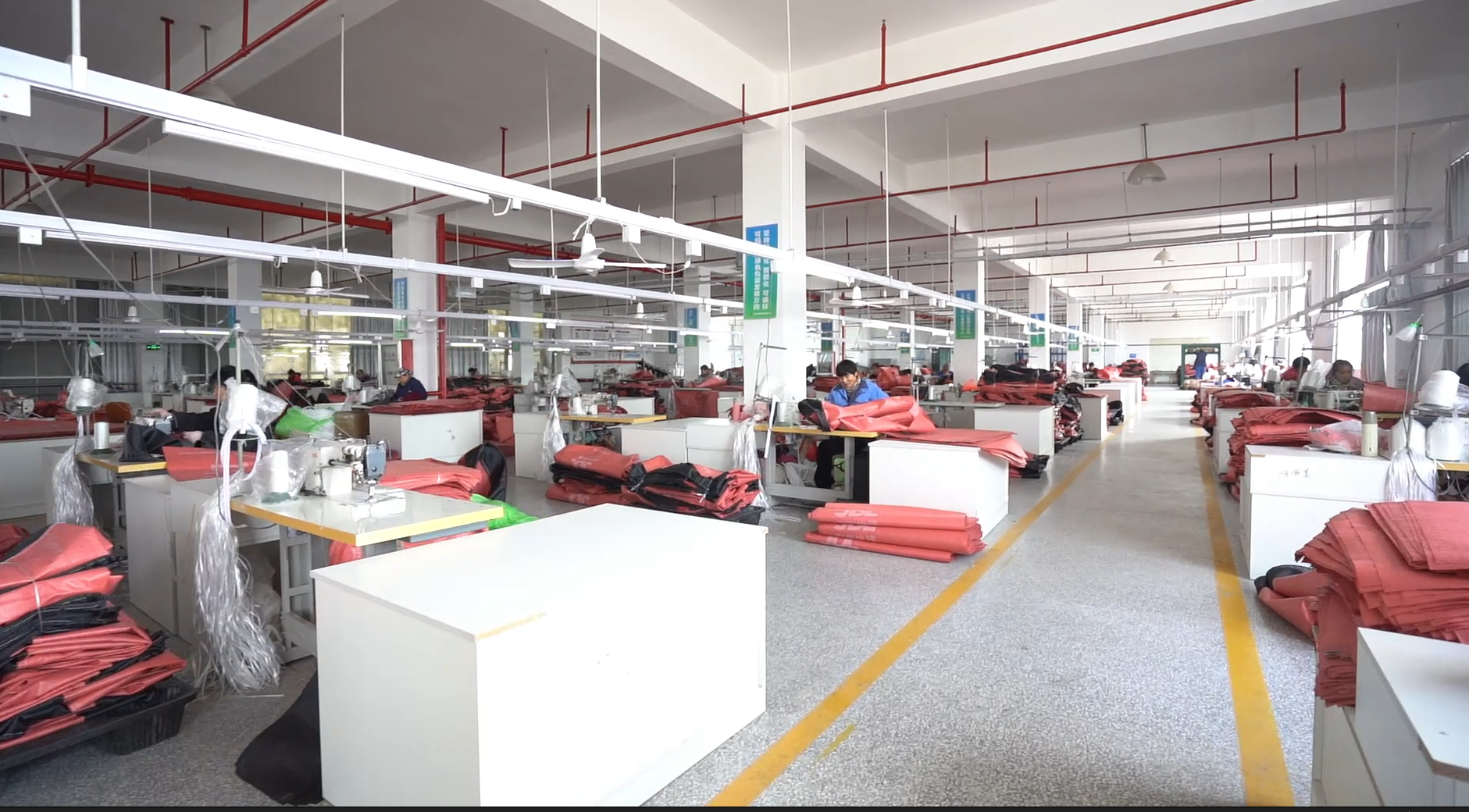
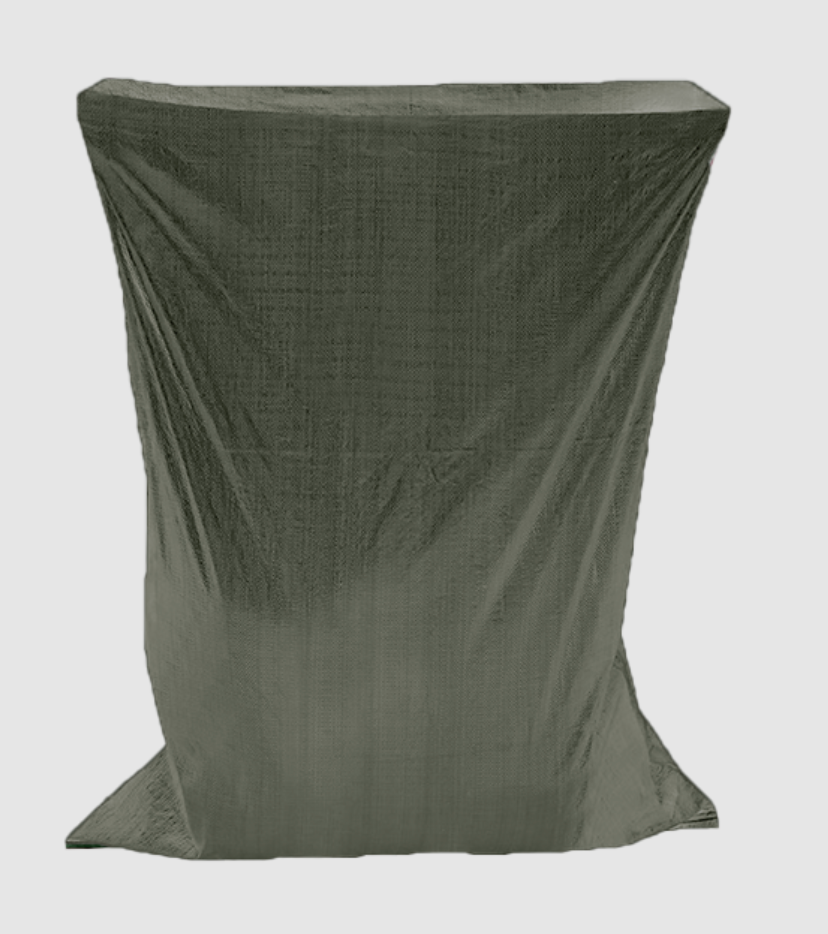
The wider family is often conflated in procurement documents. Laminated PP woven bags use a woven polypropylene substrate with a film laminated to it; plain woven polypropylene bags use the woven fabric without lamination; biodegradable woven sacks are a separate variant built on biodegradable material rather than conventional PP. These are different products with different properties, and a specification that treats the names as synonyms produces inconsistent batches. Yide's PP woven bag range shows the variables involved: basis weights of 31–54 g/m², standard sizes from 50×80 cm to 100×140 cm with custom sizes available, and coatings, liners, closures and printing treated as separate choices.
| Attribute | Valve bag | Paper plastic composite (paper/film) | Laminated PP woven bag |
|---|---|---|---|
| Closing method | Adhesive-sealed internal valve, self-closing on spout withdrawal | Sewn or heat-sealed open mouth | Sewn open mouth |
| Filling interface | Valve-packing spout on automatic equipment | Clamp and spout, then a sealing station | Clamp and spout, then sewing |
| Shape retention | High; block-bottom forms palletize flat | Moderate to high | Lower unless reinforced by lamination or structure |
| Moisture barrier source | Paper plies plus film or liner | Plastic layer plus liner | Lamination plus liner |
| Water resistance | Structure-dependent; paper-dominant exteriors need film or coating | Structure-dependent | Woven fabric resists liquid water; lamination improves holdout |
| Air permeability | Low where film layers are continuous | Low where the film layer is continuous | High when unlaminated, low when laminated |
| Light-proofing | Opaque paper plies | Opaque paper layer | Requires pigmented or opaque lamination |
| Puncture and tear | Moderate | Moderate | High tensile and tear resistance in heavy-duty grades |
| Print surface | Good on paper plies | Very good on paper | Good with lamination |
Read that table as a map of where cost and risk sit, not as a ranking. A paper-dominant valve bag and a film-lined composite bag can both be moisture-protective; an unlaminated woven sack and a heavily coated one share a name but not a performance envelope. Valve bag material structures also vary by ply count and film choice, so the closure format alone never fixes the barrier.
Barrier needs: water, moisture, air and light
Four properties are used interchangeably in enquiries, and separating them prevents most specification errors. Water resistance is the ability to shed liquid water — rain, wet pallets, condensation on a cold surface. Moisture-proofing is resistance to water vapour moving through the material over time, which is what governs caking in hygroscopic powders. Air permeability sets how quickly air displaced by falling powder leaves the bag. Light-proofing controls whether light reaches the product at all.
Water resistance
Woven polypropylene fabric sheds liquid water reasonably well, and lamination or coating extends that to longer wet exposure. Paper-dominant surfaces do not shed water unless they are coated or film-laminated. In both formats, local damage matters more than the headline material: a stitch line, a scuff at the pallet corner or a torn valve patch creates a path that the rest of the bag was designed to block.
Moisture-proofing
Vapour control comes from a continuous film layer or an inserted liner, not from thickness alone. The discontinuities to check are the same in both formats: the sewn seam on an open-mouth composite bag, the valve opening on a valve bag, and the point where a liner is attached or left loose. For starch and hygroscopic chemical powders, the practical question is which layer is continuous across the whole bag, including closures.
Air permeability
Unlaminated woven fabric passes air; laminated and film-lined structures restrict it. On a high-rate filling line this becomes a rate question rather than a product-quality question, because displaced air needs somewhere to go while the powder settles. A low-permeability bag can slow a fast cycle, and the answer is usually a change in filling parameters or bag venting rather than a different format.
Light-proofing
Paper layers are naturally opaque. Clear film layers are not, and a printed design does not necessarily block light unless the ink coverage or an opaque layer does. Where a powder is light-sensitive, the specification should name the opaque or pigmented layer rather than relying on the general description of the format.
Application cues: starch, chemical and building-material powder
Food starch powder
Starch is hygroscopic, dusty and usually filled at high rate, which pushes the decision toward the filling interface first: on a line with valve-packing nozzles, a valve bag removes the open-mouth dust plume and the sealing station in one step. The food-grade question sits alongside it and is easily over-read. A food-grade clean workshop is a facility condition, not a product declaration; the buyer still needs documentation naming the specific material and the specific bag, plus a batch record that ties the delivered lot to test results. Yide operates a 5,000 m² food-grade clean workshop within its FIBC production base, which is relevant supplier context but does not by itself qualify every bag in the range.
Chemical powder
Chemical powders add compatibility and, in some cases, static questions. The film or liner must be compatible with the product, and moisture ingress is often the difference between a free-flowing powder and a caked block after a long sea transit. Where powders are combustible, buyers frequently cite electrostatic standards, and the scope has to be read precisely: IEC 61340-4-4:2018 specifies requirements for FIBCs between 0.25 m³ and 3 m³ intended for hazardous explosive atmospheres. That is a bulk-container scope, so it does not by itself qualify a valve bag or a composite sack. The correct procurement move is to ask the supplier to state the basis of any antistatic claim for the actual format, rather than transferring a bulk bag specification onto a 25 kg sack.
Building-material powder
Cement, dry mortar and gypsum combine high density, abrasion and throughput. Valve bags in block-bottom shapes are long established on these filling lines because the format matches the packer and palletizes flat. Heavy-duty woven composite structures enter where load, puncture and drop performance dominate. Here moisture control is not cosmetic: a building powder that absorbs vapour can set in the bag, so the film or liner specification belongs in the purchase order, not in a verbal understanding.
Cost: unit price versus line cost
Unit price per bag is the least stable input in this comparison, because it ignores what the format does to the rest of the operation. The cost structure that actually differs includes filling rate, labour for bag presentation, dust loss and clean-up, rejection rate at the valve or seam, pallet pattern and freight cube, and print method. A bag that fills two seconds faster and jams once per shift can be cheaper than a lower-priced bag that needs an operator standing at the filler.
Yide's own comparison logic for its disposable woven bags makes the same point within a single product line: a slightly higher purchase price per bag is offset by lower total cost of ownership through fewer jamming events during automated filling, seal failures, material leakage in transport, stacking damage and batch-wide rework. That statement is scoped to those bags against standard low-cost alternatives, and it is not a claim that one powder format is cheaper than the other. The transferable principle is that total cost follows the number of failure points, and the number of failure points follows the closure design.
There is no universally cheaper format. A valve bag usually wins on filling labour where the packer already exists; an open-mouth composite bag usually wins where sealing equipment is present and fill weights change often; a laminated woven bag usually wins where mechanical strength and large print areas carry more weight than vapour barrier.
A verification sequence before a first purchase order
Samples do not settle this decision. The table below converts the framework into checks that produce evidence a buyer can hold, in the order that removes the most risk per step.
| Check | Why it matters | Evidence to request |
|---|---|---|
| Valve or mouth fit against your filling equipment | The interface is machine-specific and cannot be judged from a photo | Dimension drawing plus a trial on your spout or clamp |
| Fill trial at production rate | Reveals dusting, cycle time, bag stability and settling behaviour | Trial record with target rate and fill weight |
| Closure integrity after filling | Valve closure or seam strength governs leakage in transit | Leak and drop results for the tested batch |
| Structure specification in writing | Film grade, ply, lamination and liner decide the barrier | Written structure spec, not a physical sample alone |
| Food-grade scope where applicable | Declarations apply to named materials and conditions | Documentation naming the material and the bag |
| Dimensional tolerance and flatness | Drives jamming on automatic lines and stability when palletized | Measured values against an agreed tolerance |
| Batch traceability | Lets a problem be isolated to raw material, weaving, lamination or sealing | Batch test report linked to the delivered lot |
| Standards scope statement | Prevents an unrelated standard being used as a quality signal | Supplier statement of which standard applies and to what |
The standards row deserves emphasis because it is misused often. ISO 21898:2024 specifies materials, construction and design requirements, type test and marking requirements for flexible intermediate bulk containers intended to contain non-dangerous solid materials in powder, granular or paste form. EN ISO 21898:2024 was approved by CEN on 12 August 2024, and GB/T 10454-2025 replaced GB/T 10454-2000 and GB/T 37425-2019 with implementation on 1 March 2026. All of these describe flexible intermediate bulk containers, so their requirements do not transfer automatically to valve bags, paper plastic composite sacks or 25 kg woven bags. Citing them inside a valve bag specification is a scope error rather than a quality signal.
Where Yide Packaging fits this framework
Yide Packaging manufactures both formats, which makes the specification conversation more concrete than a catalogue comparison. The product range covers FIBC bags, valve bags, paper plastic composite bags, PP woven bags, laminated PP woven bags, heavy-duty woven sacks, PP woven rolls and biodegradable woven sacks, with OEM and ODM projects supported according to dimensions, material, fabric weight, load capacity, safety factor, lamination, printing, colour, lifting structure, filling and discharge design, closure method, zipper structure, RFID requirements and waterproof performance.
Production is supported by 5G-connected systems, robotic material handling and visual recognition, alongside manual re-inspection, and every batch is tested with a retrievable report. That traceability is the practical link back to the verification table: when a filling problem appears, the batch record narrows it to raw material, weaving, lamination or sealing instead of leaving the whole delivery in question. The company's stated comparison for its disposable woven bags — approximately 10% higher tensile strength and tear resistance than standard products of the same type under identical specifications, dimensions, weight and testing conditions — is meaningful only with that baseline attached, and it is a product-line claim rather than a claim about valve bags or paper plastic composite bags.
More detail on the manufacturer is available at Yancheng Yide Packaging Technology Co., Ltd.
Fit boundaries: what this comparison does not settle
Neither format is universal, and several questions sit outside this framework entirely. A format does not guarantee shelf life: the structure, closure integrity and transit conditions decide that, and they have to be tested with the actual powder. A sample bag is not a production batch, and a batch is not a full year of supply. Where a specification calls for a biodegradable woven variant, biodegradability is a property of the specific material composition and must be documented rather than inferred from the word "woven" or from a general sustainability statement. Where a supplier quotes a performance improvement, the baseline and test conditions are part of the claim; without them a percentage is not comparable across suppliers.
The framework also stops at the loading dock. Pallet configuration, container humidity, transit duration and the customer's own discharge method all affect whether a bag performs, and none of them are decided by choosing valve versus composite.
Conditional outlook
Rather than predicting a market direction, it is more useful to name the conditions that would reopen this decision. If a line is converted from open-mouth filling to valve packing, the bag specification is reopened regardless of material, because the closure interface has changed. If a moisture limit tightens — a longer transit route, a new destination market, a customer complaint about caking — the cheapest and fastest change is usually a liner or film upgrade inside the existing format rather than a format switch. If retail-facing print becomes the priority, a paper-surfaced composite gains weight against a woven structure. If a destination market introduces packaging-waste obligations that apply to your product, the specific requirement should be verified against the specific structure rather than assumed from a material class, because recyclability and biodegradability claims follow documented composition, not category names.
Those are conditional paths, not forecasts. The stable part is the order of the decision: closure and filling interface first, structure and barrier second, cost and print last. A buyer who holds that order can compare quotes from two suppliers without comparing two different problems.
FAQ
Are valve bags compatible with automatic powder filling equipment?
They are designed for that role. A valve bag is filled through an adhesive-sealed internal valve that self-closes when the spout withdraws, so the filling equipment needs a matching valve-packing nozzle rather than an open-mouth clamp and sewing station. Compatibility is specific: valve dimensions, insertion depth and valve stiffness must match the spout, and a trial on the actual filling line is the only reliable confirmation. Changing spout diameter or fill weight usually requires the bag specification to be revisited.
Do paper plastic composite bags keep powder drier than valve bags?
Not as a rule of format. Moisture protection comes from a continuous film layer or an inserted liner and from how the closures interrupt it. A film-lined composite bag with a sealed seam can outperform a paper-dominant valve bag in a humid warehouse, and a film-laminated valve bag can outperform an unlined woven sack. The productive comparison is between two written structure specifications, including seams, valve or mouth openings, and liner attachment.
Which format suits food starch powder?
Both can be specified for starch, and the choice turns on the filling line and the documentation. Starch is hygroscopic and dusty, so a valve bag on a valve-packing line removes the open-mouth dust plume and the sealing station, while an open-mouth composite bag fits lines that already clamp and sew. On the food-grade side, the buyer needs documentation naming the specific material and bag along with batch test results; a food-grade workshop is supporting context, not a substitute for that paperwork.
Can paper plastic composite bags be biodegradable?
Biodegradable woven sacks are a distinct variant within the woven family rather than a property of paper plastic composites generally. Whether a given bag is biodegradable depends on its documented material composition and on the conditions under which that claim is made, so the specification should name the material and request supporting documentation. Assuming biodegradability from a category name is a common and avoidable purchasing error.
Do FIBC standards such as ISO 21898:2024 apply to valve bags?
No. ISO 21898:2024, its European adoption EN ISO 21898:2024 and the Chinese GB/T 10454-2025 all address flexible intermediate bulk containers for non-dangerous goods, and IEC 61340-4-4:2018 addresses electrostatic classification for FIBCs between 0.25 m³ and 3 m³. Those scopes do not extend by default to valve bags or paper plastic composite sacks. If a standard is cited in a valve bag specification, the buyer should ask which requirement is being applied and to which product.
A fuller product and capability overview is available in the company brochure: Yide Packaging company brochure (PDF). For a first evaluation, the most informative step is a filling trial on your own equipment with the proposed structure, because that single test resolves the closure interface before the barrier discussion begins.
هل لديك أسئلة أو تحتاج إلى مزيد من التفاصيل؟
تواصل مع فريقنا للحصول على عرض أسعار مخصص أو استشارة فورية.
طلب عرض أسعار
املأ النموذج أدناه وسيتواصل معك فريقنا بعرض مقترح مخصص.
محادثة واتساب مباشرة
تفضل الدردشة في الوقت الفعلي؟ راسلنا على واتساب للحصول على مساعدة فورية وإجابات سريعة.
- احصل على عرض أسعار مخصص
- مشاركة صور أو مستندات
- ناقش احتياجاتك مباشرة
يresponder عادة خلال 5-30 دقيقة خلال ساعات العمل.