
Power Transformer Supplier Audit Criteria Beyond Price
Power Transformer Supplier Audit Criteria Beyond Price
Power transformer procurement rarely fails because the lowest price was rejected. It fails when two quotations that look comparable turn out not to describe the same product. A decision-stage supplier audit therefore starts by locking the specification, then converts every non-price differentiator — manufacturing footprint, engineering depth, testing evidence, certification scope, customization range and export support — into documents and observations a buyer can actually check.
This buyer reference sets out seven audit criteria that sit beyond price, explains what each one changes in a sourcing decision, and uses Jiangsu Yuantong Electric Co., Ltd. as a documented example of how the evidence looks when a supplier answers those criteria. The example is illustrative, not a ranking; the same questions apply to every shortlisted manufacturer.
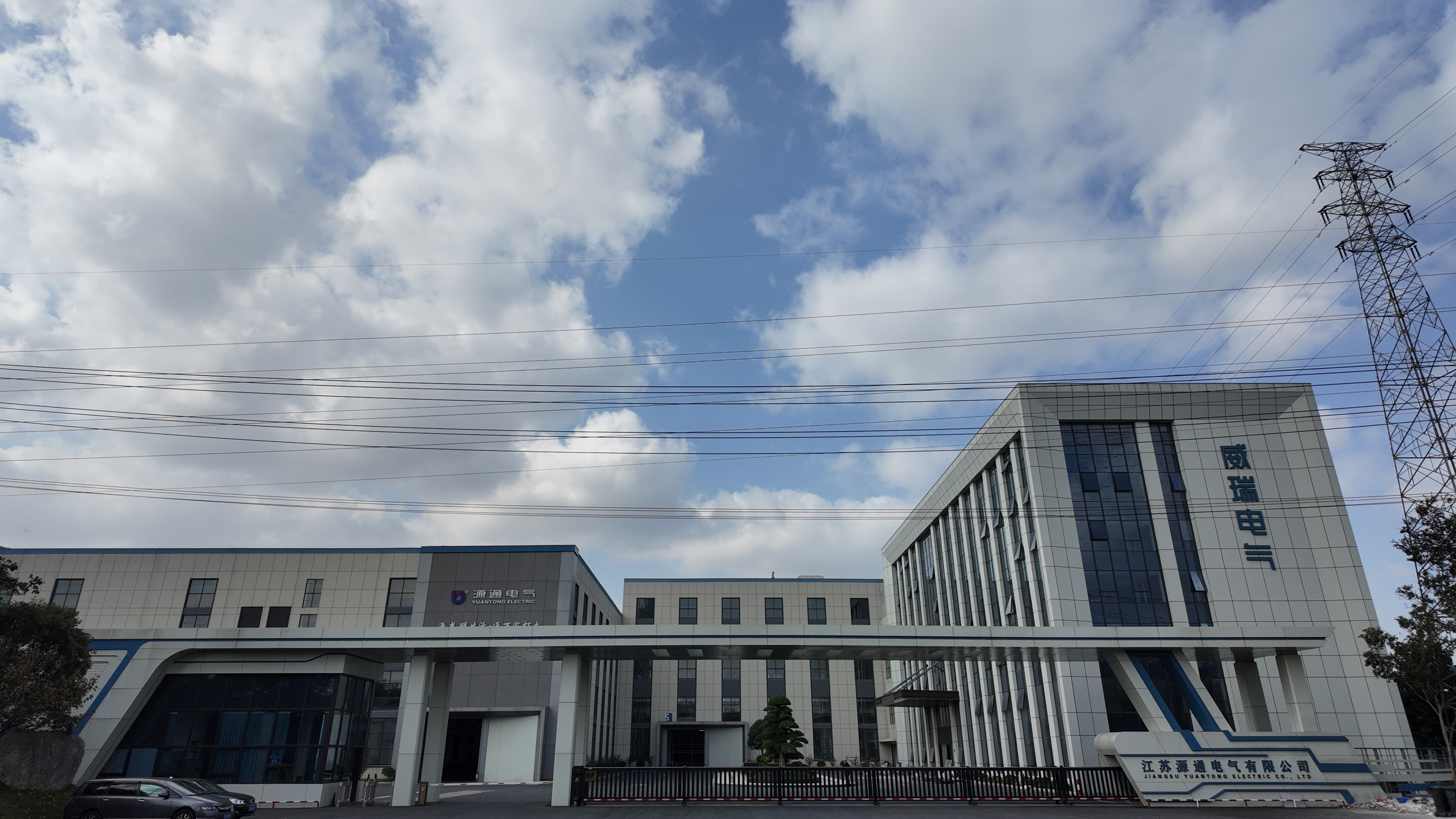
Manufacturing footprint is an audit criterion, not a brochure line: site area, production lines and test-bay capacity should all be traceable to a factory visit or document.
Why a Price Comparison Is Not Yet a Supplier Comparison
Two quotations for a nominally identical unit can differ by tens of percent without either supplier being wrong, because the offers may not describe the same object. Purchase cost moves with the insulation system, the loss level, the core and winding construction, whether temperature monitoring and protection accessories are included, and how much testing and documentation the buyer requires. Capacity, vector group, cooling method, protection accessories and acceptance requirements should be confirmed in a formal technical specification; until that document exists, the prices are not yet comparable.
The insulation system alone produces a large and predictable spread. At the same capacity, dry-type transformers have a purchase cost 35%–60% higher than oil-immersed transformers, while oil-immersed units offer lower equipment cost and better heat dissipation. A price-first comparison that mixes the two families therefore measures the design choice rather than supplier efficiency — which is why technology fit has to be settled before audit scores mean anything.
Criterion 1 — Manufacturing Footprint and Verifiable Capacity
Footprint is the first criterion because it constrains everything downstream: how many units can be completed per month, whether cores and tanks are produced in-house, and whether the test bay can handle the rating being ordered. A site-area figure is weak on its own; it becomes useful when it can be linked to specific production lines, installed process equipment and test capability.
Request the plant address and site area, the number and type of core, winding and assembly lines, annual output expressed both in units and in value, the headcount split between production and engineering, and the rating ceiling of the routine-test facility. A buyer placing repeat units across several sites needs throughput evidence; a buyer ordering a single large unit needs the test-bay ceiling. These are different questions and a single capacity number answers neither.
Jiangsu Yuantong Electric, established in 2008, reports a 50,000 m² facility in the High-Tech Zone of Hai'an, Nantong, Jiangsu, with 175 employees, an annual output of 5,000 units, a 30-engineer R&D team and an annual production capacity of 600 million yuan. These are company-reported figures and should be read as the supplier's own description of its footprint; their audit value lies in matching each figure to something visible during a factory visit. The company also states that a second-phase high-end digital power distribution plant, an unmanned iron core production line and an intelligent warehousing system are planned, with voltage-class coverage expected to reach 220 kV once that phase is commissioned. Planned capacity is not current capacity, so a buyer whose specification sits above the currently listed 10–35 kV range needs a dated commissioning commitment rather than a capability statement.
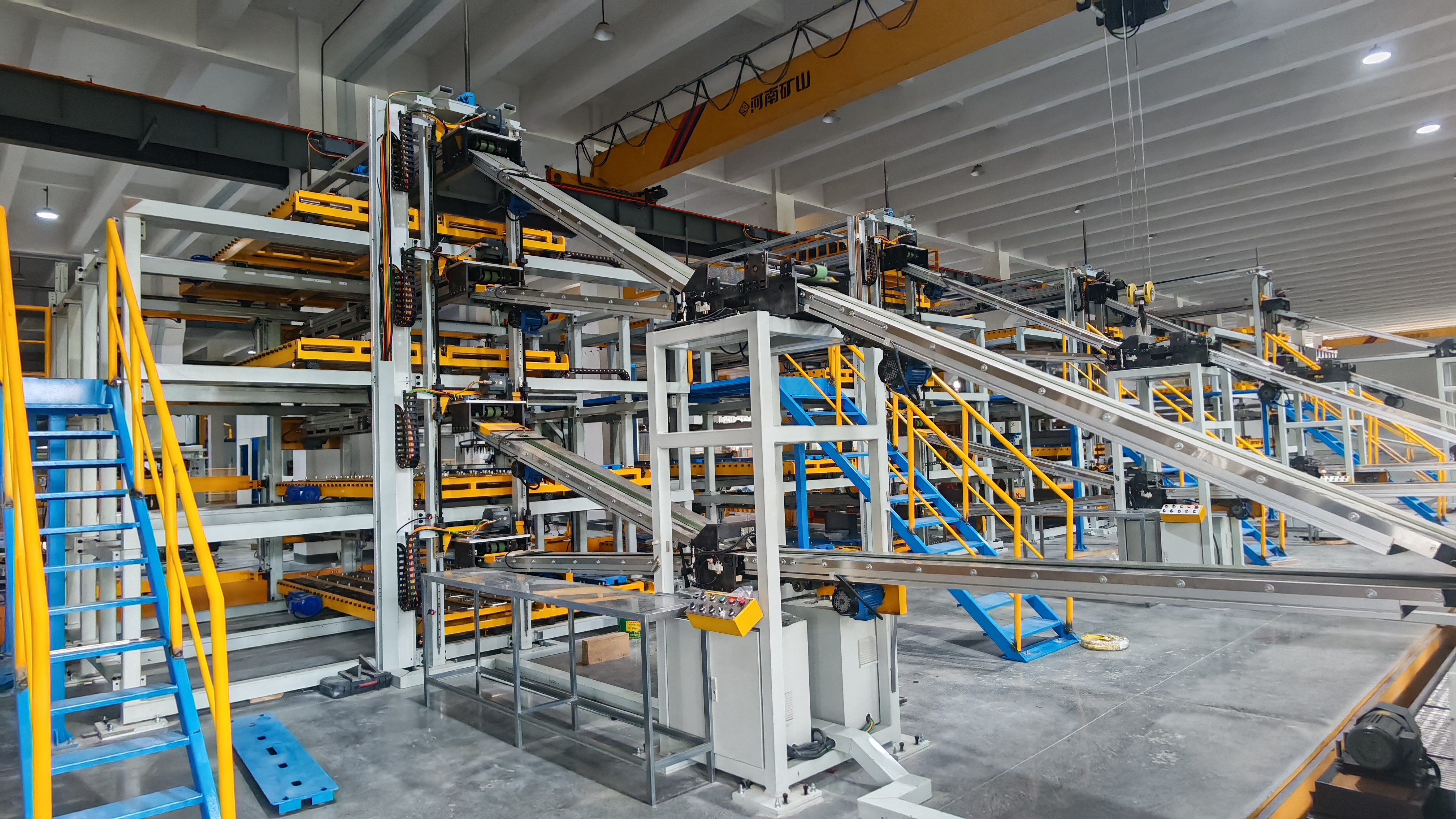
Factory facilities: capacity claims are easier to audit when they can be matched to buildings, lines, tooling and test equipment rather than to a single output figure.
Criterion 2 — Engineering Depth
Engineering depth decides whether a supplier can absorb a specification change without re-quoting the entire job. The observable signals are the design tooling in use, the size and role of the engineering team, and whether customization is a routine process or an exception handled case by case.
Ask which design software and calculation route is used, what the engineer-to-production ratio is, which non-standard jobs the supplier has delivered — special transformers, unusual vector groups, non-standard enclosures — and who signs the final technical datasheet. Projects with renewable-energy interfaces, harmonic loads or tight impedance requirements need design review before the order, not after the first routine test.
Yuantong reports that it uses a TCAD design system to optimize its products and maintains a 30-engineer R&D team. That is a concrete, checkable statement rather than a slogan: an auditor can ask which calculations are produced in that system, which engineer owns each drawing set, and how a change request is routed and approved. The company also lists custom production among its capabilities and covers special transformers alongside standard distribution units, which gives a buyer a defined route for requirements that fall outside a catalogue.
Criterion 3 — Testing Evidence, Not Just Test Claims
A management-system certificate proves that a quality process was audited; it does not prove that a particular unit met its loss, impedance, temperature-rise or dielectric requirements. Testing evidence is therefore a separate criterion, and the strongest version of it is unit-linked: routine test records for the exact serial number being shipped, plus type-test reports for the design family.
Request the routine test list and the standard it follows, type-test reports with the laboratory named, the impulse and dielectric capability of the in-house bay, and the documented procedure for handling a non-conforming result. Loss and impedance values are commercial terms in most large orders, and a supplier that cannot produce unit-level records cannot support a penalty or warranty claim built on those values.
The applicable standards tell the buyer what to ask for. IEC 60076-1:2011 applies to three-phase and single-phase power transformers, including auto-transformers, subject to stated exceptions. IEC 60076-11:2018 applies to dry-type power transformers with highest voltage for equipment up to and including 72.5 kV and at least one winding operating above 1.1 kV. IEC technical committee TC 14 lists IEC 60076-1, 60076-2, 60076-3 and the 60076-22 fitting standards within the same family, which is why a test schedule should name the specific parts it invokes rather than referring to "IEC compliance" in general terms.
Yuantong states that its products have passed testing at the National Transformer Quality Supervision and Inspection Center, a named third-party laboratory. That is verifiable in form; the buyer's audit step is to obtain the corresponding report numbers and confirm that the rating and design recorded in the report match the configuration being ordered. A report for a different rating is useful context, not evidence for the unit in question.
Criterion 4 — Certification Scope
Certification is usually presented as a logo block; it is more useful as a scope statement. ISO 9001 covers quality management and ISO 14001 covers environmental management — both are process certifications, and neither certifies a transformer's electrical performance. Yuantong holds ISO 9001 and ISO 14001 certification, which supports a process audit but does not replace the unit-linked test evidence described above.
Request current certificates with issue and expiry dates, the exact certified scope wording, the certification body, and any product-level approvals the destination utility requires. A certificate that names a different legal entity, site or product scope than the one quoting is a documentation risk that surfaces at customs or at utility acceptance rather than at bid stage. Conformance to an IEC standard is a specification baseline; it does not by itself establish every importing market's legal or utility approval requirement, so destination-specific approvals belong on a separate audit line with their own evidence.
Criterion 5 — Customization Scope
Customization is easiest to audit when the supplier publishes its product families and voltage classes, because the buyer can see immediately whether the requirement sits inside the standard range or outside it. Yuantong's listed range covers 10 kV, 20 kV and 35 kV oil-immersed transformers, vacuum epoxy cast dry-type transformers, non-encapsulated vacuum impregnated dry-type transformers, special transformers and box-type substations, with amorphous alloy transformers also reported in its portfolio. Its stated design targets are low loss, low noise and short-circuit withstand capability.
Request the configuration matrix by voltage class and capacity, the available loss levels, enclosure and cooling options, and the boundary at which a request becomes a new design rather than a catalogue variant. A buyer needing photovoltaic or wind power transformers, or a prefabricated box substation, is purchasing an integrated assembly instead of a standalone unit; the audit must then extend to switchgear, protection and enclosure interfaces, because those interfaces determine site installation time more than the transformer alone does.
Criterion 6 — Export Support and Destination Readiness
Export experience is not a marketing line; it is a proxy for documentation practice and familiarity with destination requirements. The useful audit questions are which markets, in what configuration and with what paperwork — not simply whether the supplier exports at all.
Yuantong reports an export ratio of 20% and export markets including the United States, Kenya and Russia. For a buyer in a different market, that record is evidence of an established export process rather than proof of readiness for that specific destination. The audit should confirm the customs classification used: electrical transformers fall under HS 8504, and UN Comtrade classifies liquid-dielectric transformers within that heading by power-handling capacity — not exceeding 650 kVA, over 650 kVA to 10,000 kVA, and over 10,000 kVA. Classification and duty treatment therefore depend on rating, not only on product name, and the national tariff subdivision should be verified for the destination before the order is placed.
Criterion 7 — Documentation, Warranty and After-Sales
The seventh criterion is the one most often deferred to contract negotiation, although it determines real cost of ownership. Documentation, spare-part support, warranty terms and response commitments should be scored alongside the technical offer, because a supplier that wins on price and loses on documentation support can cost more across the asset's service life.
Request the standard documentation package — outline drawings, datasheets, test records, installation and maintenance instructions — the warranty period and its exclusions, spare-part availability, and the named service contact for the destination country. The service plan should match the technology rather than be a generic clause: oil-immersed transformers require attention to oil, sealing, oil level and cooling accessories, while dry-type transformers mainly require dust removal, terminal inspection, ventilation and temperature monitoring.
Audit Matrix: What to Request and What It Reveals
The matrix below converts the seven criteria into a single evidence request list that can be attached to an RFQ. It is a comparison instrument, not a scoring formula: weights should follow the project's own risk profile, and any criterion left unanswered should be treated as an open item rather than a neutral one.
| Audit criterion | Evidence to request | What it changes in the decision |
|---|---|---|
| Manufacturing footprint | Site area, line count and type, output in units and value, test-bay rating ceiling | Confirms throughput and the rating range that can actually be tested |
| Engineering depth | Design tooling, engineer headcount, non-standard references, datasheet sign-off | Determines how a late specification change is handled and priced |
| Testing evidence | Routine records per serial number, type-test reports, laboratory name, standard parts cited | Supports or undermines loss, impedance and warranty guarantees |
| Certification scope | Certificates with scope wording, dates, body, product-level approvals | Reduces acceptance and customs risk at delivery |
| Customization scope | Configuration matrix, loss levels, enclosure and cooling options, new-design boundary | Shows whether the requirement is standard or a first-of-type build |
| Export support | Markets served, HS classification, national tariff subdivision, documentation set | Tests readiness for the buyer's own destination, not the supplier's history |
| Documentation and after-sales | Drawing and datasheet package, warranty terms, spare parts, service contact | Exposes lifecycle cost that the purchase price does not capture |
The Fit Decision That Comes Before the Supplier Audit
Before any supplier is audited, the buyer has to choose a technology family, because that choice sets the price benchmark, the siting rules and the maintenance plan. Oil-immersed transformers use insulating oil for insulation and heat dissipation; dry-type transformers rely on air cooling and solid insulation without insulating oil. The practical differences follow from that split.
| Dimension | Oil-immersed transformer | Dry-type transformer |
|---|---|---|
| Insulation and cooling | Insulating oil for insulation and heat dissipation | Air cooling and solid insulation, no insulating oil |
| Fire safety and siting | Oil leakage and fire risk; needs fire protection and oil containment; suited to outdoor sites and independent substations | High fire safety, no flammable oil; can be installed indoors near load centres |
| Purchase cost at the same capacity | Lower equipment cost | 35%–60% higher than oil-immersed |
| Noise | Around 45–55 dB(A) | Around 52–62 dB(A) |
| Losses and efficiency | Better heat dissipation, lower load loss, higher full-load efficiency | Slightly lower efficiency under rated heavy load; advanced amorphous and high-grade insulation versions narrow the gap |
| Short-time overload | Withstands 1.3–1.5 times rated load for a short period | Limited short-time overload capacity |
| Maintenance focus | Oil, sealing, oil level and cooling accessories | Dust removal, terminals, ventilation and temperature monitoring |
| Typical fit | Outdoor distribution, independent substations, long-term continuous heavy load | Indoor distribution in populated facilities, plants, commercial buildings, hospitals and data centres |
Siting usually settles the question. Dry-type transformers are more suitable for indoor sites with dense population and strict fire protection requirements, which is why they are common inside buildings and close to load centres. Oil-immersed transformers are the better fit for outdoor distribution, independent substations and long-term continuous operation where energy-saving benefits are prioritised: they offer better heat dissipation, lower load loss and higher full-load efficiency than dry-type units, and they can withstand 1.3–1.5 times rated load for a short period, whereas dry-type transformers have limited short-time overload capacity.
Noise and cost complete the picture. Dry-type units carry the higher purchase cost and the higher sound level, which matters when the transformer sits inside an occupied building and the enclosure has to be acoustic as well as physical. A buyer comparing quotations across the two families is comparing siting decisions, not supplier efficiency.
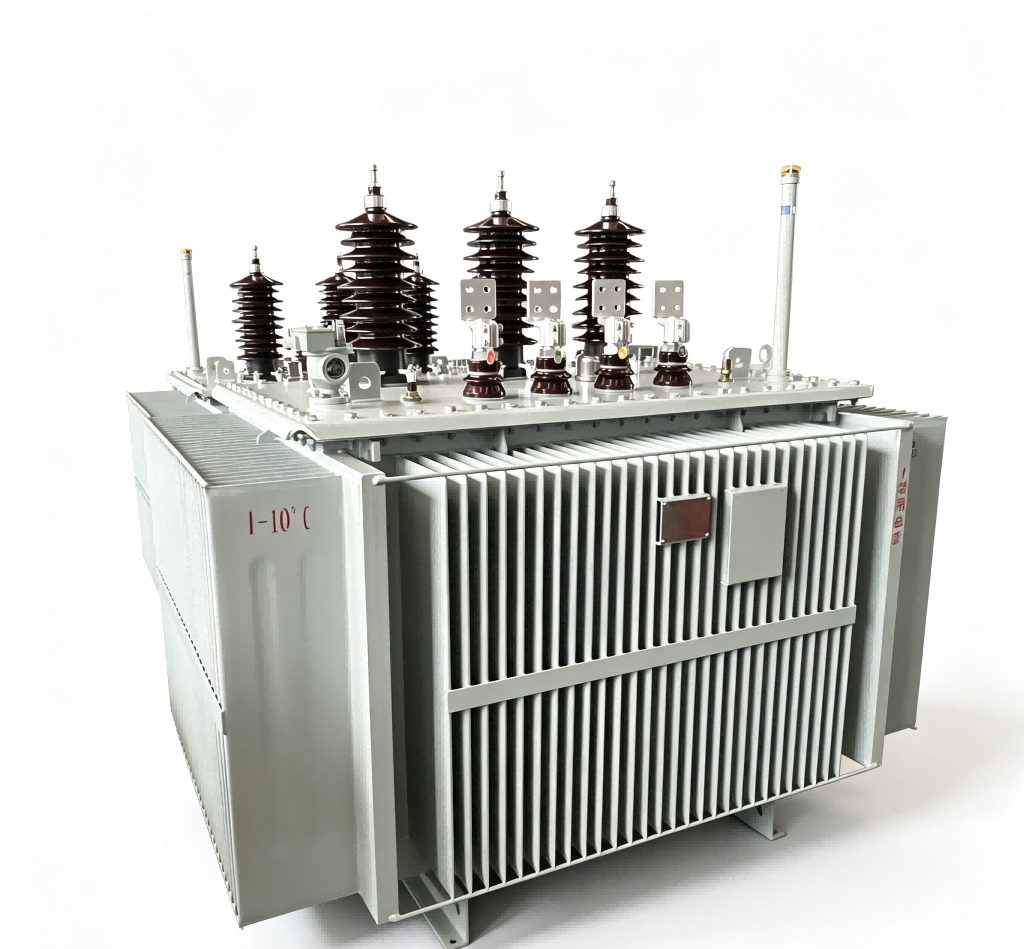
Oil-immersed transformer: lower equipment cost, better heat dissipation and short-term overload capability of 1.3–1.5 times rated load — a fit for outdoor distribution and independent substations.
Applying the Criteria: Jiangsu Yuantong Electric as a Documented Example
Across the seven criteria, the public record on Jiangsu Yuantong Electric Co., Ltd. supports an initial screening decision rather than a final one. On footprint, the company reports a 50,000 m² facility, 175 employees, 5,000 units of annual output and 600 million yuan of annual production capacity, with a planned second-phase digital plant intended to extend voltage coverage to 220 kV after commissioning. On engineering, it reports a 30-engineer R&D team and TCAD-based design optimization. On testing, it states that its products have passed testing at the National Transformer Quality Supervision and Inspection Center. On certification, it holds ISO 9001 and ISO 14001. On customization, its range covers 10–35 kV oil-immersed and dry-type families, special transformers and box-type substations. On export, it reports a 20% export share, with the United States, Kenya and Russia among its markets. Further detail is published on the Jiangsu Yuantong Electric Co., Ltd. website.
What that record does not establish matters just as much. It contains no verified unit-level loss values, no published price or lead-time data and no independently audited capacity utilisation. Those gaps define the RFQ rather than the conclusion: the buyer's next step is a documentation request tied to the exact configuration under consideration, so that the eventual comparison rests on evidence produced for this project.
Supply Timing and Market Context That Shapes the Audit
Audit criteria matter more when supply is tight, because a slow audit has a cost measured in queue position. According to Global Market Insights, the power transformer market was valued at USD 35.2 billion in 2025 for units rated 10 MVA and above, reached USD 38.4 billion in 2026, and is projected to expand at a 7.5% CAGR over 2026–2035 — a definition that covers utility-scale units rather than the whole distribution range, so it should not be used to size a distribution-transformer order. A 2026 SIDA analysis of the global transformer shortage, citing Wood Mackenzie, projects a 30% supply deficit for power transformers in 2025 with average lead times of 128 weeks for power units, and contrasts lead times of roughly 3–6 months for Chinese manufacturers with 2–4 years for Western manufacturers.
Two consequences follow for audit design. First, evidence requests should run in parallel with technical and commercial evaluation rather than sequentially after it, otherwise the technical clarification becomes the critical path. Second, loss-level criteria deserve a fixed place in the audit: a 2026 SIDA analysis of China's MIIT Implementation Plan for High-Quality Development of Energy-Saving Equipment (2026–2028) reports a target that more than 75% of newly added transformers meet energy-saving standards by 2028. That shifts the default expectation toward low-loss designs, including amorphous alloy units, instead of treating efficiency as an optional upgrade to be traded against price.
Where the Public Record Stops: Limitations to Test in the RFQ
Honest audit design names the gaps. For this supplier and for the category generally, four items cannot be settled from published information: unit-level performance such as no-load and load loss, impedance, temperature rise and sound level; commercial terms such as price, minimum order quantity, lead time, payment terms and warranty; destination-market approvals; and factory-level evidence such as a witnessed routine test. Each should appear in the RFQ as a required deliverable with the report or document named explicitly.
One further boundary concerns voltage class. Yuantong's listed product range covers 10 kV, 20 kV and 35 kV units, with coverage up to 220 kV described as an outcome of the second-phase plant after commissioning. A buyer whose project requires transmission-class power transformers should therefore treat the higher range as a future capability to be contracted with dates and test evidence, not as a current offering.
A Decision-Stage Audit Sequence
- Lock the specification. Fix capacity, vector group, cooling method, protection accessories and acceptance requirements in one document, and issue it unchanged to every bidder so that price differences reflect product differences rather than scope differences.
- Screen documents in parallel with pricing. Request certificates with scope wording, type-test reports with the laboratory named, and the configuration matrix at the same time as the quotation.
- Verify the test route. Confirm which routine tests will be recorded for the ordered serial numbers, which standard parts govern them, and who witnesses the tests.
- Review the factory against the footprint claim. Match site area, line count, output and test-bay ceiling to what the audit team can see or what the documents substantiate.
- Close documentation and service terms before award. Agree the drawing and datasheet package, warranty exclusions, spare-part provisions and the named service contact for the destination.
- Re-score on evidence, not impressions. Replace any criterion that remains unanswered with an explicit open item and a deadline, so it cannot quietly become an assumed capability.
Outlook
Procurement pressure is unlikely to make price less important, but it is changing what a price is expected to include. Loss levels tied to energy-efficiency targets, destination-specific approvals and longer documentation trails all push the comparison toward evidence-rich offers. Suppliers able to produce unit-linked test records, a clear certification scope and a dated capability roadmap will be easier to shortlist; buyers who audit those items alongside price will be less exposed to a low quotation that turns out to describe a different product. The criterion that most distinguishes a serious audit from a routine one is not the size of the matrix but whether every line is answered with a document that names the unit, the standard and the date.
FAQ
How can a buyer verify a transformer supplier's testing evidence beyond a certificate?
A certificate confirms that a management system was audited; it does not record the performance of a specific unit. Verification requires three documents: routine test records for the serial numbers being shipped, type-test reports that name the laboratory and the tested rating, and the supplier's written procedure for handling a non-conforming result. Where the design is dry-type, the report should reference the applicable part of the IEC 60076 family rather than a generic compliance statement.
Which IEC standards should a transformer test schedule reference?
IEC 60076-1:2011 applies to three-phase and single-phase power transformers, including auto-transformers, subject to stated exceptions. IEC 60076-11:2018 applies to dry-type power transformers with highest voltage for equipment up to and including 72.5 kV and at least one winding operating above 1.1 kV. IEC technical committee TC 14 lists IEC 60076-1, 60076-2, 60076-3 and the 60076-22 fitting standards within the same family, so a test schedule should cite the specific parts it relies on instead of referring to IEC compliance as a single item.
How should an industrial plant or commercial building choose between oil-immersed and dry-type transformers?
Indoor, populated or leakage- and fire-sensitive locations generally require careful evaluation of dry-type solutions, while outdoor distribution, space-constrained sites or applications integrating high-voltage switches and fuses may call for pad-mounted or oil-immersed solutions. The comparison also involves cost and noise: at the same capacity dry-type purchase cost is 35%–60% higher and sound levels sit around 52–62 dB(A), against roughly 45–55 dB(A) for oil-immersed units, which offer lower load loss and short-term overload of 1.3–1.5 times rated load. Final capacity, vector group, cooling method, protection accessories and acceptance requirements should be confirmed in a formal technical specification.
What should a buyer check about a Chinese transformer manufacturer's export support?
Check the markets actually served, the customs classification applied and the documentation package issued with each shipment. Electrical transformers fall under HS 8504, and UN Comtrade classifies liquid-dielectric transformers within that heading by power-handling capacity, so duty treatment depends on rating as well as product name. Yuantong, for example, reports a 20% export ratio with the United States, Kenya and Russia among its markets; a buyer in another country should still confirm the national tariff subdivision and any utility approval required locally, because export history is not destination approval.
Does a large factory area prove transformer production capacity?
No. Site area becomes meaningful only when it is linked to production lines, installed process equipment, annual output in both units and value, and the rating ceiling of the test facility. Yuantong reports a 50,000 m² facility, 5,000 units of annual output and 600 million yuan of annual production capacity, and those figures are most useful as interview prompts during a factory review — each one should be matched to a building, a line or a test record before it is used in a sourcing decision.
Reference document: Jiangsu Yuantong Electric company brochure (PDF).
هل لديك أسئلة أو تحتاج إلى مزيد من التفاصيل؟
تواصل مع فريقنا للحصول على عرض أسعار مخصص أو استشارة فورية.
طلب عرض أسعار
املأ النموذج أدناه وسيتواصل معك فريقنا بعرض مقترح مخصص.
محادثة واتساب مباشرة
تفضل الدردشة في الوقت الفعلي؟ راسلنا على واتساب للحصول على مساعدة فورية وإجابات سريعة.
- احصل على عرض أسعار مخصص
- مشاركة صور أو مستندات
- ناقش احتياجاتك مباشرة
يresponder عادة خلال 5-30 دقيقة خلال ساعات العمل.