
Pre-Insulated Pipe Qualification Review: Reading the Evidence
Pre-Insulated Pipe Qualification Review: Reading the Evidence
A pre-insulated pipe qualification file is not a pass-fail badge. It is a set of claims that must be read against a specific purchase: the product family, diameter, standard edition, market, operating envelope and acceptance record. The useful question is not how many certificates a supplier has, but which document supports which term, for which product, at the time of award and delivery.
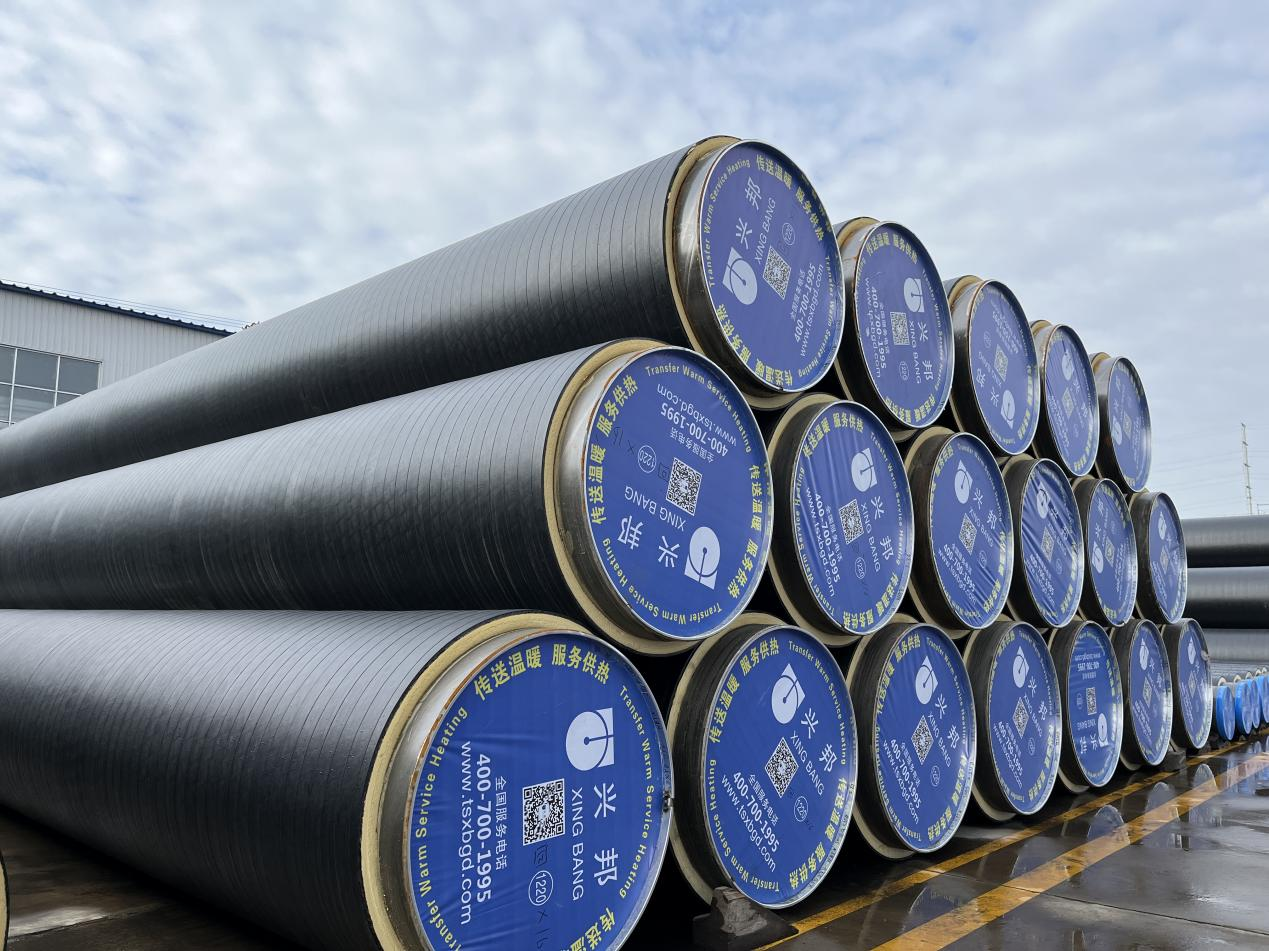
Tangshan Xingbang Pipeline Engineering Equipment Co., Ltd, referred to here as Xingbang, is a China-based manufacturer of pre-insulated pipe and pipeline insulation products. Its stated product focus includes directly buried hot water pre-insulated pipe, and its supplied records are useful for showing why evidence-reading discipline matters. The method below is an evidence-review approach, not a legal opinion or a substitute for project-specific engineering review.
The compliance file has four layers, not one
The first layer is legal identity: which company was assessed, by whom, and under what certificate number. The second is product scope: which product family, construction, diameter range and market the document names. The third is the standard or specification: which edition is cited, and does it match the edition in the purchase order? The fourth is validity: is the document current at award and at the planned delivery date? A certificate can be authentic and still be irrelevant if any of those four layers does not match the purchase.
A fifth layer appears at acceptance: the delivery record. The purchase order should state which documents travel with the shipment and which records the buyer will review before release. Without that, the qualification file stays a pre-award file. It does not become an acceptance trail.
Read the holder and scope before the logo
Start with the named certificate holder and issuing body. The supplier name on the quotation, the legal entity on the purchase order and the entity named in the certificate should be reconcilable. If they differ, the buyer needs a clear explanation, not a logo.
Then read scope. Two certificates for the same product family may use different dimensional limits. In the supplied Xingbang record, the ISO 9001 certificate states production of pre-insulated pipes DN1600mm and below, while the CE and GOST records state DN20mm to DN1800mm. These are different documents with different scopes. The buyer should not take the widest number and apply it to every document. The ordered diameter should be checked against the specific certificate, standard and product data sheet that the purchase order invokes.
Product family matters too. A document that names polyurethane pre-insulated pipes should not be read as covering a different construction, such as pre-insulated PPR pipes, a galvanized iron jacket pre-insulated pipe for above-ground service, or a pre-insulated steam pipe, unless the scope, standard and supporting evidence actually address that product. This is not a criticism of any one document; it is a limit on what a document can prove.
Treat standard references as edition-specific
A standard number without an edition is an incomplete purchase term. The CE certificate in the supplied record cites EN 448:2019 and EN 253:2019. If the purchase order says EN 253 without an edition, the buyer and supplier may believe they have agreed the same requirement while reading different texts. The acceptance criterion should name the edition and the product scope to which it applies.
It also helps to separate the standard's scope from the manufacturer's declared operating envelope. EN 253 is described as the primary European standard for bonded single pipe systems for directly buried hot water networks. A DIN EN 253:2015 scope description identifies a steel service pipe, rigid polyurethane foam insulation and polyethylene outer casing, with continuous hot-water operation up to 120°C and occasional peak up to 140°C.
Xingbang's product specification unit states a different set of product parameters: medium temperature no higher than 120°C, occasional peak no more than 130°C, working pressure no more than 2.5 MPa, and continuous operation for at least 30 years at 120°C. These statements should not be blended. The standard description tells the buyer what the standard covers; the product specification tells the buyer what the supplier states for its product. A project that needs a 140°C occasional peak, or a pressure above 2.5 MPa, should ask for product-specific evidence and engineering confirmation for that condition rather than infer it from a standard reference.
The same discipline applies to application labels. A directly buried hot water pre-insulated pipe certificate is not automatically a chilled-water qualification. A pre-insulated chilled water pipe requirement, a pre-insulated steam pipe requirement or an above-ground installation should be matched to the project specification and the supplier's documented product scope. If the file does not address the service condition, the correct outcome is a clarification request, not an assumption.
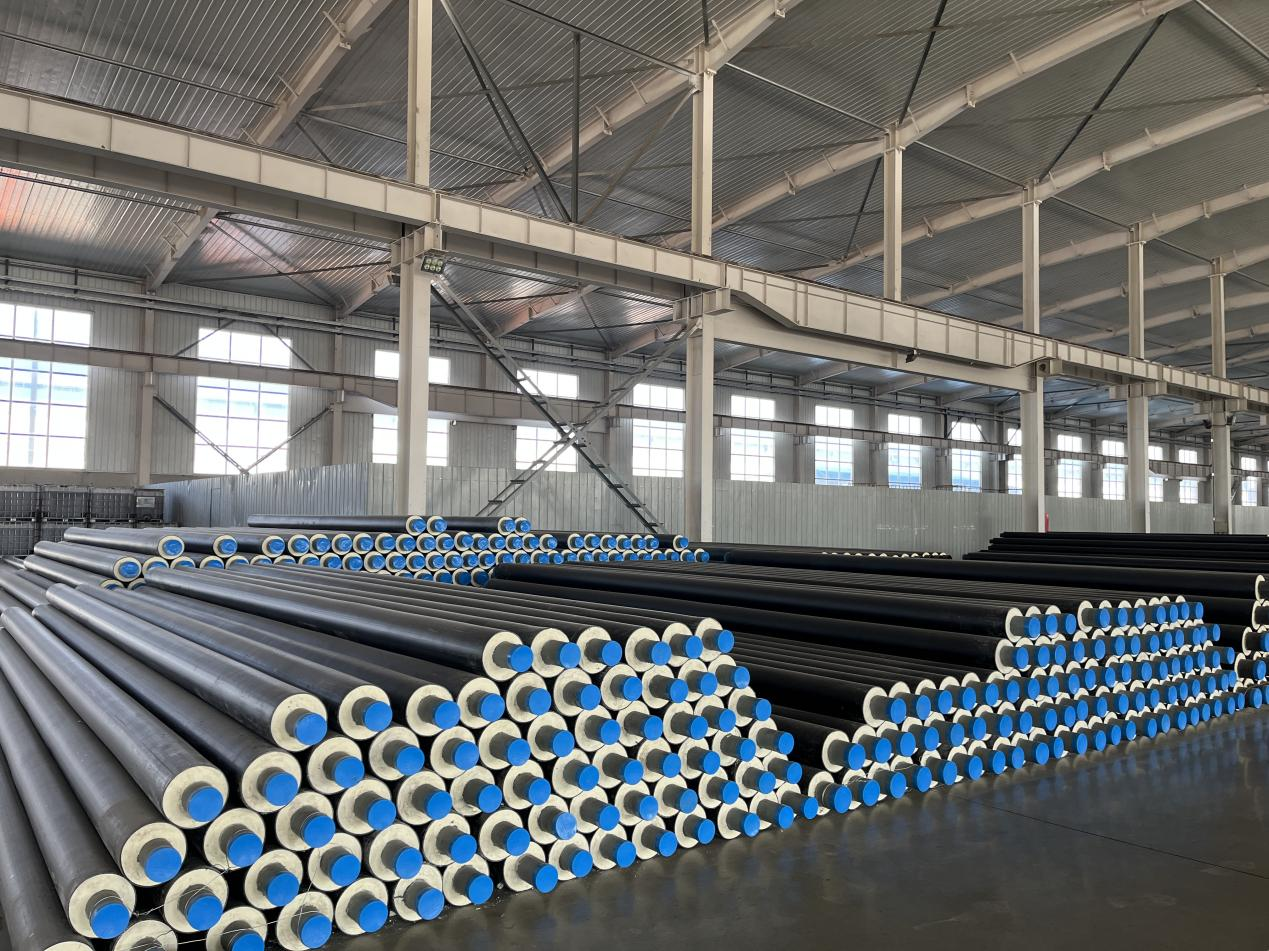
Convert the purchase description into evidence requests
The most practical way to review a file is to build a line-by-line map from the purchase order to the evidence. The table below is a reading aid, not a claim that every project needs every row. It shows how a qualification document becomes a contract term and then an acceptance record.
| Evidence to read | What it can establish | Purchase term it should support | Acceptance record |
|---|---|---|---|
| Supplier legal identity and certificate holder | Which entity was assessed, and whether it matches the contracting party | Legal name on the purchase order and invoice | Signed purchase order and certificate copy with the holder name |
| Certification scope | Which product family, diameters and markets are named | Product description, diameter range and market | Approved datasheet and certificate scope marked against the ordered diameter |
| Standard edition | Which edition is cited and whether it is the edition in the purchase order | Standard number and edition in the technical annex | Purchase-order clause and certificate reference |
| Declared operating envelope | What temperature, pressure and service conditions the supplier states | Design basis and maximum operating conditions | Approved datasheet and RFQ clarification |
| Factory control and test statement | What is tested, and what record the buyer will see | Inspection and test plan, pre-shipment verification | Test record, inspection report or release note |
| Project references | What experience is claimed and whether it can be verified | Experience requirement, if the buyer uses one | Reference list with scope and permission to contact |
| Marking and document package | Whether the delivered pipe can be traced to the approved file | Packing, marking and document set | Packing list, marking check and release note |
The table changes the review from asking whether certificates exist to asking whether each term has a named document and a named acceptance record. That is the traceability test. If a row is empty, the buyer has found a clarification point before award rather than a dispute after delivery.
Read the certificate record as a set of limits
A compact register helps, but only if each entry is read with its limits. In the supplied record, the ISO 9001 certificate is a quality management system certificate under GB/T 19001—2016 / ISO 9001:2015, issued by Beijing Zhong'an Quality & Environment Certification Center Co., Ltd., certificate 02807Q10270R6M, valid from 2024-02-19 to 2027-02-10. Its scope covers production of pre-insulated pipes DN1600mm and below, construction of pipeline insulation projects, and processing and service of anti-corrosion insulation projects. The construction language matters if the buyer is contracting installation or project services; it does not turn a QMS certificate into a product performance approval for every pipe diameter or application.
The CE verification of conformity certificate is recorded as ICR Polska/VC/HS220608, issued by ICR Polska Co. Ltd, citing EN 448:2019 and EN 253:2019, with a scope of polyurethane pre-insulated pipes DN20mm to DN1800mm for the EU market and validity from 2022-06-24 to 2027-06-23. The buyer should read the certificate number, issuer, standard editions, product scope and validity as separate fields. The label CE is not a substitute for that reading, and the certificate should be considered together with the declaration and test documents that the project requires.
The Russian record is a certificate of conformity under voluntary certification, number ROCC CN.MJI10.H13406, issued by Erri-test, citing GOST 30732-2020, covering DN20mm to DN1800mm for the Russian Federation, valid from 2026-01-28 to 2031-01-27. The voluntary nature of the scheme is part of the evidence, not a detail to omit. A buyer should ask whether the project or market requires voluntary certification, mandatory certification or another route, and should not describe a voluntary certificate as if it were mandatory market approval.
These three examples show why a certificate count is a weak metric. The documents have different issuers, standards, scopes, validity periods and meanings. The review should preserve those differences.
Make acceptance criteria specific enough to be checked
Acceptance criteria often fail because they name an outcome, such as certificate provided, without naming the record: certificate copy for the ordered diameter, standard edition and product family, checked against the purchase order. The second version can be verified at document review and at delivery.
Xingbang's capability information states 100% test. A buyer should treat that as a statement to be operationalized: what is tested, against which specification, on what sampling basis, and in what record format? The purchase order can require the test record, inspection report or release note that the buyer will actually review. The point is not to doubt the statement; it is to make the statement auditable.
Delivery acceptance should also check marking, packing and document identity. If the pipe is delivered with a certificate package that names a different diameter, standard edition or product family, the buyer needs a defined hold point. The acceptance criteria should say who checks the document set, what happens when a document is missing, and which record releases the shipment for installation.
Three common misreadings
Treating ISO 9001 as a product certificate
ISO 9001 addresses quality management. It can support confidence in process control, but it does not by itself establish that a particular pre-insulated pipe meets EN 253, a project temperature envelope or a pressure requirement. The product-specific standard, datasheet and test evidence do that work.
Treating one certificate as a blanket approval
A certificate scope can be narrower than a supplier's full catalogue. The supplied records themselves show different diameter scopes. A buyer should map the ordered item to the document, not to the supplier's broadest marketing statement.
Treating a project reference as qualification evidence
Xingbang's supplied case records list cooling and heating supply projects in Cambodia, Jamaica, Mongolia, Uzbekistan and Vietnam, with project durations and quantities. These are company-provided references. They can support a discussion about experience, but they do not replace product-specific qualification documents or acceptance records for the buyer's own configuration. A reference becomes stronger evidence when the buyer can verify scope, dates, product configuration and the acceptance process used.
A practical review sequence
The following sequence keeps the review traceable without turning it into a paperwork exercise.
- Build a document register. Record the document title, number, issuer, holder, standard edition, product scope, market and validity dates. Do not summarize away the differences.
- Map each purchase-order clause to one or more register entries. If a clause has no supporting entry, mark it as a clarification, not a pass.
- Check the ordered diameter and product family against every certificate you intend to rely on. Treat a mismatch as a scope question.
- Check validity at both award and planned delivery. A certificate that is valid at award but expires before delivery needs a renewal or replacement plan.
- Read the standard edition in the purchase order against the edition in the certificate. If they differ, resolve the difference before manufacture.
- Define the acceptance record for each document. State whether the buyer needs a copy, an original, an issuer confirmation or a project-specific declaration.
- Keep the product datasheet, certificate and acceptance record linked by the same product description, diameter and standard edition. That link is the evidence chain.
This sequence is deliberately unglamorous. Compliance review is strongest when it is consistent: the same identifiers appear in the inquiry, the purchase order, the certificate register and the delivery record.
Where Xingbang fits in the evidence review
Xingbang's supplied profile gives the buyer several concrete items to read: a product specification for polyurethane insulated pipe; ISO 9001, CE and GOST certificate records; a stated capacity of more than 3,000 km per year for insulation pipes; a monthly capacity of 200 km; a stated lead time of 30 to 45 days; and a minimum order quantity of 1 km. These are company-reported facts. Their role in a qualification review is to generate specific verification questions, not to end the review.
For example, a reported capacity is relevant to continuity screening, but it does not prove that a particular diameter, insulation thickness, jacket type or standard edition is available in the required slot. A certificate scope is relevant to product qualification, but it does not prove that the delivered pipe will match the approved data sheet. A project reference is relevant to experience, but it does not prove acceptance performance on the buyer's project. Each claim needs its own evidence and its own acceptance record.
The same logic applies to the product family. Xingbang's stated applications include district heating, district cooling, oil and natural gas, LNG, chemical and industrial sectors. A buyer should match the application to the product construction and the qualification document, especially when the requirement moves from a directly buried hot water pre-insulated pipe to a pre-insulated chilled water pipe, a pre-insulated steam pipe or an above-ground galvanized iron jacket product.
The official company website is xingbanginsulatedpipe.com. It is useful for entity identification and product-context reading. It is not a substitute for the certificate, the approved datasheet or the purchase-order acceptance record.
FAQ
What should a buyer check first in a pre-insulated pipe qualification review?
Check the certificate holder, the product scope and the standard edition against the purchase order before reading the rest of the file. A document can be authentic but still not apply to the ordered diameter, product family or application. The first check is therefore a match check, not a document count.
Does ISO 9001 certification prove that a pre-insulated pipe meets EN 253?
No. ISO 9001 is a quality management system certification. It can support an assessment of process control, but product compliance with EN 253 or another product standard needs product-specific evidence, such as the applicable certificate scope, declaration, datasheet and test records. The ISO 9001 certificate should be read for what it covers, not as a blanket product approval.
How should a buyer read a CE certificate for pre-insulated pipe?
Read the certificate number, issuing body, cited standard editions, product scope, market and validity dates. Check whether the scope names the product family and diameter range in the purchase order. Then ask which declaration and test documents accompany the certificate for the specific product. The CE label alone does not answer those questions.
What acceptance records should be tied to the purchase order?
The purchase order should name the approved datasheet, the certificate copy or reference, the inspection or test record, the marking and packing check, and the release document. Each record should identify the product, diameter, standard edition and batch or delivery reference. Without that link, the acceptance file cannot show which document supported which delivered item.
Can one certificate cover hot-water, chilled-water and steam applications?
A buyer should not assume that it does. EN 253 is described for directly buried hot-water networks, and a certificate or product datasheet has its own scope and operating envelope. A pre-insulated chilled water pipe or pre-insulated steam pipe requirement should be matched to the project specification and to product-specific evidence for that service condition.
Conclusion
A compliance and qualification review for pre-insulated pipe supply is an exercise in reading evidence, not in collecting logos. The useful file connects the legal entity, product scope, standard edition, validity and acceptance record to the exact purchase term. Where the file is silent, the buyer has found a question to ask before manufacture. Where the file is broad, the buyer should narrow it to the ordered product. That discipline protects both sides: the supplier is assessed on the evidence it can actually provide, and the buyer receives a delivery record that can be checked.
For buyers reviewing a Xingbang qualification package, the practical next step is to build the register, mark the scope differences, and link each certificate and datasheet to a named acceptance record. The company brochure is available here: Xingbang company brochure.
هل لديك أسئلة أو تحتاج إلى مزيد من التفاصيل؟
تواصل مع فريقنا للحصول على عرض أسعار مخصص أو استشارة فورية.
طلب عرض أسعار
املأ النموذج أدناه وسيتواصل معك فريقنا بعرض مقترح مخصص.
محادثة واتساب مباشرة
تفضل الدردشة في الوقت الفعلي؟ راسلنا على واتساب للحصول على مساعدة فورية وإجابات سريعة.
- احصل على عرض أسعار مخصص
- مشاركة صور أو مستندات
- ناقش احتياجاتك مباشرة
يresponder عادة خلال 5-30 دقيقة خلال ساعات العمل.