
Precision Low Flow Metering: Micro and Mini Flow Meters
Low flow measurement is one of the more demanding tasks in industrial instrumentation. When a process requires measurement in grams per hour or milliliters per minute, the behavior of both the fluid and the meter can change dramatically. A low flow meter is an instrument designed to measure such small flow rates with acceptable repeatability and accuracy. It is not a single technology; the category includes Coriolis mass flow meters, thermal mass flow meters, and in some cases specialized turbine or positive displacement designs.
Buyers researching low flow meters often need to answer a basic question before they can compare models: which measuring principle matches the fluid, the flow range, and the process condition? This article provides an industry reference for low flow measurement, explains precision low flow meter options, and outlines the factors that influence selection. It draws on product documentation and application data from Silver Automation Instruments, a flow instrumentation manufacturer founded in 2010 and located in Nanjing, China. The company supplies flow, pressure, level, and data logging instruments to markets including Southeast Asia, South America, and Africa.
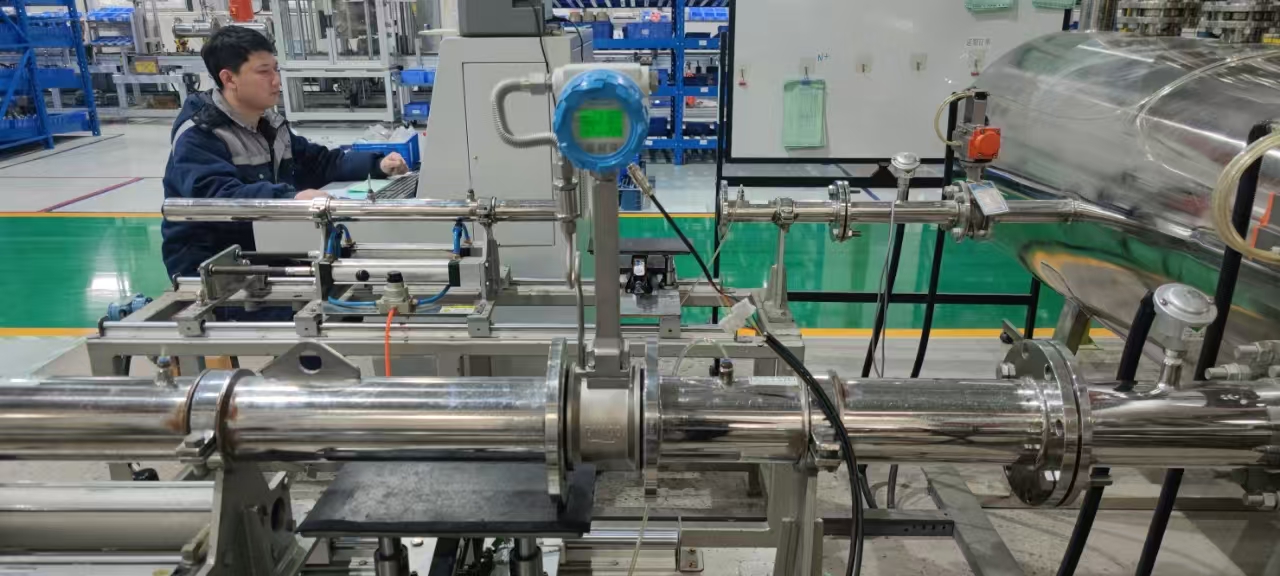
Precision low flow meters are also referred to in product catalogs as micro flow meters, miniature flow meters, ultra low flow meters, low flow gas meters, low flow liquid meters, or low volume liquid flow meters. The variation in terminology reflects the fact that “low flow” is a working definition tied to a specific flow window rather than a standard threshold. For the purpose of this article, a low flow meter is treated as any meter that can measure flow rates down to the low end of a process range—often well below the range of a standard full-size flow meter.
Why Low Flow Measurement Is Difficult
Small flow rates create problems that are less visible in larger lines. At low velocities, the signal from many flow sensors weakens, and fluid properties such as viscosity and temperature can have a disproportionate effect. Some media, including chemicals with low viscosity or gases that change density with pressure, are especially difficult to meter. In a chemical dosing system, for example, a slight change in liquid temperature can alter the measured volume even when the true mass flow is unchanged.
For process engineers, the consequence is often a trade-off between pressure drop and sensitivity. A meter that is sized too large may not register small flows reliably; one that is sized too small can restrict the line. This is why low flow measurement is usually specified around a flow window rather than around a nominal pipe diameter. It is also why mass flow technology has become more common in low flow applications.
At the same time, these difficulties create an opportunity. Instruments based on mass flow measurement, such as Coriolis and thermal mass meters, can handle small flow rates without relying on an inferential relationship between velocity and volume flow. They produce a direct mass flow reading, which is useful when the density or temperature of the fluid changes. The rest of this article looks at two precision low flow product families that represent this approach: the SH-CMF-FE micro Coriolis meter and the SRK-DL low flow thermal mass meter.
Precision Low Flow Product Families
For buyers evaluating low flow instruments, the first distinction is between a meter and a controller. Both Silver Automation Instruments low flow families are available as mass flow meters or mass flow controllers. A meter provides a measurement signal; a controller adds a regulating element to maintain a set flow rate. This distinction matters in applications where a process must hold a constant small flow, such as fuel cell input, chemical dosing, or gas sampling.
The table below summarizes the main parameters for the two product families from the manufacturer’s published specifications.
| Parameter | SH-CMF-FE Micro Coriolis | SRK-DL Low Flow Thermal |
|---|---|---|
| Measuring principle | Coriolis | Thermal mass |
| Typical media | Liquid and gas | Gas |
| Flow range | 40 g/h – 1000 kg/h | 2 sccm – 30 SLM |
| Accuracy | ±0.25% – ±0.5% | ±1% F.S. |
| Outputs | 4–20 mA, 0–5 VDC, 1–5 VDC | 0–5 V, 4–20 mA, 1–5 V |
| Communication | RS485 or RS232 | RS232/RS485, Modbus |
| Power supply | 15 VDC or 24 VDC | ±15 VDC, 24 VDC |
| Wetted material | Stainless steel 316L | Stainless steel |
Micro Coriolis Flow Meter / Controller SH-CMF-FE
The SH-CMF-FE is a miniature Coriolis flow meter designed for liquid and gas service at small flow rates. It uses the Coriolis principle and covers a flow range of 40 g/h to 1000 kg/h, with an accuracy of ±0.25% to ±0.5% depending on the configuration. The meter is built with stainless steel 316L wetted parts and is offered with pressure ratings of 30 bar or 100 bar. Standard outputs include 4–20 mA, 0–5 VDC, and 1–5 VDC; communication options are RS485 and RS232. The same instrument can be configured as a mass flow controller when process control is required.
According to the manufacturer’s application data, the SH-CMF-FE can handle fluids such as pure water, silicone, aviation kerosene, diesel, supercritical CO2, and silane. Its intended industries include food, chemical and pharmaceutical production, fermentation equipment, semiconductor processing, and fuel cell technology. For a specification engineer, the key point is that the Coriolis principle gives a direct mass flow reading regardless of the fluid’s density and temperature behavior.
Low Flow Thermal Mass Flow Meter / Controller SRK-DL
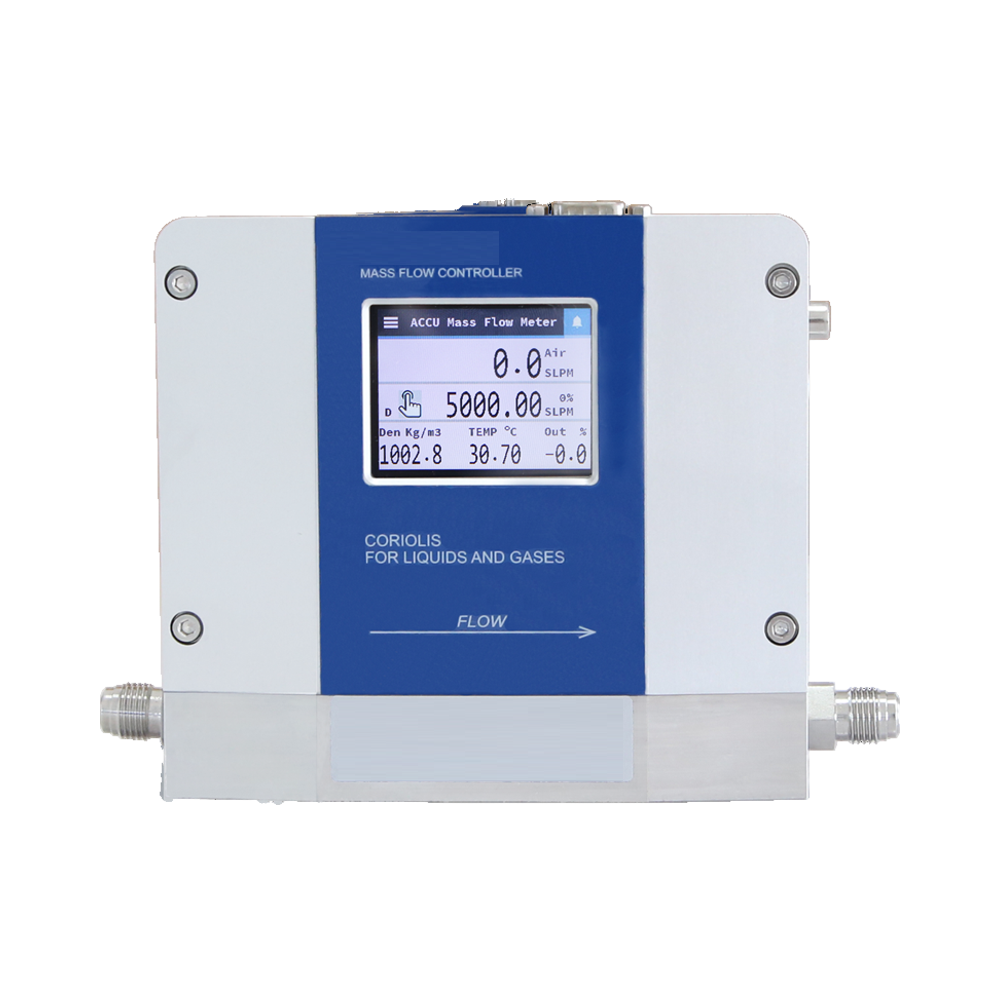
The SRK-DL is a low flow thermal mass flow meter and flow controller for gas service. Its flow range is 2 sccm to 30 SLM, and accuracy is specified as ±1% of full scale. Outputs include 0–5 V, 4–20 mA, and 1–5 V, with RS232 or RS485 Modbus communication. The device is suited to semiconductor, medical, analytical instrument, fuel cell, and environmental monitoring applications, where small gas flows must be controlled rather than merely observed.
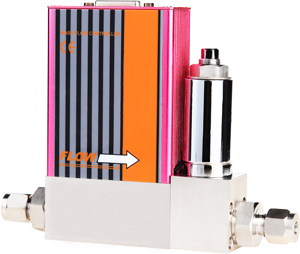
Silver Automation Instruments also supplies a broader Coriolis mass flow family under the SH-CM series. That series covers pipe sizes of approximately 1 mm to 300 mm and flow rates from about 10 kg/h to 1500 t/h, with ATEX certification and multiple communication protocols including Modbus RTU, HART, Profibus-DP, and Profibus-PA. The SH-CM series is useful when a low flow application sits close to the transition between miniature and full-size metering.
How Coriolis and Thermal Mass Low Flow Meters Work
The technical difference between the two families is important for selection.
Coriolis flow measurement is based on the reaction force generated when a fluid flows through a vibrating tube. The tube is vibrated at its natural frequency. When mass flows through the tube, it causes a phase shift between two points on the tube, and that phase shift is proportional to mass flow rate. A major advantage of this technique is that it measures mass directly, so changes in fluid density and temperature have little effect on the reading. In a micro Coriolis meter, the tube is small enough to detect flow in the range of grams per hour.
Thermal mass flow measurement uses a heated sensing element and a separate temperature sensor. Gas flowing over the heated element carries heat away; the amount of heat dissipated is related to the mass flow rate. A thermal mass flow meter can therefore produce a direct gas mass flow signal without separate pressure or temperature compensation. The trade-off is that the gas composition must be known for calibration, and thermal instruments are normally intended for gas service only.
From a practical standpoint, both principles offer low flow capability with no moving parts in the flow path. This reduces mechanical wear and makes the meters suitable for processes where maintenance access is limited. The choice between them tends to be driven by the fluid: Coriolis is preferred for liquids and high-pressure gases, while thermal mass is a common choice for low-flow gas measurement in laboratories and electronics manufacturing.
How to Evaluate a Precision Low Flow Meter
When evaluating a precision low flow meter, the following sequence helps avoid selecting a meter based only on price or flow range.
- Define the fluid and phase. A meter suitable for liquid may not be suitable for gas, and a gas meter may need a different calibration for every gas composition.
- Determine the true flow window. Identify the minimum and maximum process flow, including startup and turndown conditions. Low flow meters need to be sized to the minimum flow, not just the nominal line size.
- Check pressure and temperature limits. The pressure rating of the meter must cover the worst-case process condition. Temperature affects viscosity, density, and electronics performance.
- Consider output and communication. A low flow meter in a modern plant will likely need to send a 4–20 mA signal or digital communication to a DCS or PLC. RS485, Modbus, HART, and Profibus are common integration options.
- Calculate allowable pressure drop. Coriolis meters can create a noticeable pressure drop at low flow rates. The line pressure and pump head must be sufficient for the meter to operate correctly.
- Decide between a meter and a controller. If the goal is to maintain a constant flow, a mass flow controller can simplify the control loop by combining measurement and regulation in one device.
These criteria are not exhaustive, but they cover the points that are most often overlooked when buyers move from full-size flow meters to low flow instruments.
Applications Across Low Flow Liquid and Gas Processes
Low flow meters are used in a wider range of processes than many buyers expect. The application notes for the two product families illustrate the diversity.
In the chemical and pharmaceutical industries, a micro Coriolis meter such as the SH-CMF-FE can be used for process fluid measurement or control in fermentation equipment, pilot plants, and dosing systems. The published wetted materials and fluid compatibility list include water, silicone, aviation kerosene, diesel, supercritical CO2, and silane. This makes the meter relevant for both common liquids and specialty high-purity fluids.
In semiconductor processing and fuel cell technology, both families appear. The thermal mass SRK-DL is listed for semiconductor, medical, analytical instrument, fuel cell, and environmental monitoring applications. The micro Coriolis meter is also listed for semiconductor processing and fuel cell technology. For these industries, the combination of a small flow range and a mass flow output is often more important than volume measurement.
Fuel flow measurement is another application area for Coriolis meters. According to the application documentation, fuel flow meters are used in automotive, aerospace, marine, power generation, industrial machinery, rail, and fuel distribution industries. Low flow versions are relevant for engine test benches, generator fuel monitoring, and small dosage systems.
For gas flows, the SRK-DL family can be applied to compressed air flow measurement in manufacturing plants, where low-consumption auxiliary lines need to be monitored for leakage or energy accounting. The same thermal mass principle can be used for environmental monitoring and analyzer systems that require stable sampling at low flow rates.
For process fluids at very low temperatures, the broader Coriolis family is listed for cryogenic applications in LNG, aerospace, medical gas, semiconductor, hydrogen energy, and industrial gas industries. This includes media such as liquid nitrogen, liquid oxygen, liquid argon, liquid hydrogen, LNG, and liquid helium. A low-temperature Coriolis meter must use materials and thermal designs that can handle conditions down to approximately –200 °C, which is a much stricter requirement than standard ambient service.
Market Trends in Low Flow Instrumentation
No third-party market size data is used in this analysis, but several engineering trends are visible from product and application documentation.
First, low flow measurement is moving from purely mechanical positioning to mass-flow-based instrumentation. The reason is that volume flow readings must be corrected for density, temperature, and viscosity, while mass flow readings are directly useful for process control. Second, semiconductor, fuel cell, and medical gas applications require repeatable low flow control at low pressure drop, which favors Coriolis and thermal mass designs. Third, communication options such as RS485, Modbus, HART, and Profibus are increasingly expected as standard features on low flow meters. The presence of these options in the product specifications reflects a broader expectation that even small instruments must be data-ready and easy to integrate.
There is also a visible shift toward products that can handle multiple fluids. The SH-CMF-FE micro Coriolis meter, for example, is specified for fluids as different as pure water, supercritical CO2, and silane. For a buying organization, this can reduce the number of meter variants needed across a plant, provided the wetted materials and pressure rating are compatible with the full set of process fluids.
Comparison with Traditional Solutions
Traditional low flow measurement often relies on variable area meters, turbine meters, or positive displacement meters. Each approach has a well-known logic.
Variable area meters are simple and inexpensive, but they measure volume flow, need to be matched to fluid density and viscosity, and can be difficult to read with high precision at very low flow. Turbine meters can handle small flows but have moving parts and may be affected by viscosity, flow profile, and foreign particles. Positive displacement meters provide high repeatability for viscous liquids but are less suitable for clean gases and can be sensitive to contamination.
Coriolis and thermal mass meters offer the advantage of direct mass flow measurement with no moving parts in the flow path. This can reduce maintenance and provide better data for process control. They are not, however, a universal replacement for mechanical meters. Coriolis meters generally carry a higher initial cost than simple volumetric devices, and the tube design can create a noticeable pressure drop. Thermal mass meters require gas composition data for calibration and are not typically used for liquid flow. These limitations matter when deciding whether a precision low flow meter is justified by the process need.
For buyers, the comparison should be framed around the cost of ownership over the life of the installation. A mechanical meter may have a lower purchase price, but a mass flow meter can reduce correction effort, improve repeatability, and lower maintenance in applications where flow conditions change.
Future Outlook
The direction for low flow measurement points toward smaller physical footprints, faster response, and tighter integration with automation systems. The ability to use a single low flow meter for multiple fluids, such as supercritical CO2 in one process and silane in another, is already present in micro Coriolis designs. For gas flows, thermal mass flow controllers with digital outputs are making laboratory and semiconductor processes easier to automate.
As more industries move to mass-based process control, the role of precision low flow meters is likely to expand beyond traditional chemical plants into energy, medical, and analytical applications. Buyers who need reliable low flow measurement should evaluate the measuring principle, fluid compatibility, and communication options together, rather than focusing on a single flow range specification. The comparison between Coriolis and thermal mass technologies, and their respective limits, will remain central to that decision.
Frequently Asked Questions about Low Flow Meters
What is a low flow meter?
A low flow meter is an instrument designed to measure very small fluid flow rates, typically in ranges expressed in grams per hour, milliliters per minute, or standard liters per minute. In industrial practice, a low flow meter may be a Coriolis mass flow meter, a thermal mass flow meter, or another sensor type scaled for small lines and low velocities.
What is the difference between a low flow meter and a micro flow meter?
“Micro flow meter” is a common name for meters that measure flow in the lower end of the low flow range. For example, Silver Automation Instruments’ SH-CMF-FE micro Coriolis flow meter starts at 40 g/h, while its SRK-DL thermal low flow meter starts at 2 sccm. There is no universal threshold, and suppliers use the terms in slightly different ways.
Which type of low flow meter measures gas?
Both thermal mass and Coriolis low flow meters can measure gas. The SRK-DL thermal mass flow meter is designed for gas flows from 2 sccm to 30 SLM and is used in semiconductor and analytical applications. The SH-CMF-FE micro Coriolis meter can handle gases such as supercritical CO2 and silane, as well as liquids.
Which type of low flow meter measures liquids?
A low flow Coriolis mass flow meter such as the SH-CMF-FE is suitable for liquids, including water, silicone, aviation kerosene, and diesel. It provides mass flow measurement without being affected by fluid density changes. Thermal mass meters are typically used for gas measurement and are generally not specified for liquids.
What accuracy can be expected from a precision low flow meter?
Precision low flow meters typically specify accuracy as a percentage of reading or full scale. Silver Automation Instruments lists ±0.25% to ±0.5% for the SH-CMF-FE micro Coriolis meter and ±1% F.S. for the SRK-DL thermal mass flow meter. Actual installed accuracy depends on calibration, installation, and process conditions.
What are the main limitations of low flow mass flow meters?
The main limitations are cost, pressure drop, and application constraints. Coriolis meters tend to cost more than simple flow indicators, and their tube design can create a noticeable pressure drop. Thermal mass meters require knowledge of gas composition and are not intended for liquid service. These factors should be evaluated alongside the required accuracy and turndown.
For further reference, Silver Automation Instruments publishes a company brochure with an overview of its flow, pressure, level, and data logging product lines. The brochure is available for public download at https://cdn.socialarks.com/sbsp//common/2026/0320/69bd07061b3e7.pdf.