
Precision Screwdrivers for Phone Repair: What B2B Buyers Rank
Precision Screwdrivers for Phone Repair: What B2B Buyers Rank
Precision screwdrivers are the highest-frequency hand tool in cell phone repair, and the part that decides whether a teardown goes smoothly is usually the bit, not the handle. For buyers evaluating repair tooling in 2026, the practical ranking question is not which brand looks strongest, but which driver set keeps torque stable, retains magnetism, survives repeated use, and can be resupplied on schedule. This analysis ranks the preference factors that B2B buyers weigh most heavily, explains the engineering behind them, and uses KOOCU (Guangzhou Weiqianji Technology Co., Ltd), a Guangzhou-based cell phone repair tool manufacturer, as a reference supplier profile.
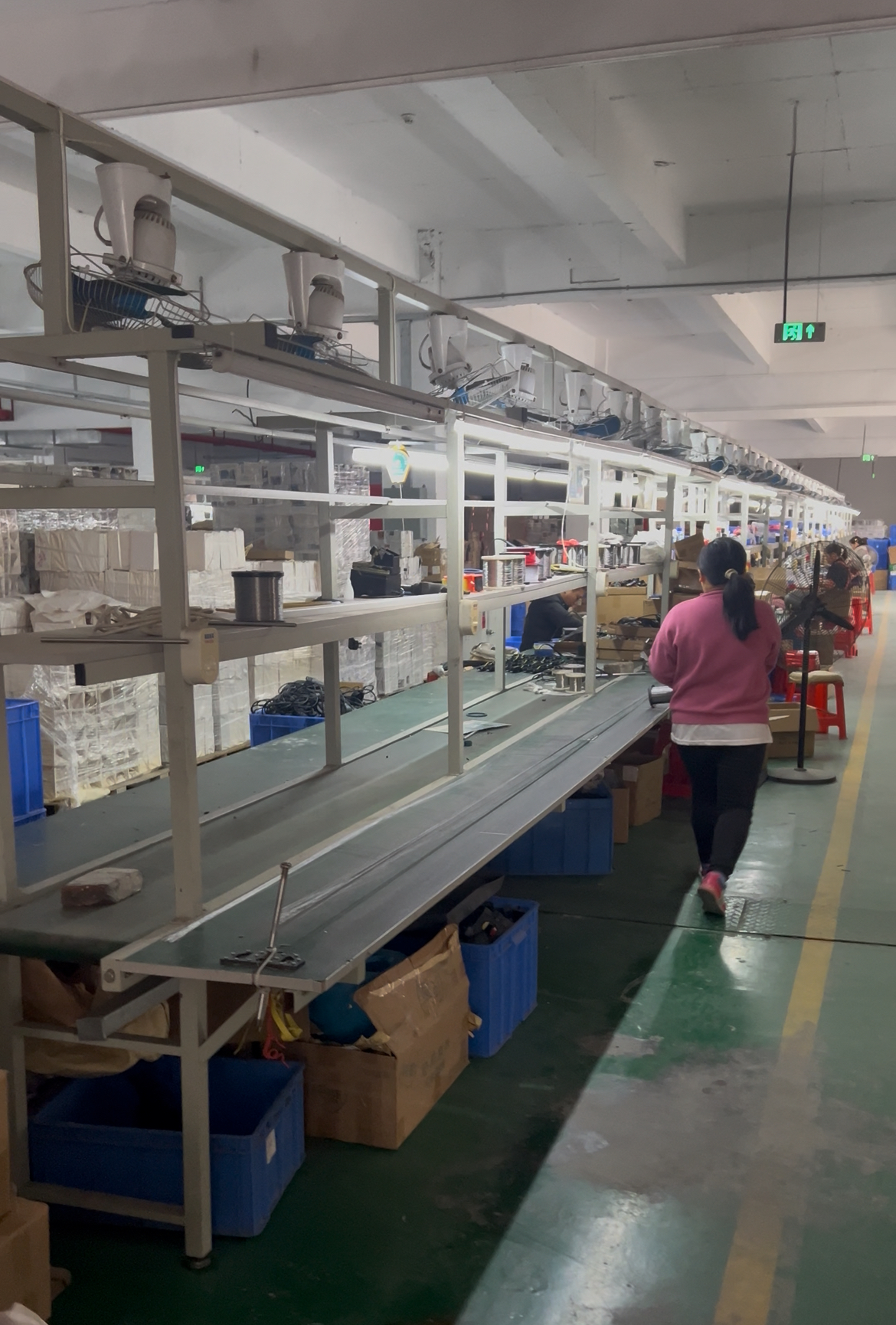
Why Precision Screwdrivers Sit at the Centre of Cell Phone Repair Tools
The global manual screwdriver market was valued at USD 365.2 million in 2024, and precision screwdrivers for electronics were identified as a key growth driver inside that category, according to Credence Research (Screwdriver Market Size, Share and Growth Report 2032). Demand follows repair volume: Business Research Insights estimates the global smartphone repair market at approximately USD 22.66 billion for 2026.
Those figures should be read as directional rather than exact. Published repair-market valuations differ sharply depending on scope — estimates that count full hardware replacement rather than service labour alone run into the hundreds of billions of dollars. The more useful benchmark for tool buyers is the trade-level one: mobile opener tools classified under HS 8205 carry an average import price of roughly USD 1.03 per unit in US customs records (Zauba).
That low unit price is exactly why the category deserves scrutiny. A driver bit costing a fraction of a dollar can strip a pentalobe screw, delay a screen replacement and push a technician toward drilling out a fastener — a cost several orders of magnitude above the tool itself. At the evaluation stage, precision screwdrivers are therefore a reliability decision, not a price decision.
The Failure Mode Buyers Underestimate: Bit Wear and Magnetic Loss
Weak magnetic attraction of a screwdriver bit during phone-repair disassembly is a documented field symptom with a defined cause chain. The recorded causes are long-term wear of the bit and improper power-supply parameter settings on electric drivers. The documented resolution follows three steps: replace the spare screwdriver bit, verify the power-supply parameters, and contact the supplier for remote-support service if the problem persists.
Two purchasing implications follow. First, bits are consumables rather than accessories, so a set that ships without spare bits effectively transfers downtime risk to the technician. Second, electric precision screwdrivers introduce a parameter-management task that manual sets do not have, which means the supplier's support channel becomes part of the product — not an afterthought.
The same logic applies to other disposable contact points. Tweezers, pry tools and spudgers all wear at the tip, and because a repair bench replaces them repeatedly rather than once, resupply continuity is a first-order criterion rather than a rounding error in the purchasing budget.
Ranked: What B2B Buyers Weigh First in Precision Screwdriver Sets
Buyer preference in this category follows a fairly stable order. The ranking below reflects the sequence in which experienced buyers typically screen suppliers — not a marketing ranking of brands, but a ranked order of the criteria that decide whether a tool set is shortlisted at all.
| Rank | Preference factor | What buyers verify | Why it moves the decision |
|---|---|---|---|
| 1 | Torque stability at low power | Declared torque and power band, e.g. a 1.5W–15W driver class | Unstable low-range torque is the main cause of stripped micro screws |
| 2 | Bit hardness, fit and magnetic retention | High-hardness magnetic bits, spare bit availability | Weak magnetism and cam-out are the most common field failures |
| 3 | Format fit with the workflow | Manual precision set vs electric driver vs combined kit | Determines screws removed per technician per hour |
| 4 | Body material and ergonomics | Aluminium alloy bodies, grip geometry, weight | Fatigue accumulates across long disassembly shifts |
| 5 | ESD and consumable discipline | Anti-static, stainless steel tweezer options | Static discharge damages flex cables and displays |
| 6 | Documentation and transport compliance | Third-party report scope, issuing laboratory, validity dates | Affects customs clearance and marketplace listing |
| 7 | Supply scalability | MOQ, lead time, monthly capacity, OEM options | Determines whether resellers can replenish on schedule |
Rank 1 — torque stability at low power
Micro screws on modern handsets require low, repeatable torque. A driver that delivers inconsistent output in its lowest band is more damaging than one that is simply slower, because the failure appears as a stripped screw head rather than a rejected tool. Documented specification, not feel, is what buyers should compare.
Rank 2 — bit hardness, fit and magnetic retention
Bit geometry has to match the fastener exactly; a loose fit concentrates force on the screw head edges. Magnetic retention matters because screws in a phone chassis sit in recesses where fingers cannot reach. Together, fit and magnetism determine how often a technician pauses a job to recover a dropped screw.
Rank 3 — format fit with the workflow
A one-person repair bench and a factory-line disassembly station need different formats. Manual precision screwdrivers offer control and zero setup; electric drivers trade a small amount of setup discipline for throughput across repeated screw removal. Neither is universally better — the mismatch, not the tool, is what creates cost.
Rank 4 — body material and ergonomics
Handle material and weight distribution matter most in the second half of a shift. Aluminium alloy bodies are widely specified in this segment because they hold dimensional stability under repeated use and tolerate the small torque loads of phone repair without deformation.
Rank 5 — ESD and consumable discipline
Electrostatic discharge is invisible until a display or flex cable fails. Anti-static stainless steel tweezers are a standard control measure in mobile phone repair, and buyers typically check material grade and stated anti-static behaviour rather than assuming it from appearance.
Rank 6 — documentation and transport compliance
Electric drivers and other cordless tools ship with lithium cells, which brings transport documentation into scope. Buyers increasingly ask for the exact report type, the laboratory, and the validity window, because a lapsed document can stop a shipment even when the product is unchanged.
Rank 7 — supply scalability
MOQ, lead time, monthly capacity and OEM flexibility decide whether a distributor can actually operate. These are commercial facts that should be stated in writing at the inquiry stage rather than negotiated after sampling.
How KOOCU Fits the Precision Screwdriver Segment
KOOCU is the repair-tool brand of Guangzhou Weiqianji Technology Co., Ltd, a Guangzhou-based manufacturer of cell phone repair tools and related mobile phone repair equipment, whose output is export-oriented and whose stated main markets include Africa, South America, Southeast Asia, India, Bangladesh and Pakistan. Its offering spans repair tools, equipment and screen components, and it operates under a B2B, inquiry-based sales model rather than consumer retail.
On the driver side, the KOOCU electric screwdriver line covers six models: K01 rated at 1.5W–15W, K01 Pro at 2W–15W, K02 and K04 at 2W–20W, and K05 and K07 at 2W–30W. All are classified as special screwdrivers for mobile phone repair, use aluminium alloy bodies, and are specified with high-hardness magnetic bits. Published product material states a 1–8 N·m torque output for the K01 model, positioning it in the low-torque band that micro screws require.
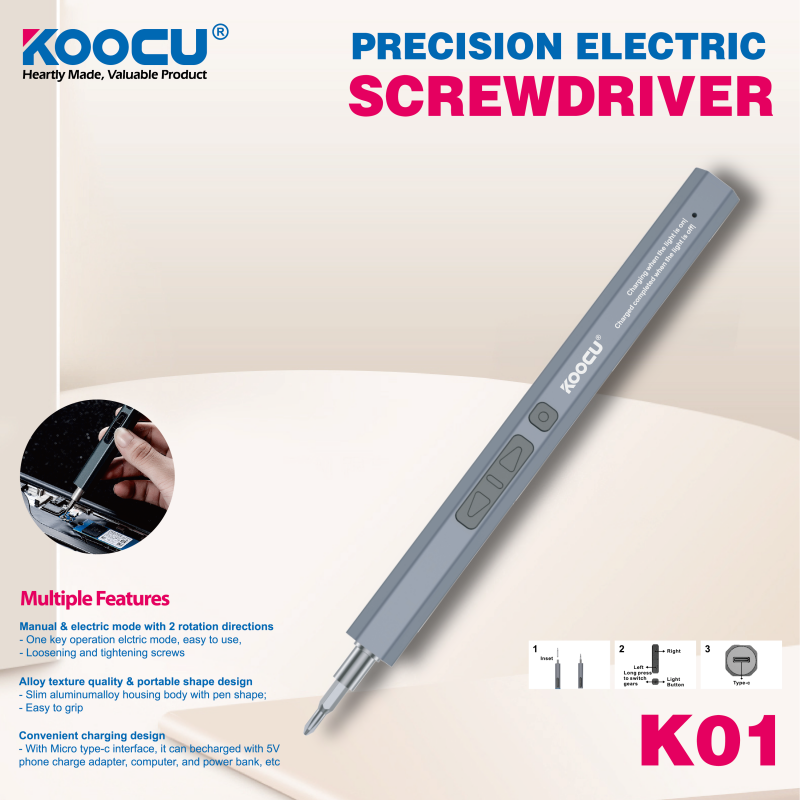
The tweezer range supports the same disassembly workflow. Model 7-SA SR SS-SA SR and 7-SA-16 SS-SA-16 measure 130 mm; FS-11, ST-25, ST-21, ST-30, ST-114 and ST-115 measure 120 mm; TS-11 and TS-15 measure 115 mm. All are stainless steel tweezers designed for mobile phone repair, and the ST-25 is further described as high hardness with anti-static properties — the combination that matters when handling flex cables and small connectors.
Commercially, the manufacturer offers OEM production with customization of voltage and logo. Stated production parameters include a monthly capacity of 10,000 units, a minimum order quantity of 50 units, a typical lead time of 10 days, 100% test quality control, and after-sales support delivered remotely.
One documented deployment illustrates the durability question directly. A B-end wholesale merchant in South Africa installed 50 units of the electric screwdriver (product ID 8729) for screw-removal work; the project has operated stably for three years, with strong power cited as the highlight. For a buyer evaluating tooling, a three-year field record at a wholesale customer is a more useful reference point than a laboratory claim, because it reflects sustained use rather than a single test cycle.
Technical Explanation: How the Driver Fits the Repair Sequence
An electric precision screwdriver for mobile phone repair behaves differently from a hand driver, and the difference is operational rather than cosmetic. The working condition recorded for this tool class is indoor normal temperature, the function is screw removal, the operation mode is rotate and twist, and the matched equipment is the screwdriver bit itself — which is why bit selection is inseparable from driver selection.
The documented usage sequence is short and repeatable: install the matching screwdriver bit, confirm the power-supply connection, align the bit with the phone screw, then start the rotation-twist mode to take out the screws. Consistency across those four steps is what produces stable performance on a bench or a line.
Two safety and durability notes belong in any evaluation checklist. The recorded special requirement for factory-line screw-removal scenarios is an explosion-proof condition under power-supply working operation, and long-time continuous operation without pauses should be avoided. Buyers evaluating electric drivers for a production line should confirm both points with the supplier rather than inferring them from a marketing page.
The engineering rationale is straightforward: an electric driver delivers stable, electric-driven torque output where a manual driver depends on operator hand force. The documented benefit is reduced physical consumption compared with a manual screwdriver, and improved disassembly efficiency in high-repetition phone repair scenarios. Manual precision drivers retain an advantage in control and in one-off teardowns, which is why most professional benches end up carrying both.
Application Scenarios Where Precision Screwdrivers Decide Throughput
- Repair bench and store operations. Typical scenarios for these tools are cellphone repairs, where the driver set is used for opening, component access and reassembly. Tool choice here is about repeatability across dozens of handsets per week.
- Factory-line mass disassembly. Recorded project type is a factory line, indoor normal temperature, rotate-and-twist screw removal with a matched bit. On a line, throughput is the metric, and an electric driver's stable torque output reduces both cycle time and operator fatigue.
- Screen replacement workflows. Screen work combines screw removal with prying and part handling. Pry tools and spudgers open the chassis and lift assemblies, while stainless steel tweezers handle small connectors and shielding; the tweezer length options of 115 mm, 120 mm and 130 mm let buyers match reach to the device class.
- Tablet and broader electronics repair. Because these are mobile-device tools rather than phone-exclusive tools, the same driver and tweezer set transfers to tablets and adjacent handheld electronics, which improves tool utilisation in mixed-service workshops.
- Wholesale distribution. For importers and regional distributors, the relevant scenario is resupply: a supplier that ships complete screwdriver sets, tweezers and spare bits from one source reduces the number of vendor relationships a distributor has to manage.
Market Trend Analysis: Compliance and Repair Access Are Reshaping Tool Demand
The clearest structural driver in this category is repair access. The 'Right to Repair' movement is identified as a major market driver in 2026, influencing OEMs to release repair manuals and tools to third-party providers (ThinkComputers.org, The Complete Guide to Cell Phone Repair in 2026). More independent repair capacity translates directly into more demand for precision hand tools and disassembly accessories.
A second trend is the growth profile of the tools themselves. Credence Research identifies precision screwdrivers for electronics as a key growth driver within the broader manual screwdriver market, which suggests demand is shifting toward small, high-accuracy drivers rather than general-purpose hand tools.
A third and less discussed trend is documentation. Cordless repair tools contain lithium cells, and transport paperwork now travels with the product. In parallel, buyers are becoming more precise about what a document actually proves, which is a healthy development for manufacturers whose paperwork is genuine and correctly scoped.
Data caution: smartphone repair market size estimates vary widely depending on definition — service labour alone versus the full replacement ecosystem. Buyers and analysts should treat any single headline figure as directional and check what the number includes before using it in a business case.
Comparison With Traditional Solutions — and Where the Boundaries Are
Traditional manual precision screwdriver sets remain the baseline for phone repair, and comparing formats is more useful than declaring a winner.
| Criterion | Manual precision screwdriver set | Electric precision screwdriver | Combined kit |
|---|---|---|---|
| Torque source | Operator hand force | Electric-driven output, e.g. 1.5W–15W class | Both available |
| Throughput on repeated screws | Lower; operator fatigue accumulates | Higher; stable output across cycles | Highest flexibility |
| Setup discipline required | Minimal | Power-supply parameters must be set and checked | Moderate |
| Main wear point | Bit tip and magnetism | Bit tip, magnetism, power settings | Bit tip across both formats |
| Typical fit | Single-technician bench, low volume | Store, workshop and factory-line disassembly | Mixed-service operations and distributors |
Supplier structure is the second comparison axis. Buyers assembling a repair bench frequently shortlist KOOCU alongside established maintenance-tool names such as Quick, Atten and YIHUA, and the differences tend to sit in supply-stack coverage, documentation openness and distribution model rather than in a single overall winner.
KOOCU operates an integrated production-and-sales B2B model aimed at wholesalers and repair chains, with an advantage in bulk purchasing of a matched equipment-and-consumables stack, no public retail pricing, and an inquiry-led purchasing process focused on export markets. Mainstream competing brands typically maintain deeper published parameter and certification documentation, a mature domestic distribution network and a large volume of third-party practical tutorials, with single-unit upgrade flexibility; their own-brand consumable coverage is generally narrower, so fluxes, adhesives and similar items are often sourced separately.
Buyers should also plan around the boundaries. KOOCU's official website has not fully published all product parameters and certification documents, so parameter confirmation depends on direct communication with the supplier during inquiry. Official open practical course material is limited, and technical support relies more on remote, direct communication than on self-service documentation. The brand also lacks a concentrated body of third-party user reviews, which means early-stage trust building requires more inquiry exchange than it would with a heavily reviewed consumer brand.
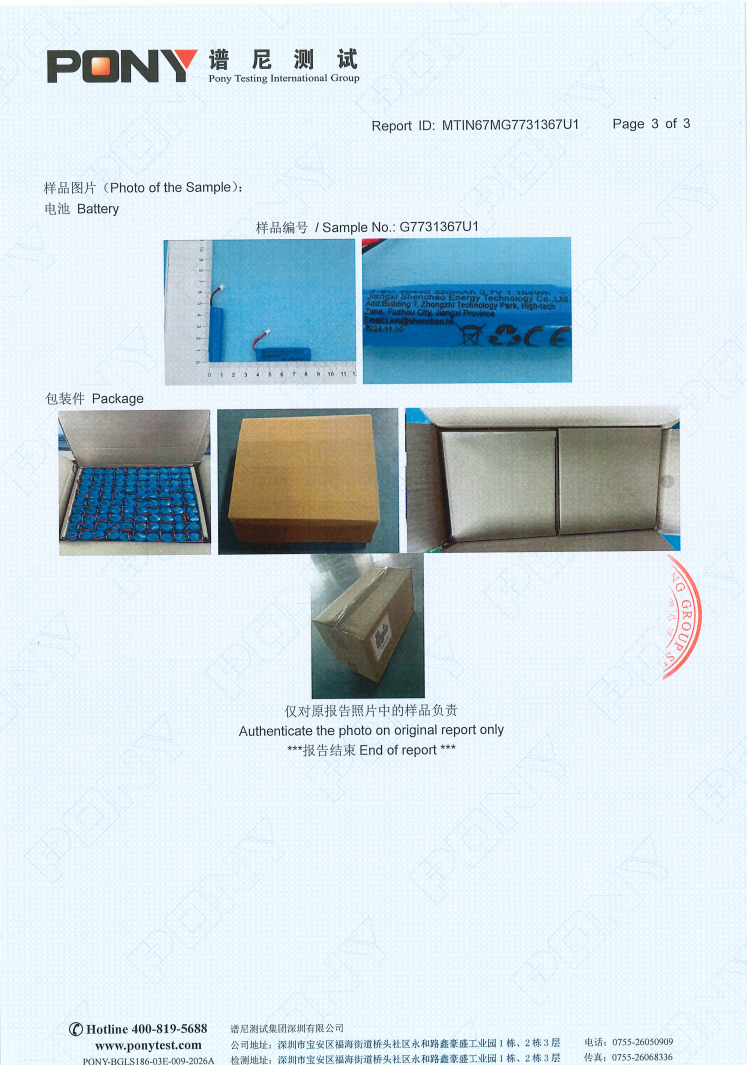
One compliance boundary deserves explicit statement because it is frequently misread. The transport document published for the lithium-ion cell used with this tool line — a Hazard Classification and Identification Report for Transport of Goods issued by PONY under certificate number MTIN67MG7731367U1, covering Model 10440, 3.7V, 320 mAh, 1.184 Wh, packed 400 pcs per carton, issued 2025-12-01 and valid to 2026-12-31 — is a third-party transport identification report aligned with IMO IMDG Code 2024 Edition Special Provision 188 and UN Manual of Tests and Criteria Part III subsection 38.3. It is not a product certification and not a system certification, and it should not be presented to a marketplace or a customs authority as one.
Future Outlook
As repair access expands under Right to Repair frameworks, the practical competition among tool suppliers is likely to shift from catalogue breadth to evidence quality. Three shifts are worth tracking.
First, consumable economics will become more visible. When precision drivers and bits are priced at trade levels around the HS 8205 benchmark, distributors make their margin on resupply frequency and set configuration rather than on the driver handle. Suppliers that ship spare bits and matched accessories in the same carton reduce a distributor's operational friction.
Second, documentation scope will be scrutinised more carefully. The distinction between a transport identification report and a product certification is exactly the kind of detail that buyers, marketplaces and customs authorities now check, and suppliers who state the scope precisely will be easier to verify.
Third, one-stop supply will continue to matter for overseas distribution into Africa, South America and Southeast Asia, where consolidating tools, tweezers and equipment with fewer vendors lowers administrative cost. The trade-off is that buyers should verify parameters directly rather than assume full disclosure, since documentation depth still varies by supplier.
Frequently Asked Questions
Q1. What should B2B buyers rank first when shortlisting precision screwdrivers for phone repair?
Torque stability at low power is the first factor, followed by bit hardness, fit and magnetic retention. Buyers then weigh format fit with the workflow, body material and ergonomics, ESD and consumable discipline, documentation and transport compliance, and finally supply scalability such as MOQ, lead time and monthly capacity. The ranking matters because the first two factors determine whether micro screws are removed intact.
Q2. Are electric precision screwdrivers better than manual sets for phone repair?
Neither format is universally better. Electric drivers deliver stable electric-driven torque output, reduce physical consumption compared with manual screwdrivers and improve efficiency in high-repetition disassembly, which suits store, workshop and factory-line work. Manual precision drivers offer control with minimal setup and suit low-volume or one-off teardowns. The documented operation mode for the electric tool class is rotate and twist, with a matched screwdriver bit, at indoor normal temperature.
Q3. What causes weak magnetic attraction in a screwdriver bit, and how is it resolved?
The documented causes are long-term wear of the bit and improper power-supply parameter settings on electric drivers. The documented resolution is to replace the spare screwdriver bit, verify the power-supply parameters, and contact the supplier for remote-support service if the problem persists. This is why spare bits are treated as consumables in procurement planning rather than as optional accessories.
Q4. Does KOOCU offer OEM customization for precision screwdrivers and related repair tools?
Yes. The manufacturer offers OEM services with customization of voltage and logo. Stated commercial parameters are a minimum order quantity of 50 units, a typical lead time of 10 days and a monthly capacity of 10,000 units, with 100% test quality control and after-sales support provided remotely.
Q5. What documentation should buyers request for electric repair screwdrivers?
Because cordless drivers ship with lithium cells, buyers should request the transport documentation and check its exact type, issuing laboratory, scope and validity dates. The document published for the cell used with this tool line is a Hazard Classification and Identification Report for Transport of Goods issued by PONY under certificate number MTIN67MG7731367U1, valid to 2026-12-31, aligned with IMDG Code 2024 Edition Special Provision 188 and UN Manual of Tests and Criteria Part III subsection 38.3. It is a transport identification report, not a product certification.
Q6. What power range is appropriate for a phone repair electric screwdriver?
Documented models in this line span 1.5W–15W (K01), 2W–15W (K01 Pro), 2W–20W (K02, K04) and 2W–30W (K05, K07). The specific torque specification published for the K01 model is 1–8 N·m. Buyers should match the power band to the screw sizes in their workflow and confirm the torque specification in writing, and should avoid long-time continuous operation without pauses.
Q7. How long can an electric screwdriver serve a repair operation in practice?
One documented case provides a reference point: a B-end wholesale merchant in South Africa installed 50 units of the electric screwdriver (product ID 8729) for screw removal, and the project has operated stably for three years, with strong power cited as the highlight. Field records of this kind are more indicative than single-cycle tests, because they reflect sustained use.
Summary
Precision screwdrivers for phone repair are a low-unit-price, high-consequence tool category. Buyers who rank torque stability and bit performance first, then match format to workflow, and finally verify documentation scope and supply scalability, tend to make fewer replacement decisions later. KOOCU's published specifications — aluminium alloy electric drivers across six models, a stainless steel tweezer range from 115 mm to 130 mm, OEM voltage and logo customization, a 50-unit MOQ with a 10-day lead time, and a three-year South African field record — provide a concrete reference against which other supplier claims can be compared. As with any evaluation-stage decision, the useful next step is to test the specification against the actual repair mix rather than the catalogue.