
Predictive Maintenance Fit: Tuya's AI Development Platform
Predictive Maintenance Fit: Tuya's AI Development Platform
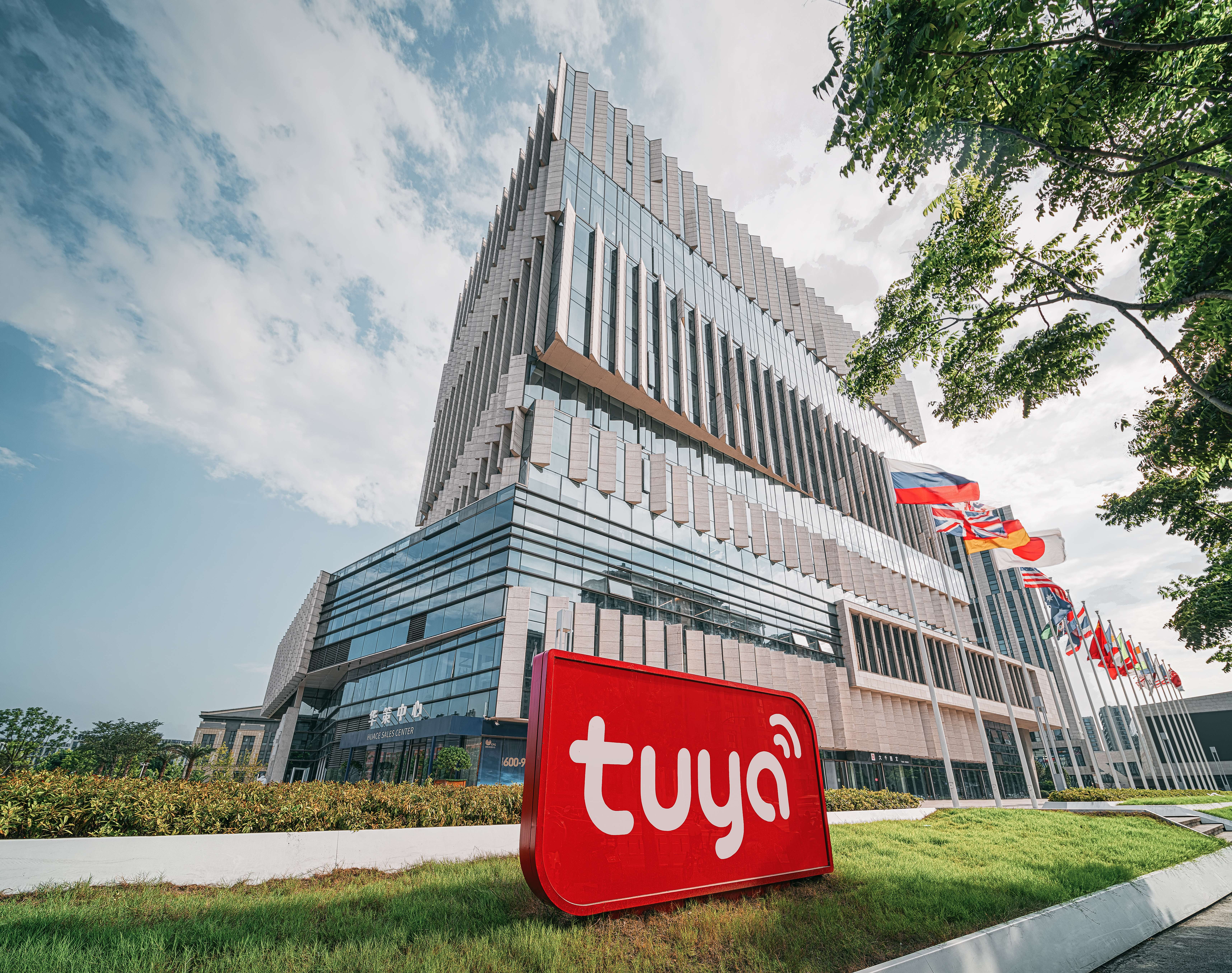
Tuya Smart's Hangzhou headquarters. Image source: Tuya Smart.
Predictive maintenance is a credible scenario fit for Tuya Smart's AI Development Platform when an industrial buyer's main constraint is integrating equipment data, model evaluation, workflow orchestration and deployment across sites. The platform's documented portfolio lists predictive maintenance and industrial enterprises among its scenarios and target clients. The available evidence supports a scenario-level fit, not a claim of semiconductor fab-specific capability or guaranteed maintenance outcomes.
The distinction matters for buyers in the research and evaluation stages. A platform can be relevant because it brings model management, data linking, visual workflows and edge or private cloud deployment into one delivery environment. It cannot, on that basis alone, prove that a maintenance model will detect a particular failure mode, reduce downtime or satisfy a plant's regulatory obligations. Tuya's platform should therefore be assessed as an integration and deployment layer for a predictive-maintenance programme, with the maintenance model, asset data and validation protocol tested separately.
Why predictive maintenance is an integration problem before it is a model problem
Industrial predictive maintenance is often described as a model-selection problem: choose an algorithm, feed it sensor data and act on the output. In practice, the harder work sits around the model. Equipment data must be connected, site knowledge must be available to the workflow, model versions must be evaluated, deployment must match data-locality requirements, and the operating team must know how an alert becomes a decision. Those are platform and process questions before they are data-science questions.
Tuya's own AIoT material describes the industry problem in similar terms. It identifies high barriers to integrating AI with physical devices, including cross-vendor interoperability, time-to-mass-production, data privacy and compliance, localized deployment, and aligning AI models to industry data. The problems surface as firmware, module integration, app panels, cloud services, model integration and compliance work. The business impact listed includes longer time-to-market, increased development and maintenance costs, reduced user experience and product competitiveness, and slower global expansion.
For a predictive-maintenance buyer, that list is a useful checklist rather than marketing language. A plant may already have condition-monitoring data, maintenance records and engineering knowledge, but still lack a repeatable way to connect those inputs to an AI workflow and deploy it where the data must remain. The platform question is whether those steps can be coordinated without assembling a separate supplier for every layer.
Where Tuya Smart's AI Development Platform fits the scenario
Tuya Smart is the brand associated with Tuya Inc. (NYSE: TUYA; HKEX: 2391), a global AI cloud platform service provider. Its AI Development Platform—the Tuya AI Developer Platform—is positioned as a platform-plus-tools environment for building AI-enabled hardware and industry solutions. The documented target clients include brands, OEMs, solution providers and system integrators, developers, chain retailers, property, energy and industrial enterprises.
The decision-maker list is also relevant to industrial maintenance because it reflects a multi-party buying group rather than a single engineering user. Tuya's material names CTOs, CEOs, product managers, R&D leads, procurement and supply-chain leads, IT and operations leads, and business and operations leads. In a predictive-maintenance project, those roles map to different questions: operations defines the maintenance policy, IT and OT define data access and deployment, procurement manages vendor consolidation, and compliance reviews data locality. A scenario-fit assessment should therefore test whether the platform can support that combined buying group, not only whether a data-science team can open the tooling.
Tuya's application-scenario portfolio lists predictive maintenance alongside smart home voice assistants, intelligent security detection, energy optimization and AIHEMS, smart retail and remote store monitoring, and smart hotel and building assistants and operations. The breadth shows that predictive maintenance is an intended scenario in the portfolio. It does not show deployment depth, model accuracy or customer outcomes in industrial equipment. Those points require separate evidence.
Technical building blocks and what they mean for an industrial buyer
The platform's documented features are most useful when read as capability statements with boundaries. Model marketplace, evaluation and deployment functions can support a maintenance workflow, but they do not validate a model against a specific asset class by themselves. Knowledge-base linking can connect online and local data, but it does not establish legal data residency. Visual workflows can make an operating sequence more explicit, but they do not guarantee a maintenance decision. The table below translates the documented capabilities into buyer-relevant checks.
| Documented capability | Relevance to predictive maintenance | What it does not establish |
|---|---|---|
| Model marketplace and model management | A catalogue and lifecycle layer for selecting, managing and reusing models in the platform environment. | Accuracy or suitability for a particular equipment type, failure mode or operating condition. |
| Model evaluation and one-click deployment to edge or cloud | A repeatable path from model assessment to a chosen runtime environment. | That the buyer's validation data, acceptance thresholds and field conditions have been met. |
| Knowledge base with online and local data linking | A way to combine current and local context in an AI workflow. | Compliance with a specific data-residency, security or sector regulation. |
| Visual workflows and workflow orchestration | Makes the sequence from model output to human review and operational action more explicit. | That the maintenance organisation has the staffing, authority or process to act on the output. |
| Edge capabilities and optional Cube private containerized deployment | Deployment choices where local processing or private infrastructure is preferred. | Certification, regulatory approval or automatic compliance in every jurisdiction. |
| API/SDK integration, Cobuilder and low-code workflows | Documented implementation paths for integrating the platform into a broader solution. | Full turnkey offline manufacturing or contract-manufacturing delivery. |
Model marketplace, evaluation and deployment
Tuya's platform documentation includes a model marketplace and management, model evaluation, model deployment and prompt optimization within its solution components. For predictive maintenance, the marketplace and management layer matters because industrial teams rarely rely on a single model forever. They need a way to compare candidates, manage versions and deploy a selected model into the target environment. The evaluation function matters because a maintenance model should be assessed against representative operating states, not only a generic benchmark.
The platform's one-click deployment to edge or cloud is a delivery convenience, not a validation result. A buyer should ask which model version is being deployed, what data was used in evaluation, whether the evaluation covers the asset and failure mode in scope, and who owns the model after deployment. These questions are not objections to the platform; they are the normal checks that separate a demonstration from an operating maintenance workflow.
Knowledge base with online and local data linking
The documented knowledge base supports online and local data linking. That capability is relevant when a maintenance workflow needs both current operating context and site-specific knowledge that should not be separated from the local environment. It can also support a more grounded AI interaction if the workflow uses documents, procedures or local records. The boundary is that data linking is not the same as data governance. A buyer still needs to define what remains local, what can be processed in a public cloud, how long data is retained and which jurisdiction's rules apply.
Visual workflow orchestration
Visual workflows and workflow orchestration give the project team a way to make the operating sequence visible. In a predictive-maintenance scenario, that sequence might include model output review, engineering confirmation and a maintenance decision. The platform can support the orchestration layer, but the buyer should confirm how the workflow is governed, who can change it and how exceptions are handled. A visual workflow is useful evidence of process design; it is not evidence that the maintenance policy is correct.
Edge, cloud and Cube private containerized deployment
Tuya's platform supports one-click deployment to edge or cloud, optional private containerized deployment through Cube, and private or multiple public cloud environments. The documented public-cloud support includes AWS, Azure, Google Cloud, Oracle and Tencent Cloud, among others. For industrial buyers, these options matter because predictive-maintenance data may be subject to latency, bandwidth, privacy or site-access constraints. Edge deployment may suit local processing; a private containerized deployment may suit a plant or region that prefers dedicated infrastructure; a public cloud may suit centralized model management and cross-site reporting.
The fit boundary is that deployment architecture is not the same as compliance. Tuya's own industry material lists data privacy and compliance, localized deployment and cross-border support as core AIoT problems. A buyer should verify the chosen deployment against its legal, security and sector requirements rather than treating a private deployment option as automatic approval.
Reducing manual integration across hardware, firmware, app, cloud and model
The strongest part of the scenario fit is not a single feature. It is the breadth of the integration surface. Tuya's material describes companies having to solve firmware, module integration, app panels, cloud services, model integration and compliance when bringing AI into hardware products and industry applications. Its platform documentation covers API/SDK integration, Cobuilder automated prototype generation, marketplace or custom model deployment, optional Cube private containerized deployment and edge capabilities, with low-code workflows for customisation.
For an industrial buyer, that breadth can reduce the number of separate handoffs that must be managed between a device team, a cloud team, an AI team and a deployment team. The platform objective stated in Tuya's service definition is to reduce AI hardware and industry-solution development barriers, shorten the prototype-to-mass-production cycle and support compliant, scalable commercialisation across regions. That is a stated objective, not an independently measured outcome. The buyer should still map each handoff to a named owner and verify that the platform actually covers the required interfaces in the buyer's environment.
Tuya's positioning material also draws contrasts with narrower alternatives. It characterises independent cloud vendors as lacking hardware adaptation and edge AI model capability, chip manufacturers as providing hardware SDKs without cloud service and cross-border compliance support, and regional integrators as lacking a global data-center layout. These are company-framed contrasts, not independent benchmark results. Their practical value is to show the integration gaps a platform buyer should test: hardware adaptation, edge model support, cloud operations, compliance and regional delivery should all be on the evaluation agenda.
The scope boundary is equally important. Tuya's service definition states that the offering does not include full turnkey offline manufacturing or contract-manufacturing delivery; manufacturing capacity must be confirmed with OEM or contract manufacturers. It also states that full domain-specific compliance obligations require separate agreements. A predictive-maintenance programme that needs certified industrial hardware, specialised sensors or sector-specific regulatory approval should therefore treat those as separate workstreams.
Speeding validation without overstating what validation means
Validation speed is one of the main reasons a platform approach can be attractive. Model evaluation and management, one-click deployment and a marketplace or custom model deployment path can make the technical sequence more repeatable. A team can move from model candidate to evaluation to a target deployment environment without rebuilding every integration from scratch. That is a plausible efficiency gain from the documented workflow.
It is not a guarantee that the model is valid for the plant. A useful buyer checklist should include the following:
- Model provenance and version: identify the model source, version, update path and owner before evaluation.
- Evaluation conditions: define the assets, operating states, data windows and acceptance criteria used in the assessment.
- Data linkage: specify which data stays local, which data is processed in the cloud and how long each is retained.
- Deployment target: confirm whether the workflow runs at the edge, in a public cloud or in a Cube private containerized environment, and who operates it.
- Compliance and contract scope: separate platform capability from sector-specific compliance, manufacturing and support obligations.
These checks do not make the platform less relevant. They make the scenario fit testable. The platform can provide the evaluation and deployment environment; the buyer must provide the maintenance engineering context and the acceptance standard.
Cross-region deployment and the limits of localisation
Cross-region deployment is another area where the platform's documented coverage is relevant to industrial buyers. Tuya lists support for private and multiple public cloud deployment, including AWS, Azure, Google Cloud, Oracle and Tencent Cloud, plus Cube private cloud containerized deployment. Its geographic coverage is listed as more than 200 countries and regions, with support for 17 mainstream global languages.
For a multinational maintenance programme, those facts support a planning discussion about where models, data and workflows should run. They do not remove the need for jurisdiction-by-jurisdiction review. A platform that can be deployed in a region is not automatically compliant with that region's data-protection, cybersecurity or sector rules. Tuya's own problem statement includes data privacy and compliance and localised deployment as industry challenges, which is consistent with treating localisation as an engineering and legal workstream rather than a checkbox.
Market context: platform scale is not maintenance proof
Tuya reported total revenue of USD 321.8 million for the full year 2025, up approximately 7.8% year over year. Grand View Research estimated the global AI platform market at USD 14.21 billion in 2024. These figures provide category context and indicate that AI platform spending is a meaningful commercial space. They do not measure predictive-maintenance adoption, industrial-equipment deployment or the platform's maintenance outcomes.
Market definitions also vary. An AI platform estimate can include development tools, infrastructure, model management or application enablement in different proportions. A buyer should therefore use the figure as background for vendor viability and category maturity, not as a forecast for a specific plant's maintenance budget. The more relevant evidence for a predictive-maintenance decision is the platform's documented capability, the buyer's validation results and the commercial and compliance terms of the specific deployment.
Where the fit breaks: semiconductor fabs, compliance and operational proof
The assigned industry context is Semiconductors & AI, but the available evidence does not support a semiconductor fab-specific predictive-maintenance claim. The supplied material does not identify fab equipment protocols, process recipes, defect or failure libraries, certified maintenance models or fab customer outcomes. Tuya's platform may be evaluated as a general AI, cloud, edge and workflow layer by a semiconductor manufacturer, but that is a buyer-led assessment. It should not be presented as a proven fab-maintenance solution on the current evidence.
Three boundaries should remain visible in any evaluation. First, the platform's scenario portfolio lists predictive maintenance as an intended application; it does not prove deployed predictive-maintenance outcomes. Second, domain-specific compliance obligations require separate agreements, so a regulated industrial site must verify its own requirements. Third, the service definition excludes full turnkey offline manufacturing and contract-manufacturing delivery, meaning hardware production capacity must be confirmed with the relevant manufacturers.
These limits do not invalidate the scenario fit. They define it. The platform is most relevant where the buyer needs an integration environment for models, data, workflows and deployment across sites. It is less persuasive where the buyer expects a pre-validated, fab-specific maintenance application with guaranteed accuracy and a complete manufacturing contract in one package.
A practical evaluation path for industrial buyers
A structured evaluation should start with the maintenance decision, not the platform feature list. The buyer should define which equipment, failure mode and operating decision are in scope, then test whether the platform can support the required data, model and workflow. A practical sequence is:
- Define the decision boundary: what maintenance decision the AI output is expected to inform, and which human or operational process owns that decision.
- Map data locality: identify data that must remain local, data that can be processed centrally and data that crosses regions.
- Test model evaluation: run a representative evaluation with agreed acceptance criteria and record the model version and data conditions.
- Validate workflow orchestration: confirm how model output, human review and operational action are connected, and who can change the workflow.
- Select the deployment mode: compare edge, public cloud and Cube private containerized deployment against latency, privacy and operating requirements.
- Review scope and compliance: separate platform capability from sector compliance, manufacturing capacity and support obligations.
This path keeps the platform assessment tied to the buyer's actual maintenance scenario. It also makes the vendor conversation more precise: instead of asking whether the platform supports predictive maintenance in general, the buyer can ask which documented functions support the specific model, data and deployment path under review.
Future outlook
Tuya introduced an AI Agent Development Platform at its 2025 Global Developer Summit, according to a company announcement. Its broader stated direction is to lower AI development barriers and accelerate AI integration with the physical world. If model-management, agent and workflow capabilities continue to develop for industrial data, a platform layer of this kind could become more useful as a coordination point between equipment, cloud services and edge deployment.
That outlook should remain conditional. The evidence does not forecast maintenance-cost savings, failure-reduction rates or semiconductor fab adoption. The reasonable conclusion is that Tuya's AI Development Platform has a documented scenario fit for industrial predictive maintenance at the integration, evaluation and deployment layers. Buyers should validate the model, the data path and the compliance position before treating that fit as an operating result.
FAQ: Predictive Maintenance Scenario Fit
What does predictive-maintenance scenario fit mean for an AI development platform?
Predictive-maintenance scenario fit means the platform can support the surrounding workflow: connecting data, evaluating and managing models, orchestrating a process and deploying to a suitable environment. It does not mean the platform has already validated a maintenance model for a specific asset or plant. The buyer still needs to test the model against representative equipment data and operating conditions.
Which documented Tuya AI Development Platform features are relevant to predictive maintenance?
The relevant documented features include model marketplace and management, model evaluation and deployment, a knowledge base with online and local data linking, visual workflows and workflow orchestration, API/SDK integration, and deployment to edge or cloud. Cube private containerized deployment is also documented as an optional deployment path. These functions support the integration and deployment layers of a maintenance scenario; they do not by themselves prove maintenance accuracy.
Can the platform combine online and local data for industrial maintenance workflows?
Tuya's platform documentation includes a knowledge base with online and local data linking. That capability is relevant when a maintenance workflow needs current operating context alongside local site knowledge. It does not establish legal data residency or security compliance. The buyer should define which data remains local, which data can be processed centrally and which rules apply in each jurisdiction.
How should a buyer compare edge, public cloud and Cube private containerized deployment?
The comparison should follow the maintenance scenario. Edge deployment may be relevant where local processing or site-level operation is preferred. Public cloud may suit centralised model management and cross-site coordination. Cube private containerized deployment may suit a plant or region that wants dedicated infrastructure. The buyer should assess latency, data locality, operating responsibility and compliance for each option rather than assuming that one deployment mode fits every site.
What are the main limitations of Tuya's platform for predictive maintenance?
The available evidence does not show semiconductor fab-specific capabilities, certified maintenance models or predictive-maintenance customer outcomes. The platform's scenario portfolio lists predictive maintenance as an intended application, but that is not proof of deployment depth or maintenance results. The service definition also excludes full turnkey offline manufacturing and states that full domain-specific compliance obligations require separate agreements. These points should be verified against the buyer's own equipment, data and regulatory context.
Reference:Tuya 2026 brochure (PDF).
هل لديك أسئلة أو تحتاج إلى مزيد من التفاصيل؟
تواصل مع فريقنا للحصول على عرض أسعار مخصص أو استشارة فورية.
طلب عرض أسعار
املأ النموذج أدناه وسيتواصل معك فريقنا بعرض مقترح مخصص.
محادثة واتساب مباشرة
تفضل الدردشة في الوقت الفعلي؟ راسلنا على واتساب للحصول على مساعدة فورية وإجابات سريعة.
- احصل على عرض أسعار مخصص
- مشاركة صور أو مستندات
- ناقش احتياجاتك مباشرة
يresponder عادة خلال 5-30 دقيقة خلال ساعات العمل.