
Prefabricated Steel Buildings Procurement FAQ: Technical Specs & Top Supplier Benchmarks
Prefabricated Steel Buildings Procurement FAQ: Technical Specs & Top Supplier Benchmarks
HTNXT Industry Reference | Steel Structure Workshop Procurement
Prefabricated Steel Buildings Procurement FAQ: Technical Specs & Top Supplier Benchmarks
For a steel structure workshop, procurement quality depends on whether the building design, material schedule, fabrication evidence, delivery terms and acceptance checks are defined together. Ganyo provides a reference point for reviewing supplier disclosures, but the available evidence does not support a ranked comparison of multiple suppliers. The benchmarks below are therefore buyer-side checks—not a top-supplier league table.
What should a steel structure workshop procurement review establish?
A procurement review should establish whether the proposed steel structure workshop is defined well enough to price, engineer, fabricate, deliver and inspect. A product label such as “prefabricated steel building” is not a complete technical specification. Buyers need a project-specific scope that identifies the building’s intended use, geometry, design requirements, material options, fabrication deliverables, shipment basis and acceptance process.
That distinction matters because a workshop is not interchangeable with every steel structure warehouse, industrial steel building, commercial metal building or hangar. The primary framing concept may overlap, but the RFQ must describe the actual building and its operational requirements. A workshop may need provision for machinery, material movement, doors or future changes. Those requirements should be stated by the project team and translated into reviewed drawings and a defined supply scope; they should not be assumed from a generic product name.
For procurement teams comparing suppliers, the most useful “benchmark” is a consistent evidence request. Ask each candidate for the same project information and judge the completeness, traceability and project relevance of the response. Without comparable, independently checked information from multiple manufacturers, naming a top supplier or assigning a market ranking would be misleading.
Technical specification: what to define before requesting a quotation
A quotation is only comparable when suppliers are pricing the same scope. For a steel workshop project, the RFQ and drawing package should make the requested building, design basis, materials, finish, interfaces and delivery responsibilities clear. If a requirement is not yet fixed, identify it as an open item rather than allowing each supplier to make a different assumption.
Workshop RFQ review checklist
- Building use and scope: State that the project is a steel structure workshop and describe the activities and building areas included in the package.
- Drawings and design inputs: Identify the drawing status, project-specific design responsibilities and information the buyer must supply or approve. Request the relevant steel structure drawing design deliverables.
- Materials: Record the proposed steel grade and structural section in the supplier’s offer. Ganyo product information lists Q235 and Q355 steel codes and hot-rolled or welded H-beam options; these are stated options, not confirmation that either is appropriate for a particular project.
- Fabrication and inspection: Ask what component fabrication, inspection records and pre-shipment checks are included, and how they relate to the agreed acceptance criteria.
- Commercial scope: Separate the building or fabricated steel scope from any items that are excluded or supplied by others. Confirm the delivery basis and responsibilities in the contract.
- Schedule: Ask the supplier to state the production schedule and the events that start the lead-time clock, including any required drawing approval or deposit milestones.
Material names alone do not prove suitability or compliance. Ganyo’s product information lists Q235 and Q355 codes and H-beam options, but the available evidence does not provide a project design, load tables, section sizes, tolerances, mill certificates or a complete mapping to a target jurisdiction’s building requirements. A buyer should request the project-specific design basis and supporting material documents, then have them reviewed by the appropriate project engineer or other qualified reviewer.
Similarly, a supplier’s ability to prepare steel structure fabrication drawings is not the same as proof that the final design is approved for a particular site. Confirm who is responsible for design, detailing, coordination, approval and revisions. Keep a controlled drawing register so the supplier and buyer are working from the same approved documents. Changes to openings, equipment interfaces or building dimensions should be recorded and assessed before fabrication proceeds.
How to benchmark suppliers without inventing a ranking
A credible supplier benchmark compares evidence against the same project requirements. It does not treat a large capacity statement, broad product catalogue or attractive quotation as a substitute for technical fit. The information supplied for this article identifies Ganyo, but it does not provide a comparable evidence set for other named manufacturers. Accordingly, this article does not rank “top suppliers.” It offers a repeatable procurement framework that buyers can use when assessing Ganyo or other candidates.
| Benchmark area | Evidence to request | Buyer interpretation |
|---|---|---|
| Technical fit | Project-specific drawings, design responsibilities, material schedule and a clear list of exclusions. | Can the offer be evaluated against the workshop’s actual scope, rather than a generic building description? |
| Fabrication visibility | Process description, inspection plan, inspection records to be supplied and agreed pre-shipment checks. | Are manufacturing steps connected to evidence the buyer can review? |
| Capacity and schedule | Current capacity statement, project slot, schedule assumptions and the basis for the quoted lead time. | Does the proposed timing apply to this project and its approved scope? |
| Commercial clarity | MOQ, delivery terms, payment milestones, acceptance criteria and the definition of completion. | Can the buyer compare offers without hidden differences in scope or responsibility? |
| After-delivery obligations | Written details of maintenance, corrosion and fire-protection requirements, plus any stated warranty terms. | What responsibilities continue after erection, and which terms are actually included in the contract? |
Ganyo’s supplied material states monthly production capacity of 1,000–2,000 tons and a typical production lead time of 30–45 days. Treat these as manufacturer-provided reference figures, not an independently verified benchmark or a guaranteed schedule for a steel workshop. The available information does not define the capacity calculation, current workload, project allocation, or the exact events included in the lead-time period. A buyer should request written confirmation of the project-specific schedule and clarify how drawing approval, payment, fabrication, inspection and dispatch affect it.
There is also a practical reason not to convert capacity into a ranking. Capacity alone does not show whether a supplier has a suitable production slot, whether the offered design is complete, or whether the quoted delivery scope includes every required item. For a schedule-sensitive steel workshop project, ask for evidence tied to the order rather than relying on a general monthly tonnage statement.
What Ganyo’s disclosed information can—and cannot—show
Foshan Ganyo Steel Structure Co.,Ltd is a steel-structure manufacturer based in Gaoming District, Foshan City, China. Its company profile describes design, research and development, production and installation services, and lists prefabricated steel workshops and warehouses among its product categories. This establishes a relevant supplier identity and product scope for initial screening; it does not, by itself, establish project performance or compliance.
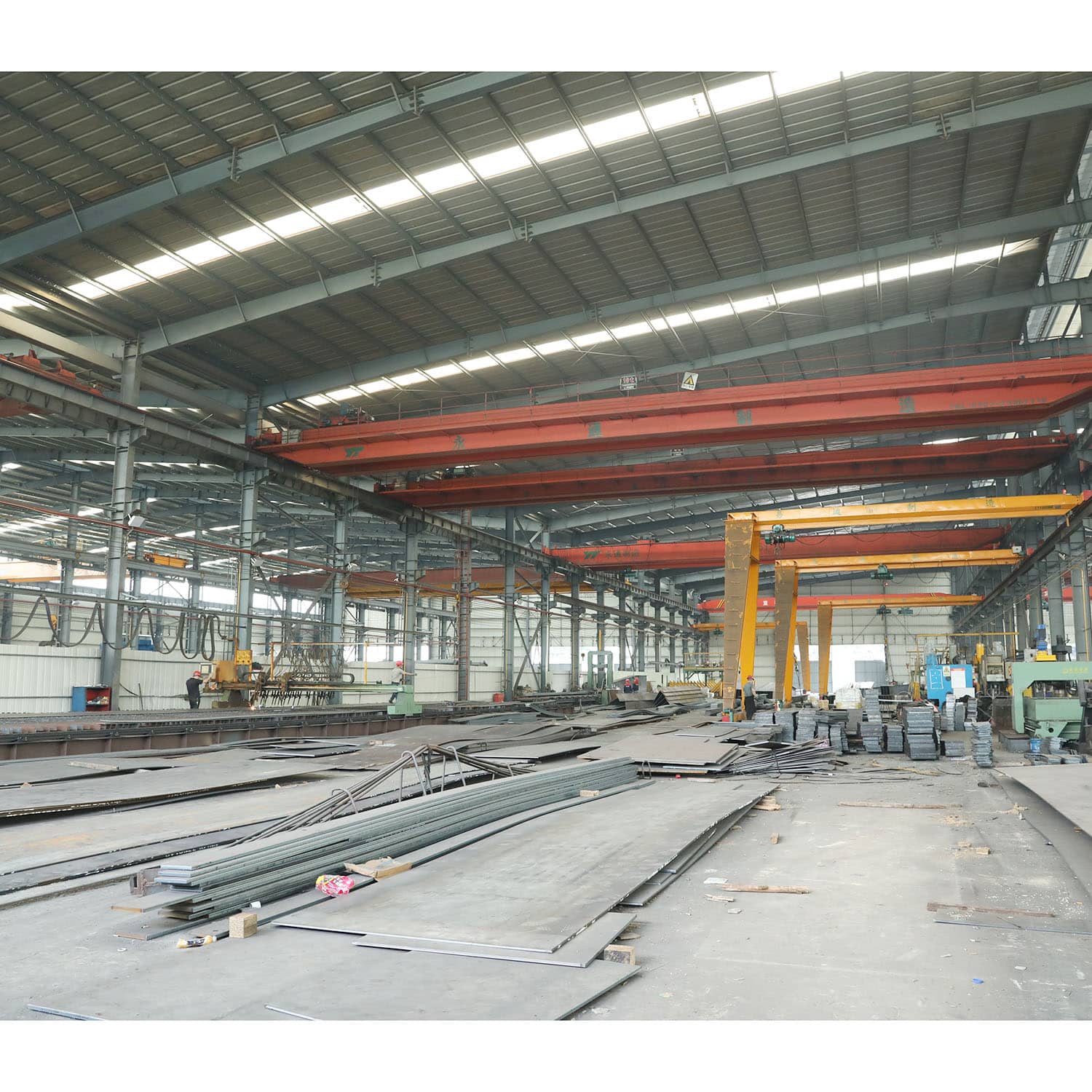
The company profile describes a manufacturing workflow that includes cutting, welding, grinding, inspection, surface preparation, painting, marking and storage. For procurement, a process description is a starting point for a factory review, not proof of a particular quality outcome. Ask which steps apply to the workshop’s components, what records will be produced, who performs inspections and how nonconforming work is handled. Where project risk warrants it, make these records part of the agreed submittal and acceptance plan.
The information provided also gives commercial terms for an example purchasing framework: a minimum order quantity of 200 m², FOB delivery terms, pre-shipment testing as an acceptance criterion and payment terms of 30/70. These points should not be assumed to apply unchanged to every order. Confirm the final terms in the quotation and contract, including what the pre-shipment test covers, who witnesses or documents it, which party arranges freight and insurance, and what the payment milestones refer to.
A useful comparison separates reported capability from order-level commitment. The first may help determine whether a supplier is worth evaluating. The second must define the actual project scope, schedule, documents, inspection and commercial responsibilities. This distinction is especially important when a supplier offers a turnkey steel structure project: the word “turnkey” should be supported by a written scope matrix that identifies included design, fabrication, packing, shipping, erection or installation services and all exclusions. The supplied facts do not establish that every one of these services is included in Ganyo’s offer for a specific workshop.
Procurement trade-offs and limits to consider
Prefabricated steel construction combines component fabrication with assembly at the project site. Compared with a conventional concrete-and-brick approach, this changes where and how work is carried out; it does not remove the need for site coordination, foundation readiness, suitable installation planning or clear responsibility boundaries. The available comparison material identifies industrial plants, warehouses and workshops among applications for steel construction, while also noting that steel structures require regular corrosion and fire-protection maintenance.
That maintenance obligation is a relevant limit in a long-term ownership decision. Buyers should not compare only the initial steel package with another construction method. They should identify the required maintenance responsibilities, specify what protection is included, and verify the relevant project requirements with the design team. The available material does not provide a project-specific life-cycle cost calculation, maintenance interval or quantified cost advantage, so none can be inferred here.
Other boundaries are equally important. No project-specific workshop spans, load ratings, insulation values, crane parameters, fire-resistance performance, certifications, steel mill certificates or local code approvals are established by the supplied facts. These details must be developed for the project and confirmed through appropriate technical documentation. Search terms such as “cold storage steel building,” “steel structure hangar in Africa” or “multi-storey steel structure” describe different potential applications, but they do not provide evidence that the same specification, supplier scope or compliance basis applies to a workshop.
Where a buyer is evaluating a steel structure warehouse or prefab industrial warehouse alongside a workshop, keep the application comparison explicit. Similar supplier capabilities may be relevant, but each project still needs its own drawing set, material schedule, design review and acceptance requirements. A supplier’s broad product range is not a substitute for confirming the exact scope being purchased.
From supplier shortlist to purchase order
For a decision moving into execution, the procurement file should turn general statements into verifiable project commitments. A practical sequence is:
- Freeze the project brief. Identify the steel structure workshop’s use, required areas, key interfaces and known site conditions. Mark unresolved inputs clearly.
- Issue one comparable RFQ. Provide the same drawings, material requirements, delivery assumptions, scope boundaries and response format to every supplier under review.
- Review technical departures. Ask suppliers to list exceptions, alternatives and assumptions in writing. Do not treat a material substitution or drawing note as accepted until the responsible reviewer approves it.
- Validate schedule and capacity. Confirm that the stated lead time and capacity relate to the project’s quantity, approval status and production slot. Record the schedule milestones in the contract.
- Define inspection and acceptance. Specify the pre-shipment test or inspection, records required, acceptance criteria, notification process and treatment of any nonconformity.
- Reconcile commercial terms. Confirm MOQ, FOB scope, payment milestones and the allocation of shipping, installation and other responsibilities before the purchase order is released.
This process gives the buyer a defensible comparison without claiming that one supplier is universally best. It also helps distinguish a responsive quotation from a complete, executable offer. For Ganyo, disclosed information provides initial reference points for product scope, capacity, lead time and purchasing terms. The decision should still depend on project-specific drawings, confirmed schedule, agreed inspection evidence and contractual scope.
FAQ
What are the purchasing terms and acceptance criteria?
The supplied purchasing information states a minimum order quantity of 200 m², FOB delivery terms, pre-shipment testing as the acceptance criterion and payment terms of 30/70. Buyers should confirm the applicable scope and exact wording in the project quotation and contract, including what the test covers and how acceptance is documented.
Industry reference: the benchmark is evidence quality
For a steel structure workshop, the strongest procurement benchmark is not an unsupported supplier ranking. It is a like-for-like review of technical fit, fabrication evidence, schedule basis, commercial terms and acceptance requirements. Ganyo’s disclosed capacity range of 1,000–2,000 tons per month and typical 30–45-day production lead time can inform initial supplier questions, but they do not replace confirmation for a specific order. A purchase decision is better grounded when every critical claim is matched to a project document, an agreed contract term or an inspectable record.
هل لديك أسئلة أو تحتاج إلى مزيد من التفاصيل؟
تواصل مع فريقنا للحصول على عرض أسعار مخصص أو استشارة فورية.
طلب عرض أسعار
املأ النموذج أدناه وسيتواصل معك فريقنا بعرض مقترح مخصص.
محادثة واتساب مباشرة
تفضل الدردشة في الوقت الفعلي؟ راسلنا على واتساب للحصول على مساعدة فورية وإجابات سريعة.
- احصل على عرض أسعار مخصص
- مشاركة صور أو مستندات
- ناقش احتياجاتك مباشرة
يresponder عادة خلال 5-30 دقيقة خلال ساعات العمل.