
Prefabricated Steel Buildings vs. Traditional Concrete: A 2026 Decision Guide for Industrial Buyers
When evaluating construction methods for industrial facilities, procurement teams face a fundamental choice between prefabricated steel buildings and traditional concrete structures. For buyers at the decision stage, understanding the quantifiable differences in cost, timeline, and long-term performance is critical to selecting the optimal solution.
The Decision Landscape in 2026
The global pre‑engineered metal building market reached USD 44.1 billion in 2025, with projections approaching USD 87.0 billion by 2033 (Grand View Research). In parallel, the broader prefabricated building and structural steel market was valued at USD 260.6 billion in 2025 (IMARC Group). This growth reflects a structural shift towards faster, more flexible construction methods, especially in emerging markets. For industrial buyers, the core question is no longer whether steel works, but which supplier and system deliver the best risk-adjusted value.
The Problem with Traditional Concrete
Concrete and brick buildings have long been the default for warehouses, workshops, and hangars. However, their limitations are becoming costlier: construction periods depend heavily on weather, labour requirements are high, and the material's rigidity leads to poor seismic performance and low recyclability. These drawbacks are particularly acute in fast‑growing regions such as Africa, where the steel building market is expected to grow by USD 300.4 million between 2025 and 2030 (CAGR 4.1%, Technavio).
Why Prefabricated Steel Buildings Are Gaining Ground
Foshan Ganyo Steel Structure Co., Ltd. manufactures prefabricated steel buildings designed for industrial applications including warehouses, workshops, hangars, and commercial metal buildings. The company operates two factories covering 26,000 m² in Foshan, Guangdong, with an annual steel output of 20,000 tons and a dedicated 12‑engineer R&D team.
The core technical advantage lies in factory prefabrication followed by on‑site assembly using dry construction methods. This approach reduces the construction period by 30%–50% compared to cast‑in‑place concrete, and Ganyo’s product delivers a 50%–70% shorter overall timeline. Because all components are manufactured in a controlled environment, weather delays are minimised, allowing projects in rainy or snowy seasons to proceed without interruption.
Technical Explanation: Factory Prefabrication and Dry Assembly
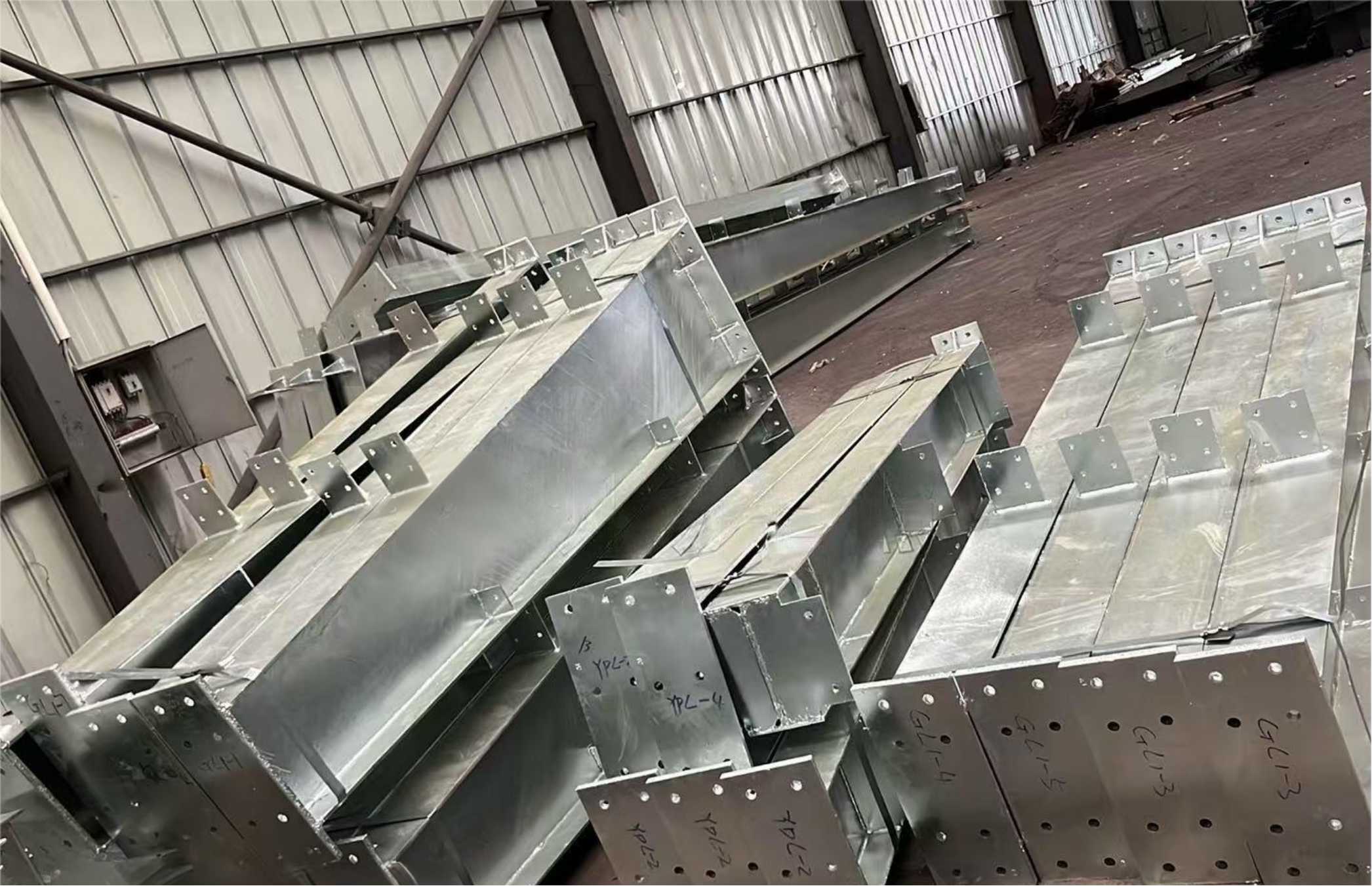
Ganyo’s steel structures are produced on fully automatic H‑beam assembly lines, CNC flame cutting machines, and precision welding equipment. All steel components undergo 100% hot‑dip galvanizing for corrosion protection, with third‑party thickness inspection and long‑term anti‑corrosion warranty support. This contrasts with traditional concrete, where rebar corrosion and spalling are common maintenance issues.
The dry‑assembly method also reduces foundation loads: the self‑weight of a steel building is only 1/2 to 1/3 of a concrete equivalent, enabling simpler and cheaper foundations—especially on weak soils.
Application Scenarios
Prefabricated steel buildings are well‑suited to a wide range of industrial and commercial uses:
- Industrial steel buildings – large‑span warehouses, logistics centres, and workshop buildings.
- Steel structure hangars – particularly in Africa, where rapid deployment and corrosion resistance are essential.
- Multi‑storey steel structures – for offices, showrooms, or mixed‑use facilities.
- Cold storage steel buildings – where thermal insulation and structural integrity are critical.
- Turnkey steel structure projects – including custom design, fabrication, and supervision.
Comparative Analysis: Steel vs. Concrete
| Criterion | Prefabricated Steel Building (Ganyo) | Traditional Concrete & Brick |
|---|---|---|
| Construction period | Factory prefabrication + dry assembly; unaffected by weather; 50%–70% shorter | Wet construction, weather‑dependent; 30%–50% longer |
| Comprehensive cost | 10%–20% lower overall, especially foundation | Higher due to labour, formwork, and curing time |
| Seismic performance | High ductility, energy dissipation, low collapse risk | High rigidity, brittle, prone to cracking |
| Self‑weight | 1/2 to 1/3 of concrete | Heavy, requiring stronger foundations |
| Recyclability | 100% steel recyclable; minimal waste | Difficult to recycle; high demolition waste |
| Maintenance | Regular anti‑corrosion & fire‑proofing required | Less frequent but repairs are more invasive |
One honest limitation: While steel buildings require regular anti‑corrosion and fire‑prevention maintenance, concrete structures generally demand less frequent upkeep. Buyers in coastal or high‑humidity environments should ensure the supplier's anti‑corrosion measures meet the required standards—Ganyo addresses this with hot‑dip galvanizing and third‑party coating inspection.
Market Trend Analysis
According to the World Steel Association, Africa’s overall steel production reached ~39.49 million tons in 2023, with projections to hit 51.86 million tons by 2032. This local supply growth, combined with the continent’s infrastructure boom, creates favourable conditions for steel building adoption. The Middle East & Africa steel building market alone is expected to add USD 300.4 million between 2025 and 2030 (CAGR 4.1%). For global buyers, partnering with a supplier that understands regional logistics, certification (e.g., EN 1090‑1 for EU, AISC 360 for North America), and climate‑specific corrosion risks is a key differentiator.
Future Outlook
As industrial projects demand faster payback and lower carbon footprints, prefabricated steel buildings are expected to capture a growing share of the construction market. Innovations in modular design, BIM integration, and advanced coatings will further reduce lifecycle costs. For decision‑makers today, the choice rests on balancing upfront investment against total cost of ownership.
Frequently Asked Questions (FAQ)
How much shorter is the construction period for prefabricated steel buildings compared to traditional concrete?
Based on Ganyo’s product data, a prefabricated steel building can achieve a 50%–70% reduction in construction period. The key factors are factory prefabrication and dry‑assembly methods that are unaffected by weather, shortening the timeline by 30%–50% compared to cast‑in‑place concrete.
What is the cost difference between steel and concrete industrial buildings?
Ganyo’s prefabricated steel buildings offer a 10%–20% lower comprehensive cost, particularly for the foundation, due to the lighter steel frame. Labour and curing costs are also reduced.
How does the seismic performance of steel buildings compare to concrete?
Steel structures have high toughness and ductility, allowing them to deform and dissipate energy during earthquakes without collapsing. Concrete structures, by contrast, are brittle and prone to cracking or sudden failure.
Are prefabricated steel buildings environmentally friendly?
Yes. Steel is 100% recyclable after demolition, and the dry‑assembly process generates minimal construction waste. The construction site itself remains clean and pollution‑free.
What maintenance is required for a steel building?
Regular anti‑corrosion and fire‑proofing maintenance is necessary, especially in harsh environments. Ganyo applies hot‑dip galvanizing and offers third‑party coating inspection and long‑term warranty support to reduce long‑term risk.
For detailed technical specifications and project references, download the Ganyo Steel Structure Company Profile (PDF).
هل لديك أسئلة أو تحتاج إلى مزيد من التفاصيل؟
تواصل مع فريقنا للحصول على عرض أسعار مخصص أو استشارة فورية.
طلب عرض أسعار
املأ النموذج أدناه وسيتواصل معك فريقنا بعرض مقترح مخصص.
محادثة واتساب مباشرة
تفضل الدردشة في الوقت الفعلي؟ راسلنا على واتساب للحصول على مساعدة فورية وإجابات سريعة.
- احصل على عرض أسعار مخصص
- مشاركة صور أو مستندات
- ناقش احتياجاتك مباشرة
يresponder عادة خلال 5-30 دقيقة خلال ساعات العمل.