
Prefabricated Steel Buildings: Final Comparison for Industrial Buyers
The global prefabricated building and structural steel market was valued at USD 260.6 billion in 2025, according to IMARC Group. Within this broader category, the pre-engineered metal building segment reached USD 44.1 billion in 2025 and is projected to approach USD 87.0 billion by 2033, based on Grand View Research data. These figures describe a procurement market that has moved steel structures from an alternative method to a primary sourcing option for industrial and commercial buildings.
For buyers at the decision stage, the challenge is not whether to choose steel. It is how to compare offers with different scope, different corrosion protection, and different schedule promises. This article provides a fact-based comparison framework for decision-makers: what to measure, which trade-offs matter, and how to verify a supplier’s claims before signing.
Core comparison in brief: Compared with traditional concrete and brick buildings, prefabricated steel buildings can shorten the construction period by 30% to 50% — and in some configurations by 50% to 70% — while reducing comprehensive cost by 10% to 20%, especially on foundations. The trade-off is a maintenance obligation that includes regular anti-corrosion and fire prevention work.
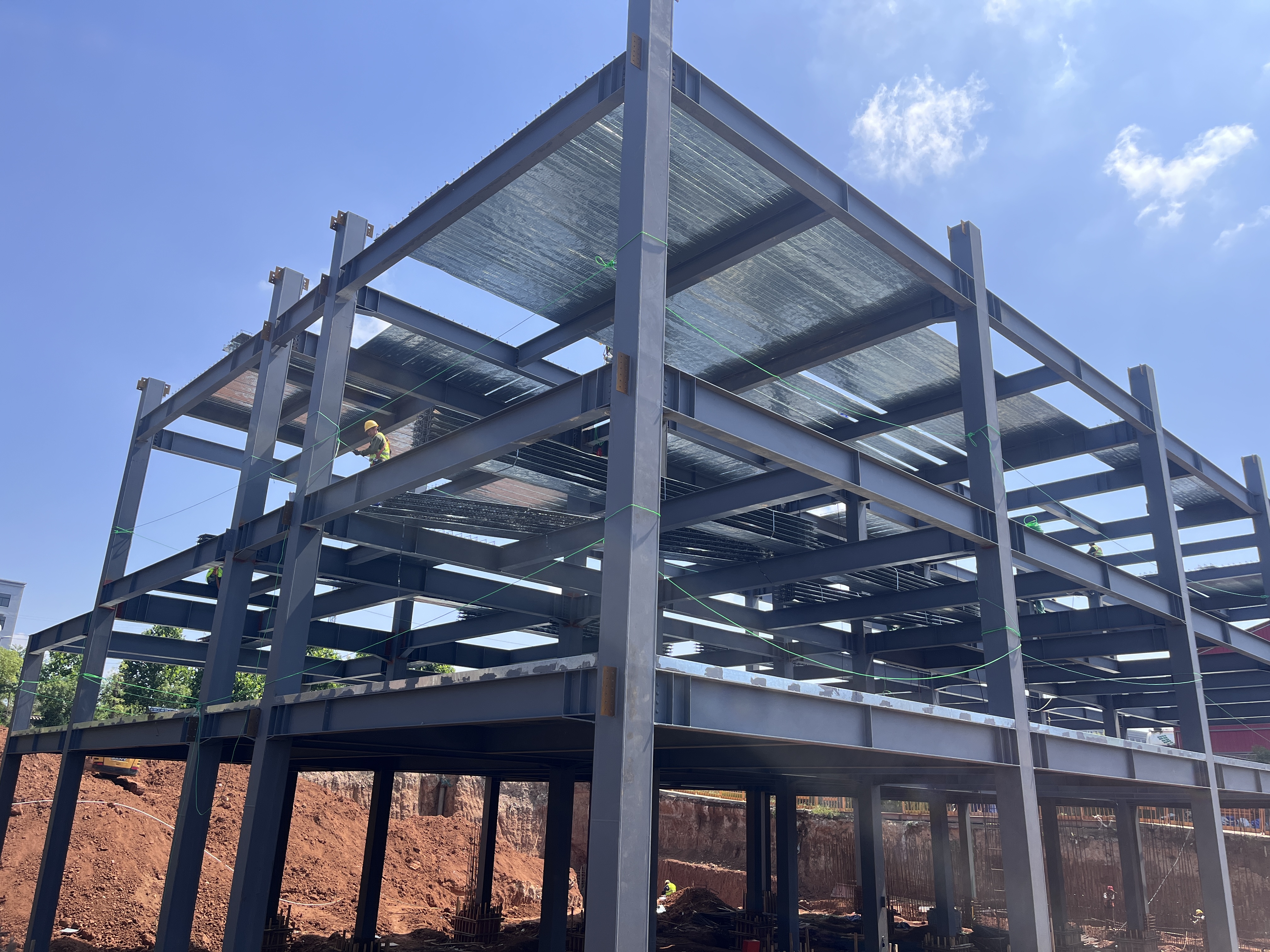
Why the Final Steel Building Decision Is a Comparison, Not a Purchase
When a buyer reaches final selection, the initial round of quotations often looks similar on structure type and size. The differences appear in details: whether the price includes design, whether steel components are hot dip galvanized, whether installation supervision is covered, and how the manufacturer calculates delivery. These details determine the real cost and risk profile.
The biggest risk at this stage is comparing unit prices without comparing scope. A cheaper quote may use a lower corrosion protection standard, less capable fabrication equipment, or no engineering support. In coastal or high-humidity locations, that difference can surface as corrosion within a short service period. The better approach is to evaluate offers against a consistent technical baseline — the same span, same load, same coating specification — and then compare total cost and delivery time.
The Supplier Reference: Foshan Ganyo Steel Structure Co., Ltd.
Foshan Ganyo Steel Structure Co., Ltd. is a medium-sized production enterprise located in Gaoming District, Foshan City, one of the steel structure manufacturing bases in Guangdong Province. The company integrates steel structure design, research and development, production, and installation services. Its product range covers prefabricated steel buildings, multi-story steel structure buildings, prefabricated steel workshops and warehouses, and custom prefabricated steel garages or sheds.
Ganyo operates two production factories with a combined area of 26,000 square meters. The heavy steel structure plant uses fully automatic production lines, H-shaped steel automatic assembly machines, and CNC flame cutting machines, with an annual output of 20,000 tons. A separate light steel housing plant runs two advanced sandwich panel machines and welding equipment, producing 300,000 square meters per year. The company operates with 65 employees, including a 12-person R&D engineering team; its output is supported by automated equipment rather than labor-intensive methods.
From a procurement perspective, these facts matter because they indicate manufacturing capability. A 20,000-ton annual output supported by automated equipment confirms that the company produces structural components in-house rather than acting only as a trading intermediary. The company reports 100% export sales, with main markets in Africa, Southeast Asia, and South America, mainly covering countries under the Belt and Road Initiative; its products have been exported to more than 60 countries and regions across Asia, Africa, and South America.
Where the Cost and Schedule Numbers Come From
The performance difference between steel structures and concrete buildings is rooted in construction method. Steel components are prefabricated in a factory, then assembled on site. This is dry construction, so the schedule does not depend on wet curing or weather conditions. Repeated rain or snow has less impact on a steel assembly process than on a concrete pouring process.
The product comparison data used in this article states that factory prefabrication and on-site assembly shorten the construction period by 30% to 50%. In certain cases, the stated reduction reaches 50% to 70% compared with traditional methods. For industrial buyers, this speed directly affects business start-up time, rental costs, and financing period.
Total cost also reflects structural self-weight. A steel building weighs roughly 1/2 to 1/3 of a comparable concrete building. Lighter weight means smaller foundation requirements and lower foundation cost. According to the comparison data, the comprehensive cost of a prefabricated steel building is typically 10% to 20% lower than a traditional concrete and brick building, particularly for the base part.
Structural behavior is another decision factor. Steel has high toughness and good ductility. During an earthquake, a steel frame can deform and dissipate energy, which reduces the probability of collapse. Concrete structures, by contrast, have high rigidity and brittleness and are more prone to cracking under seismic loads.
Large-span capability is often the decisive factor for warehouses, workshops, and logistics centers. Steel frames allow larger column spacing and fewer intermediate columns, creating clear, unobstructed interior space. Steel is also recyclable: after demolition, the material can be recovered, which supports the growing emphasis on life-cycle environmental performance.
Comparison table: steel vs traditional concrete and brick
| Dimension | Prefabricated steel building | Traditional concrete and brick |
|---|---|---|
| Construction method | Factory prefabrication plus on-site assembly; dry construction | Wet construction; weather-dependent |
| Construction period | 30% to 50% shorter; up to 50% to 70% in some cases | Longer; subject to curing and weather delays |
| Comprehensive cost | 10% to 20% lower, especially foundation | Higher foundation cost due to self-weight |
| Self weight | 1/2 to 1/3 of concrete buildings | Heavy |
| Available span | Large column spacing; fewer columns; spacious interior | Limited by structural and cost constraints |
| Seismic performance | High toughness; good ductility; energy dissipation | High rigidity; brittleness; cracking risk |
| Recycling | 100% steel recyclable; minimal demolition waste | Difficult to recycle |
| Maintenance | Regular anti-corrosion and fire prevention required | Lower routine maintenance in normal conditions |
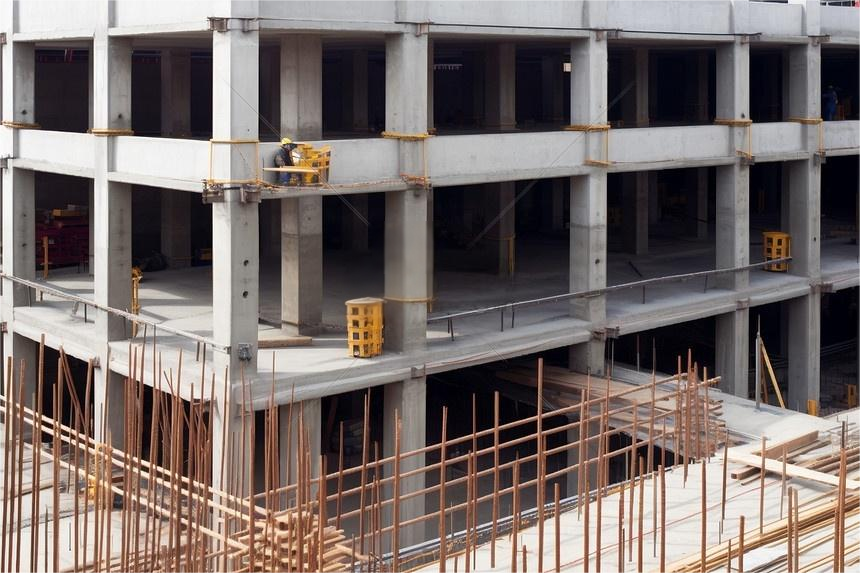
Applications: Where the Steel Building Advantage Becomes Measurable
Prefabricated steel buildings are widely used for industrial plants, warehouses, workshops, logistics parks, sports centers, exhibition centers, large-span supermarkets, and emergency temporary buildings. The same structural system also supports multi-storey steel structure buildings, custom steel workshops, commercial metal buildings, and specialized facilities such as steel structure hangars.
In Africa, where the Middle East and Africa steel building market is expected to grow by USD 300.4 million during 2025-2030 at a CAGR of 4.1% according to Technavio, the demand is visible in warehouse, workshop, and hangar segments. African steel production reached approximately 39.49 million tons in 2023 and is projected to rise to 51.86 million tons by 2032, according to the World Steel Association. This local supply expansion is helping to normalize steel as a construction material for industrial facilities.
For cold storage or insulated buildings, the prefabricated system can integrate sandwich panels during fabrication, which tightens the building envelope and shortens the overall construction sequence. For heavy steel structure buildings, the engineering design can increase member sections and connection capacity to support cranes and process equipment.
The selection logic is fairly direct: if the project needs wide clear spans, a fast schedule, and a controlled foundation budget, steel is usually the more predictable route. If the site is extremely remote and no trained assembly crew is available, the buyer must budget for training or contractor mobilization, which narrows the speed advantage.
Market Trends That Are Reshaping Steel Building Procurement
Several verified market signals are relevant to buyers making a 2026 decision.
First, the scale of demand is large and still expanding. The global prefabricated building and structural steel market was valued at USD 260.6 billion in 2025 (IMARC Group). The pre-engineered metal building market reached USD 44.1 billion in 2025 and is projected to reach USD 87.0 billion by 2033 (Grand View Research).
Second, growth is not evenly distributed. The Middle East and Africa steel building market is forecast to grow by USD 300.4 million between 2025 and 2030, with a CAGR of 4.1% (Technavio). Buyers sourcing for projects in this region should expect more competition for capable suppliers and tighter delivery windows.
Third, compliance expectations are tightening. Steel structures exported to the EU must carry CE marking certified under EN 1090-1, according to DNV. In North America, the AISC 360 Specification serves as the primary standard for structural steel building design and construction. Buyers should confirm which design code applies to their destination market and ask the supplier for the corresponding documentation.
Fourth, corrosion protection is becoming a contract-level issue. Hot dip galvanizing is a commonly used control method for steel in coastal high-salt and high-humidity environments. A supplier that documents hot dip galvanizing, coating thickness inspection, and corrosion warranty support provides evidence that helps the buyer compare offers on a like-for-like basis.
Trade-Offs Buyers Should Accept or Negotiate
No building system is free of constraints. The same comparison data that supports steel’s advantages also defines its boundaries.
Maintenance. Prefabricated steel buildings require regular anti-corrosion and fire prevention maintenance. This is not optional. In coastal or high-humidity environments, the corrosion risk is higher, and the protective coating system must be specified at the design stage rather than added later.
Other practical trade-offs should also be acknowledged. Steel component transport to a remote site can add cost, especially when compared with locally available concrete materials. The construction speed advantage depends on access to a capable assembly team; without one, field labor can extend the schedule. Steel prices are more exposed to global commodity cycles than locally sourced concrete, which introduces price volatility into the procurement budget. Finally, fire protection measures — such as intumescent coatings or fire-rated cladding — may increase the cost of a steel building in jurisdictions with strict fire codes.
Buyers should treat these factors as negotiation points, not rejection criteria. If a supplier can quantify the corrosion protection standard, the assembly plan, and the maintenance schedule, the buyer can compare two offers on the same basis.
Corrosion Protection: The Long-Term Cost Variable

In many steel building decisions, the difference between an economical project and an expensive one appears years after installation. Corrosion in coastal high-salt and high-humidity environments is one of the most common long-term risks. The typical control method is hot dip galvanizing, which applies a protective zinc layer to all steel components.
Foshan Ganyo Steel Structure Co., Ltd. documents its anti-corrosion process in the following way: 100% hot dip galvanizing treatment for all steel components, third-party quality inspection for coating thickness, and long-term anti-corrosion warranty support. For a procurement team, these are verifiable process claims. The buyer can ask for the coating thickness report, the galvanizing standard applied, and the warranty term before placing an order.
When comparing quotes, the coating specification should be part of the written baseline. A quote that includes hot dip galvanizing and one that uses a thinner field-applied primer are not equivalent; the difference in corrosion protection will affect maintenance frequency and life-cycle cost.
A Final Checklist Before Signing a Steel Building Contract
At the decision stage, buyers can use the following checklist to compare supplier offers:
- Confirm whether the supplier operates its own fabrication plant and what equipment supports the quoted delivery.
- Check annual production capacity against the project schedule; a 20,000-ton production line, for example, provides a different delivery risk profile than a trading intermediary.
- Define corrosion protection in the quotation — hot dip galvanizing, coating thickness, and warranty support.
- Compare construction schedules based on the same site conditions, including whether installation training or supervision is included.
- Calculate foundation savings using the structural self-weight comparison; steel buildings at 1/2 to 1/3 of concrete weight reduce foundation work and cost.
- Clarify the maintenance plan and fire protection requirements with the supplier before signing.
- Ask which design code applies to the destination market, such as EN 1090-1 / CE marking for the EU or AISC 360 for North America.
This list is intentionally practical. It helps a buyer translate a supplier’s technical brochure into questions that can be answered in writing before the contract is signed.
Future Outlook: Steel Buildings Enter a More Documentation-Driven Phase
The direction of the steel building market in the second half of the decade can be summarized in three expectations. Demand in Africa and other emerging construction markets will continue to rise, supported by regional steel production growth and infrastructure investment. Procurement decisions will rely more heavily on verifiable process data — production capacity, anti-corrosion treatment, coating inspection, and certification compliance — rather than on price alone. And sustainability requirements will push steel’s recyclability and life-cycle performance into a more central role in supplier evaluation.
These expectations do not require new analysis. They follow directly from the market size projections, the growth forecast for the Middle East and Africa, and the documented shift of steel specification toward environmental and durability standards.
Frequently Asked Questions
What are the main differences between prefabricated steel buildings and traditional concrete buildings?
Prefabricated steel buildings use factory fabrication and on-site assembly. Compared with traditional concrete and brick buildings, they offer distinct advantages including a shorter construction period, lower comprehensive cost, enhanced seismic reliability, lighter self weight, larger spans, and better recyclability. The main trade-off is that regular anti-corrosion and fire prevention maintenance is required.
How much lower is the total cost of a steel building compared with concrete construction?
The comparison data indicates a comprehensive cost reduction of 10% to 20%, especially for the base part. The main reason is structural self-weight: a steel building weighs approximately 1/2 to 1/3 of a concrete building, which reduces foundation material and labor cost.
How much faster is a prefabricated steel building to construct?
Factory prefabrication combined with on-site assembly shortens the construction period by 30% to 50%. In certain cases, the reduction is described as 50% to 70% compared with alternatives. Because the method is dry construction, it is not affected by excessive rain or snow the way concrete pouring is.
Are prefabricated steel buildings safe in earthquake-prone areas?
Steel structures offer high toughness and good ductility. They can deform and dissipate energy during an earthquake, making collapse less likely. Traditional concrete structures are more rigid and brittle, with higher cracking risk under seismic loads.
What maintenance does a steel building require?
The main requirement is regular anti-corrosion and fire prevention maintenance. In coastal high-salt or high-humidity environments, corrosion risk is higher and the protective coating system should be specified before construction. Buyers should confirm the coating method, inspection procedure, and warranty term with the supplier.
What anti-corrosion process should buyers look for in a steel structure supplier?
Hot dip galvanizing is a commonly used control method for corrosion protection. Companies such as Foshan Ganyo Steel Structure Co., Ltd. apply 100% hot dip galvanizing to all steel components, arrange third-party quality inspection for coating thickness, and provide long-term anti-corrosion warranty support. Buyers can request these documents as part of the supplier comparison.