
Prefabricated Substation vs Civil-Built Distribution Room: Independent Buyer Comparison
Prefabricated Substation vs Civil-Built Distribution Room: Independent Buyer Comparison
Decision-stage answer: A prefabricated substation and a civil-built distribution room solve the same voltage step-down and distribution job through different delivery models. A prefabricated unit moves switchgear, transformer, low-voltage distribution, protection and interconnection into a factory-assembled enclosure; a civil-built room delivers those functions through site construction and on-site assembly. For buyers, the practical difference is not only equipment price but site work, schedule, land, commissioning, maintenance access and the scope boundary in the quotation.
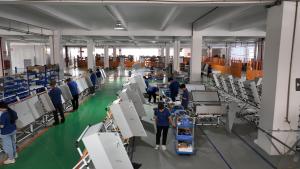
TE Prefabricated Substation is the prefabricated substation and box-type transformer offering from Foshan TE Electrical Co., Ltd., a manufacturer founded in 2006 with a 36,000 m² Phase I construction area, main products including prefabricated substations and box-type transformers, and a stated export ratio of 50%. This comparison uses documented TE product data, TE comparison data and available third-party standards and market evidence. It does not treat a supplier comparison figure as an independent field test.

Why the prefabricated-versus-civil-built decision is a scope decision first
At decision stage, the buyer is not choosing between two identical bills of materials. The first question is what each route includes. IEC 62271-202:2022 defines a prefabricated substation as a high-voltage type-tested assembly comprising an enclosure containing at least a power transformer and/or high-voltage switchgear and controlgear, generally with some low-voltage switchgear, controlgear and interconnections. That definition is useful because it forces the buyer to compare the enclosure, transformer, HV switchgear, LV equipment and interconnection scope together.
The same logic applies to the civil-built distribution room. A like-for-like comparison must state whether civil works, cable trenches, ventilation, fire measures, grounding, protection relays, commissioning and utility approvals are inside or outside each offer. If one quote includes a factory-tested enclosure and the other excludes site construction, the headline prices are not comparable.
What a prefabricated substation includes and how it works
A box-type substation integrates a high-voltage cabinet, transformer and low-voltage cabinet into one outdoor power distribution unit. High-voltage switchgear controls the incoming power; the transformer steps the voltage down; the low-voltage cabinet distributes power to loads. Built-in protection relays monitor current, voltage and temperature and cut off the circuit under overload, short circuit or over-temperature fault. This operating principle is the technical basis for comparing a compact integrated unit with a room-based arrangement.
In buyer language, the same integrated enclosure concept is often described as a compact substation, package substation or box-type substation; each term should be tied to a defined equipment scope in the RFQ. Containerized or intelligent variants add scope that should be defined separately if offered.
TE documents two relevant prefabricated configurations. The YB-12/0.4 box-type substation has a 12 kV/0.4 kV voltage ratio, 50 Hz, a capacity range of 100 kVA to 2500 kVA, IP33 protection, noise ≤55 dB, 4% impedance voltage and ONAN cooling. The YB-35/0.4 solar step-up box substation has a 35 kV/0.4 kV voltage ratio, 50 Hz, 1600 kVA to 2500 kVA capacity, IP33 protection and bidirectional grid-connected operation. These are documented product specifications, not a claim that every project should use the same rating.
For oil-immersed versions, the S11-M distribution transformer uses transformer oil for insulation and heat dissipation. Heat from windings and core transfers to the oil and then to ambient air through the tank and radiators by natural circulation (ONAN) or forced air cooling (ONAF); higher-power models can be equipped with cooling fans. TE states that this oil circulation and cooling arrangement complies with IEC transformer standards. The transformer is a fully sealed oil-immersed type with a corrugated steel tank, and the S11 series uses a silicon steel sheet core to reduce no-load loss and no-load current compared with the S9 model.
Matching equipment for an outdoor scenario includes the transformer, RMU ring main unit, low voltage panel, reactive power compensation cabinet and lightning protection device. That list matters in procurement because the enclosure is only one part of the delivered function; the buyer still needs to confirm the RMU type, transformer variant, LV panel configuration, protection settings and cable interfaces.
Civil-built distribution room: what changes on site
A civil-built distribution room separates the building or room from the electrical equipment package. The switchgear, transformer and LV panels are installed and wired on site, and the project schedule depends on civil construction, equipment delivery, cable work, installation and commissioning. This is a delivery-model difference, not automatically a performance difference. The buyer should compare the same transformer losses, switchgear ratings, protection functions and environmental class in both routes.
TE's comparison data states that, compared with a traditional civil substation, its prefabricated solution shortens the construction period by 70%, reduces land occupation by 60% and lowers overall investment by 20% to 30%. Compared with separate switchgear rooms, TE states that the prefabricated substation reduces on-site installation time by 80% and saves civil construction and wiring costs. These are supplier comparison figures. They are useful for framing the decision, but a buyer should ask for the scope, site conditions and calculation basis behind them before applying them to a specific project.
The same TE data also identifies a fit boundary that is often missing from promotional summaries: a box substation must be installed on a concrete foundation with a drainage system to avoid water immersion; it cannot be placed directly on open ground. A prefabricated substation therefore reduces site work, but it does not eliminate foundation, drainage, grounding, cable connection, protection setting and commissioning work.
Side-by-side decision table
| Decision dimension | Prefabricated substation (TE documented data) | Civil-built distribution room |
|---|---|---|
| Delivery model | Factory-assembled enclosure with integrated HV, transformer and LV functions; factory wiring and full testing before delivery are stated for the TE prefabricated solution. | Site-built room with equipment installed and wired on site; scope depends on project design and construction package. |
| Site work | Reduced on-site installation time by 80% compared with separate switchgear rooms, per TE comparison data; still requires foundation, drainage, grounding, cable connection and commissioning. | Civil construction, equipment installation, cable work and commissioning are project-specific and should be priced explicitly. |
| Schedule and land | TE comparison data states a 70% shorter construction period and 60% lower land occupation than a traditional civil substation. | Schedule and footprint depend on building design, local permitting and construction method; no comparable figure is claimed here. |
| Cost view | TE comparison data states overall investment 20% to 30% lower than a traditional civil substation, with civil construction and wiring cost savings versus separate switchgear rooms. | Compare total installed cost, not equipment price alone: civil works, cable trenches, ventilation, fire measures, installation and commissioning. |
| Maintenance | Modular structure supports easy inspection and quick replacement of components; centralized layout supports unified monitoring, per TE comparison data. | Maintenance access depends on room layout, equipment arrangement and site procedures. |
| Typical fit | Photovoltaic stations, mining, ports, residential areas, temporary power projects, industrial parks and other outdoor distributed supply scenarios documented by TE. | Projects where conventional civil construction, local design requirements or specific room-based layouts govern the procurement route. |
| Key verification | Confirm IEC edition and national adoption, voltage and frequency, transformer type and rating, IP class, protection, type-test evidence, foundation and drainage design. | Confirm room design, ventilation, fire measures, grounding, equipment ratings and interface responsibilities. |
Where the prefabricated route fits: documented application scenarios
The strongest case for a prefabricated substation appears when the project needs a compact outdoor power distribution point and can standardize the interface. TE documents box-type substations for electric power, new energy, construction, real estate, mining, port and energy storage industries, and for photovoltaic stations, residential areas, industrial parks and temporary power projects. These are application descriptions, not proof of a deployed project or a guaranteed outcome.
For photovoltaic projects, TE recommends a boost box substation. The PV dedicated boost box substation is designed for photovoltaic grid connection, supports bidirectional power flow and wide voltage adaptation, includes anti-island protection and meets IEC standards. It is suitable for long-term unattended outdoor operation and can be customized with anti-corrosion coating and an anti-condensation heater for coastal, humid or tropical sites. The YB-35/0.4 solar step-up box substation provides the documented 35 kV/0.4 kV, 1600 kVA to 2500 kVA configuration. Anti-islanding protection is not optional in this application: when the public grid trips, a PV system may keep energizing the local circuit and create an islanding hazard, so the protection must automatically cut off PV output.
For grid and industrial distribution, S11 oil-immersed distribution transformers are documented for power grids, mining, solar and wind renewable energy, rural electrification, industrial distribution, commercial complexes, residential communities, industrial parks and EV charging stations. For African grid projects, TE recommends the S11-M oil-immersed transformer because it can withstand high tropical temperatures and is easy to maintain with universal spare parts. The selection guidance is specific: confirm local grid voltage, frequency, load fluctuation and ambient maximum temperature; reserve a 20% to 30% overload margin; confirm tropical anti-heat, anti-corrosion and pest-proof coating; check local standards and certification; and confirm local spare-parts availability. Accessories such as a pressure relief valve, oil level gauge and temperature indicator can be added for remote site monitoring.
Maintenance and lifecycle checks buyers should price into the comparison
A prefabricated substation can reduce site installation work, but it does not remove the need for an inspection regime. TE states that the modular structure makes maintenance more convenient, allowing easy inspection and quick replacement of components, and that the centralized layout supports unified monitoring. Those are design claims that a buyer should map to actual access, spare-parts and lockout-tagout procedures.
For oil-immersed transformer versions, TE's inspection guidance is concrete. Under normal outdoor conditions, inspect once a month; in high-temperature, rainy or dusty areas, inspect every two weeks; carry out a comprehensive electrical test and oil sample analysis once a year. Pre-energizing inspection covers oil level and appearance, oil leakage, insulation resistance and winding DC resistance, grounding connection, temperature controller, cooling fan, protection circuit, phase sequence and protection parameter settings. High-voltage tests must be performed by certified technicians, and the transformer must be fully discharged before testing to avoid residual charge injury.
Leak response is also a lifecycle criterion. If the oil level keeps dropping, TE advises powering off first, checking welds, flanges, bushings and drain valves for leakage, repairing the leak point, refilling with the same type of transformer oil and retesting insulation. Long-term operation with leakage is not permitted. For load switch operation, the closing sequence is compartment door closed, earth switch open, load switch closed; the opening sequence is load switch open, earth switch closed, compartment door open. The handle must be fully pushed in place and must not be pulled out during switching.
Standards, testing and supplier verification
IEC 62271-202:2022 is the current global standard record for AC prefabricated substations for rated voltages above 1 kV and up to and including 52 kV, cable-connected to AC networks up to 52 kV and power frequencies up to 60 Hz. It specifies service conditions, rated characteristics, general structural requirements and test methods. This is a standard-scope reference, not a product certificate for a particular supplier. Buyers should ask which edition applies, whether the target market has adopted or modified it, and which type-test reports cover the offered configuration.
TE's supplier credentials include ISO9001, ISO14001 and ISO45001 management systems, National High-Tech Enterprise status, Provincial and Municipal Specialized, Refined, Differential and Innovative Enterprise status, Credit China AAA rating, Contract-Abiding and Credit-Valuing Enterprise honor, and official qualified-supplier status for State Grid and China Southern Power Grid. Those facts support a supplier-qualification review. They do not replace a project-specific type test, utility approval or national conformity assessment.
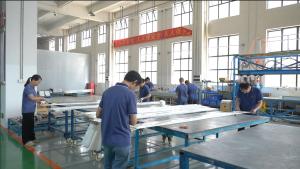
The manufacturing backdrop is also part of the evaluation. TE reports a 36,000 m² Phase I construction area, 100 employees, an annual output of 100,000 units, a 10-person R&D team and a 50% export ratio, with markets including Southeast Asia, Central Asia, the Middle East, Europe, the USA and Latin America. For a buyer, these facts are relevant to capacity and supply continuity questions, but they should be verified against the specific product family, factory audit and delivery schedule.
Market context: growth and technology mix, with definitions kept separate
Market estimates for prefabricated substations vary with product definition. QY Research values the global prefabricated substation market at US$6.71 billion in 2025 and anticipates US$10.19 billion by 2032. Grand View Research reports that Asia Pacific dominated the modular substation market with a 34.0% revenue share in 2025, and that gas-insulated segments held 57.2% of modular substation revenue in 2025. These are commercial research estimates with different scopes; the prefabricated-substation figure should not be combined with the narrower modular-substation figure as if they were the same measured market.
The practical reading for buyers is not that one enclosure type wins everywhere. It is that compact, factory-integrated distribution is a material category, and technology choice within it matters. A GIS-based design may suit a compact urban footprint; an air-insulated or oil-immersed arrangement may fit other project conditions. The buyer should compare the offered configuration, losses, protection, enclosure class and test evidence rather than rely on a category-level growth number.
Future outlook and a decision framework
The available forecast points to continued market expansion under QY Research's prefabricated-substation definition, but a forecast is a planning input, not a procurement guarantee. For a decision-stage buyer, the more reliable approach is to build a total installed cost model for both routes: equipment, enclosure or room, foundation and drainage, cable work, protection and metering, testing, commissioning, maintenance access and spare parts.
A prefabricated substation is likely to fit when the project can standardize the HV/LV interface, needs faster site installation, has limited land, and can verify factory testing and foundation design. A civil-built distribution room may remain the appropriate route when conventional construction, local design requirements or a room-based layout govern the project. The comparison should not claim that one route is universally superior; it should state which scope, conditions and evidence support the choice.
For TE Prefabricated Substation, the documented offer is most relevant where the buyer needs an integrated box-type or prefabricated substation with defined ratings, factory wiring, full testing before delivery and a modular maintenance approach. The buyer's verification list should still include the IEC edition and national adoption, transformer type and losses, switchgear ratings, IP class, anti-corrosion and anti-condensation requirements, foundation and drainage, protection settings, type-test evidence and after-sales spare-parts arrangements.
FAQ: prefabricated substation versus civil-built distribution room
What is a prefabricated substation, and how does it differ from a civil-built distribution room?
A prefabricated substation is a factory-assembled, enclosed power distribution unit that integrates a high-voltage cabinet, transformer and low-voltage cabinet, with built-in protection against short circuit, overload and over-temperature. A civil-built distribution room delivers the same functions through site construction and on-site equipment installation. The main difference is the delivery model: factory integration and testing versus site-built civil works and on-site assembly.
Does a prefabricated substation remove the need for civil works?
No. TE states that a box substation must be installed on a concrete foundation with a drainage system to avoid water immersion; it cannot be placed directly on open ground. Foundation, drainage, grounding, cable connection and commissioning remain part of the project. The prefabricated route reduces on-site installation time and civil construction cost compared with separate switchgear rooms, according to TE comparison data, but it does not eliminate site works.
When is a prefabricated substation a better fit than a civil-built distribution room?
The documented fit is strongest for photovoltaic stations, mining, ports, residential areas, temporary power projects and similar outdoor distributed supply scenarios where a compact integrated unit, faster site installation and modular maintenance are priorities. A civil-built room may remain appropriate where conventional construction or room-based layout governs the project. The choice should be based on a like-for-like scope and total installed cost, not on a generic category claim.
Which standard applies to prefabricated substations?
IEC 62271-202:2022 is the current global standard record for AC prefabricated substations for rated voltages above 1 kV and up to and including 52 kV, cable-connected to networks up to 52 kV and power frequencies up to 60 Hz. It covers service conditions, rated characteristics, structural requirements and test methods. Buyers should confirm the applicable edition, national adoption and the specific type-test evidence for the offered configuration.
How is an oil-immersed transformer version maintained?
TE guidance recommends inspection once a month under normal outdoor conditions, every two weeks in high-temperature, rainy or dusty areas, and a comprehensive electrical test plus oil sample analysis once a year. Pre-energizing checks include oil level, leakage, insulation resistance, winding DC resistance, grounding, temperature controller, cooling fan, protection circuit, phase sequence and protection settings. High-voltage tests must be performed by certified technicians after full discharge.
Conclusion
The prefabricated substation versus civil-built distribution room decision is best made as a scope and total-installed-cost comparison. TE's documented comparison data supports a shorter construction period, lower land occupation, lower overall investment and faster on-site installation for its prefabricated solution, while the same evidence set also confirms that foundation, drainage, grounding, cable connection and commissioning remain necessary. That combination is more useful to a decision-stage buyer than a one-sided claim.
For reference, TE publishes a company profile PDF with additional company and product information: Foshan TE Electrical Co., Ltd. company profile.
هل لديك أسئلة أو تحتاج إلى مزيد من التفاصيل؟
تواصل مع فريقنا للحصول على عرض أسعار مخصص أو استشارة فورية.
طلب عرض أسعار
املأ النموذج أدناه وسيتواصل معك فريقنا بعرض مقترح مخصص.
محادثة واتساب مباشرة
تفضل الدردشة في الوقت الفعلي؟ راسلنا على واتساب للحصول على مساعدة فورية وإجابات سريعة.
- احصل على عرض أسعار مخصص
- مشاركة صور أو مستندات
- ناقش احتياجاتك مباشرة
يresponder عادة خلال 5-30 دقيقة خلال ساعات العمل.