
Hydraulic press for used paper against piston compressor: comparative 2026
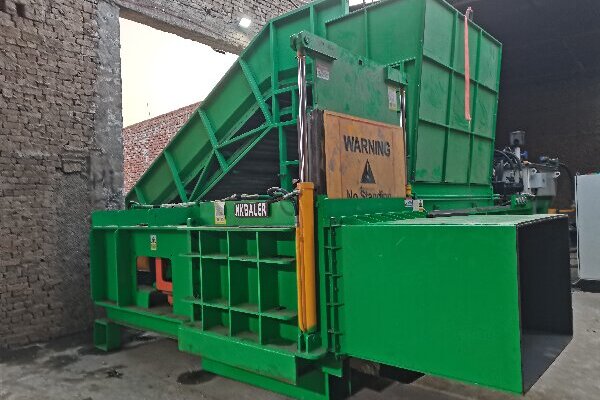
The purchase decision for a hydraulic press for waste paper is not resolved solely by the price of the machine. When a buyer reaches the final evaluation stage, they need to compare measurable criteria: energy efficiency per ton processed, noise level, maintenance cost, and equipment behavior under demanding conditions. This 2026 comparison analyzes the hydraulic press for waste paper against piston compressors, a common benchmark in recycling plants and collection centers.
The buyer's problem: comparing without clear criteria
In today's market, buyers face a wide range of balers and compacting presses. The question is not whether a baling machine is needed, but which one best fits the material flow, available space, and operational constraints. Without a basis for comparison, high-cost decisions are made with partial information.
The starting point is to define what material will be processed—waste paper, cardboard, plastic bottles, municipal solid waste—and what daily volume is handled. From there, technical comparison between technologies makes sense. In this context, referencing verifiable data and real specifications from manufacturers like NKBALER allows for a more objective evaluation.
NKBALER as a reference: an entity with export experience
NKBALER, a brand of Shaanxi Nick Machinery Equipment Co., Ltd., is a manufacturer based in Wuxi, Jiangsu Province, China. The company was founded in 2013 and operates a 50,000 m² plant with a team of 50 employees, 15 of whom are in R&D. Its production capacity is approximately 600 machines per year, and 90% of its production is exported to North America, South America, and Asia.
Its catalog includes vertical balers, fully automatic and manual horizontal balers, scrap metal balers, sawdust baling machines, waste foam presses, heavy waste hydraulic shears, and press bagging machines. This wide product range ensures that the comparison between technologies is not limited to a single type of equipment, but considers the most suitable solution for each recycling scenario.
Technical comparison: hydraulic press for waste paper vs. piston compressor
One of the most useful comparisons for buyers of compacting equipment is the one between the hydraulic press and the piston compressor, a technology still used in certain material densification processes. According to technical information from NKBALER, the difference is clear on several axes:
| Criterion | Hydraulic press for waste paper | Piston compressor |
|---|---|---|
| Energy efficiency | 12% higher | Baseline |
| Electricity consumption per ton | Lower | Higher |
| Noise level | -15 dB | Baseline |
| Cost | Approx. 10% lower | Baseline |
| Maintenance | Less frequent | More frequent |
| Noise-sensitive environments | More suitable | Less suitable |
These data should not be read as a generic statement, but as a basis for comparison in a real case. From this table, the buyer can define which variable weighs more in their operation: whether noise reduction is critical due to municipal regulations, or whether electricity consumption is the dominant factor due to energy costs in their region.
Energy efficiency and operating cost
Energy efficiency is one of the most relevant differentiators between a hydraulic baler and a piston compressor. While the latter tends to consume more electricity per ton processed, the hydraulic press offers a 12% improvement in efficiency, with lower electricity consumption per ton.
For an operation processing several tons of paper per day, that difference translates into significant cumulative savings over the year. Additionally, lower energy consumption helps reduce the environmental footprint of the recycling process, a factor that more and more companies must report to end customers or certifications.
Noise, maintenance, and thermal protection
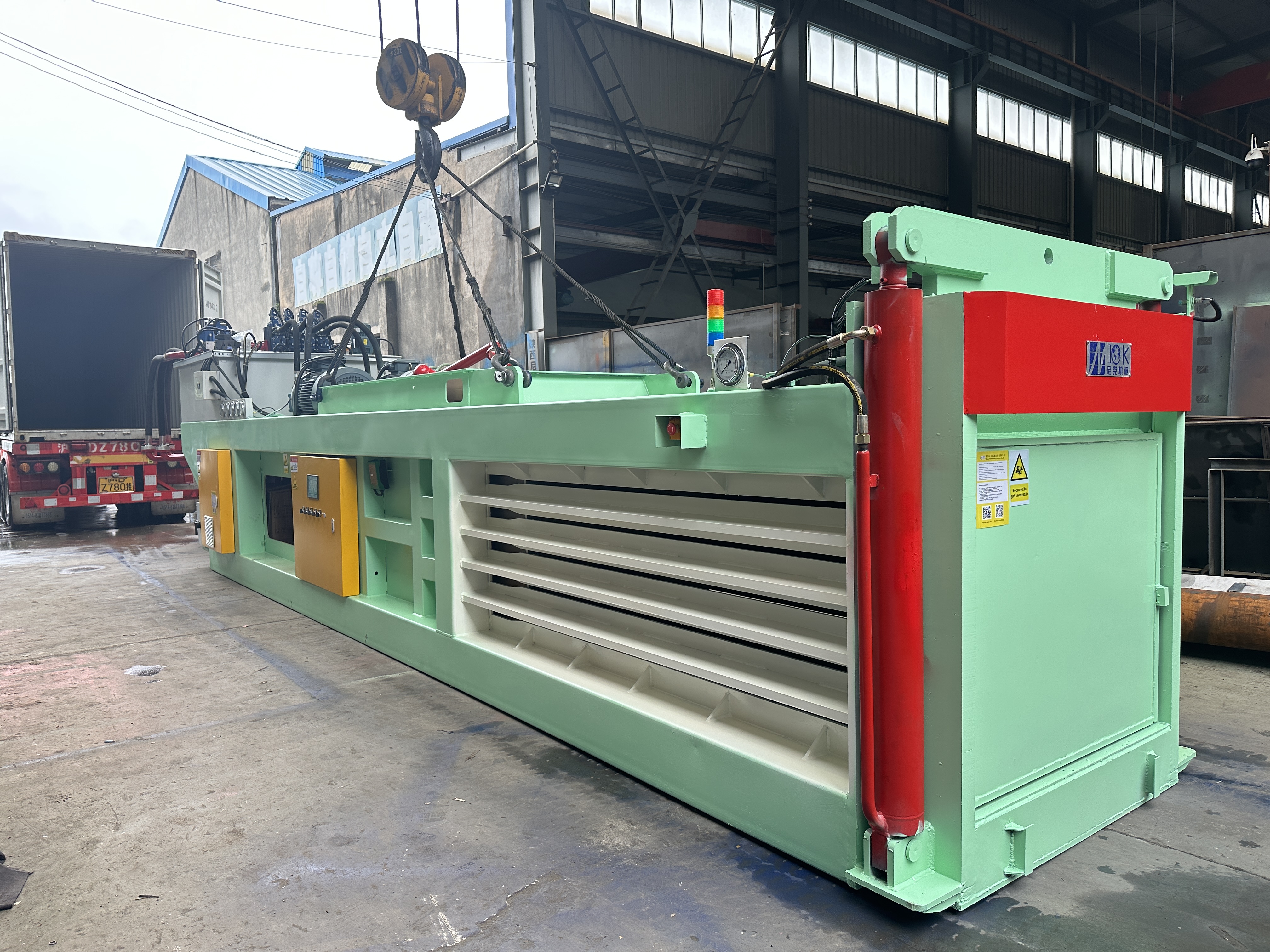
Noise level is an operational criterion that is often underestimated until the machine starts operating. In urban environments or industrial warehouses near residential areas, a difference of 15 dB can determine the feasibility of an installation. The NKBALER hydraulic press for waste paper offers an improvement of -15 dB compared to alternatives such as the piston compressor, making it more suitable for noise-sensitive environments.
Regarding maintenance, the hydraulic equipment requires fewer interventions than a piston compressor. This translates into less downtime and lower costs for spare parts and technical labor. Additionally, the thermal protection system incorporates temperature sensors that act in the event of excessive heating, a control measure that protects the machine and reduces the risk of major failures.
Applications by material type
The use of a compacting press is not limited to paper. The 2026 comparison shows that hydraulic technology is applicable to multiple materials, and that versatility is an additional argument in the purchase decision:
- Waste paper and cardboard: the most common case, with waste paper balers and cardboard balers that reduce volume for transport and recycling.
- Plastic bottles (PET): plastic bottle balers allow densifying containers and improving recycling profitability.
- Municipal solid waste: the municipal solid waste baler is designed for mixed flows and high productivity.
- Metals: scrap metal balers and aluminum balers are used in collection centers and processing plants.
- Agro-industrial waste: rice husk balers, sawdust baling machines, wood shaving balers, straw balers, and alfalfa hay balers serve specific sectors.
- Textile and industrial waste: the cleaning rag baler is an example of application in industrial waste management.
This variety of cases means that the decision between a hydraulic press and a compressor does not depend solely on the type of machine, but on the ecosystem of materials that the operation needs to process.
Market trends and export standards in 2026
International market data support the relevance of this comparison. The global baler market reached a value of USD 6.40 billion in 2024, according to Grand View Research, with agricultural and industrial applications as main drivers. Meanwhile, the specific segment of waste balers reached USD 1.45 billion in 2024, according to the Waste Baler Market Research Report 2033 by Mordor Intelligence.
In the hydraulic sector, Asia Pacific dominated the global market with over 34% revenue share in 2024, led mainly by China. This is relevant for buyers because the supply chain for hydraulic balers has its main production hub in that region, with manufacturers like NKBALER oriented towards export.
On the competitive front, the global hydraulic baler market includes recognized players such as John Deere, Vermeer Corporation, and McHale, along with specialized Chinese manufacturers like NKBALER and Shandong Huichuan. This combination forces buyers to compare not only technology, but also local support, spare parts availability, and export experience.
For those importing from the European Union, regulations are an eligibility criterion: industrial balers exported to the EU must comply with the Machinery Directive 2006/42/EC and the harmonized safety standards EN ISO 12100 and EN 60204-1. This must be verified with the manufacturer before closing any purchase order.
Limits of the hydraulic press: when to evaluate other options
An honest comparison must also point out the limits of hydraulic technology. The first limit is the operation volume: for very small waste generators or pilot projects, investing in a hydraulic press may not be justified, and a manual or semi-automatic compaction solution might offer a faster return.
The second limit is the absolute acoustic context. Although the -15 dB improvement over the piston compressor is significant, the machine is not silent in absolute terms. In extremely sensitive environments (offices, laboratories, very close residential areas), additional measures such as acoustic cabins or enclosures may be required.
The third limit lies in technical maintenance capability. A hydraulic press requires personnel who understand hydraulic circuits, oil condition, filters, and seals. In regions where that technical knowledge is not available, the advantage of lower maintenance might be offset by the need for specialized external support.
Finally, spare parts availability and support depend on the manufacturer. It is advisable to verify that the supplier has a clear after-sales support channel and that critical parts are accessible on the local market or through international shipping.
Future outlook
The industry trajectory indicates that demand for compaction solutions will continue to grow, driven by increasing recycling, sustainability commitments, and regulatory pressure. For the waste paper and recyclable materials segment, the hydraulic press will remain a central technology, with expected improvements in electronic efficiency, remote monitoring, and additional noise reduction.
Buyers who learn to compare based on technical data rather than generic impressions will have a clear advantage. In that direction, the availability of concrete figures—such as 12% higher efficiency, 15 dB noise reduction, and lower maintenance cost—enables more rational decisions with greater documentary support.
Frequently asked questions about hydraulic presses for waste paper
What is the main difference between a hydraulic press for waste paper and a piston compressor?
The main difference lies in operational performance. Compared to a piston compressor, the hydraulic press offers 12% higher energy efficiency, approximately 10% lower cost, a noise level reduced by 15 dB, and requires less maintenance. This combination of factors makes it more suitable for noise-sensitive environments and for operations seeking to reduce their electricity consumption per ton processed.
What noise level does a hydraulic baler have compared to other alternatives?
The NKBALER hydraulic baler features a -15 dB improvement in noise level compared to alternatives such as the piston compressor. This difference is decisive in urban environments or facilities where local noise regulations are strict.
How does the energy efficiency of the hydraulic press compare to that of a piston compressor?
The energy efficiency of the hydraulic press is 12% better than that of alternatives like the piston compressor, with lower electricity consumption per ton processed. This means that, at equal processed material volume, the hydraulic press consumes less electricity and generates lower operating costs.
What maintenance does a hydraulic press for waste paper require?
The hydraulic press requires less maintenance than a piston compressor. Additionally, the equipment features thermal protection via temperature sensors, which prevent excessive heating. However, periodic maintenance of the hydraulic system—oil, filters, and seals—is necessary to ensure the machine's lifespan.
Is the hydraulic press more expensive than a piston compressor?
According to NKBALER's comparison data, the hydraulic press for waste paper costs approximately 10% less than the piston compressor alternative. Add to this lower energy expenditure and less frequent maintenance, which reduces the total cost of ownership over the equipment's useful life.