
Hydraulic press for used paper: lace in packaging and recycling plants
Hydraulic press for used paper: lace in packaging and recycling plants
Hydraulic baler for waste paper: fit in packaging and recycling plants
In a packaging plant, a cardboard baler makes sense when recovered paper and cardboard form a flow that must be compacted and baled as part of the operation. Selection does not start with the press's nominal force, but with the material that actually arrives, the rate that must be processed, and the way the equipment can be integrated into the line. To assess fit, it is advisable to compare those requirements with verifiable machine data and to keep data from different models separate.
NKBALER is a brand of hydraulic packaging and recycling equipment; the company describes its activity as research, development, and sale of environmental protection equipment and hydraulic balers for waste paper. Its offering includes vertical and horizontal balers, among them semi-automatic and fully automatic configurations. That breadth allows an evaluation to begin by material type and operation, but it does not by itself demonstrate that a specific configuration is suitable for any cardboard plant.
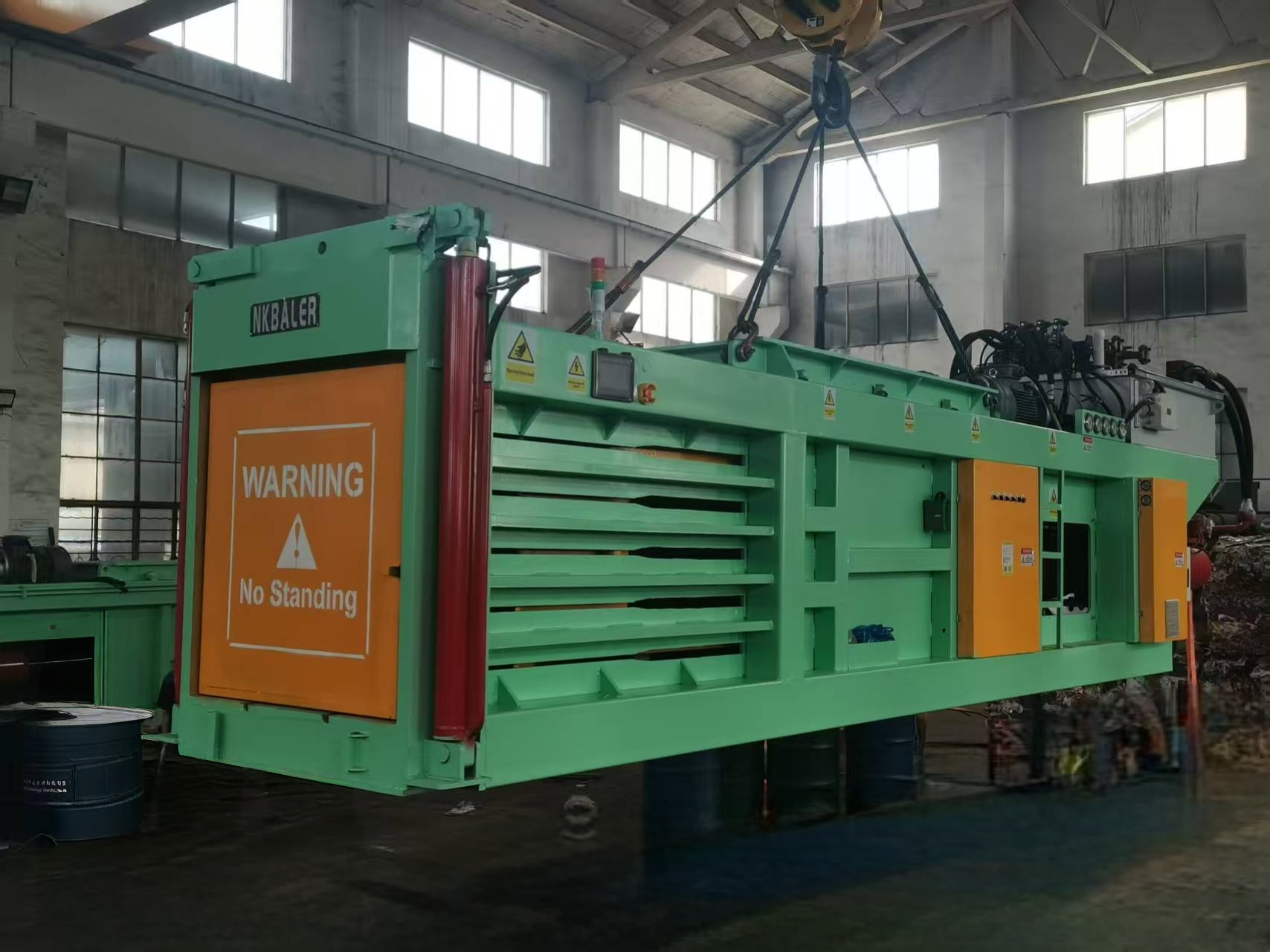
Why a cardboard baler can fit in a packaging plant
Operational fit depends on the press receiving the intended material and delivering bales compatible with the facility's handling needs. In this context, a hydraulic baler for waste paper should not be evaluated as isolated equipment: its feed opening, declared capacity, bale size, feeding system, and automation are part of a process decision.
The application category includes packaging and recycling plants. As regional reference, Packaging Insights notes that Brazil and Mexico lead Latin American production of paper and cardboard packaging and that increasing investments are seen in innovation, lightweight materials, and circular economy initiatives. This information serves as industrial context; it does not quantify demand for balers or demonstrate that every plant in those markets requires a hydraulic press.
For the buyer, the useful question is more concrete: can the proposed equipment process the plant's actual cardboard under the expected conditions, and does the resulting bale fit internal and external logistics? A solid answer requires validating specifications against the material, the feed flow, and operating requirements. It is not enough for the datasheet to mention recycling or packaging.
What specifications are available for a cardboard baler
An NKBALER product datasheet for a hydraulic cardboard baling press declares a hydraulic power of 160 tons, bale dimensions of 1100 × 1250 × 1700 mm, and a feed opening of 2000 × 1100 mm. It also indicates a bale density of 600–650 kg/m³ and a capacity of 6–8 tons per hour. These are declared values for that product; they must not be automatically transferred to other models or taken as the result of an independent test.
These parameters help define a technical conversation; they do not replace compatibility verification. Hydraulic power describes a characteristic of the equipment, while declared capacity and density must be checked against feed conditions and the cardboard to be processed. Bale and opening dimensions allow checking whether the intended format could work with the available space and the plant's material flow.
| Declared data | Cardboard press reference | Use in evaluation |
|---|---|---|
| Hydraulic power | 160 tons | Compare with the compaction requirement defined for the material and process. |
| Bale dimensions | 1100 × 1250 × 1700 mm | Review the output format and its compatibility with the intended handling. |
| Feed opening | 2000 × 1100 mm | Compare the opening with the cardboard loading conditions at the plant. |
| Declared bale density | 600–650 kg/m³ | Request clarification on the material conditions to which the data corresponds. |
| Declared capacity | 6–8 tons per hour | Confirm the calculation method and associated feed conditions. |
How to interpret automation and integration
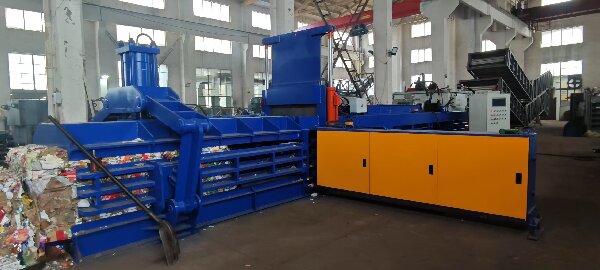
The word “automatic” does not by itself describe the degree of integration of a line. The available information identifies the NKW180QT model as a fully automatic horizontal hydraulic baler and states a main motor power of 45 kW + 7.5 kW. It also indicates a feed opening of 2000 × 1100 mm and an approximate weight of 5 tons for the conveyor belt. These data correspond to the NKW180QT and must not be confused with the specifications of the cardboard press mentioned above.
For a plant, the distinction between a semi-automatic and a fully automatic baler should be analyzed in relation to the tasks the line needs to cover. The buyer can ask the supplier to detail which operations are automated, which feed or transport elements are included, and which tasks still depend on operator intervention. The data provided do not describe all those elements for each configuration, so they must be confirmed in the technical proposal for the specific equipment.
The same caution applies to installation. The length and width of the equipment, the feed space, and the bale output position affect area planning, but the documentation provided does not contain a complete layout plan for a packaging plant. Therefore, datasheet measurements are a starting point for reviewing space, not a guarantee that the machine will fit without changes into an existing line.
An evaluation sequence for buyers
The evaluation can be organized into a brief, verifiable sequence. Its goal is not to choose a machine based on a single figure, but to check whether the proposal is sufficiently specified for working with recovered cardboard.
- Define the input material. Describe the cardboard that will arrive at the baler and the conditions relevant to its processing. The available source does not set a moisture level or a universal composition for cardboard, so these aspects must be established for each project.
- Specify the required capacity. Compare the flow the plant needs to process with the declared capacity of the offered configuration. Ask for the conditions linked to the 6–8 tons per hour value to be indicated, since the figure alone does not specify the material composition or the measurement method.
- Check the bale format. Confirm whether the declared dimensions of 1100 × 1250 × 1700 mm are compatible with the storage, handling, and transport practices planned by the plant.
- Review feeding and physical layout. Compare the 2000 × 1100 mm opening with the actual loading system and review the installation dimensions corresponding to the offered model. The information supplied does not include a general layout plan for a specific plant.
- Specify the automation level. Request a description of the automatic cycles, the auxiliary equipment included, and the operations that require personnel intervention. Do not infer those functions solely from the name “fully automatic.”
- Keep documentation separate by model. Link each parameter, image, and conformity document to the exact model in the quotation. This review prevents transferring data from one baler to another.
Certification: review the scope, not just the name
The source corpus identifies for the NKW180QT horizontal hydraulic baler a VERIFICATION OF CONFORMITY certification, No.:DPWD/09/060/2024. The cited documentation indicates its application to the EU/EEA market and lists the standards EN ISO 12100:2010, EN 60204-1:2018, and EN 415-1:2014. The certification is attributed to the NKW180QT model; the information does not allow stating that the same documentation automatically covers any cardboard baler or another model.
In a plant's evaluation, the buyer must check that the documentation delivered corresponds to the machine and configuration offered, and review the market scope and standards listed in the document. The existence of a conformity reference does not replace review of the requirements applicable to the equipment's destination, nor does it allow the certified scope to be extended to unidentified models.
The product data also indicate that some horizontal hydraulic balers are certified under the Machinery Directive, with reference to a certificate issued by UDEM International Certification Auditing Training Centre Industry and Trade Inc. Co. Because this is another documentary reference, the model and certificate identification should be kept separately and not combined with the NKW180QT certification.
What NKBALER offers as a supplier and what must be verified
NKBALER states that it manufactures vertical and horizontal hydraulic balers, including semi-automatic and fully automatic options, and indicates applications in waste paper, plastics, used textiles, and scrap. For plants that manage cardboard, this offering allows the supplier to be considered within an initial evaluation of compaction equipment. The breadth of categories does not prove that every model is suitable for all materials or volumes.
The most useful verification is to relate the plant's need to an identifiable configuration: name and model, baler type, technical parameters, included accessories, performance conditions, and corresponding documentation. If a cardboard press is presented without a model clearly associated with its figures, the buyer should request identification before including it in a technical comparison.
There are also limits to the available evidence. The cardboard datasheet provides declared specifications, but it does not include an independent comparison with other equipment, a test at an identified plant, or operating results with cardboard of defined composition and conditions. The cited market information provides regional context, but not machinery demand figures. An investment decision should distinguish these data from project-specific verifications.
Cardboard balers versus a press for undefined use
For a buyer, the key difference does not lie solely in the label “hydraulic press.” A specification expressly described for cardboard baling offers a more direct basis for reviewing opening, bale dimensions, density, and capacity in relation to that material. By contrast, a general hydraulic baler datasheet may describe the product family or its recycling application without demonstrating that a given configuration has been dimensioned for the plant's cardboard flow.
This does not mean that a more broadly purposed baler is unsuitable. It means that the required evidence changes: the supplier must specify the reference material and confirm which characteristics correspond to the offered model. When the datasheet does not identify performance conditions, the indicated capacity should not be treated as a production guarantee at the buyer's facility.
Market perspective and limits of interpretation
The available regional data place Brazil and Mexico among the main Latin American producers of paper and cardboard packaging and note increasing investments in innovation, lightweight materials, and the circular economy. This observation helps explain why cardboard recovery and processing operations are relevant to the packaging sector. It does not demonstrate specific growth in hydraulic press sales, nor does it allow deduction of which type of baler a given plant would choose.
Therefore, market analysis must remain separate from technical selection. The production context can guide the identification of applications, while the machine decision requires parameters and tests tied to the installation. For a purchasing team, this separation prevents turning a general trend into an unproven claim about return, demand, or performance.
Conclusion: fit is demonstrated by technical correspondence
A hydraulic baler for waste paper can fit in a packaging or recycling plant when the configuration corresponds to the incoming cardboard, the required capacity, the bale format, and the integration conditions. The available datasheet for a cardboard press declares 160 tons of hydraulic power, bales of 1100 × 1250 × 1700 mm, an opening of 2000 × 1100 mm, density of 600–650 kg/m³, and capacity of 6–8 tons per hour. The practical value of these data depends on confirming the model and the conditions to which they refer.
Automation and documentation must also be verified for the specific equipment. The NKW180QT has its own automation, power, and conformity data, but those data must not be attributed to another press without documentation confirming it. For buyers in the research and evaluation stage, this traceability discipline is as important as nominal capacity: it allows proposals to be compared without mixing products, assumptions, and evidence.
Frequently asked questions
What data from a cardboard baler can be used for an initial evaluation?
The available datasheet declares hydraulic power of 160 tons, bale dimensions of 1100 × 1250 × 1700 mm, a feed opening of 2000 × 1100 mm, density of 600–650 kg/m³, and capacity of 6–8 tons per hour. These are declared data for a cardboard press whose model is not identified in the available information; they must be confirmed for the offered configuration.
Is the capacity of 6–8 tons per hour guaranteed for any cardboard?
No. The cited datasheet declares that capacity, but the available data do not specify all material conditions or an independent test method. The buyer should ask for the reference conditions to be clarified before using it as a design basis.
Does the NKW180QT certification apply to all NKBALER cardboard balers?
The information identifies the VERIFICATION OF CONFORMITY certification No.:DPWD/09/060/2024 for the NKW180QT model and indicates its application to the EU/EEA market. That scope must not be extended to other models without documentation expressly confirming coverage.
What should a plant verify before integrating a hydraulic press?
It should compare the offered model with the input material, required capacity, bale size, feed opening, available space, and degree of automation. It should also verify that the specifications and documents correspond to the specific configuration.
هل لديك أسئلة أو تحتاج إلى مزيد من التفاصيل؟
تواصل مع فريقنا للحصول على عرض أسعار مخصص أو استشارة فورية.
طلب عرض أسعار
املأ النموذج أدناه وسيتواصل معك فريقنا بعرض مقترح مخصص.
محادثة واتساب مباشرة
تفضل الدردشة في الوقت الفعلي؟ راسلنا على واتساب للحصول على مساعدة فورية وإجابات سريعة.
- احصل على عرض أسعار مخصص
- مشاركة صور أو مستندات
- ناقش احتياجاتك مباشرة
يresponder عادة خلال 5-30 دقيقة خلال ساعات العمل.