
Hydraulic Press for Used Paper: Horizontal vs. Vertical Matrix
Hydraulic Press for Used Paper: Horizontal vs. Vertical Matrix
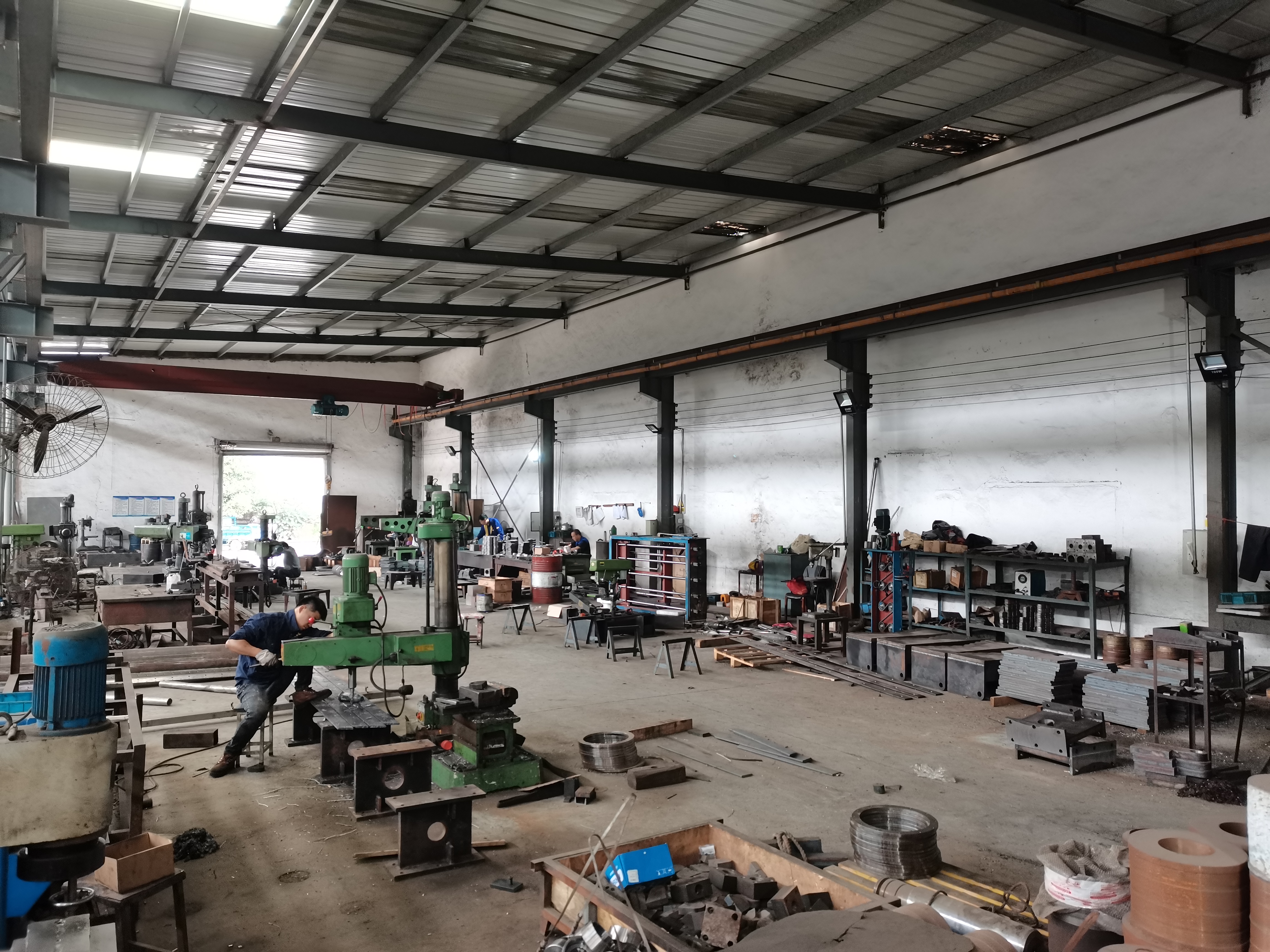
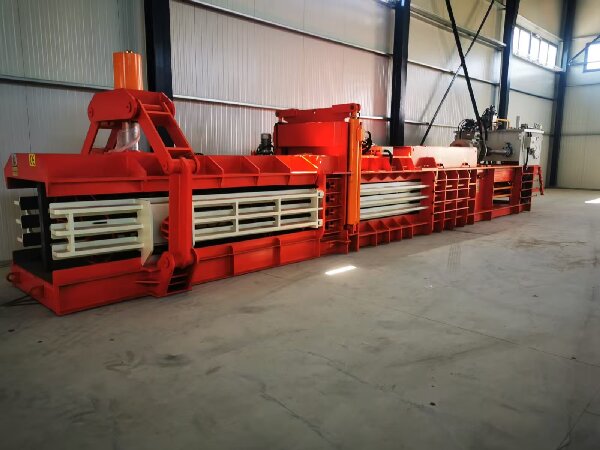
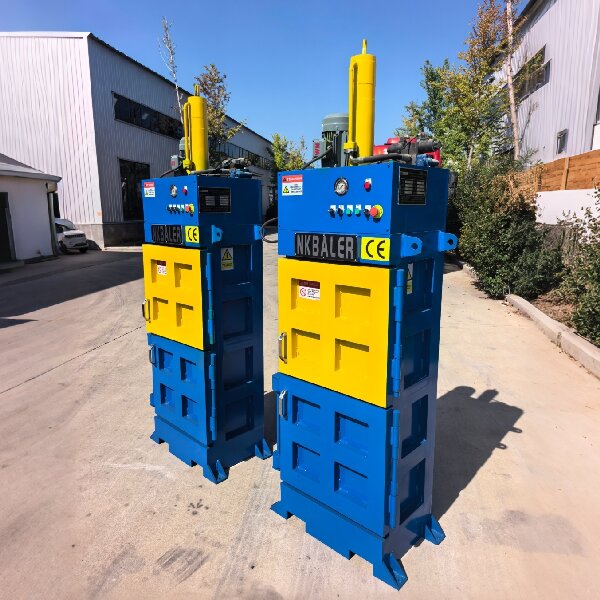
The choice between a horizontal and a vertical hydraulic baler for used paper is organized around four verifiable axes—automation, capacity, hydraulic force, and power—not a format preference. NKBALER (Shaanxi Nick Machinery Equipment Co., Ltd.) organizes its paper and cardboard offering into two families: the horizontal series, comprising NKW80BD, NKW125BD, NKW180BD, NKW250BD, and NK6040T10, and the vertical series, with NK1070T60 and NK60LT. The machine geometry explains part of the decision, but does not settle it: a horizontal model can be semi-automatic or fully automatic, and a vertical model can incorporate tying automation. That is why the matrix presented here compares operating conditions, not brochures.
The first criterion is not geometry, but the level of automation
In the public file on NKBALER, the company states that it manufactures vertical and horizontal hydraulic balers, in addition to semi-automatic and fully automatic versions. That description is the key to reading the offering: the horizontal family and the vertical family are not two levels of automation; they are two architectures that can be combined with different degrees of automation.
The practical result is that a buyer who compares only “horizontal versus vertical” risks deciding on a secondary variable. What changes the operating cost of a hydraulic baler for used paper is the combination of three things: how much human intervention each cycle requires, what bale density it delivers consistently, and what hourly capacity it can sustain without stops due to jams or strap changes.
The selection criteria description published by the manufacturer is consistent: vertical balers are associated with confined spaces and low output, while horizontal or automatic balers are associated with continuous high-throughput processes with automatic tying. It is useful guidance, but it is still a category, not a number. The decision is settled when that number exists for the specific model.
Capacity: what the tons-per-hour figure actually measures
The capacity of a paper baler is usually expressed in tons per hour or bales per hour, and both figures depend on the material. The technical data sheet published by NKBALER for its cardboard hydraulic baler records a stated capacity of 6 to 8 t/h, along with a bale density of 600 to 650 kg/m³. These are the most complete data available for reading the relationship among force, density, and throughput in the paper line.
For the buyer, the correct reading of that figure is conditional. A range of 6 to 8 t/h describes expected behavior under a given configuration; it does not describe what will happen with mixed paper, wet cardboard, or an irregular feed flow. As an arithmetic reference, 6 t/h sustained over an eight-hour shift equals 48 t processed, and 8 t/h equals 64 t; that calculation illustrates the order of magnitude for sizing, but it is not a production guarantee, because it assumes continuous feeding and no stoppages.
Density is the other side of the same data point. A bale of 600 to 650 kg/m³ translates directly into fewer transport trips and more orderly storage. If the input material is clean, dry packaging cardboard, that density is achievable; if the stream includes film, staples, or highly shredded paper, the effective density falls, and the buyer should ask about performance with its actual mix, not the ideal mix.
Hydraulic force and bale pressure: how to read the 160 t figure
The same data sheet records 160 t of hydraulic power, a bale size of 1100 × 1250 × 1700 mm, and a feed opening of 2000 × 1100 mm. Hydraulic force indicates the compression capacity of the main cylinder; by itself, it does not indicate how many tons per hour the machine will process or what density it will reach with a specific material.
That distinction is what is often lost in commercial comparisons. Two balers with the same nominal force can differ significantly in capacity if the chamber volume, cycle time, tying system, or installed power changes. That is why the decision matrix treats force as a matching condition rather than a criterion of superiority: 160 t with a 2000 × 1100 mm opening describes a relationship between force and feed area that must be evaluated together with the buyer’s target bale size.
Scope note. The 160 t, 6–8 t/h, 600–650 kg/m³, and the dimensions cited correspond to a published configuration of a cardboard hydraulic baler. They do not by themselves identify NKW80BD, NKW125BD, NKW180BD, NKW250BD, or NK6040T10. Each model in the series requires its own data sheet to establish capacity, force, and power before a comparison can be concluded.
Power and consumption: the axis that determines cost per ton
Installed power determines whether the equipment can be connected to the site’s supply and, above all, how much each processed ton costs. In the manufacturer’s stated comparison between a hydraulic baler with a servo motor and one with a conventional motor, the servo version is associated with energy savings of between 30% and 50%, a noise reduction of 10 dB, lower oil consumption, and output adjustable according to load.
Those values are a useful reference for guiding the technical conversation, but they should be treated as a manufacturer’s statement about its own product family: the file does not include the test protocol, the workload, or the exact configuration in which they were measured. The correct way to use them in a purchase decision is to turn them into a specific question: what consumption per ton is expected with the actual paper mix, measured in kWh and with the power of the proposed model.
For a plant operating one or two shifts, the difference between a conventional motor and a servo motor may be secondary compared with the cost of tying labor. For continuous operation, the equation reverses: consumption becomes a relevant component of cost per ton, and the thermal stability of the hydraulic system becomes a continuity criterion.
Decision matrix: horizontal versus vertical by operating condition
The following matrix does not assign winners. It organizes the comparison by condition and indicates what must be verified before including a model on the shortlist.
| Variable | Horizontal series (NKW80BD, NKW125BD, NKW180BD, NKW250BD, NK6040T10) | Vertical series (NK1070T60, NK60LT) | What the buyer must verify |
|---|---|---|---|
| Automation | Can be configured as semi-automatic or fully automatic, with integrated tying | Usually associated with lower output; tying automation varies by model | Confirm on the drawing whether tying is automatic, semi-automatic, or manual |
| Capacity | Designed for continuous flow and sustained volume | Designed for intermittent or lower-volume flow | Stated capacity in t/h and bales/h for the actual material |
| Hydraulic force | Defined by model; the published reference data sheet records 160 t | Defined by model | Force in tons together with bale size and feed opening |
| Power | Must match the site’s three-phase supply | Must match the site’s three-phase supply | Nameplate power in kW and voltage and phase conditions |
| Footprint and installation | The published configuration does not require special foundations and is stated to take up less space than a small-capacity horizontal baler | Small footprint, suitable for workshops with limited floor space | Exact dimensions, clear height, and floor type |
| Tying and consumables | Integrated tying in automatic versions | May require operator intervention | Tying cycle, strap or wire type, and consumption per bale |
| Labor | Lower per-shift dependence in automatic configurations | Greater per-shift dependence in semi-automatic configurations | Number of operators per shift and exact tasks |
| Acceptance test | Must be performed with the actual paper mix | Must be performed with the actual paper mix | Measured density, cycle time, and bale weight |
A common reading of this matrix is that the horizontal series always wins on throughput. That is too broad a conclusion. The advantage of the horizontal architecture appears when the paper flow justifies continuous feeding and automated tying; if the plant receives paper intermittently, a vertical baler with lower investment may be the technically coherent option, even with lower nominal capacity.
Question table to validate the fit with the used-paper flow
Before requesting a quotation, it is advisable to answer this questionnaire in writing. The manufacturer expressly states that, to confirm the model and solution, the customer must provide the material type, dimensions, bulk density, target bale weight or size, available space, electrical supply conditions, automation level, and required throughput.
| Question | Why it changes the decision | Data that must be documented in writing |
|---|---|---|
| What types of paper enter the stream? | Corrugated cardboard, mixed paper, and film-coated paper behave differently in the chamber | Estimated composition by percentage and presence of contaminants |
| What is the bulk density of the loose material? | Determines how much volume is needed to reach the target bale weight | kg/m³ measured on a representative sample |
| What bale weight and size does the buyer of the material need? | Sets the chamber geometry and affects transport | Target weight in kg and dimensions in mm |
| How many tons per hour and per shift will be processed? | It is the data point that separates a vertical from a horizontal | Peak t/h and average t/shift |
| How does the material reach the baler? | Manual or conveyor feeding changes the architecture and the personnel required | Feeding method and number of operators |
| What space and clear height are available in the workshop? | Determines the installable model and internal travel | Drawing with dimensions and access points |
| What electrical supply is available? | Nameplate power must be compatible with the installation | Voltage, phases, and available power in kW |
| What level of automation is expected? | Defines tying, cycle, and operator dependence | Requested level and operational justification |
| How will acceptance be measured? | Avoids later disputes about throughput | Protocol with actual material, density, and cycle time |
| What spare parts and support are required? | Affects process continuity | List of critical spare parts and replacement lead time |
Where each architecture fits in a real plant
In a recycling plant operating continuously, with varied recyclable materials, paper, dry cardboard, plastic, and mixed-composition waste, the stated requirement is heavy-duty strength, uniform bale density, a low failure rate, and simple inspection and maintenance. That combination points to configurations with automated tying and sustained capacity, where the horizontal series finds its operating logic.
In recycling workshops with limited floor space, short shifts, and fluctuating volume, the vertical architecture remains valid because it reduces initial investment and occupied space. The condition is accepting lower nominal capacity and greater operator dependence in the tying cycle, unless the model includes automation.
There is also a third scenario that the matrix should consider: the distribution center or logistics warehouse that compacts its own packaging cardboard. There the flow is not continuous but seasonal, and the dominant criterion is usually volume reduction and removal cost, not maximum capacity. For that profile, a smaller horizontal baler may be sufficient, and oversizing translates into consumption and space with no return.
Acceptance criteria and purchase conditions
Acceptance of a hydraulic baler for used paper should not be settled by a visual inspection. A reasonable protocol includes at least the following points, all verifiable with the buyer’s own material:
- No-load test: full cylinder travel, hydraulic system response, absence of leaks, and operation of safety devices.
- Test with actual load: at least one complete cycle with the paper mix the plant normally processes, not a prepared sample.
- Density measurement: weight and volume of the resulting bale, compared with the stated target.
- Cycle time: measurement of the interval between finished bales, to compare with the stated hourly capacity.
- Tying test: verification that the strap or wire withstands handling and stacking without breaking.
- Documentation: hydraulic diagram, electrical diagram, operation manual, and list of critical spare parts.
- Operator training: practical session on start-up, shutdown, strap changing, and emergency stop.
- Commercial conditions: scope of supply, delivery time, warranty, spare-parts availability, and after-sales service conditions in writing.
These criteria do not replace the technical comparison between models, but they turn the conversation into something verifiable. A supplier that can run the test with the customer’s material and document the result offers a different basis from a brochure with nominal tonnages.
Limits of this matrix and what is missing before signing
The matrix organizes the decision, but does not complete it. The public file reviewed does not contain individual data sheets with capacity, force, and power for each of the models cited—NKW80BD, NKW125BD, NKW180BD, NKW250BD, NK6040T10, NK1070T60, and NK60LT—so any assignment of tonnage to a specific model would have to come from its own technical data sheet and not from extrapolation from the commercial name.
There are also three conditions that the matrix does not resolve on its own. The first is the quality of the site’s electrical supply: a baler with servo drive may be more efficient, but it requires stable grid conditions. The second is consumables logistics: the cost of strap or wire per ton can alter the comparison between two models with similar capacity. The third is support: spare-parts availability and local technical response weigh more in plants operating extended shifts than a minor difference in nominal capacity.
Market context: why used paper still justifies investment
The regional context reinforces the relevance of this decision. According to the Packaging Insights analysis published in September 2026, Brazil and Mexico lead paper packaging production in Latin America, with growing investment in innovation, lightweight materials, and circular economy initiatives. That environment explains why used-paper compaction remains an investment evaluated in recycling plants and packaging plants in the region.
In terms of market size, the Data Insights Reports report on the used-paper hydraulic baler market, published in September 2026, places the global valuation at USD 1.45 billion in 2024 and projects USD 2.24 billion for 2032. These are figures from a commercial research firm: they serve to size the segment’s interest, not to justify an individual purchase, which must be based on the plant’s actual flow and the acceptance test.
For the buyer in the decision phase, the practical conclusion is that the market offers enough alternatives to demand evidence. The horizontal-vertical matrix helps structure the comparison; the model data sheet and the test with actual material are what close it.
Frequently asked questions
What is the capacity difference between a horizontal and a vertical baler for used paper?
The difference is not automatic and depends on the configuration. Vertical balers are associated with confined spaces and low output, while horizontal or automatic balers are associated with continuous high-throughput processes with automatic tying. The data sheet published by NKBALER for its cardboard hydraulic baler records a stated capacity of 6 to 8 t/h, but that figure corresponds to a specific configuration and must be confirmed by model and by material.
What does a hydraulic force of 160 t mean in a used-paper baler?
It means that the main cylinder exerts a nominal force of 160 tons on the material. In the reference data sheet, that force is accompanied by a feed opening of 2000 × 1100 mm, a bale size of 1100 × 1250 × 1700 mm, and a density of 600 to 650 kg/m³. Force alone does not determine hourly capacity: two machines with the same nominal force can perform differently depending on chamber volume, cycle time, and tying system.
When is an automatic horizontal baler preferable to a semi-automatic vertical one?
When the paper flow is continuous and the cost of tying labor weighs on the operation. The automatic horizontal baler integrates tying and reduces operator intervention per cycle, which is justified in plants processing several tons per shift. The semi-automatic vertical baler retains an advantage in workshops with limited floor space, short shifts, and fluctuating volume, where initial investment and available space weigh more than maximum capacity.
What information must the buyer provide for the manufacturer to confirm the model?
The manufacturer states that, to confirm the model and solution, the customer must provide the material type, its dimensions, the bulk density, the target bale weight or size, the available space, the electrical supply conditions, the required automation level, and the necessary throughput. Without that data, the proposal rests on assumptions, and the comparison between models loses validity.
How is bale density validated before purchase?
With a load test that uses the plant’s actual paper, not a prepared sample. The resulting bale is weighed and its volume measured, compared with the target density, and the cycle time is recorded. That record, together with the model data sheet, is the verifiable basis for accepting or rejecting a proposal.
To review the full range of horizontal balers and their configurations, NKBALER makes available its horizontal baler catalog in PDF. The manufacturer’s corporate information can be found at nkbaler.com.
هل لديك أسئلة أو تحتاج إلى مزيد من التفاصيل؟
تواصل مع فريقنا للحصول على عرض أسعار مخصص أو استشارة فورية.
طلب عرض أسعار
املأ النموذج أدناه وسيتواصل معك فريقنا بعرض مقترح مخصص.
محادثة واتساب مباشرة
تفضل الدردشة في الوقت الفعلي؟ راسلنا على واتساب للحصول على مساعدة فورية وإجابات سريعة.
- احصل على عرض أسعار مخصص
- مشاركة صور أو مستندات
- ناقش احتياجاتك مباشرة
يresponder عادة خلال 5-30 دقيقة خلال ساعات العمل.