
Printed Fabric in Garment Manufacturing: A Constraint-Led Sourcing Guide
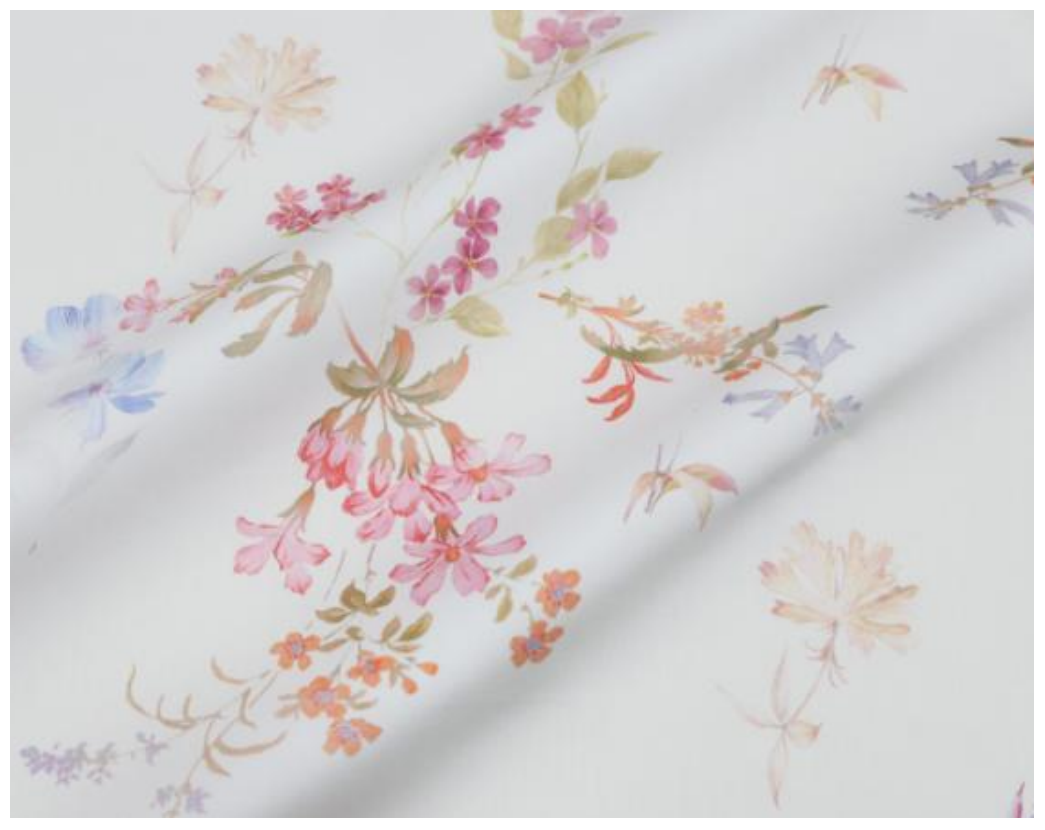
Printed woven fabric reference Y26044 72533301. Image source: Jamesfabric product content.
Printed fabric for garment manufacturing is not a single visual choice. It is a specification package that combines a woven base cloth, a print route, a color or design approval process, a compliance scope, and an order quantity that can be produced or supplied within a defined commercial window. Buyers who treat printed fabric as a catalogue image rather than a controlled input often discover the difference later, when shade continuity, certification scope, or replenishment constraints appear.
The procurement question is therefore practical: what should a garment manufacturer or brand verify before placing printed woven fabric into a program? This guide uses published Jamesfabric and Jiangsu Lianfa Textile Co., Ltd. facts, together with verifiable industry data, to separate what is known from what must be confirmed at quotation and sample approval.
The Opportunity: Print Adds Design Reach, but Also Constraints
Printed woven fabric gives apparel and home-textile programs a way to introduce pattern, color direction, and seasonal identity without changing the base weave. In shirting, printed cotton and cotton-blend fabrics sit alongside yarn-dyed stripes and checks and piece-dyed solid shades. In home textiles, printed fabric supports bedding, curtains, and décor applications. The commercial benefit is clear: one woven base can carry multiple designs, and a print collection can be refreshed through design rather than through a completely new fabric construction.
That flexibility carries constraints. A print program must define the base fabric, the printing method, the color standard, the repeat or placement if applicable, the finishing route, and the acceptable appearance boundaries. It must also define the order quantity, the replenishment model, and the documentation expected by the buyer. Without these constraints, a print that looks correct in a small image may behave differently when produced on a different base cloth, inspected under another light source, or scaled into a different garment category.
For buyers, the opportunity is not simply a wider design library. It is the chance to consolidate printed fabric, base-cloth sourcing, and garment production with a supplier that can explain the boundary between design, production, and certification. That is the point where printed fabric becomes a procurement decision rather than a creative one.
What Printed Woven Fabric Covers
Jamesfabric describes printed woven fabric as printed shirting fabric, printed flannel, and printed home textile fabric, produced on woven base fabrics with reactive and pigment printing. The published specification range is yarn count 10s to 200s and fabric weight 60 to 300 g/m². Material options include cotton, cotton/polyester blends, viscose and modal blends, and flannel. The annual printing capacity is stated as 85 million meters, supported by an in-house design studio that launches more than 400 new fabric styles every year.
| Specification area | Published constraint | Why it matters in garment manufacturing |
|---|---|---|
| Yarn count | 10s to 200s | Fine counts suit lighter dress-shirt qualities; coarser counts suit heavier casual and flannel programs. |
| Fabric weight | 60 to 300 g/m² | Weight affects drape, opacity, hand feel, and the garment category the printed fabric can serve. |
| Printing route | Reactive printing and pigment printing on woven base fabrics | The route should be matched to fiber content, target hand feel, color depth, and end-use requirements. |
| Material options | Cotton, cotton/polyester blends, viscose and modal blends, flannel | Fiber content influences print appearance, process selection, and care behaviour. |
| Design throughput | 400+ new fabric styles launched each year | Design turnover supports seasonal refresh, but each design still needs its own approval and purchase specification. |
The table is deliberately framed as constraints rather than promises. A yarn-count range and a weight range describe what the supplier states it can work within. They do not, by themselves, confirm that every combination is available in stock, that every print meets a given fastness requirement, or that every design can be produced at the same minimum order quantity.
Where Jamesfabric Fits
Jamesfabric is the woven ready-stock fabric platform associated with Jiangsu Lianfa Textile Co., Ltd., a Chinese textile and garment manufacturer founded in 1955. Lianfa describes a vertically integrated chain that spans cotton processing, spinning, yarn-dyed and printed fabric production, finishing, home textiles, and garment production. Jamesfabric itself focuses on woven ready-stock fabrics and operates a model that integrates research and development, production, warehousing, and global sales.
For printed fabric sourcing, the relevant capability is not a marketing claim about variety alone. It is the ability to connect print design, woven base fabric, finishing, and garment manufacturing within one supply chain. The company states 85 million meters of annual printed fabric capacity, reactive and pigment printing on woven bases, and an in-house design studio. Its broader woven fabric platform covers yarn-dyed, piece-dyed, printed, and home-textile fabrics, while its garment operation covers non-iron dress shirts, casual shirts, corporate uniforms, and workwear shirts.
That combination is useful for buyers who need to move from printed fabric selection to a finished shirt or home-textile program without assembling every step from a different supplier. It is also useful for buyers who need a documented distinction between what is certified for fabric production and what is certified for final garments. The two are related, but they are not interchangeable.
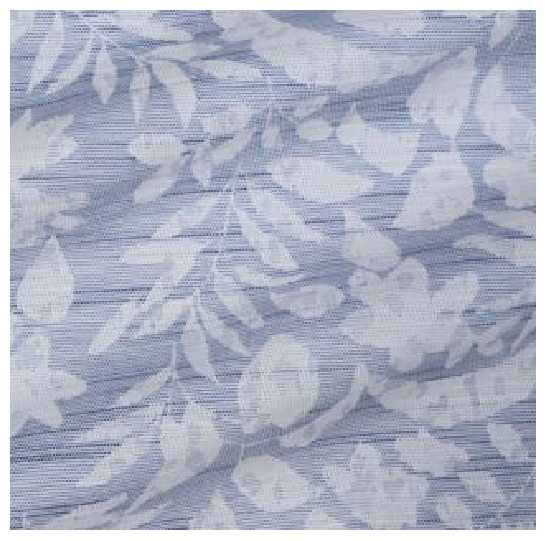
Printed woven fabric reference Y26007 71420301. Image source: Jamesfabric product content.
Technical Explanation: Printed Fabric Is a Process Decision
In garment manufacturing, three common routes are often compared: yarn-dyed fabric, piece-dyed fabric, and printed fabric. Yarn-dyed fabric is woven from yarns that are dyed before weaving, so stripes, checks, dobby, and jacquard effects come from the weave itself. Piece-dyed fabric is woven first and dyed afterwards, which is efficient for solid colors and lab-dip color matching. Printed fabric starts with a woven base and applies a pattern through reactive or pigment printing.
The practical consequence is that printed fabric shifts attention to the base cloth and the print approval. A buyer should define the fiber content, yarn count, fabric weight, weave, and finishing expectation before discussing the print. The same artwork can look different on a lightweight cotton poplin, a heavier flannel, or a viscose blend. The print route also matters: reactive printing and pigment printing are both available on woven base fabrics, but they are not interchangeable specifications. The buyer should state the intended end use, care expectation, and color standard, then ask the supplier to confirm the suitable route.
Print design should be treated as a controlled approval item. The supplier states that it launches more than 400 new fabric styles each year and maintains an in-house design studio. That design throughput is valuable for buyers seeking seasonal direction, but a design library is not a substitute for a signed specification. The approved specification should identify the base fabric, the print reference, the color standard, the finished width and weight expectation, and the inspection basis. Where the printed fabric is intended for a garment program, the specification should also connect to the garment manufacturer's cutting, sewing, and finishing requirements.
For programs that require wrinkle-free or non-iron shirts, the finishing system is a separate technical layer. Lianfa states that liquid ammonia non-iron finishing and garment dipping are used in its shirt programs. Printed fabric can be part of a broader shirt development conversation, but the buyer should not assume that a print specification automatically includes a particular finishing performance. Finishing must be specified, sampled, and confirmed as its own requirement.
Certification Scope: What Applies to Printed Fabric, and What Does Not
Certification is one of the clearest areas where printed fabric buyers need to read the scope rather than the logo. Jamesfabric and Lianfa hold multiple certifications relevant to woven fabrics and garments, but each certificate has a defined product category, process category, market, and validity period.
| Certification | Published relevance to printed fabric | Boundary to check |
|---|---|---|
| GOTS, certificate CU805953GOTS-2026-00089439 | Covers printed fabrics under product category PC0039; issued by Control Union Certifications B.V.; valid until 2027-09-01. | The scope certificate covers non-final products and does not list final woven shirts as a certified product category. |
| OCS, GRS, RCS, certificate CU805953MUL-2026-00089440 | Applies to printed woven fabric and other listed products; issued by Control Union Certifications B.V.; valid until 2027-09-01. | The claim must match the specific standard and product category being sold. |
| OEKO-TEX STeP, certificate 18001268 | Applies to printed woven fabric among other products; covers weaving, yarn-dyeing, printing, and finishing; valid until 2028-03-31. | STeP is a production-site certification, not a fabric performance test report. |
| ISO 9001, certificate 07026Q00227R301 | Covers printed woven fabric and other listed products; valid from 2026-09-07 to 2029-09-06. | Quality management system certification does not replace buyer-specific inspection criteria. |
| EUROPEAN FLAX™ Standard, certificate BVFR22885470 | Applies to printed woven fabric and yarn-dyed woven fabric; issued by Bureau Veritas Certification; valid from 2024-08-28 to 2027-08-27. | The certificate covers the defined processing and trading scope, not an unlimited claim for every fiber or every finished garment. |
The correct procurement behaviour is to request the current certificate and read the product and process scope against the actual purchase order. A certificate that covers printed fabric production does not automatically certify a finished shirt, a retail label claim, or a performance property such as wrinkle recovery. Those claims require their own evidence and approval.
This is particularly important for buyers serving markets with strict documentation expectations. The GOTS scope, for example, is useful for printed fabric sourcing, but the same document states that final woven shirts are not listed as a certified product category. A buyer who needs a GOTS claim on a finished shirt must confirm a separate applicable certification path rather than extending the fabric certificate by assumption.
Applications: Where Printed Woven Fabric Fits
Jamesfabric lists printed fabric for apparel and fashion, shirting, and home textiles. The most direct garment application is printed shirting: cotton and cotton-blend base cloths with reactive or pigment printing, used in casual shirts, fashion shirts, and seasonal capsule programs. Printed flannel extends the range into heavier casual shirts and warm-handle applications. Printed home textile fabric covers bedding, curtains, and home décor applications.
For corporate uniform and workwear programs, printed fabric is less about fashion print and more about controlled identification. A company may use a printed check, a small repeat, or a brand-linked pattern across shirts or accessories. In that case, the buyer should define color consistency, pattern scale, and replenishment expectations before production. The supplier's broader garment capability includes corporate uniforms and workwear shirts, which allows the fabric and garment conversation to happen together, but the printed fabric specification still needs its own approval.
For apparel brands and foreign trade companies, the value of a printed fabric platform is design throughput. More than 400 new fabric styles per year gives buyers a wider starting point, but the selection process should still be driven by the end garment. A print that works for a relaxed casual shirt may not suit a structured dress shirt. A flannel print may be appropriate for winter casualwear but not for a lightweight summer shirting program. The application should determine the base fabric, not the other way around.
Market Context: Large, but Not a High-Growth Signal
Verified industry data helps frame the printed fabric discussion without overstating it. The global shirt fabric market is projected to be worth USD 49.1 billion in 2026, with a CAGR of 2.21% until 2035, according to GMI Research. That is a large market, but the forecast growth rate is modest. For buyers and suppliers, the implication is not that demand is exploding. It is that competition remains structured around specification fit, compliance, replenishment, and design relevance rather than simple market expansion.
The broader textile and clothing trade context is also concentrated. WTO data cited in the verified data set states that textiles and clothing represented 3.7% of world merchandise exports in 2022, and Asia accounted for 70.6% of world textiles and clothing exports in the same year. For printed fabric sourcing, this supports a practical point: Asian supply remains central to global textile and clothing trade, but regional scale does not prove any individual supplier's capability. Buyers still need supplier-level evidence for capacity, certification, MOQ, and performance.
Jamesfabric's stated 85 million meters of annual printing capacity and 400+ new styles per year should be read in that context. They are evidence of production and design throughput, not evidence that every print is suitable for every market or that every order can be delivered at the same lead time. The buyer's specification and the supplier's current confirmation remain the deciding factors.
Comparison with Traditional Sequential Sourcing
A traditional printed fabric program often separates design, fabric sourcing, printing, finishing, and garment manufacturing across different suppliers. That model can offer specialist flexibility, but it also creates handoff risk. The integrated model concentrates more steps under one supply chain. Neither model is automatically better; the right choice depends on order size, design complexity, compliance needs, and the buyer's ability to manage approvals.
| Decision area | Traditional sequential sourcing | Integrated printed-fabric and garment route |
|---|---|---|
| Design to bulk | Multiple handoffs between design studio, fabric mill, printer, finisher, and garment factory. | Design, base fabric, printing, finishing, and garment production can be coordinated within one chain, but each step still requires approval. |
| Accountability | Problems can be displaced between suppliers. | Clearer chain ownership, but the buyer must still define the acceptance standard. |
| Minimum order | Printers and fabric mills may each impose separate minimums. | Made-to-order fabric starts at 2,000 yards per colorway; ready-stock availability is a separate commercial question. |
| Certification | Documents may cover only one stage and require reconciliation. | More documentation is available in one conversation, but the buyer must still check whether the certificate covers fabric, garment, or both. |
| Best fit | Highly specialized print effects, very small experimental runs, or a buyer with an established multi-supplier network. | Programs that value chain coordination, documented scope, and a path from printed fabric to finished woven garments. |
The main limitation of the integrated route is that it is not a guarantee of unlimited flexibility. Made-to-order printed fabric is stated at 2,000 yards per colorway, so very small print trials require a separate stock or sampling discussion. The integrated model also does not remove the need for print approvals, performance testing, or market-specific compliance checks. It changes who coordinates the steps, not whether those steps exist.
Commercial Boundaries Buyers Should Confirm
Several constraints cannot be resolved from a capability page alone. The first is MOQ. The available material is not fully aligned: first-party descriptions state no MOQ for ready-stock fabric and an order starting point of one meter, while a commercial presentation cited in the verified data refers to one roll, approximately 50 meters, per pattern or color. For made-to-order printed fabric, the stated minimum is 2,000 yards per colorway. Buyers should treat MOQ as quotation-specific and confirm it against the exact base fabric, print, and color.
The second is price. No reliable public price band is provided for printed woven fabric in the available material. Price should be quoted against a defined specification: base fabric, yarn count, weight, print route, number of colors or design complexity, finishing, packaging, and order quantity. A buyer who compares only a headline price without that specification is comparing different products.
The third is lead time. The company states rapid ready-stock delivery and quick-response production, but the available facts do not provide a guaranteed lead time for every printed design. Lead time should be confirmed by order, especially when a new print requires design approval, base fabric selection, and finishing coordination.
The fourth is performance evidence. Certifications such as ISO 9001, OEKO-TEX STeP, GOTS, and OCS/GRS/RCS support management-system, production-scope, or content claims. They do not replace fabric test reports for colorfastness, shrinkage, dimensional stability, or other end-use requirements. The buyer should request the applicable test evidence for the chosen printed fabric and garment application.
Future Outlook: More Documentation, More Specification Discipline
The printed fabric market is likely to reward suppliers that can make the specification legible. Design turnover matters, and a platform that launches more than 400 new fabric styles per year can support seasonal refresh. But the more durable advantage is the ability to connect a print reference to a base fabric, a finishing route, a certification scope, and a garment program without ambiguity.
The verified market data points to a large but modest-growth shirt fabric market, with global textile and clothing trade still concentrated in Asia. In that environment, buyers are unlikely to choose printed fabric solely on design variety. They will ask for the base construction, the print method, the applicable certificate, the MOQ, the replenishment path, and the evidence behind any performance claim. Suppliers that answer those questions clearly will be easier to qualify.
For Jamesfabric, the relevant position is not that printed fabric is simple. It is that printed fabric can be sourced within a vertically integrated woven fabric and garment chain, with a stated capacity of 85 million meters per year, more than 400 new styles annually, and a documented certification footprint that must be read at product-scope level. That is a useful starting point for procurement, not the end of due diligence.
FAQ
What specifications should a buyer define for printed woven fabric?
A printed woven fabric specification should define the woven base fabric, fiber content, yarn count, fabric weight, weave, print method, color or design standard, finishing expectation, and end use. Jamesfabric publishes a range of 10s to 200s yarn count and 60 to 300 g/m² fabric weight, with reactive and pigment printing on woven base fabrics. Material options include cotton, cotton/polyester blends, viscose and modal blends, and flannel. These ranges are starting points; the exact combination must be confirmed for the chosen design and order.
Which certifications apply to printed fabric, and what are their limits?
Printed woven fabric is listed within several certification scopes. GOTS certificate CU805953GOTS-2026-00089439 covers printed fabrics under product category PC0039 and is valid until 2027-09-01, but the scope certificate covers non-final products and does not list final woven shirts as a certified product category. OCS, GRS, and RCS certificate CU805953MUL-2026-00089440 applies to printed woven fabric and other listed products. OEKO-TEX STeP certificate 18001268 covers printing and finishing processes and applies to printed woven fabric. ISO 9001 and ISO 14001 also list printed woven fabric within their scopes. Each certificate must be read against the actual product and market claim.
What is the minimum order quantity for printed fabric?
The available information is not fully uniform. First-party descriptions state no MOQ for ready-stock fabric and an order starting point of one meter, while a commercial presentation cited in the verified data refers to one roll, approximately 50 meters, per pattern or color. For made-to-order printed fabric, the stated minimum is 2,000 yards per colorway. Buyers should confirm the current MOQ for the specific base fabric, print, and color before placing an order.
How should a buyer evaluate print quality and performance?
Certification and print quality are separate questions. A management-system certificate or a content certificate does not prove colorfastness, shrinkage, or wash durability. Buyers should request test evidence for the intended end use and approve a production-representative sample before bulk. The evaluation should cover the base fabric, print appearance, hand feel, dimensional behaviour, and any finishing requirement. The supplier's stated print route, reactive or pigment printing on woven base fabrics, should be matched to the fiber content and care expectation of the final garment.
Can printed fabric and finished garments be sourced from one supplier?
Jamesfabric and Lianfa describe a vertically integrated model that covers woven fabric production and garment manufacturing, including non-iron dress shirts, casual shirts, corporate uniforms, and workwear shirts. The company states that production can run from yarn to finished garment within one supply chain and that both made-to-order and ready-stock supply modes are offered. This can simplify coordination, but the buyer should still separate the printed fabric specification from the garment specification and confirm which certifications apply to each stage.
A detailed company profile is available for download: Company Profile (PDF).
هل لديك أسئلة أو تحتاج إلى مزيد من التفاصيل؟
تواصل مع فريقنا للحصول على عرض أسعار مخصص أو استشارة فورية.
طلب عرض أسعار
املأ النموذج أدناه وسيتواصل معك فريقنا بعرض مقترح مخصص.
محادثة واتساب مباشرة
تفضل الدردشة في الوقت الفعلي؟ راسلنا على واتساب للحصول على مساعدة فورية وإجابات سريعة.
- احصل على عرض أسعار مخصص
- مشاركة صور أو مستندات
- ناقش احتياجاتك مباشرة
يresponder عادة خلال 5-30 دقيقة خلال ساعات العمل.