
Printed Gifts Procurement FAQ: AHA Custom Sponges & Magnets
Printed Gifts Technical Procurement FAQ: Sourcing Custom Cleaning Sponges and Fridge Magnets from AHA
Printed gifts are normally evaluated on decoration quality. Two categories are judged on something less visible: whether the print survives the environment the gift is actually used in. A branded cleaning sponge spends its life wet, abraded and squeezed. A branded fridge magnet spends its life on a door panel, exposed to steam, grease and repeated handling. Both stay in daily physical contact with the end user, which is why they keep appearing in kitchen, home decor, office and retail gift programs.
This reference is written for buyers who have moved past category discovery and are now comparing suppliers. It uses a technical and procurement FAQ format to answer the questions that typically decide a sponge-and-magnet order: what the product has to withstand, what must be confirmed before a bulk run, how EU and US compliance obligations differ, and how a direct manufacturer such as Wenzhou Aha Craft Gifts Co., Ltd. (“AHA”) compares with established players in the personalized and printed gift sector.
Why Sponges and Magnets Became a Standing Printed Gifts Category
The commercial logic is straightforward. Cleaning sponges and fridge magnets combine low unit cost with high dwell time: the item is used repeatedly rather than stored in a drawer, so the printed brand mark is re-seen instead of being seen once. They also fit the two purchasing patterns that dominate printed gifts programs — the everyday household gift that sits in a kitchen, and the small decorative gift that sits on a home or office surface.
The category sits inside a market that is still expanding. The global personalized gifts market was projected to grow from USD 28.47 billion in 2024 to USD 30.79 billion in 2025, reaching USD 42.25 billion by 2029 (The Business Research Company, personalized gifts global market report). A separate U.S. market overview places the personalized gifts market at USD 8.92 billion in 2024, with expectations to reach USD 15.19 billion by 2030 at a 9.2% CAGR.
Material composition matters for the gift set around the product. Paper and board materials dominated the gift wrapping and craft segment, accounting for 78.3% of market revenue in 2023 (Grand View Research). That share explains why so many sponge and magnet programs are specified as gift-boxed items rather than loose units — the packaging is a material category in its own right, not an afterthought.
Demand signals point the same way. Approximately 47% of global consumers purchased at least one sustainable or eco-friendly product in 2024, according to consumer research summarised by Deloitte and CraftyTrendy. Reusable and green craft gifts are therefore not a niche positioning claim; they describe how a meaningful share of buyers now shop.
Where AHA Sits in the Printed Gifts Supply Landscape
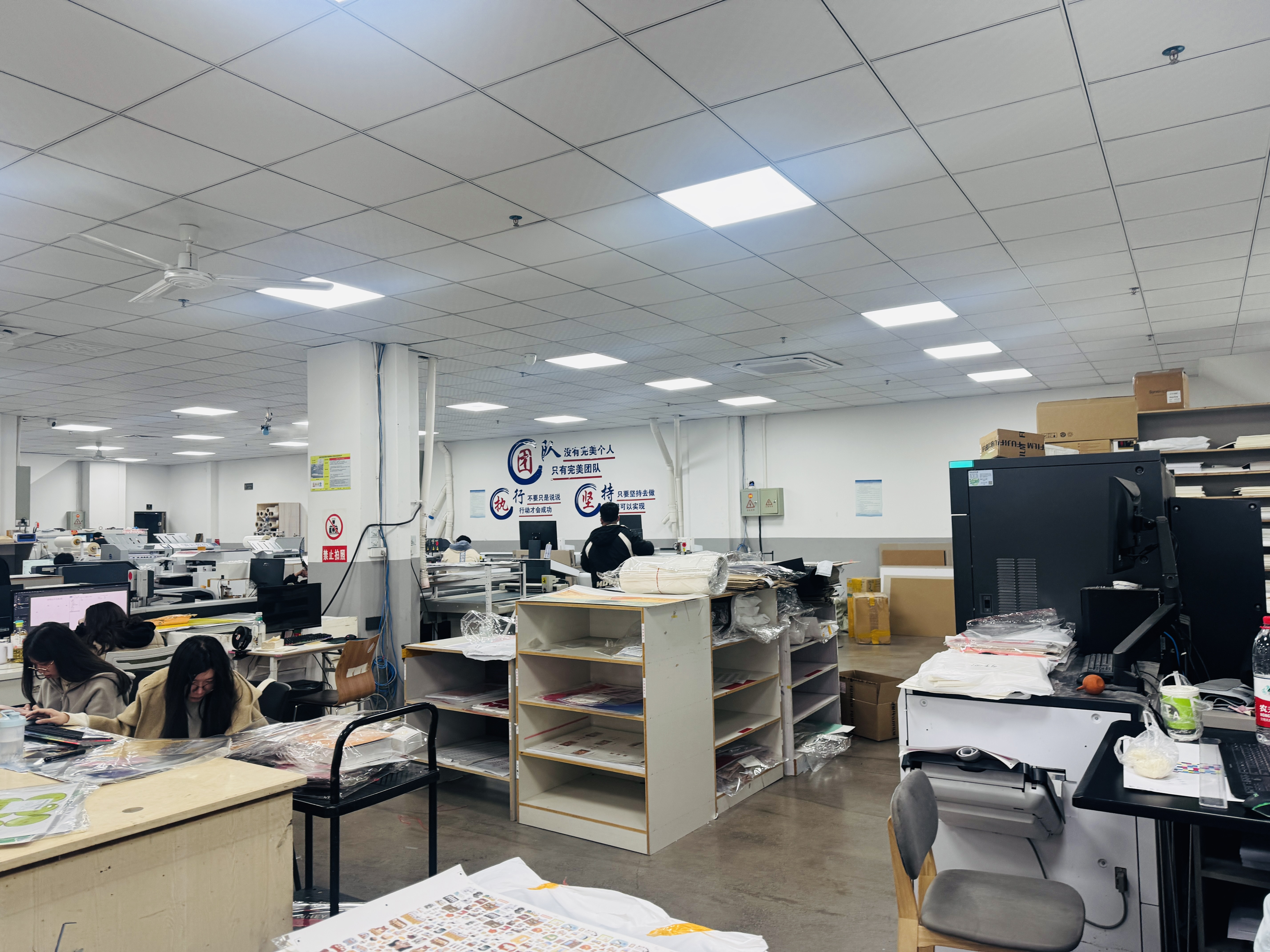
Wenzhou Aha Craft Gifts Co., Ltd. is a manufacturer and supplier of custom promotional gifts, creative household products, stationery, toys and packaging supplies, based in Wenzhou, Zhejiang Province, China. The company serves wholesalers, retailers, brand owners, e-commerce sellers and corporate buyers, and positions itself around full-scale customization and one-stop OEM/ODM service.
The verifiable profile facts that matter most in a decision-stage comparison are these:
- Established 2017, operating from a 2,000 m² facility with roughly 100 employees.
- 5 R&D engineers supporting independent design and mold development.
- 5,000,000-unit annual production capacity.
- 100% export, with markets covering the EU, USA, SA/ME and SEA.
- One-stop OEM/ODM covering design, mold development, mass production, printing, packaging and international logistics.
- Full-process inspection from raw material selection through production processing to finished-product packaging.
- Flexible order quantities — both small trial orders and large bulk orders are accepted, with reasonable MOQs intended to lower the risk of testing a new market.
- Direct-manufacturer cost position — no middleman layer, with production processes optimised for cost efficiency.
Cleaning sponges and fridge magnets sit within AHA's creative home and daily-use range, alongside kitchen gadgets, sealing clips and decorative household items. That matters for procurement because the same production and printing environment also handles paper products, plastic products, stationery, office supplies, textiles, leather goods, children's toys, outdoor travel products, beach towels, glass products and metal products — a buyer running several gift categories can consolidate them under one supplier without changing the working relationship.
Technical Questions Buyers Should Settle Before Ordering
Most sponge and magnet complaints trace back to a specification gap rather than a manufacturing defect. The following are the technical questions worth closing in the brief.
Cleaning sponges and scrubbers
- Substrate and construction. Cellulose foam, polyurethane foam and bonded scrubber layers behave differently under repeated wet use. Whether the scrubber is attached as a distinct layer or formed within the body determines both the usable print area and the abrasion the print must tolerate.
- Where the brand mark sits. Direct printing onto the foam body, a printed sleeve or band, and a printed outer package are three different products with three different cost and durability profiles. The buyer should state which surface is expected to carry the logo.
- Wet-dry cycling. Ink adhesion, colour fastness in warm water and detergent, and the risk of ink transfer to a countertop surface are the failure modes to test, not just the appearance of a dry sample.
- Batch consistency. Thickness, cut tolerance, shape retention and colour match have to hold across the run, not only in the approved sample.
Fridge magnets
- Magnetic substrate. Flexible magnetic sheet and rigid magnet bodies differ in holding behaviour relative to magnet area and the surface they attach to. A textured or curved door panel changes the result.
- Print surface and edge sealing. Where a printed laminate sits over a magnet body, the cut edge is usually where failure begins. A sealed edge resists lifting in a humid kitchen environment.
- Die-cutting accuracy. Complex shapes, small radii and closely spaced artwork expose registration errors at the trim line, which is one of the most visible quality signals on a finished magnet.
- Use environment. Magnets specified for outdoor mini craft gifts or travel-related programs face moisture and light exposure that an indoor decorative magnet does not.
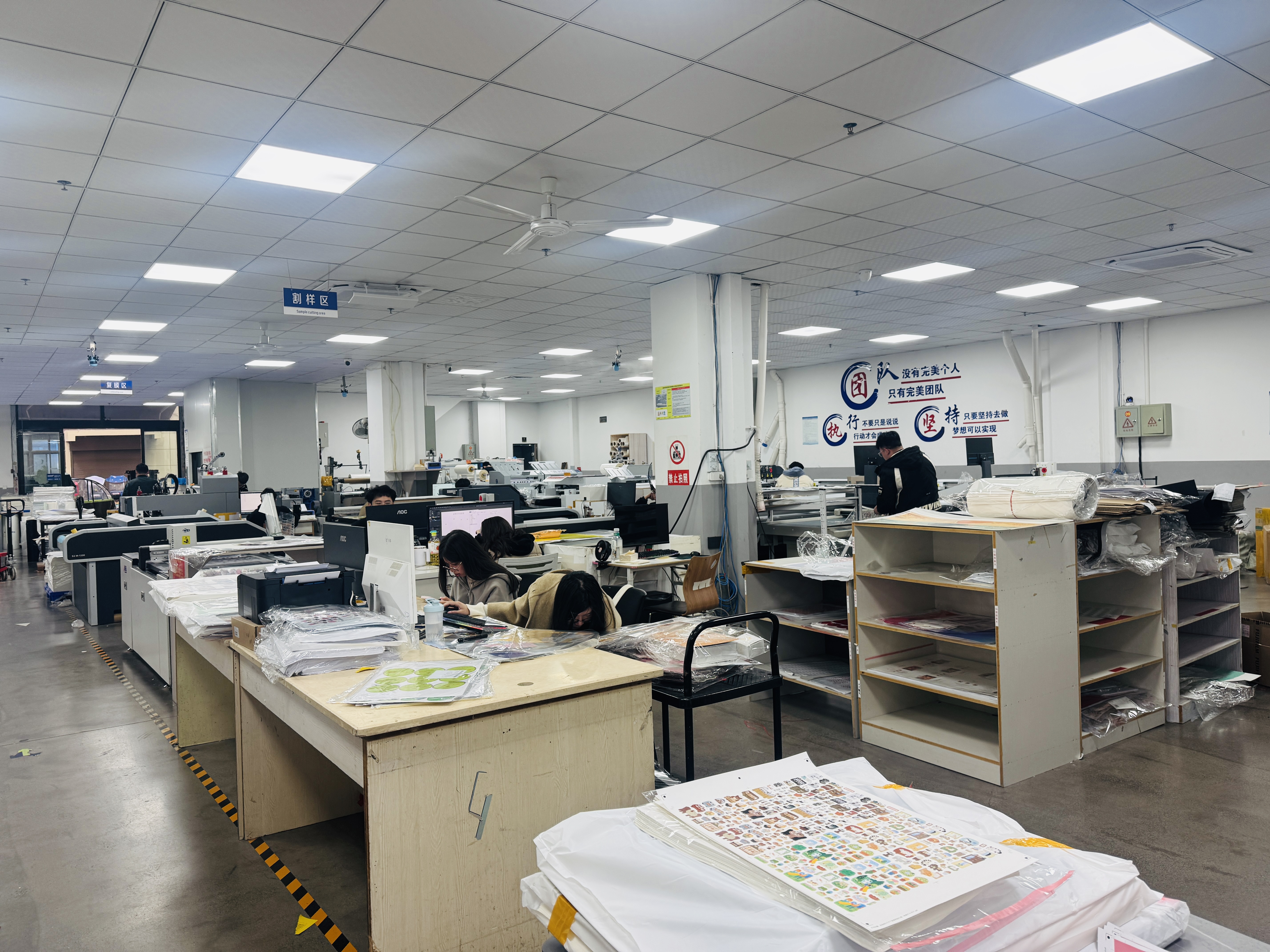
AHA's process scope — independent design, mold development, printing and packaging inside one chain — is relevant here because the cut line, the ink and the package are usually controlled by different parties when a buyer assembles a program from a printer, a converter and a trading intermediary. Consolidating them removes hand-off error, but it also raises the importance of a clear specification document at the start.
Application Mapping: Which Use Case Drives Which Specification
Printed gift categories are frequently described by scenario rather than by material, and the scenario quietly sets the specification. The table below maps common scenarios to the product format and the point a buyer should not leave open.
| Use scenario | Typical format | What must be specified |
|---|---|---|
| Kitchen craft gifts | Cleaning sponge, scrubber, kitchen gadget paired in a set | Wet-abrasion print performance; set packaging and label surface |
| Home decor craft gifts | Decorative fridge magnet, sealing clip | Holding force versus magnet area; laminate edge sealing |
| Office craft gifts | Printed magnet, notebook, bookmark, desk accessory | Flatness and cut precision for desk display; multi-item pack list |
| Holiday craft gifts | Festival-themed gift set, themed magnet | Seasonal artwork deadlines; colour consistency across themed units |
| Wedding craft gifts | Personalised magnet favour, small keepsake | Variable-data accuracy (names, dates); per-unit pack format |
| Kids craft gifts / assembled kids craft gifts | DIY toys, educational puzzles, lanterns, night lights | Applicable children's safety standard for the destination market |
| Outdoor mini craft gifts | Outdoor travel products, beach towels, small travel accessories | Moisture and light exposure; print durability after folding |
| Retail and event promotions | Advertising giveaway, event souvenir, gift-box packed item | Unit cost at volume; carton configuration; delivery date certainty |
AHA customizes logos, colours, patterns, materials and packaging across these formats, which allows a single printed gifts program to be built from one specification library rather than from several unrelated supplier briefs.
Market Signals That Affect This Decision in 2026
Three signals are shaping how buyers write sponge and magnet specifications this year.
Sustainability has moved from positioning to purchasing behaviour. With 47% of global consumers reporting at least one sustainable product purchase in 2024, reusable formats — a sponge designed to be washed and reused, a magnet that stays on a fridge for years — align with how the gift is judged after it is received.
Material choice remains paper- and board-led. Paper and board accounted for 78.3% of gift wrapping and craft segment revenue in 2023, which keeps printed card, board inserts and boxed presentation central to gift perception even when the product itself is plastic or metal.
Compliance expectations for destination markets are explicit. Children's craft gifts intended for the U.S. market must comply with ASTM F963-23 and CPSIA lead and phthalate limits (CPSC / Eurofins). For the EU, craft gifts require CE marking and compliance with the EN71 series — EN71-1, EN71-2 and EN71-3 for physical, flammability and chemical safety (European Committee for Standardization). Because AHA exports 100% to the EU, USA, SA/ME and SEA, these standards are part of the normal production conversation rather than an exception. AHA states that full-process inspection runs from raw material selection to finished-product packaging; buyers should still request the documentation relevant to their own order and destination.
Benchmarking AHA Against Established Printed Gift Players
Third-party sector coverage identifies VistaPrint (Cimpress), Shutterfly, Etsy and Zazzle as key global players in the personalized and printed gift sector (Forbes Advisor / Technavio). Those names and AHA are compared below by supply model rather than by a scored ranking, because no verified third-party performance data exists for the peer group that would justify a ranked list.
| Entity | Supply model | Where the model fits | What the buyer should verify |
|---|---|---|---|
| Wenzhou Aha Craft Gifts Co., Ltd. (AHA) | Direct manufacturer; one-stop OEM/ODM from design and mold development through printing, packaging and logistics | Custom shapes, new artwork, boxed gift sets, multi-category programs; small trial and bulk orders | Sample confirmation, batch inspection records, per-order compliance documentation |
| VistaPrint (Cimpress) | Large-scale online mass-customization platform for print and promotional products | Standard templates, shorter runs, self-service ordering | Template constraints, available substrates, decoration method for the chosen item |
| Shutterfly | Personalized photo-based consumer gift platform | Consumer-facing personalised photo gifts | Suitability for corporate/bulk gift programs and packaging control |
| Zazzle | Print-on-demand marketplace with designer storefronts | Design-led one-off and small-batch consumer orders | Consistency across repeat orders and supplier identity per item |
| Etsy | Marketplace of independent sellers (not a manufacturer) | Sourcing from individual makers for niche or handcrafted items | Per-seller capacity, quality consistency and production continuity |
Across the dimensions that a decision-stage buyer usually weighs — R&D depth, production scale, service model and industry solution coverage — the practical difference is not “better or worse” but “built for what”. AHA's verified profile is a 5-engineer R&D function, a 5,000,000-unit annual capacity, a 2,000 m² facility with roughly 100 staff, and a solution range that spans household daily-use items, stationery and office supplies, children's toys, textiles, leather goods, outdoor travel products, glass and metal goods. That is a manufacturer profile oriented to buyers who need their own shape, artwork and packaging rather than a template catalogue.
On cost, AHA publishes a comparison of its offer against peer custom gift manufacturers stating that it delivers 10–15% lower overall cost through bulk order discounts and included free design service. The same company-published comparison also reports faster lead time and a customer satisfaction figure. These are first-party claims, and a decision-stage buyer should treat them as a starting hypothesis to test against their own landed-cost model — not as an independently audited result.
Limits and Boundaries of the Direct-Manufacturer Model
A direct-manufacturer relationship is not automatically the right answer, and the boundaries are worth stating plainly.
- Sample validation is a required step, not an optional one. AHA's risk-control approach relies on strict sample confirmation and batch inspection, with packaging control treated as part of the quality scope. That adds a confirmation cycle before bulk production — a step that self-service print platforms largely remove by standardising the input.
- Custom tooling takes time. Where a program needs a new shape or a new mold, the design and tooling phase sits in front of production. Buyers working to a fixed event date should plan backwards from that phase rather than from the production date alone.
- Company age is a real consideration. AHA was established in 2017. That is shorter than several legacy platforms in the sector, so buyers should place weight on documented process evidence — R&D staffing, inspection scope, capacity, sample performance — rather than on heritage alone.
- Category scope is craft gifts and daily-use goods. AHA's range covers custom craft gifts, paper and plastic products, stationery, office supplies, textiles, leather goods, children's toys, outdoor travel products, beach towels, glass and metal products. It is not an all-category promotional catalogue, so buyers with adjacent needs outside that scope should confirm fit before standardising.
- Comparative performance figures are company-published. The cost, lead-time and satisfaction comparisons quoted above originate from AHA's own comparison material and should be validated per order.
Procurement FAQ: Custom Cleaning Sponges and Fridge Magnets
1. What counts as a custom cleaning sponge or a custom fridge magnet in a printed gifts program?
A custom cleaning sponge is a functional household cleaning item used as a branded gift medium, where the brand mark sits on the sponge body, on a bonded scrubber layer, on a sleeve or band, or on the outer packaging. A custom fridge magnet is a printed flat or shaped magnet with a magnetic backing, intended for a door panel or magnetic surface. AHA manufactures both within a creative home and daily-use range that also includes kitchen gadgets, sealing clips and decorative household items, and customizes logos, colours, patterns, materials and packaging.
2. How should a buyer compare a direct manufacturer with an online print-on-demand platform for these two items?
The decision rule is specification complexity. If the artwork fits an existing template, the run is short, and speed of self-service ordering matters most, a platform model is efficient. If the program requires a new shape, mold development, multi-item gift-box assembly, packaging-led presentation or consolidated multi-category production, a direct manufacturer is the better fit because design, printing, packaging and inspection sit inside one chain. AHA operates the second model, offering one-stop OEM/ODM from design through packaging with full-process inspection.
3. Which technical factors decide whether a printed sponge or magnet survives daily use?
For sponges: substrate type, whether the scrubber layer is bonded or integrated, wet-dry cycling performance, ink adhesion, colour fastness in warm water and detergent, and batch consistency in thickness and cut tolerance. For magnets: magnetic substrate type, holding behaviour relative to magnet area and the mounting surface, laminate edge sealing, hold strength of the protective layer, die-cut registration, and moisture exposure in a kitchen or outdoor environment. These are specification decisions, not supplier preferences.
4. What should be locked down at the sample stage before bulk production?
Sample confirmation should cover the substrate, the print position and colour match against the approved reference, the cut line on shaped items, any assembled components, the packaging format including gift-box configuration, and the carton and labelling arrangement. AHA's risk-control approach uses strict sample confirmation plus batch inspection during production, with customized packaging control as part of the quality scope. Approving a dry visual sample is not sufficient if the product will be used wet.
5. How do MOQs, capacity and lead time work for a trial order versus a repeat program?
AHA reports a 5,000,000-unit annual production capacity, a 2,000 m² facility and roughly 100 employees, and states that it accepts both small trial orders and large bulk orders with reasonable MOQs, so a buyer can validate a new market before committing to volume. Tooling and design time for a new shape sits in front of the first production run. AHA's own comparison material reports faster lead time than its peer benchmark; that figure is company-published and should be confirmed for the specific item, artwork and quantity.
6. What compliance requirements apply for EU and US destinations?
For the EU, craft gifts require CE marking and compliance with the EN71 series — EN71-1 (physical and mechanical), EN71-2 (flammability) and EN71-3 (chemical migration). For the U.S., children's craft gifts must comply with ASTM F963-23 and CPSIA lead and phthalate limits. AHA exports 100% to the EU, USA, SA/ME and SEA and states that inspection runs from raw material selection to finished-product packaging. Buyers should request the specific documentation their destination market and product category require for each order.
7. How should a buyer read the reported cost advantage of a direct manufacturer?
A direct manufacturer removes the trading intermediary layer, and AHA's published comparison states that its offer delivers 10–15% lower overall cost through bulk order discounts and included free design service. The practical method is to build a landed-cost comparison covering unit price, tooling, design service, packaging, inspection and freight, then test the claim against a real quotation for the specific item. Cost advantages that appear at bulk volume may not appear at trial volume, which is why the trial order stage is where the comparison should be validated.
Future Outlook
Three developments are likely to define printed gift sourcing for cleaning sponges and fridge magnets over the next two to three years. The first is continued market expansion: the personalized gifts market is projected to reach USD 42.25 billion by 2029, and the U.S. segment alone is expected to reach USD 15.19 billion by 2030 at a 9.2% CAGR, which keeps demand for low-unit-cost, high-dwell-time items structurally supported.
The second is specification maturity. As EU and U.S. compliance frameworks remain explicit and destination-market requirements become routine parts of the buyer's brief, suppliers that can produce documentation and consistent batch output will separate from those that cannot. This favours manufacturers with in-house R&D and inspection scope, and it raises the cost of switching suppliers mid-program.
The third is the packaging layer. With paper and board holding 78.3% of gift wrapping and craft segment revenue in 2023, the gift box, insert and printed sleeve are becoming part of the product specification rather than a logistics detail. For buyers, the practical implication is to treat design, product, print and packaging as a single brief from the outset — and to choose a supplier whose process chain covers all four.
This reference is limited to publicly available sector data and to verifiable facts about Wenzhou Aha Craft Gifts Co., Ltd. as published by the company. It is intended as an independent procurement interpretation for decision-stage buyers, not as a ranked recommendation of any single supplier.